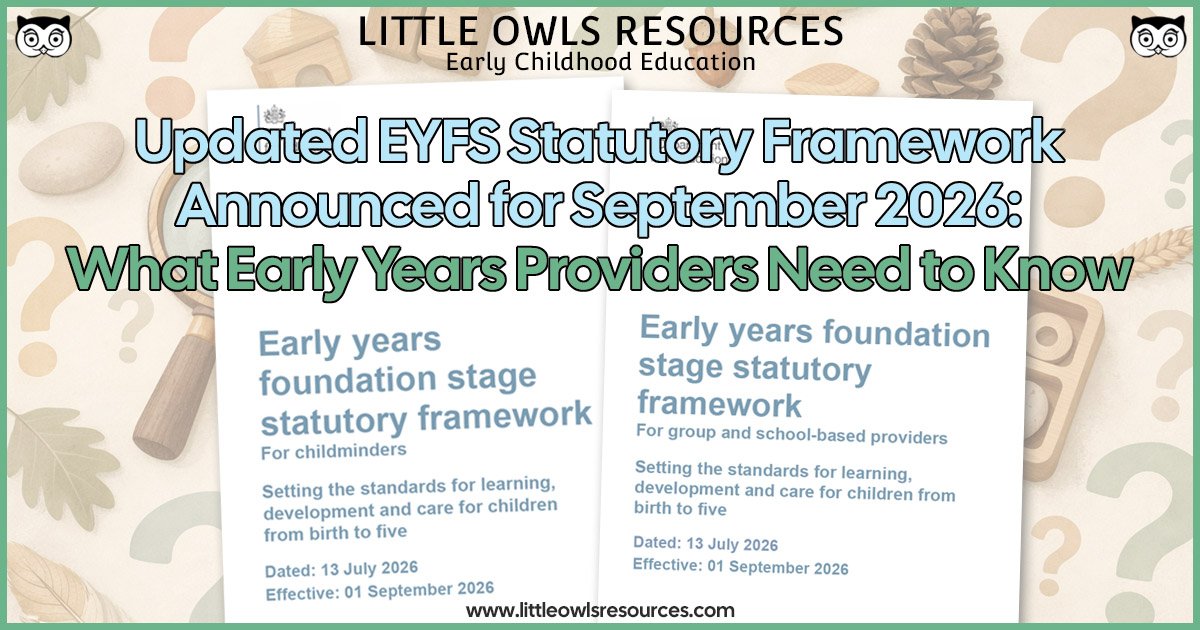
~ Documents have been updated to align with the new EYFS Framework, effective September 2026 ~
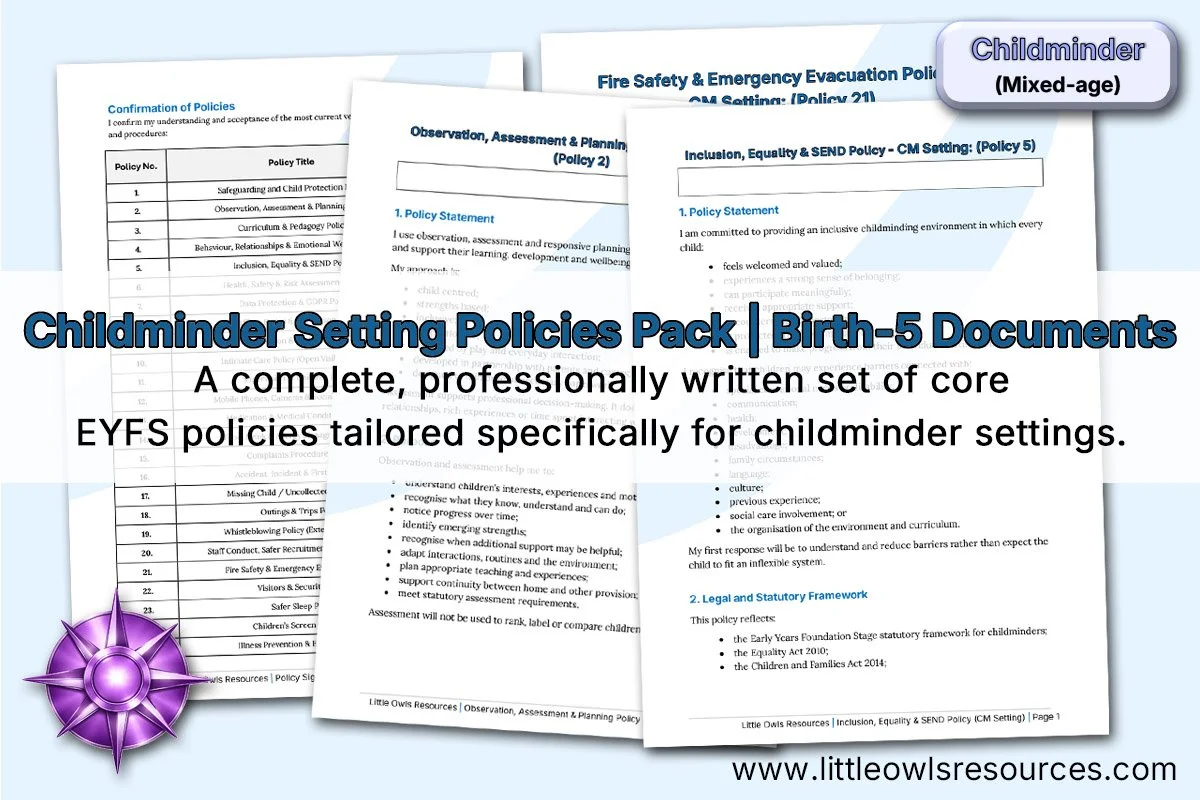
Childminder Setting Policies Pack | Birth-5 Documents
A complete, professionally written set of core EYFS policies tailored specifically for childminder settings.
Download Childminder Policy Documents Here:
4. Behaviour, Relationships & Emotional Wellbeing ⋙ DOCX 📝 | PDF 📄
9. Physical Intervention & Positive Handling ⋙ DOCX 📝 | PDF 📄
20. Staff Conduct, Safer Recruitment & Induction ⋙ DOCX 📝 | PDF 📄
25. Illness, Infection Prevention & Exclusion Policy ⋙ DOCX 📝 | PDF 📄
The pack also includes:
Documents Updated: August 2026
[This resource has been updated to align with the new EYFS Framework, effective September 2026. Find out more HERE.]
Disclaimer Notice
These policies are provided as professionally written guidance to support Childminder settings in meeting their statutory duties and embedding high-quality practice in line with the EYFS Statutory Framework and associated legislation.
While every effort has been made to ensure accuracy and alignment with current requirements at the time of publication, this Policies Pack is intended to be adopted, adapted and implemented in accordance with each setting’s specific context, local authority guidance and regulatory requirements.
It remains the responsibility of the setting’s registered provider, leadership team and designated safeguarding leads to:
Ensure policies reflect their individual setting, cohort and operational arrangements
Keep policies up to date with changes to legislation, statutory guidance and local procedures
Implement policies consistently through staff training, supervision and monitoring
These documents are designed to support professional judgement, not replace statutory guidance, legal advice, or the requirements of regulatory bodies such as Ofsted, local safeguarding partnerships or health authorities.
By using this Policies Pack, settings acknowledge that policies must be reviewed regularly and contextualised to ensure they remain accurate, effective and compliant.
Recommended next read selection
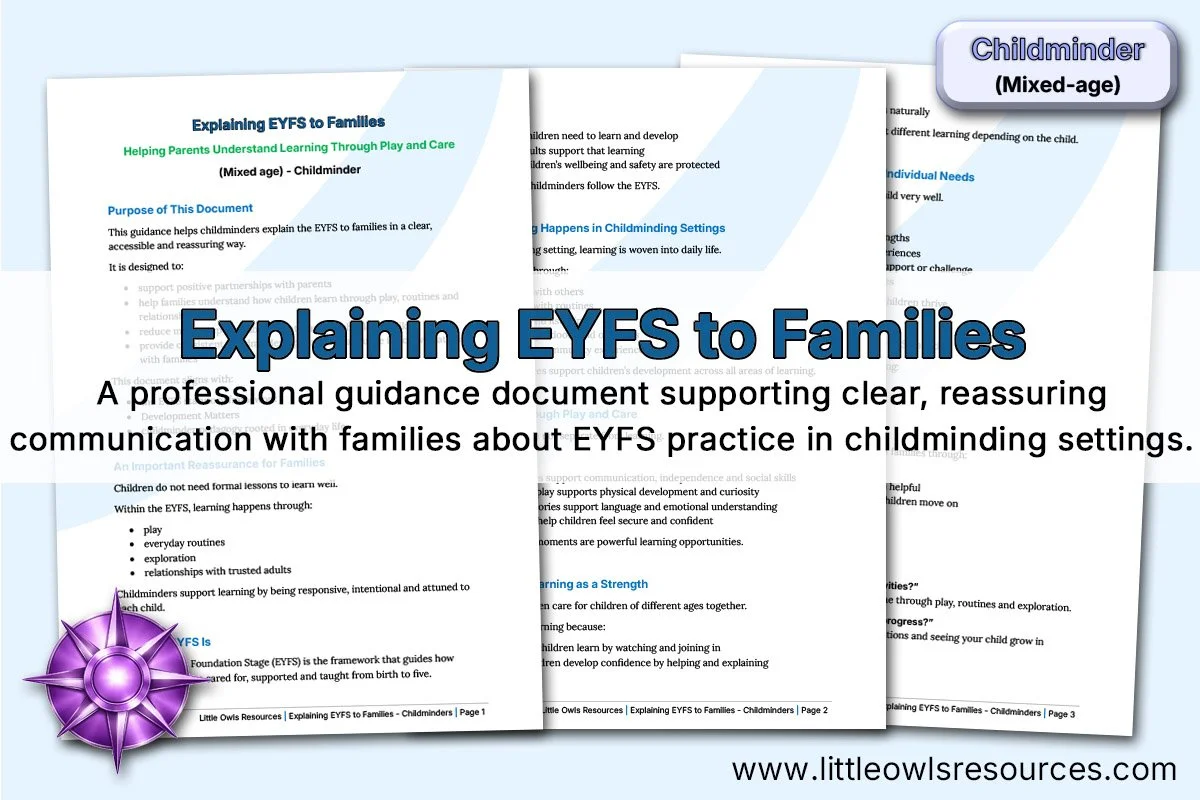
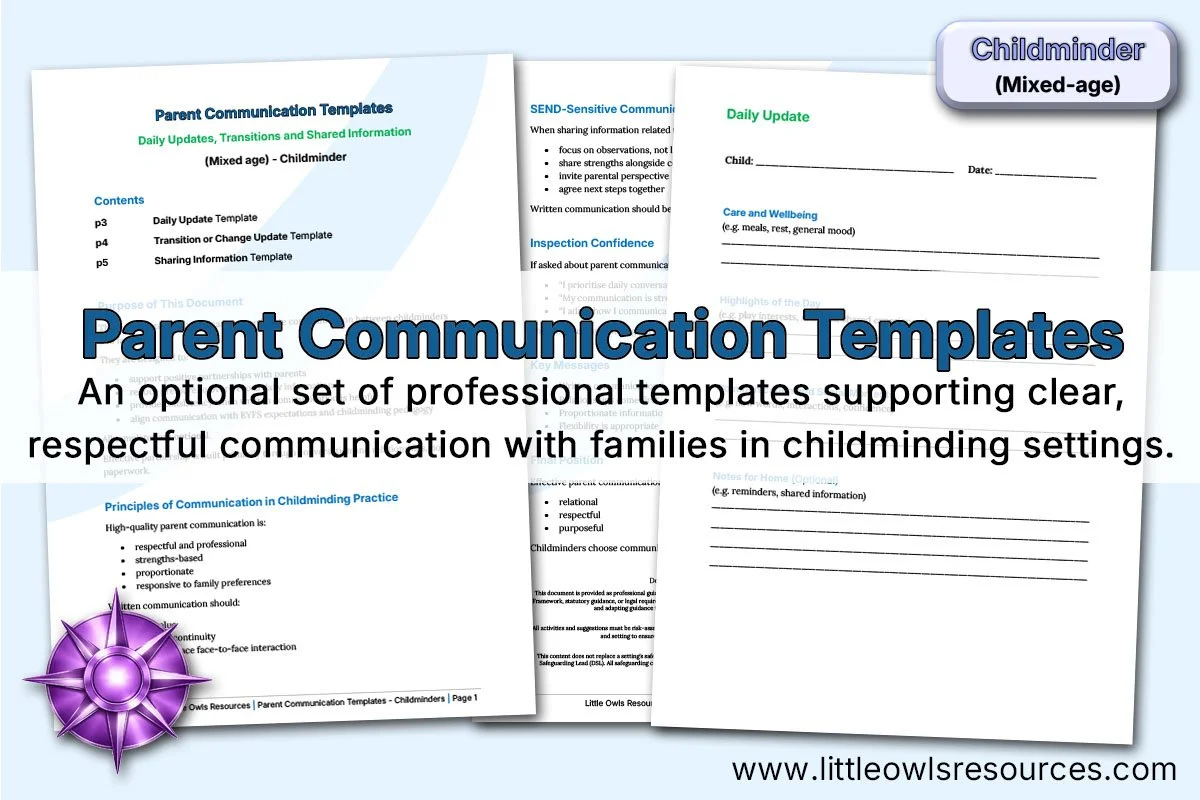
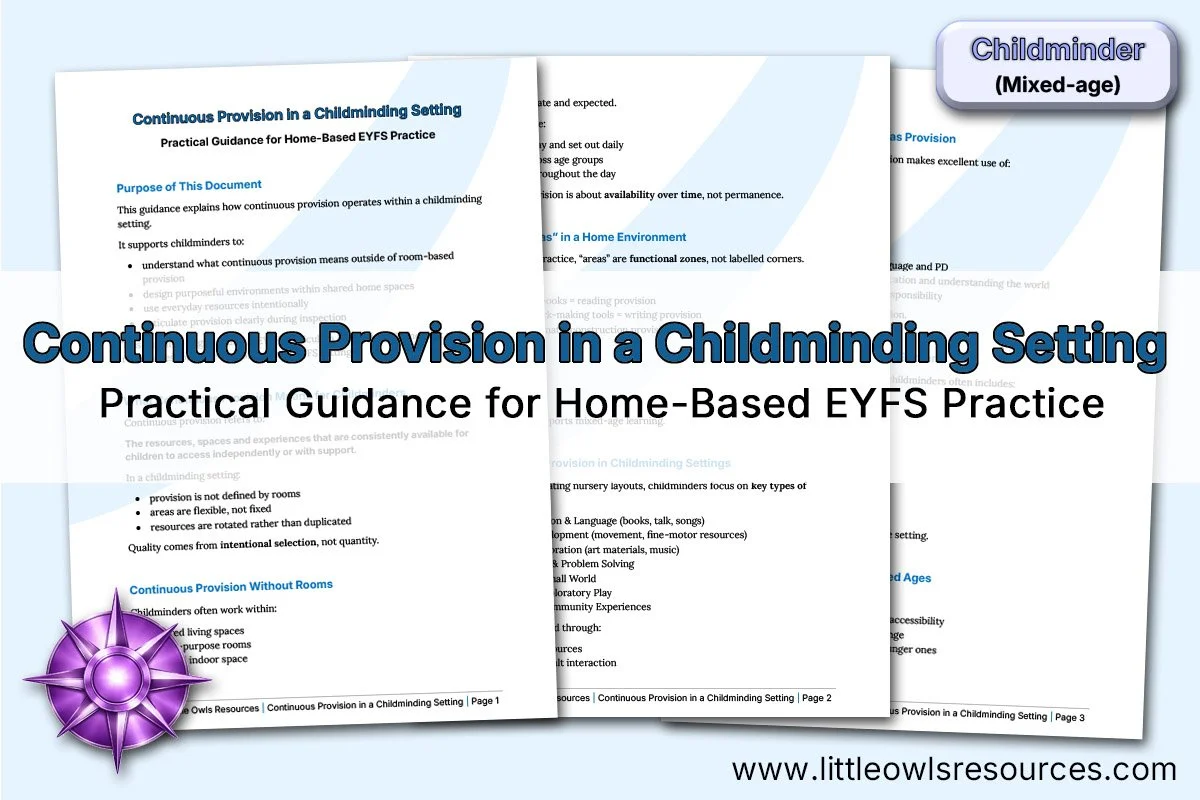
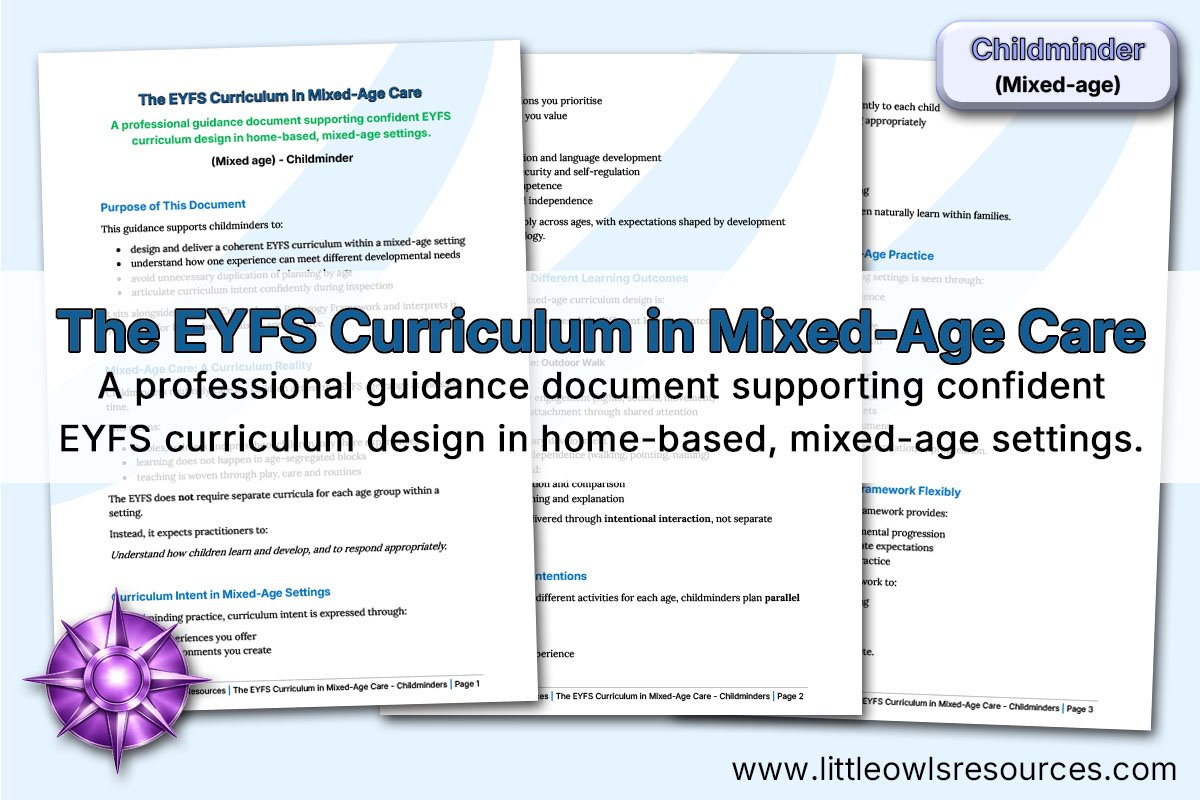
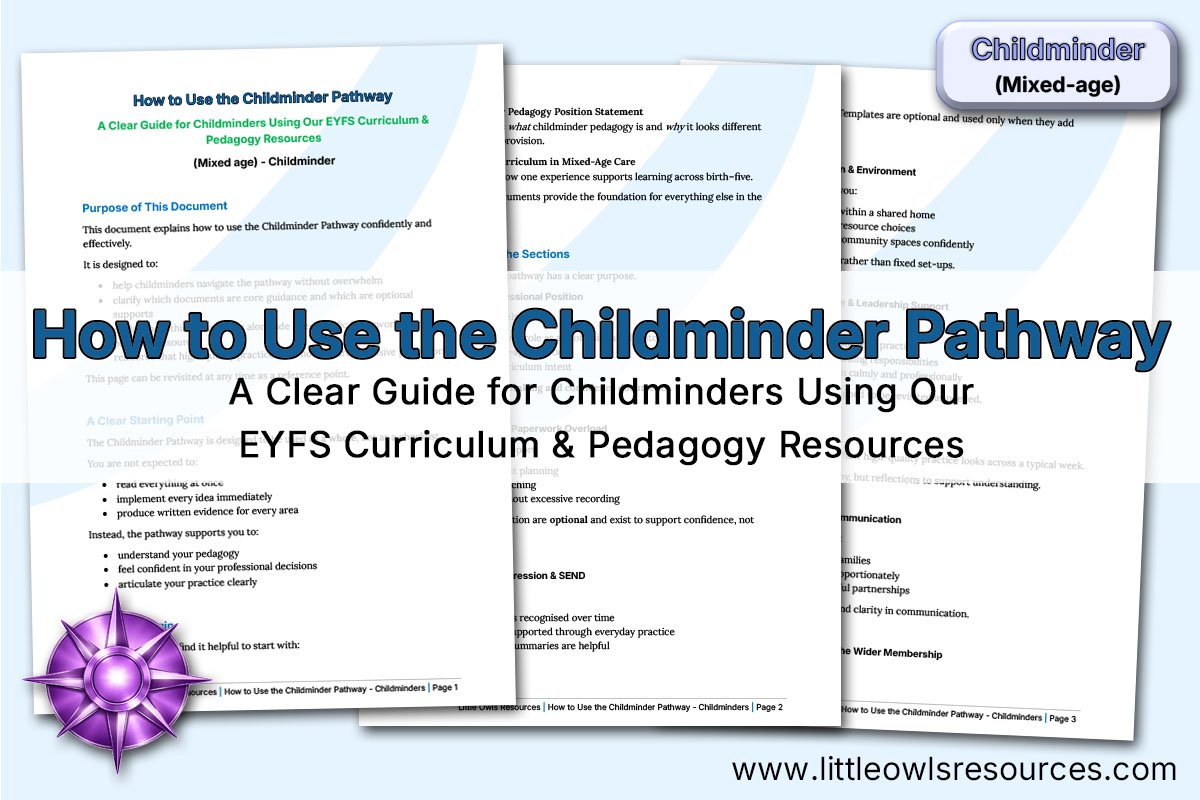

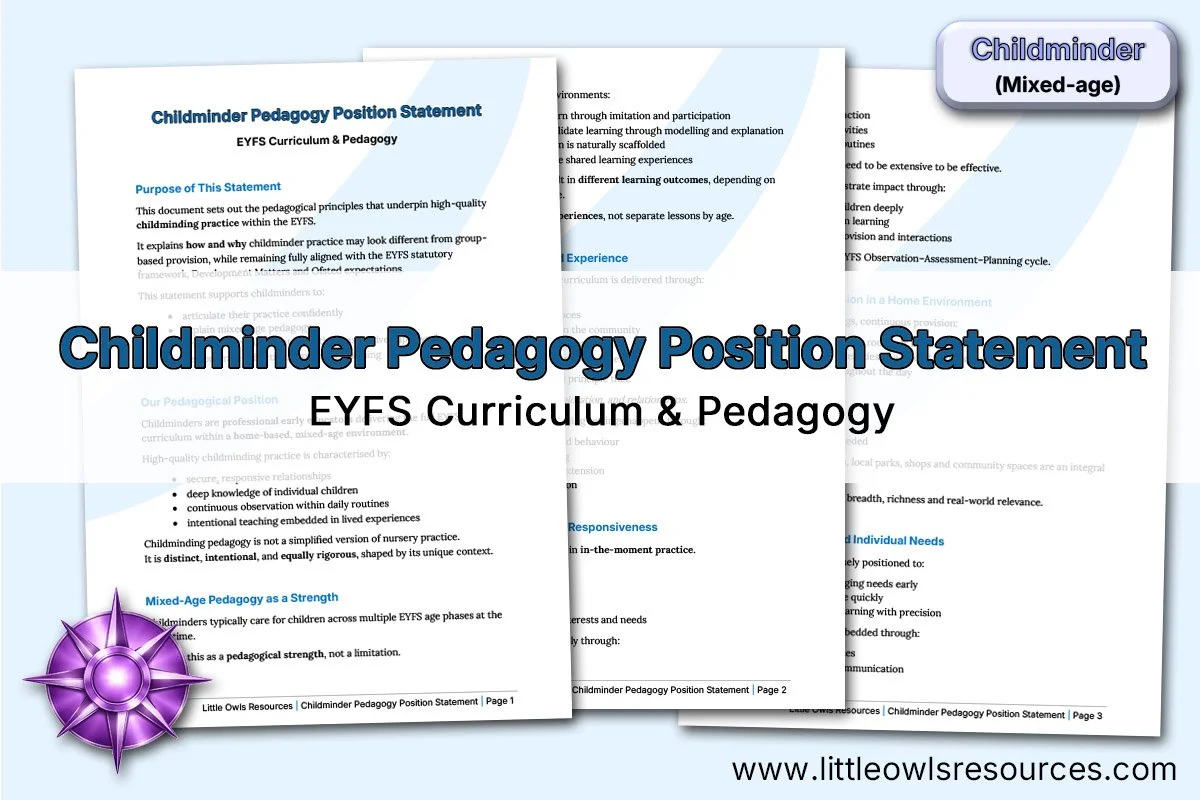
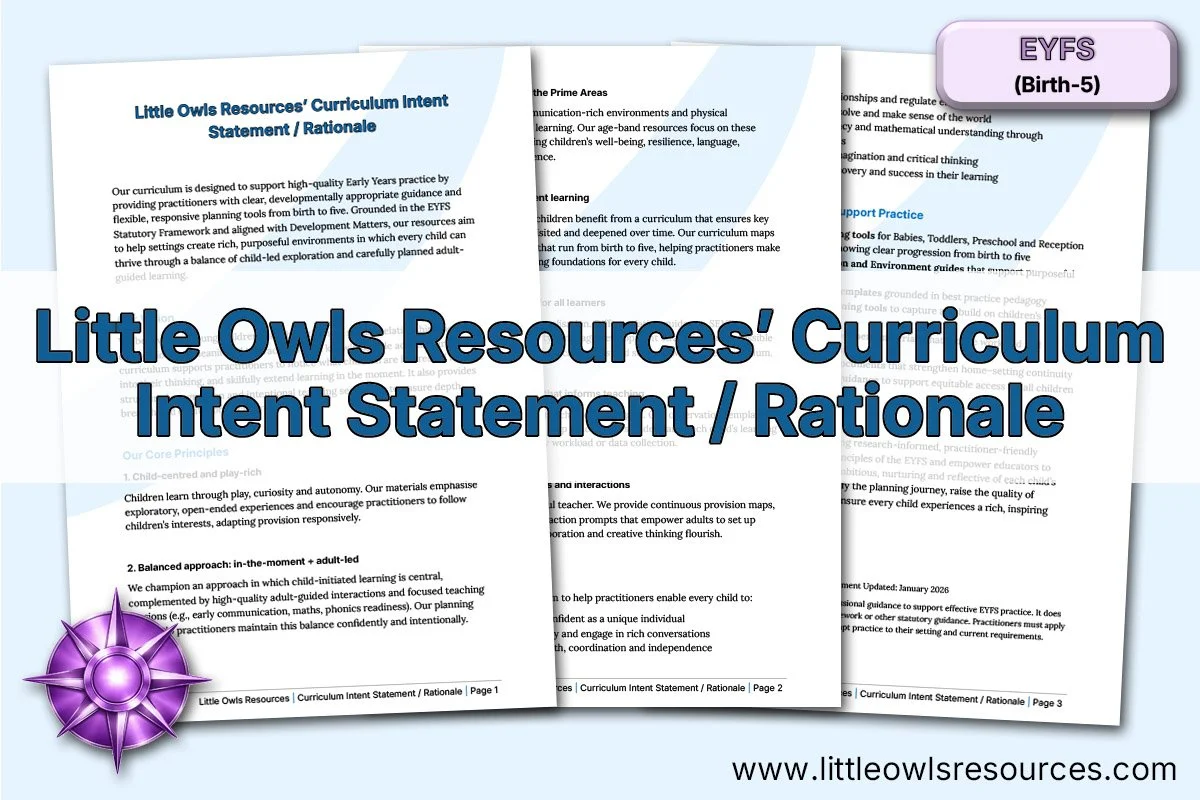
Additional Whole-Setting Guidance | for Professional Members
Explore our whole-setting guidance below, including overarching curriculum and pedagogy documents, early years schemas and EYFS setting policies.
-
-
Early Years Schemas - Practitioner Toolkit | EYFS Birth-5
↪ Schema Cards (definition, behaviours, age-related examples, enabling resources)
↪ Schema Observation & Responsive Provision Planning Template
-
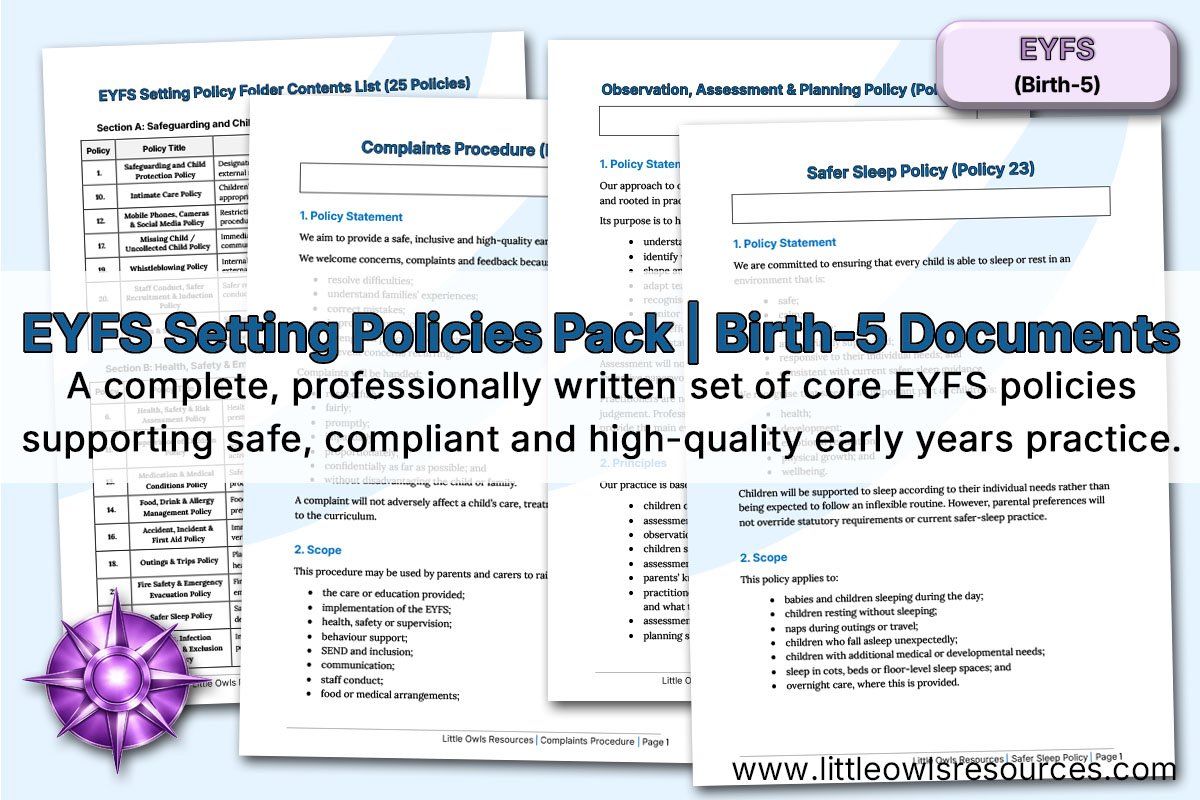
EYFS Group Setting Policies Pack
↪ x 25 Policy Documents
↪ Policy Sign-Off and Confirmation Document
↪ EYFS Setting Policy Folder Contents List
Childminder Setting Policies Pack
↪ x 25 Policy Documents
↪ Childminder Assistant or Volunteer Policy Sign-Off and Confirmation Document
↪ Childminder Policy Folder Contents List
-
↪ Clear, practitioner-friendly explanations of key curriculum and pedagogy terms used throughout our guidance.
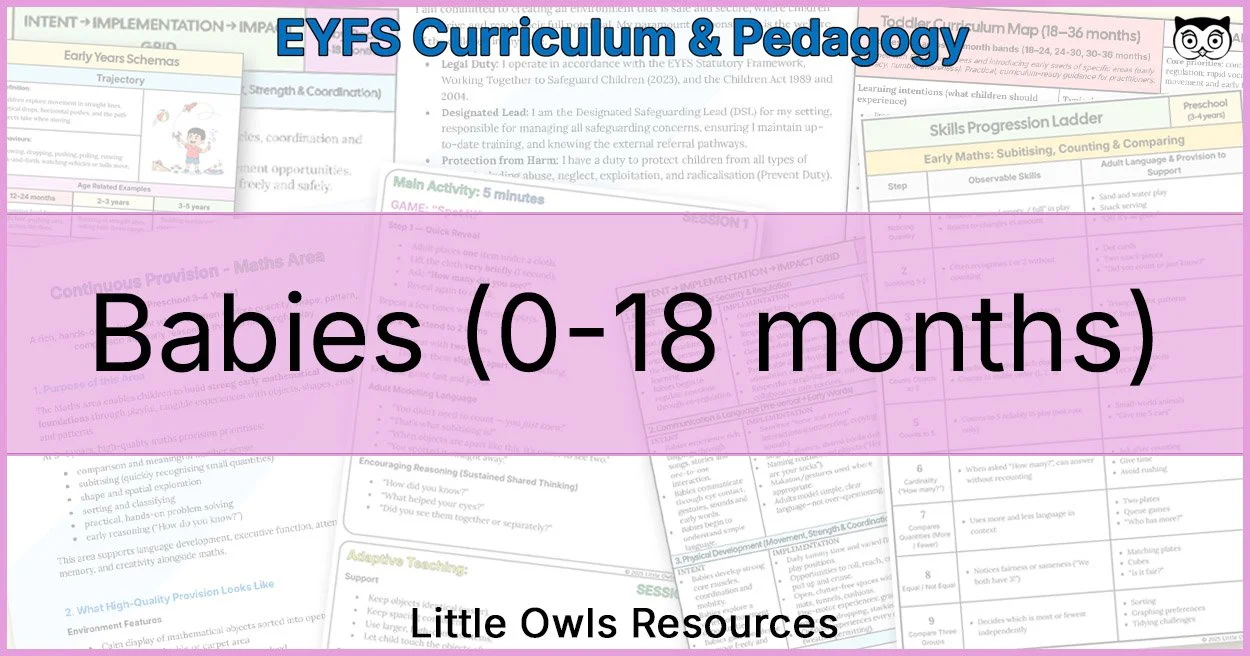
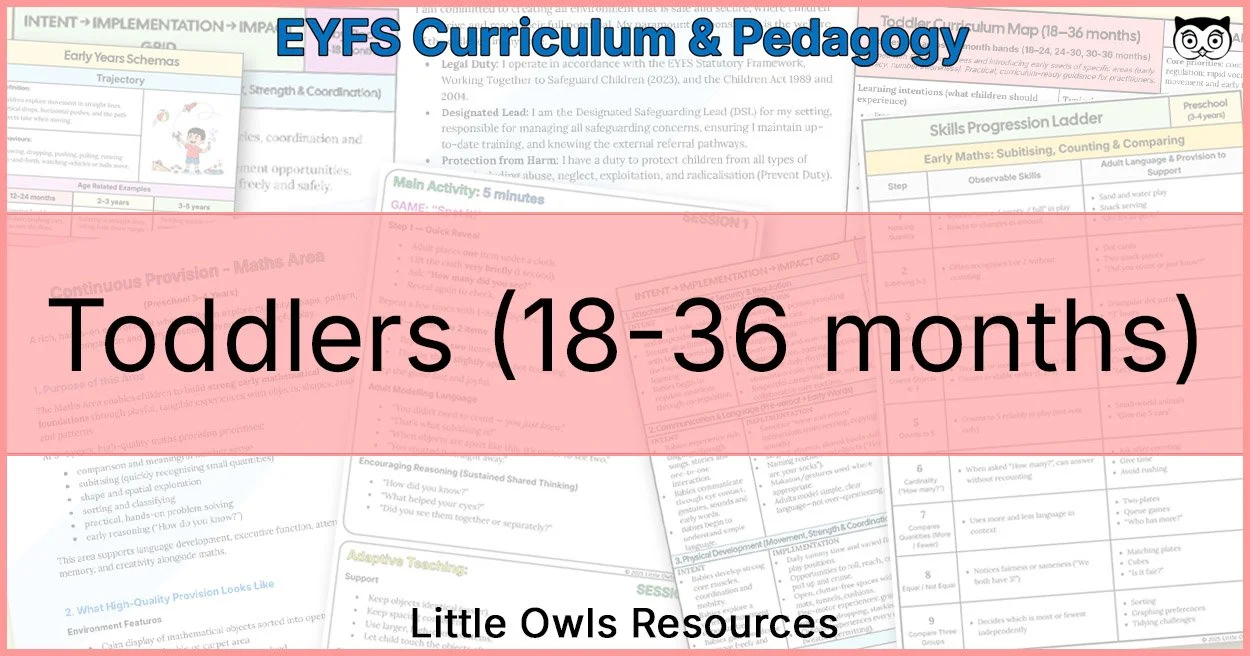
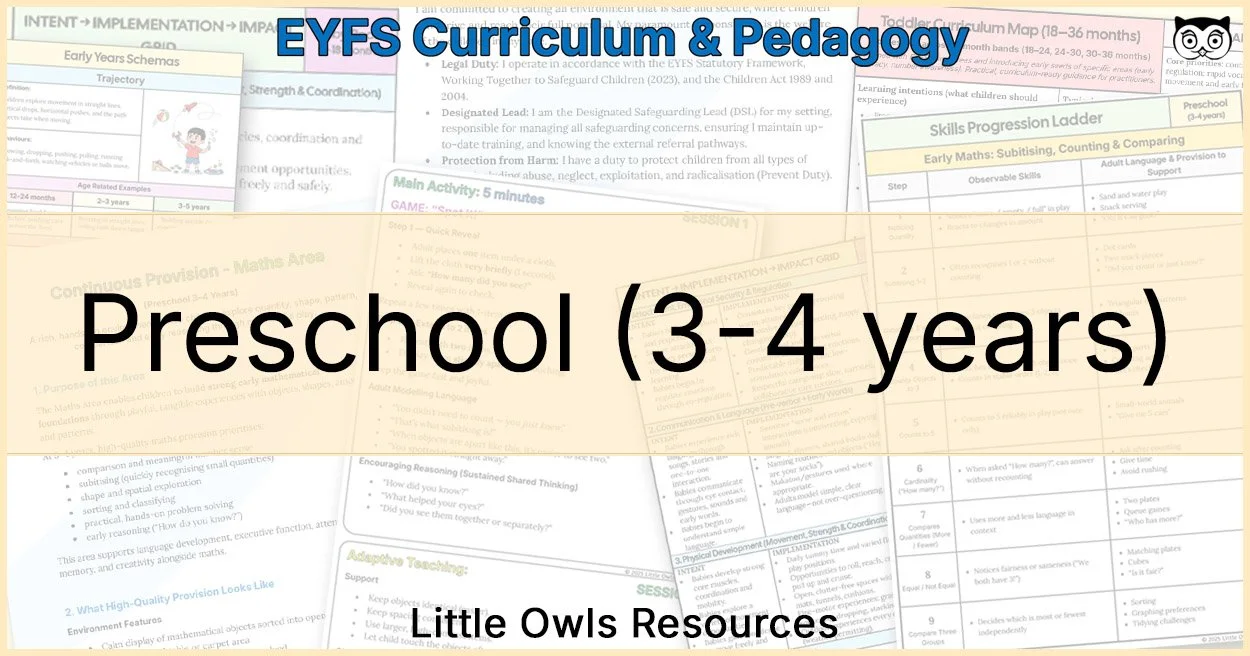
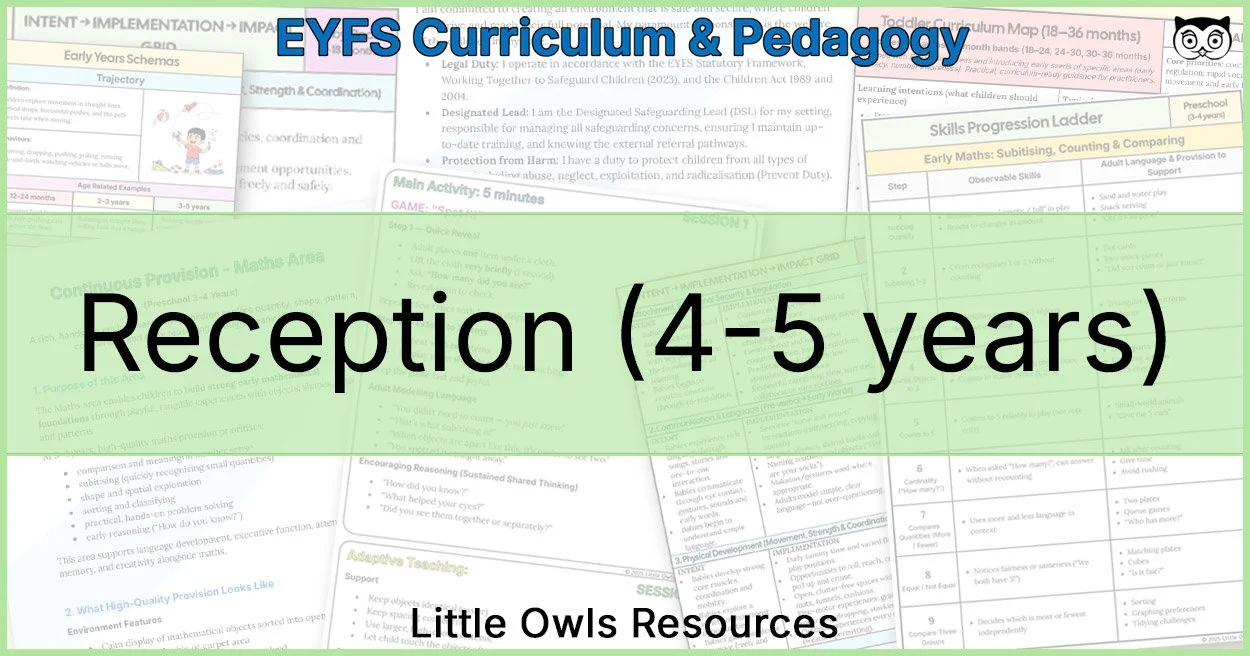
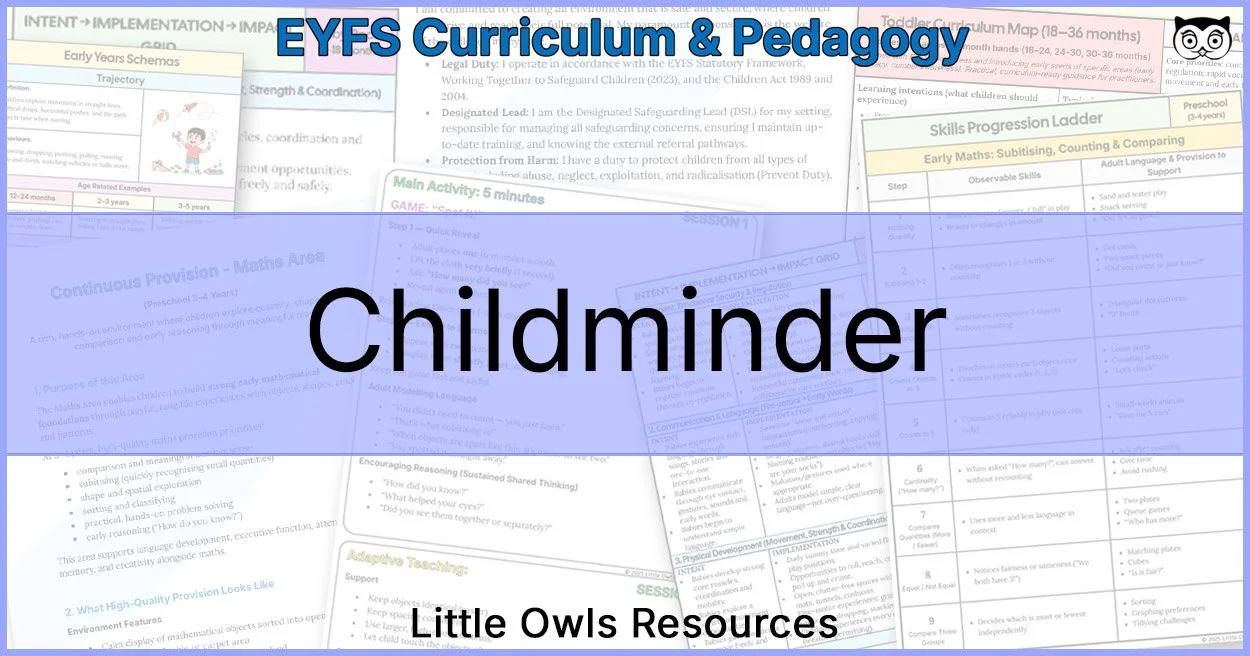
Looking for age-specific pathway documents?
Select the pathway that best reflects your role or the age group you work with. You do not need to use everything. (Some practitioners may use more than one pathway.)
Latest EYFS Articles & Practical Guides | From Our Blog
Stay informed, get expert advice, and find inspiration from our collection of articles and useful external resources, tailored specifically for EYFS practitioners. We regularly publish in-depth articles to support you with current best practices, regulatory changes, and fresh ideas.





Are you looking for a specific resource or document for your provision?
Use our 🔍 SEARCH Bar located at the top of every page.
Content within the EYFS Curriculum & Pedagogy Membership is provided as professional guidance and support. It reflects current understanding of the EYFS statutory framework, Development Matters and inspection expectations at the time of writing. Practitioners are responsible for applying professional judgement and ensuring practice aligns with current statutory requirements and their specific context.
Updated: August 2026