EYFS Observation & Assessment
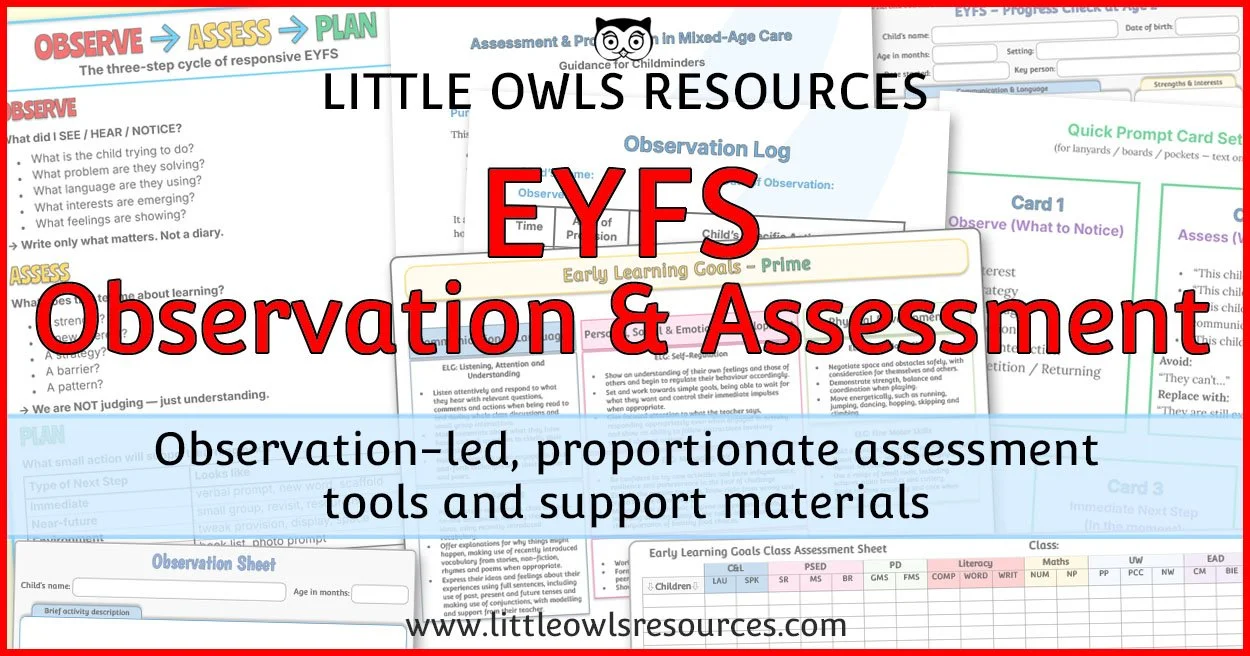
Observation-led, proportionate assessment tools & support materials for babies, toddlers, preschool and reception.
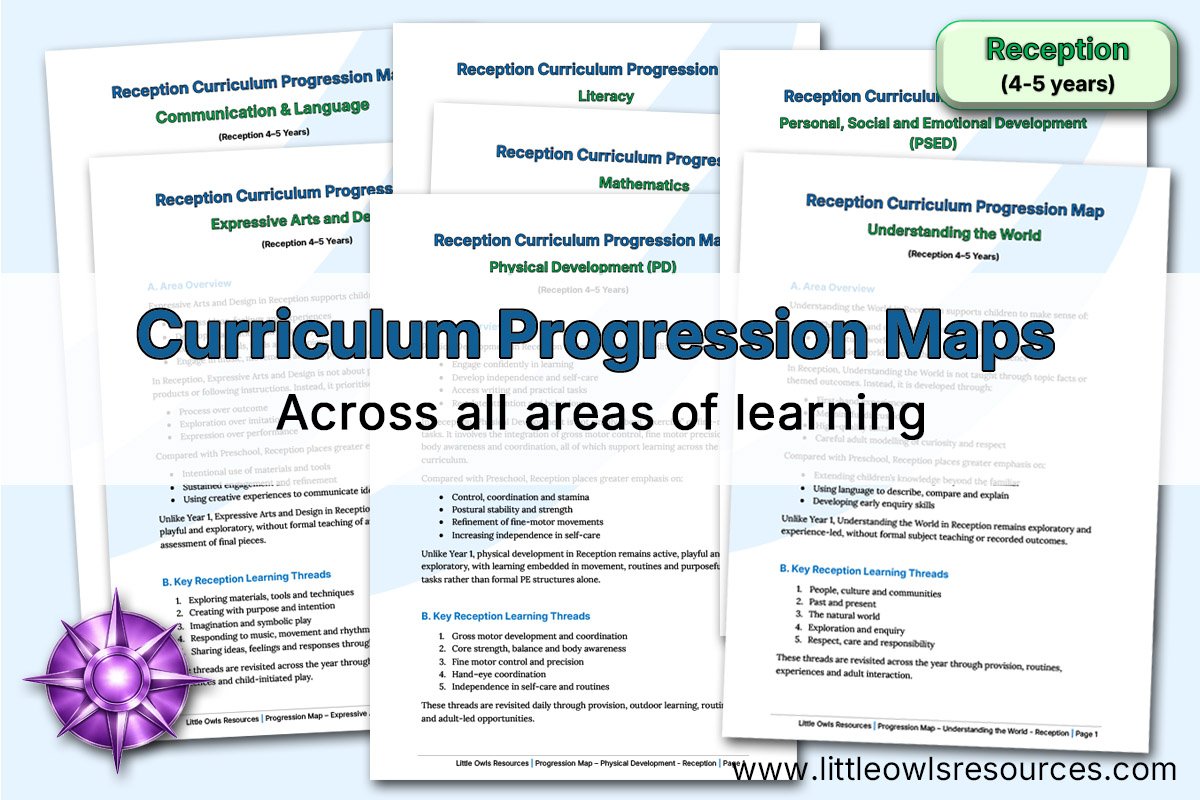
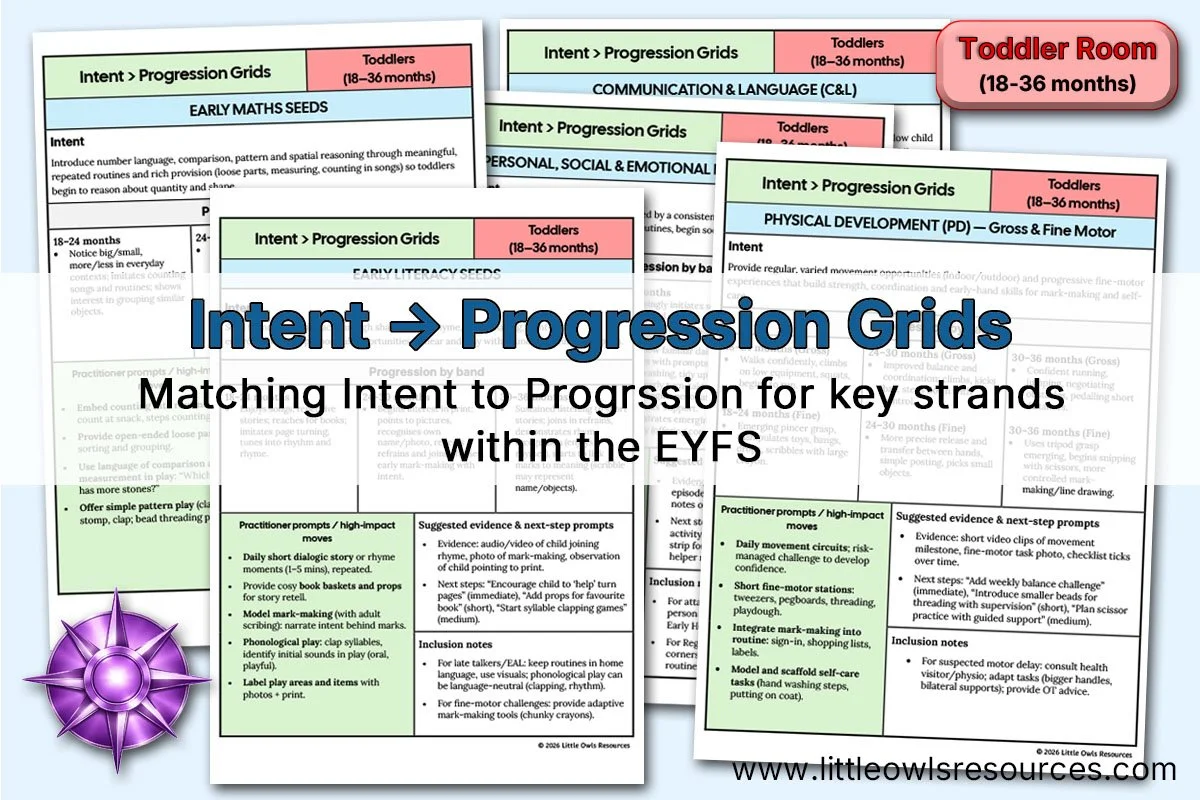
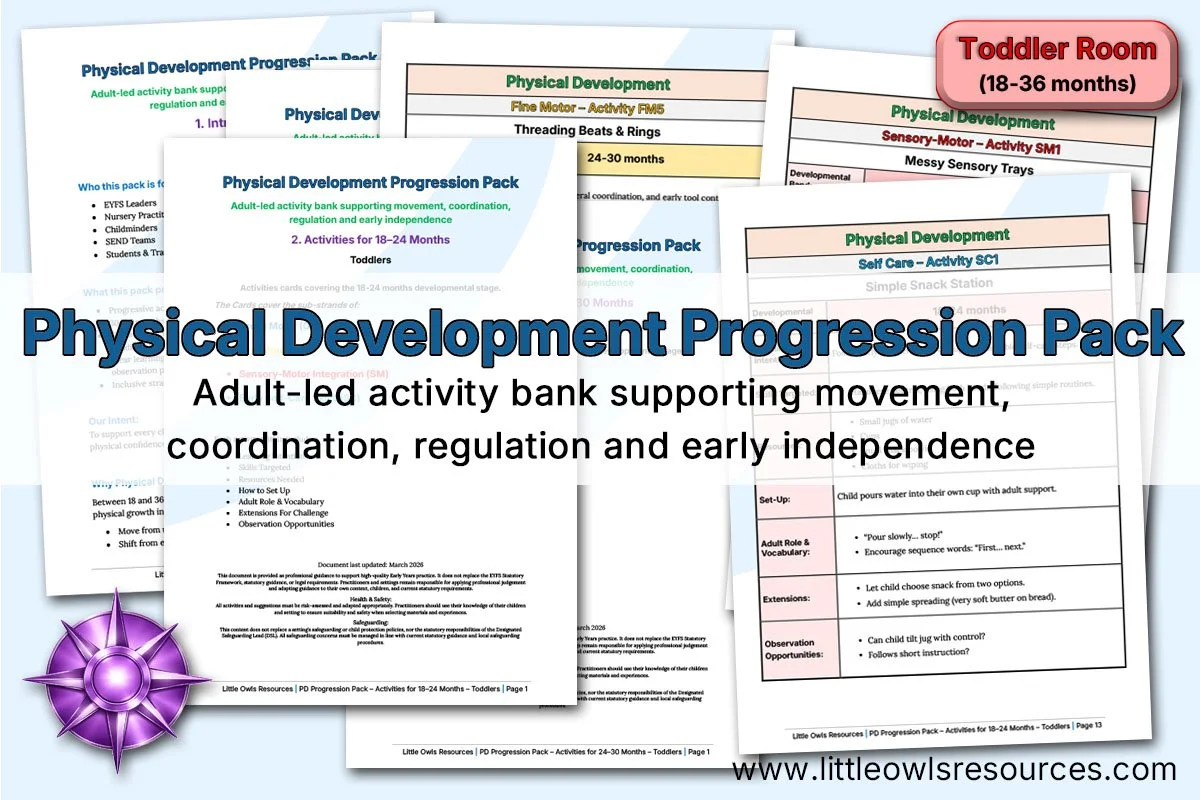
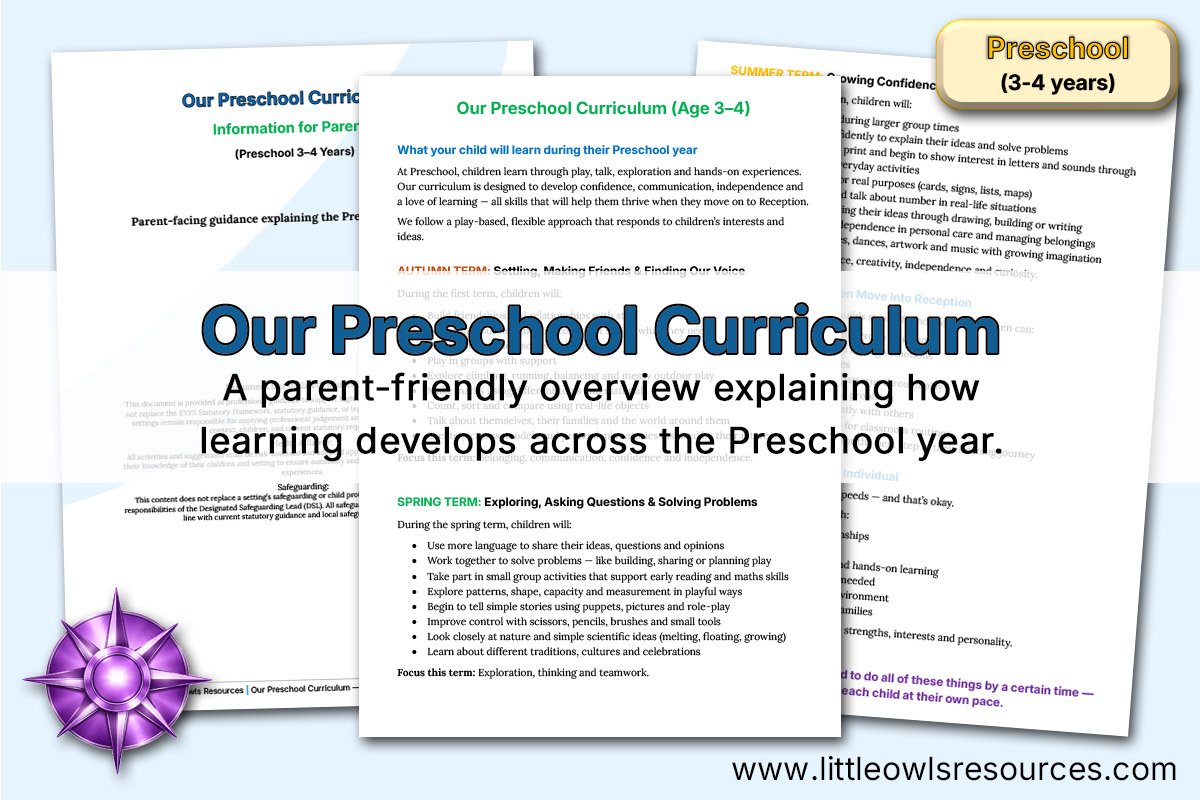
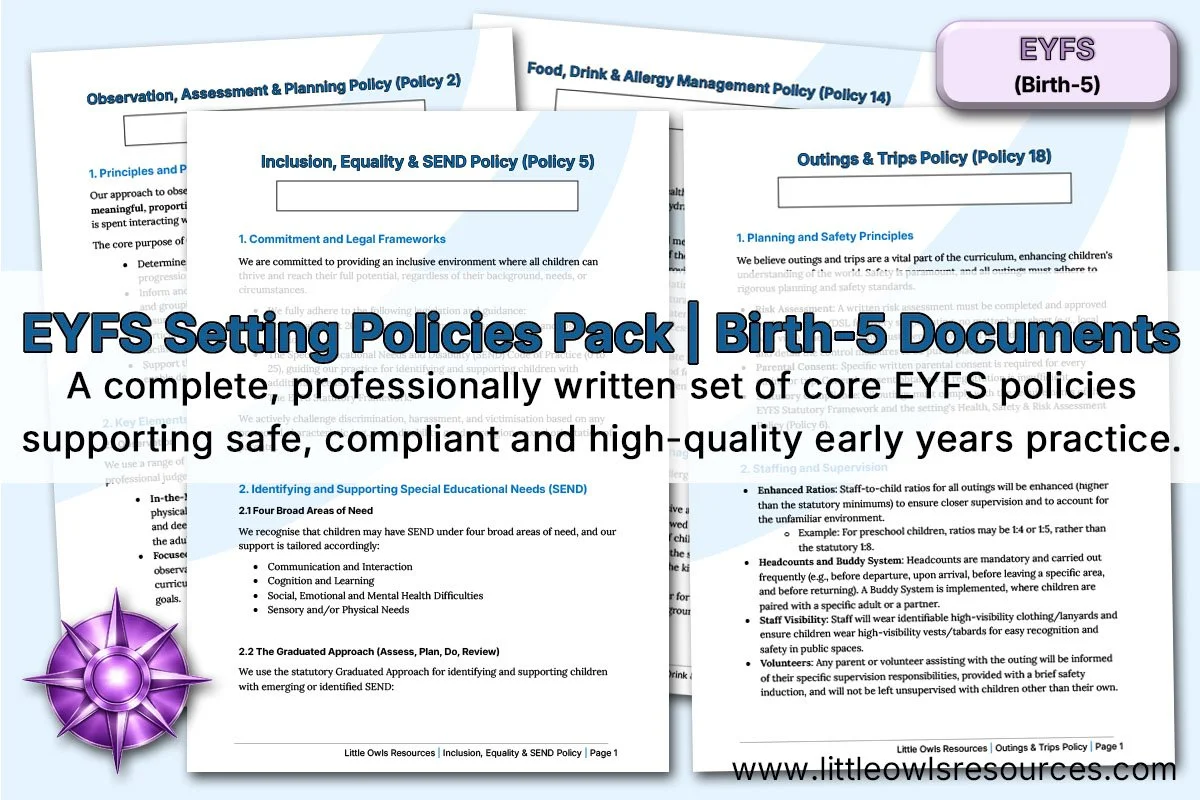
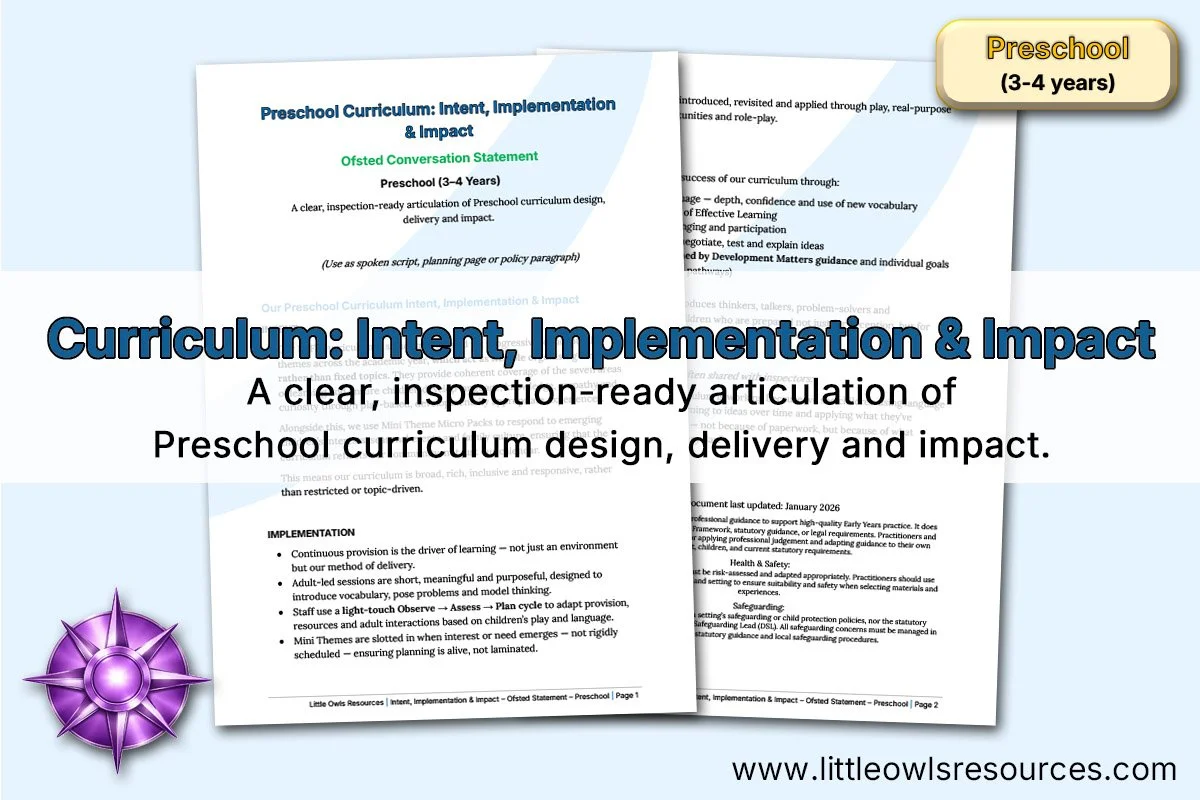
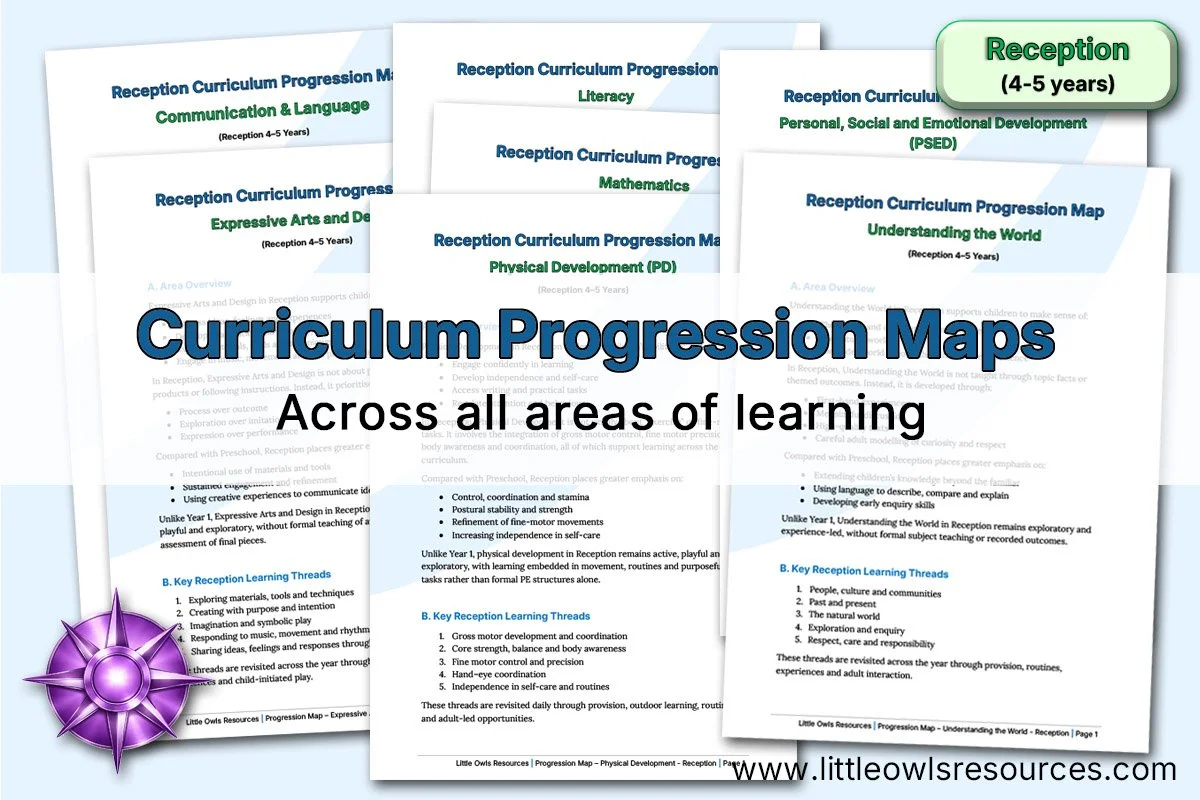
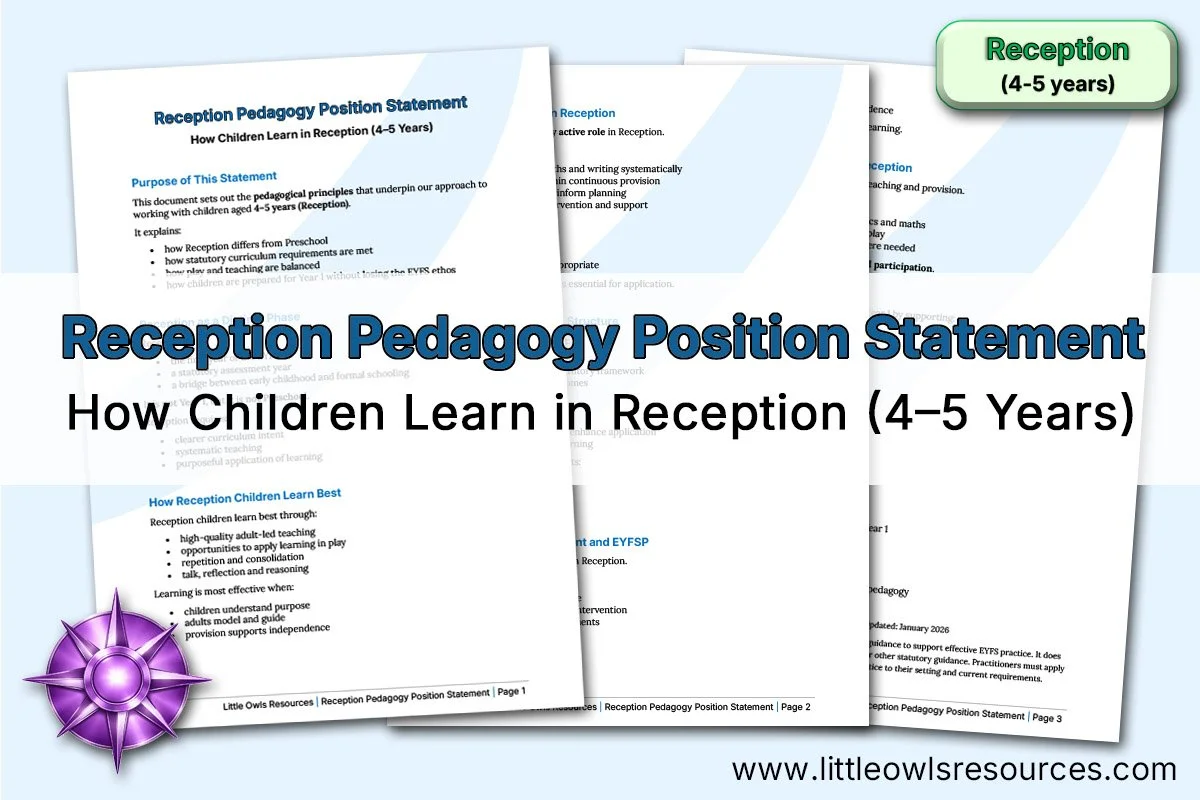
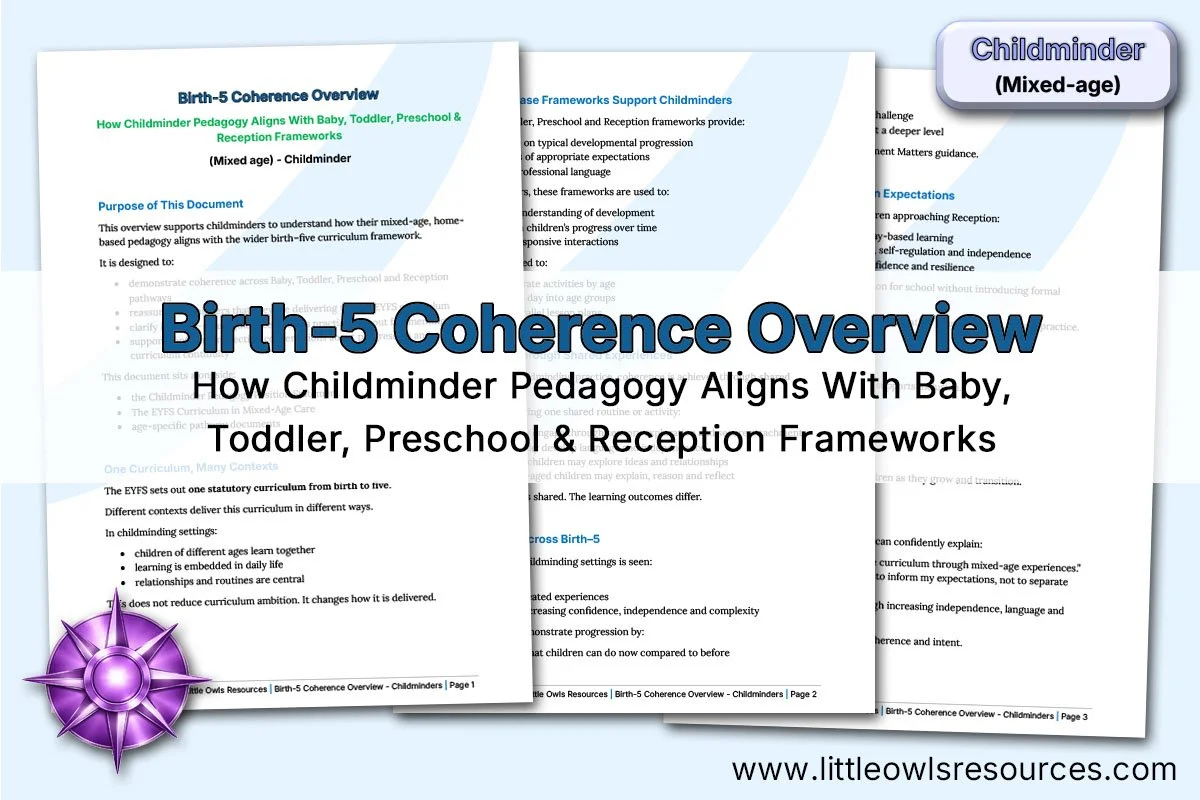
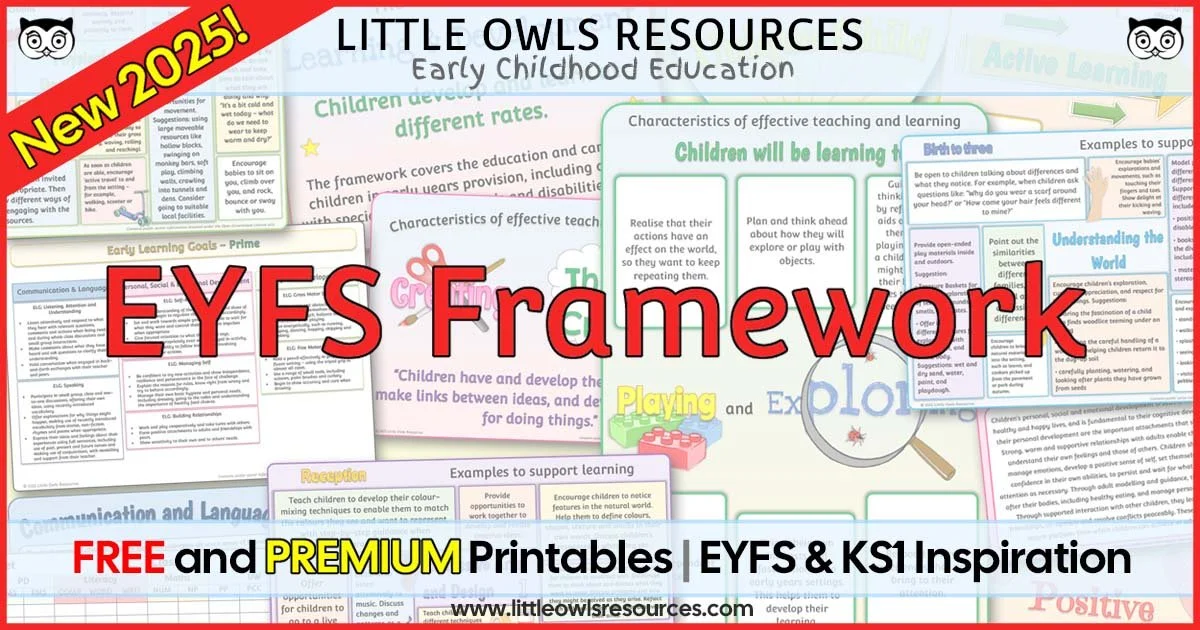
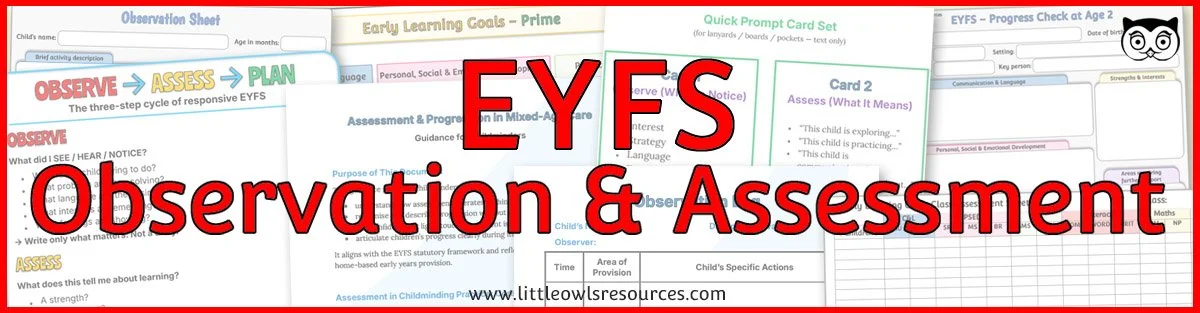
Above is a small selection of our EYFS observation & assessment resources.
In the Early Years, observation and assessment are about understanding children — not measuring them.
High-quality practice is:
observation-led
responsive
focused on wellbeing, engagement and development over time
This hub brings together:
↪ age-specific observation and assessment guidance
↪ practical templates and tools
↪ statutory assessment support
↪ curriculum and progression references
EYFS Curriculum Observation & Assessment Materials
📌 Jump to Section
❓ What Does Observation & Assessment Mean in the EYFS?
🧭 Observation & Assessment by Age & Stage
👀 Observation & Responsive Planning
🔄 The Observation–Assessment–Planning Cycle (OAP)
📘 Statutory Assessment Requirements
🌉 Transitions & Progress Summaries
🎒 School Readiness in the EYFS
🎯 Intent, Implementation & Impact
📝 Observation & Assessment Templates
🤝 SEND & Inclusive Observation
⭐ Final Positioning Statement
🔤 EYFS Terminology Glossary
🧰 Additional Planning Support Materials
➕ Further Support
❓ What Does Observation & Assessment Mean in the EYFS?
In the EYFS:
observation is continuous and part of everyday interaction
assessment is proportionate and meaningful
development is non-linear and individual
Observation helps practitioners to:
understand how children are feeling and learning
notice patterns over time
respond through interaction, routines and provision
Assessment is used to:
support understanding
identify when additional support may be helpful
communicate with families and professionals
It is not used to:
track children against rigid expectations
produce excessive evidence
compare children
Free EYFS Observation & Assessment Resources
(Click on the image below to find out more)
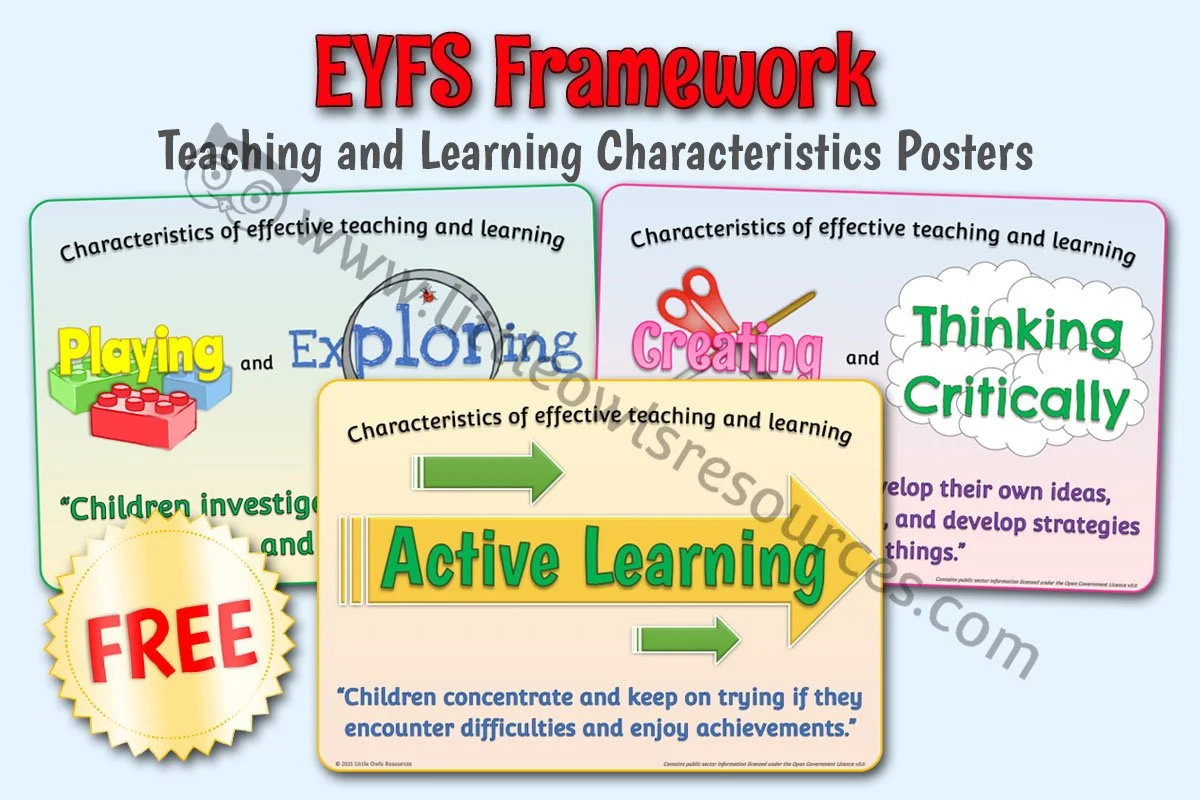
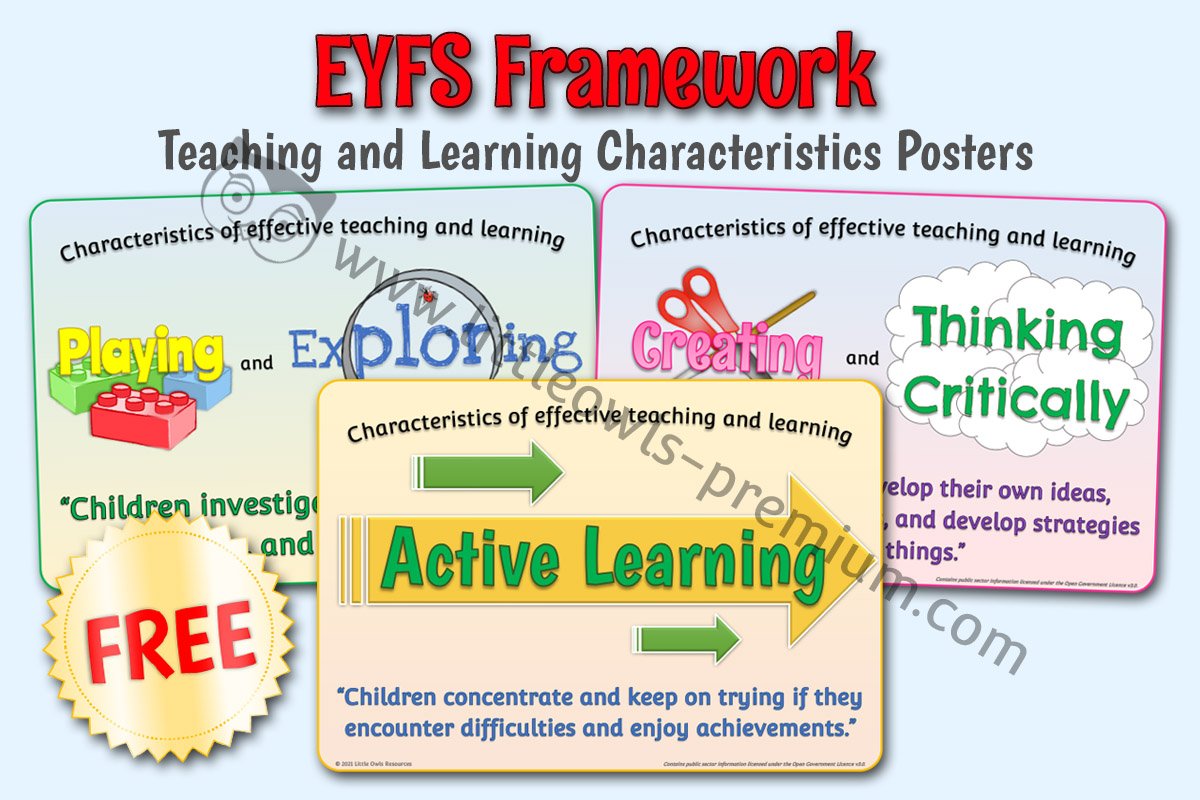
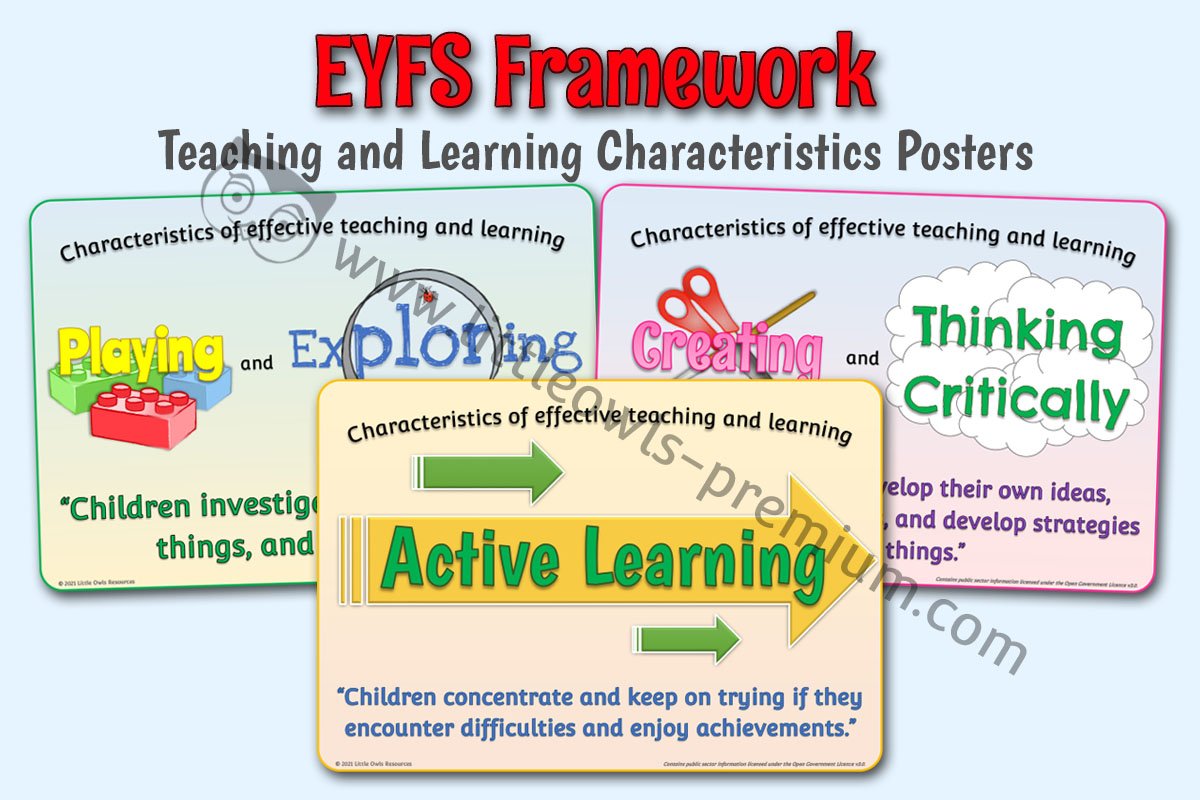
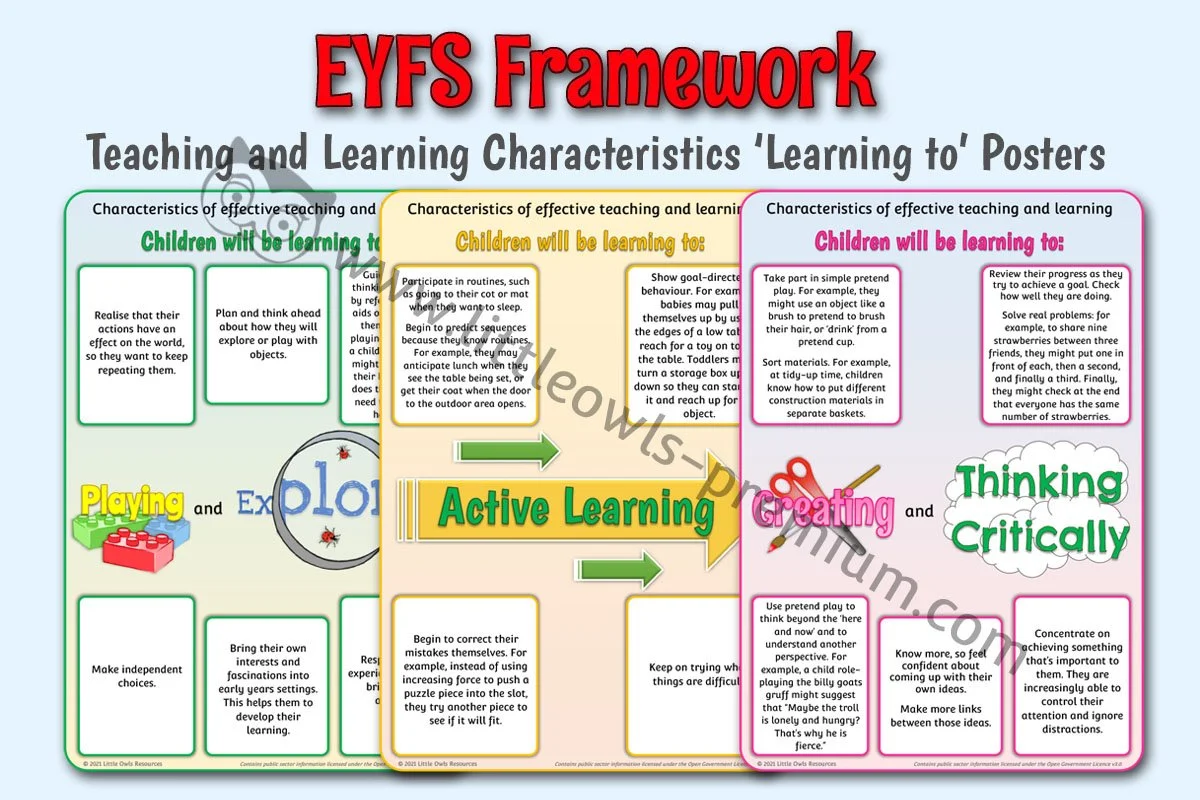
A4 poster for each of the ‘Three Characteristics of Effective Teaching and Learning’ outlined within the EYFS Framework.
playing and exploring - children investigate and experience things, and ‘have a go’
active learning - children concentrate and keep on trying if they encounter difficulties, and enjoy achievements
creating and thinking critically - children have and develop their own ideas, make links between ideas, and develop strategies for doing things
We hope you find this helpful!
MORE ‘EYFS FRAMEWORK’ RESOURCES
The above description and files below contain public sector information licensed under the Open Government Licence v3.0.
Original artwork drawn by Sara Murphy and final digital resources created by Stuart Murphy. COPYRIGHT ON ALL OF THE RESOURCES HOUSED ON THIS WEBSITE IS HELD BY ‘LITTLE OWLS RESOURCES’. OUR RESOURCES (INCLUDING THE IMAGES WITHIN THEM), CANNOT BE SHARED OR SOLD COMMERCIALLY.
DOWNLOAD EDITABLE (DOCX)
DOWNLOAD NON-EDITABLE (PDF)
DOWNLOAD NON-EDITABLE (Zipped JPEGs)
<<-BACK TO ‘EYFS FRAMEWORK’ MENU
<<-BACK TO ‘GET ORGANISED’ SAMPLES MENU
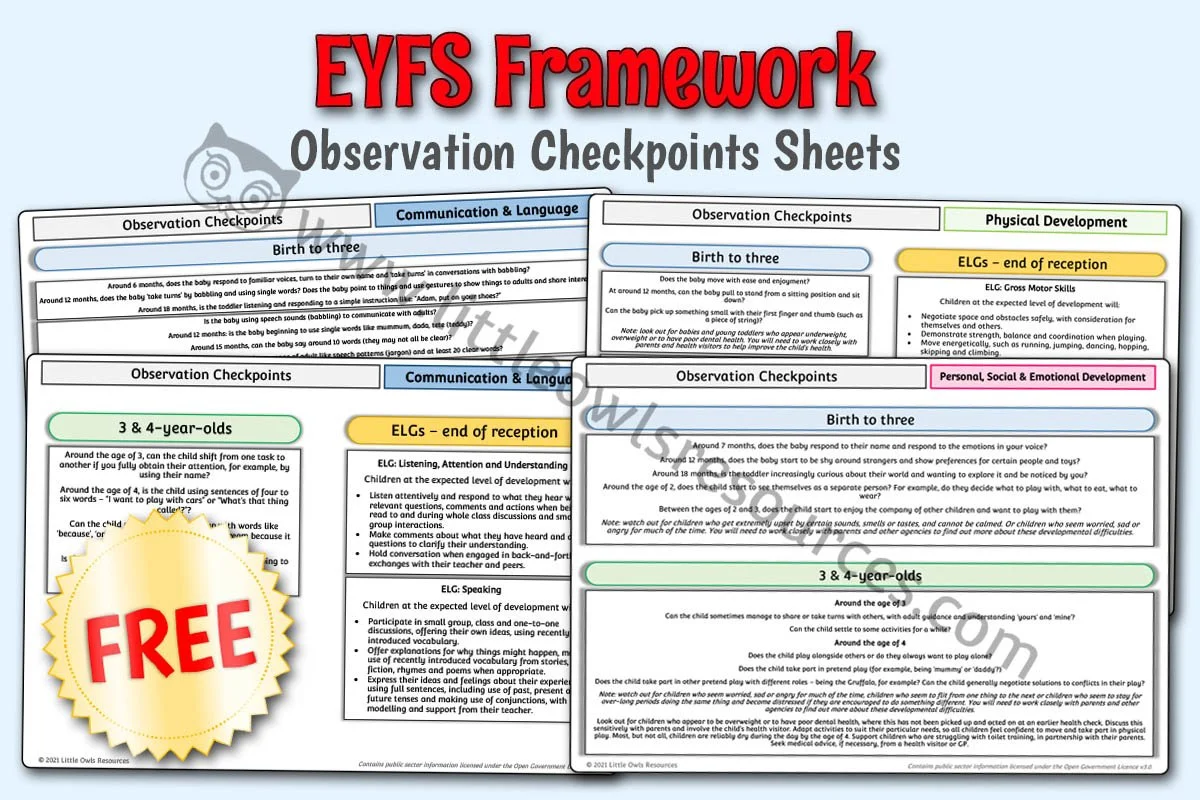
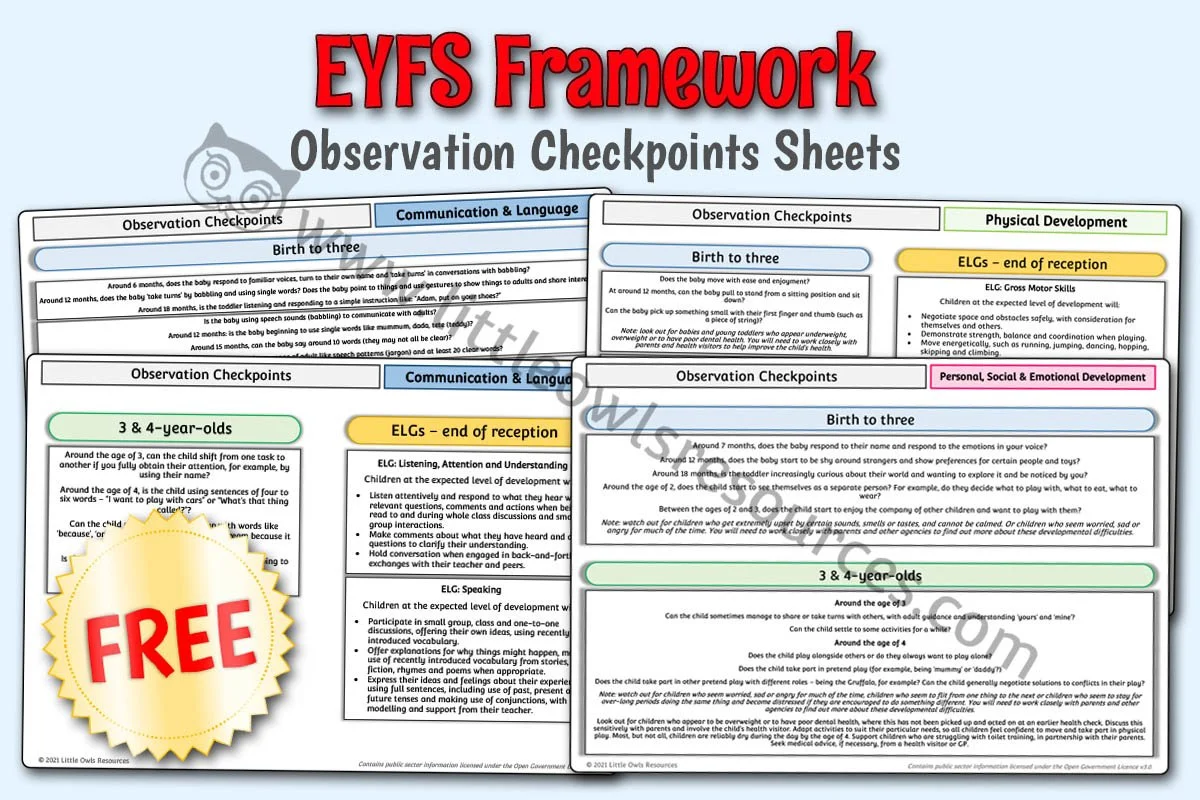
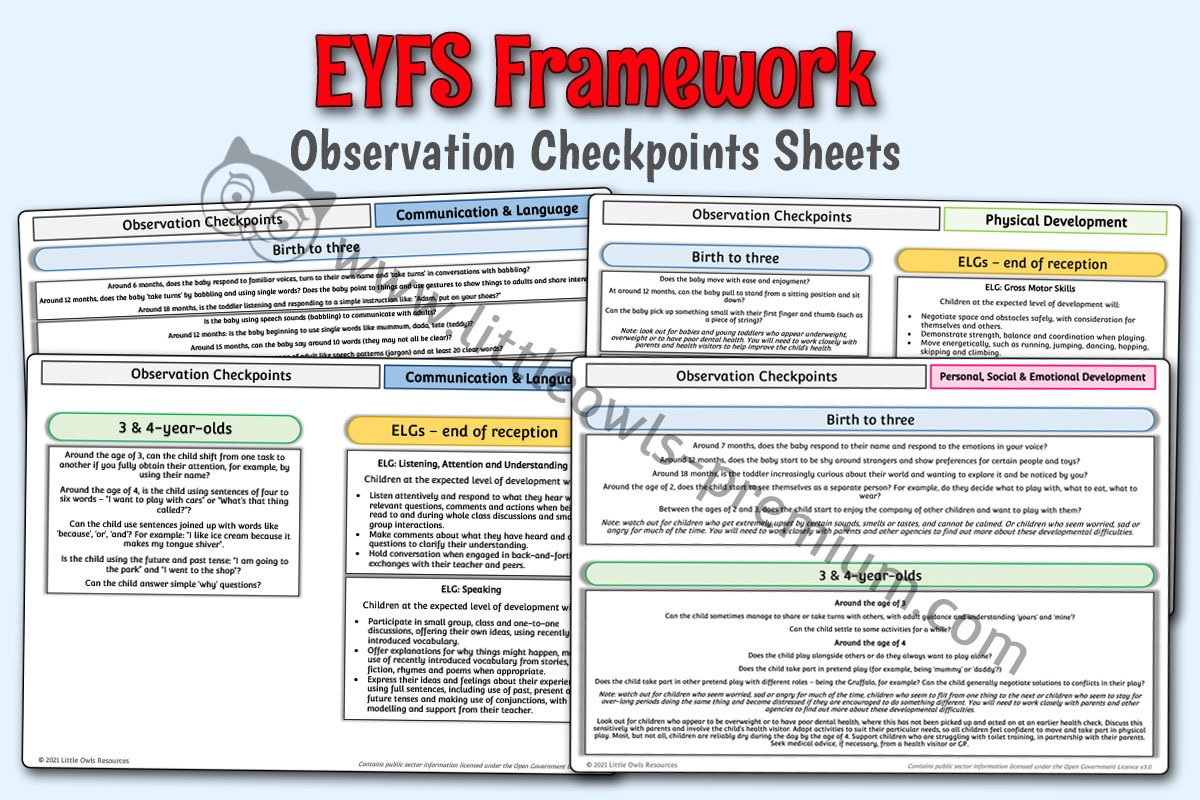
Development Matters incorporates ‘Observation Checkpoints’ for the Prime areas (Communication and Language, Physical Development & Personal, Social and Emotional Development). We have condensed these checkpoints into handy overview sheets. Plus we have included the ELGs from the EYFS Framework for each of these Prime areas.
We hope you find this helpful!
MORE ‘EYFS FRAMEWORK’ RESOURCES
Files contain public sector information licensed under the Open Government Licence v3.0.
Original artwork drawn by Sara Murphy and final digital resources created by Stuart Murphy. COPYRIGHT ON ALL OF THE RESOURCES HOUSED ON THIS WEBSITE IS HELD BY ‘LITTLE OWLS RESOURCES’. OUR RESOURCES (INCLUDING THE IMAGES WITHIN THEM), CANNOT BE SHARED OR SOLD COMMERCIALLY.
DOWNLOAD EDITABLE (DOCX)
DOWNLOAD NON-EDITABLE (PDF)
DOWNLOAD NON-EDITABLE (Zipped JPEGs)
-
If you are not a member already, become a ‘Free Access’ member here. This will give you access to resources within the ‘Free Sample Resources’ sections at the top of most topic provision pages plus all ‘Special Dates Calendars’.
Find out more about all of our membership options here.
If you are already a member… thank-you!
🧭 EYFS Observation & Assessment Guidance & Tools by Age & Stage
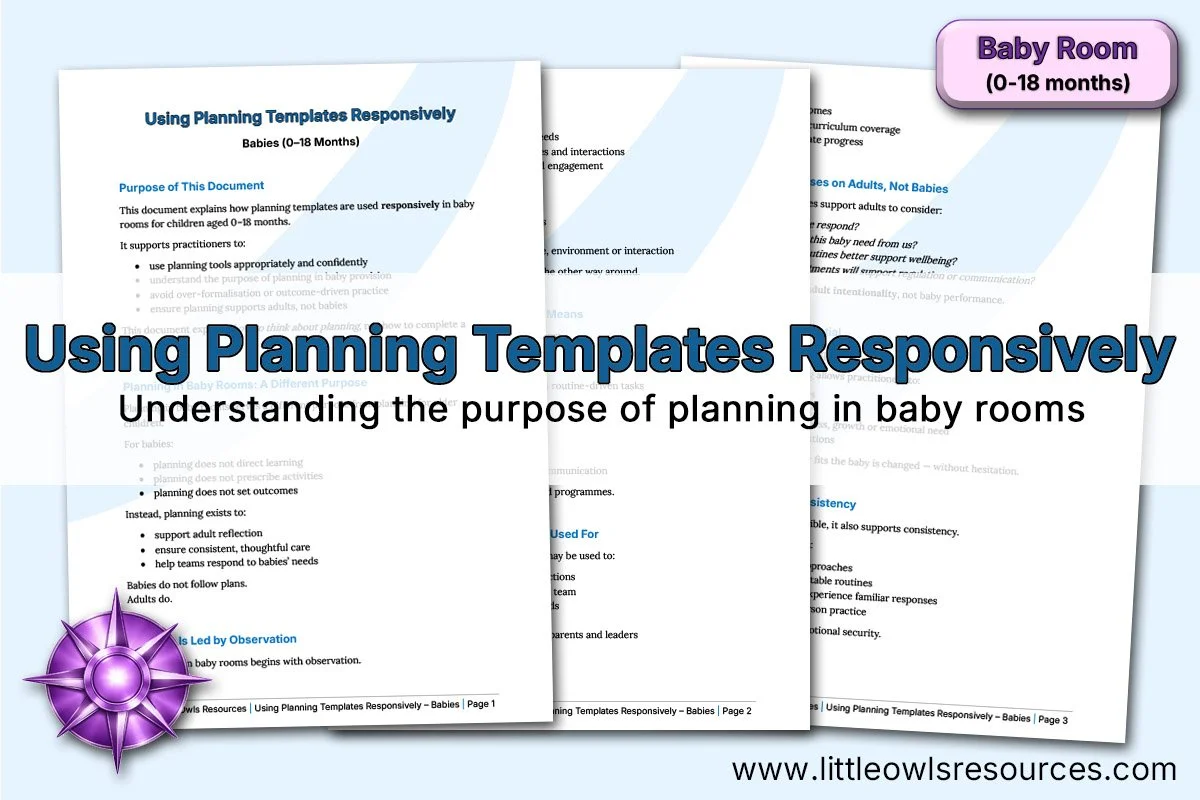
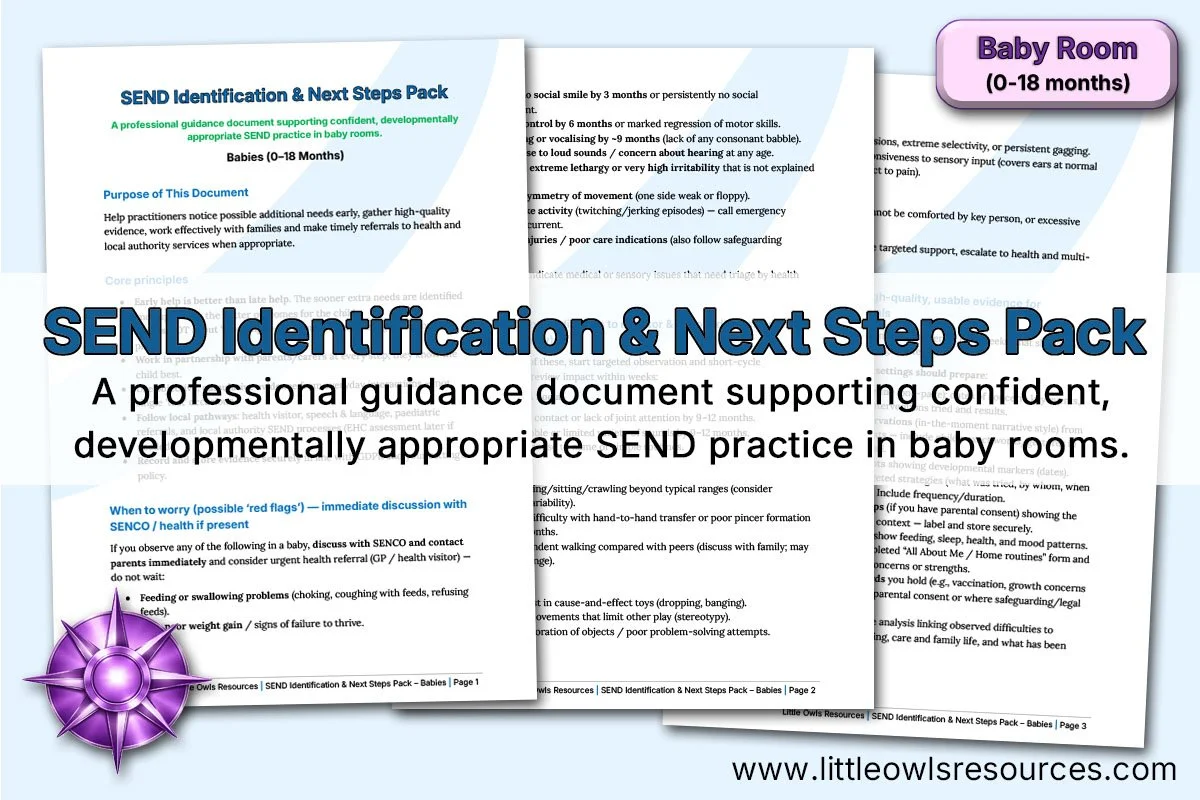
A professional guidance document supporting confident, developmentally appropriate SEND practice in baby rooms.
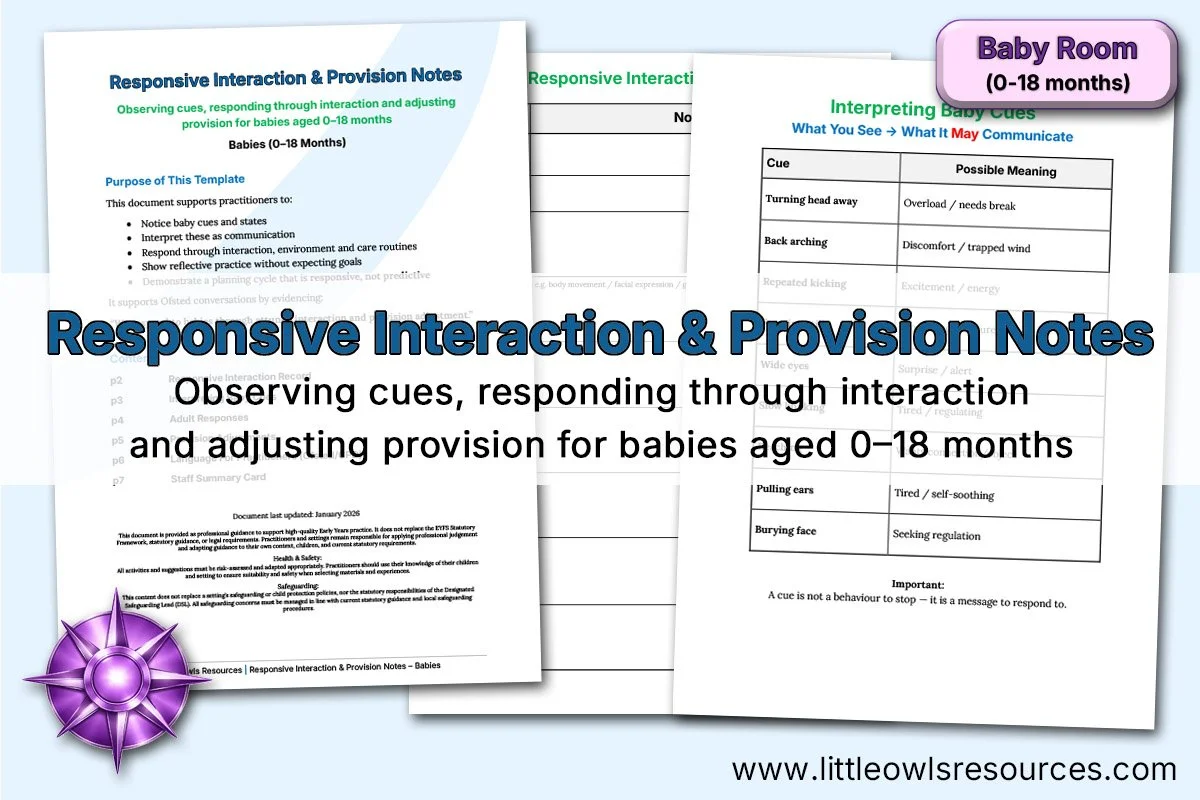
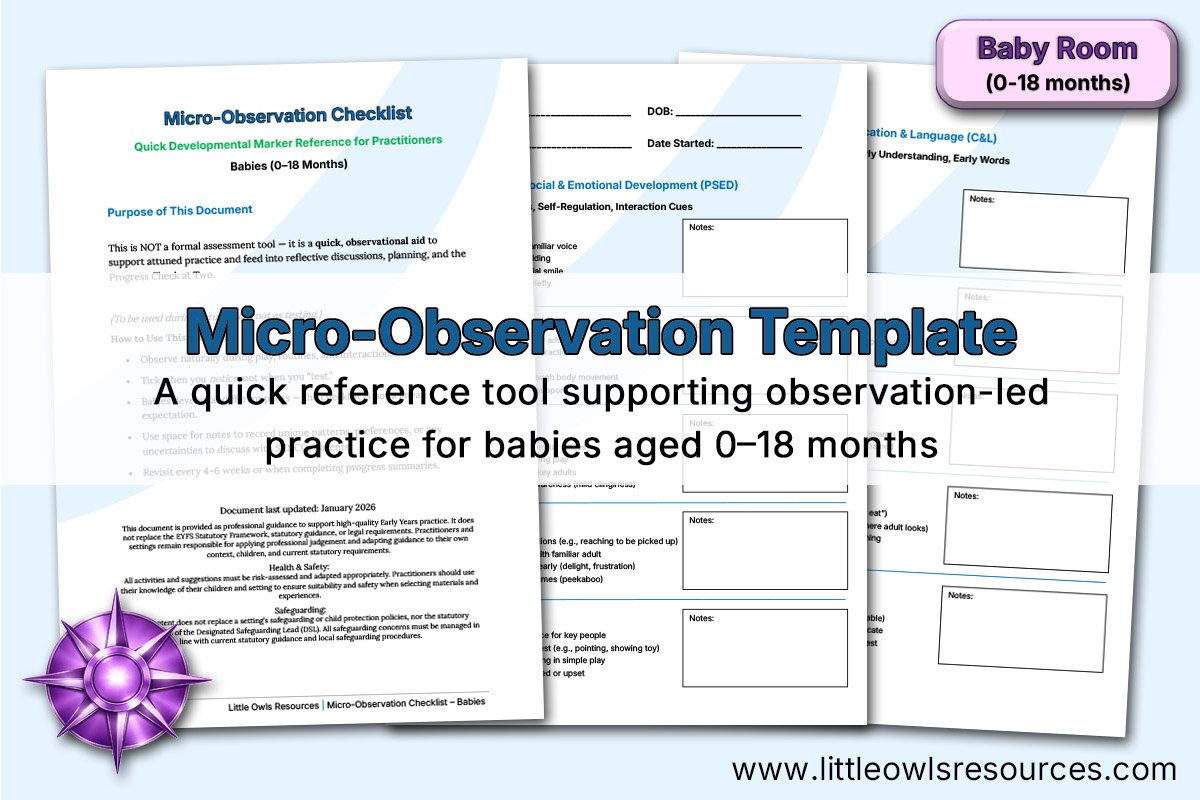
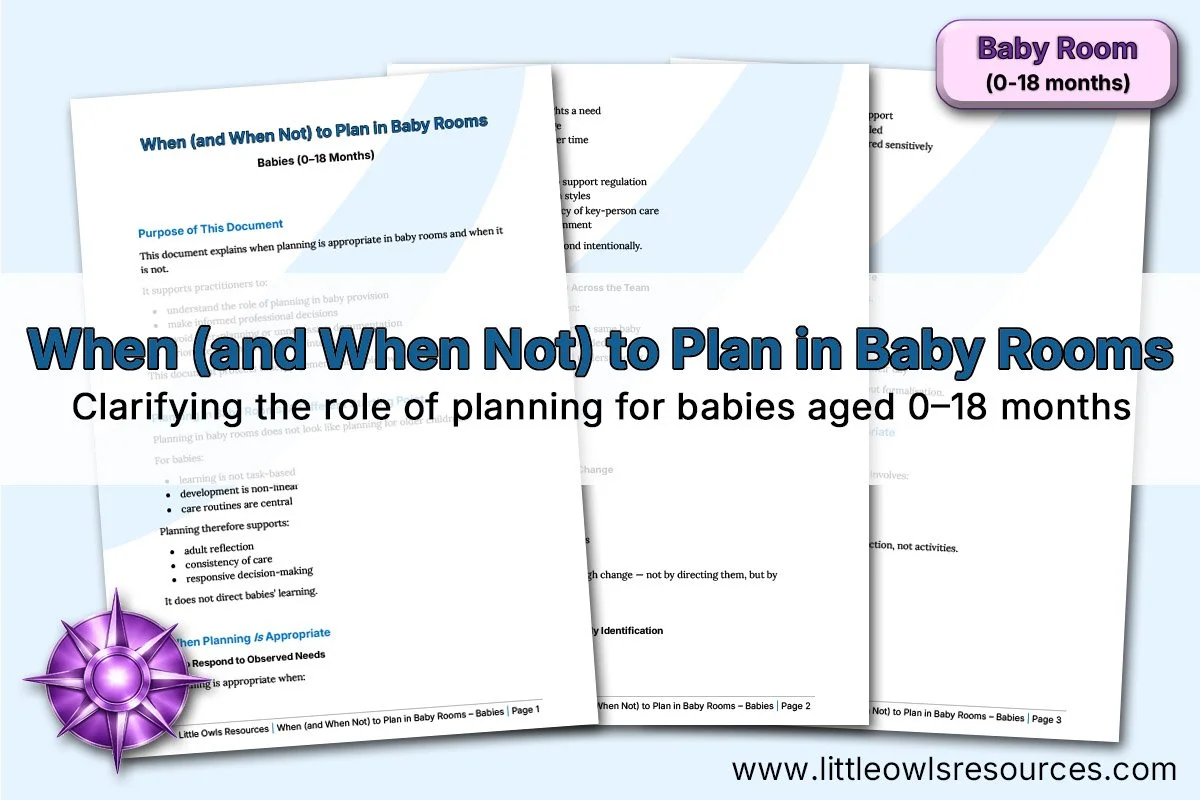
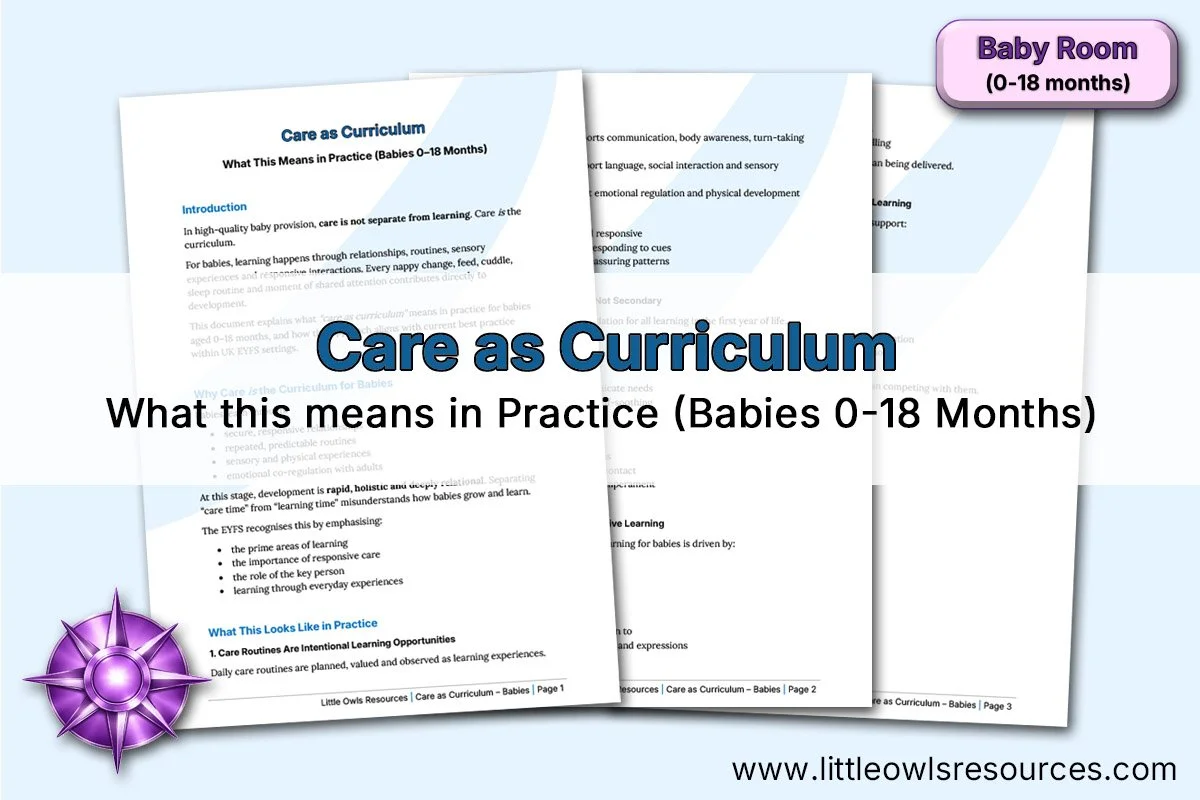
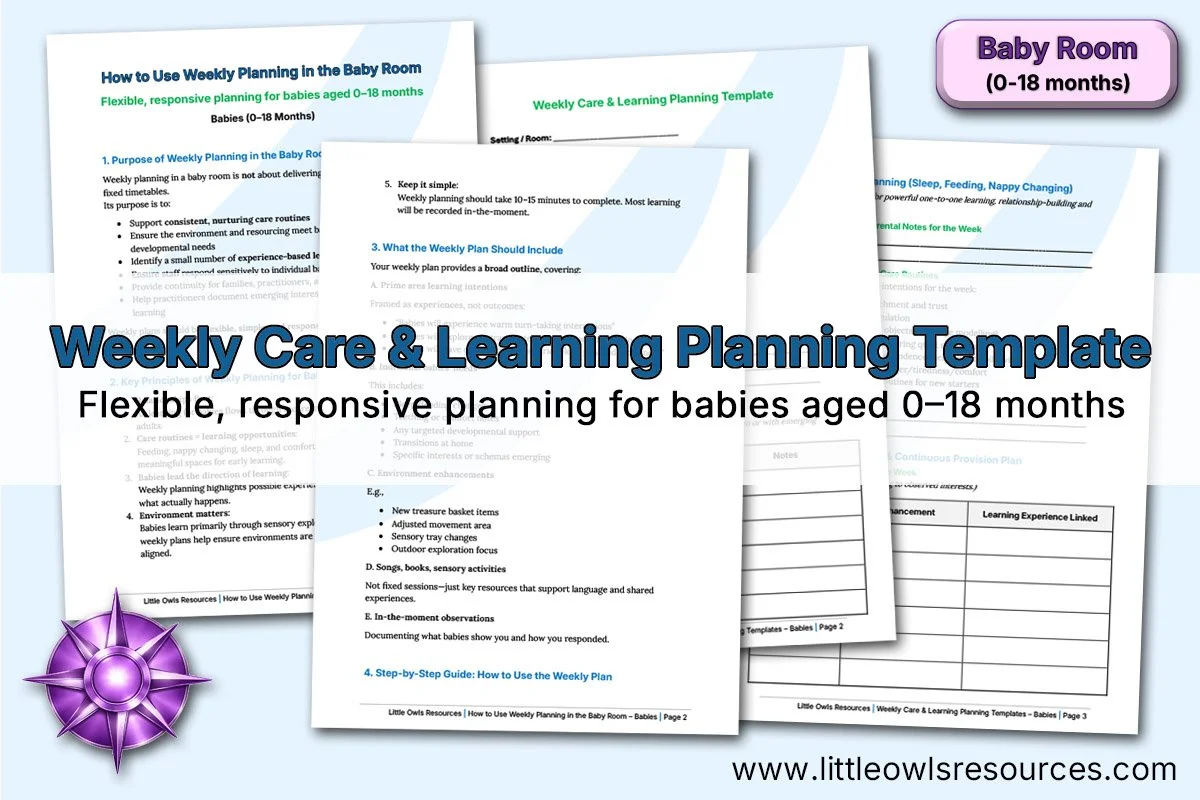
Observing cues, responding through interaction and adjusting provision for babies aged 0–18 months.
Toddler Room | 18 - 36 Months
A practical set of strength-based documents to support secure, consistent transitions from 18–36 month provision into the 3–4 year room.
Quick guidance and practical tools for supporting toddlers (18–36 months) in everyday provision.
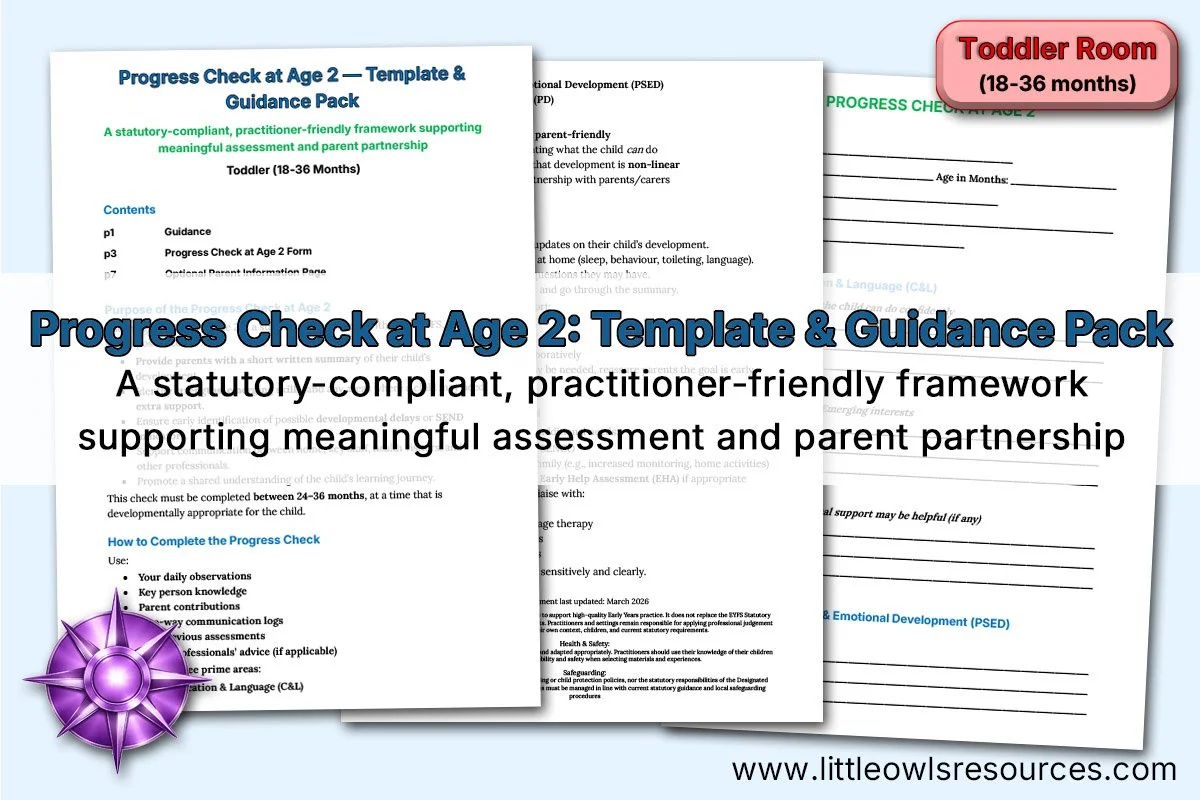
A statutory-compliant, practitioner-friendly toolkit supporting meaningful assessment and parent partnership.
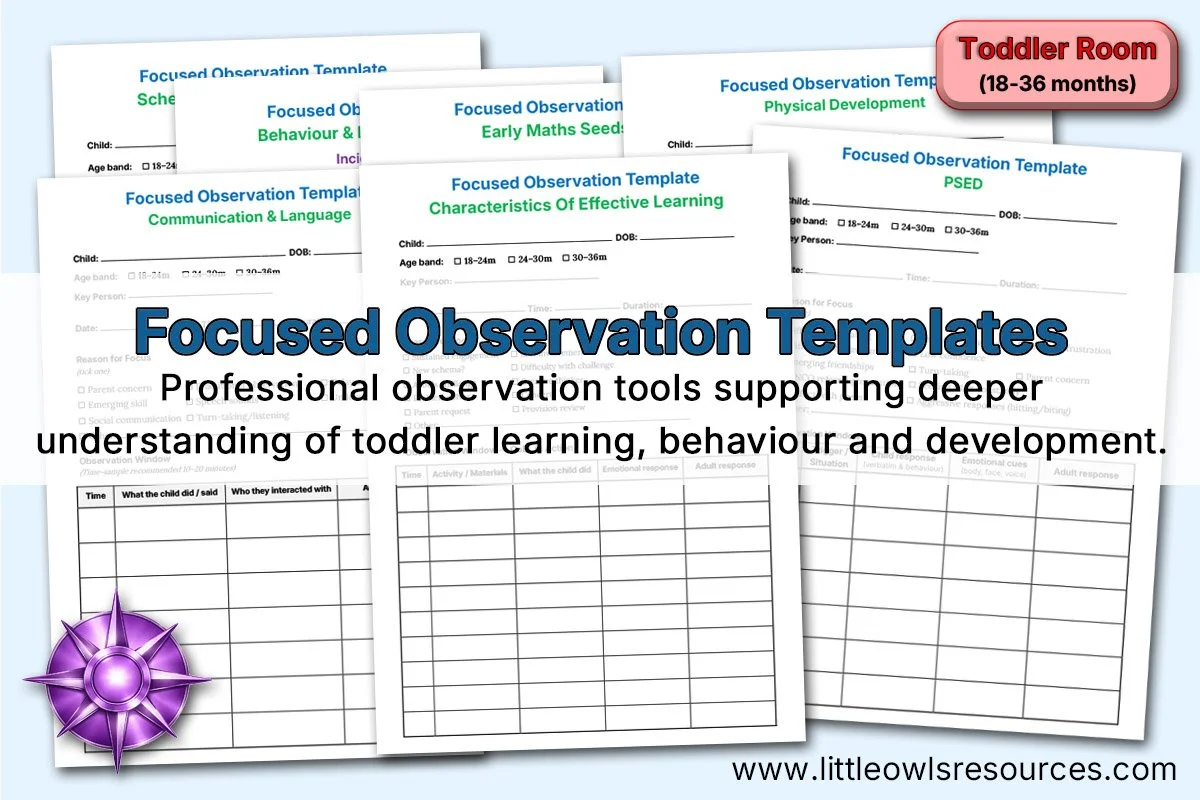
A professional observation tool supporting deep understanding of toddler learning, behaviour and development.
Professional observation tools supporting deeper understanding of toddler learning, behaviour and development.
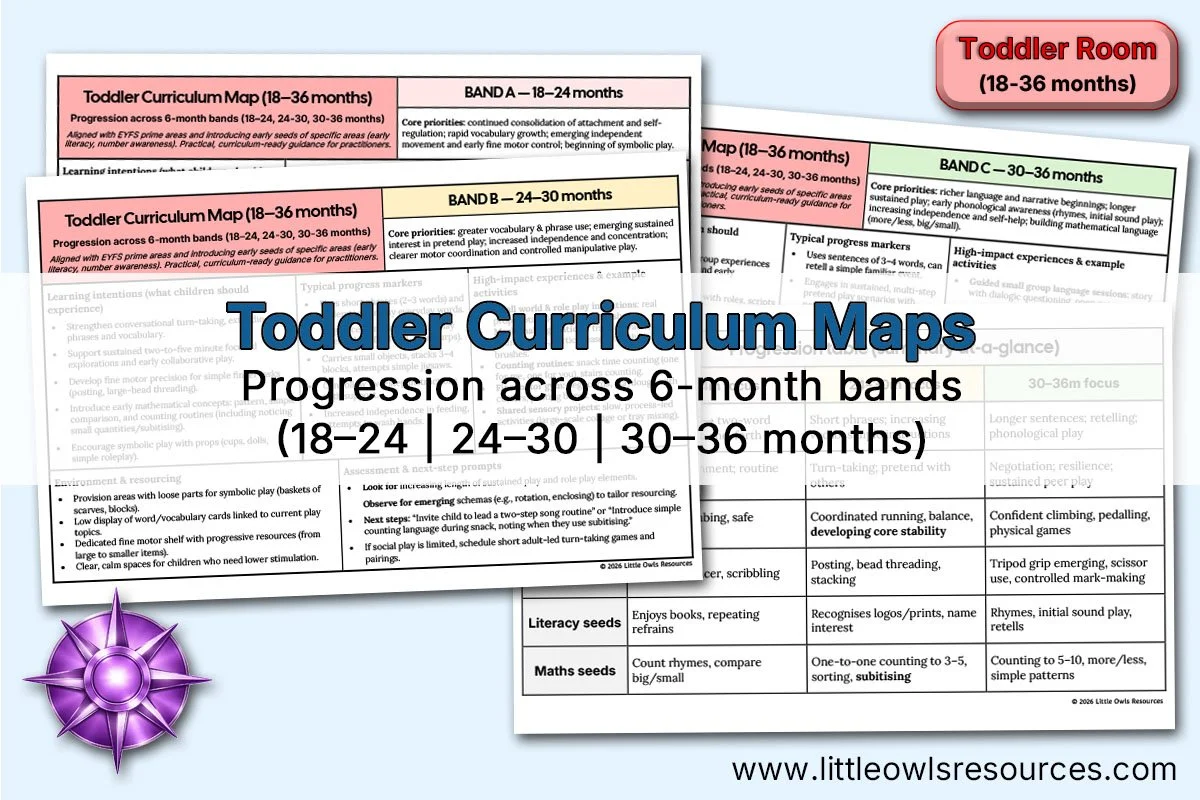
A practitioner-facing reference supporting intentional, developmentally appropriate toddler practice across key strands.
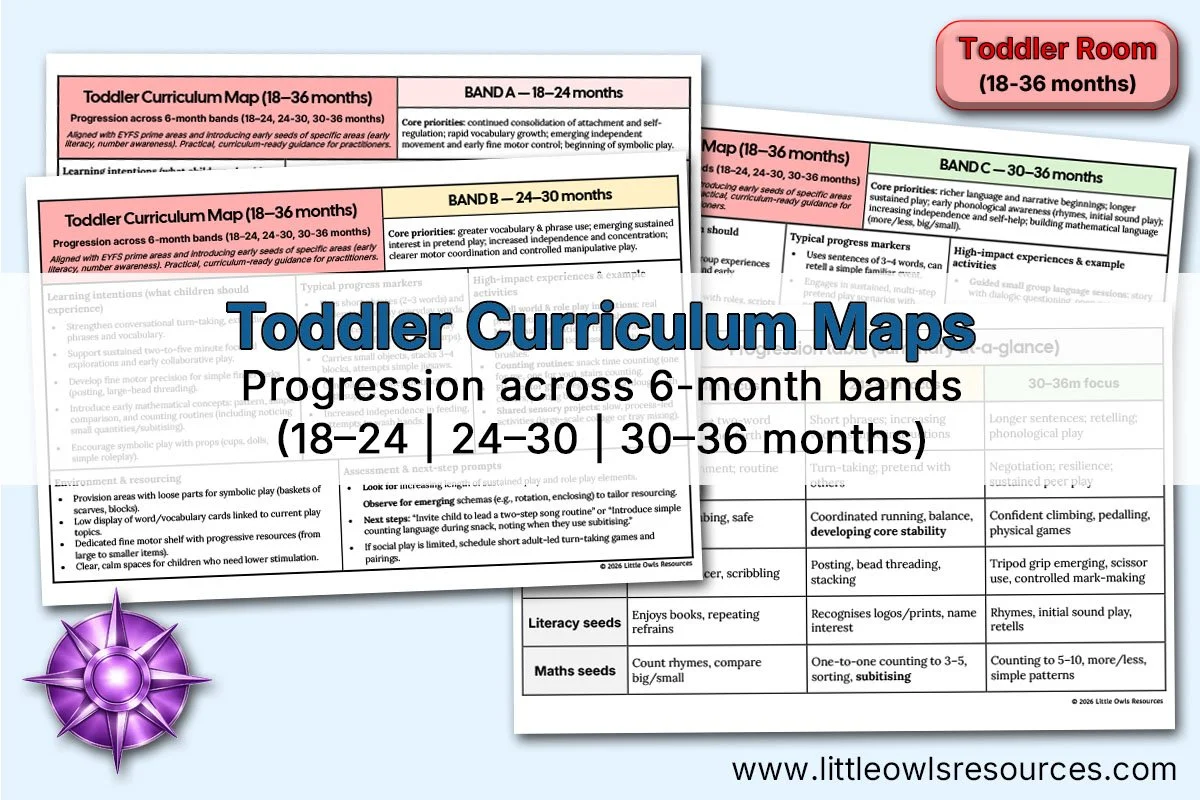
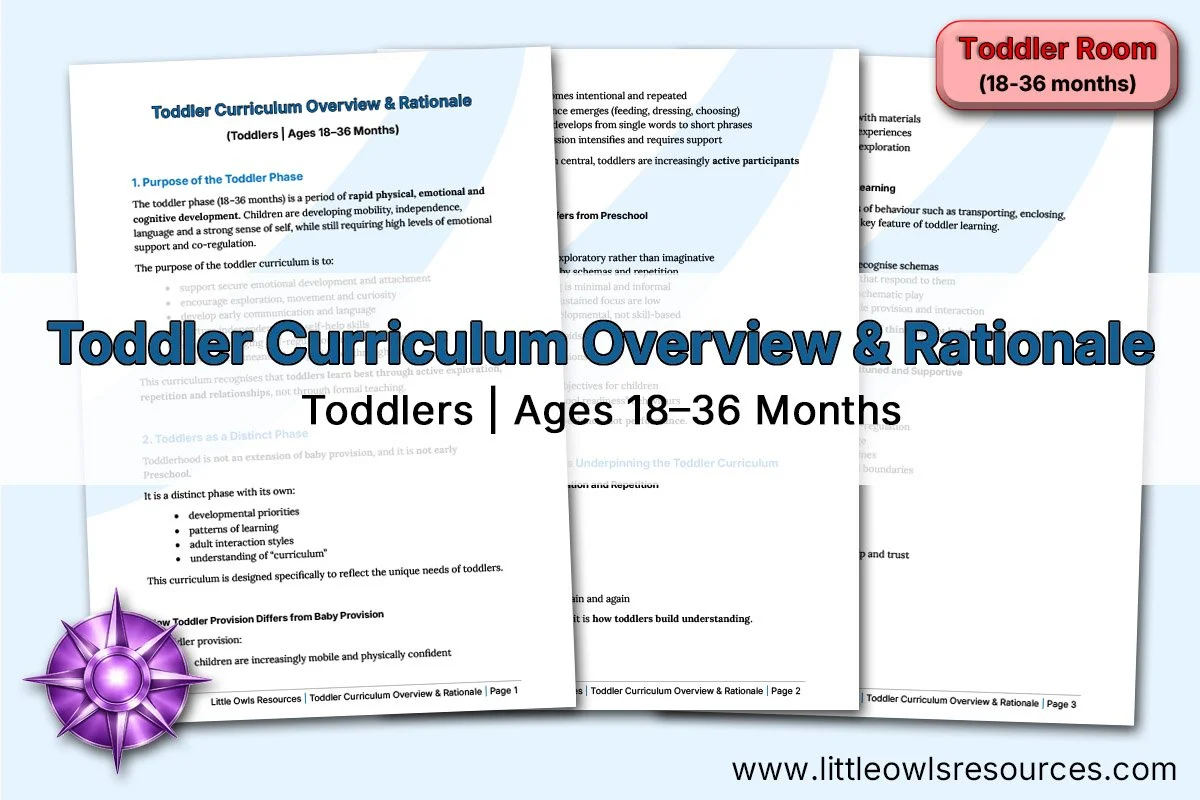
A developmentally informed curriculum overview supporting intentional, child-led toddler practice.
Preschool | 3 - 4 Years
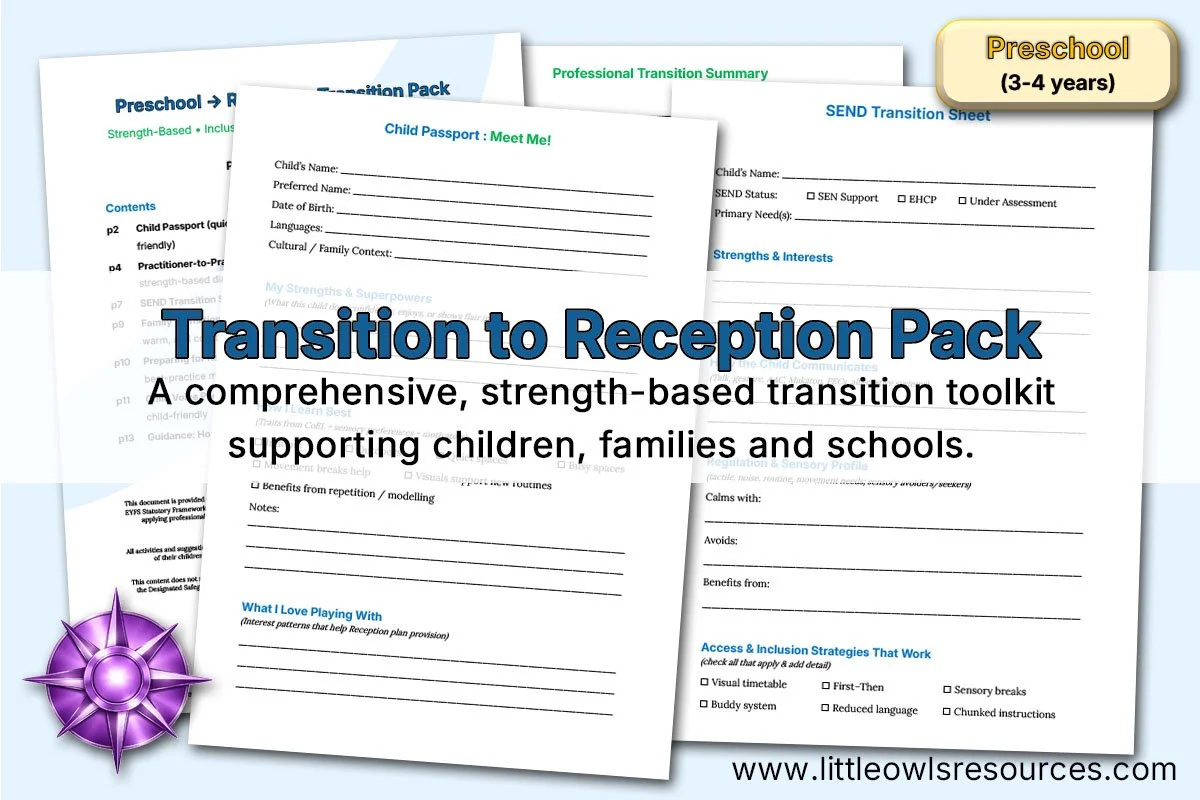
A comprehensive, strength-based transition toolkit supporting children, families and schools.
A professional reporting toolkit supporting meaningful communication with families and smooth transition to school.
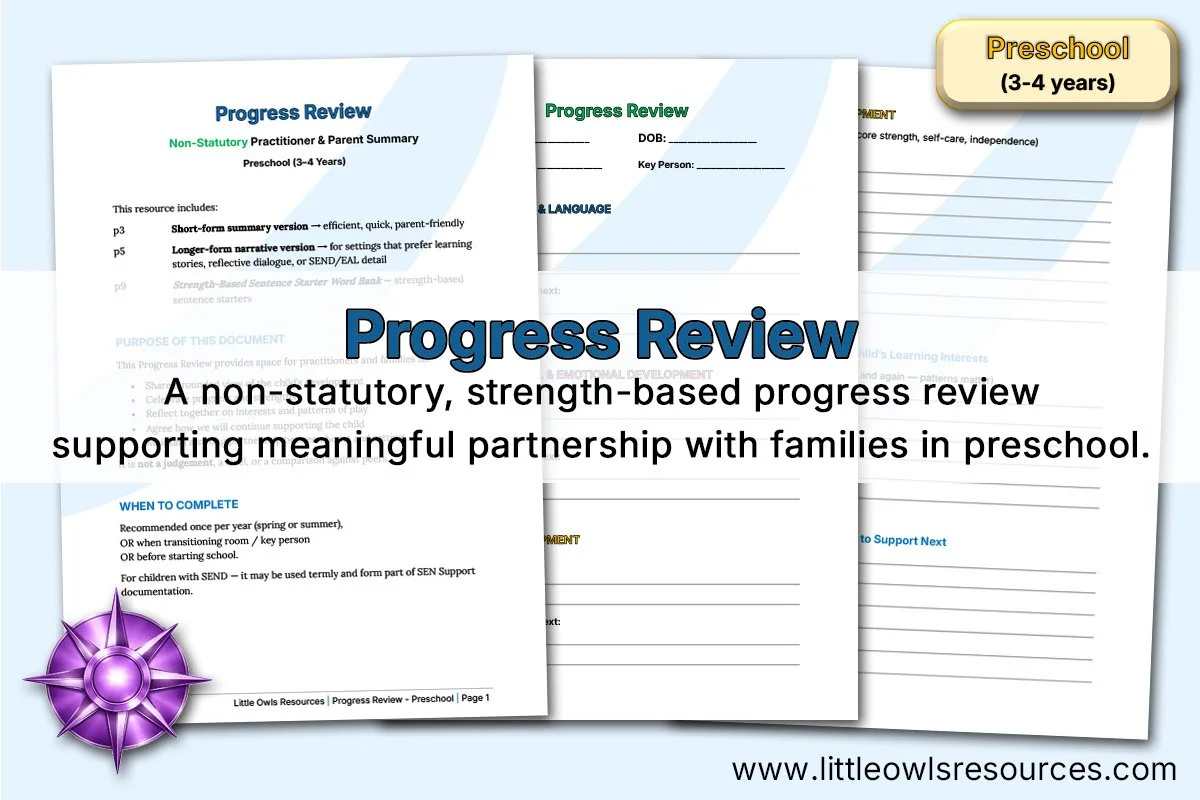
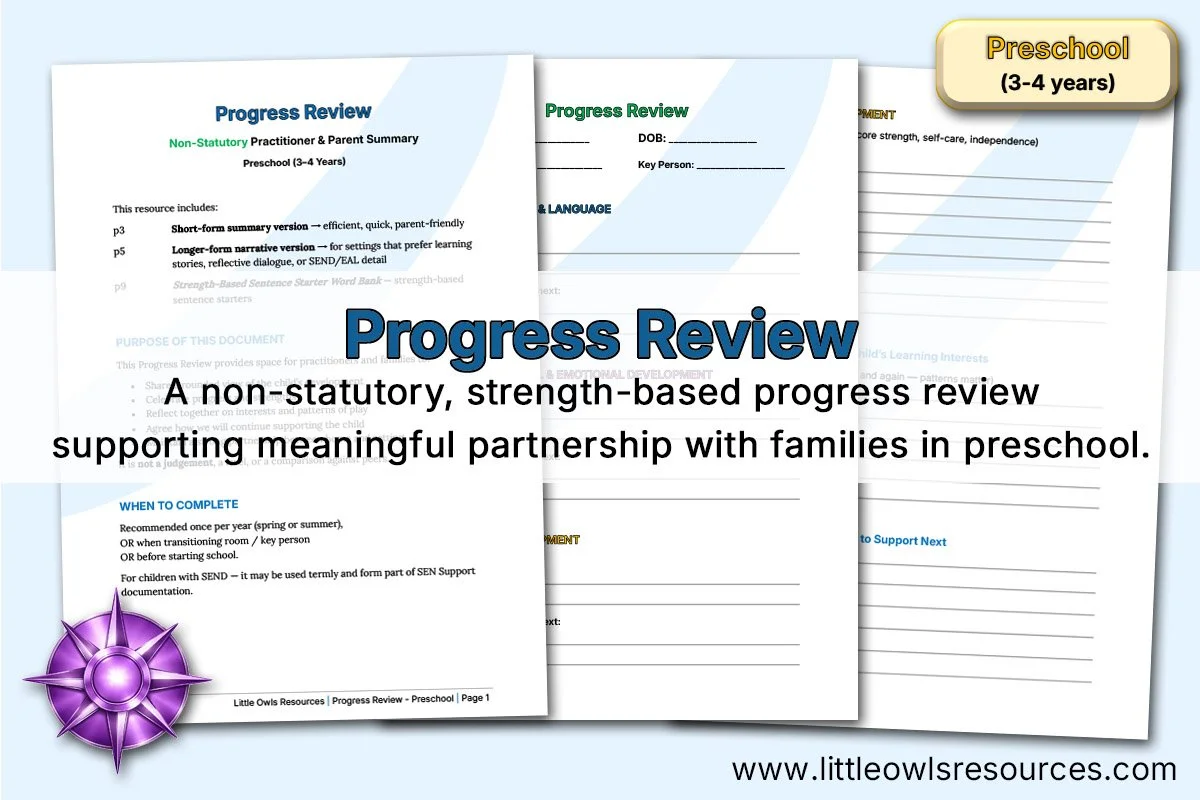
A strength-based progress review supporting meaningful partnership with families in preschool.
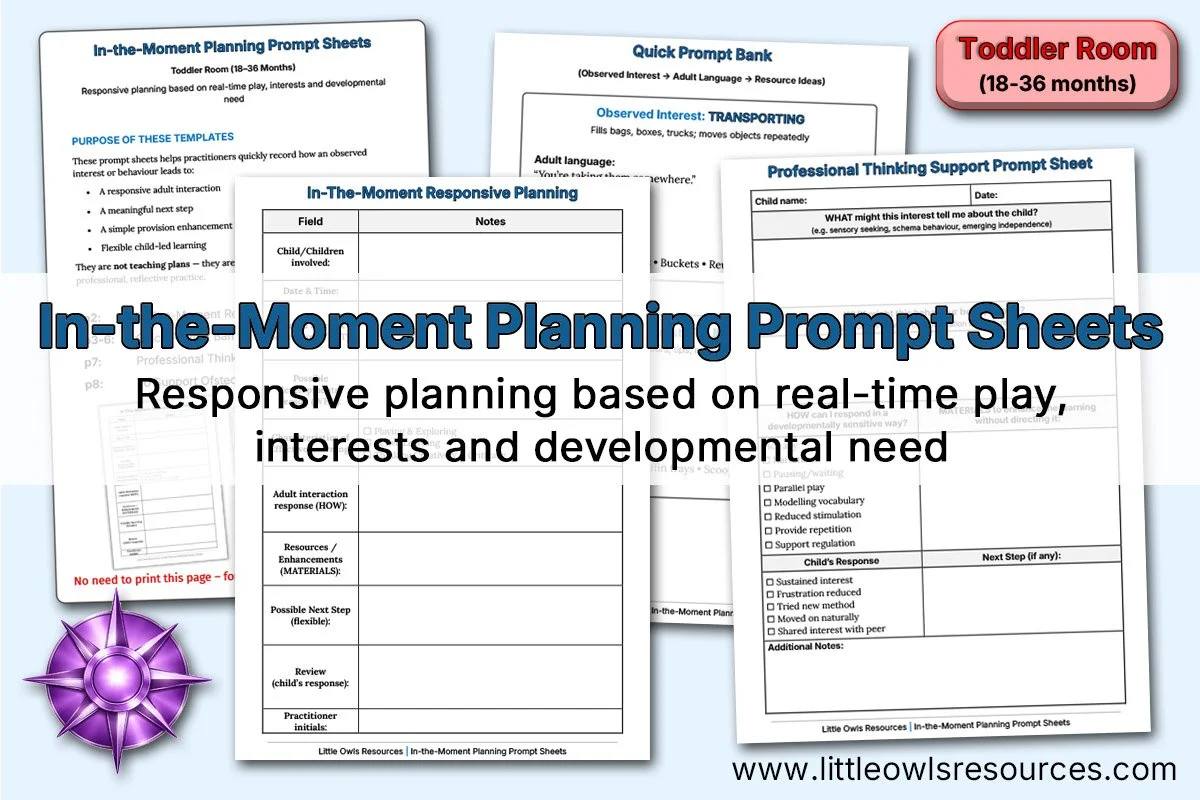
A practical professional toolkit supporting responsive EYFS practice without over-planning.
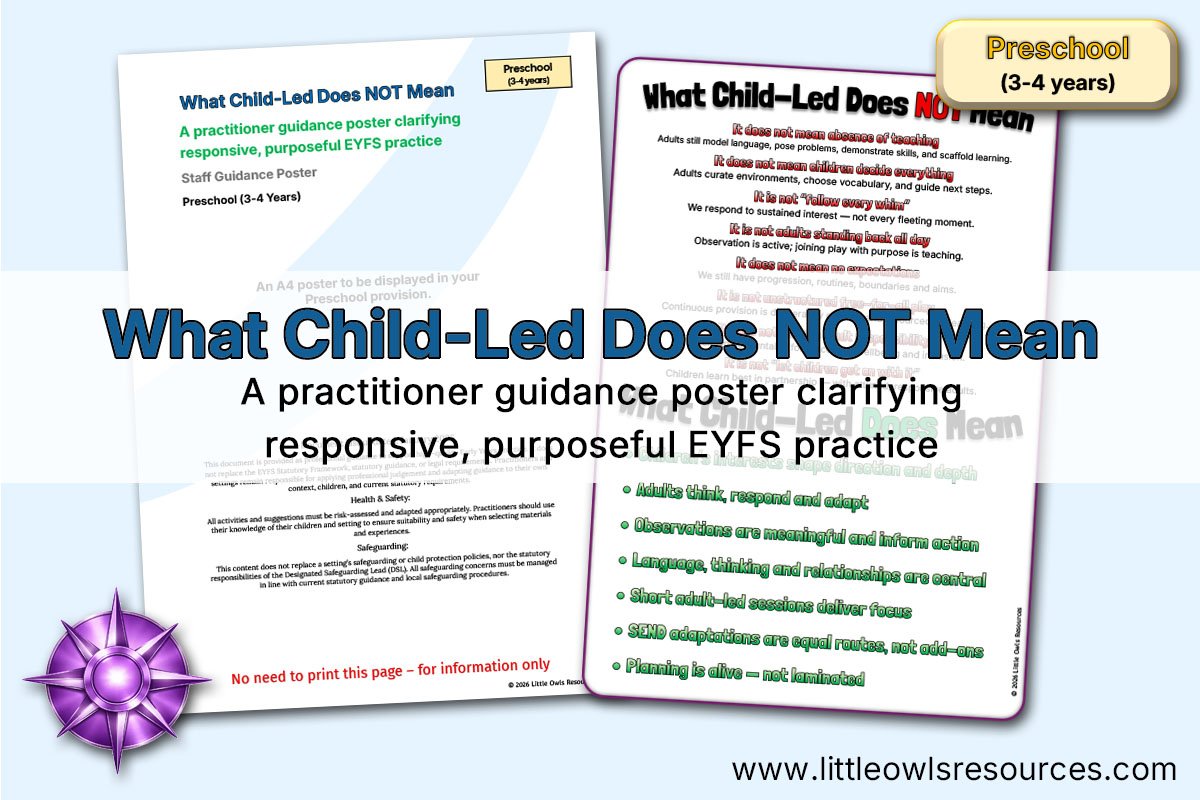
A strengths-led overview supporting observation, reflection and meaningful next steps in a play-based EYFS environment.
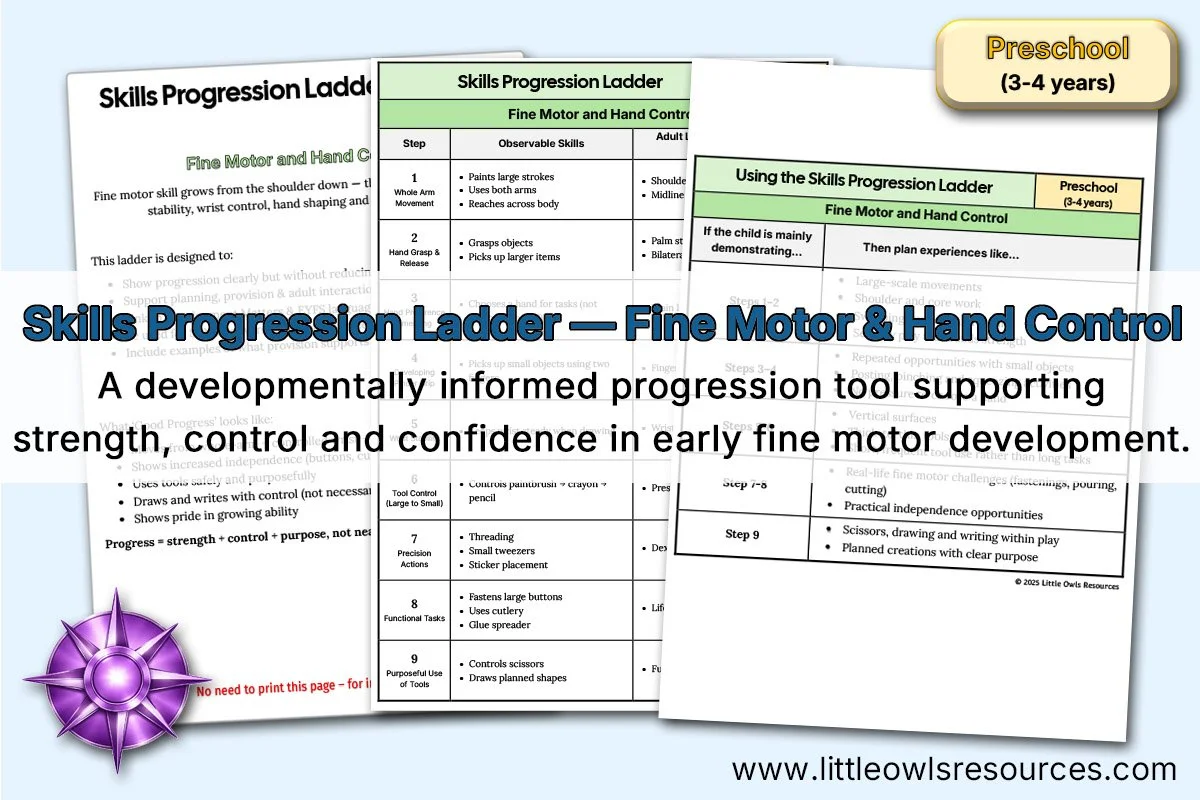
A developmentally informed progression tool supporting strength, control and confidence in early fine motor development.
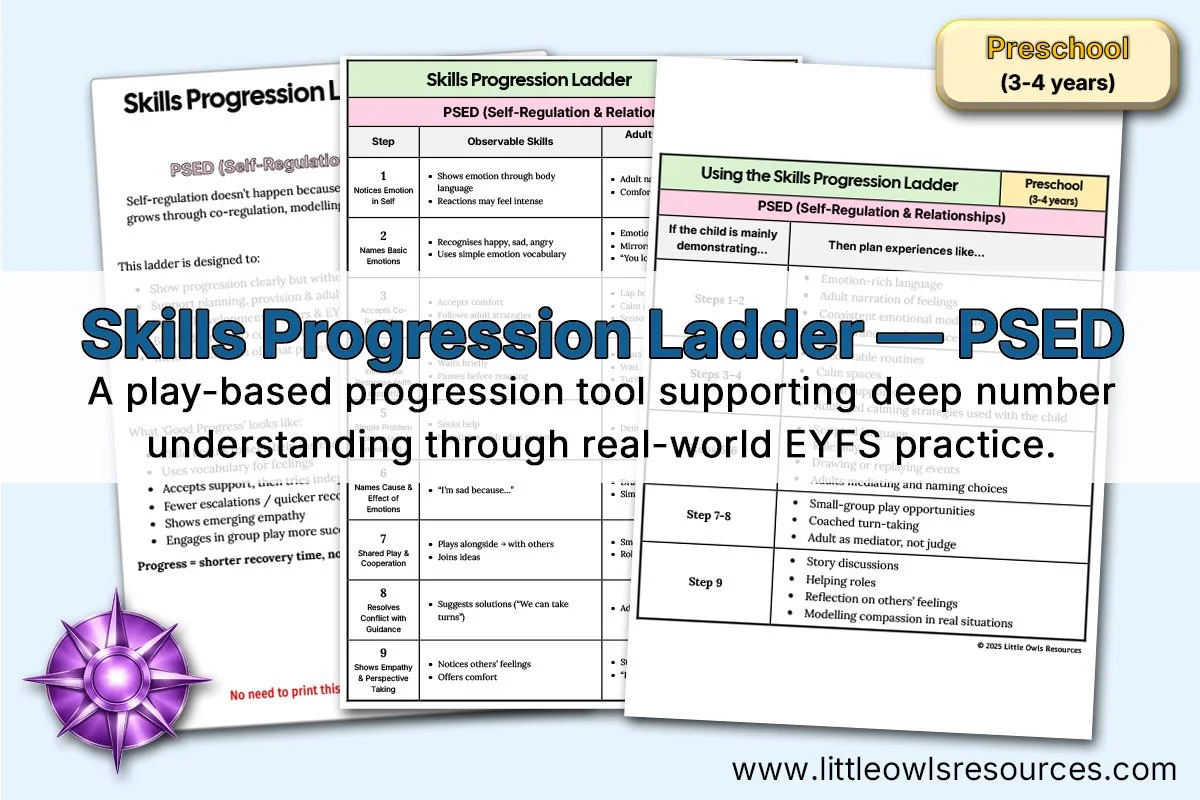
A play-based progression tool supporting deep number understanding through real-world EYFS practice.
A play-based progression tool supporting exploration of shape and pattern by building, rotating, navigating, transforming and describing.
A play-based progression tool supporting deep number understanding through real-world EYFS practice.
A developmentally grounded progression tool supporting early writing from mark-making to name writing.
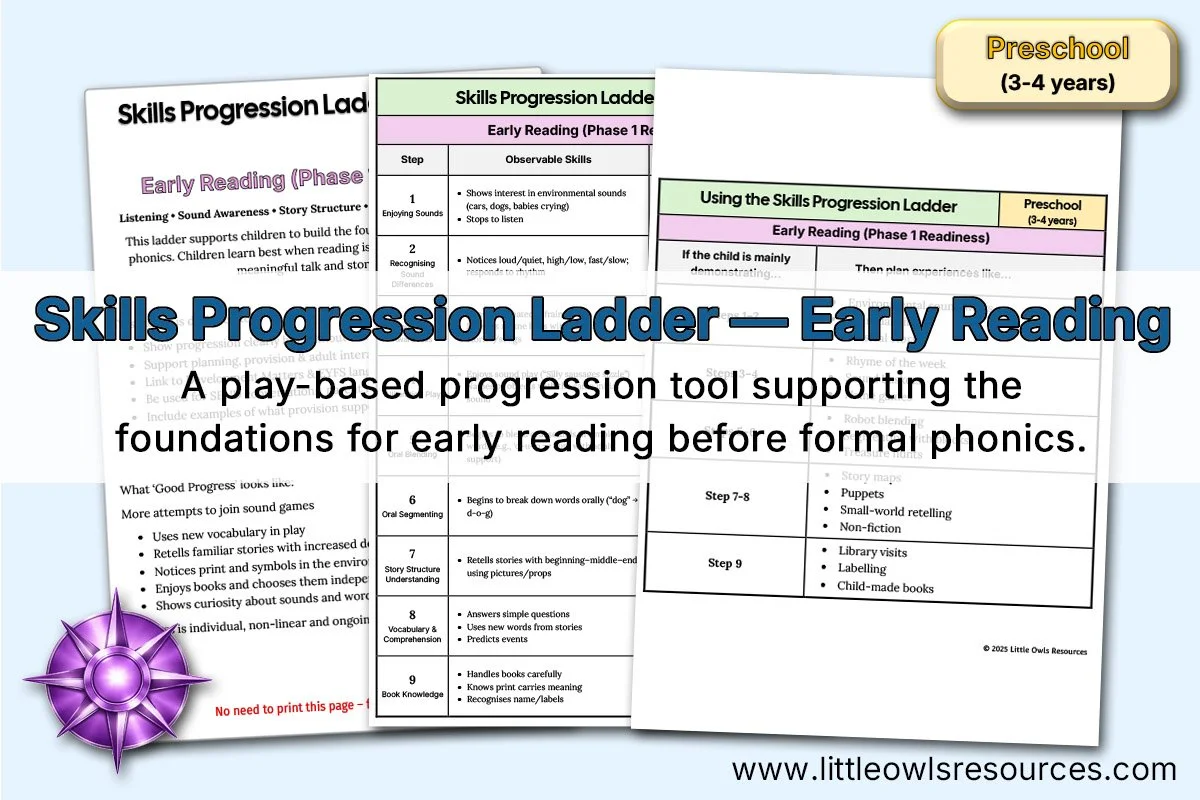
A play-based progression tool supporting the foundations for early reading before formal phonics.
A practical progression tool supporting listening, understanding, vocabulary and conversation through play-based EYFS practice.
Reception | 4 - 5 Years
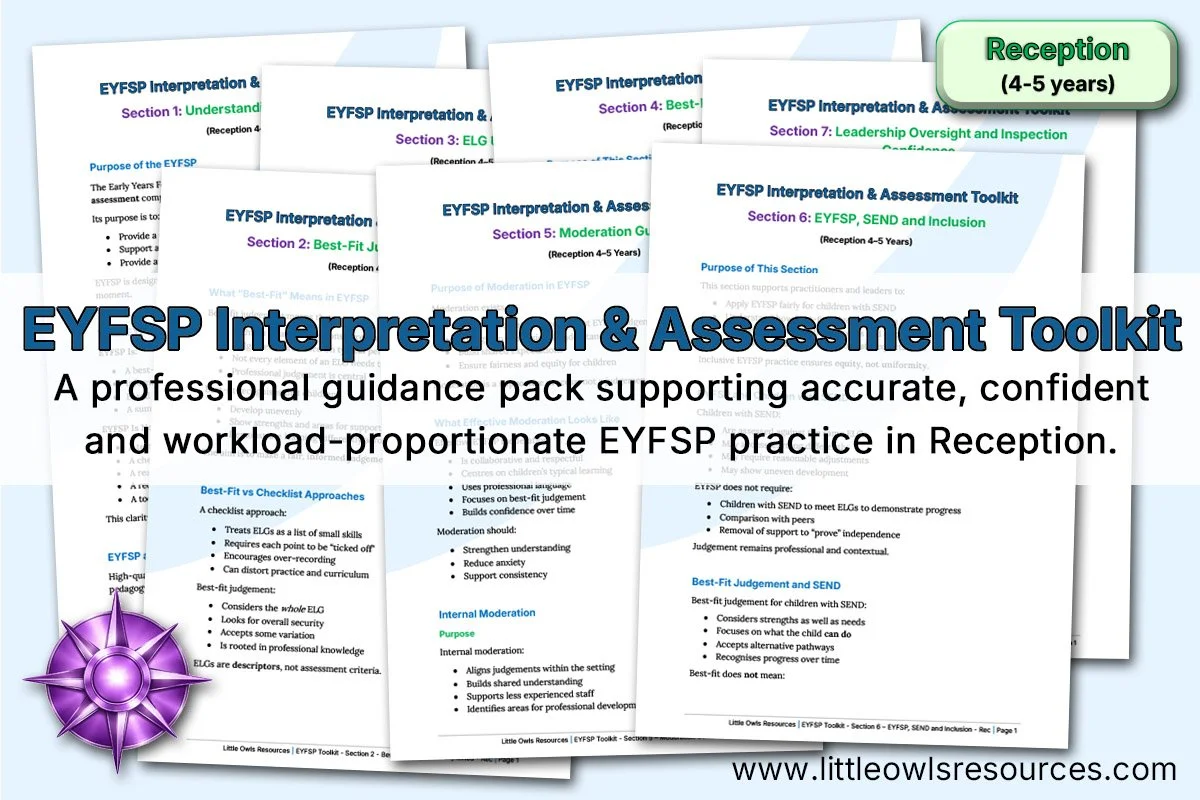
A professional guidance pack supporting accurate, confident and workload-proportionate EYFSP practice in Reception.
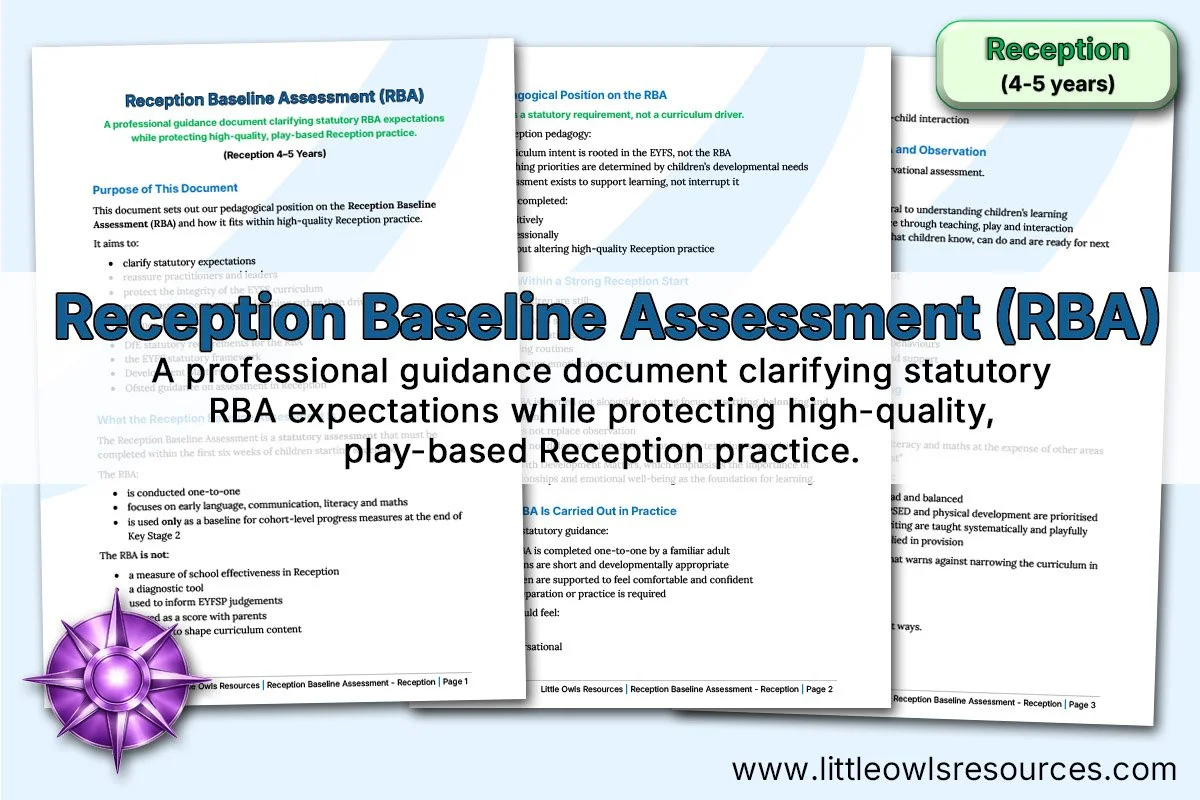
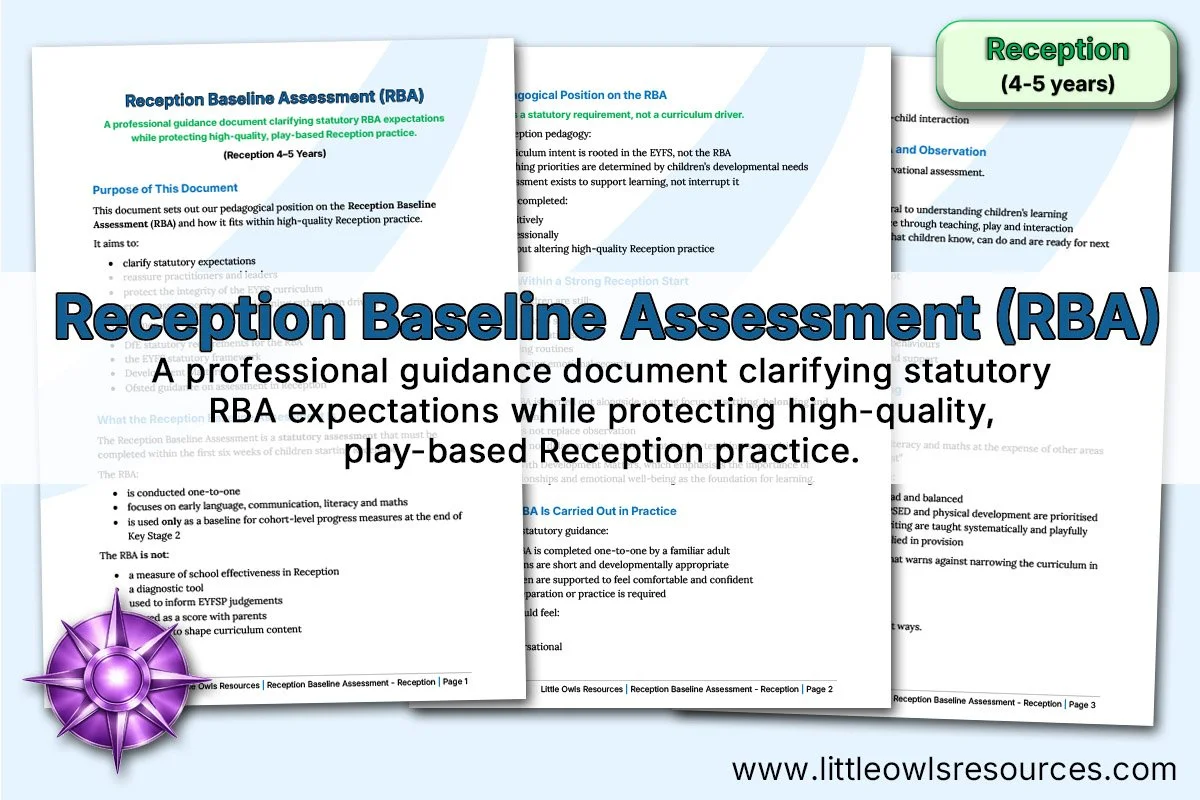
A professional guidance document clarifying statutory RBA expectations while protecting high-quality, play-based Reception practice.
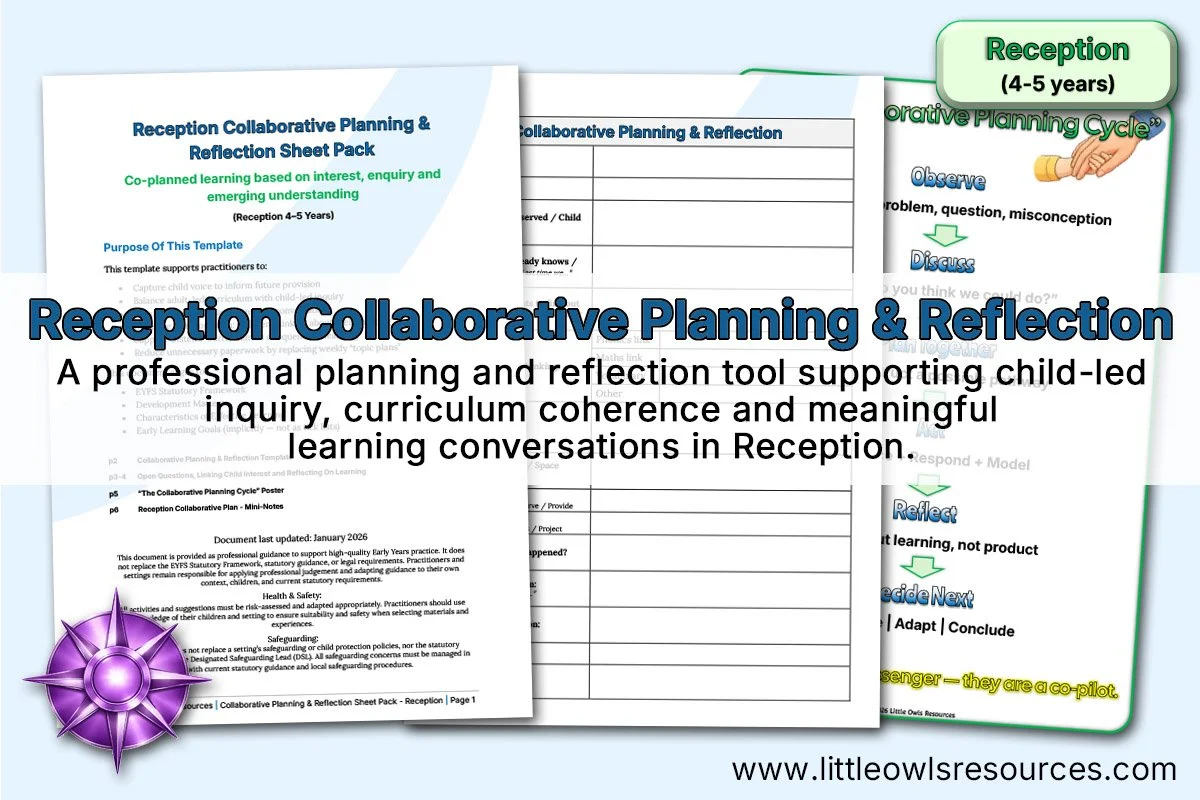
A professional planning and reflection tool supporting child-led inquiry, curriculum coherence and meaningful learning conversations in Reception.
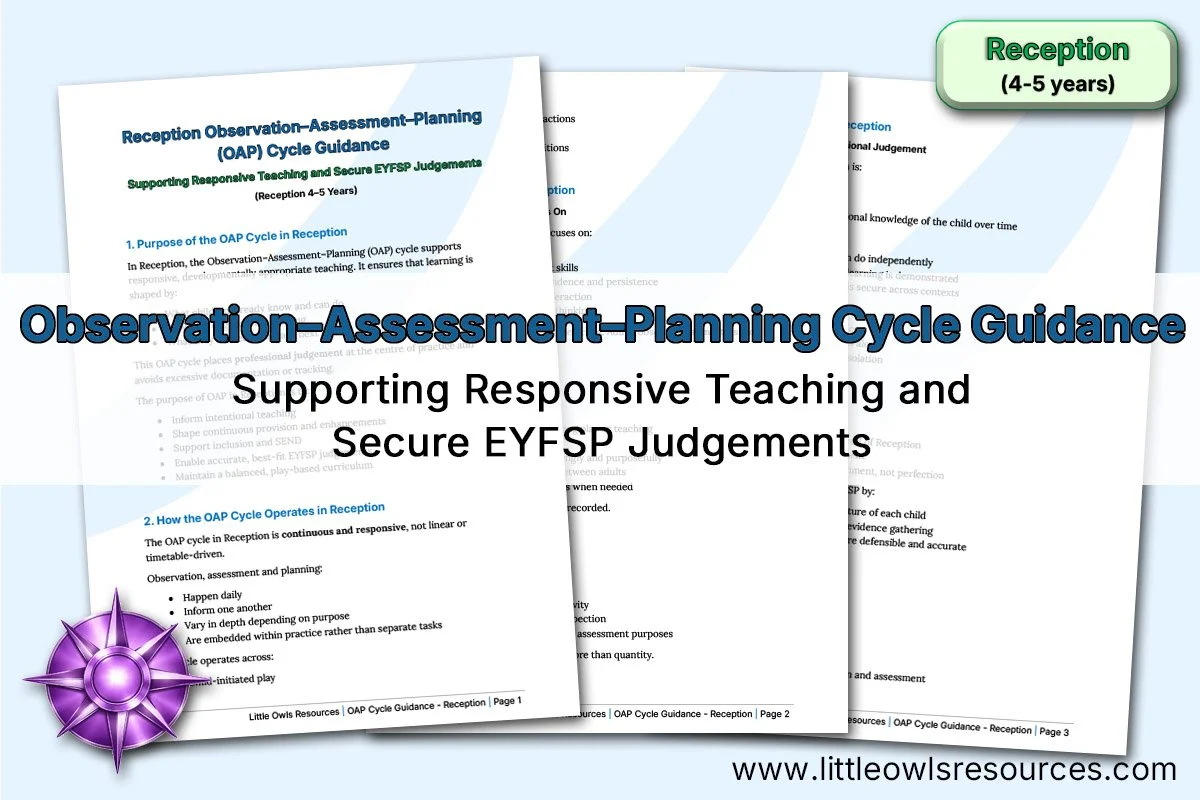
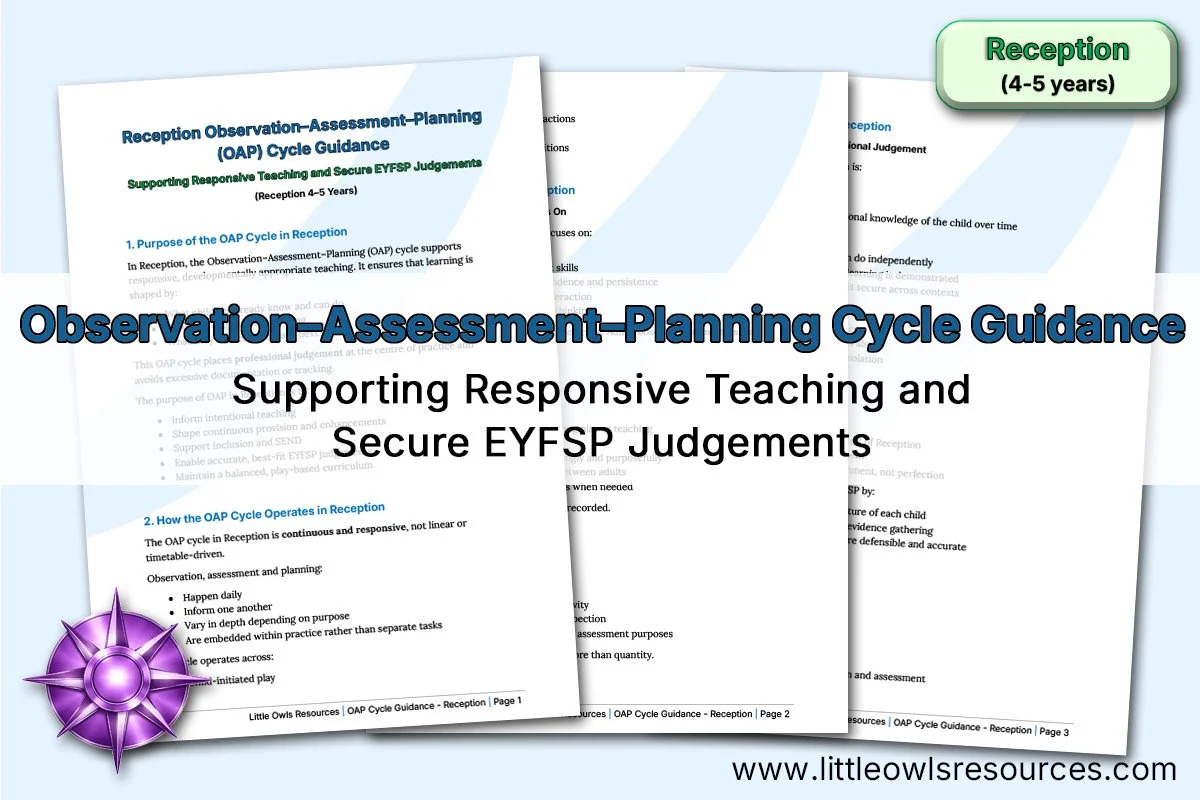
A professional guidance document supporting responsive teaching, proportionate assessment and secure EYFSP judgements in Reception.
EYFS | Birth - 5
A practical, research-informed toolkit for recognising schemas and responding through meaningful, child-led provision.
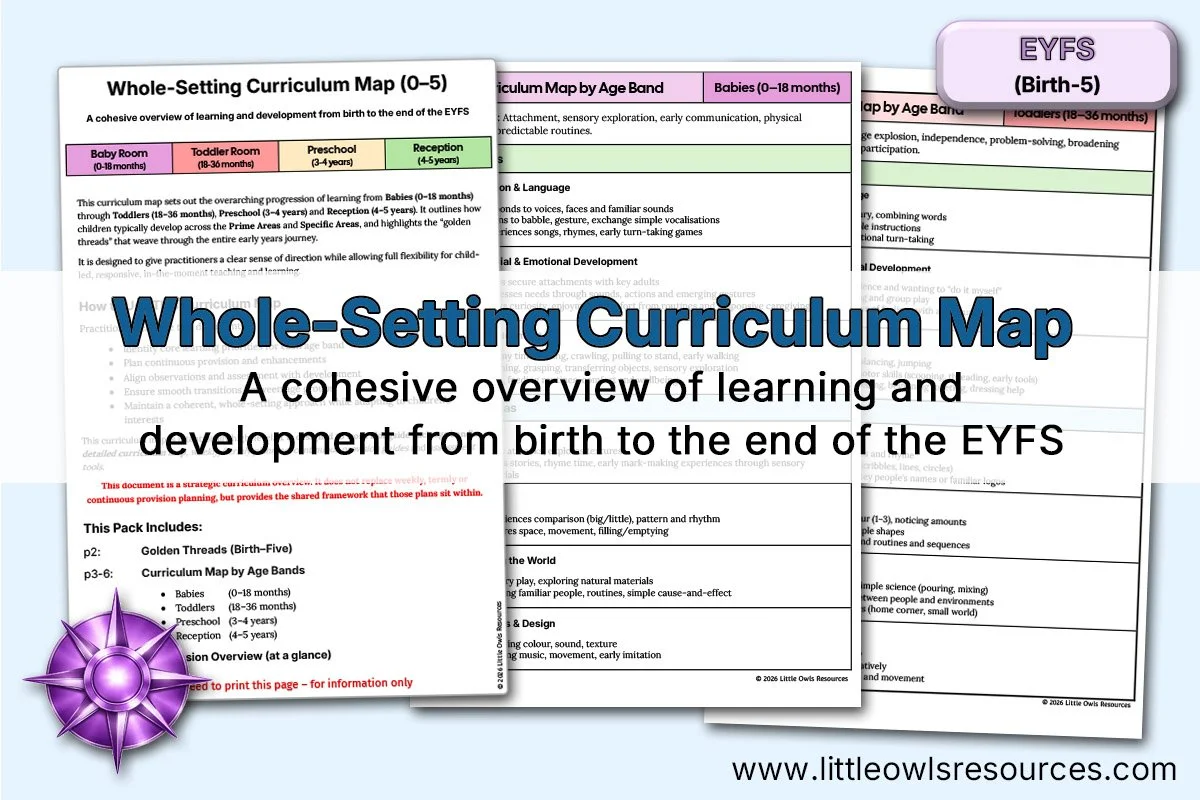
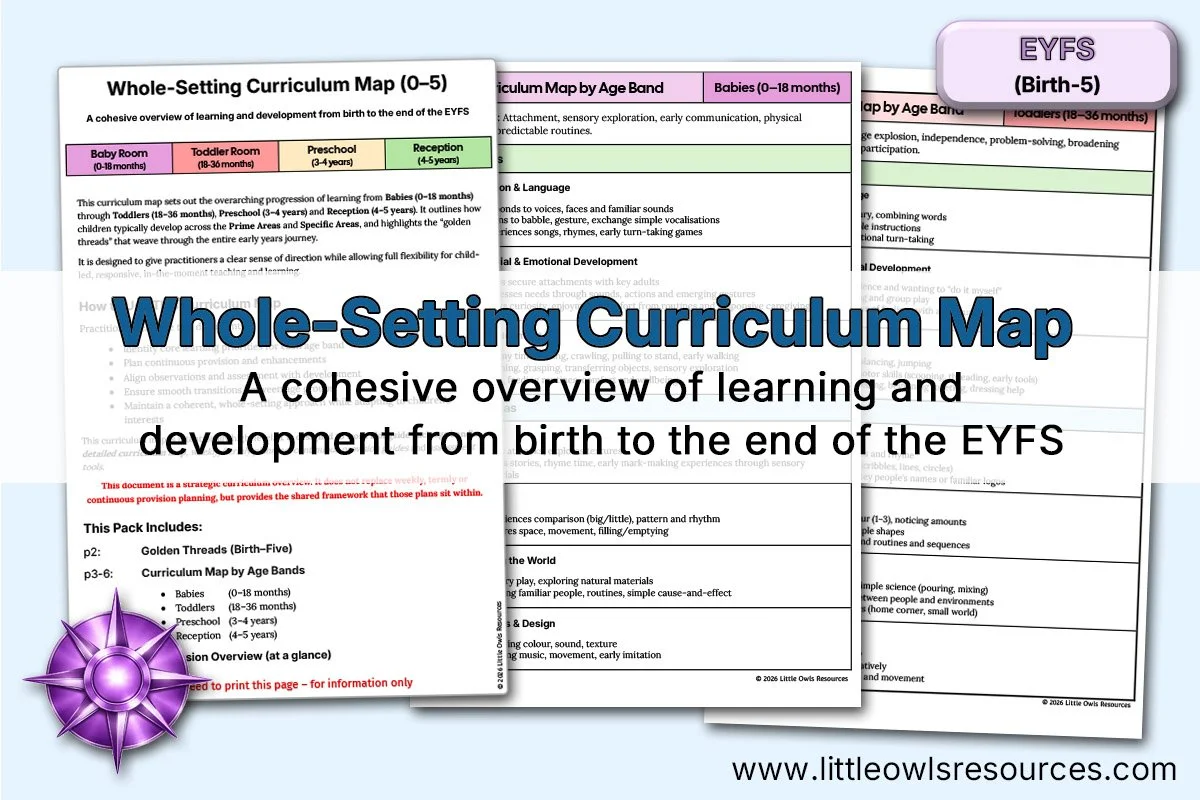
A cohesive, high-level overview of learning and development from birth to the end of the EYFS.
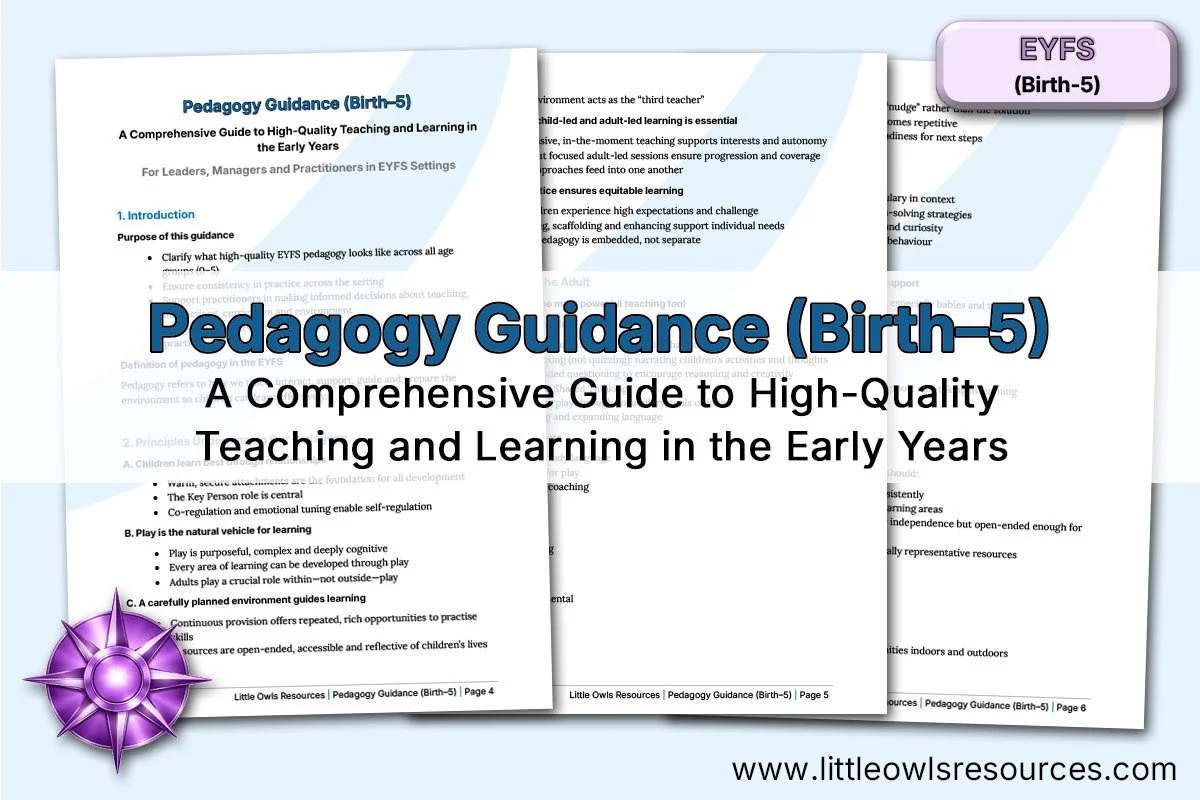
A professional guidance document supporting confident, consistent EYFS pedagogy from birth to five.
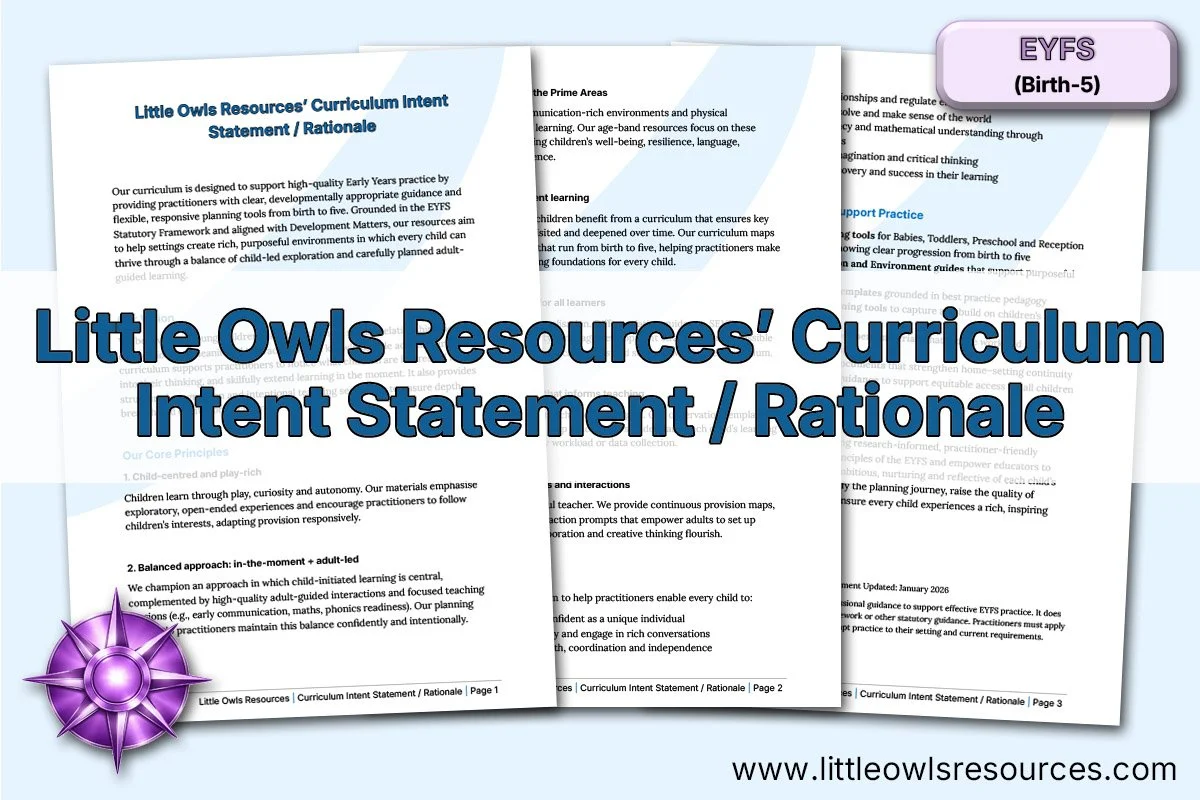
Our curriculum is designed to support high-quality Early Years practice by providing practitioners with clear, developmentally appropriate guidance and flexible, responsive planning tools from birth to five.
Childminder | Mixed-Age
Illustrating High-Quality EYFS Practice in a Home-Based Setting - An illustrative practice guide showing how EYFS principles are lived through everyday childminding routines.
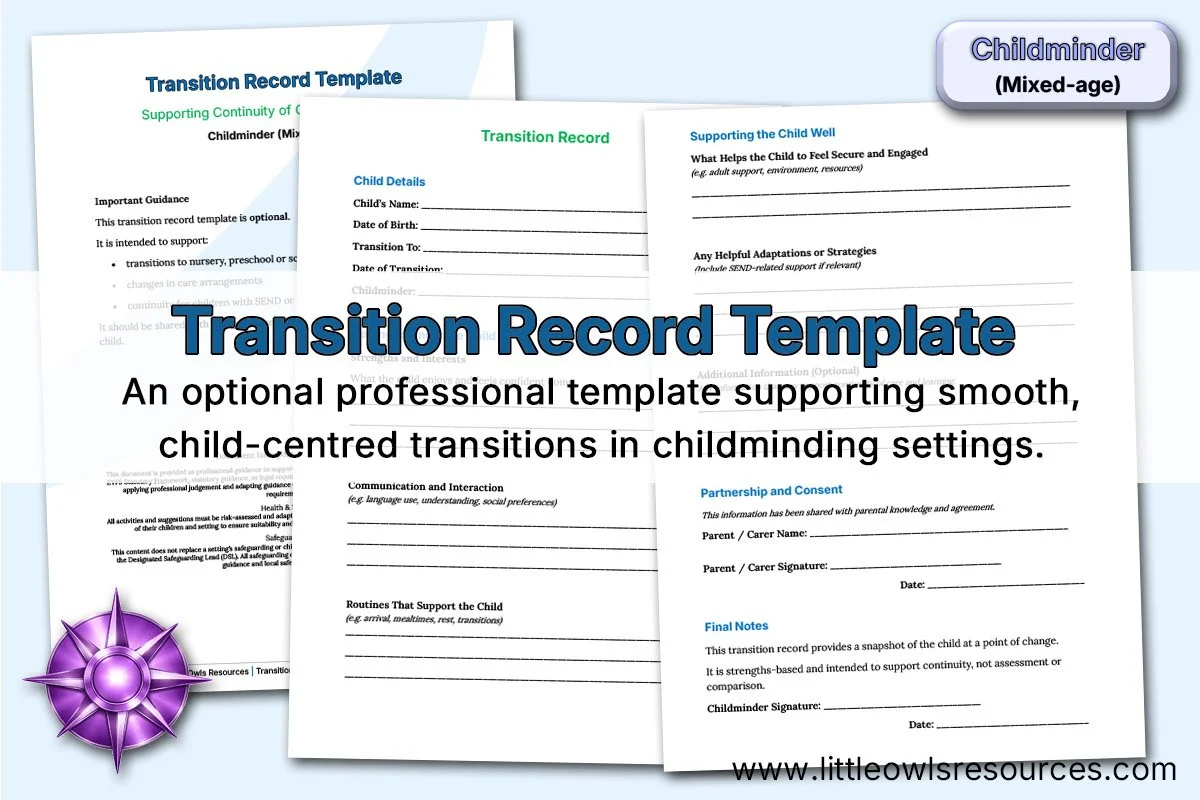
Supporting Continuity of Care and Learning - An optional professional template supporting smooth, child-centred transitions in childminding settings.
Supporting Transitions and Communication with Families and Schools - A professional guidance document supporting clear, proportionate information sharing in childminding settings.
A professional guidance document supporting confident, proportionate EYFS assessment in mixed-age, home-based settings.
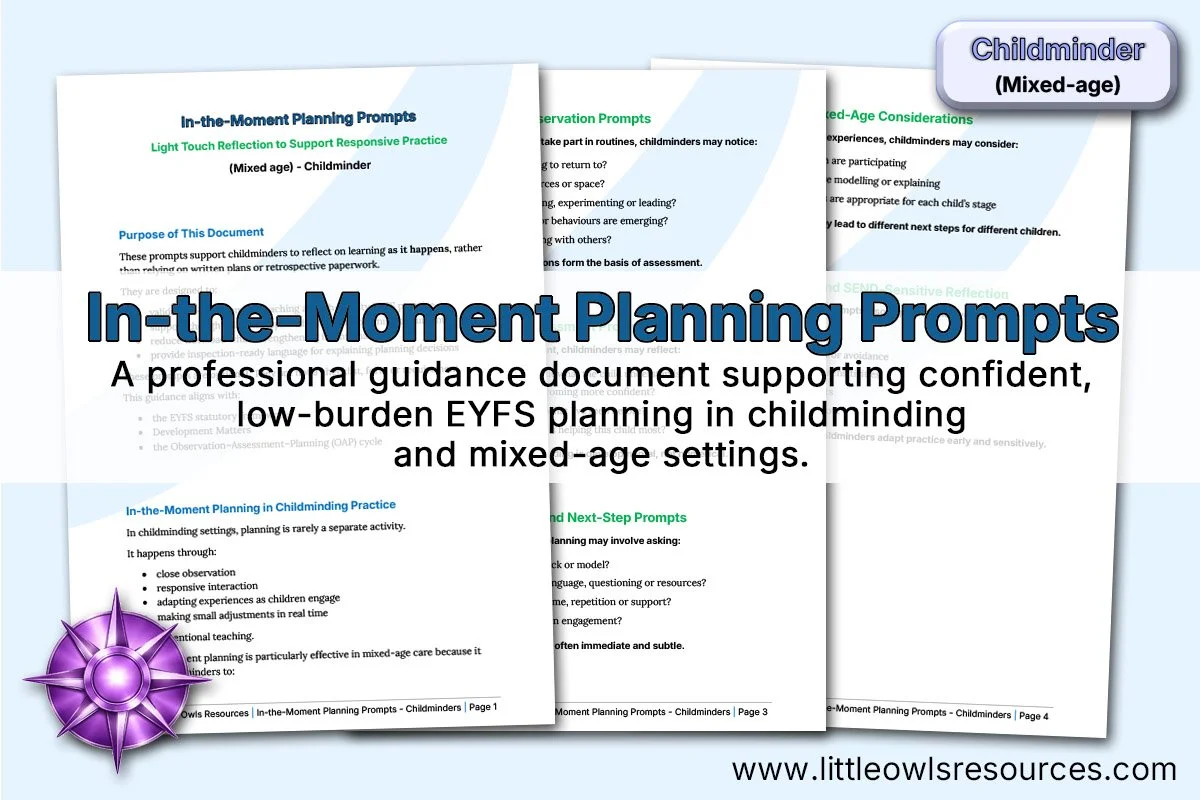
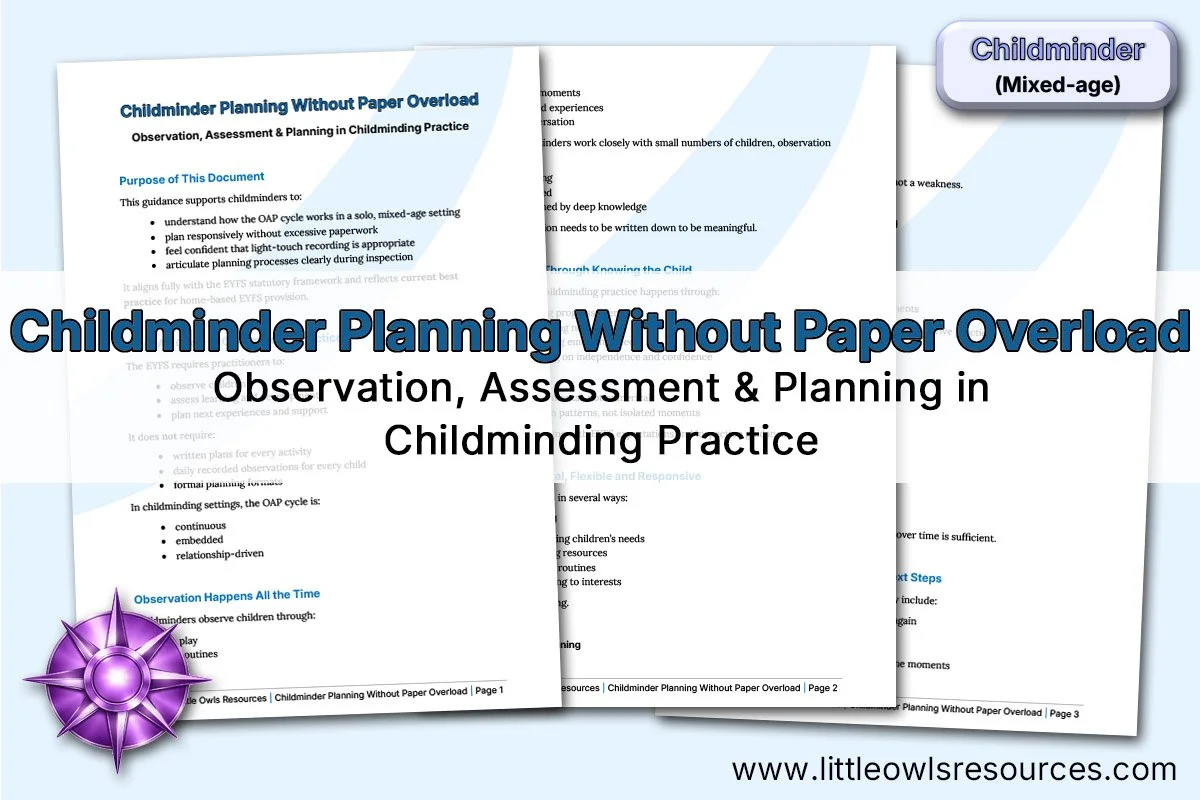
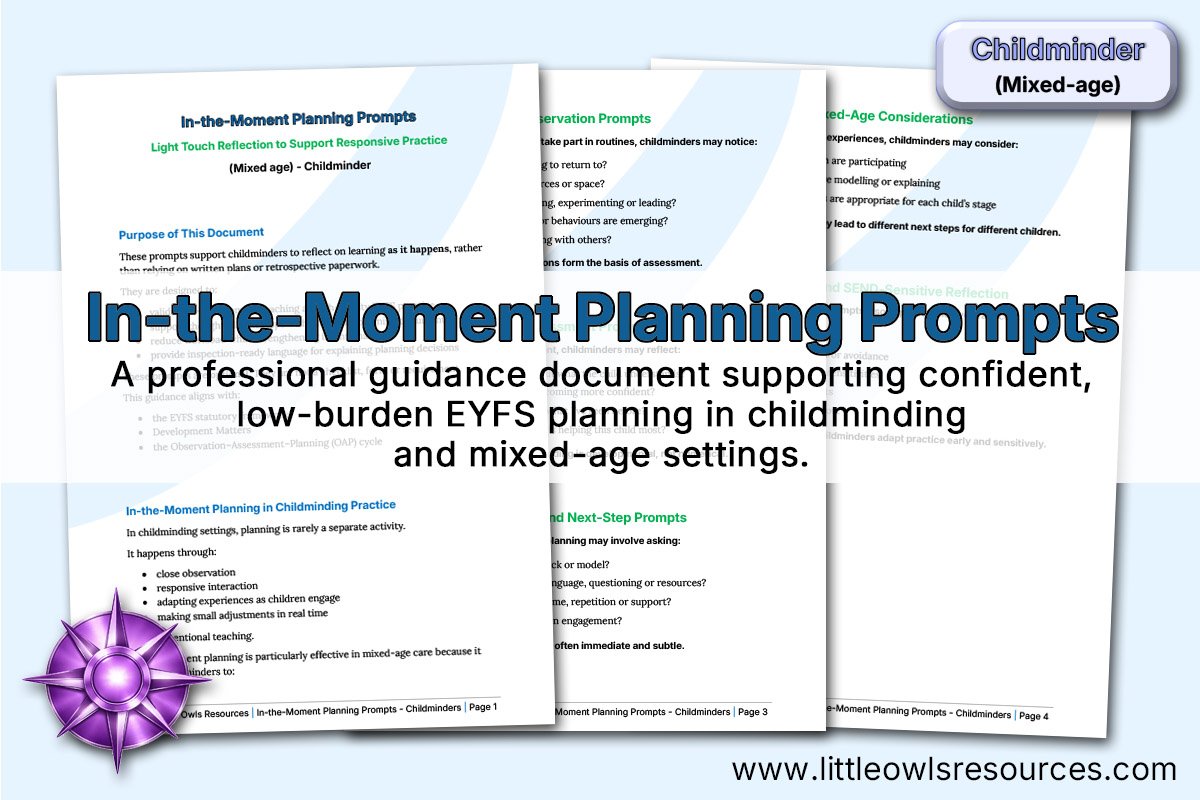
A professional guidance document supporting confident, low-burden EYFS planning in childminding and mixed-age settings.
👀 Observation & Responsive Planning
Observation is only meaningful when it leads to action. Balancing the three roles of Facilitator, Co-Play Partner, and Observer — creates a cycle of notice → respond → extend, the heart of in-the-moment responsive planning.
Explore:
narrative observation templates
in-the-moment observation prompts
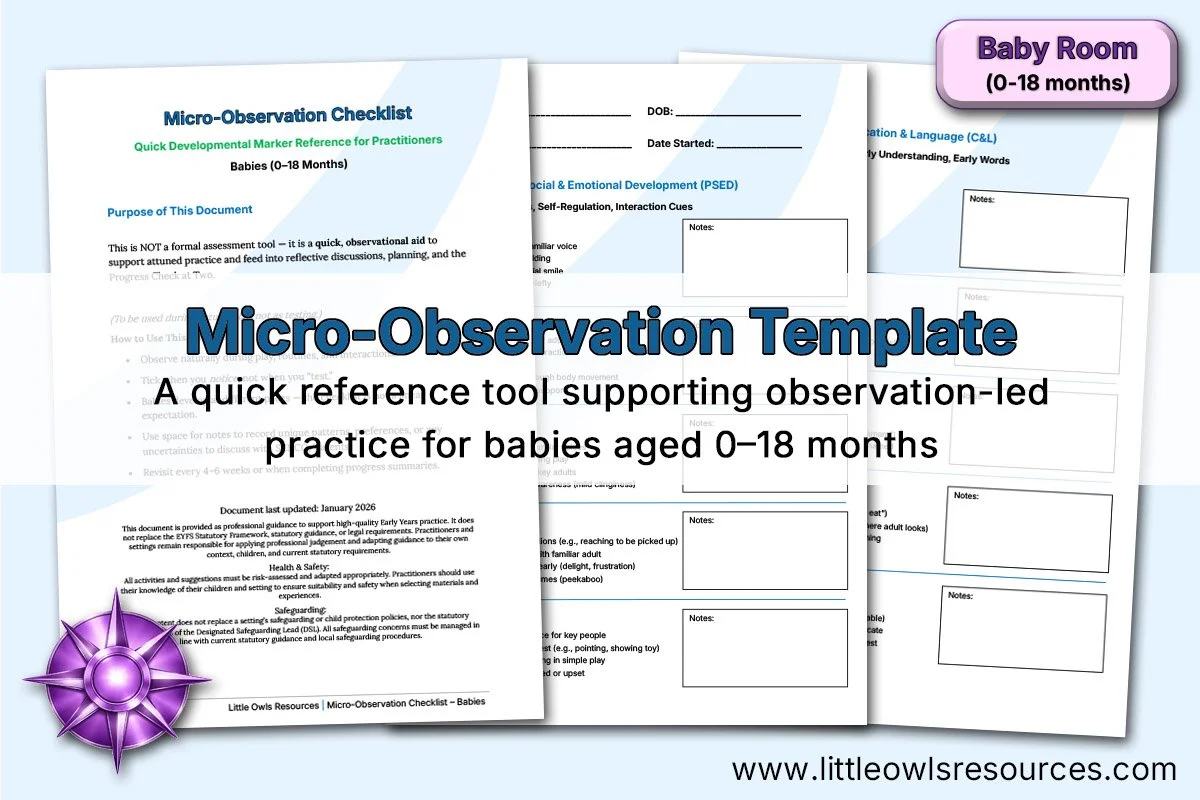
micro-observation tools
responsive planning formats
These support practitioners to:
notice subtle cues and behaviours
interpret communication and engagement
respond through interaction, environment and care
A professional planning and reflection tool supporting child-led inquiry, curriculum coherence and meaningful learning conversations in Reception.
A professional guidance document supporting confident, low-burden EYFS planning in childminding and mixed-age settings.
Observing cues, responding through interaction and adjusting provision for babies aged 0–18 months.
A practical, research-informed toolkit for recognising schemas and responding through meaningful, child-led provision.
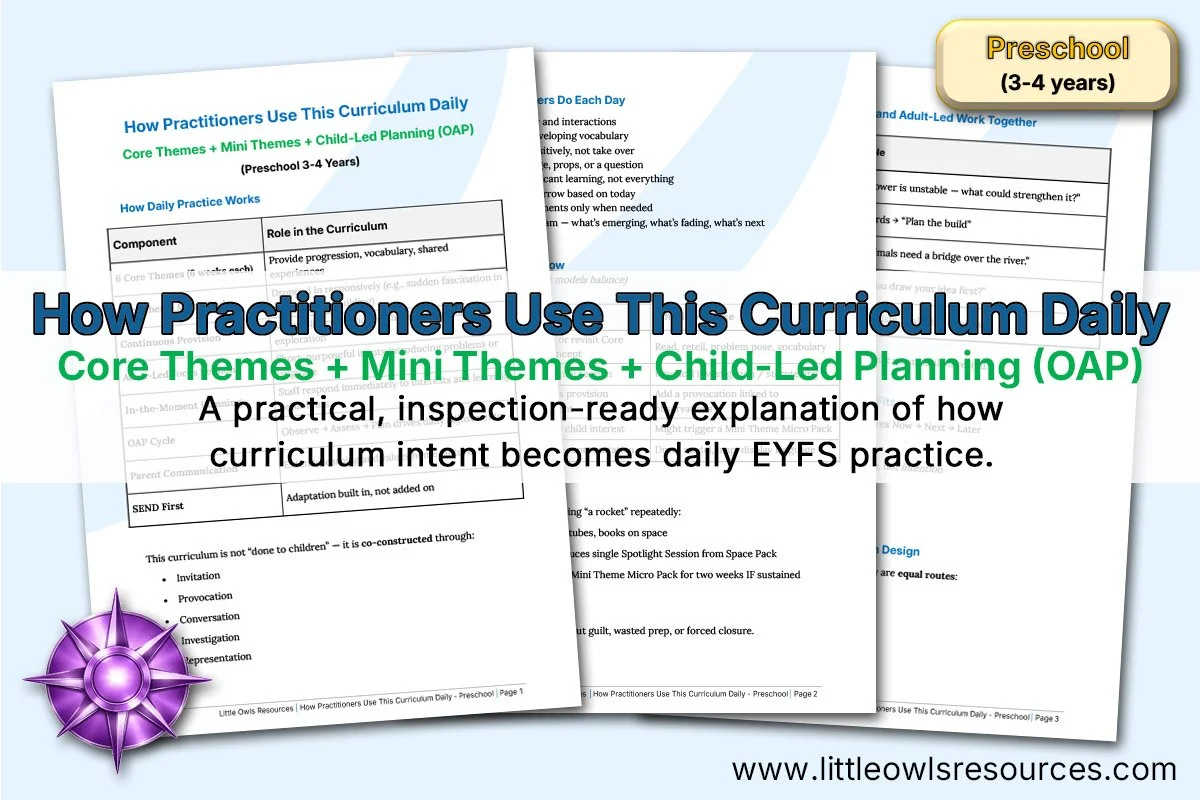
A practical, inspection-ready explanation of how curriculum intent becomes daily EYFS practice.
A professional guidance document supporting confident, consistent EYFS pedagogy from birth to five.
Our curriculum is designed to support high-quality Early Years practice by providing practitioners with clear, developmentally appropriate guidance and flexible, responsive planning tools from birth to five.
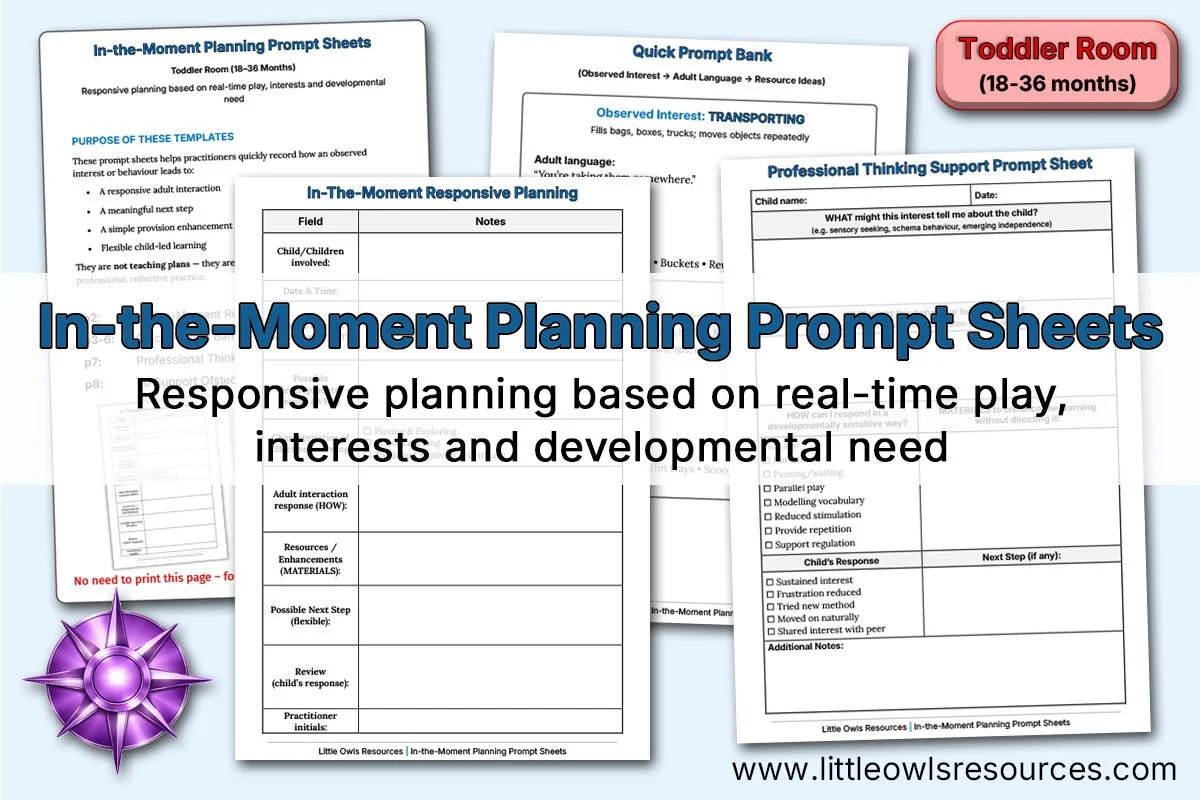
This form of planning is the most flexible and responsive. It's often referred to as "in the moment", "on-the-spot" or "responsive" planning. Intended for use by all types of EYFS practitioners, this flexible pack is ideal for Nurseries, Childminders, Preschools or for Reception Teachers at school. This short-term planning toolkit has all of the materials you need to guide you through this responsive approach to your children’s learning.
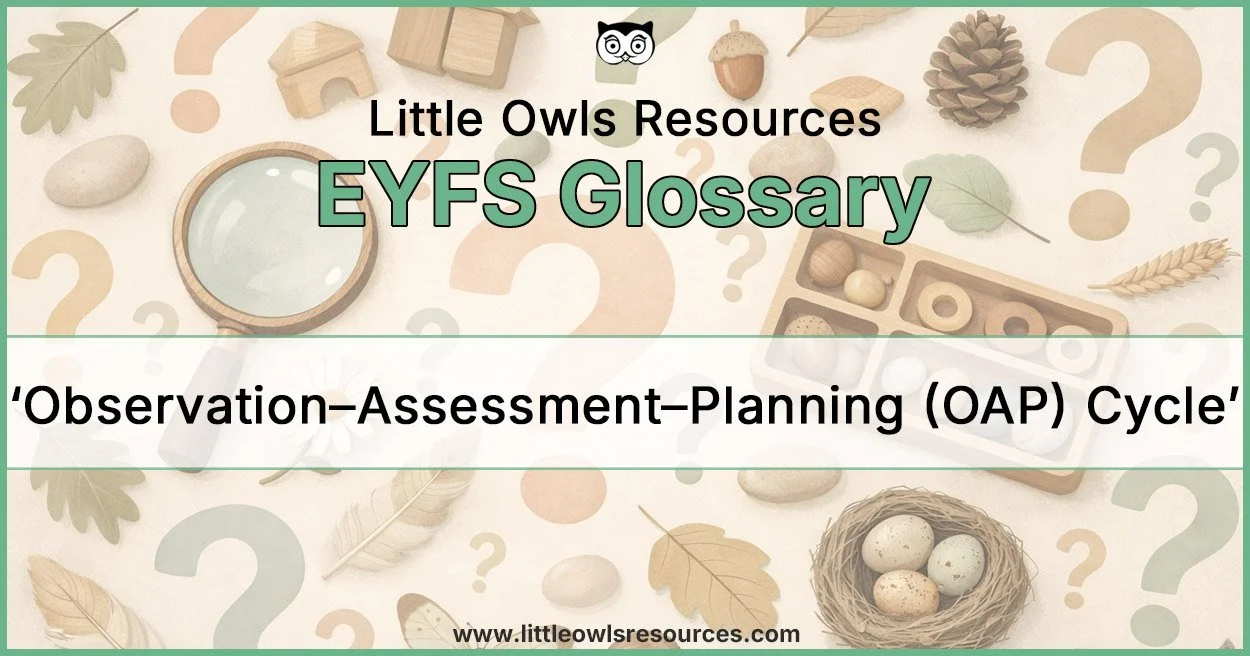
🔄 The Observation–Assessment–Planning Cycle (OAP)
The OAP cycle supports reflective, responsive practice.
Observe → notice what children do, say and communicate
Assess → interpret meaning and patterns
Plan → respond through provision, interaction and routines
In high-quality EYFS practice:
this cycle is ongoing
it is not always written down
it prioritises responsiveness over paperwork
Further information regarding the OAP Cycle may be found on our EYFS Glossary entry page: ‘Observation–Assessment–Planning (OAP) Cycle | EYFS’
The Observation–Assessment–Planning (OAP) Cycle describes a continuous process used by early years practitioners to support children’s learning and development. It involves observing…
📘 Statutory Assessment Requirements
We provide guidance and tools to support statutory responsibilities, including:
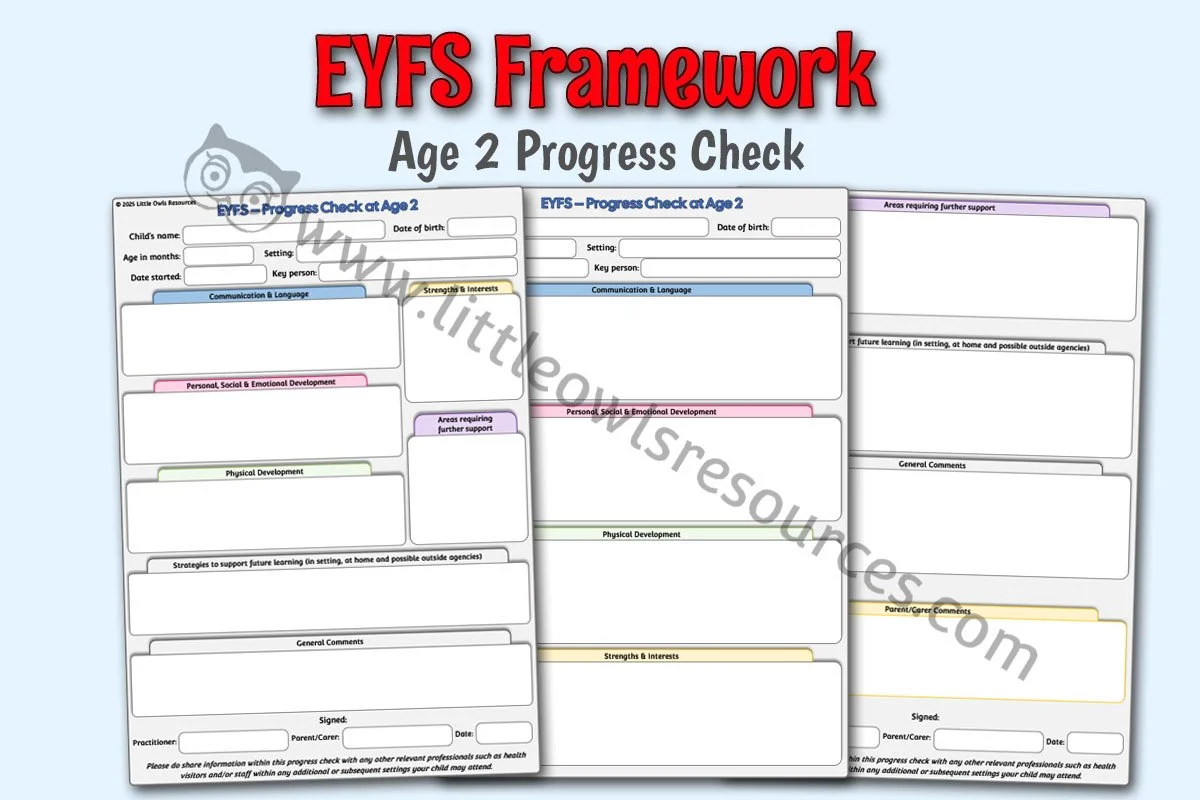
✔ Progress Check at Age 2 EYFS
report templates
practitioner guidance
parent communication support
✔ Reception Baseline Assessment (RBA) England
understanding purpose
what practitioners need to know
how it fits within practice
✔ Early Years Foundation Stage Profile (EYFSP)
ELG interpretation
best-fit assessment
moderation support
reporting guidance
Statutory assessment is only one part of understanding children — not the whole picture.
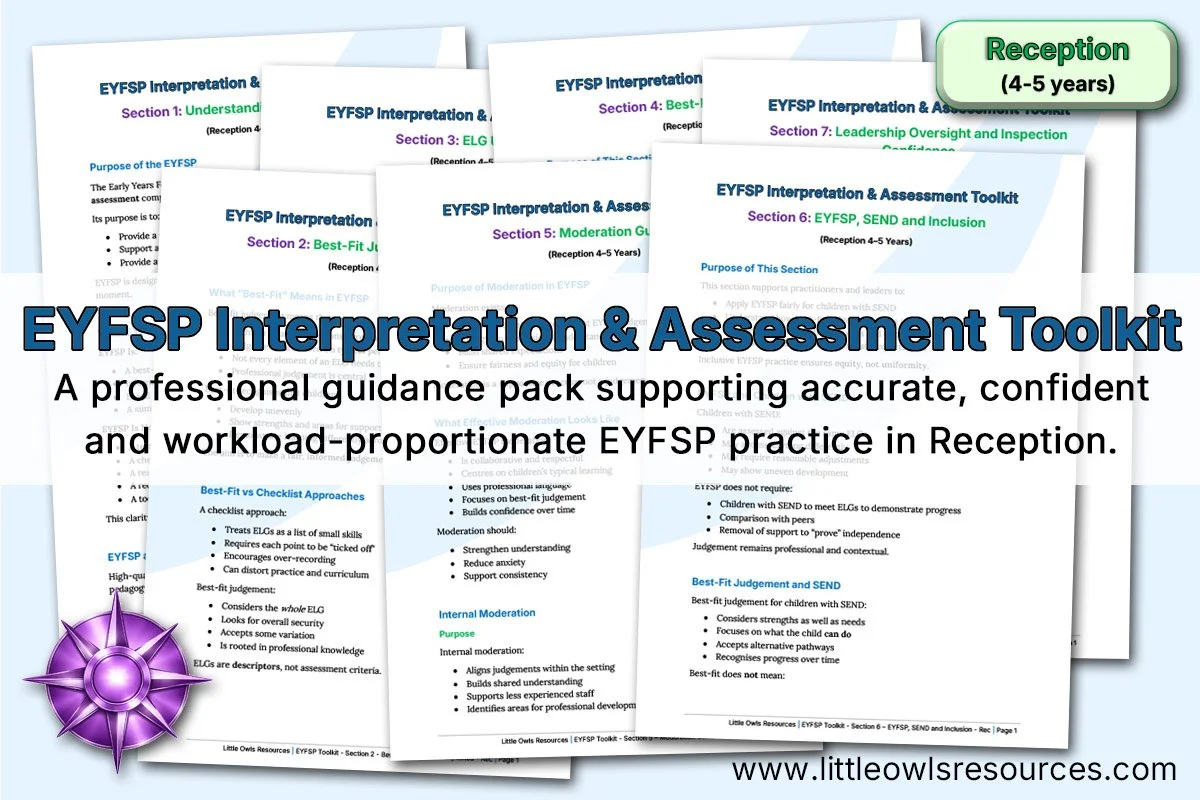
A professional guidance pack supporting accurate, confident and workload-proportionate EYFSP practice in Reception.
A professional guidance document clarifying statutory RBA expectations while protecting high-quality, play-based Reception practice.
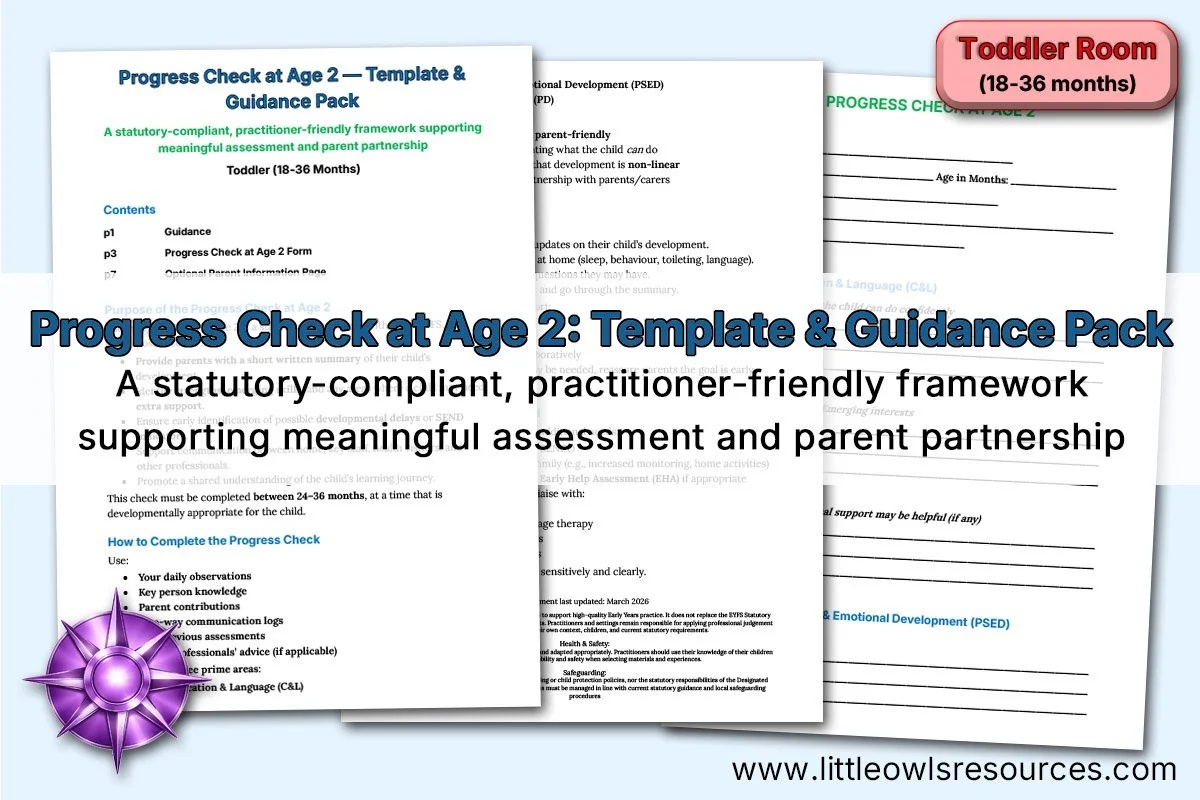
A statutory-compliant, practitioner-friendly toolkit supporting meaningful assessment and parent partnership.
Handy ‘Age 2 Progress Check’ forms. Two different versions to choose from within this pack. If you would like to adapt the forms, simply choose the editable docx file.
The EYFS Framework states there should be a progress check carried out at age 2.
More information can be found regarding the statutory requirements on the cover sheet attached within this document.
We hope you find this helpful!
Files contain public sector information licensed under the Open Government Licence v3.0.
Original artwork drawn by Sara Murphy and final digital resources created by Stuart Murphy. COPYRIGHT ON ALL OF THE RESOURCES HOUSED ON THIS WEBSITE IS HELD BY ‘LITTLE OWLS RESOURCES’. OUR RESOURCES (INCLUDING THE IMAGES WITHIN THEM), CANNOT BE SHARED OR SOLD COMMERCIALLY.
DOWNLOAD EDITABLE (DOCX)
DOWNLOAD NON-EDITABLE (PDF)
DOWNLOAD NON-EDITABLE (Zipped JPEGs)
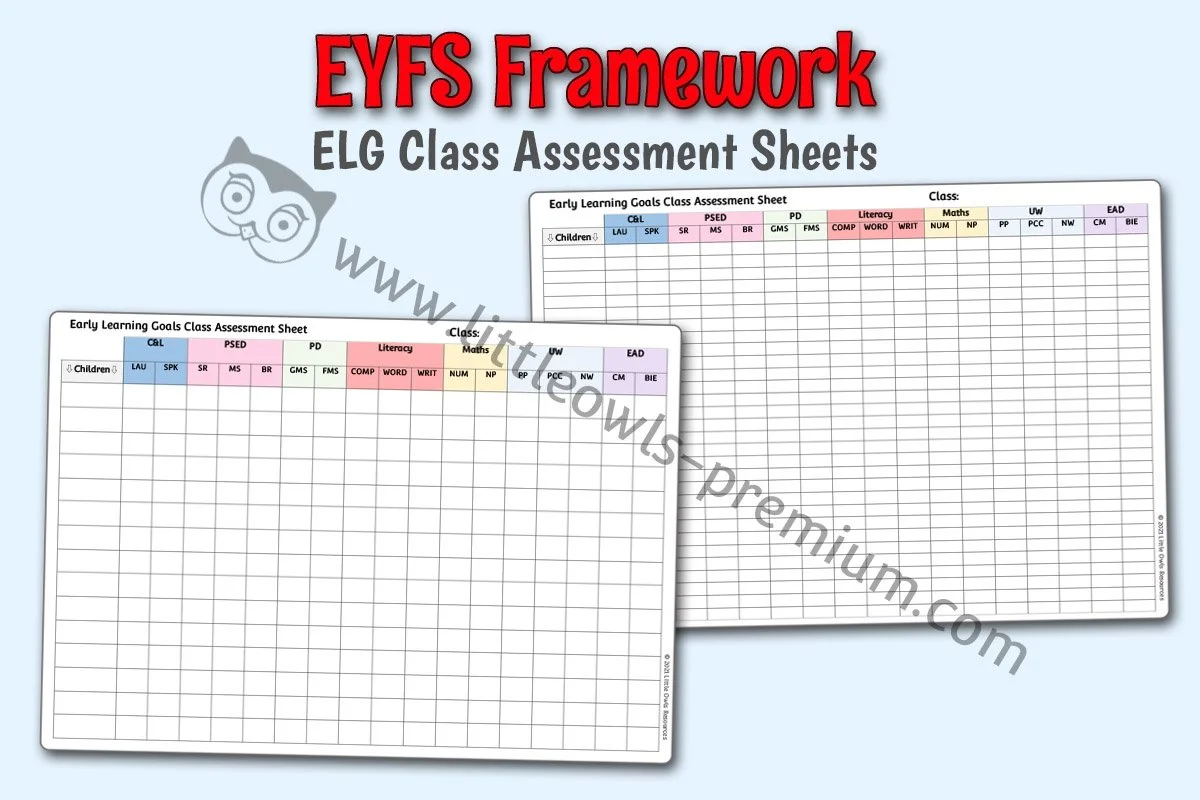
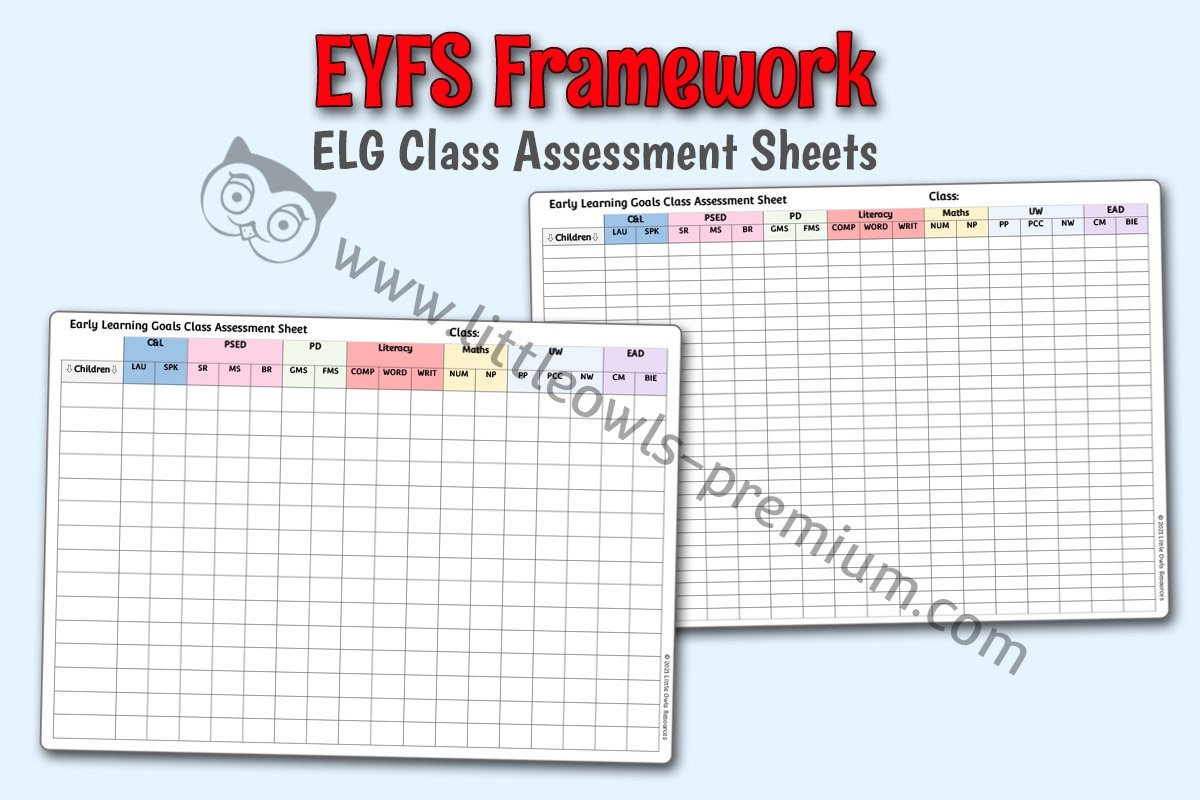
Handy assessment tool for those teaching children in their reception year.
All Early Learning Goals (ELGs) from the EYFS Framework are condensed onto a colour coded class assessment tick sheet. The first sheet has space for 30 children and the second provides slightly larger boxes for 15 children.
We hope you find this helpful!
Files contain public sector information licensed under the Open Government Licence v3.0.
Original artwork drawn by Sara Murphy and final digital resources created by Stuart Murphy. COPYRIGHT ON ALL OF THE RESOURCES HOUSED ON THIS WEBSITE IS HELD BY ‘LITTLE OWLS RESOURCES’. OUR RESOURCES (INCLUDING THE IMAGES WITHIN THEM), CANNOT BE SHARED OR SOLD COMMERCIALLY.
DOWNLOAD EDITABLE (DOCX)
DOWNLOAD NON-EDITABLE (PDF)
DOWNLOAD NON-EDITABLE (Zipped JPEGs)
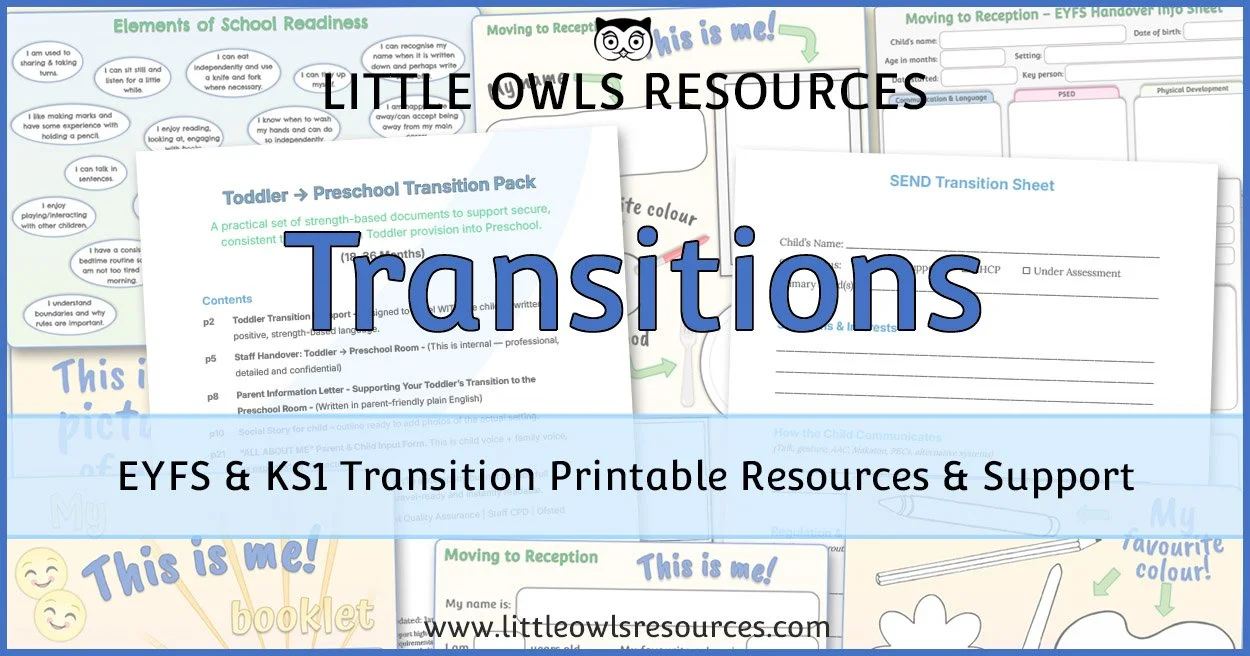
🌉 Transitions & Progress Summaries
Observation and assessment support smooth transitions between:
rooms
settings
home and school
Explore:
transition record templates
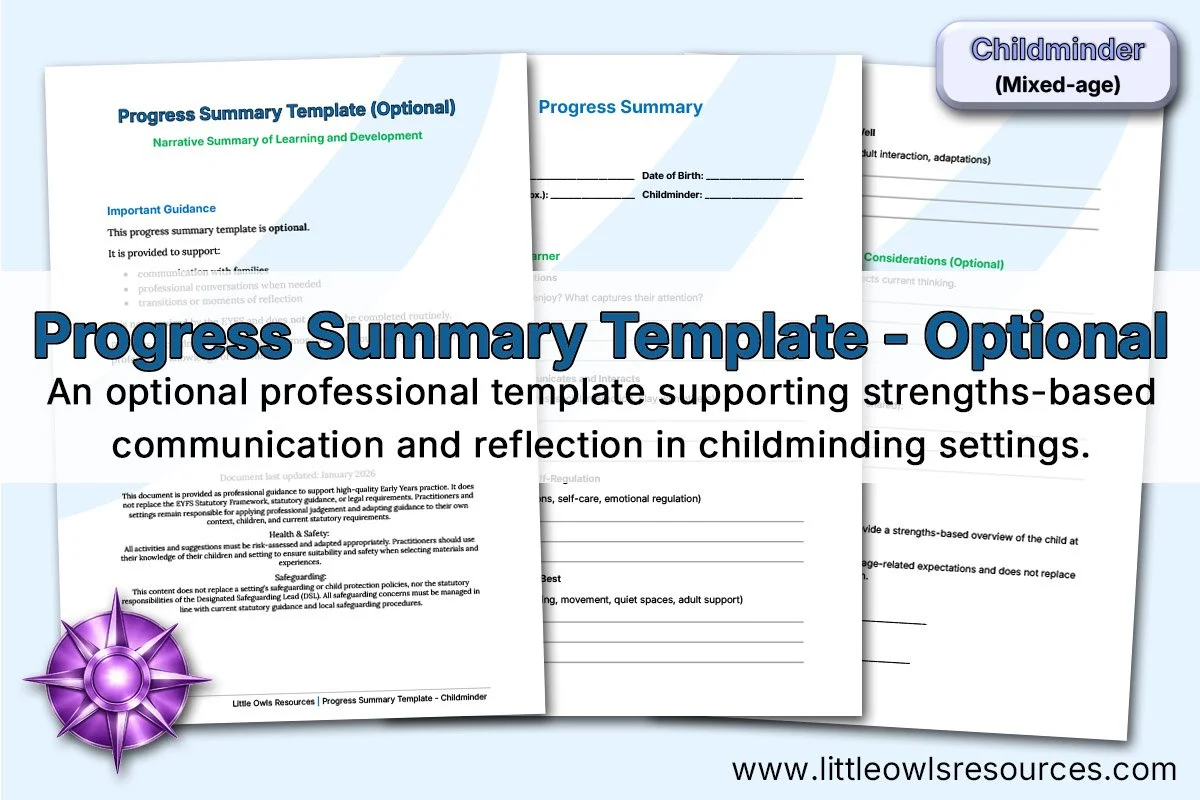
progress summaries
handover documents
family communication tools
These ensure:
continuity of care
shared understanding
supportive transitions for children and families
Transitions
Supporting Continuity of Care and Learning - An optional professional template supporting smooth, child-centred transitions in childminding settings.
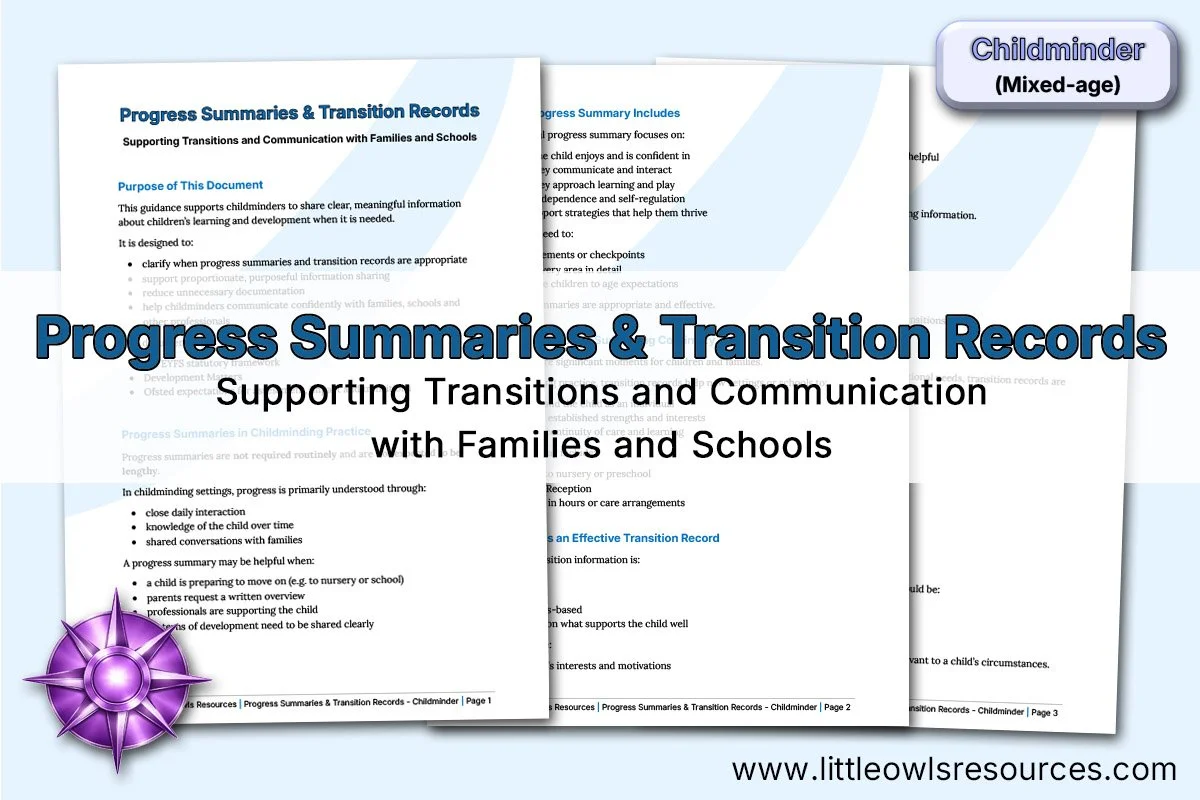
Supporting Transitions and Communication with Families and Schools - A professional guidance document supporting clear, proportionate information sharing in childminding settings.
A practical set of strength-based documents to support secure, consistent transitions from 18–36 month provision into the 3–4 year room.
A professional guidance document supporting emotionally secure, relationship-led practice during periods of change.
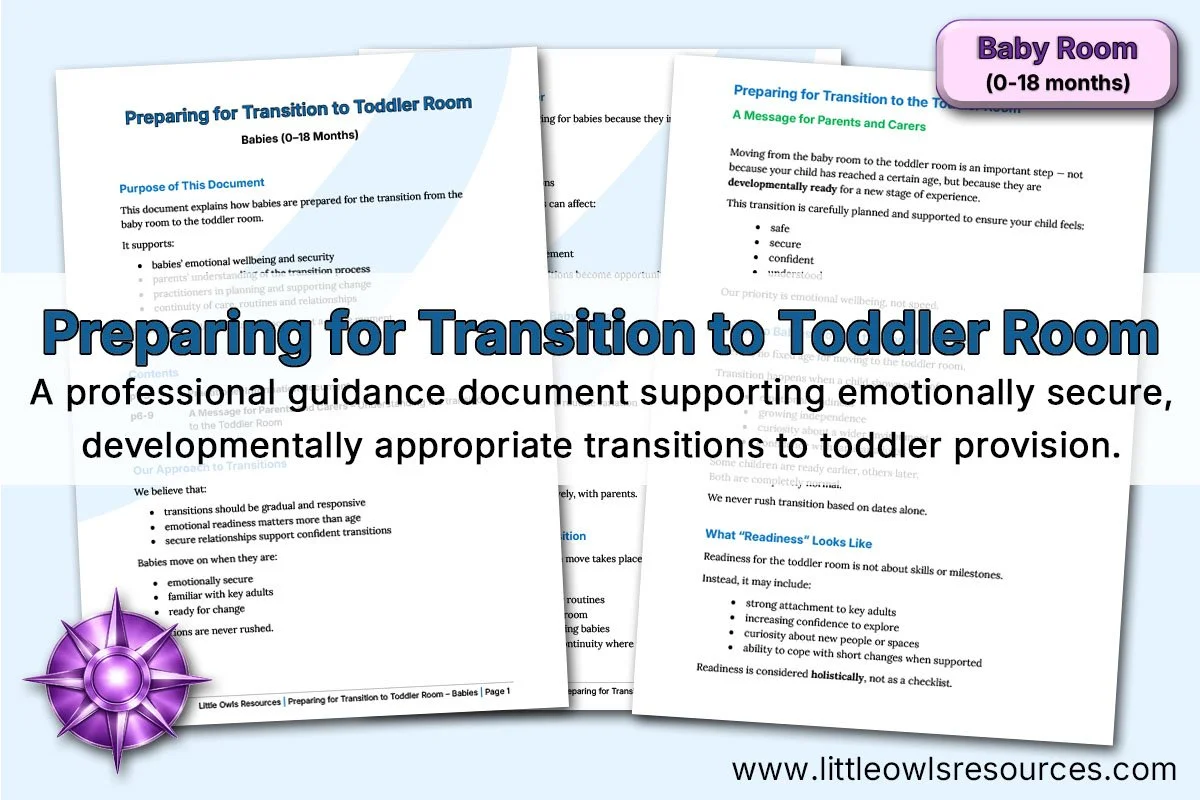
A professional guidance document supporting emotionally secure, developmentally appropriate transitions from baby room to toddler provision.
A professional, parent-facing pack supporting calm transitions, secure attachment and consistent early care in baby rooms.
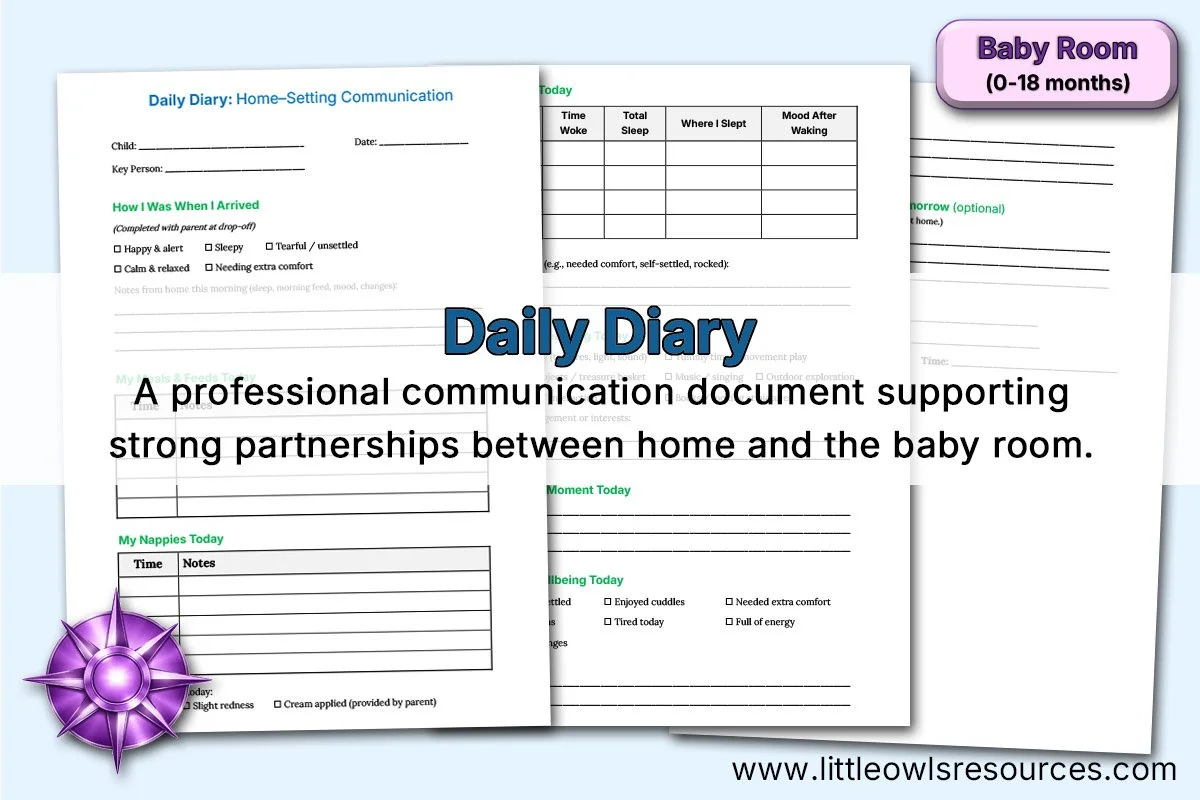
A professional communication document supporting strong partnerships between home and the baby room.
A comprehensive, strength-based transition toolkit supporting children, families and schools.
A professional reporting toolkit supporting meaningful communication with families and smooth transition to school.
A strength-based progress review supporting meaningful partnership with families in preschool.
A strengths-led overview supporting observation, reflection and meaningful next steps in a play-based EYFS environment.
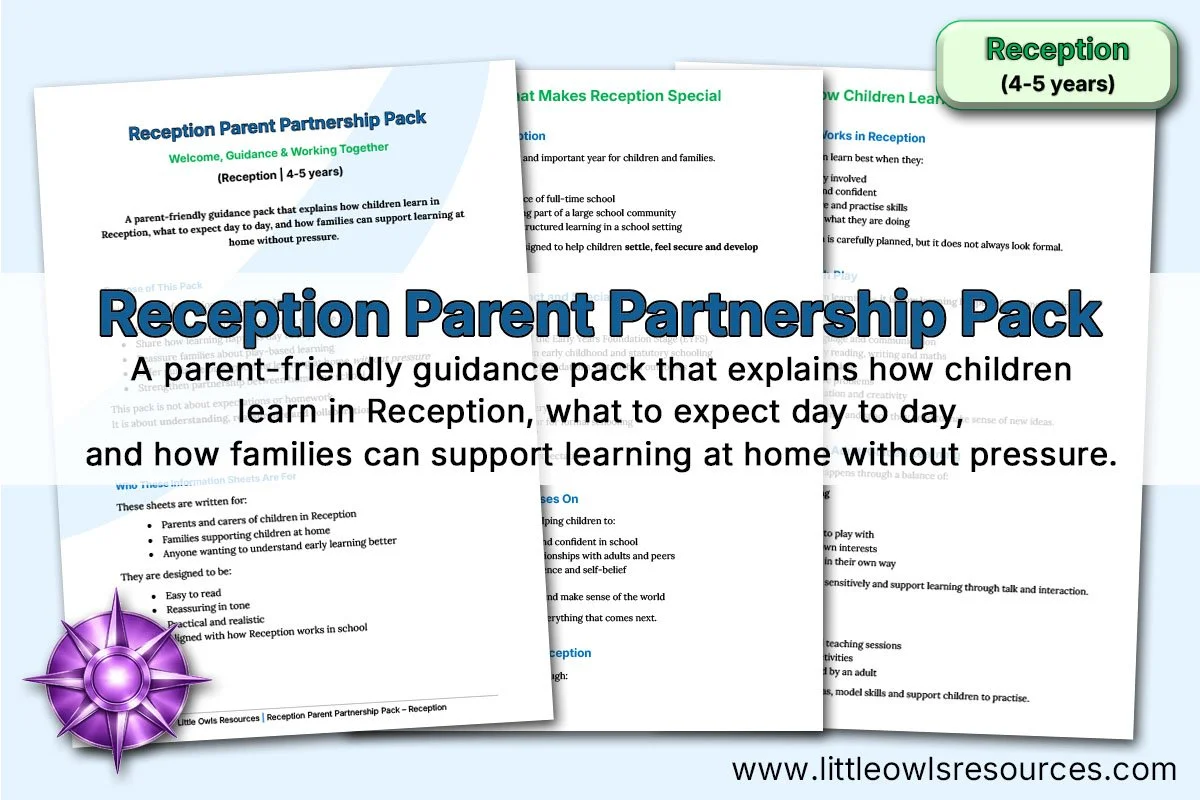
A parent-friendly guidance pack that explains how children learn in Reception (4–5), what to expect day to day, and how families can support learning at home without pressure.
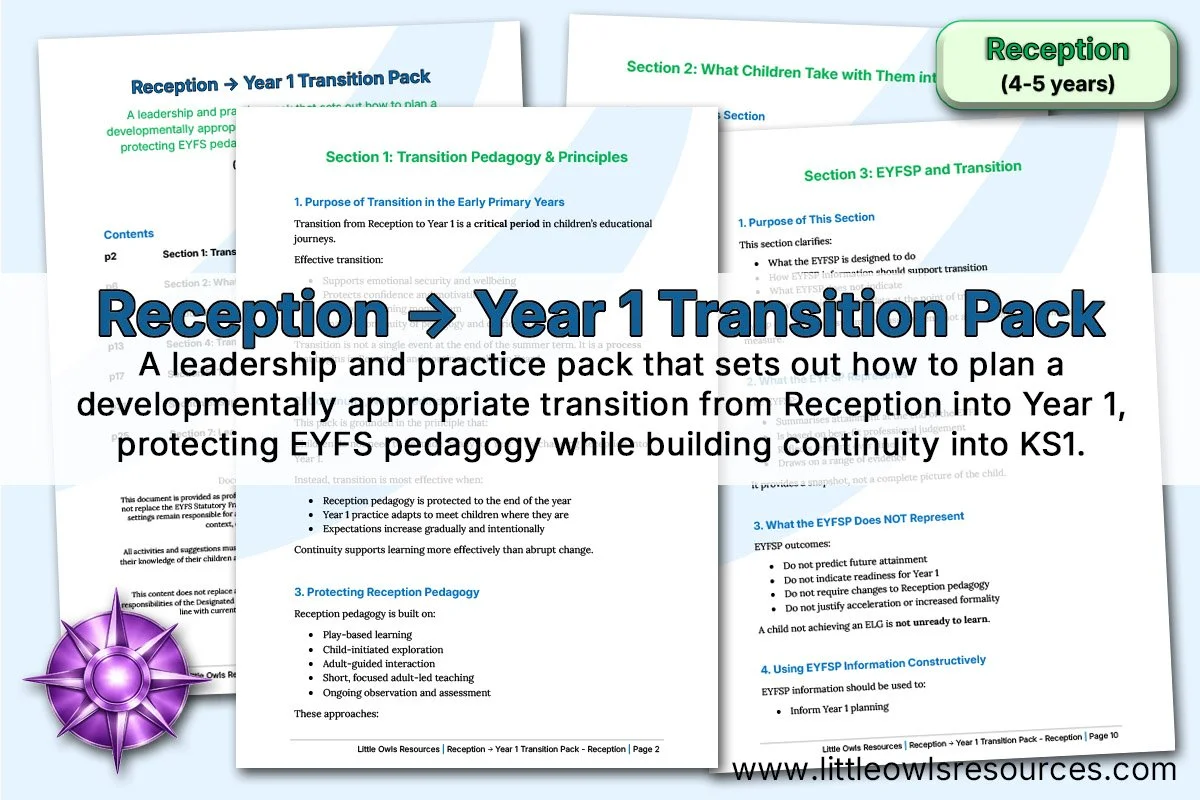
A leadership and practice pack that sets out how to plan a developmentally appropriate transition from Reception into Year 1, protecting EYFS pedagogy while building continuity into KS1.
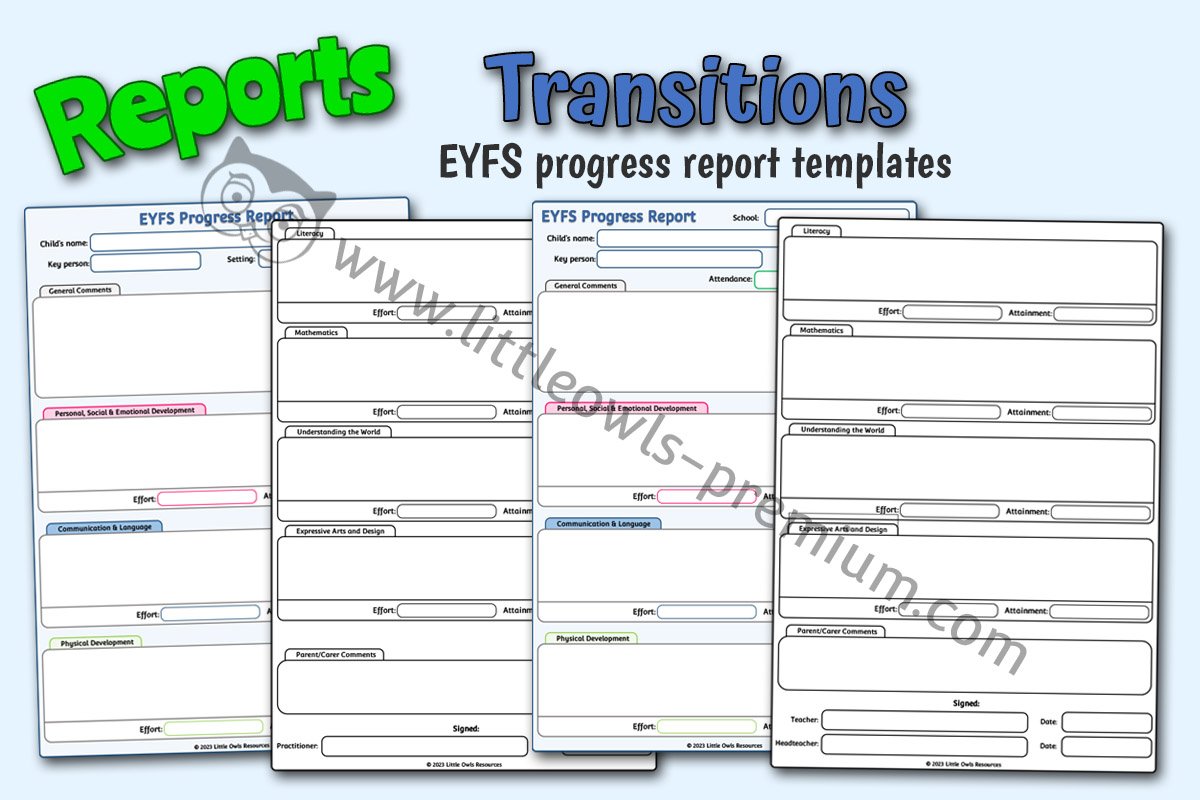
We hope these report templates are useful.
Please see below for templates included within this pack.
Preschool/Nursery/Childminder
Colour version – p2-3
Low-ink (black and white) version – p4-5
Reception/School
Colour version – p6-7
Low-ink (black and white) version – p8-9
Original artwork drawn by Sara Murphy and final digital resources created by Stuart Murphy. COPYRIGHT ON ALL OF THE RESOURCES HOUSED ON THIS WEBSITE IS HELD BY ‘LITTLE OWLS RESOURCES’. OUR RESOURCES (INCLUDING THE IMAGES WITHIN THEM), CANNOT BE SHARED OR SOLD COMMERCIALLY.
DOWNLOAD EDITABLE (DOCX)
DOWNLOAD NON-EDITABLE (PDF)
DOWNLOAD NON-EDITABLE (Zipped JPEGs)
<<-BACK TO ‘EYFS FRAMEWORK’ MENU
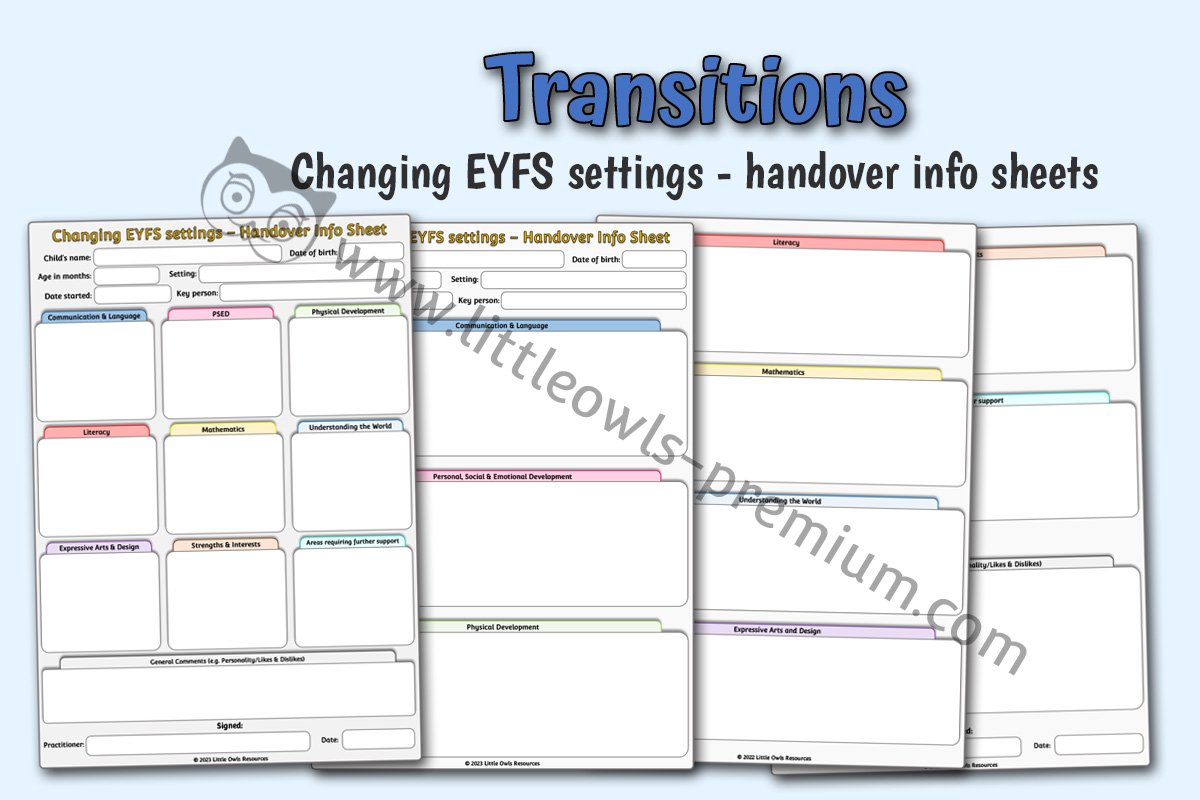
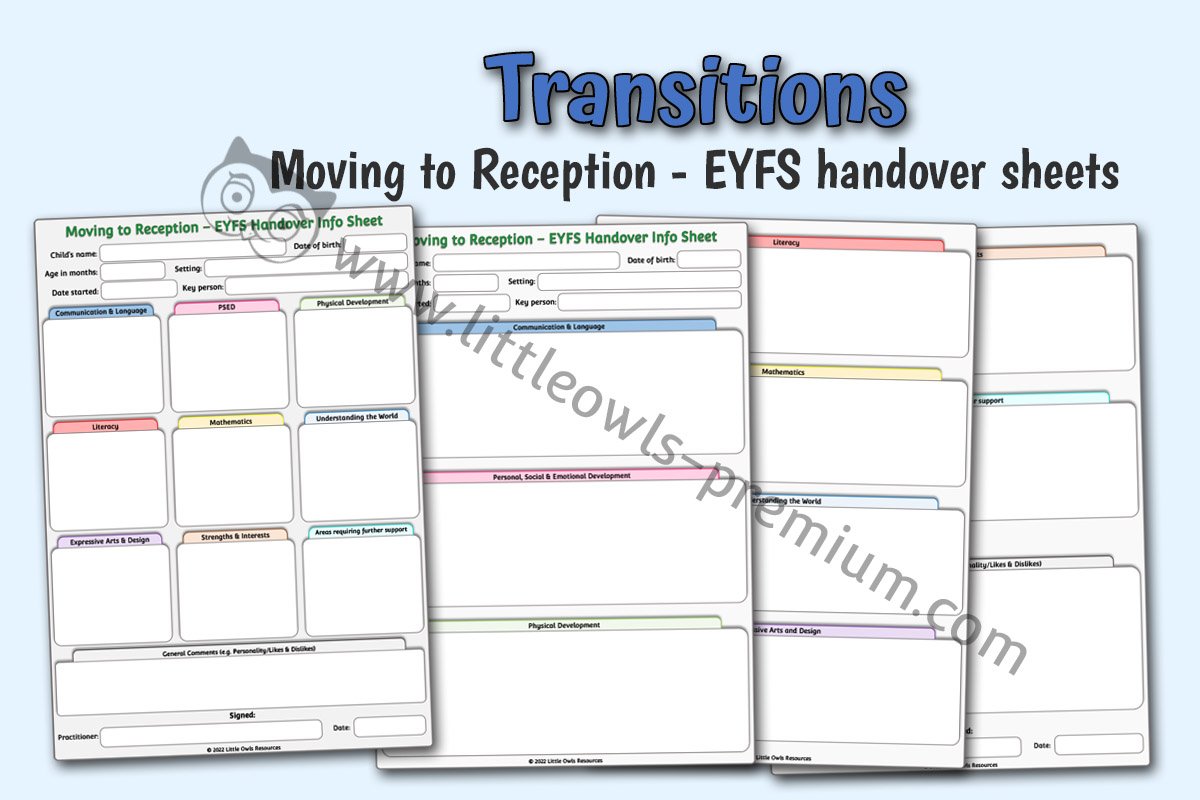
These sheets are intended for use by practitioners in pre-school EYFS settings (Nursery, Pre-School, Childminders). Both the short form (one page) and the longer variation (three pages) have spaces for adding information about a child’s individual attainment and personality that may be useful for their new setting. Please print and use the sheets you find most useful within this pack.
We hope you find this helpful!
Original artwork drawn by Sara Murphy and final digital resources created by Stuart Murphy. COPYRIGHT ON ALL OF THE RESOURCES HOUSED ON THIS WEBSITE IS HELD BY ‘LITTLE OWLS RESOURCES’. OUR RESOURCES (INCLUDING THE IMAGES WITHIN THEM), CANNOT BE SHARED OR SOLD COMMERCIALLY.
DOWNLOAD EDITABLE (DOCX)
DOWNLOAD NON-EDITABLE (PDF)
DOWNLOAD NON-EDITABLE (Zipped JPEGs)
<<-BACK TO ‘EYFS FRAMEWORK’ MENU
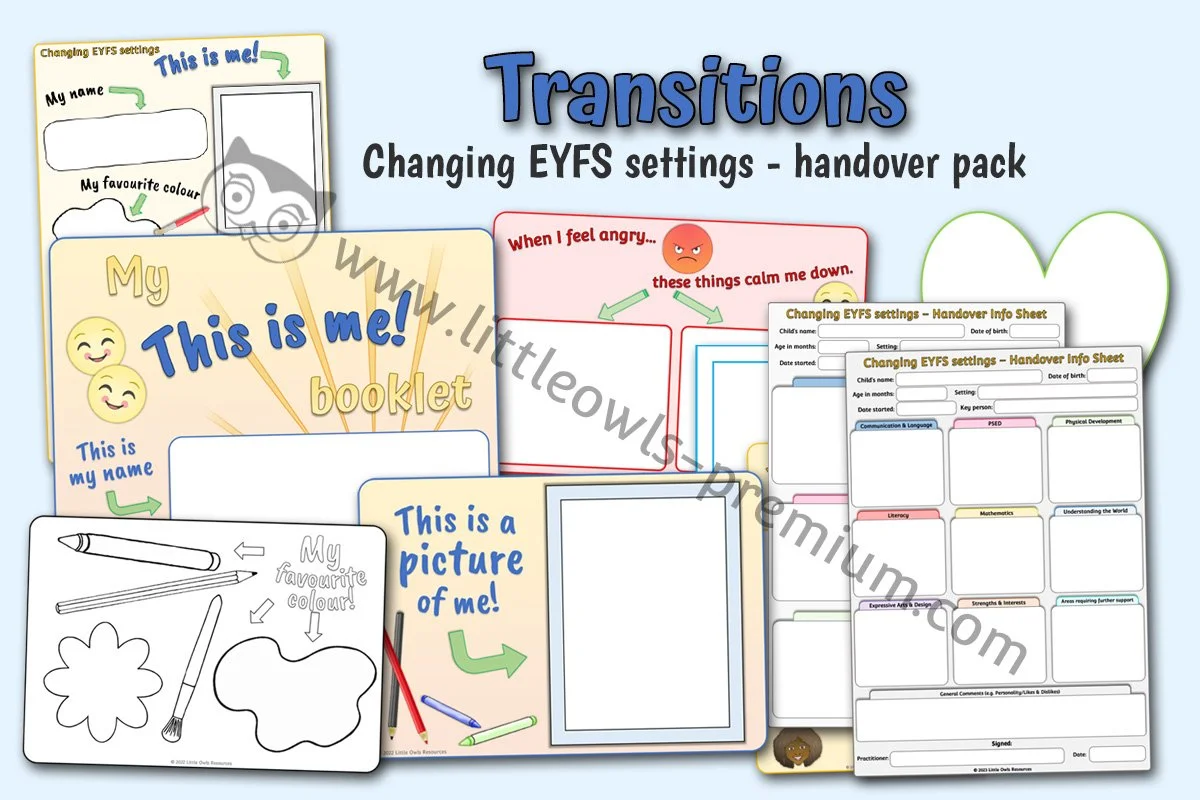
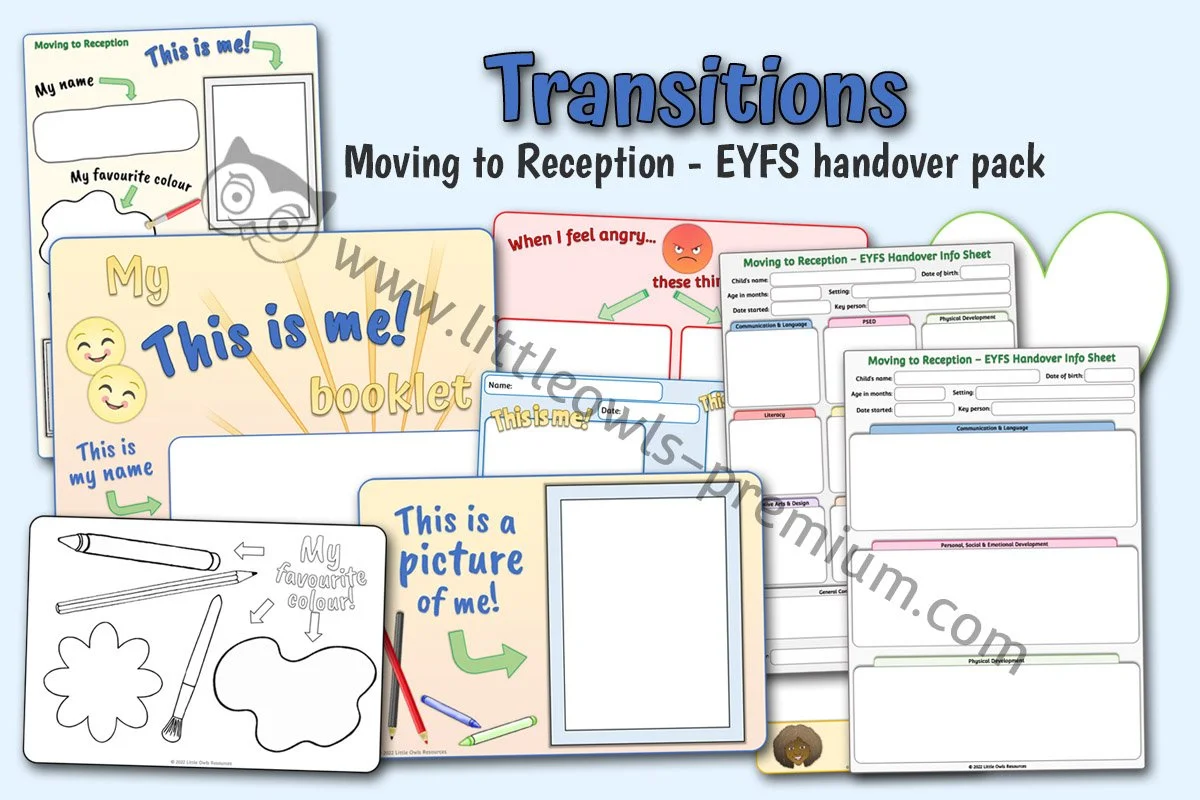
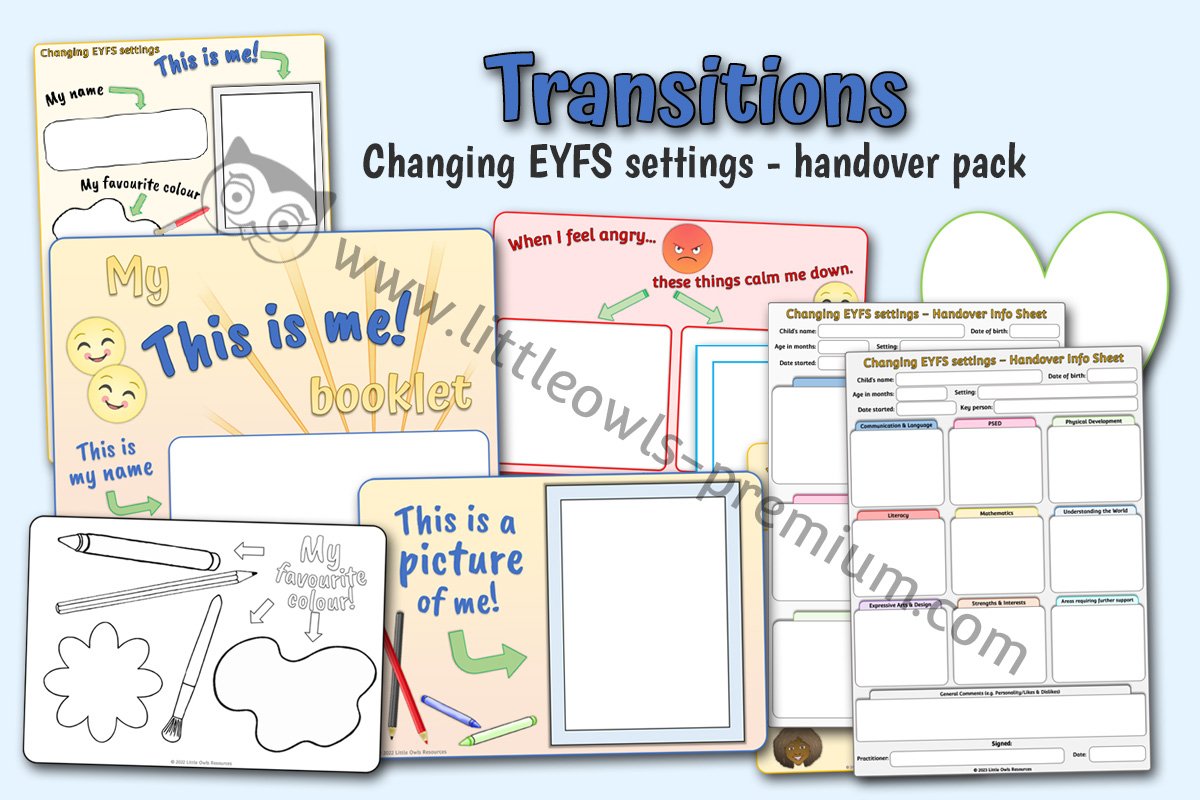
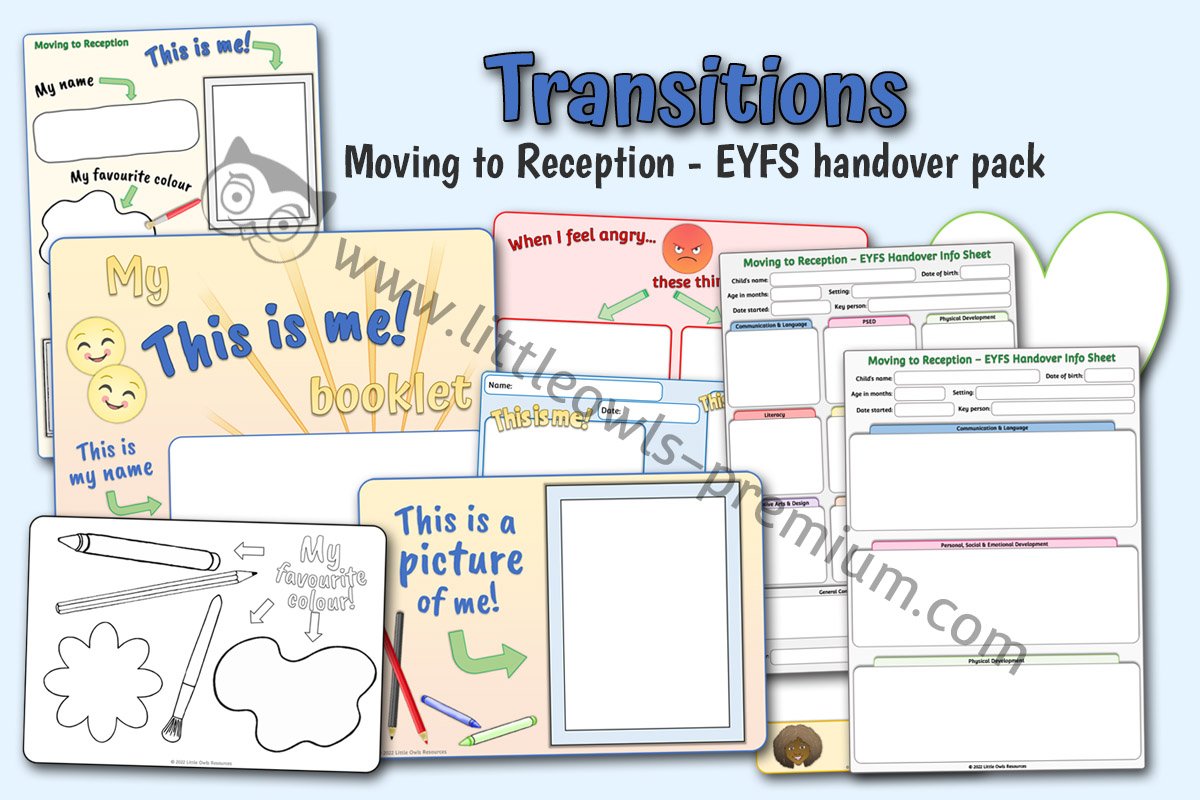
This pack is intended for use by practitioners in pre-school EYFS settings (Nursery, Pre-School, Childminders) to compile information to be sent to a child’s new key worker when moving to a new setting.
Elements of this pack could also be used by settings who would like to send home a pack for children to fill in with their families before starting.
Pages included in the pack as follows:
(Please note that we have provided a selectin of pages for you to choose those appropriate for your child/setting needs. Print the ones which work for you and your child(ren) in order to create your own bespoke pack.)
EYFS handover sheets p2-5
• Forms to pass on attainment information to new setting.
‘This is me’ sheets (colour) p6-7
• Sheets for children to fill in independently or with adult help to tell new setting about themselves.
‘This is me’ sheets (BW) p8-9
• Sheets for children to fill in independently or with adult help to tell new setting about themselves
‘When I feel worried’ sheet (vertical) p10
• Sheets for children to complete with some support about their coping strategies.
‘When I feel angry’ sheet (vertical) p11
• Sheets for children to complete with some support about their coping strategies.
Picture frame outline (black) p12
• Rectangle frame for children to draw a self-portrait.
Picture frame outline (blue) p13
• Rectangle frame for children to draw a self-portrait.
Heart frame outline (pink) p14
• Heart-shaped frame for children to draw a self-portrait.
Heart frame outline (green) p15
• Heart-shaped frame for children to draw a self-portrait.
Balloon frame outline (red) p16
• Balloon-shaped frame for children to draw a self-portrait.
Balloon frame outline (yellow) p17
• Balloon-shaped frame for children to draw a self-portrait.
‘This is me’ booklet (colour) p18-26
• Booklet for children to fill in independently (or with help) to tell new setting about themselves.
‘This is me’ booklet (BW) p27-35
• Booklet for children to fill in independently (or with help) to tell new setting about themselves.
Picture/Handprint/Name sheets p36-40
• Sheets for children to draw themselves, add their handprint and attempt their name.
‘When I feel worried’ sheet (horizontal) p41
• Sheets for children to complete with some support about their coping strategies.
‘When I feel angry’ sheet (horizontal) p42
• Sheets for children to complete with some support about their coping strategies.
We hope you find this helpful!
Original artwork drawn by Sara Murphy and final digital resources created by Stuart Murphy. COPYRIGHT ON ALL OF THE RESOURCES HOUSED ON THIS WEBSITE IS HELD BY ‘LITTLE OWLS RESOURCES’. OUR RESOURCES (INCLUDING THE IMAGES WITHIN THEM), CANNOT BE SHARED OR SOLD COMMERCIALLY.
DOWNLOAD EDITABLE (DOCX)
DOWNLOAD NON-EDITABLE (PDF)
DOWNLOAD NON-EDITABLE (Zipped JPEGs)
<<-BACK TO ‘EYFS FRAMEWORK’ MENU
These sheets are intended for use by practitioners in pre-school EYFS settings (Nursery, Pre-School, Childminders). Both the short form (one page) and the longer variation (three pages) have spaces for adding information about a child’s individual attainment and personality that may be useful for their Reception teacher.
We hope you find this helpful!
Original artwork drawn by Sara Murphy and final digital resources created by Stuart Murphy. COPYRIGHT ON ALL OF THE RESOURCES HOUSED ON THIS WEBSITE IS HELD BY ‘LITTLE OWLS RESOURCES’. OUR RESOURCES (INCLUDING THE IMAGES WITHIN THEM), CANNOT BE SHARED OR SOLD COMMERCIALLY.
DOWNLOAD EDITABLE (DOCX)
DOWNLOAD NON-EDITABLE (PDF)
DOWNLOAD NON-EDITABLE (Zipped JPEGs)
<<-BACK TO ‘EYFS FRAMEWORK’ MENU
This pack is intended for use by practitioners in pre-school EYFS settings (Nursery, Pre-School, Childminders) to compile information to be sent to a child’s new teacher when starting school.
Elements of this pack could also be used by schools/reception teachers who would like to send home a pack for children to fill in with their families before starting with you.
Pages included in the pack as follows:
(Please note that we have provided a selectin of pages for you to choose those appropriate for your child/setting needs. Print the ones which work for you and your child(ren) in order to create your own bespoke pack.)
EYFS handover sheets p2-5
• Forms to pass on attainment information to new teacher.
‘This is me’ sheets (colour) p6-7
• Sheets for children to fill in independently or with adult help to tell new teacher about themselves.
‘This is me’ sheets (BW) p8-9
• Sheets for children to fill in independently or with adult help to tell new teacher about themselves
‘When I feel worried’ sheet (vertical) p10
• Sheets for children to complete with some support about their coping strategies.
‘When I feel angry’ sheet (vertical) p11
• Sheets for children to complete with some support about their coping strategies.
Picture frame outline (black) p12
• Rectangle frame for children to draw a self-portrait.
Picture frame outline (blue) p13
• Rectangle frame for children to draw a self-portrait.
Heart frame outline (pink) p14
• Heart-shaped frame for children to draw a self-portrait.
Heart frame outline (green) p15
• Heart-shaped frame for children to draw a self-portrait.
Balloon frame outline (red) p16
• Balloon-shaped frame for children to draw a self-portrait.
Balloon frame outline (yellow) p17
• Balloon-shaped frame for children to draw a self-portrait.
‘This is me’ booklet (colour) p18-26
• Booklet for children to fill in independently (or with help) to tell new teacher about themselves.
‘This is me’ booklet (BW) p27-35
• Booklet for children to fill in independently (or with help) to tell new teacher about themselves.
Picture/Handprint/Name sheets p36-40
• Sheets for children to draw themselves, add their handprint and attempt their name.
‘When I feel worried’ sheet (horizontal) p41
• Sheets for children to complete with some support about their coping strategies.
‘When I feel angry’ sheet (horizontal) p42
• Sheets for children to complete with some support about their coping strategies.
We hope you find this helpful!
Original artwork drawn by Sara Murphy and final digital resources created by Stuart Murphy. COPYRIGHT ON ALL OF THE RESOURCES HOUSED ON THIS WEBSITE IS HELD BY ‘LITTLE OWLS RESOURCES’. OUR RESOURCES (INCLUDING THE IMAGES WITHIN THEM), CANNOT BE SHARED OR SOLD COMMERCIALLY.
DOWNLOAD EDITABLE (DOCX)
DOWNLOAD NON-EDITABLE (PDF)
DOWNLOAD NON-EDITABLE (Zipped JPEGs)
<<-BACK TO ‘EYFS FRAMEWORK’ MENU
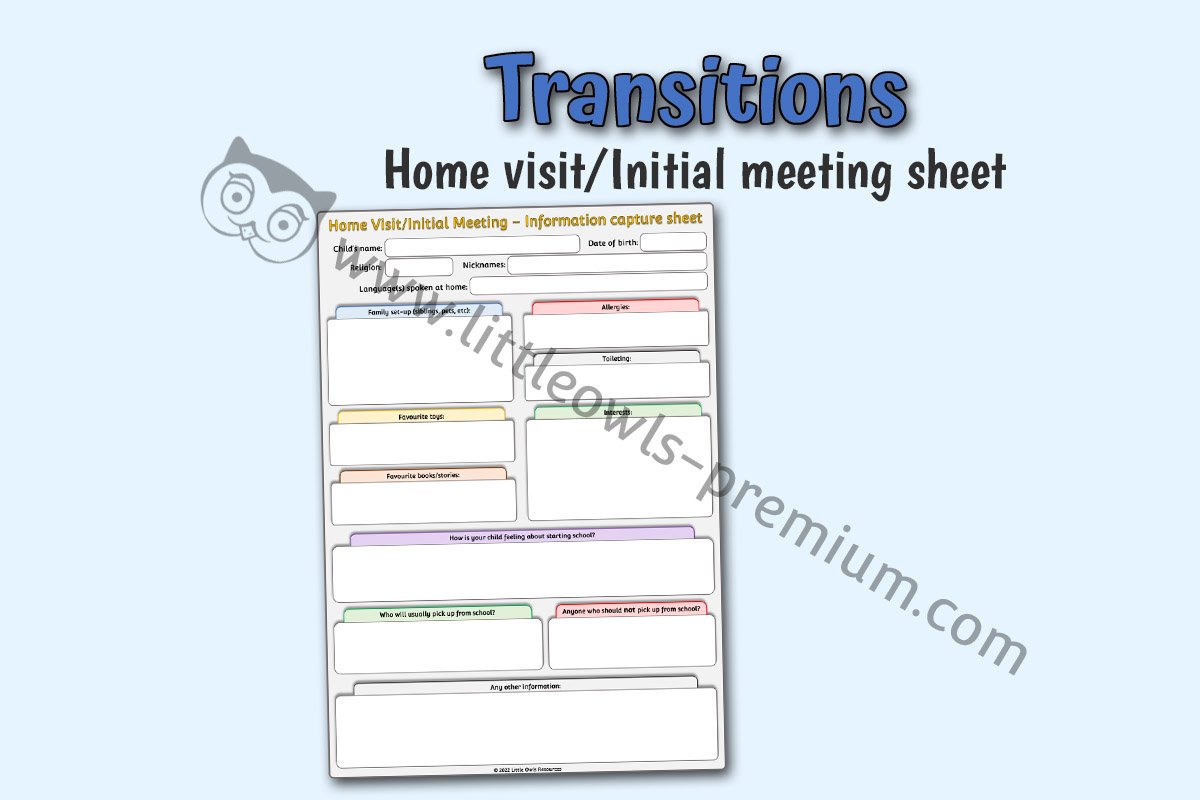
This sheet is intended for use by Reception teachers when first meeting new intake children and/or their parent/guardian.
It is hoped that the headings of the boxes will help in both gathering information and stimulating helpful conversation about the child.
We hope you find this helpful!
Original artwork drawn by Sara Murphy and final digital resources created by Stuart Murphy. COPYRIGHT ON ALL OF THE RESOURCES HOUSED ON THIS WEBSITE IS HELD BY ‘LITTLE OWLS RESOURCES’. OUR RESOURCES (INCLUDING THE IMAGES WITHIN THEM), CANNOT BE SHARED OR SOLD COMMERCIALLY.
DOWNLOAD EDITABLE (DOCX)
DOWNLOAD NON-EDITABLE (PDF)
DOWNLOAD NON-EDITABLE (Zipped JPEGs)
<<-BACK TO ‘EYFS FRAMEWORK’ MENU
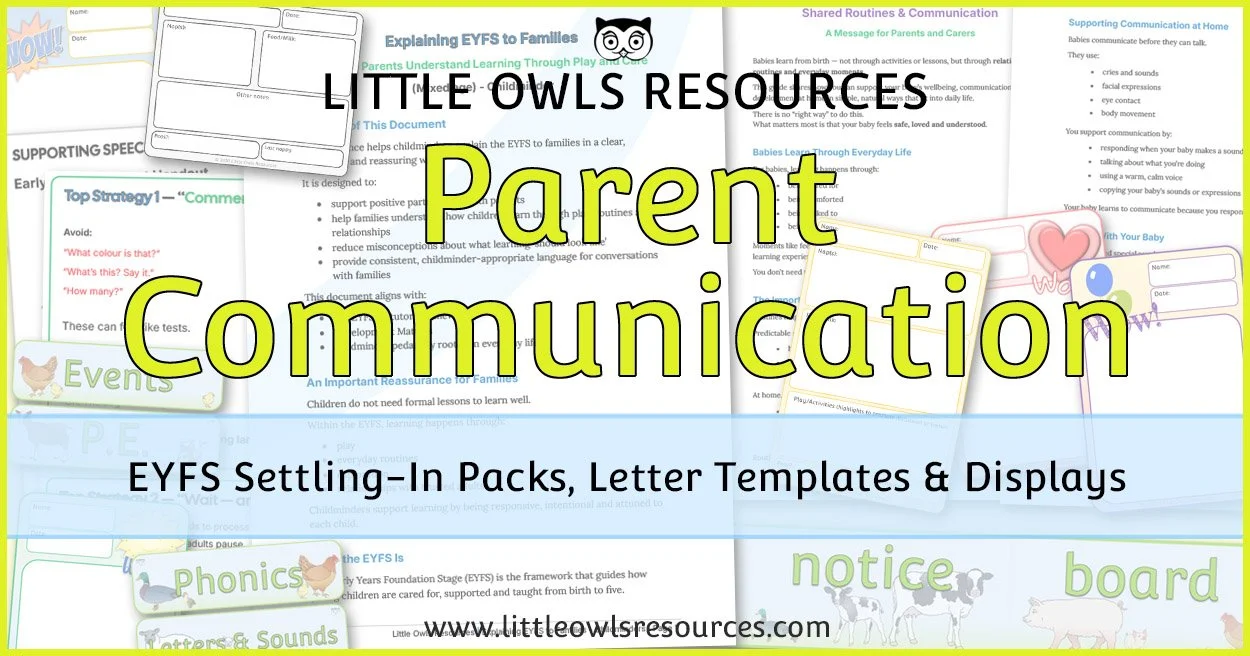
Parent Communication
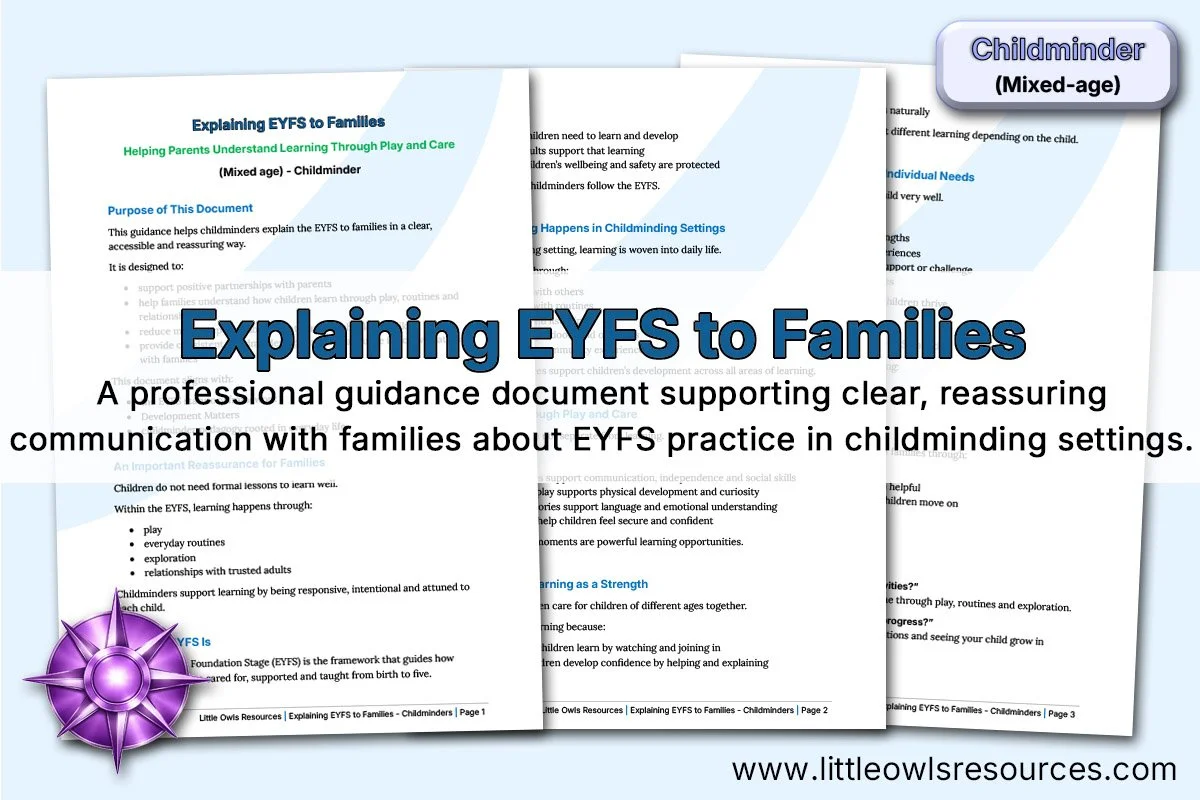
Helping Parents Understand Learning Through Play and Care - A professional guidance document supporting clear, reassuring communication with families about EYFS practice in childminding settings.
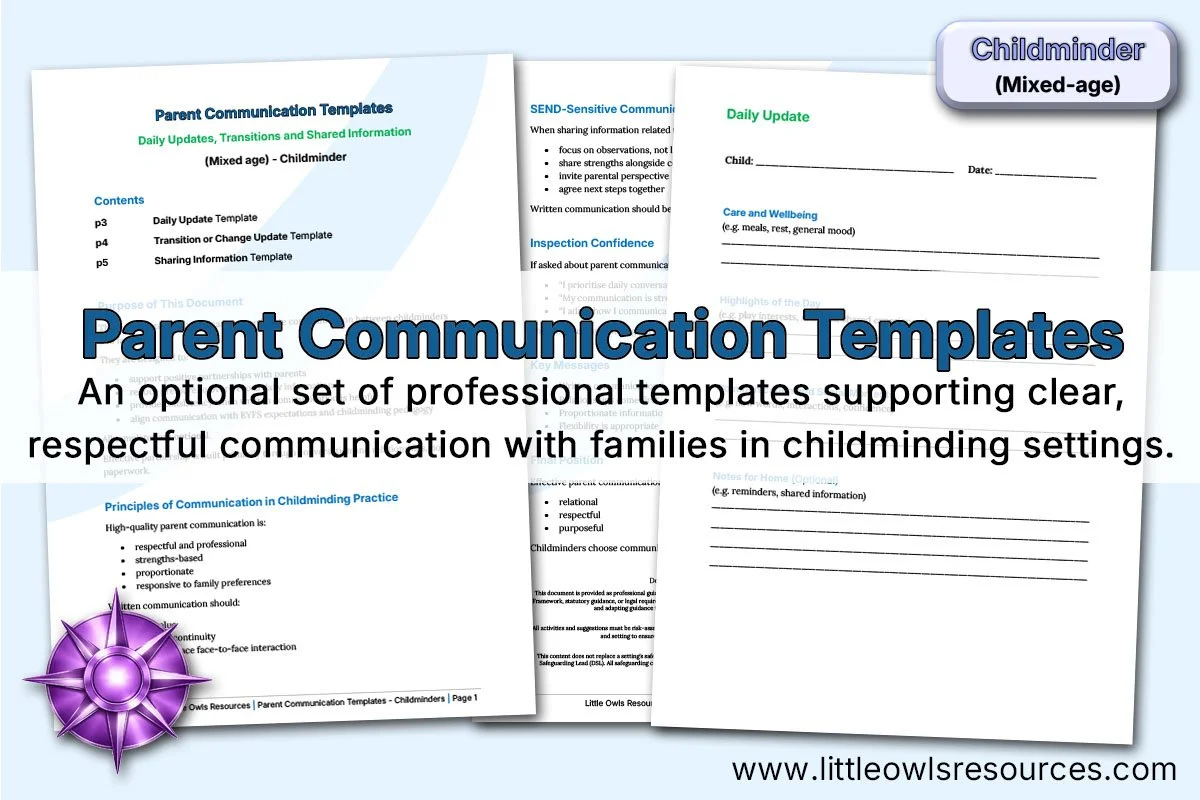
Daily Updates, Transitions and Shared Information - An optional set of professional templates supporting clear, respectful communication with families in childminding settings.
Editable letters and updates supporting clear, inclusive communication with families (18–36 months)
A simple, strengths-based communication tool supporting partnership between nursery and home (18–36 months)
A parent-friendly guidance pack supporting early speech and language through everyday interaction.
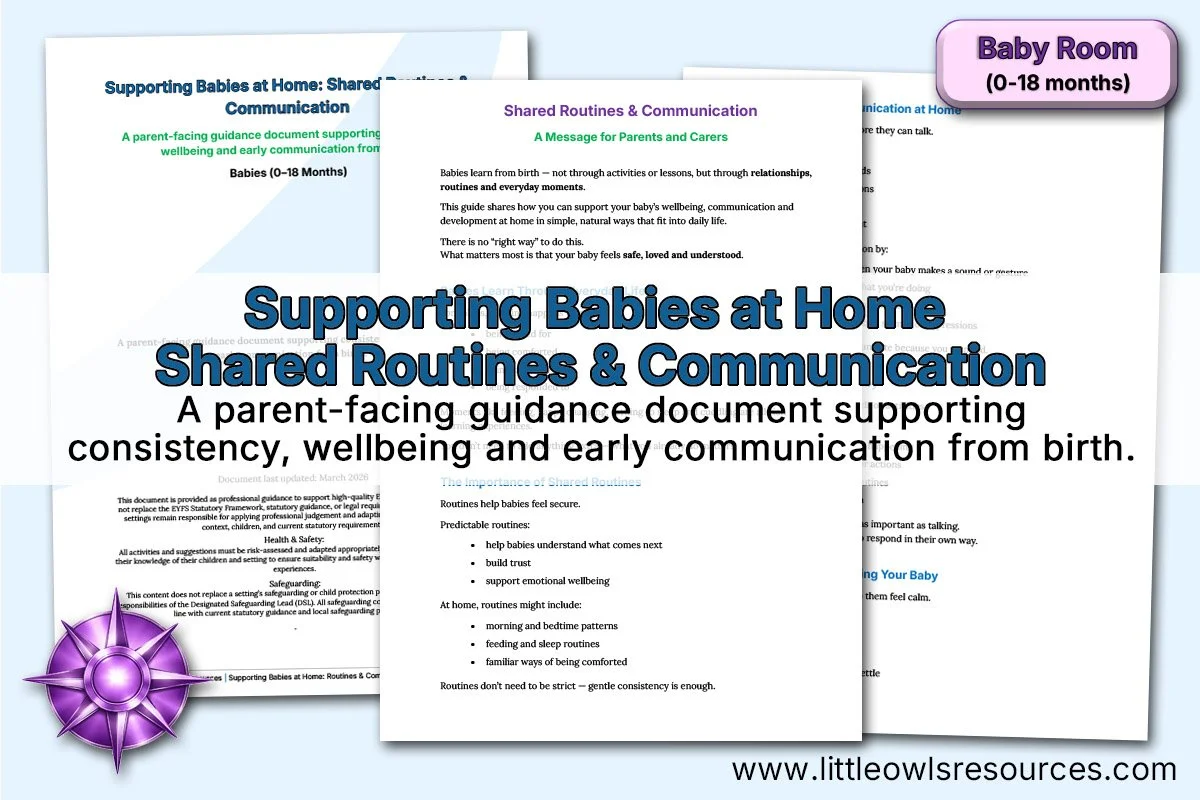
A parent-facing guidance document supporting consistency, wellbeing and early communication from birth.
A professional, parent-facing pack supporting calm transitions, secure attachment and consistent early care in baby rooms.
A professional communication document supporting strong partnerships between home and the baby room.
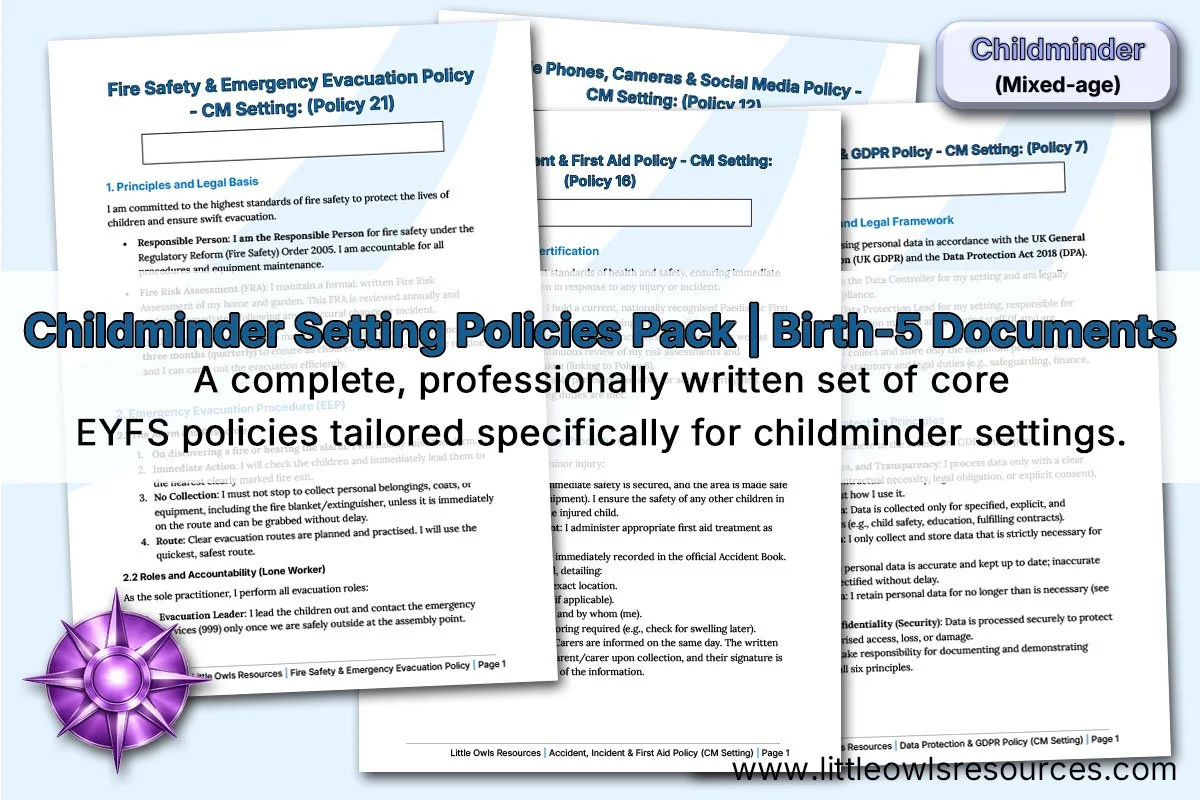
A complete, professionally written set of core EYFS policies tailored specifically for childminder settings.
A complete, professionally written set of core EYFS policies supporting safe, compliant and high-quality early years practice in Nurseries & Preschools.
A parent-friendly guidance pack that explains how children learn in Reception (4–5), what to expect day to day, and how families can support learning at home without pressure.
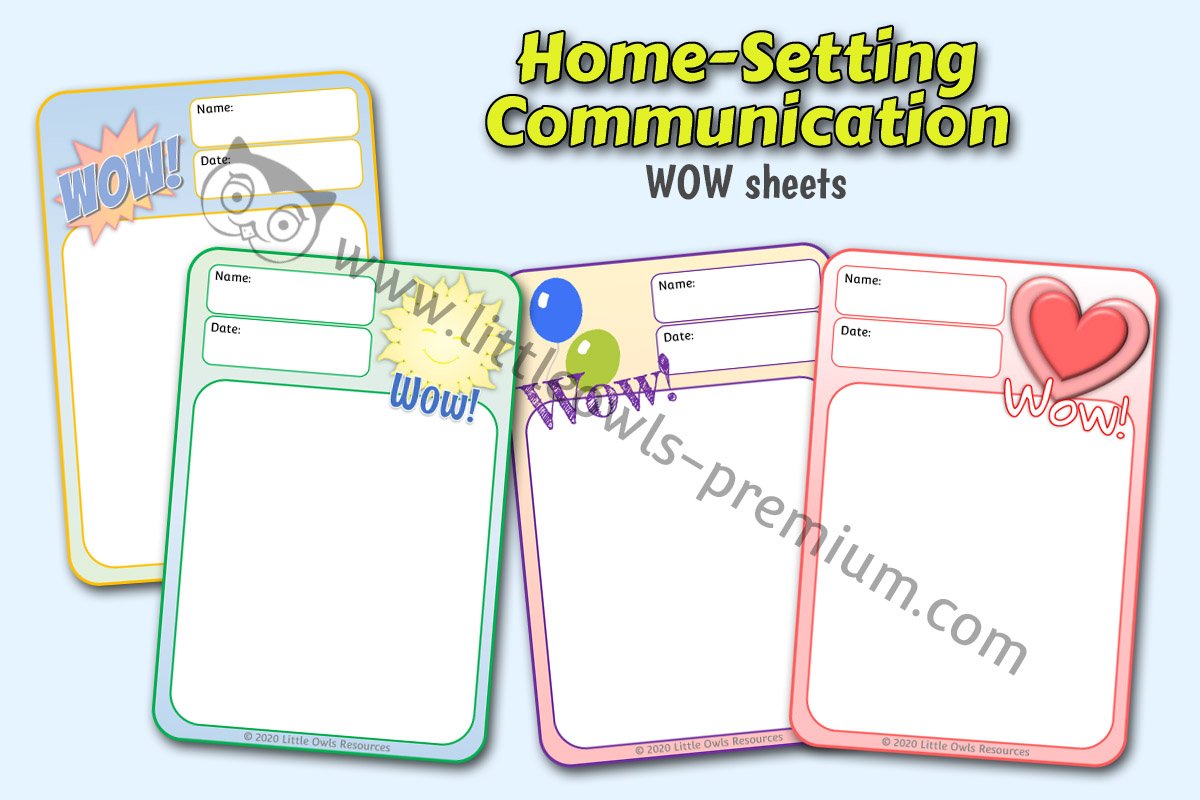
Celebrate children’s achievements! Hear about children’s ‘Wow Moments’ at home.
Send these A6 sized ‘Wow Moment’ Sheets home with children and encourage parents to fill them in and return them to you when their child achieves something special.
This could be for example putting their shoes on independently, a sentence/word they have said, helping with a chore at home, writing their name, etc.
These sheets could also be used in your setting for you to fill in to celebrate children’s achievements.
Original artwork drawn by Sara Murphy and final digital resources created by Stuart Murphy. COPYRIGHT ON ALL OF THE RESOURCES HOUSED ON THIS WEBSITE IS HELD BY ‘LITTLE OWLS RESOURCES’. OUR RESOURCES (INCLUDING THE IMAGES WITHIN THEM), CANNOT BE SHARED OR SOLD COMMERCIALLY.
DOWNLOAD EDITABLE (DOCX)
DOWNLOAD NON-EDITABLE (PDF)
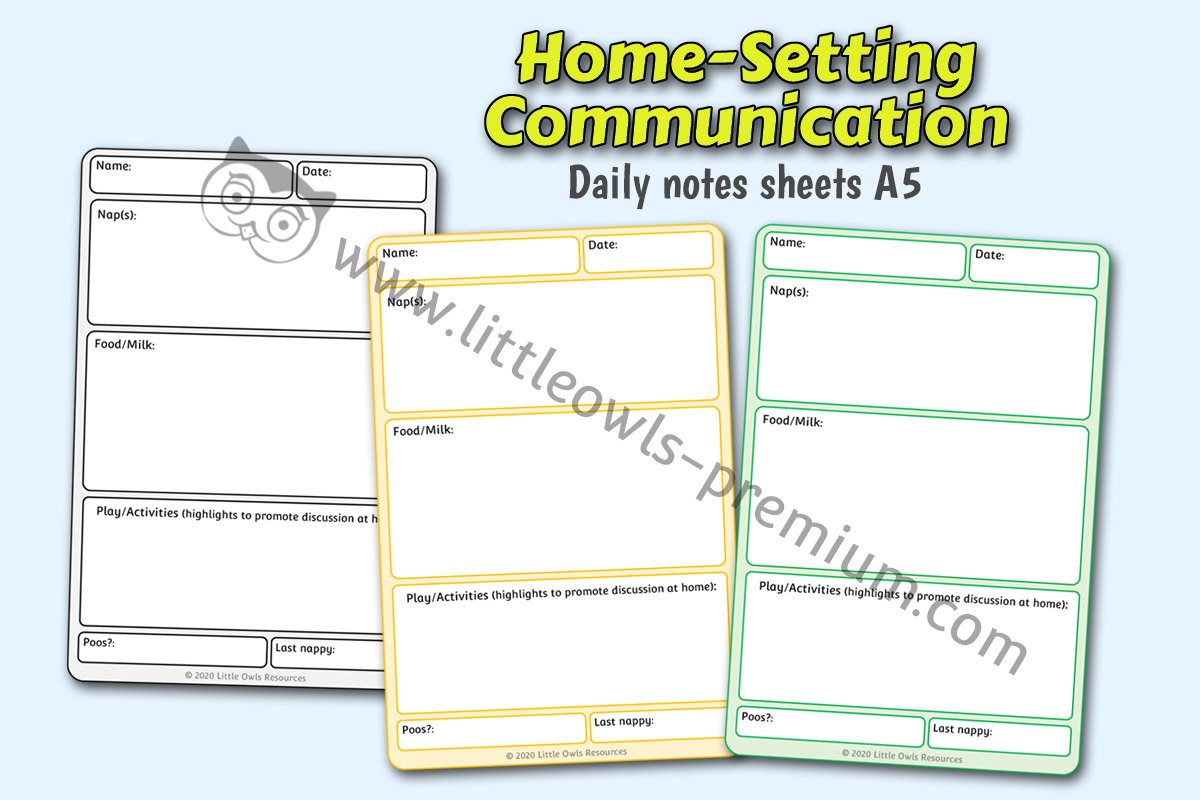
Handy sheet to jot down key information for parents/carers for handover at the end of a session. Whilst Childminding young children, we have found this very useful over the years!
It is available as an editable DOCX file so feel free to change the headings, sizes of boxes, colour themes, etc. You may like to make space for your setting logo.
Also available as a non-editable PDF file.
Original artwork drawn by Sara Murphy and final digital resources created by Stuart Murphy. COPYRIGHT ON ALL OF THE RESOURCES HOUSED ON THIS WEBSITE IS HELD BY ‘LITTLE OWLS RESOURCES’. OUR RESOURCES (INCLUDING THE IMAGES WITHIN THEM), CANNOT BE SHARED OR SOLD COMMERCIALLY.
DOWNLOAD EDITABLE (DOCX)
DOWNLOAD NON-EDITABLE (PDF)
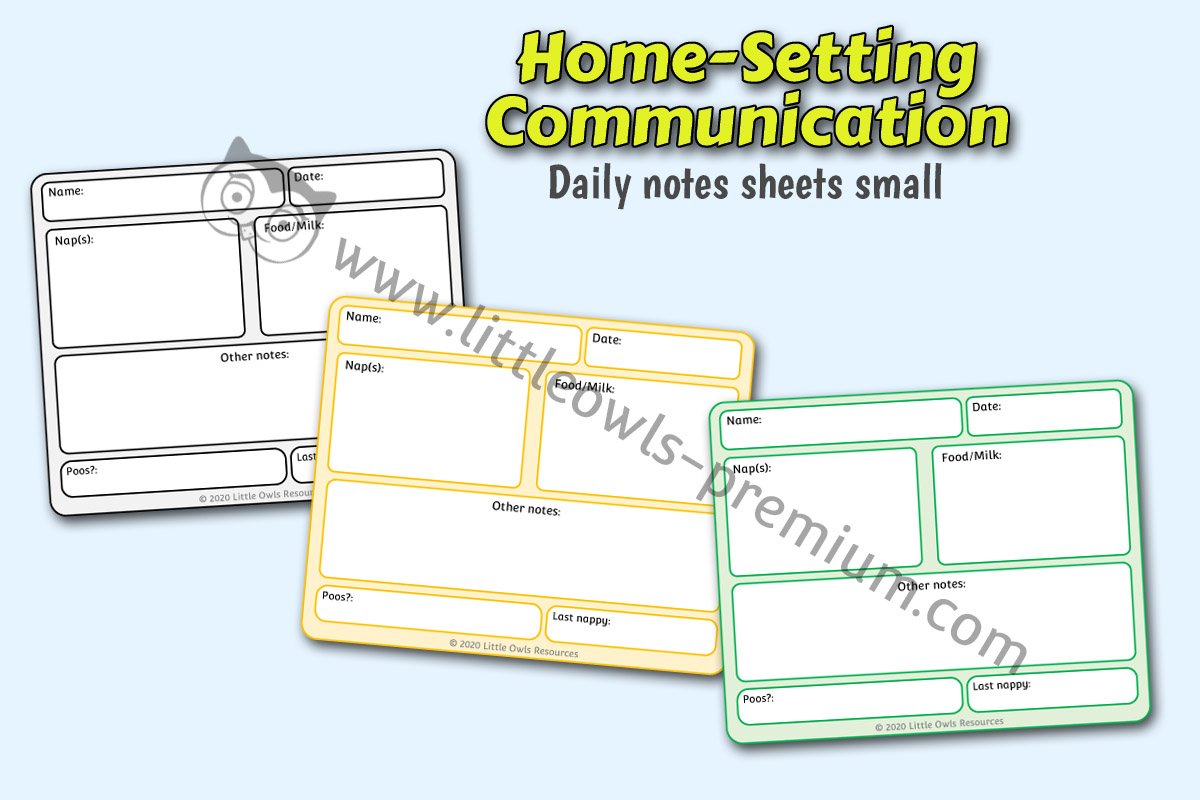
Handy sheet to jot down key information for parents/carers for handover at the end of a session. Whilst Childminding young children, we have found this very useful over the years!
It is available as an editable DOCX file so feel free to change the headings, sizes of boxes, colour themes, etc. You may like to make space for your setting logo.
Also available as a non-editable PDF file.
Original artwork drawn by Sara Murphy and final digital resources created by Stuart Murphy. COPYRIGHT ON ALL OF THE RESOURCES HOUSED ON THIS WEBSITE IS HELD BY ‘LITTLE OWLS RESOURCES’. OUR RESOURCES (INCLUDING THE IMAGES WITHIN THEM), CANNOT BE SHARED OR SOLD COMMERCIALLY.
DOWNLOAD EDITABLE (DOCX)
DOWNLOAD NON-EDITABLE (PDF)
🎒 School Readiness in the EYFS
School readiness is not about academic targets.
It is about:
emotional security
communication and language
independence and confidence
curiosity and engagement
Our resources support practitioners to:
articulate school readiness clearly
avoid inappropriate expectations
communicate confidently with parents and inspectors
Transition Packs
A comprehensive, strength-based transition toolkit supporting children, families and schools.
A leadership and practice pack that sets out how to plan a developmentally appropriate transition from Reception into Year 1, protecting EYFS pedagogy while building continuity into KS1.
School Readiness Posters, Prompts & Handouts
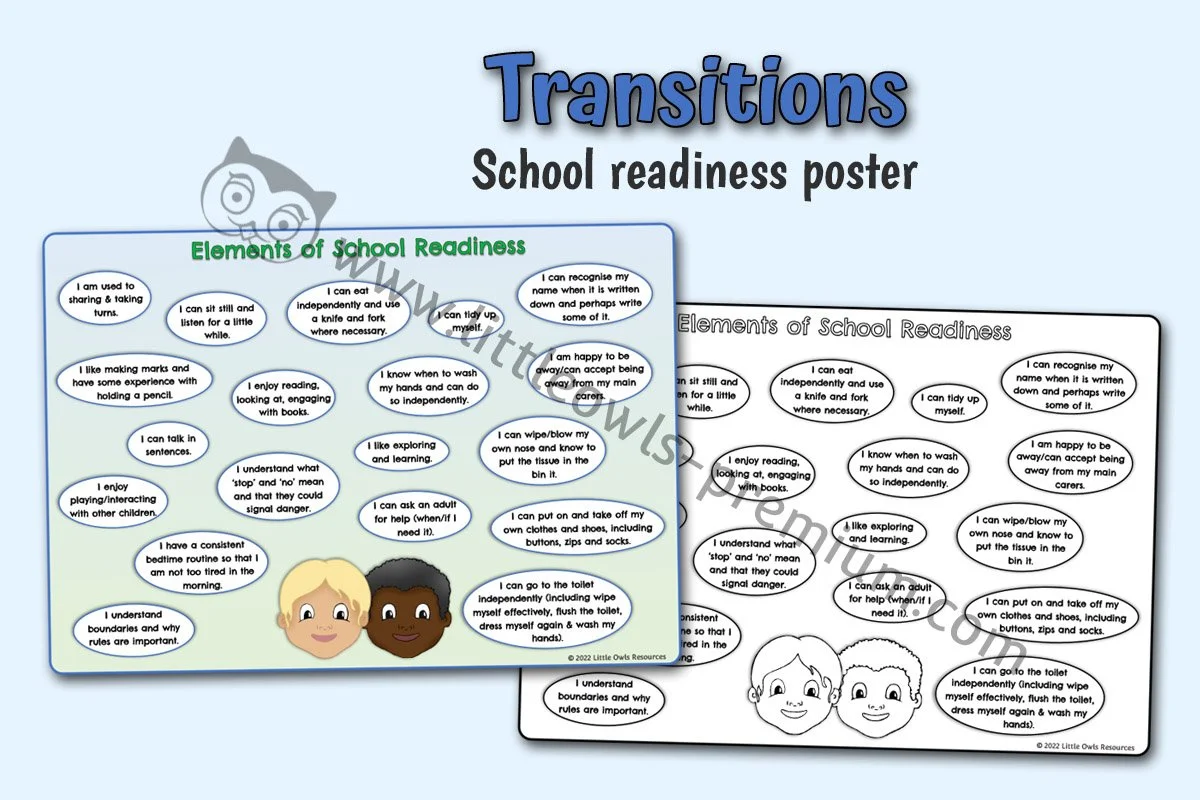
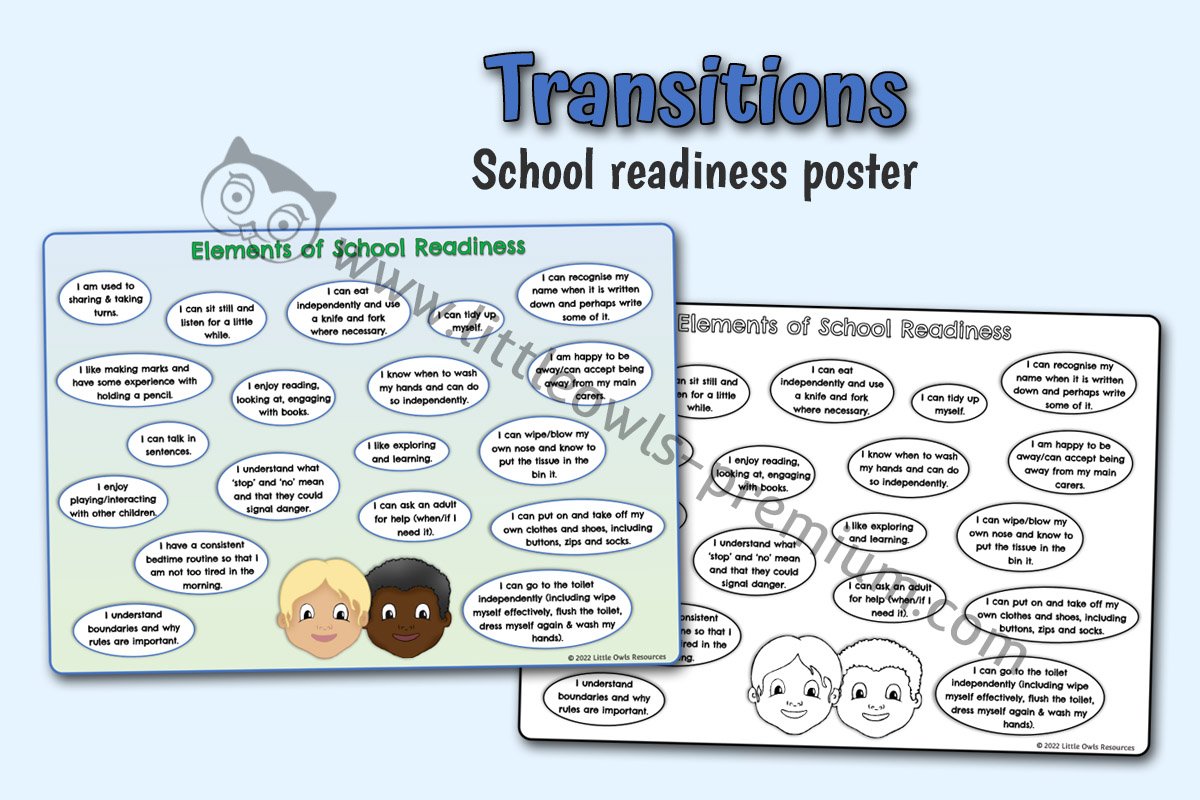
This poster is intended to inform/remind parents and practitioners of some of the milestones that can be reached and celebrated with children as they prepare for their transition to school.
It is important to stress that this is not intended to be used as a tick sheet of absolute requirements. All children are different with distinct strengths and areas for development.
We hope you find this helpful!
Original artwork drawn by Sara Murphy and final digital resources created by Stuart Murphy. COPYRIGHT ON ALL OF THE RESOURCES HOUSED ON THIS WEBSITE IS HELD BY ‘LITTLE OWLS RESOURCES’. OUR RESOURCES (INCLUDING THE IMAGES WITHIN THEM), CANNOT BE SHARED OR SOLD COMMERCIALLY.
DOWNLOAD EDITABLE (DOCX)
DOWNLOAD NON-EDITABLE (PDF)
DOWNLOAD NON-EDITABLE (Zipped JPEGs)
<<-BACK TO ‘EYFS FRAMEWORK’ MENU
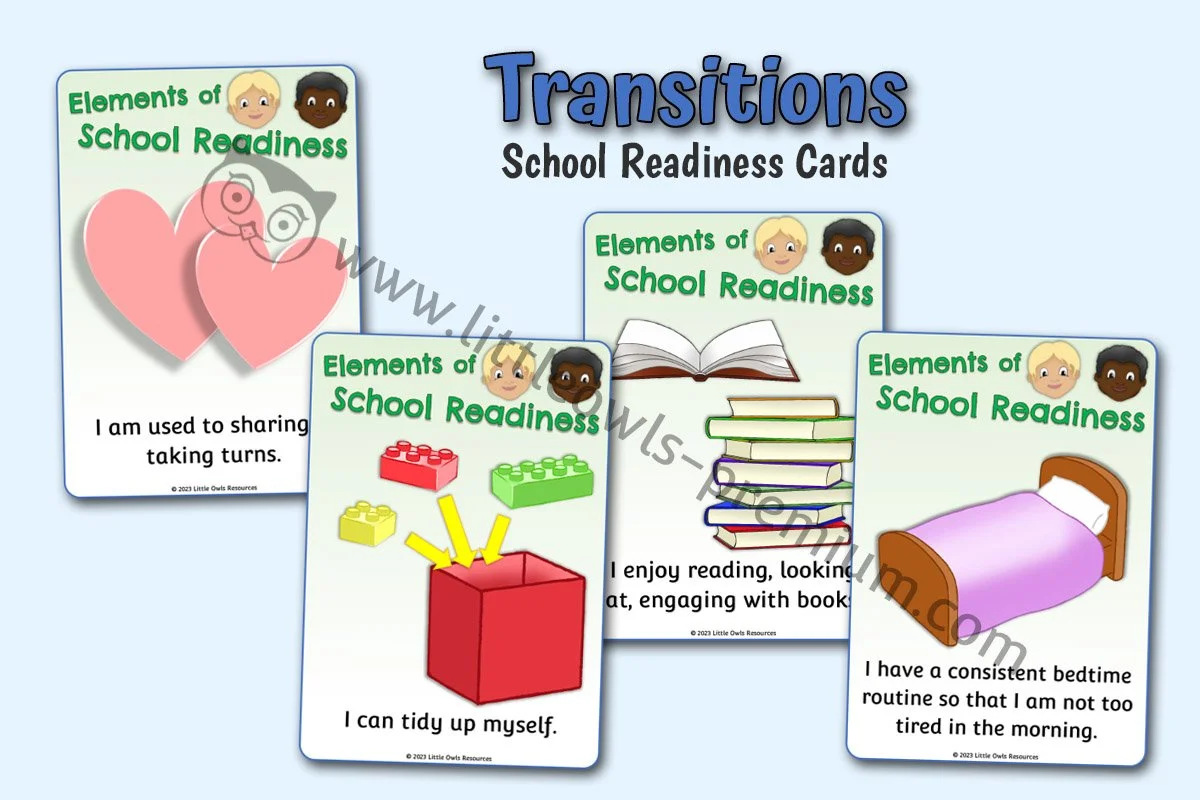
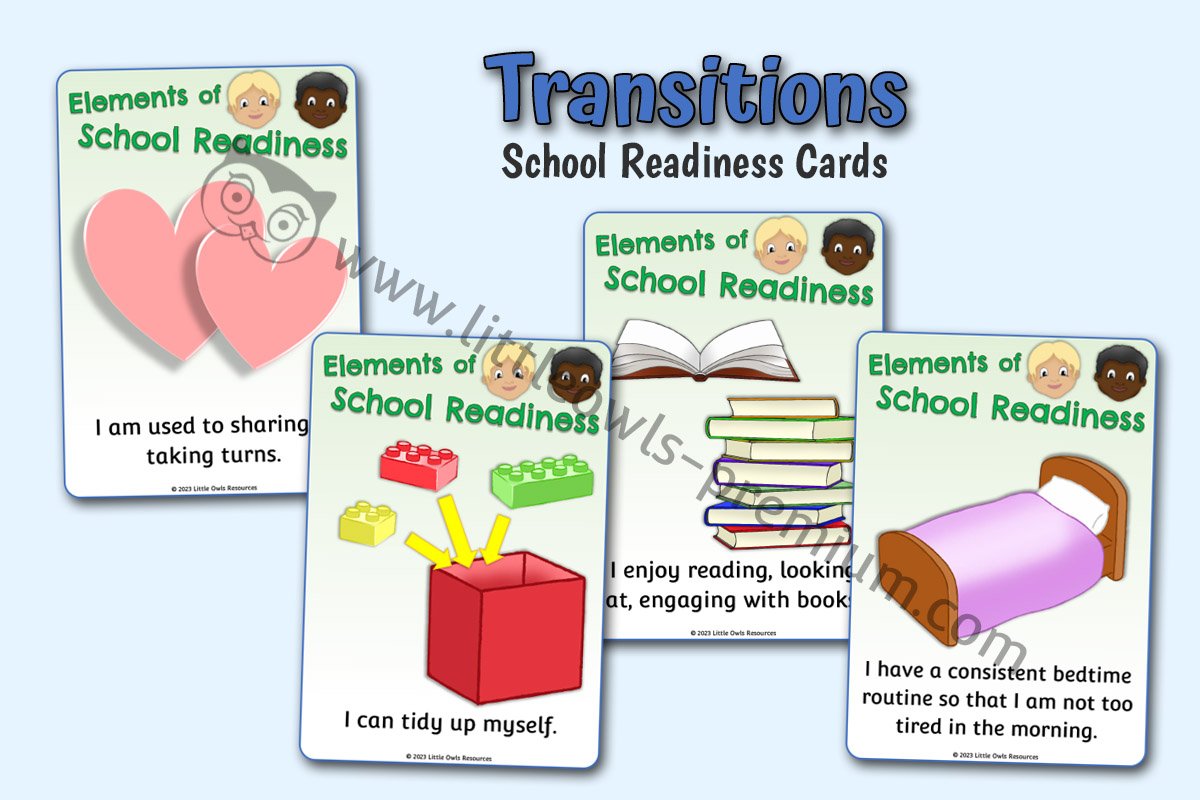
These cards are intended to inform/remind parents and practitioners of some of the milestones that can be reached and celebrated with children as they prepare for their transition to school.
It is important to stress that they are not intended to be a collection of absolute requirements. All children are different with distinct strengths and areas for development.
We hope you find this helpful!
Original artwork drawn by Sara Murphy and final digital resources created by Stuart Murphy. COPYRIGHT ON ALL OF THE RESOURCES HOUSED ON THIS WEBSITE IS HELD BY ‘LITTLE OWLS RESOURCES’. OUR RESOURCES (INCLUDING THE IMAGES WITHIN THEM), CANNOT BE SHARED OR SOLD COMMERCIALLY.
DOWNLOAD EDITABLE (DOCX)
DOWNLOAD NON-EDITABLE (PDF)
DOWNLOAD NON-EDITABLE (Zipped JPEGs)
<<-BACK TO ‘EYFS FRAMEWORK’ MENU
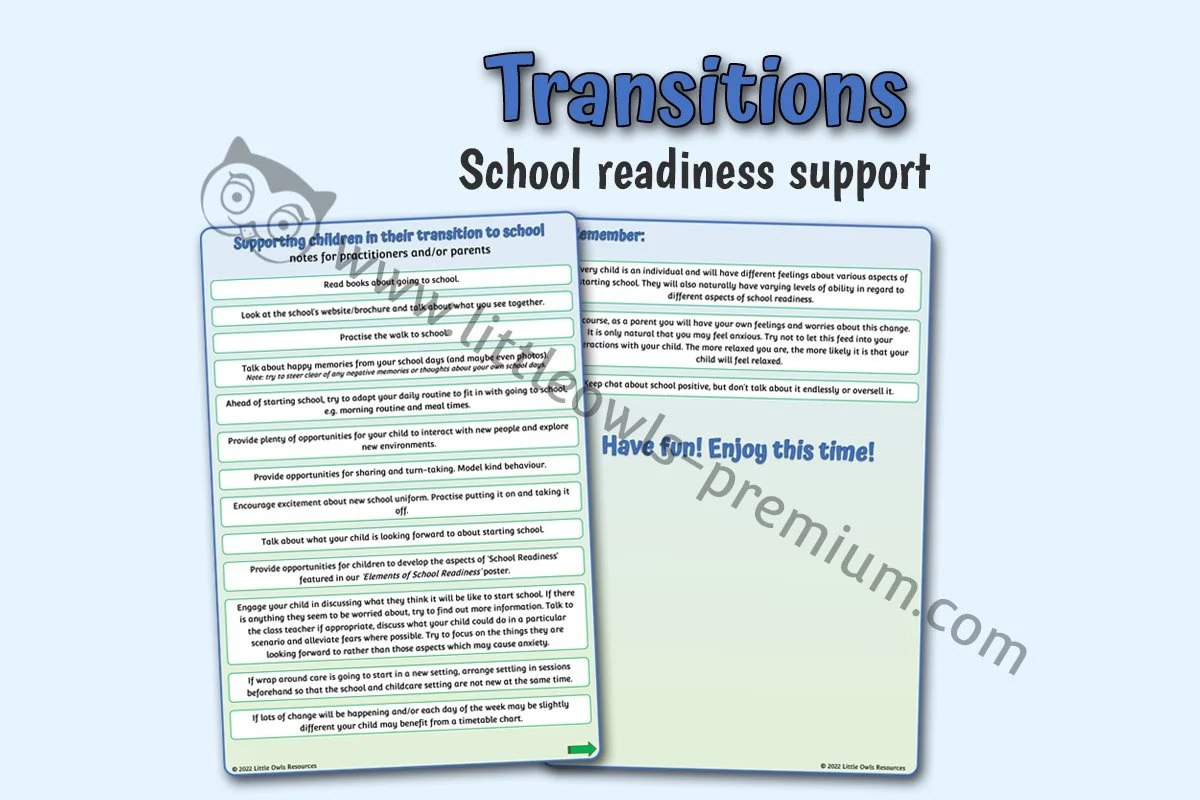
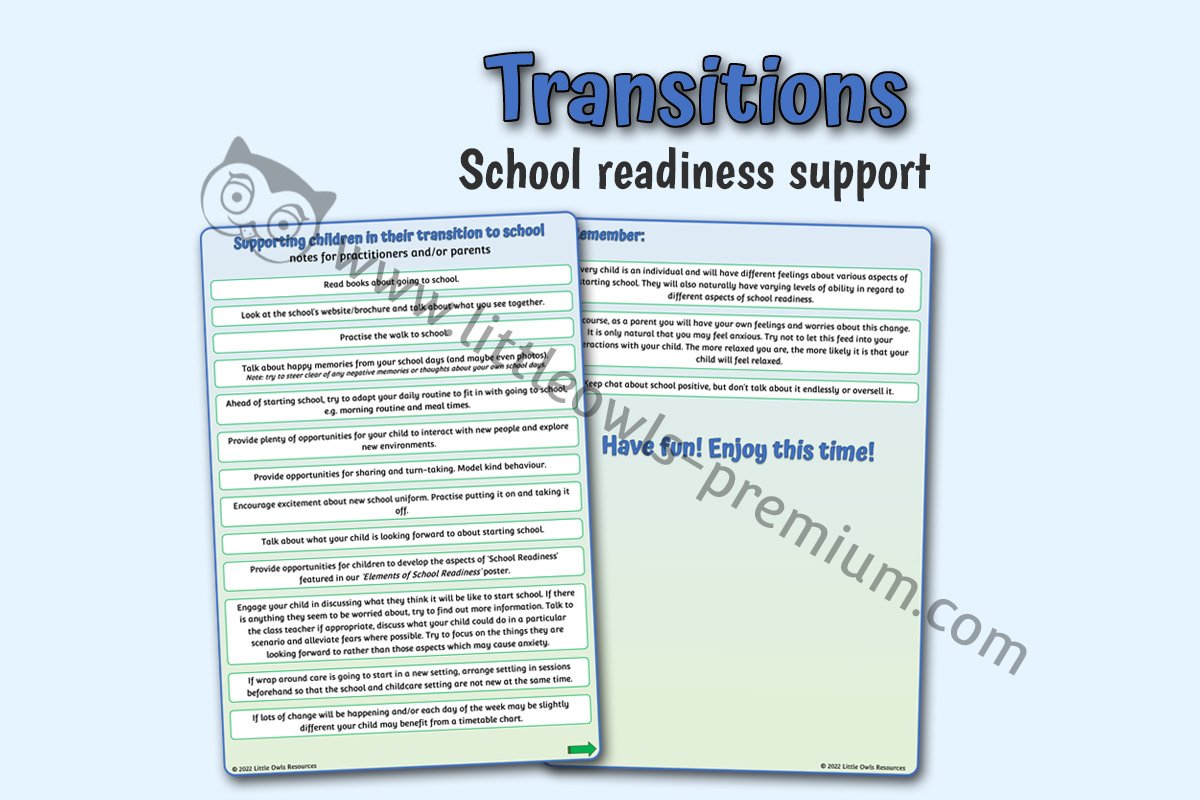
Notes for practitioners and/or parents in supporting children during their transition to school.
We hope you find this helpful!
Original artwork drawn by Sara Murphy and final digital resources created by Stuart Murphy. COPYRIGHT ON ALL OF THE RESOURCES HOUSED ON THIS WEBSITE IS HELD BY ‘LITTLE OWLS RESOURCES’. OUR RESOURCES (INCLUDING THE IMAGES WITHIN THEM), CANNOT BE SHARED OR SOLD COMMERCIALLY.
DOWNLOAD EDITABLE (DOCX)
DOWNLOAD NON-EDITABLE (PDF)
DOWNLOAD NON-EDITABLE (Zipped JPEGs)
<<-BACK TO ‘EYFS FRAMEWORK’ MENU
EYFS Transition Pedagogy, Throughline & Developmental Milestones Documents
A cohesive, high-level overview of learning and development from birth to the end of the EYFS.
A professional guidance document supporting confident, consistent EYFS pedagogy from birth to five.
🎯 Intent, Implementation & Impact
Observation and assessment help practitioners understand the impact of their provision.
Explore:
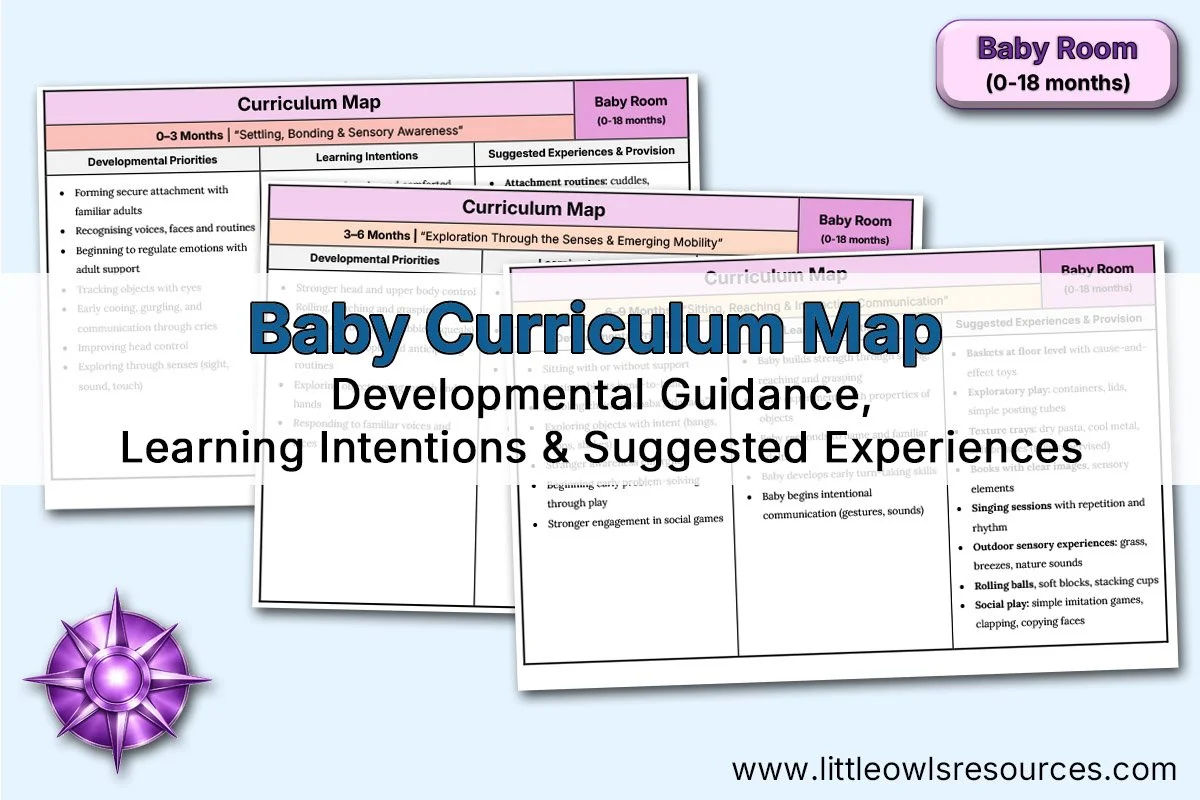
curriculum maps
intent → implementation → impact grids
progression ladders
practitioner reference tools
These support:
curriculum clarity
inspection conversations
professional reflection
Babies | Birth - 18 Months
A professional guidance document supporting confident, developmentally appropriate SEND practice in baby rooms.
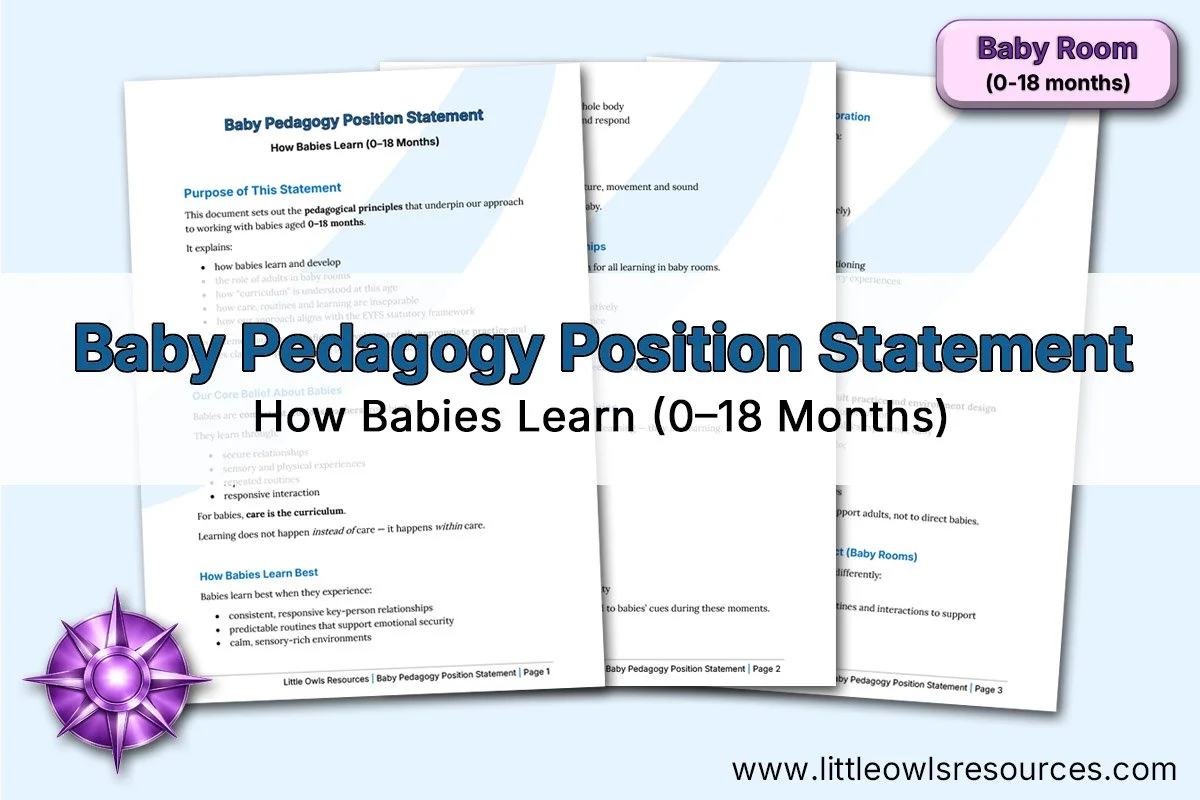
This document sets out the pedagogical principles that underpin our approach to working with babies aged 0–18 months.
Toddlers | 18 - 36 Months
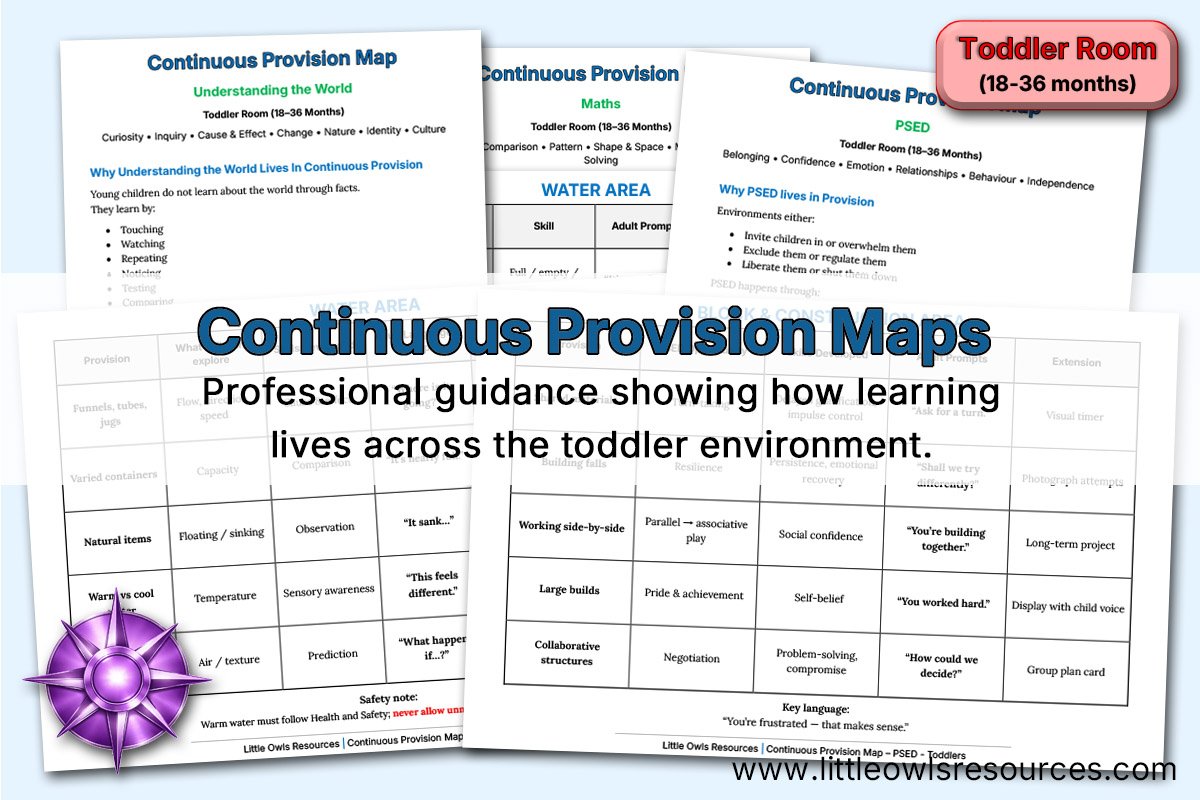
Quick guidance and practical tools for supporting toddlers (18–36 months) in everyday provision.
Foundations for early reading, writing, sound and meaning through play. A practitioner-facing literacy resource designed to support the earliest foundations of reading, writing and communication — before formal phonics, letter instruction or written outcomes.
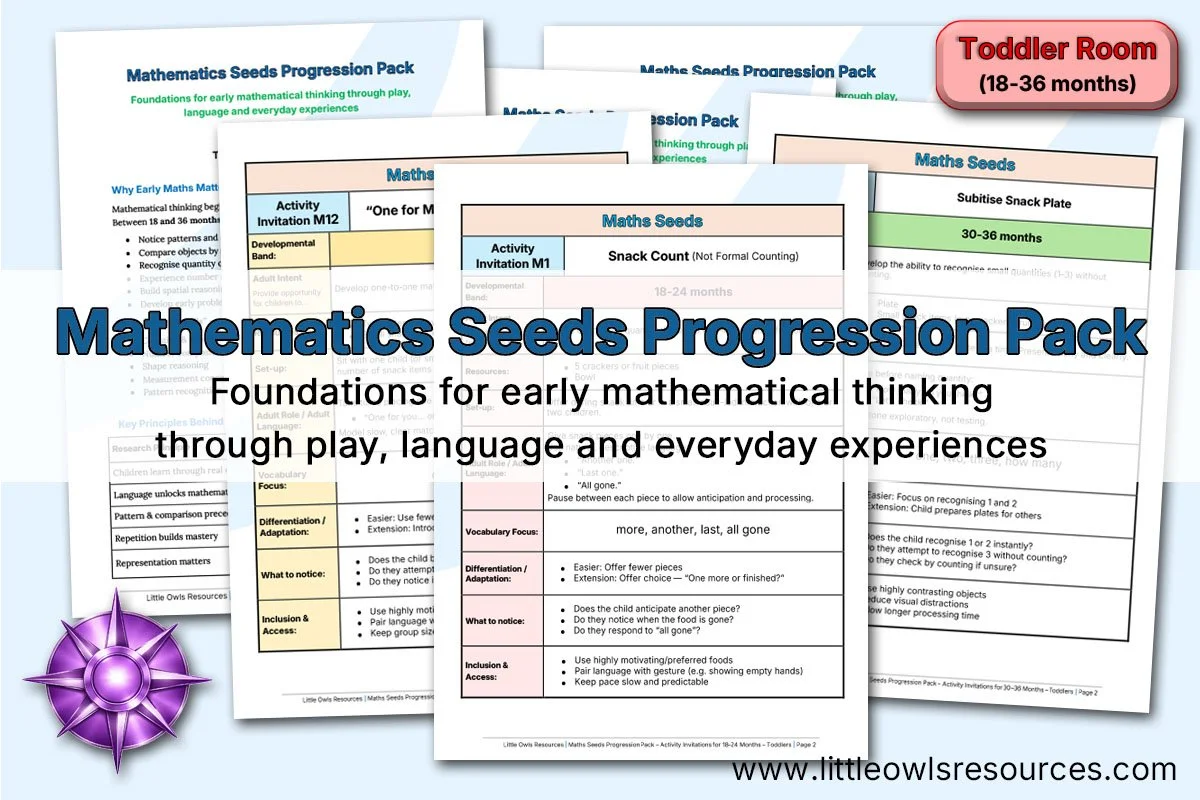
Foundations for early mathematical thinking through play, language and everyday experiences.
Progression map and adult initiated opportunity bank to strengthen toddler language through high-quality interactions.
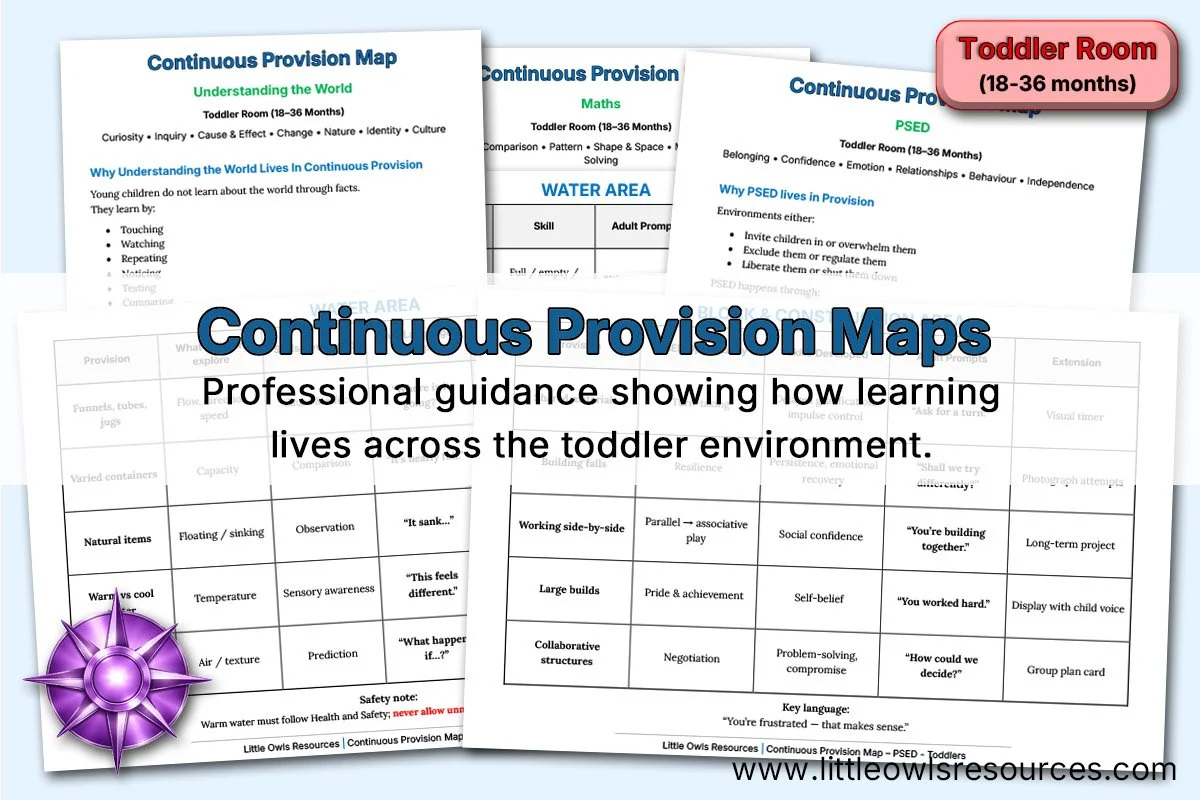
Practitioner-facing reference packs supporting intentional, developmentally appropriate toddler practice across key area of learning strands.
A practitioner-facing reference supporting intentional, developmentally appropriate toddler practice across key strands.
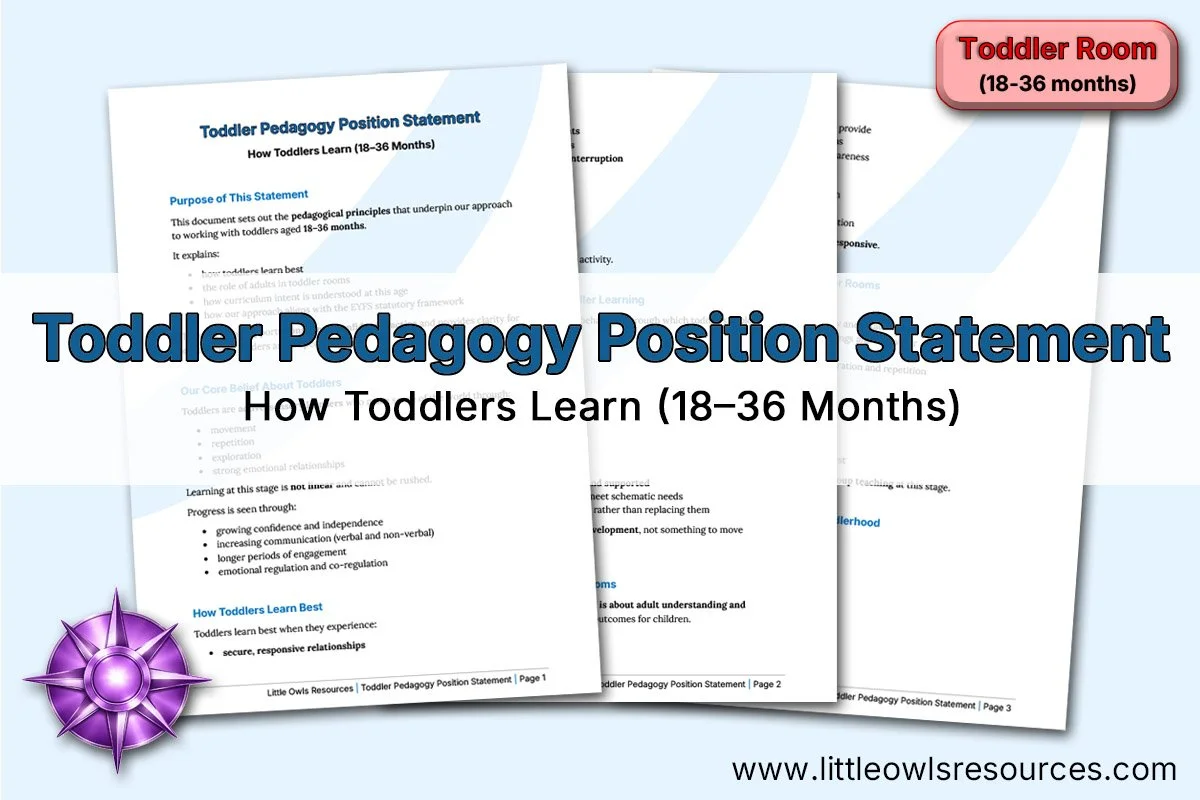
A developmentally informed curriculum overview supporting intentional, child-led toddler practice.
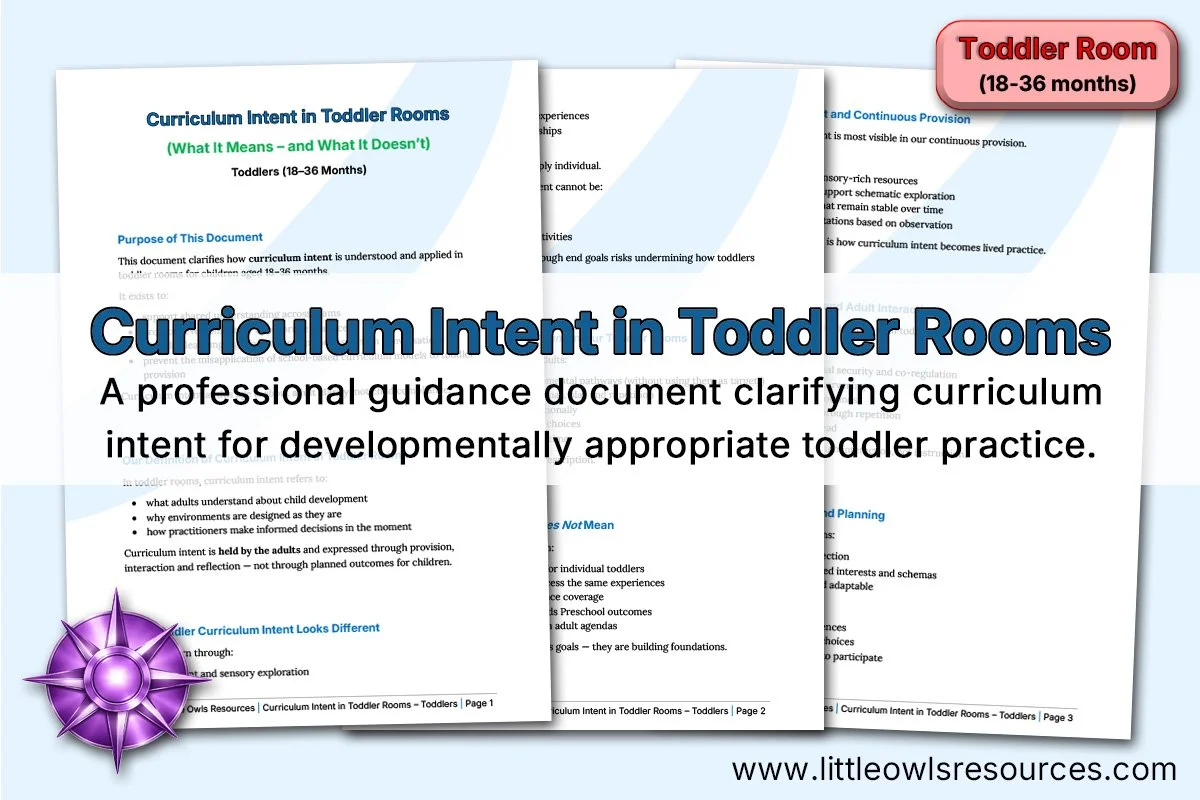
A professional guidance document clarifying curriculum intent for developmentally appropriate toddler practice.
Preschool | 3 - 4 Years
A developmentally informed progression tool supporting strength, control and confidence in early fine motor development.
A play-based progression tool supporting deep number understanding through real-world EYFS practice.
A play-based progression tool supporting exploration of shape and pattern by building, rotating, navigating, transforming and describing.
A play-based progression tool supporting deep number understanding through real-world EYFS practice.
A developmentally grounded progression tool supporting early writing from mark-making to name writing.
A play-based progression tool supporting the foundations for early reading before formal phonics.
A practical progression tool supporting listening, understanding, vocabulary and conversation through play-based EYFS practice.
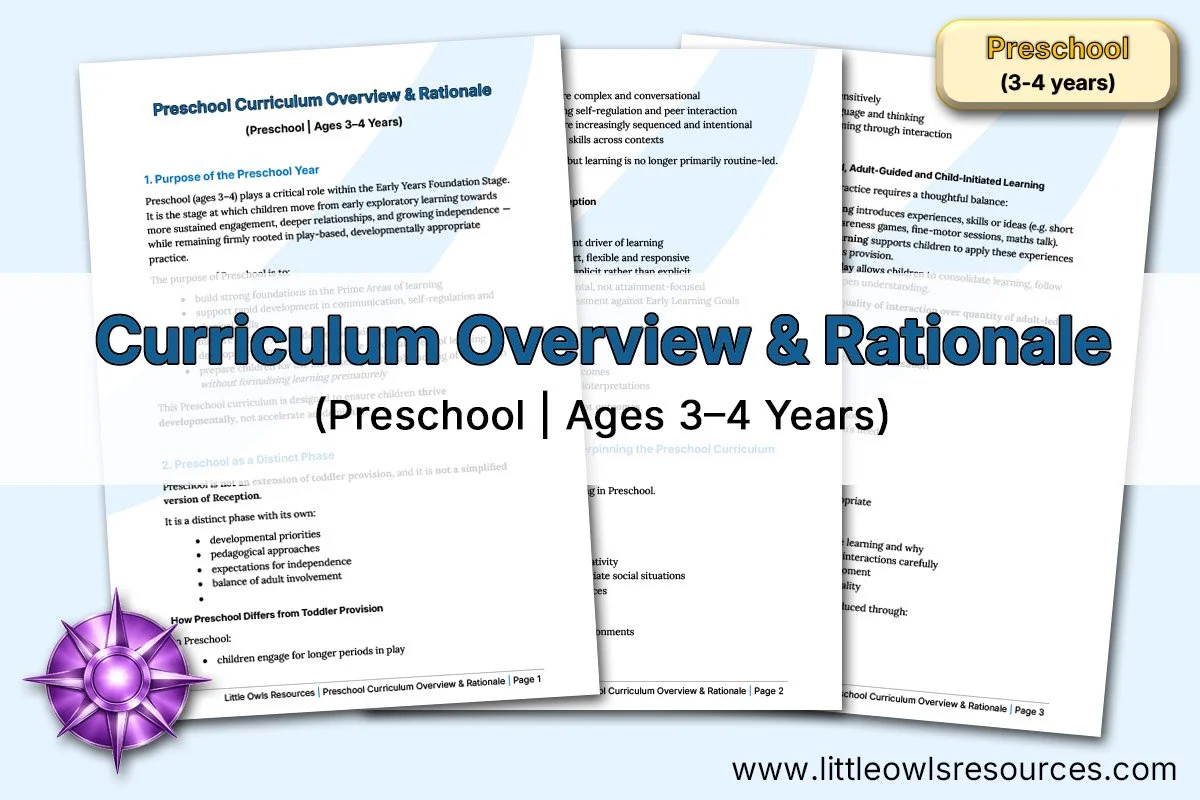
A clear, inspection-ready articulation of Preschool curriculum design, delivery and impact.
Reception | 4 - 5 Years
A practical professional guide to recognising, planning for and assessing how Reception children learn through play, teaching and application.
A comprehensive professional toolkit outlining learning progression across the Reception year, aligned with the EYFS framework and EYFSP expectations.
EYFS Mixed Age
How Childminder Pedagogy Aligns With Baby, Toddler, Preschool & Reception Frameworks - A professional overview supporting coherent, inspection-ready understanding of birth–five EYFS practice in childminding settings.
A cohesive, high-level overview of learning and development from birth to the end of the EYFS.
Observation Checkpoints & ELGs, plus Teaching & Learning Characteristics, Overarching Principles & Key Features of Effective Practice Prompts
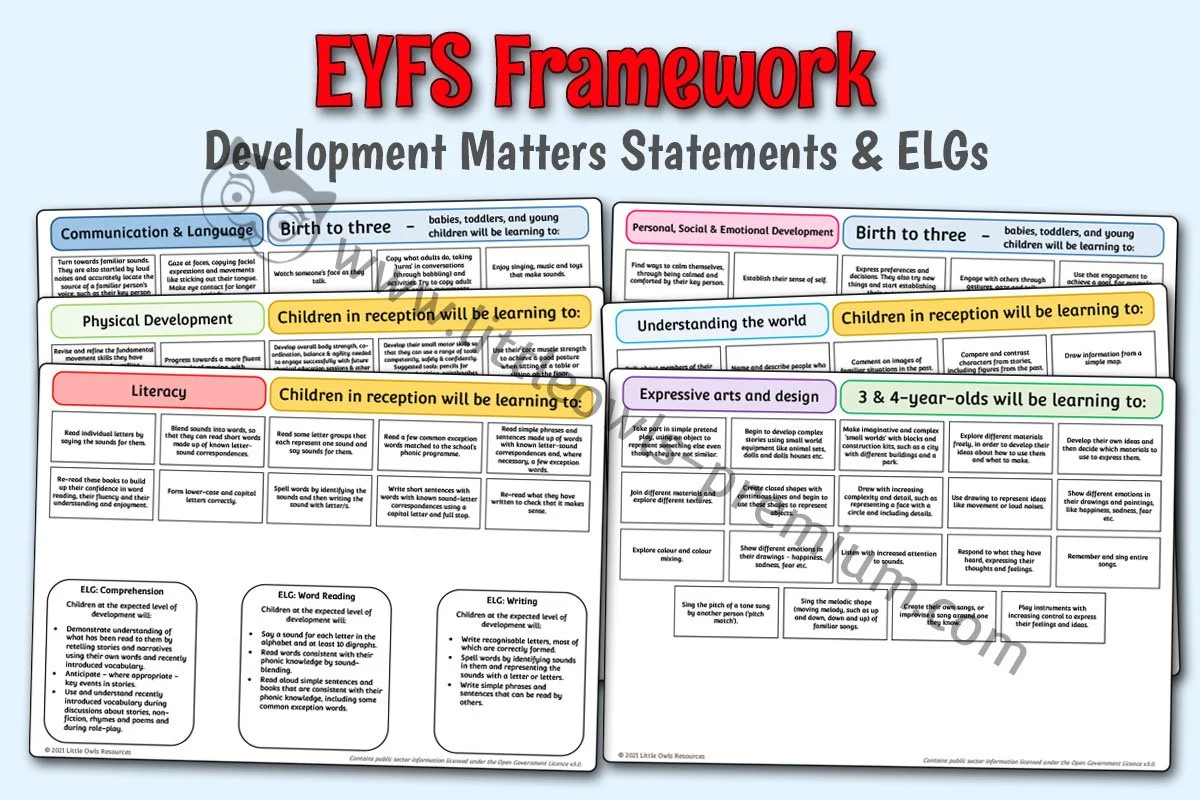
Handy planning and assessment tool. We have placed all of the Development Matters learning statements and ELGs into one document.
Includes 21 pages. The 7 areas of learning are each spread across 3 pages (birth to 3 / 3 & 4 year olds / children in reception).
Files contain public sector information licensed under the Open Government Licence v3.0.
Original artwork drawn by Sara Murphy and final digital resources created by Stuart Murphy. COPYRIGHT ON ALL OF THE RESOURCES HOUSED ON THIS WEBSITE IS HELD BY ‘LITTLE OWLS RESOURCES’. OUR RESOURCES (INCLUDING THE IMAGES WITHIN THEM), CANNOT BE SHARED OR SOLD COMMERCIALLY.
DOWNLOAD EDITABLE (DOCX)
DOWNLOAD NON-EDITABLE (PDF)
DOWNLOAD NON-EDITABLE (Zipped JPEGs)
Development Matters incorporates ‘Observation Checkpoints’ for the Prime areas (Communication and Language, Physical Development & Personal, Social and Emotional Development). We have condensed these checkpoints into handy overview sheets. Plus we have included the ELGs from the EYFS Framework for each of these Prime areas.
We hope you find this helpful!
Files contain public sector information licensed under the Open Government Licence v3.0.
Original artwork drawn by Sara Murphy and final digital resources created by Stuart Murphy. COPYRIGHT ON ALL OF THE RESOURCES HOUSED ON THIS WEBSITE IS HELD BY ‘LITTLE OWLS RESOURCES’. OUR RESOURCES (INCLUDING THE IMAGES WITHIN THEM), CANNOT BE SHARED OR SOLD COMMERCIALLY.
DOWNLOAD EDITABLE (DOCX)
DOWNLOAD NON-EDITABLE (PDF)
DOWNLOAD NON-EDITABLE (Zipped JPEGs)
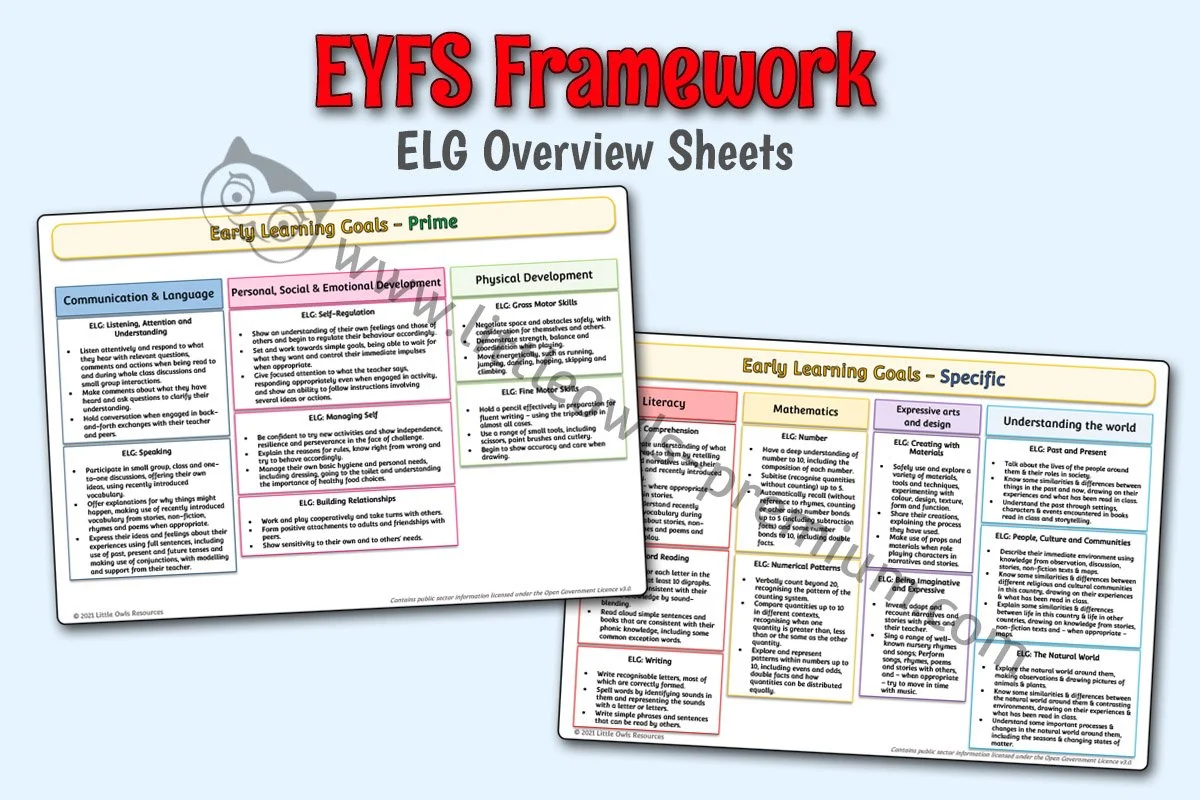
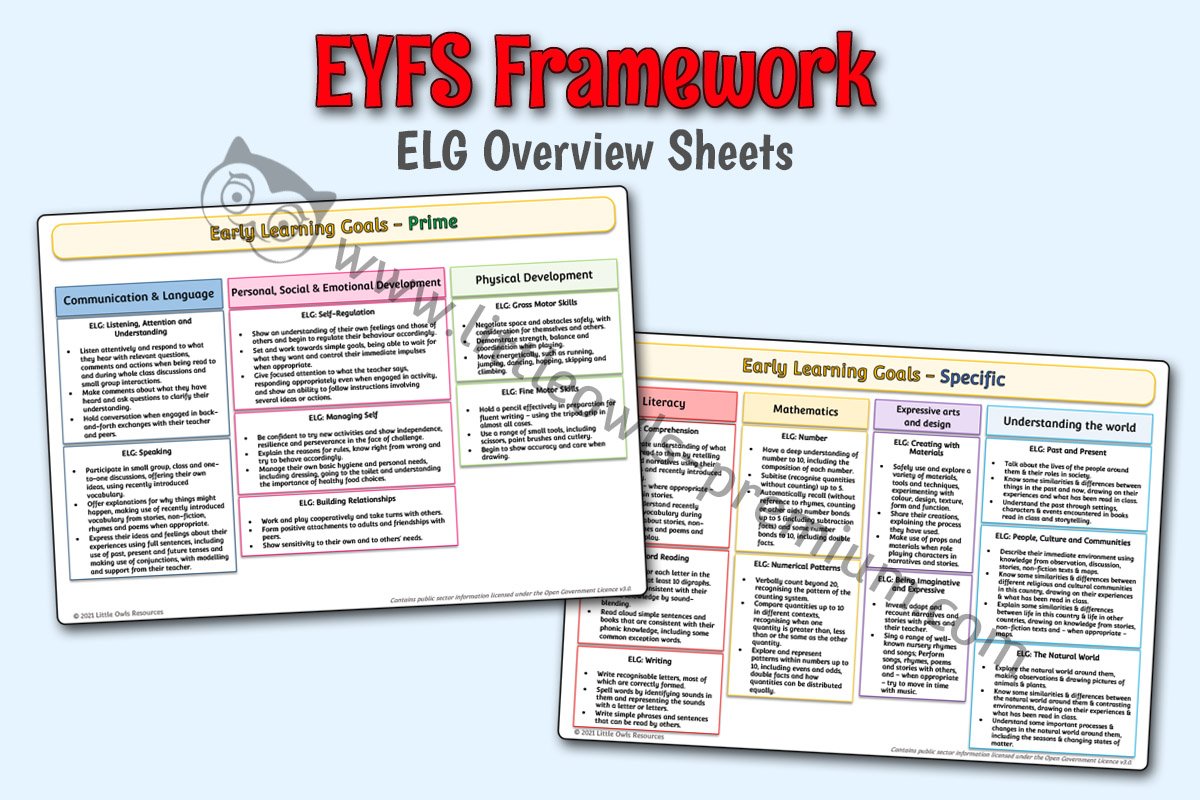
Handy planning and assessment tool for those teaching children in their reception year.
All Early Learning Goals (ELGs) from the EYFS Framework, are condensed onto 2 sheets. The first sheet houses all of the ‘Prime’ area goals and the second the ‘Specific’ area goals.
We hope you find this helpful!
Files contain public sector information licensed under the Open Government Licence v3.0.
Original artwork drawn by Sara Murphy and final digital resources created by Stuart Murphy. COPYRIGHT ON ALL OF THE RESOURCES HOUSED ON THIS WEBSITE IS HELD BY ‘LITTLE OWLS RESOURCES’. OUR RESOURCES (INCLUDING THE IMAGES WITHIN THEM), CANNOT BE SHARED OR SOLD COMMERCIALLY.
DOWNLOAD EDITABLE (DOCX)
DOWNLOAD NON-EDITABLE (PDF)
DOWNLOAD NON-EDITABLE (Zipped JPEGs)
A4 poster for each of the Three Characteristics of Effective Teaching and Learning’ outlined within the EYFS Framework.
playing and exploring - children investigate and experience things, and ‘have a go’
active learning - children concentrate and keep on trying if they encounter difficulties, and enjoy achievements
creating and thinking critically - children have and develop their own ideas, make links between ideas, and develop strategies for doing things
We hope you find this helpful!
The above description and files below contain public sector information licensed under the Open Government Licence v3.0.
Original artwork drawn by Sara Murphy and final digital resources created by Stuart Murphy. COPYRIGHT ON ALL OF THE RESOURCES HOUSED ON THIS WEBSITE IS HELD BY ‘LITTLE OWLS RESOURCES’. OUR RESOURCES (INCLUDING THE IMAGES WITHIN THEM), CANNOT BE SHARED OR SOLD COMMERCIALLY.
DOWNLOAD EDITABLE (DOCX)
DOWNLOAD NON-EDITABLE (PDF)
DOWNLOAD NON-EDITABLE (Zipped JPEGs)
<<-BACK TO ‘EYFS FRAMEWORK’ MENU
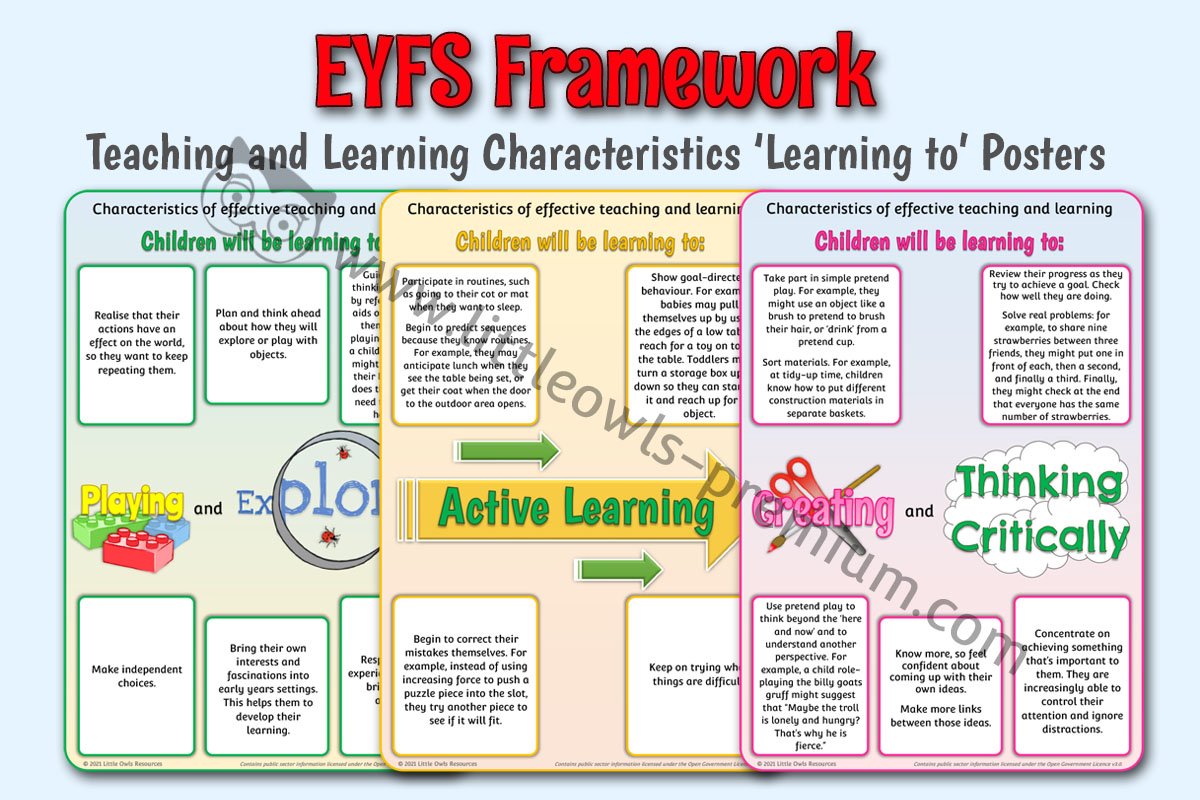
A4 poster for each of the Three Characteristics of Effective Teaching and Learning’ outlined within the EYFS Framework.
Each poster features one of the three headings, plus the relevant ‘Children will be learning to’ statements from ‘Development Matters’
We hope you find this helpful!
The above description and files below contain public sector information licensed under the Open Government Licence v3.0.
Original artwork drawn by Sara Murphy and final digital resources created by Stuart Murphy. COPYRIGHT ON ALL OF THE RESOURCES HOUSED ON THIS WEBSITE IS HELD BY ‘LITTLE OWLS RESOURCES’. OUR RESOURCES (INCLUDING THE IMAGES WITHIN THEM), CANNOT BE SHARED OR SOLD COMMERCIALLY.
DOWNLOAD EDITABLE (DOCX)
DOWNLOAD NON-EDITABLE (PDF)
DOWNLOAD NON-EDITABLE (Zipped JPEGs)
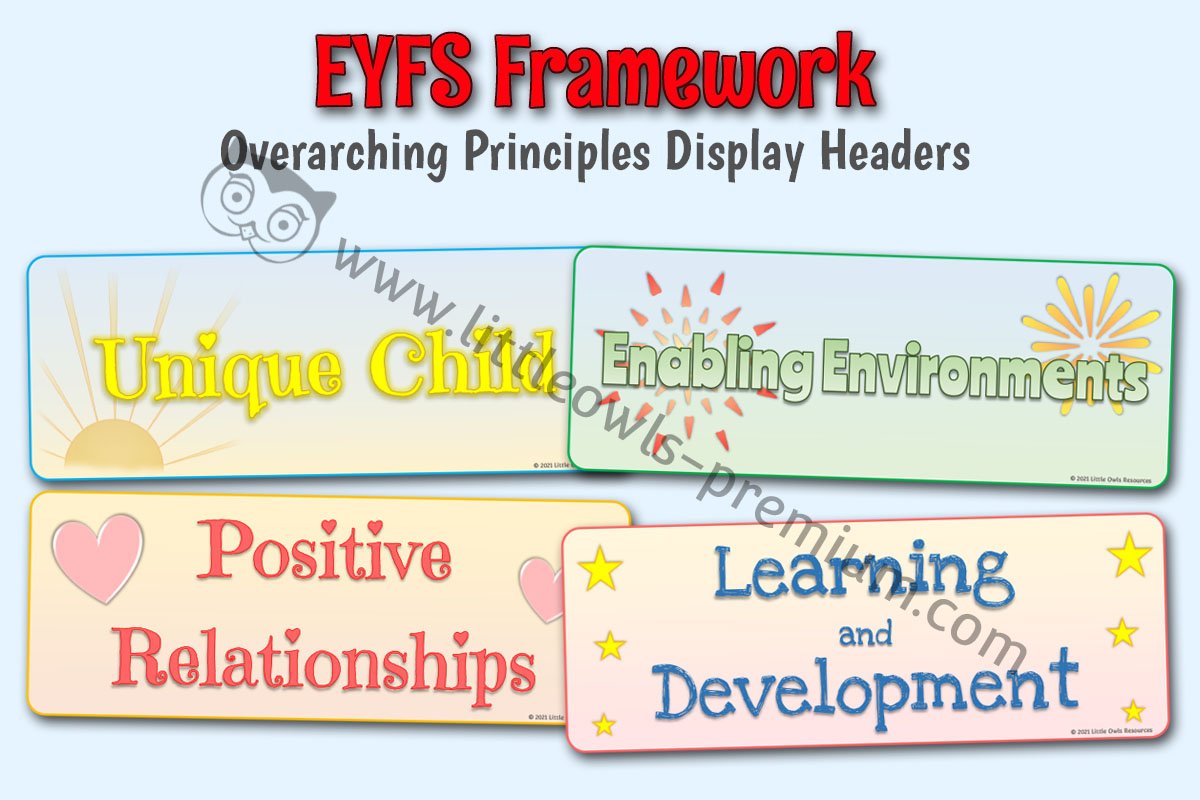
Display Header for each of the ‘Overarching Principles’ within the EYFS Framework.
The EYFS Framework states “Four guiding principles should shape practice in early years settings. These are:
• Every child is a unique child, who is constantly learning and can be resilient, capable, confident and self-assured.
• Children learn to be strong and independent through positive relationships.
• Children learn and develop well in enabling environments with teaching and support from adults, who respond to their individual interests and needs and help them to build their learning over time. Children benefit from a strong partnership between practitioners and parents and/or carers.
• Importance of learning and development. Children develop and learn at different rates. The framework covers the education and care of all children in early years provision, including children with special educational needs and disabilities (SEND).”
We hope you find this helpful!
The above description and files below contain public sector information licensed under the Open Government Licence v3.0.
Original artwork drawn by Sara Murphy and final digital resources created by Stuart Murphy. COPYRIGHT ON ALL OF THE RESOURCES HOUSED ON THIS WEBSITE IS HELD BY ‘LITTLE OWLS RESOURCES’. OUR RESOURCES (INCLUDING THE IMAGES WITHIN THEM), CANNOT BE SHARED OR SOLD COMMERCIALLY.
DOWNLOAD EDITABLE (DOCX)
DOWNLOAD NON-EDITABLE (PDF)
DOWNLOAD NON-EDITABLE (Zipped JPEGs)
<<-BACK TO ‘EYFS FRAMEWORK’ MENU
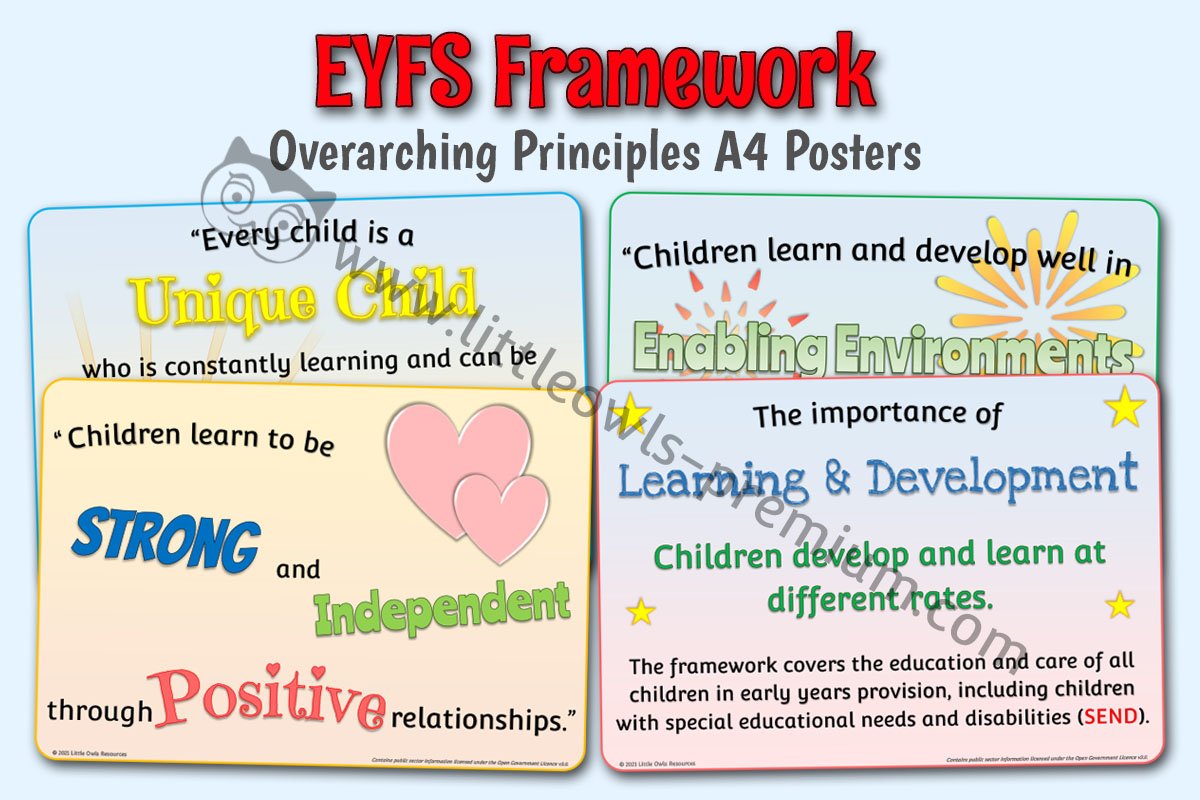
A4 poster for each of the ‘Overarching Principles’ within the EYFS Framework.
The EYFS Framework states “Four guiding principles should shape practice in early years settings. These are:
• Every child is a unique child, who is constantly learning and can be resilient, capable, confident and self-assured.
• Children learn to be strong and independent through positive relationships.
• Children learn and develop well in enabling environments with teaching and support from adults, who respond to their individual interests and needs and help them to build their learning over time. Children benefit from a strong partnership between practitioners and parents and/or carers.
• Importance of learning and development. Children develop and learn at different rates. The framework covers the education and care of all children in early years provision, including children with special educational needs and disabilities (SEND).”
We hope you find this helpful!
The above description and files below contain public sector information licensed under the Open Government Licence v3.0.
Original artwork drawn by Sara Murphy and final digital resources created by Stuart Murphy. COPYRIGHT ON ALL OF THE RESOURCES HOUSED ON THIS WEBSITE IS HELD BY ‘LITTLE OWLS RESOURCES’. OUR RESOURCES (INCLUDING THE IMAGES WITHIN THEM), CANNOT BE SHARED OR SOLD COMMERCIALLY.
DOWNLOAD EDITABLE (DOCX)
DOWNLOAD NON-EDITABLE (PDF)
DOWNLOAD NON-EDITABLE (Zipped JPEGs)
<<-BACK TO ‘EYFS FRAMEWORK’ MENU
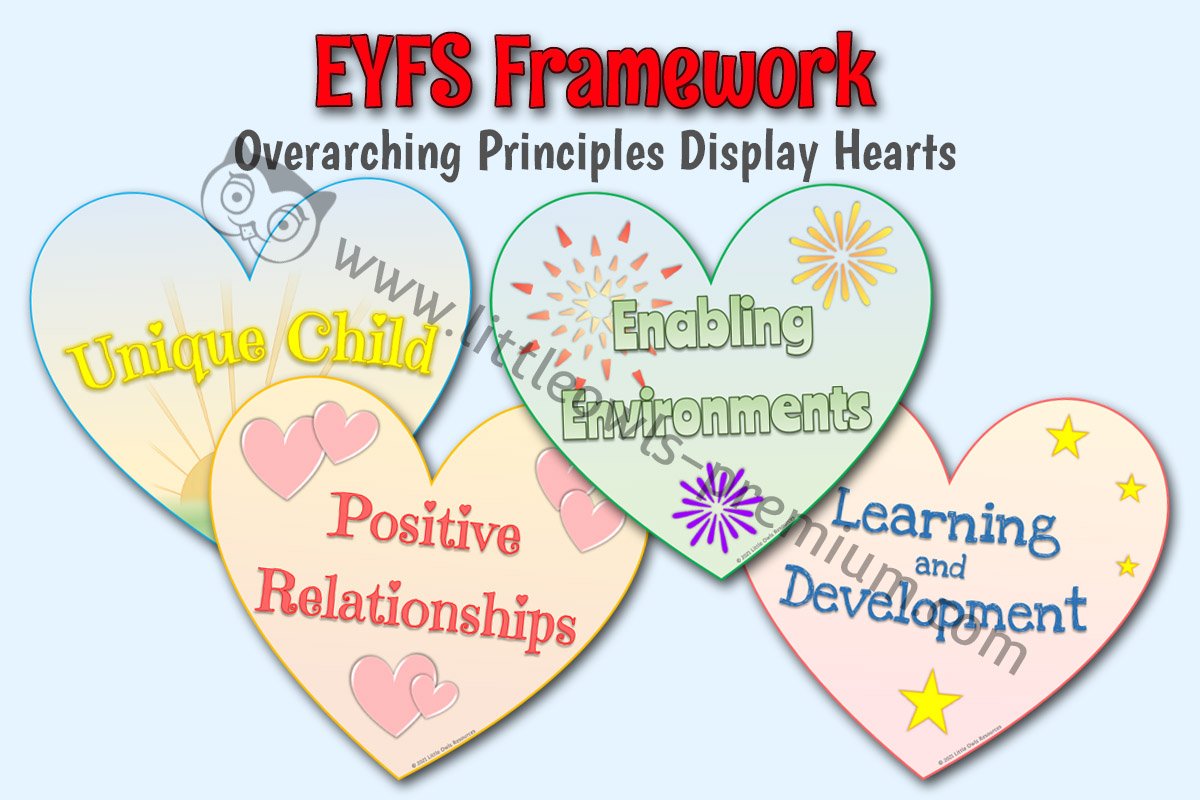
Four display headers (in the shape of hearts) for each of the ‘Overarching Principles’ within the EYFS Framework.
The EYFS Framework states “Four guiding principles should shape practice in early years settings. These are:
• Every child is a unique child, who is constantly learning and can be resilient, capable, confident and self-assured.
• Children learn to be strong and independent through positive relationships.
• Children learn and develop well in enabling environments with teaching and support from adults, who respond to their individual interests and needs and help them to build their learning over time. Children benefit from a strong partnership between practitioners and parents and/or carers.
• Importance of learning and development. Children develop and learn at different rates. The framework covers the education and care of all children in early years provision, including children with special educational needs and disabilities (SEND).”
We hope you find this helpful!
The above description and files below contain public sector information licensed under the Open Government Licence v3.0.
Original artwork drawn by Sara Murphy and final digital resources created by Stuart Murphy. COPYRIGHT ON ALL OF THE RESOURCES HOUSED ON THIS WEBSITE IS HELD BY ‘LITTLE OWLS RESOURCES’. OUR RESOURCES (INCLUDING THE IMAGES WITHIN THEM), CANNOT BE SHARED OR SOLD COMMERCIALLY.
DOWNLOAD EDITABLE (DOCX)
DOWNLOAD NON-EDITABLE (PDF)
DOWNLOAD NON-EDITABLE (Zipped JPEGs)
<<-BACK TO ‘EYFS FRAMEWORK’ MENU
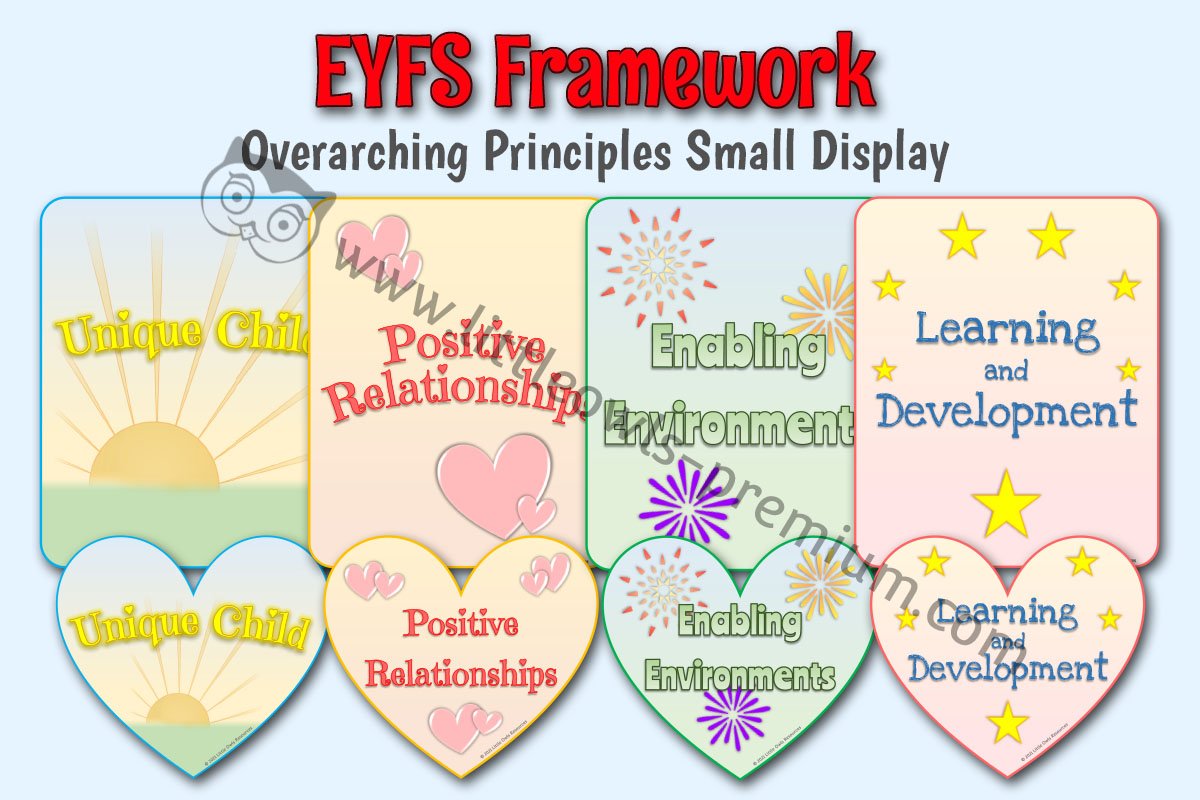
Pack of display headers (small) for each of the ‘Overarching Principles’ within the EYFS Framework. Two different designs.
The EYFS Framework states “Four guiding principles should shape practice in early years settings. These are:
• Every child is a unique child, who is constantly learning and can be resilient, capable, confident and self-assured.
• Children learn to be strong and independent through positive relationships.
• Children learn and develop well in enabling environments with teaching and support from adults, who respond to their individual interests and needs and help them to build their learning over time. Children benefit from a strong partnership between practitioners and parents and/or carers.
• Importance of learning and development. Children develop and learn at different rates. The framework covers the education and care of all children in early years provision, including children with special educational needs and disabilities (SEND).”
We hope you find this helpful!
The above description and files below contain public sector information licensed under the Open Government Licence v3.0.
Original artwork drawn by Sara Murphy and final digital resources created by Stuart Murphy. COPYRIGHT ON ALL OF THE RESOURCES HOUSED ON THIS WEBSITE IS HELD BY ‘LITTLE OWLS RESOURCES’. OUR RESOURCES (INCLUDING THE IMAGES WITHIN THEM), CANNOT BE SHARED OR SOLD COMMERCIALLY.
DOWNLOAD EDITABLE (DOCX)
DOWNLOAD NON-EDITABLE (PDF)
DOWNLOAD NON-EDITABLE (Zipped JPEGs)
<<-BACK TO ‘EYFS FRAMEWORK’ MENU
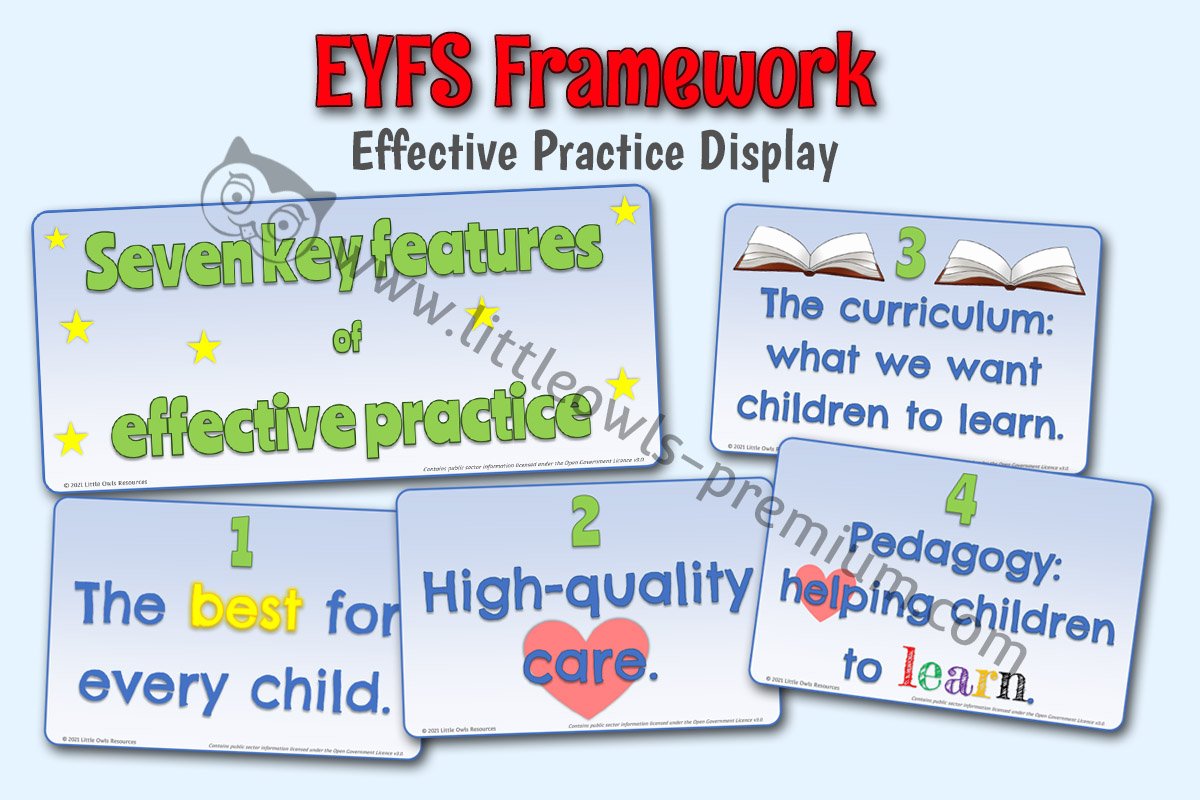
Display Header for each of the 'Seven key features of effective practice' within Development Matters.
The 'Seven key features of effective practice' are as follows:
1. The best for every child
2. High-quality care
3. The curriculum: what we want children to learn
4. Pedagogy: helping children to learn
5. Assessment: checking what children have learnt
6. Self-regulation and executive function
7. Partnership with parents
We hope you find this helpful!
The above description and files below contain public sector information licensed under the Open Government Licence v3.0.
Original artwork drawn by Sara Murphy and final digital resources created by Stuart Murphy. COPYRIGHT ON ALL OF THE RESOURCES HOUSED ON THIS WEBSITE IS HELD BY ‘LITTLE OWLS RESOURCES’. OUR RESOURCES (INCLUDING THE IMAGES WITHIN THEM), CANNOT BE SHARED OR SOLD COMMERCIALLY.
DOWNLOAD EDITABLE (DOCX)
DOWNLOAD NON-EDITABLE (PDF)
DOWNLOAD NON-EDITABLE (Zipped JPEGs)
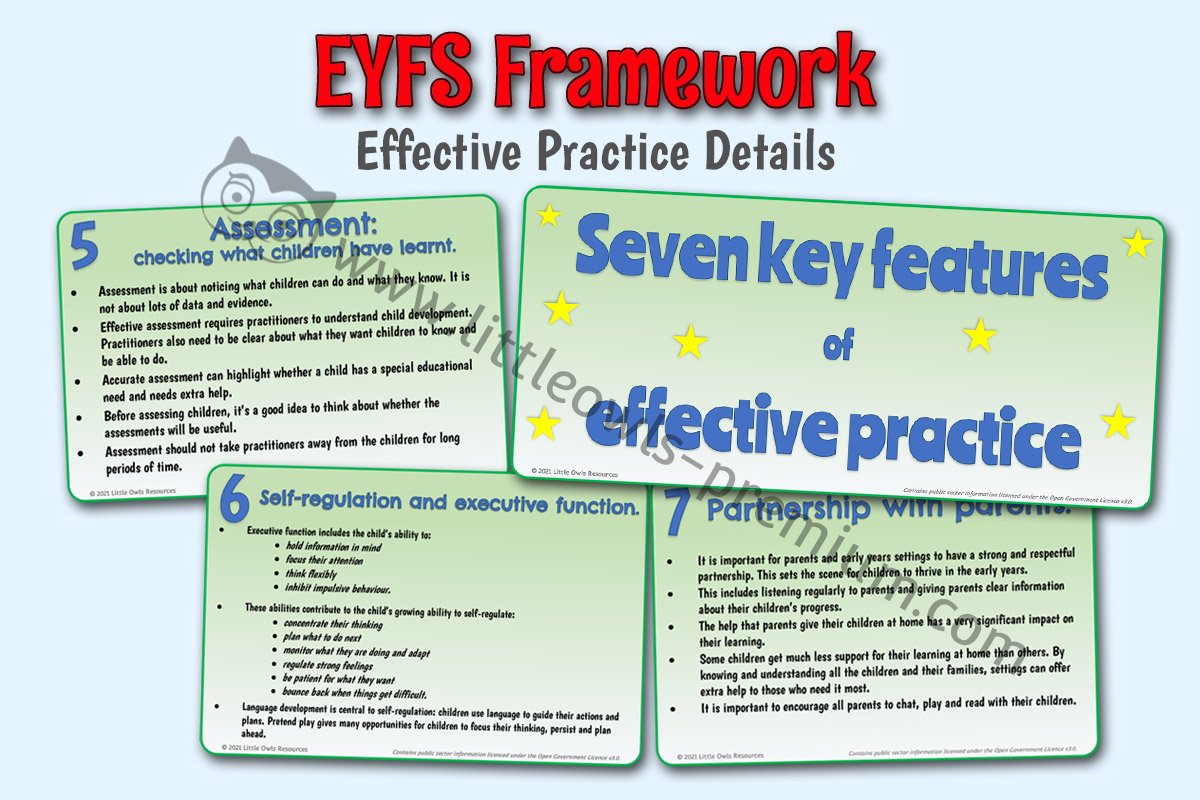
Display Header and Cards for each of the 'Seven key features of effective practice' within Development Matters.
The 'Seven key features of effective practice' are as follows:
1. The best for every child
2. High-quality care
3. The curriculum: what we want children to learn
4. Pedagogy: helping children to learn
5. Assessment: checking what children have learnt
6. Self-regulation and executive function
7. Partnership with parents
Bullet point details which describe each of the 7 key features are included on each card.
We hope you find this helpful!
The above description and files below contain public sector information licensed under the Open Government Licence v3.0.
Original artwork drawn by Sara Murphy and final digital resources created by Stuart Murphy. COPYRIGHT ON ALL OF THE RESOURCES HOUSED ON THIS WEBSITE IS HELD BY ‘LITTLE OWLS RESOURCES’. OUR RESOURCES (INCLUDING THE IMAGES WITHIN THEM), CANNOT BE SHARED OR SOLD COMMERCIALLY.
DOWNLOAD EDITABLE (DOCX)
DOWNLOAD NON-EDITABLE (PDF)
DOWNLOAD NON-EDITABLE (Zipped JPEGs)
📝 Observation & Assessment Templates
Browse practical resources including:
observation templates
assessment formats
reflection sheets
reporting templates
All tools are:
optional
flexible
designed to reduce workload
A professional planning and reflection tool supporting child-led inquiry, curriculum coherence and meaningful learning conversations in Reception.
Supporting Continuity of Care and Learning - An optional professional template supporting smooth, child-centred transitions in childminding settings.
Supporting Transitions and Communication with Families and Schools - A professional guidance document supporting clear, proportionate information sharing in childminding settings.
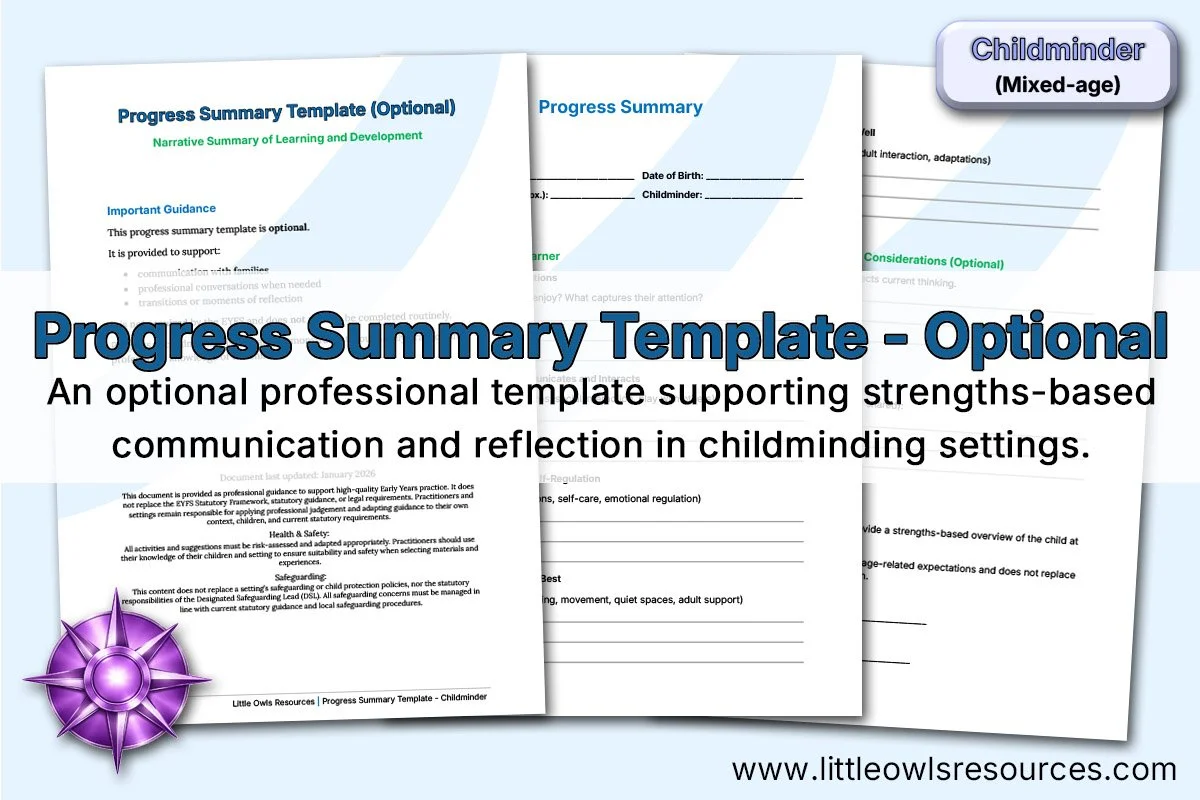
A professional support resource for childminders who prefer light-touch written reflection alongside responsive EYFS practice.
A professional guidance document supporting confident, low-burden EYFS planning in childminding and mixed-age settings.
A practical set of strength-based documents to support secure, consistent transitions from 18–36 month provision into the 3–4 year room.
A statutory-compliant, practitioner-friendly toolkit supporting meaningful assessment and parent partnership.
A professional observation tool supporting deep understanding of toddler learning, behaviour and development.
Professional observation tools supporting deeper understanding of toddler learning, behaviour and development.
Observing cues, responding through interaction and adjusting provision for babies aged 0–18 months.
A comprehensive, strength-based transition toolkit supporting children, families and schools.
A professional reporting toolkit supporting meaningful communication with families and smooth transition to school.
A strength-based progress review supporting meaningful partnership with families in preschool.
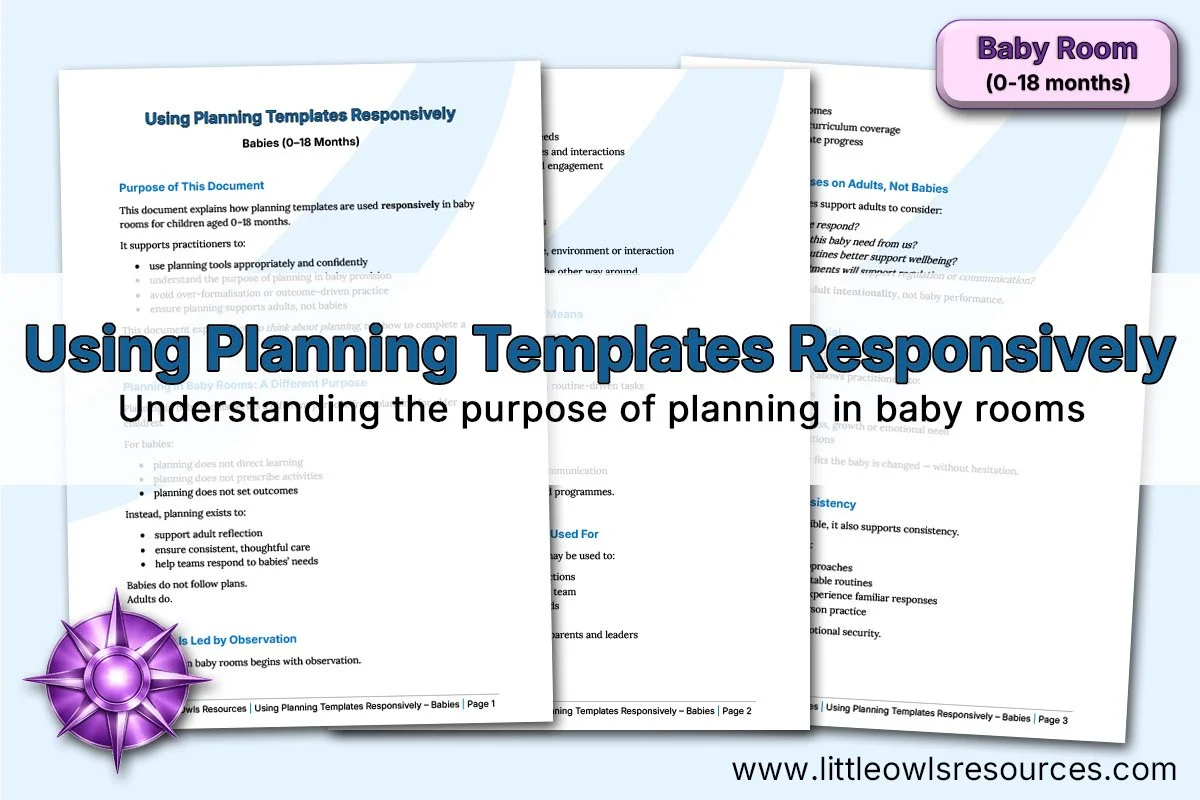
A practical professional toolkit supporting responsive EYFS practice without over-planning.
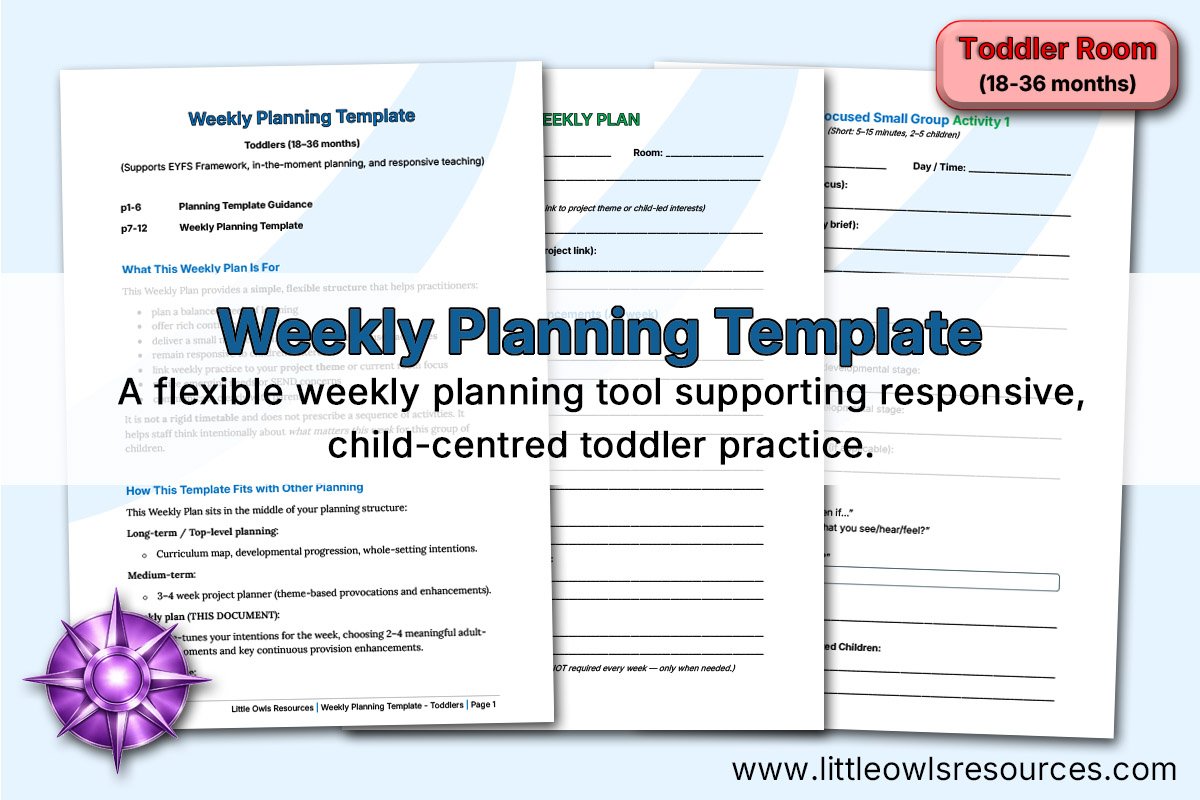
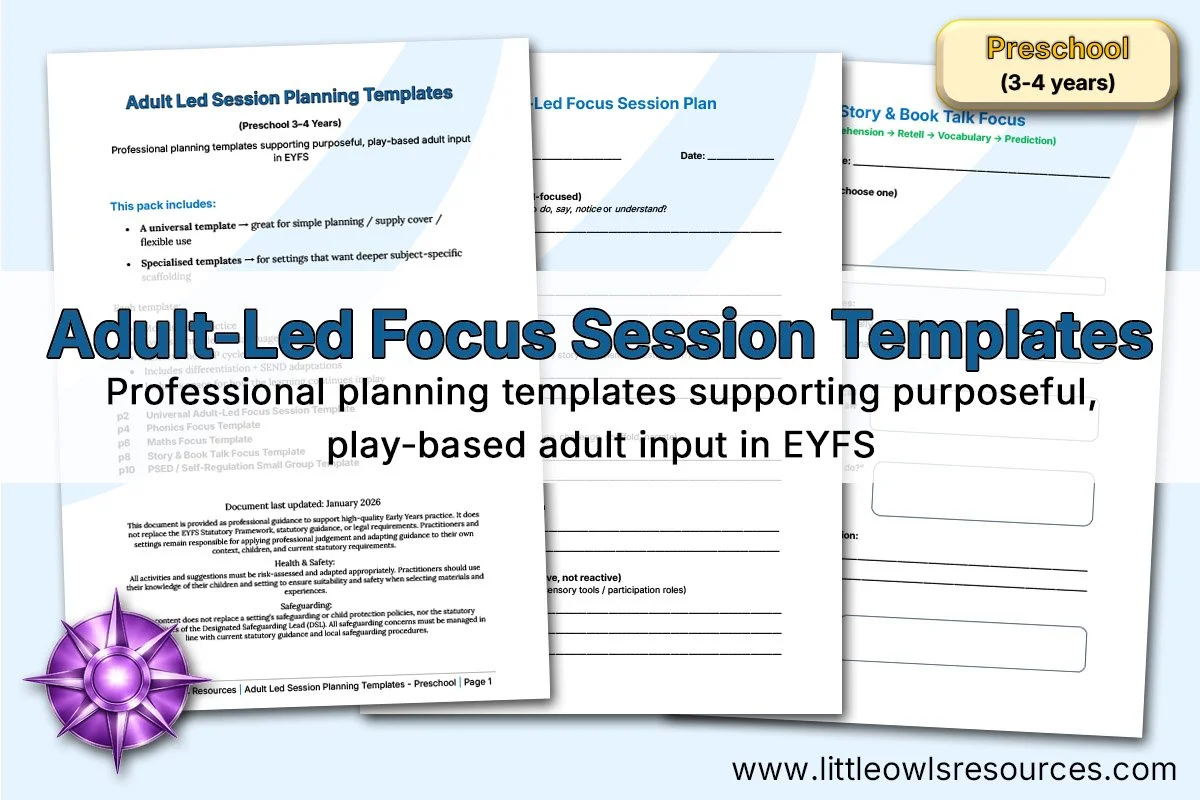
A professional guidance document supporting confident, flexible weekly planning in preschool.
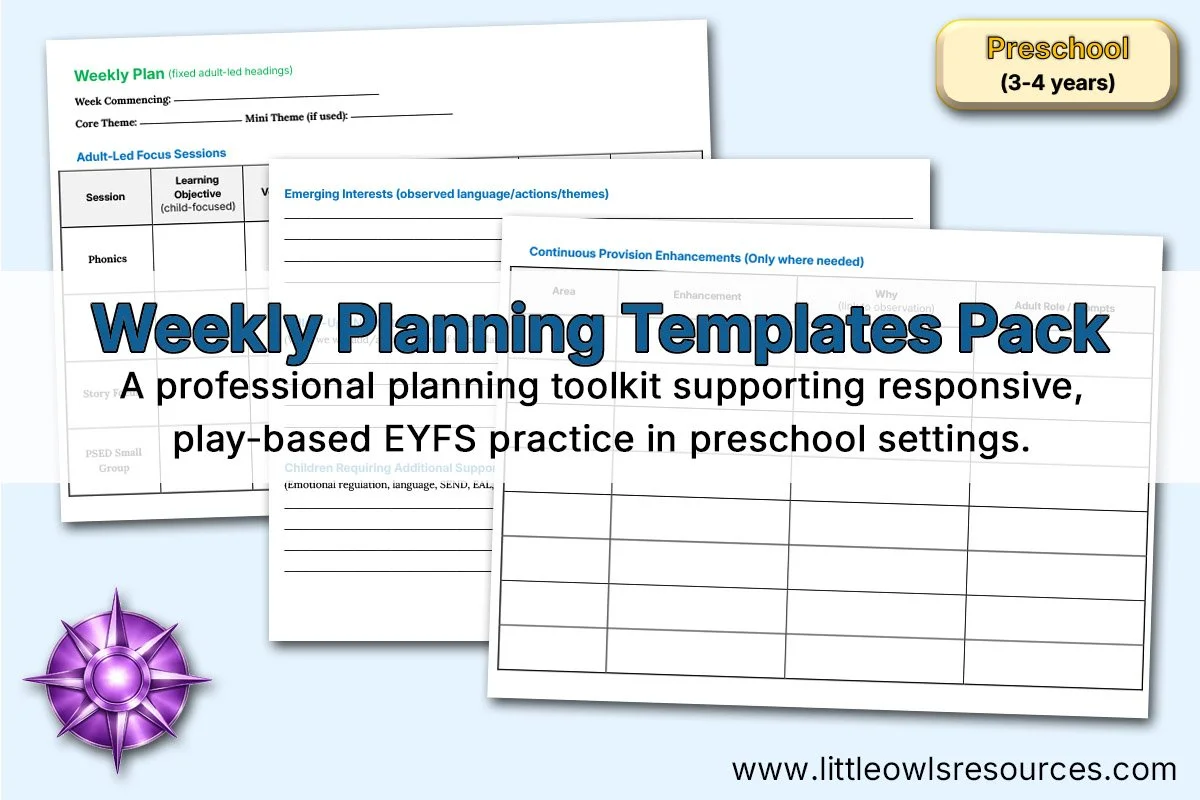
A professional planning toolkit supporting responsive, play-based EYFS practice in preschool settings.
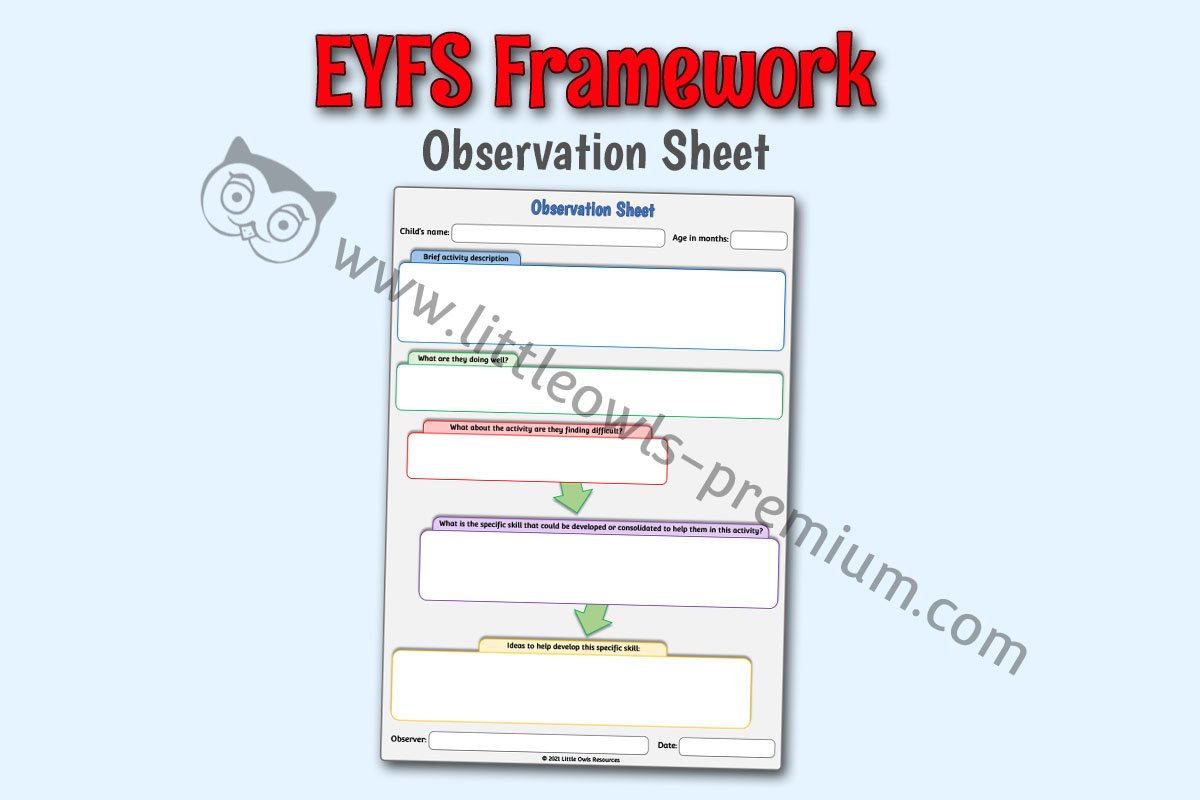
This observation sheet is intended to help practitioners concentrate on the most important aspects of what they are seeing during an observation and then develop steps forward for a child without being bogged down in extensive note-taking.
The sections of the sheet are designed for quick and concise notes that spark ideas for a child’s development.
We hope it helps!
Original artwork drawn by Sara Murphy and final digital resources created by Stuart Murphy. COPYRIGHT ON ALL OF THE RESOURCES HOUSED ON THIS WEBSITE IS HELD BY ‘LITTLE OWLS RESOURCES’. OUR RESOURCES (INCLUDING THE IMAGES WITHIN THEM), CANNOT BE SHARED OR SOLD COMMERCIALLY.
DOWNLOAD EDITABLE (DOCX)
DOWNLOAD NON-EDITABLE (PDF)
DOWNLOAD NON-EDITABLE (Zipped JPEGs)
<<-BACK TO ‘EYFS FRAMEWORK’ MENU
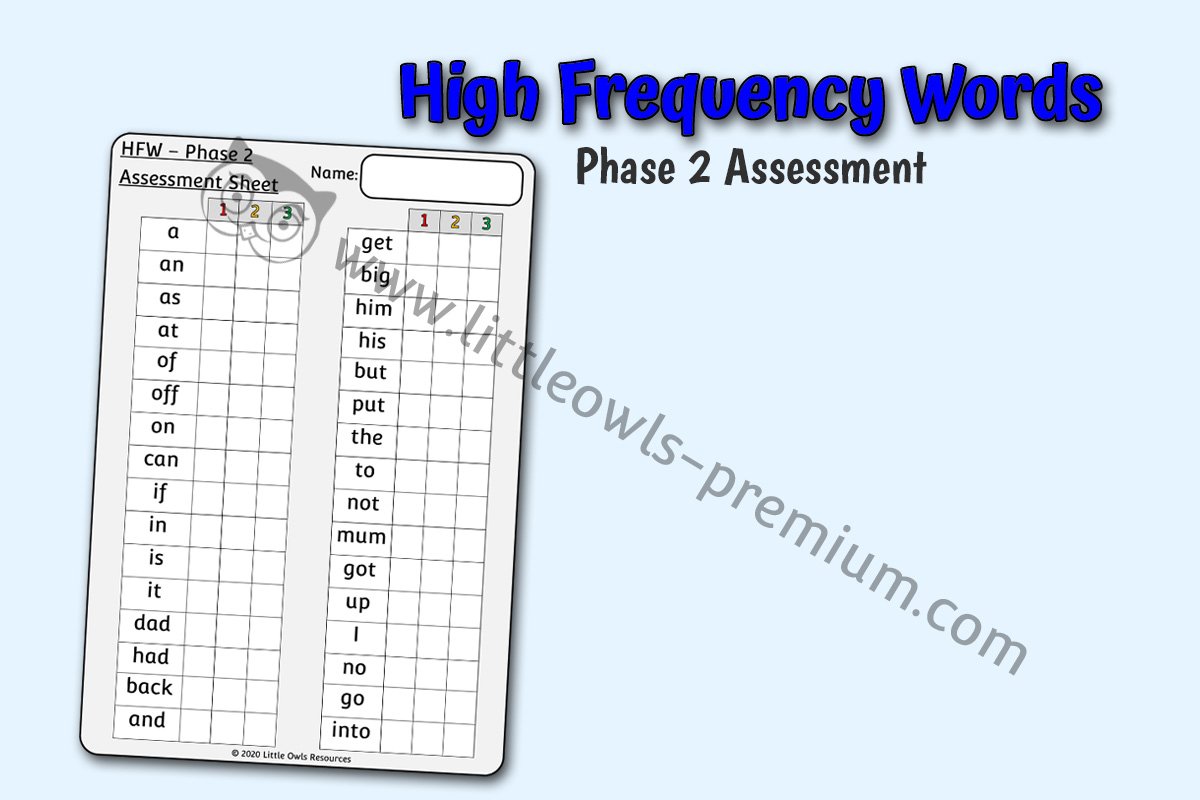
Handy assessment resource for teacher/professional or parent/carer to note down occasions when a child has read Phase 2 High Frequency/Sight Words effectively. Please note this is not intended for a child to read from, but a tool for adults to use in order to take stock of a child’s learning.
Original artwork drawn by Sara Murphy and final digital resources created by Stuart Murphy. COPYRIGHT ON ALL OF THE RESOURCES HOUSED ON THIS WEBSITE IS HELD BY ‘LITTLE OWLS RESOURCES’. OUR RESOURCES (INCLUDING THE IMAGES WITHIN THEM), CANNOT BE SHARED OR SOLD COMMERCIALLY.
DOWNLOAD EDITABLE (DOCX)
DOWNLOAD NON-EDITABLE (PDF)
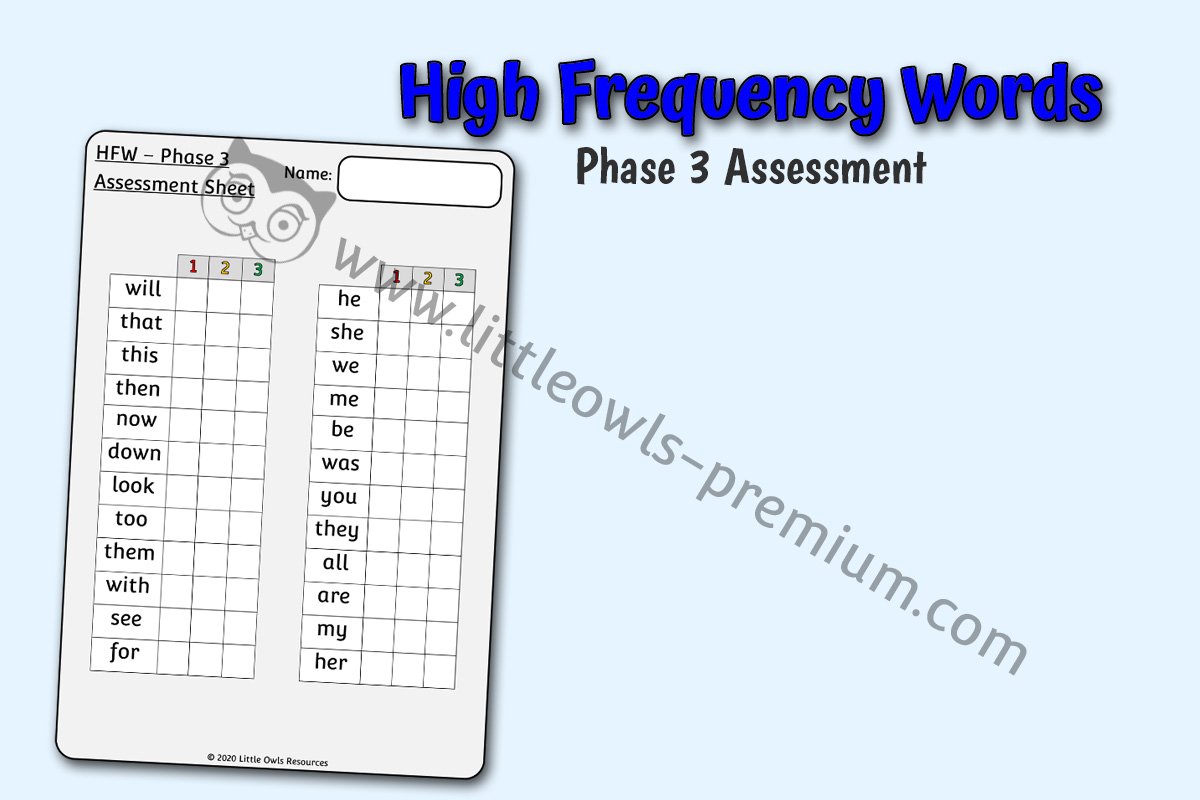
Handy assessment resource for teacher/professional or parent/carer to note down occasions when a child has read Phase 3 High Frequency/Sight Words effectively. Please note this is not intended for a child to read from, but a tool for adults to use in order to take stock of a child’s learning.
Original artwork drawn by Sara Murphy and final digital resources created by Stuart Murphy. COPYRIGHT ON ALL OF THE RESOURCES HOUSED ON THIS WEBSITE IS HELD BY ‘LITTLE OWLS RESOURCES’. OUR RESOURCES (INCLUDING THE IMAGES WITHIN THEM), CANNOT BE SHARED OR SOLD COMMERCIALLY.
DOWNLOAD EDITABLE (DOCX)
DOWNLOAD NON-EDITABLE (PDF)
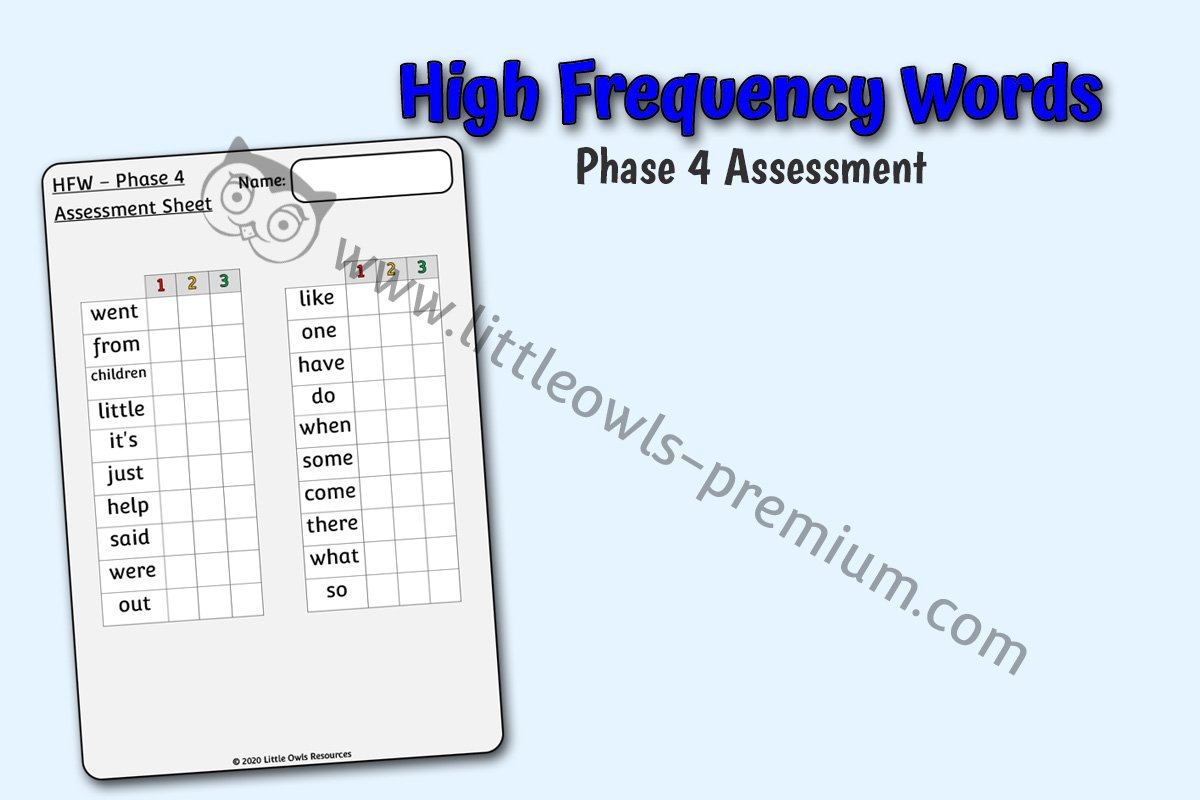
Handy assessment resource for teacher/professional or parent/carer to note down occasions when a child has read Phase 4 High Frequency/Sight Words effectively. Please note this is not intended for a child to read from, but a tool for adults to use in order to take stock of a child’s learning.
Original artwork drawn by Sara Murphy and final digital resources created by Stuart Murphy. COPYRIGHT ON ALL OF THE RESOURCES HOUSED ON THIS WEBSITE IS HELD BY ‘LITTLE OWLS RESOURCES’. OUR RESOURCES (INCLUDING THE IMAGES WITHIN THEM), CANNOT BE SHARED OR SOLD COMMERCIALLY.
DOWNLOAD EDITABLE (DOCX)
DOWNLOAD NON-EDITABLE (PDF)
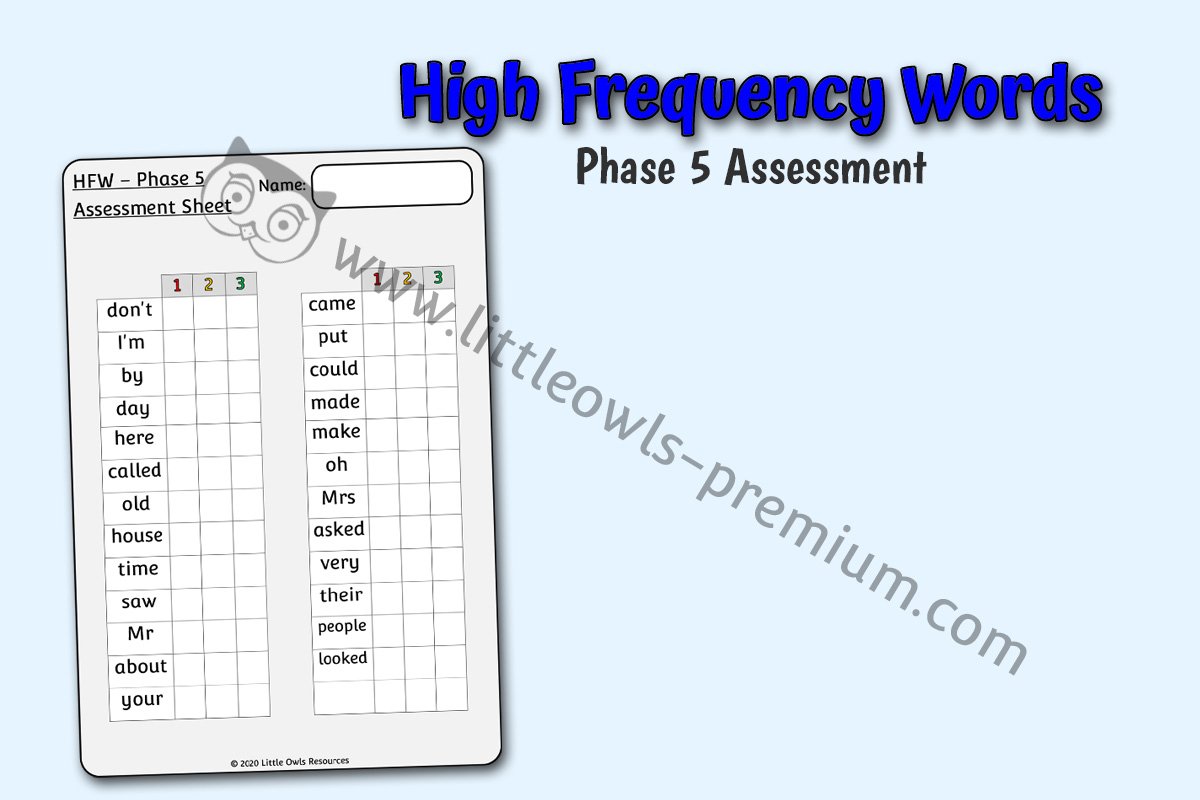
Handy assessment resource for teacher/professional or parent/carer to note down occasions when a child has read Phase 5 High Frequency/Sight Words effectively. Please note this is not intended for a child to read from, but a tool for adults to use in order to take stock of a child’s learning.
Original artwork drawn by Sara Murphy and final digital resources created by Stuart Murphy. COPYRIGHT ON ALL OF THE RESOURCES HOUSED ON THIS WEBSITE IS HELD BY ‘LITTLE OWLS RESOURCES’. OUR RESOURCES (INCLUDING THE IMAGES WITHIN THEM), CANNOT BE SHARED OR SOLD COMMERCIALLY.
DOWNLOAD EDITABLE (DOCX)
DOWNLOAD NON-EDITABLE (PDF)
🤝 SEND & Inclusive Observation
Observation plays a key role in early identification.
Inclusive assessment means:
noticing patterns over time
valuing all forms of communication
adapting provision and interaction
working closely with families
Support is:
relational
preventative
non-diagnostic
A professional guidance document supporting the development of self-regulation, learning behaviours and independence in Reception.
Observing Patterns, Adapting Practice, Seeking Support - A professional guidance document supporting confident, inclusive EYFS practice and early identification in home-based childminding settings.
A practical set of strength-based documents to support secure, consistent transitions from 18–36 month provision into the 3–4 year room.
Quick guidance and practical tools for supporting toddlers (18–36 months) in everyday provision.
A statutory-compliant, practitioner-friendly toolkit supporting meaningful assessment and parent partnership.
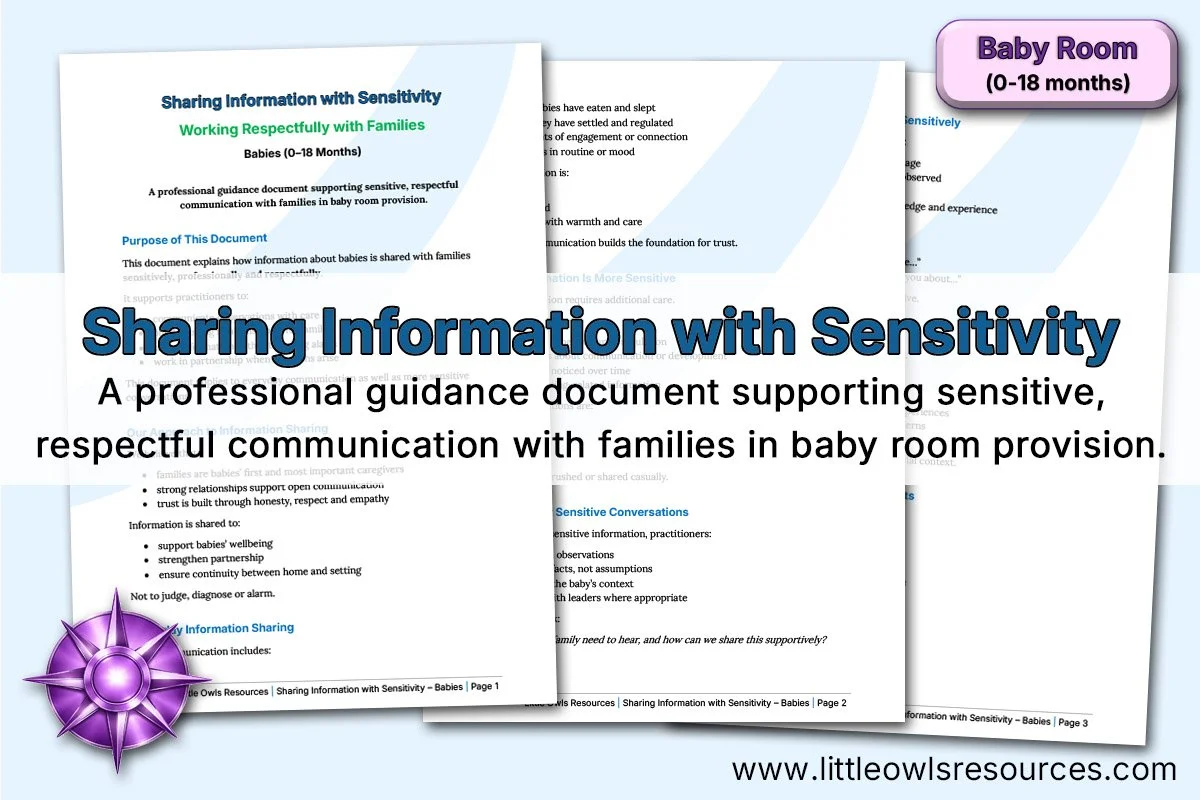
A professional guidance document supporting sensitive, respectful communication with families in baby room provision.
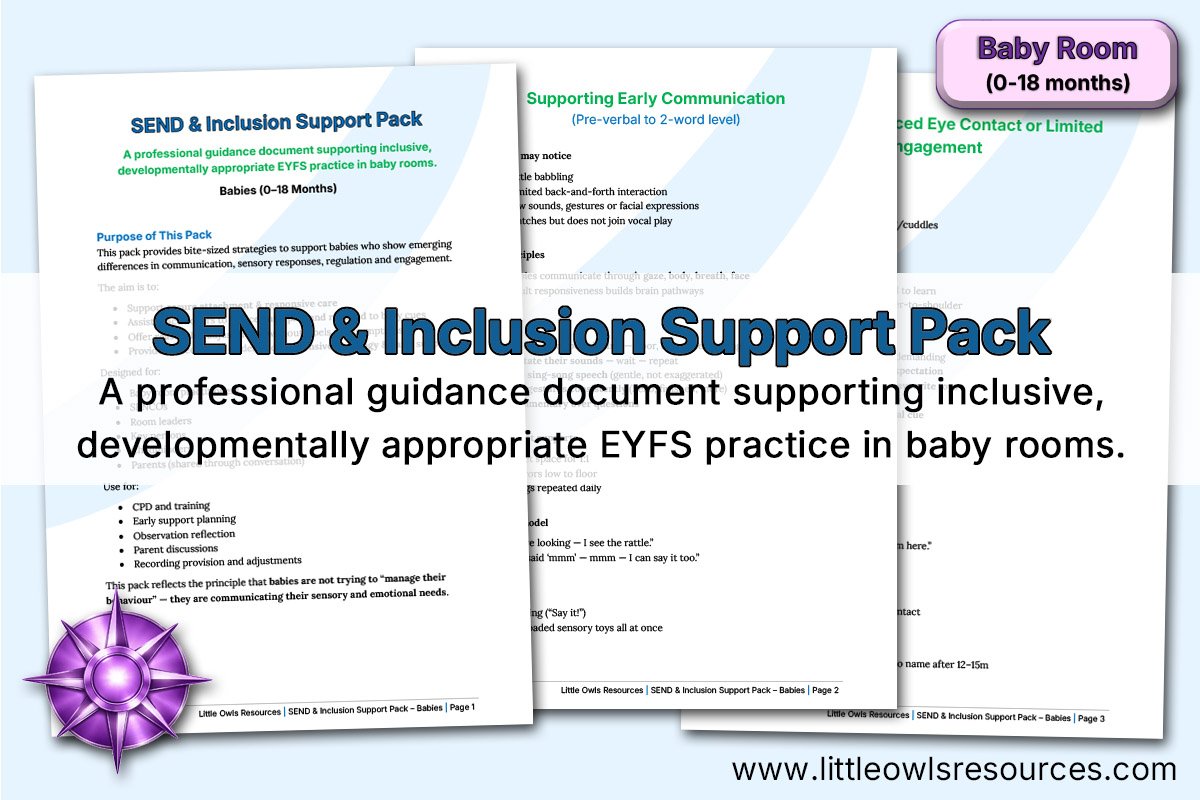
A professional guidance document supporting inclusive, developmentally appropriate EYFS practice in baby rooms.
A professional guidance document supporting confident, developmentally appropriate SEND practice in baby rooms.
A professional guidance document supporting confident, consistent EYFS pedagogy from birth to five.
Our curriculum is designed to support high-quality Early Years practice by providing practitioners with clear, developmentally appropriate guidance and flexible, responsive planning tools from birth to five.
This document sets out the pedagogical principles that underpin our approach to working with babies aged 0–18 months.
A parent-friendly guidance pack that explains how children learn in Reception (4–5), what to expect day to day, and how families can support learning at home without pressure.
A leadership and practice pack that sets out how to plan a developmentally appropriate transition from Reception into Year 1, protecting EYFS pedagogy while building continuity into KS1.
⭐ A Final Note
Effective observation and assessment:
prioritise understanding over measurement
support responsive, high-quality practice
remain proportionate and purposeful
Your professional judgement is central. Our resources are here to support it — not replace it.
➕ Related Site Areas You May Be Interested In
Search ‘Little Owls Resources’ using the following menu buttons
Click here to visit our ‘Special Dates Calendar’ page for an entire year of key EYFS & KS1 events, festivals & celebrations.
Content on this website is provided as professional guidance and support. It reflects current understanding of the EYFS statutory framework, Development Matters and inspection expectations at the time of writing. Practitioners are responsible for applying professional judgement and ensuring practice aligns with current statutory requirements and their specific context.
Updated: April 2026