

Reception High-Impact Question & Vocabulary Bank (4–5 Years)
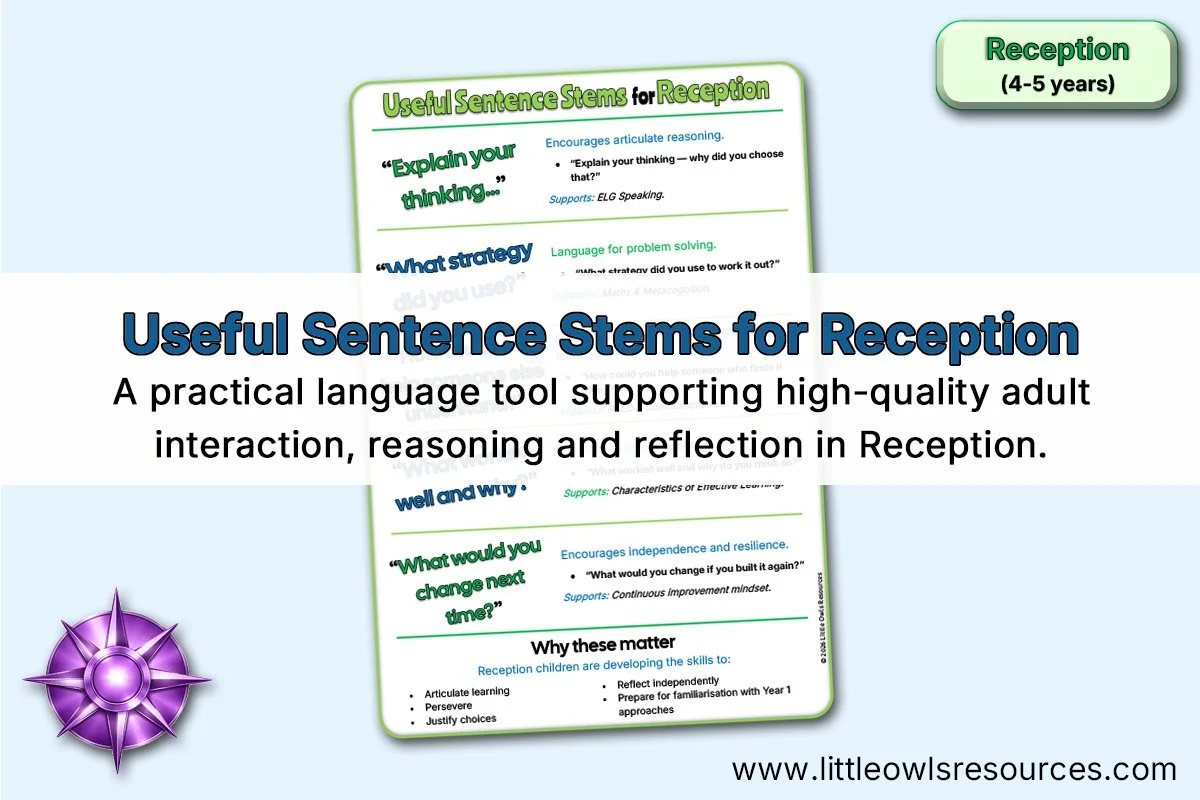
Supporting high-quality adult interaction, vocabulary development and sustained shared thinking across your Reception provision.
High-quality adult interaction is one of the most powerful ways to support children’s learning in the Early Years. The language we use, the questions we ask and the conversations we build all shape children’s thinking, communication and understanding.
This page provides a bank of high-impact questions, carefully selected vocabulary and adult modelling prompts, organised by theme. These can be used flexibly within continuous provision, small group work and everyday interactions to deepen learning and support all children.
✅ Extend child-led play through meaningful conversation
✅ Introduce and model new vocabulary naturally
✅ Support sustained shared thinking
✅ Build confidence in adult-child interactions
✅ Ensure consistency across your team
Tip: Focus on fewer, richer interactions rather than asking lots of questions.
Browse by Theme
🌱 All About Me
The All About Me theme supports children in developing a strong sense of identity, belonging and self-awareness. It provides rich opportunities for children to talk about themselves, their families, their experiences and what makes them unique.
In Reception, this theme is fundamental for building confidence, communication and relationships, while also laying the foundations for language development and meaningful interaction.
💬 High-Impact Questions
🔍 Exploration & Observation
What can you tell me about yourself?
What do you notice about how you look?
What are you doing here?
Who is in your family?
What do you like to play with?
💭 Thinking & Reasoning
Why do you think we are all different?
What makes you special?
How are you the same as your friend? How are you different?
Why do we have names?
How have you changed since you were a baby?
🔗 Connection & Application
Does this remind you of something you do at home?
Who else likes the same things as you?
Have you ever felt like this before?
What do you enjoy doing with your family?
What would you like to learn next?
🗣️ Vocabulary Focus
Core Vocabulary
name
family
friend
body
face
same
different
like / dislike
happy / sad
grow
Extended Vocabulary
unique
similar
different
feelings / emotions
belong
change
baby / toddler / child
remember
celebrate
🧠 Adult Modelling Prompts
“I can see you’ve drawn your family — tell me about them.”
“You look proud of your work — how are you feeling?”
“That reminds me of when I…”
“I wonder what makes everyone different?”
“You noticed something interesting about yourself there.”
“I can see a similarity between you and your friend…”
“Let’s think about how you’ve changed since you were younger.”
🔄 Sustained Shared Thinking Prompts
Tell me more about that…
What happened next?
How did that make you feel?
What do you think about that?
Why is that important to you?
What could you do next?
💡 Practitioner Tip
Focus on genuine conversations rather than quick questions — giving children time to think, respond and expand their ideas leads to richer language and deeper understanding.
⭐ Why this theme matters
All About Me is a foundational theme because it:
supports identity, belonging and self-confidence
develops early communication and language skills
builds relationships and emotional understanding
provides a meaningful starting point for all learning
helps children feel seen, valued and understood
🔗 Additional Useful Resources
Starting School
The Starting School theme supports children as they settle into new routines, environments and relationships. It provides opportunities to explore feelings, expectations and experiences linked to beginning Reception.
This theme is key for building confidence, independence and emotional security, while supporting children to understand the structure of the school day and their role within it.
💬 High-Impact Questions
🔍 Exploration & Observation
What can you see in our classroom?
What do we do when we come into school?
Who helps you in our classroom?
What areas do you like to play in?
What happens at different times of the day?
💭 Thinking & Reasoning
Why do we have routines at school?
What helps us to learn and play together?
How can we look after our classroom?
Why is it important to take turns?
What helps you feel ready to learn?
🔗 Connection & Application
How is school the same or different from home?
What do you enjoy most about being at school?
Have you learned something new today?
What helps you when something feels tricky?
Who can help you if you are unsure?
🗣️ Vocabulary Focus
Core Vocabulary
school
classroom
teacher
friend
routine
tidy
share
help
learn
rules
Extended Vocabulary
independent
responsibility
belong
confident
environment
organise
cooperate
safe
respect
transition
🧠 Adult Modelling Prompts
“I can see you remembered our routine — you came in and got started straight away.”
“You showed responsibility by tidying up.”
“I wonder what helps our classroom stay calm and ready for learning?”
“You solved that problem by sharing — that helped your friend too.”
“Let’s think about what we do next in our day.”
“You look like you’re feeling unsure — how can I help?”
“I noticed you tried something new — that’s how we learn.”
🔄 Sustained Shared Thinking Prompts
What could you do next?
How can we solve this together?
What might help you here?
Can you show me your idea?
What happens if we try it a different way?
Who could help you with that?
💡 Practitioner Tip
Support children by modelling routines alongside them and narrating what is happening — this helps children understand expectations while building independence and confidence.
⭐ Why this theme matters
Starting School is essential because it:
supports smooth transitions into Reception
builds confidence, independence and resilience
helps children understand routines, expectations and structure
develops social skills and relationships
creates a sense of belonging and security
🔗 Additional Useful Resources
People Who Help Us
The People Who Help Us theme supports children in developing an understanding of the roles people play within their community and wider world. It provides meaningful opportunities to explore familiar occupations, services and real-life experiences.
In Reception, this theme strengthens communication, understanding of the world and social awareness, while helping children make connections between their own lives and the people who support them.
💬 High-Impact Questions
🔍 Exploration & Observation
Who helps us in our community?
What can you see this person doing?
What tools or equipment are they using?
Where might you see this person working?
Who helps you at home or at school?
💭 Thinking & Reasoning
Why are these jobs important?
How do these people help us?
What might happen if we didn’t have these helpers?
What skills do you think they need?
Why do some people wear uniforms?
🔗 Connection & Application
Have you ever met someone who helps you like this?
What would you do if you needed help?
How can we help others in our classroom?
What job would you like to do when you grow up?
How can we show kindness to people who help us?
🗣️ Vocabulary Focus
Core Vocabulary
job
help
doctor
nurse
police
firefighter
teacher
uniform
tools
community
Extended Vocabulary
emergency
responsibility
service
protect
care
support
equipment
role
workplace
teamwork
🧠 Adult Modelling Prompts
“This person helps people by…”
“I can see they are using their equipment carefully.”
“I wonder why this job is important…”
“You’re pretending to be a doctor — what might you say to help your patient?”
“That reminds me of when someone helped me…”
“How do you think this person is helping others?”
“You worked as a team there — just like real helpers do.”
🔄 Sustained Shared Thinking Prompts
Why do you think that?
How does that help people?
What might happen next?
What would you do in that situation?
Can you think of another way to help?
Who else might do a similar job?
💡 Practitioner Tip
Where possible, connect learning to real-life experiences (visitors, local walks, familiar routines) — this helps children build deeper understanding and more meaningful language.
⭐ Why this theme matters
People Who Help Us is important because it:
develops understanding of the world and community awareness
supports language development through real-life contexts
builds respect for others and social responsibility
encourages aspiration and curiosity about the wider world
provides rich opportunities for role play and storytelling
🔗 Additional Useful Resources
Houses & Homes
The Houses & Homes theme supports children in exploring where people live, how homes are similar and different, and what makes a place feel safe and comfortable. It provides meaningful opportunities for children to draw on their own experiences while developing awareness of the wider world.
In Reception, this theme strengthens language, understanding of the world and imaginative play, while encouraging children to talk about their own homes and respect the diversity of others.
💬 High-Impact Questions
🔍 Exploration & Observation
What can you see in this home?
What rooms can you find?
What do people do in each room?
What materials is this house made from?
What is the same or different about these homes?
💭 Thinking & Reasoning
Why do people need homes?
What makes a home safe and comfortable?
Why are some homes different from others?
How are homes built?
What might happen if a house wasn’t strong?
🔗 Connection & Application
Can you tell me about your home?
What is your favourite place in your home and why?
How is your home similar or different to this one?
Who lives in your home with you?
What would you include if you were building your own house?
🗣️ Vocabulary Focus
Core Vocabulary
house
home
room
kitchen
bedroom
bathroom
door
window
build
family
Extended Vocabulary
shelter
materials
bricks
wood
structure
protect
strong
design
apartment / flat
environment
🧠 Adult Modelling Prompts
“This house is made from bricks — that helps make it strong.”
“I can see different rooms — I wonder what happens in each one.”
“Your home sounds special — tell me more about it.”
“I wonder why some homes look different around the world…”
“You’ve designed your own house — what made you choose that?”
“That structure looks strong — how did you build it?”
“This reminds me of homes we’ve seen before — what is similar?”
🔄 Sustained Shared Thinking Prompts
What could you add next?
How could we make this stronger?
What might happen if we changed this?
Why did you choose that?
Can you explain your idea?
How could we build this together?
💡 Practitioner Tip
Be mindful that children’s experiences of “home” can vary — use inclusive language and provide opportunities for all children to share in ways that feel comfortable to them.
⭐ Why this theme matters
Houses & Homes is important because it:
supports understanding of the world and cultural awareness
develops language through meaningful, personal connections
encourages imaginative and constructive play
builds awareness of safety, shelter and environment
promotes respect for diversity and different lifestyles
🔗 Additional Useful Resources
Autumn
The Autumn theme supports children in exploring seasonal change, observing the natural world and developing an awareness of how environments transform over time. It provides rich, real-life contexts for language development through outdoor experiences and sensory exploration.
In Reception, this theme strengthens observation, vocabulary development and understanding of the world, while encouraging curiosity, discussion and connection to children’s own experiences.
💬 High-Impact Questions
🔍 Exploration & Observation
What can you see happening outside?
What has changed since before?
What colours can you notice?
What can you find on the ground?
What do the trees look like now?
💭 Thinking & Reasoning
Why do leaves change colour?
Why do leaves fall from trees?
What happens to the weather in Autumn?
Why might animals behave differently at this time of year?
What do you think will happen next as the season changes?
🔗 Connection & Application
Have you noticed anything different on your way to school?
What do you like to do in Autumn?
Have you seen leaves like these before?
How does the weather feel today?
What happens after Autumn?
🗣️ Vocabulary Focus
Core Vocabulary
Autumn
leaves
tree
wind
rain
cold
conker
acorn
change
weather
Extended Vocabulary
season
observe
decay
crunchy
damp
temperature
harvest
hibernate
environment
transformation
🧠 Adult Modelling Prompts
“I can see the leaves are changing colour — they look different from before.”
“These leaves feel crunchy and dry.”
“I wonder why the wind is making the leaves fall…”
“This reminds me of what happens when the seasons change.”
“You’ve noticed something interesting about the weather today.”
“Let’s look closely — what else can we observe?”
“The environment is changing — what can you see happening?”
🔄 Sustained Shared Thinking Prompts
What do you notice?
What has changed?
Why do you think that is happening?
What might happen next?
How does it feel?
What else can we find?
💡 Practitioner Tip
Make the most of outdoor learning opportunities — real experiences of seasonal change provide the richest context for vocabulary, observation and meaningful discussion.
⭐ Why this theme matters
Autumn is important because it:
supports understanding of seasonal change and the natural world
develops descriptive language and observational skills
encourages curiosity and exploration outdoors
provides rich opportunities for sensory learning and discussion
builds early understanding of time, change and environment
🔗 Additional Useful Resources
Light & Dark
The Light & Dark theme supports children in exploring contrasts in their environment, including day and night, shadows, light sources and how darkness changes what we see and feel. It provides rich opportunities for investigation, discussion and imaginative play.
In Reception, this theme strengthens understanding of the world, scientific thinking and language development, while encouraging children to explore, predict and describe what they observe.
💬 High-Impact Questions
🔍 Exploration & Observation
What can you see when the lights are on?
What changes when it gets dark?
Can you find any shadows?
Where is the light coming from?
What happens when you move the light?
💭 Thinking & Reasoning
Why do we need light?
How are shadows made?
Why does it get dark at night?
What might happen if there was no light?
Why do shadows change shape or size?
🔗 Connection & Application
How do you feel when it is dark? Why?
What do you use at home when it is dark?
Have you ever seen your shadow outside?
What happens when you go to sleep at night?
Where else might we find light?
🗣️ Vocabulary Focus
Core Vocabulary
light
dark
day
night
shadow
sun
moon
lamp
torch
bright
Extended Vocabulary
source
reflection
glow
dim
silhouette
direction
absorb
block
transparent
opaque
🧠 Adult Modelling Prompts
“The light is coming from this source — it’s making a shadow.”
“I can see your shadow moving when you move.”
“What do you notice about the shape of the shadow?”
“It’s darker here because the light is blocked.”
“I wonder what will happen if we move the torch closer…”
“That area looks dim — it’s not as bright as over here.”
“You’ve discovered something interesting about light and shadow.”
🔄 Sustained Shared Thinking Prompts
What do you notice?
What has changed?
Why do you think that happened?
What might happen if we try something different?
How can we test that idea?
What do you think will happen next?
💡 Practitioner Tip
Provide opportunities for hands-on exploration with light sources (torches, lamps, natural light) and allow children time to investigate shadows, movement and change independently.
⭐ Why this theme matters
Light & Dark is important because it:
supports early scientific thinking and investigation skills
develops language linked to observation and explanation
encourages curiosity, prediction and problem-solving
helps children understand natural patterns such as day and night
provides rich opportunities for exploratory and imaginative play
🔗 Additional Useful Resources
Winter
The Winter theme supports children in exploring seasonal changes, colder weather, and how environments, animals and people adapt during this time of year. It provides rich opportunities for observation, discussion and sensory exploration.
In Reception, this theme strengthens understanding of the world, descriptive language and early scientific thinking, while encouraging children to reflect on their own experiences of seasonal change.
💬 High-Impact Questions
🔍 Exploration & Observation
What can you see outside in Winter?
How does the weather look today?
What does it feel like?
What changes have you noticed?
What happens to plants and trees in Winter?
💭 Thinking & Reasoning
Why is it colder in Winter?
What happens to water when it freezes?
Why do we wear warm clothes?
How do animals stay warm?
What do you think will happen when the weather changes again?
🔗 Connection & Application
What do you wear when it is cold?
Have you ever seen ice or frost?
What do you like to do in Winter?
How does Winter feel different from other seasons?
What happens after Winter?
🗣️ Vocabulary Focus
Core Vocabulary
Winter
cold
ice
frost
snow
weather
coat
hat
gloves
freeze
Extended Vocabulary
temperature
freezing
melt
icy
slippery
season
hibernate
shelter
environment
change
🧠 Adult Modelling Prompts
“The temperature feels very cold today.”
“The water has frozen into ice.”
“I can see frost on the ground — it looks white and icy.”
“I wonder what will happen when the ice warms up…”
“You noticed something different about the weather.”
“These clothes help keep us warm in Winter.”
“The ice feels slippery — let’s be careful.”
🔄 Sustained Shared Thinking Prompts
What do you notice?
How does it feel?
Why do you think that happened?
What might happen next?
How could we find out?
What has changed?
💡 Practitioner Tip
Use real experiences of cold weather, ice and frost wherever possible — these provide powerful opportunities for children to explore change, cause and effect, and descriptive language.
⭐ Why this theme matters
Winter is important because it:
supports understanding of seasonal and environmental change
develops scientific thinking through real experiences
builds descriptive vocabulary linked to weather and materials
encourages observation, prediction and discussion
provides rich opportunities for sensory and exploratory learning
🔗 Additional Useful Resources
Traditional Tales
The Traditional Tales theme introduces children to well-known stories that have been shared across generations. These familiar narratives provide a strong foundation for developing story structure, language patterns and early comprehension skills.
In Reception, this theme supports early reading development, storytelling and imaginative play, while enabling children to retell, adapt and create their own versions of stories.
💬 High-Impact Questions
🔍 Exploration & Observation
What is happening in this part of the story?
Who are the characters?
Where is the story set?
What can you see in the picture?
What has happened so far?
💭 Thinking & Reasoning
Why did the character do that?
What problem is happening in the story?
How could the character solve the problem?
What might happen next?
Why did the story end that way?
🔗 Connection & Application
Have you heard this story before?
Can you retell the story in your own words?
What would you change about the story?
How would you feel if you were that character?
Can you create a different ending?
🗣️ Vocabulary Focus
Core Vocabulary
story
character
beginning
middle
end
problem
ending
once upon a time
next
finally
Extended Vocabulary
setting
sequence
retell
predict
solution
villain
hero
magical
traditional
familiar
🧠 Adult Modelling Prompts
“Once upon a time… let’s begin our story.”
“This is the beginning — what is happening here?”
“I can see a problem starting…”
“What do you think will happen next?”
“Let’s retell the story together.”
“That character made an interesting choice — why do you think they did that?”
“How could we change the ending?”
🔄 Sustained Shared Thinking Prompts
What happens next?
Why do you think that?
How did the character feel?
What would you do?
Can you tell me more?
How could the story be different?
💡 Practitioner Tip
Revisit the same stories regularly — repetition builds familiarity, confidence and deeper comprehension, allowing children to join in, retell and innovate within stories.
⭐ Why this theme matters
Traditional Tales is important because it:
supports early reading and comprehension skills
develops story structure and narrative language
encourages imagination, creativity and storytelling
builds confidence through familiar, repeated texts
provides strong foundations for retelling and writing in Year 1
🔗 Additional Useful Resources
Superheroes
The Superheroes theme taps into children’s natural interests in imaginative play, storytelling and role-play. It provides rich opportunities to explore ideas such as helping others, solving problems, teamwork and bravery.
In Reception, this theme supports communication, narrative development and personal, social and emotional learning, while encouraging children to create, adapt and act out their own stories.
💬 High-Impact Questions
🔍 Exploration & Observation
Who is this superhero?
What can they do?
What do you notice about their costume?
What is happening in this scene?
Who might need help?
💭 Thinking & Reasoning
Why is the superhero helping?
What problem needs to be solved?
How could the superhero solve this problem?
What powers would be most useful here?
What might happen next in the story?
🔗 Connection & Application
What would your superhero power be? Why?
How can we help others in real life?
Have you ever helped someone?
How could we work together like a team?
What kind of superhero would you like to be?
🗣️ Vocabulary Focus
Core Vocabulary
superhero
help
save
power
strong
fast
costume
problem
team
brave
Extended Vocabulary
rescue
mission
villain
hero
protect
responsibility
teamwork
strategy
solution
courage
🧠 Adult Modelling Prompts
“Your superhero is on a mission — who are they helping?”
“I can see you’re solving a problem — what is your plan?”
“That was a brave choice — you helped your friend.”
“Let’s think about what might happen next in your story…”
“You worked as a team to solve that — just like real heroes.”
“I wonder what power would be most useful here…”
“Your character is protecting others — that’s an important role.”
🔄 Sustained Shared Thinking Prompts
What could you do next?
How will you solve the problem?
What is your plan?
Who could help you?
What might happen next?
How can we work together?
💡 Practitioner Tip
Use superhero play to model real-life values such as kindness, helping others and teamwork, helping children connect imaginative play with meaningful social understanding.
⭐ Why this theme matters
Superheroes is important because it:
supports imaginative storytelling and narrative development
develops communication and language through role-play
promotes problem-solving and critical thinking
builds confidence, cooperation and social understanding
connects play with real-life values such as helping and caring for others
🔗 Additional Useful Resources
‘Superheroes’ Themed Continuous Provision Enhancements - Ideas Bank | Reception (4-5 Years)
‘Superheroes’ Printable Provision Resources - Coming Soon!
Space
The Space theme captures children’s curiosity about the universe, planets, stars and exploration beyond Earth. It provides rich opportunities for imaginative thinking, questioning and developing new vocabulary linked to unfamiliar concepts.
In Reception, this theme supports understanding of the world, language development and early scientific thinking, while encouraging children to explore, predict and imagine.
💬 High-Impact Questions
🔍 Exploration & Observation
What can you see in space?
What do you notice about the sky?
What shapes can you see in the stars or planets?
What is happening in this picture?
What do you think this might be?
💭 Thinking & Reasoning
Why does it get dark at night?
What do you think is in space?
How do astronauts travel to space?
Why do planets look different?
What might it feel like to be in space?
🔗 Connection & Application
Have you ever seen the moon or stars?
What do you notice about the sky at night?
What would you take with you to space?
How would you move in space?
What would you like to discover?
🗣️ Vocabulary Focus
Core Vocabulary
space
planet
star
moon
sun
rocket
astronaut
sky
Earth
night
Extended Vocabulary
galaxy
orbit
gravity
explore
universe
surface
crater
mission
launch
weightless
🧠 Adult Modelling Prompts
“The rocket is launching into space.”
“I can see the stars shining in the sky.”
“I wonder what it would feel like to be weightless…”
“This planet looks different — what do you notice?”
“Astronauts explore space to discover new things.”
“Let’s imagine what we might find in the universe.”
“You’ve created your own space mission — tell me about it.”
🔄 Sustained Shared Thinking Prompts
What do you notice?
What do you think?
Why might that happen?
What could we find out?
What would happen next?
How could we explore that idea?
💡 Practitioner Tip
Encourage children to ask their own questions about space — valuing curiosity and wonder is key to developing early enquiry skills and language.
⭐ Why this theme matters
Space is important because it:
supports curiosity and enquiry about the wider world
develops vocabulary linked to new and unfamiliar concepts
encourages imagination and creative thinking
builds early understanding of scientific ideas and exploration
provides rich opportunities for discussion, questioning and storytelling
🔗 Additional Useful Resources
Journeys & Transport
The Journeys & Transport theme supports children in exploring how people and objects move from one place to another. It provides meaningful opportunities to connect with real-life experiences such as travelling to school, visiting places and understanding different types of transport.
In Reception, this theme strengthens understanding of the world, communication and problem-solving, while encouraging children to talk about their own experiences and explore movement, direction and change.
💬 High-Impact Questions
🔍 Exploration & Observation
What can you see here?
What kind of transport is this?
Where is it going?
What is happening in this journey?
How is it moving?
💭 Thinking & Reasoning
Why do people use different types of transport?
What makes something move?
Which transport would be best for this journey? Why?
How do vehicles travel on land, water or air?
What might happen if there was no transport?
🔗 Connection & Application
How do you travel to school?
Have you been on a journey before?
What did you see on your journey?
Where would you like to travel to?
How could you get there?
🗣️ Vocabulary Focus
Core Vocabulary
journey
travel
car
bus
train
bike
road
map
stop
go
Extended Vocabulary
transport
vehicle
direction
route
destination
passenger
driver
engine
speed
traffic
🧠 Adult Modelling Prompts
“This vehicle is travelling along the road.”
“I can see where the journey starts and where it ends.”
“I wonder which route would be best to take…”
“This transport moves quickly — it has a lot of speed.”
“You’ve planned a journey — tell me where you’re going.”
“That reminds me of a journey I’ve been on…”
“Let’s think about how we could get there.”
🔄 Sustained Shared Thinking Prompts
Where are you going?
How will you get there?
What happens next?
Why did you choose that?
What could you do differently?
What might happen along the way?
💡 Practitioner Tip
Use children’s real-life experiences of journeys as a starting point — this helps build meaningful language and encourages children to share and extend their ideas.
⭐ Why this theme matters
Journeys & Transport is important because it:
supports understanding of the world through real-life experiences
develops language linked to movement, direction and travel
encourages problem-solving and planning skills
builds awareness of how people and objects move
provides rich opportunities for role play and storytelling
🔗 Additional Useful Resources
Growing & Changing
The Growing & Changing theme supports children in understanding how people, animals and plants change over time. It provides meaningful opportunities to explore life cycles, growth, development and personal change.
In Reception, this theme strengthens understanding of the world, early scientific thinking and communication, while encouraging children to reflect on their own experiences and observe changes in living things.
💬 High-Impact Questions
🔍 Exploration & Observation
What can you see happening here?
What has changed?
What does this look like now?
What can you notice about how it is growing?
What is different from before?
💭 Thinking & Reasoning
Why do living things grow and change?
What do plants or animals need to grow?
How have you changed since you were a baby?
What might happen next?
Why do things change over time?
🔗 Connection & Application
Can you remember when you were younger?
What can you do now that you couldn’t do before?
Have you seen something grow before?
How can we help something grow?
What changes have you noticed around you?
🗣️ Vocabulary Focus
Core Vocabulary
grow
change
baby
child
plant
seed
water
food
bigger
smaller
Extended Vocabulary
life cycle
develop
transform
stages
adult
nurture
healthy
roots
stem
environment
🧠 Adult Modelling Prompts
“This plant is growing — it is getting taller.”
“I can see a change from before.”
“You’ve grown and changed since you were younger.”
“I wonder what will happen next…”
“This needs water and sunlight to grow.”
“Let’s think about the different stages.”
“You’ve noticed something changing — tell me more.”
🔄 Sustained Shared Thinking Prompts
What has changed?
Why do you think that happened?
What might happen next?
How can we help it grow?
What do you notice?
How is it different from before?
💡 Practitioner Tip
Use real-life experiences such as planting, photographs and discussions about growth to make learning meaningful and relatable for children.
⭐ Why this theme matters
Growing & Changing is important because it:
supports understanding of life cycles and development
develops early scientific thinking and observation skills
encourages children to reflect on their own growth and experiences
builds language linked to change, time and development
provides rich opportunities for investigation and discussion
🔗 Additional Useful Resources
Plants & Gardening
The Plants & Gardening theme supports children in exploring the natural world through planting, caring for and observing living things. It provides meaningful, hands-on opportunities to understand how plants grow and what they need to survive.
In Reception, this theme strengthens understanding of the world, early scientific thinking and vocabulary development, while encouraging responsibility, curiosity and sustained observation over time.
💬 High-Impact Questions
🔍 Exploration & Observation
What can you see growing here?
What does this plant look like?
What parts of the plant can you see?
What is happening to the seed?
What do you notice about the soil?
💭 Thinking & Reasoning
What do plants need to grow?
Why is water important for plants?
What might happen if a plant doesn’t get sunlight?
How do plants change over time?
Why do different plants look different?
🔗 Connection & Application
Have you ever planted something before?
What happened when it started to grow?
How can we take care of our plants?
What would you like to grow?
Where might plants grow outside of the garden?
🗣️ Vocabulary Focus
Core Vocabulary
plant
seed
soil
water
grow
leaf
flower
root
stem
garden
Extended Vocabulary
germinate
nutrients
sunlight
healthy
environment
lifecycle
absorb
shoot
blossom
care
🧠 Adult Modelling Prompts
“The seed is beginning to grow — it’s starting to sprout.”
“The roots grow under the soil.”
“This plant needs water and sunlight to stay healthy.”
“I can see new leaves forming.”
“Let’s think about what this plant needs next…”
“You’re taking care of the plant — that helps it grow.”
“I wonder how this will change over time…”
🔄 Sustained Shared Thinking Prompts
What do you notice?
What has changed?
Why do you think that happened?
What might happen next?
How can we help it grow?
What does it need?
💡 Practitioner Tip
Provide opportunities for regular observation over time — revisiting plants daily or weekly helps children notice change and develop deeper understanding and language.
⭐ Why this theme matters
Plants & Gardening is important because it:
supports understanding of the natural world and life processes
develops scientific thinking through observation and enquiry
builds vocabulary linked to growth and change
encourages responsibility and care for living things
provides rich opportunities for hands-on, meaningful learning
🔗 Additional Useful Resources
Life Cycles
The Life Cycles theme supports children in understanding how living things grow, change and develop over time. It provides opportunities to explore the stages of life in plants, animals and humans, building on children’s natural curiosity about change.
In Reception, this theme strengthens understanding of the world, sequencing and early scientific thinking, while encouraging children to observe, describe and discuss changes over time.
💬 High-Impact Questions
🔍 Exploration & Observation
What can you see happening here?
What stage is this?
What does it look like now?
What has changed?
What do you notice about this stage?
💭 Thinking & Reasoning
How does this living thing change over time?
What happens next in the life cycle?
Why do living things grow and change?
What does it need to survive?
How is this similar or different to another life cycle?
🔗 Connection & Application
Have you seen something grow or change before?
How have you changed since you were a baby?
Can you remember what happened first, next and last?
What do all living things need?
Where might you see this happening in real life?
🗣️ Vocabulary Focus
Core Vocabulary
life cycle
grow
change
baby
adult
egg
plant
animal
first
next
Extended Vocabulary
stages
develop
transform
hatch
emerge
sequence
reproduce
survive
environment
🧠 Adult Modelling Prompts
“This is the first stage in the life cycle.”
“Next, it begins to change…”
“I can see how it has developed over time.”
“This living thing has transformed into something new.”
“Let’s think about what happens next…”
“You’ve noticed the different stages — well spotted.”
“All living things need certain things to survive.”
🔄 Sustained Shared Thinking Prompts
What happens next?
What has changed?
Why do you think that happens?
How is it different from before?
Can you put these in order?
What do you notice?
💡 Practitioner Tip
Use visual sequencing (photos, diagrams, real examples) to support understanding — this helps children make sense of change over time and strengthens language linked to order and process.
⭐ Why this theme matters
Life Cycles is important because it:
supports understanding of growth, change and development
develops sequencing and early scientific thinking
builds vocabulary linked to stages and processes
encourages observation and discussion over time
provides meaningful links between science and children’s own experiences
🔗 Additional Useful Resources
Minibeasts
The Minibeasts theme supports children in exploring small creatures found in natural environments such as gardens, soil and outdoor areas. It provides rich opportunities for observation, investigation and developing curiosity about living things.
In Reception, this theme strengthens understanding of the world, early scientific enquiry and vocabulary development, while encouraging children to observe closely, ask questions and care for living things.
💬 High-Impact Questions
🔍 Exploration & Observation
What can you see?
Where did you find it?
What does it look like?
How is it moving?
What do you notice about its body?
💭 Thinking & Reasoning
Why do minibeasts live here?
What do you think it needs to survive?
How does it move?
What might happen next?
Why are minibeasts important?
🔗 Connection & Application
Have you seen a minibeast before? Where?
What do you know about this creature?
How can we take care of minibeasts?
Where else might we find them?
How is this minibeast similar or different to another one?
🗣️ Vocabulary Focus
Core Vocabulary
minibeast
insect
bug
crawl
fly
legs
wings
garden
soil
leaf
Extended Vocabulary
antennae
habitat
environment
explore
observe
camouflage
life cycle
shelter
predator
survive
🧠 Adult Modelling Prompts
“This minibeast is crawling slowly along the ground.”
“I can see it has lots of legs.”
“It lives in this habitat because it can find food and shelter.”
“I wonder where it is going…”
“Let’s look closely — what do you notice?”
“You’ve found something interesting — tell me more.”
“We need to be gentle so we can take care of it.”
🔄 Sustained Shared Thinking Prompts
What do you notice?
Where do you think it is going?
Why do you think it lives there?
What might it do next?
How can we find out more?
What is different about this one?
💡 Practitioner Tip
Encourage real-life exploration outdoors — observing real minibeasts provides the richest opportunities for language, curiosity and meaningful learning.
⭐ Why this theme matters
Minibeasts is important because it:
supports early scientific enquiry and observation skills
develops vocabulary linked to living things and habitats
encourages curiosity and exploration of the natural world
promotes care and respect for living creatures
provides rich opportunities for discussion, investigation and discovery
🔗 Additional Useful Resources
Animals & Habitats
The Animals & Habitats theme supports children in exploring a range of animals and the environments in which they live. It provides meaningful opportunities to learn about similarities, differences and how living things adapt to their surroundings.
In Reception, this theme strengthens understanding of the world, vocabulary development and early scientific thinking, while encouraging children to observe, compare and ask questions about the natural world.
💬 High-Impact Questions
🔍 Exploration & Observation
What animal can you see?
What does it look like?
Where does it live?
What can you notice about its body?
How is it moving?
💭 Thinking & Reasoning
Why does this animal live in this habitat?
What does it need to survive?
How is this animal similar or different to another?
How does it move or find food?
What might happen if it lived somewhere else?
🔗 Connection & Application
Have you seen an animal like this before?
Where did you see it?
What do you know about this animal?
How can we take care of animals?
What would happen if its habitat changed?
🗣️ Vocabulary Focus
Core Vocabulary
animal
habitat
home
land
water
forest
desert
ocean
food
live
Extended Vocabulary
environment
adapt
survive
predator
prey
shelter
climate
features
species
ecosystem
🧠 Adult Modelling Prompts
“This animal lives in this habitat because it can find food and shelter.”
“I can see it has features that help it survive.”
“I wonder what would happen if it lived somewhere different…”
“This animal moves in a special way to suit its environment.”
“Let’s compare these animals — what is the same or different?”
“You’ve noticed something important about where it lives.”
“This habitat provides what the animal needs to survive.”
🔄 Sustained Shared Thinking Prompts
What do you notice?
Why do you think that?
What is different?
What might happen next?
How can we find out more?
What does it need?
💡 Practitioner Tip
Use a range of real images, small world play and outdoor experiences to help children build a deeper and more accurate understanding of animals and their habitats.
⭐ Why this theme matters
Animals & Habitats is important because it:
supports understanding of the natural world and living things
develops vocabulary linked to environments and survival
encourages comparison, observation and enquiry
builds awareness of how living things depend on their habitats
provides rich opportunities for discussion, exploration and imaginative play
🔗 Additional Useful Resources
On the Farm
The On the Farm theme supports children in exploring familiar animals, farm environments and where food comes from. It provides meaningful opportunities to connect with real-life experiences while developing understanding of animals, their care and daily routines on a farm.
In Reception, this theme strengthens understanding of the world, vocabulary development and early enquiry, while encouraging children to observe, compare and engage in imaginative role play.
💬 High-Impact Questions
🔍 Exploration & Observation
What animals can you see?
What is happening on the farm?
What sounds can you hear?
What does this animal look like?
What is the farmer doing?
💭 Thinking & Reasoning
Why do animals live on a farm?
What do farm animals need to stay healthy?
How does the farmer take care of the animals?
Where does our food come from?
What might happen if the animals were not looked after?
🔗 Connection & Application
Have you ever visited a farm?
What animals did you see?
What foods come from farms?
How can we take care of animals?
What would you do if you were a farmer?
🗣️ Vocabulary Focus
Core Vocabulary
farm
farmer
animal
cow
sheep
pig
chicken
field
food
barn
Extended Vocabulary
livestock
care
produce
dairy
harvest
shelter
pasture
tractor
crops
environment
🧠 Adult Modelling Prompts
“The farmer is taking care of the animals.”
“This animal lives on the farm and needs food and water.”
“I can hear the animals making different sounds.”
“This reminds me of where our food comes from…”
“I wonder what the farmer needs to do next…”
“You’re acting like a farmer — what jobs do you have?”
“These animals need shelter to stay safe.”
🔄 Sustained Shared Thinking Prompts
What do you notice?
What is happening here?
Why do you think that?
What might happen next?
How can we take care of them?
What would you do?
💡 Practitioner Tip
Link learning to real-life experiences and familiar foods — this helps children make meaningful connections and deepens understanding.
⭐ Why this theme matters
On the Farm is important because it:
supports understanding of where food comes from
develops vocabulary linked to animals and farming
encourages care and responsibility for living things
provides rich opportunities for role play and storytelling
connects learning to real-life experiences and environments
🔗 Additional Useful Resources
Weather & Seasons
The Weather & Seasons theme supports children in exploring changes in weather and understanding how the environment changes across the year. It provides rich opportunities for observation, comparison and discussion based on real-life experiences.
In Reception, this theme strengthens understanding of the world, early scientific thinking and language development, while encouraging children to notice patterns, describe changes and make connections to their everyday lives.
💬 High-Impact Questions
🔍 Exploration & Observation
What is the weather like today?
What can you see outside?
How does it feel?
What changes can you notice?
What is happening in the sky?
💭 Thinking & Reasoning
Why does the weather change?
What happens in different seasons?
How do we know which season it is?
Why do we wear different clothes in different weather?
What might happen next?
🔗 Connection & Application
What is your favourite type of weather? Why?
What do you wear when it is cold or hot?
What do you like to do in different seasons?
Have you noticed changes outside recently?
What season are we in now? How do you know?
🗣️ Vocabulary Focus
Core Vocabulary
weather
rain
sun
wind
snow
hot
cold
season
cloudy
sunny
Extended Vocabulary
temperature
forecast
change
environment
climate
drizzle
breeze
storm
freeze
seasonal
🧠 Adult Modelling Prompts
“The weather today is cloudy and cool.”
“I can feel the wind — it’s quite strong.”
“The temperature feels warmer than yesterday.”
“I wonder how the weather might change later…”
“We can tell it is Winter because it is colder.”
“You noticed something different about the sky.”
“Let’s think about how the seasons change over time.”
🔄 Sustained Shared Thinking Prompts
What do you notice?
How does it feel?
Why do you think that?
What has changed?
What might happen next?
How can we find out?
💡 Practitioner Tip
Use daily weather observations and discussions to build understanding over time — repeated real-life experiences help children notice patterns and develop deeper language.
⭐ Why this theme matters
Weather & Seasons is important because it:
supports understanding of environmental and seasonal change
develops vocabulary linked to weather and climate
encourages observation, comparison and prediction
builds awareness of patterns over time
provides meaningful links to children’s everyday experiences
🔗 Additional Useful Resources
Under the Sea
The Under the Sea theme invites children to explore ocean environments, sea creatures and underwater habitats. It provides exciting opportunities for imaginative play, storytelling and early scientific thinking.
In Reception, this theme supports understanding of the world, descriptive language development and curiosity about different environments, while encouraging children to compare habitats and think about how living things survive.
💬 High-Impact Questions
🔍 Exploration & Observation
What can you see under the sea?
What animals live in the ocean?
What do you notice about this sea creature?
How do the animals move?
What is happening in the water?
💭 Thinking & Reasoning
Why do these animals live in the sea?
How do sea creatures survive underwater?
What do they need to live?
How is the ocean different from land?
What might happen if the ocean changed?
🔗 Connection & Application
Have you ever been to the beach or seen the sea?
What did you notice?
What animals do you already know?
What would it feel like to be underwater?
What would you do if you were a sea creature?
🗣️ Vocabulary Focus
Core Vocabulary
sea
ocean
water
fish
shell
sand
waves
swim
deep
beach
Extended Vocabulary
habitat
coral
ocean floor
current
tide
predator
camouflage
gills
tentacles
underwater
🧠 Adult Modelling Prompts
“This creature lives underwater in the ocean.”
“I can see how it moves through the water.”
“The waves are moving the water back and forth.”
“I wonder how this animal breathes underwater…”
“This reminds me of when we visited the beach…”
“You’re describing the creature using lots of detail.”
“Let’s think about what lives deep under the sea.”
🔄 Sustained Shared Thinking Prompts
What do you notice?
What is happening here?
Why do you think that?
How is this different from land?
What might happen next?
How could we find out more?
💡 Practitioner Tip
Use sensory experiences (water play, textures, movement) to deepen understanding — this helps children connect vocabulary with real experiences.
⭐ Why this theme matters
Under the Sea is important because it:
develops understanding of different habitats and environments
builds rich descriptive and scientific vocabulary
encourages curiosity about the natural world
supports imaginative storytelling and role play
provides opportunities for sensory exploration and enquiry-based learning
🔗 Additional Useful Resources
‘Under the Sea’ Themed Continuous Provision Enhancements - Ideas Bank | Reception (4-5 Years)
‘Water Play’ & ‘Sand Play’ Printable Provision Resources
Pirates
The Pirates theme captures children’s imagination through adventure, storytelling and exploration. It provides rich opportunities for role play, map-making and narrative development.
In Reception, this theme supports communication and language, storytelling, positional language and imaginative thinking, while encouraging children to create stories, solve problems and explore ideas through play.
💬 High-Impact Questions
🔍 Exploration & Observation
What can you see in the pirate scene?
What are the pirates doing?
What do pirates use?
What is happening on the ship?
Where are they going?
💭 Thinking & Reasoning
Why do pirates need a map?
How do they find treasure?
What might happen on their journey?
How do pirates travel across the sea?
What problems might they face?
🔗 Connection & Application
Have you ever seen a pirate story?
What do you know about pirates?
What would you take on a pirate adventure?
Where would you go?
What would you do if you found treasure?
🗣️ Vocabulary Focus
Core Vocabulary
pirate
ship
boat
map
treasure
sea
island
sail
chest
gold
Extended Vocabulary
voyage
compass
crew
captain
anchor
binoculars
direction
adventure
explore
journey
🧠 Adult Modelling Prompts
“The pirate is using a map to find the treasure.”
“I wonder where the ship is travelling…”
“The waves are moving the boat across the sea.”
“This looks like an exciting adventure!”
“Let’s think about what might happen next…”
“You’ve created a detailed story about your pirate journey.”
“The crew are working together on the ship.”
🔄 Sustained Shared Thinking Prompts
What do you notice?
What is happening here?
Where are they going?
Why do you think that?
What might happen next?
How could we solve this problem?
💡 Practitioner Tip
Use maps, role play and storytelling prompts to encourage children to develop narratives and use positional and directional language.
⭐ Why this theme matters
Pirates is important because it:
supports imaginative storytelling and narrative development
develops vocabulary linked to journeys and adventure
encourages problem-solving and creative thinking
builds understanding of direction, position and movement
provides rich opportunities for role play and collaboration
🔗 Additional Useful Resources
‘Pirates’ Themed Continuous Provision Enhancements - Ideas Bank | Reception (4-5 Years)
‘Water Play’ & ‘Sand Play’ Printable Provision Resources
Beach & Seaside
The Beach & Seaside theme provides children with opportunities to explore coastal environments, natural materials and familiar experiences linked to holidays and visits to the seaside.
In Reception, this theme supports understanding of the world, descriptive language and sensory exploration, while encouraging children to observe, compare and talk about their experiences.
💬 High-Impact Questions
🔍 Exploration & Observation
What can you see at the beach?
What is happening in the water?
What can you notice about the sand?
What sounds can you hear?
What objects can you find?
💭 Thinking & Reasoning
Why do waves move?
What happens when the tide comes in or goes out?
Why is the sand wet or dry?
What lives at the seaside?
What might happen if the weather changes?
🔗 Connection & Application
Have you ever been to the beach?
What did you do there?
What did you see or collect?
What do you need to take to the seaside?
What would you do on a beach day?
🗣️ Vocabulary Focus
Core Vocabulary
beach
sea
sand
water
waves
shell
bucket
spade
rock
shore
Extended Vocabulary
coastline
tide
ocean
driftwood
pebble
splash
current
seaside
horizon
erosion
🧠 Adult Modelling Prompts
“The waves are moving towards the shore.”
“The sand feels wet here and dry over there.”
“I can hear the sound of the sea.”
“I wonder what we might find in the rock pools…”
“This reminds me of a trip to the beach…”
“You’re describing what you can see really clearly.”
“Let’s think about what happens when the tide comes in.”
🔄 Sustained Shared Thinking Prompts
What do you notice?
What is happening here?
How does it feel?
Why do you think that?
What might happen next?
What could we find?
💡 Practitioner Tip
Use sensory play (sand, water, shells) to support vocabulary development and help children describe their experiences in meaningful ways.
⭐ Why this theme matters
Beach & Seaside is important because it:
supports understanding of coastal environments
develops descriptive and sensory vocabulary
encourages observation and comparison
builds connections to real-life experiences
provides rich opportunities for exploration and imaginative play
🔗 Additional Useful Resources
‘Beach and Seaside’ Themed Continuous Provision Enhancements - Ideas Bank | Reception (4-5 Years)
‘Water Play’ & ‘Sand Play’ Printable Provision Resources
Around the World
The Around the World theme supports children in exploring different countries, cultures and ways of life. It provides meaningful opportunities to develop awareness of similarities and differences between people, places and communities.
In Reception, this theme strengthens understanding of the world, inclusive thinking and rich vocabulary development, while encouraging children to ask questions, share experiences and explore the wider world.
💬 High-Impact Questions
🔍 Exploration & Observation
What can you see in this place?
What is the same or different?
What do people wear or use?
What can you notice about the buildings or environment?
What do people do here?
💭 Thinking & Reasoning
Why do people live in different places?
How are homes different around the world?
What helps people live in different environments?
How is this place different from where we live?
What might it be like to live there?
🔗 Connection & Application
Have you ever visited another place?
Where would you like to travel? Why?
What do you know about other countries?
What languages might people speak?
What would you take on a journey around the world?
🗣️ Vocabulary Focus
Core Vocabulary
world
country
place
travel
map
home
people
culture
different
same
Extended Vocabulary
continent
environment
climate
language
tradition
community
journey
location
explore
diversity
🧠 Adult Modelling Prompts
“This place is different from where we live.”
“People around the world live in many different ways.”
“I can see something similar here…”
“I wonder what it would be like to live there…”
“This reminds me of something we have seen before…”
“You’ve noticed an important difference.”
“Let’s look at the map to see where this place is.”
🔄 Sustained Shared Thinking Prompts
What do you notice?
What is the same or different?
Why do you think that?
What might it be like?
How could we find out more?
What would you do?
💡 Practitioner Tip
Use maps, photos and real-life stories to ensure learning is meaningful, accurate and respectful of different cultures.
⭐ Why this theme matters
Around the World is important because it:
supports understanding of diversity and different cultures
develops inclusive language and respectful thinking
encourages curiosity about the wider world
builds awareness of similarities and differences
provides opportunities for discussion, storytelling and exploration
🔗 Additional Useful Resources
Healthy Living
The Healthy Living theme supports children in learning about how to keep their bodies and minds healthy. It provides meaningful opportunities to explore food, exercise, hygiene and wellbeing through real-life experiences.
In Reception, this theme strengthens understanding of the world, personal, social and emotional development (PSED), and vocabulary development, while encouraging children to make connections to their own lives and daily routines.
💬 High-Impact Questions
🔍 Exploration & Observation
What healthy foods can you see?
What is happening here?
How are people keeping healthy?
What do you notice about this activity?
What does your body need?
💭 Thinking & Reasoning
Why is it important to eat healthy food?
How does exercise help our bodies?
What helps us stay clean and healthy?
What might happen if we didn’t look after our bodies?
Why do we need sleep and rest?
🔗 Connection & Application
What do you do to stay healthy?
What foods do you like to eat?
How do you take care of your body?
What exercise do you enjoy?
What helps you feel happy and calm?
🗣️ Vocabulary Focus
Core Vocabulary
healthy
food
water
exercise
body
clean
sleep
wash
fruit
vegetables
Extended Vocabulary
nutrition
energy
hygiene
balanced
routine
wellbeing
active
muscles
heartbeat
lifestyle
🧠 Adult Modelling Prompts
“This food helps our body stay healthy.”
“Exercise gives our body energy.”
“We need to keep our bodies clean to stay well.”
“Sleep helps our bodies rest and grow.”
“I wonder how your body feels after moving…”
“You’re making a healthy choice.”
“Let’s think about what our bodies need each day.”
🔄 Sustained Shared Thinking Prompts
What do you notice?
How does it help us?
Why do you think that?
What happens if we don’t?
How does your body feel?
What could we do?
💡 Practitioner Tip
Link learning to daily routines (snack time, handwashing, outdoor play) to help children apply understanding in real-life contexts.
⭐ Why this theme matters
Healthy Living is important because it:
supports physical development and wellbeing
builds understanding of healthy choices and routines
develops vocabulary linked to the body and health
encourages self-care and independence
provides meaningful links to children’s everyday lives
🔗 Additional Useful Resources
Transition to Year 1
The Transition to Year 1 theme supports children as they prepare for the next stage of their learning journey. It provides opportunities to reflect on their experiences in Reception while building confidence, independence and readiness for new routines and expectations.
In Reception, this theme strengthens personal, social and emotional development (PSED), communication and language, and early learning behaviours, while helping children feel secure, capable and excited about moving on.
💬 High-Impact Questions
🔍 Exploration & Reflection
What have you enjoyed in Reception?
What can you do now that you couldn’t do before?
What do you remember learning?
What are you proud of?
What helps you when something feels tricky?
💭 Thinking & Reasoning
What might be the same in Year 1?
What might be different?
Why is it important to try new things?
How can we solve problems when we feel unsure?
What helps us feel confident?
🔗 Connection & Application
How do you feel about going to Year 1?
What are you looking forward to?
What might help you on your first day?
Who can you ask for help?
What will you take with you from Reception?
🗣️ Vocabulary Focus
Core Vocabulary
change
new
class
teacher
learn
school
ready
try
help
proud
Extended Vocabulary
transition
confidence
independence
challenge
routine
responsibility
achievement
reflect
progress
resilience
🧠 Adult Modelling Prompts
“You have learned so many new things this year.”
“It’s okay to feel excited or a little unsure.”
“You are ready for your next step.”
“Remember how you solved that problem before?”
“You should feel proud of what you can do now.”
“In Year 1, you will keep learning and growing.”
“You know how to ask for help when you need it.”
🔄 Sustained Shared Thinking Prompts
What do you remember?
How do you feel?
What has changed?
What might happen next?
What helps you?
What are you proud of?
💡 Practitioner Tip
Create opportunities for reflection, celebration and reassurance — this helps children feel confident and positive about transition.
⭐ Why this theme matters
Transition to Year 1 is important because it:
supports emotional wellbeing during change
builds confidence and independence
encourages reflection on learning and achievements
prepares children for new routines and expectations
helps children move forward feeling secure, capable and positive
🔗 Additional Useful Resources
Why High-Quality Adult Interaction Matters
High-quality adult interaction is at the heart of effective Early Years practice. Through thoughtful questioning and rich language modelling, practitioners can:
extend children’s thinking
deepen understanding
build vocabulary
support communication and confidence
Wider Curriculum Links
This page works alongside:
Together, these create a coherent, high-quality Reception curriculum.
Document Updated: March 2026
Recommended next read Selection
Professional Membership Contents (Reception 4-5 Years)
Below you will find listed the component documents of our ‘Reception Curriculum & Pedagogy Suite’. They are separated into Strands 1-10. You do not need to use everything all at once.
-
👉 This section is essential for alignment.
Reception Curriculum Overview & Rationale [Free Orienting Sample]
Reception Pedagogy Position Statement [Free Orienting Sample]
-
👉 Curriculum clarity and sequencing.
Reception Curriculum Progression Maps (all areas of learning)
Guide to Learning Progression: How to Use the Reception Curriculum Progression Maps
Progression Maps for:
Communication and Language
Personal, Social and Emotional Development
Physical Development
Literacy
Mathematics
Understanding the World
Expressive Arts and Design
Reception Curriculum Phase Framework
How To Use The Reception Curriculum Phase Pack
Phase 1: Settling & Foundations
Phase 2: Exploration & Early Application
Phase 3: Independence & Depth
Phase 4: Consolidation & Transition
-
-
👉 Stable, purposeful provision.
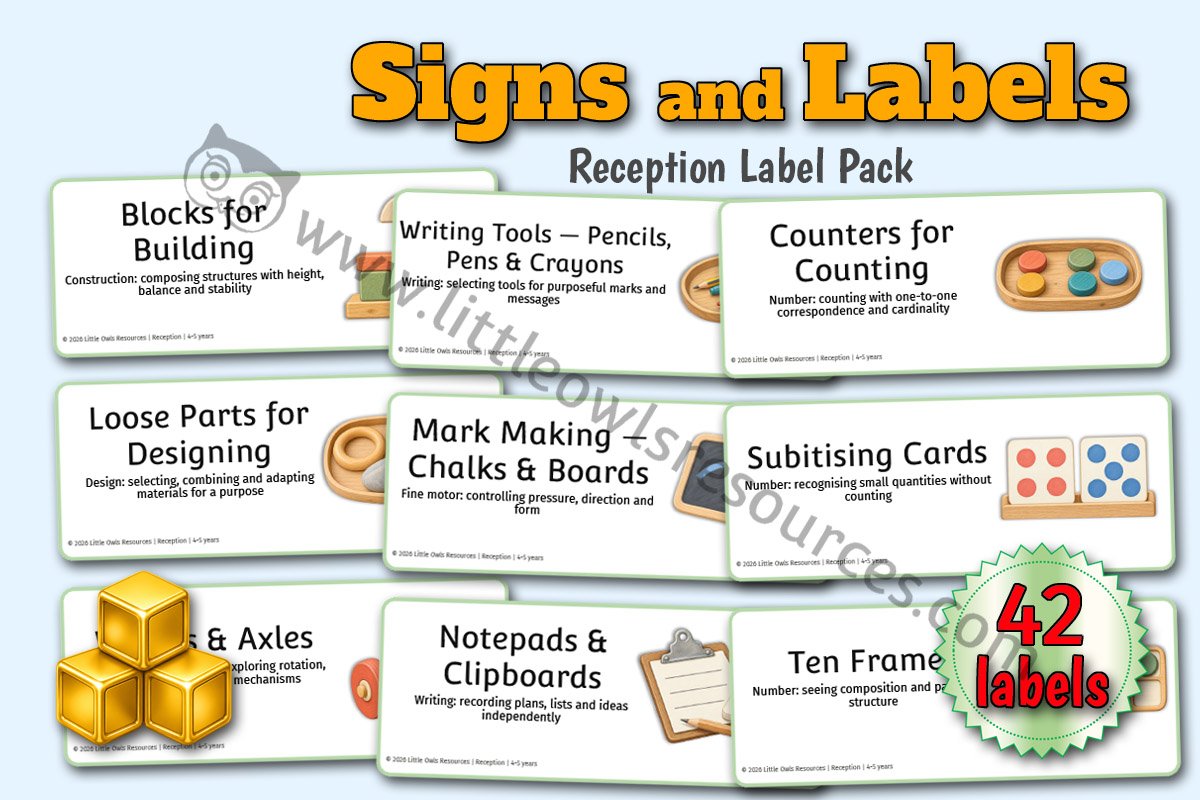
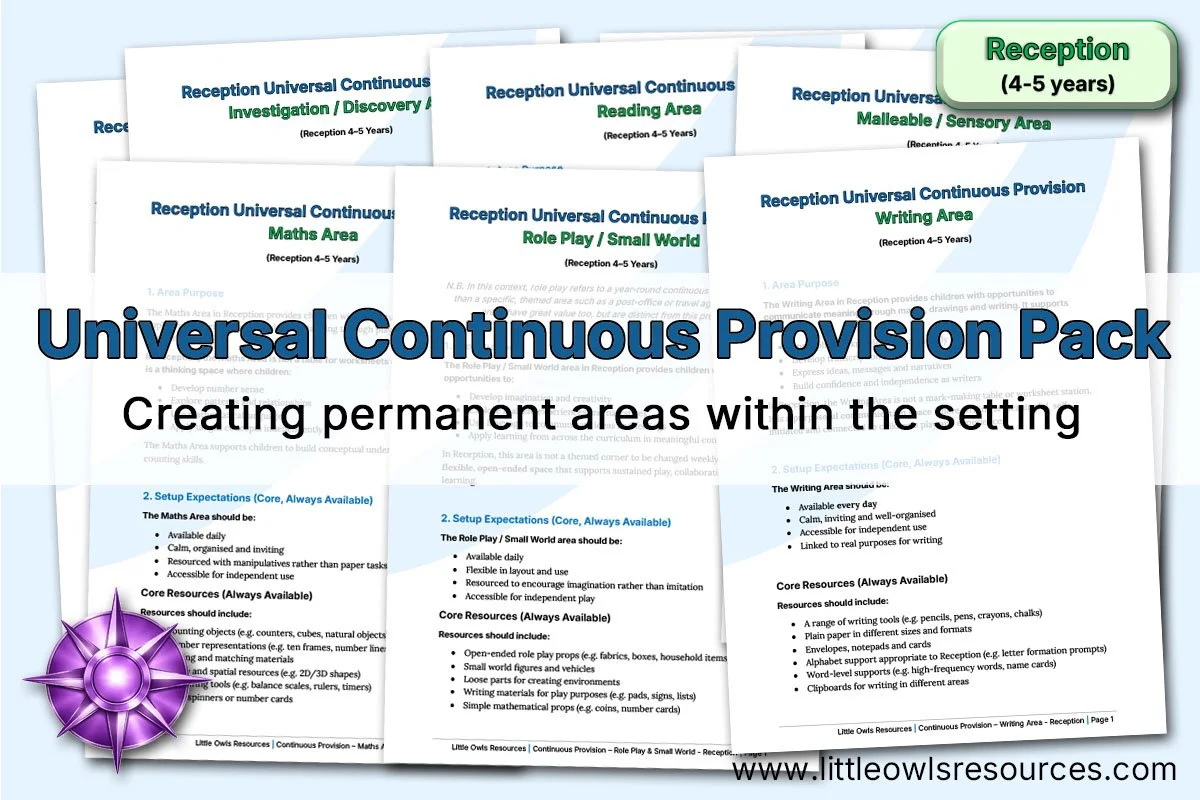
Universal Continuous Provision Pack (Areas listed below)
Construction
Creative
Investigation / Discovery
Maths
Reading
Role Play / Small World
Malleable / Sensory
Writing
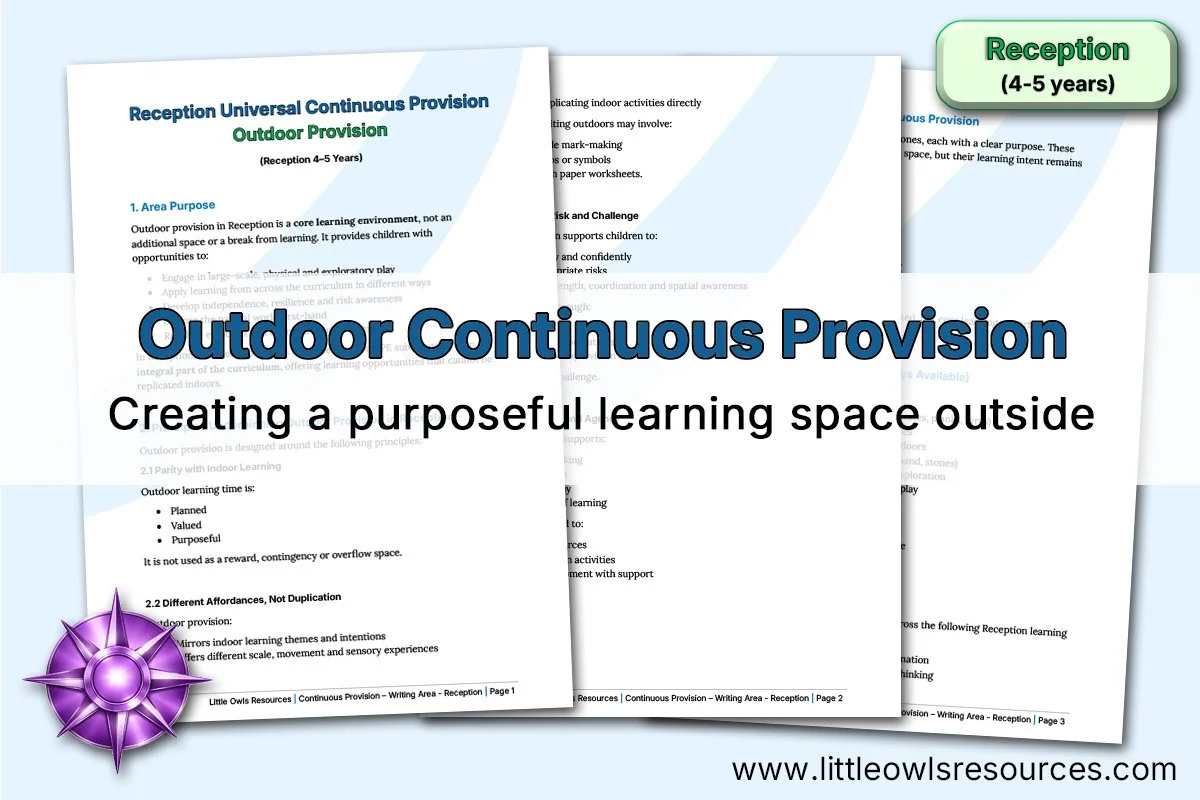
Outdoor Continuous Provision (Reception)
-
👉 Light-touch, application-focused.
-
👉 Systematic teaching without Year 1 drift.
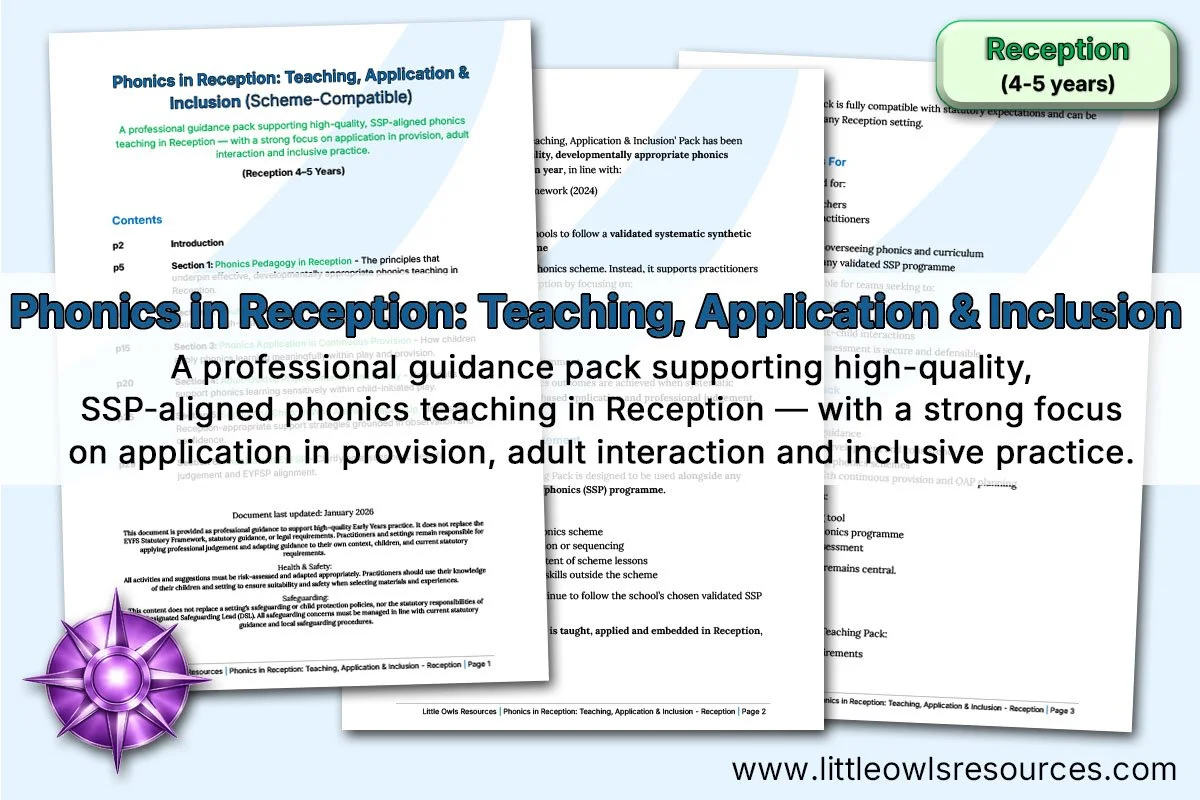
Phonics (Scheme-Compatible)
Phonics in Reception: Teaching, Application & Inclusion
Pedagogy
Adult-Led Session Guidance
Phonics in Provision
Supporting Children Not Keeping Up
Phonics & EYFSP
Scheme Compatibility Statement
Maths
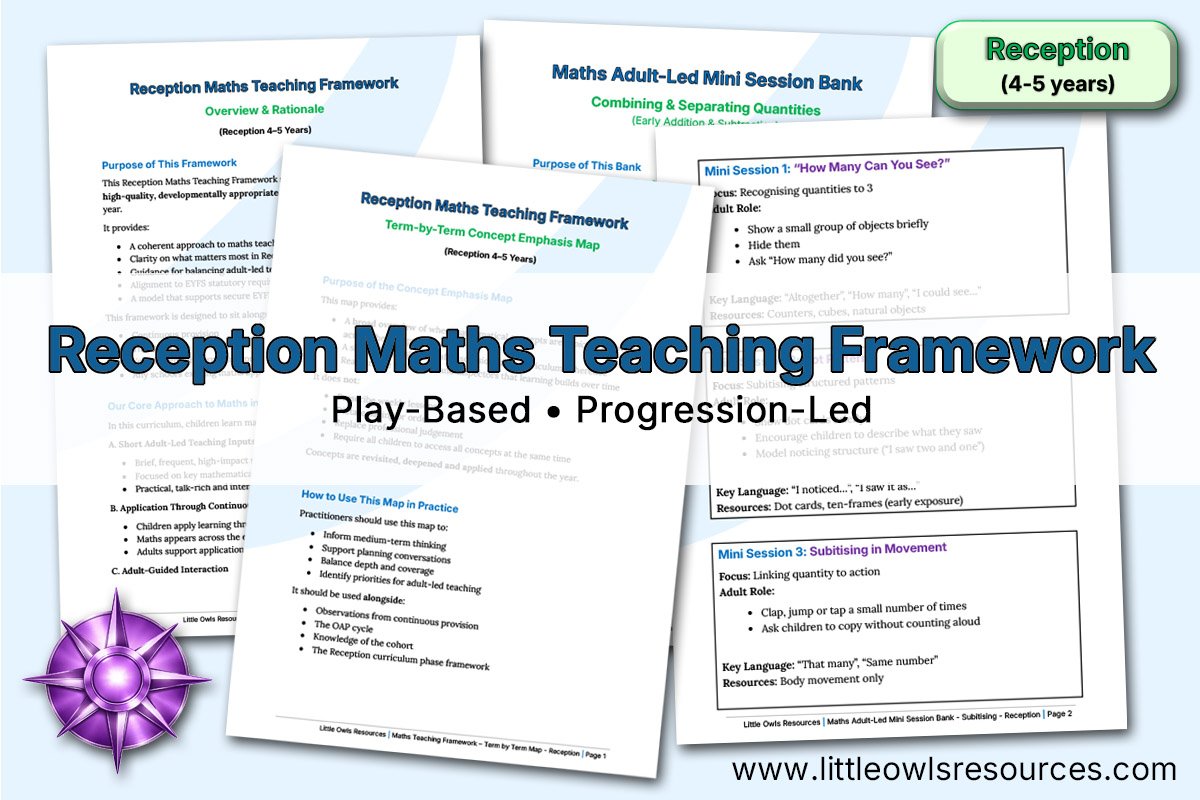
Reception Maths Teaching Framework
Term by Tem Maths Concept Emphasis Map
Maths Adult-Led Mini Session Banks (9 Banks)
Maths Across the Curriculum & Provision
Maths & EYFSP Guidance
Writing
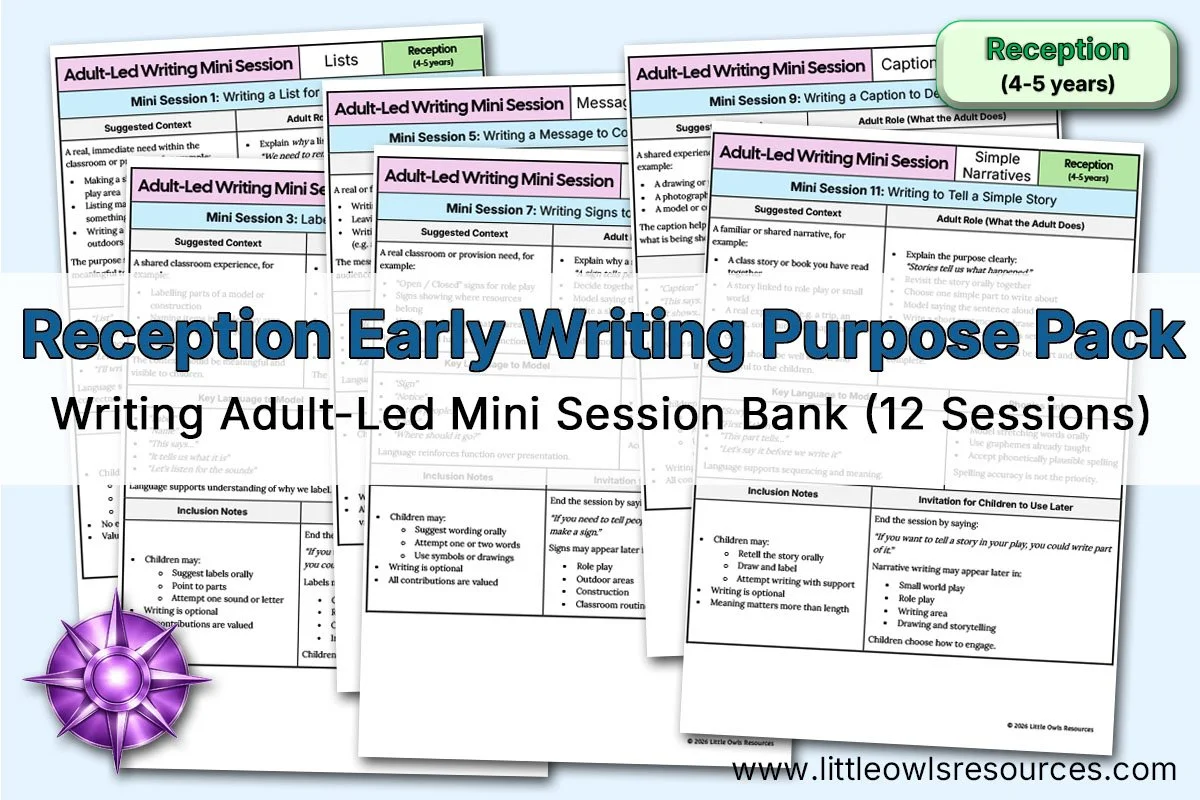
Reception Early Writing Purpose Pack
Writing Adult-Led Mini Session Bank (12 Sessions)
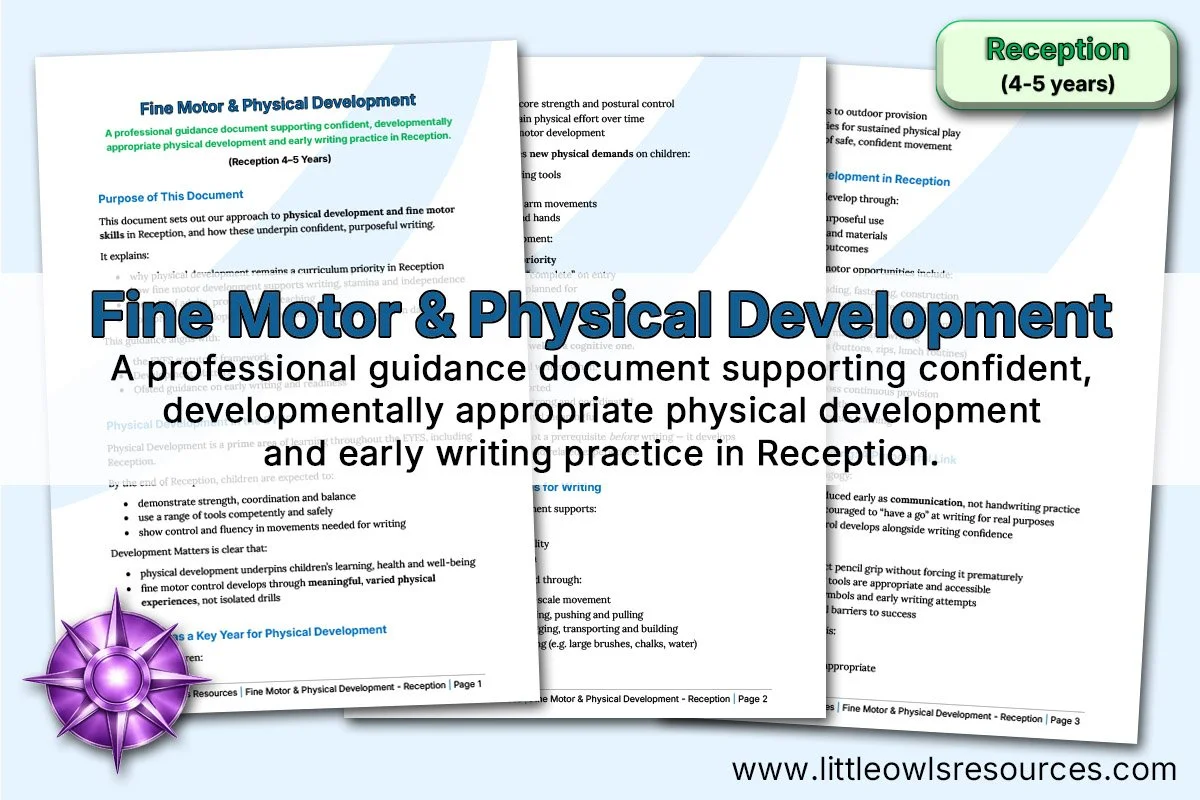
Fine Motor & Physical Development
Guidance Surrounding Foundations for Writing in Reception (4–5 Years)
-
👉 Precision language for application.
Theme-Based High-Impact Question & Vocabulary Banks
Leadership Rationale: Why Questions Differ by Age
-
👉 Statutory confidence with inclusive practice.
EYFSP Interpretation & Assessment Toolkit
ELG Unpacking
Best-Fit Exemplification
Moderation Guidance
Reception SEND & Inclusion Toolkit
The graduated response (Universal → Targeted → Specialist)
Adaptations across phonics, maths & writing
Visual Communication Pack
Language-first strategies for inclusion
Observation, assessment and SEND
Collaborative working with families and specialists
Referral Preparation — for EHCP pathway
Reception APDR Template
Leadership and inspection readiness
-
👉 Leadership assurance.
Reception Leadership & Inspection Readiness Pack
Curriculum Intent & Implementation Guidance
Ofsted Conversation Prompts
-
👉 Clear communication beyond the classroom.
Additional Whole-Setting Guidance | for Professional Members
Explore our whole-setting guidance below, including overarching curriculum and pedagogy documents, early years schemas and EYFS setting policies.
-
-
Early Years Schemas - Practitioner Toolkit | EYFS Birth-5
↪ Schema Cards (definition, behaviours, age-related examples, enabling resources)
↪ Schema Observation & Responsive Provision Planning Template
-
EYFS Group Setting Policies Pack
↪ x 22 Policy Documents
↪ Policy Sign-Off and Confirmation Document
↪ EYFS Setting Policy Folder Contents List
Childminder Setting Policies Pack
↪ x 22 Policy Documents
↪ Childminder Assistant or Volunteer Policy Sign-Off and Confirmation Document
↪ Childminder Policy Folder Contents List
-
↪ Clear, practitioner-friendly explanations of key curriculum and pedagogy terms used throughout our guidance.
Looking for a different age group pathway?
Select the pathway that best reflects your role or the age group you work with. You do not need to use everything. (Some practitioners may use more than one pathway.)
Latest EYFS Articles & Practical Guides | From Our Blog
Stay informed, get expert advice, and find inspiration from our collection of articles and useful external resources, tailored specifically for EYFS practitioners. We regularly publish in-depth articles to support you with current best practices, regulatory changes, and fresh ideas.




Are you looking for a specific resource or document for your provision?
Use our 🔍 Search Bar located at the top of every page.
___________________________
Content within the EYFS Curriculum & Pedagogy Membership is provided as professional guidance and support. It reflects current understanding of the EYFS statutory framework, Development Matters and inspection expectations at the time of writing. Practitioners are responsible for applying professional judgement and ensuring practice aligns with current statutory requirements and their specific context. All resources, experiences and environment arrangements must be risk assessed by the setting and used in accordance with individual children’s developmental stages, needs and supervision requirements.
Safeguarding content does not replace a setting’s safeguarding and child protection policy or the statutory role of the Designated Safeguarding Lead (DSL). All concerns must be managed in line with current statutory guidance and local safeguarding procedures.
_____________________________