

🦖 Dinosaur Activities for EYFS & KS1 | Ideas, Printables & Planning
Travel back millions of years and discover a fascinating prehistoric world with our collection of Dinosaur activities for EYFS and KS1. From mighty Tyrannosaurus Rex and gentle herbivores to fossils, dinosaur eggs and exciting excavation sites, dinosaurs continue to capture children's imaginations and inspire learning through play.
Perfect for Nursery, Preschool, Childminders, Reception and Key Stage 1, these resources and ideas support communication, literacy, mathematics, scientific enquiry, creative development and outdoor learning.
Whether children are becoming palaeontologists, exploring fossils, creating dinosaur habitats or building their own Dinosaur Museum, you'll find printable resources, planning support and engaging learning opportunities to enrich your provision.
-
Dinosaurs inspire awe, curiosity and endless questions. A Dinosaur topic naturally encourages children to:
🔬 Think Like Scientists
Ask questions
Investigate evidence
Compare and classify
Develop theories
🗣️ Develop Communication & Language
Learn rich topic vocabulary
Discuss discoveries
Share ideas and theories
Engage in storytelling
🌍 Explore the Past
Compare prehistoric and modern animals
Learn about fossils
Investigate extinction
Explore how the Earth has changed
🎭 Use Their Imagination
Create dinosaur worlds
Role play explorers and palaeontologists
Invent their own dinosaur species
Build museums and excavation sites
📌 Jump to Section
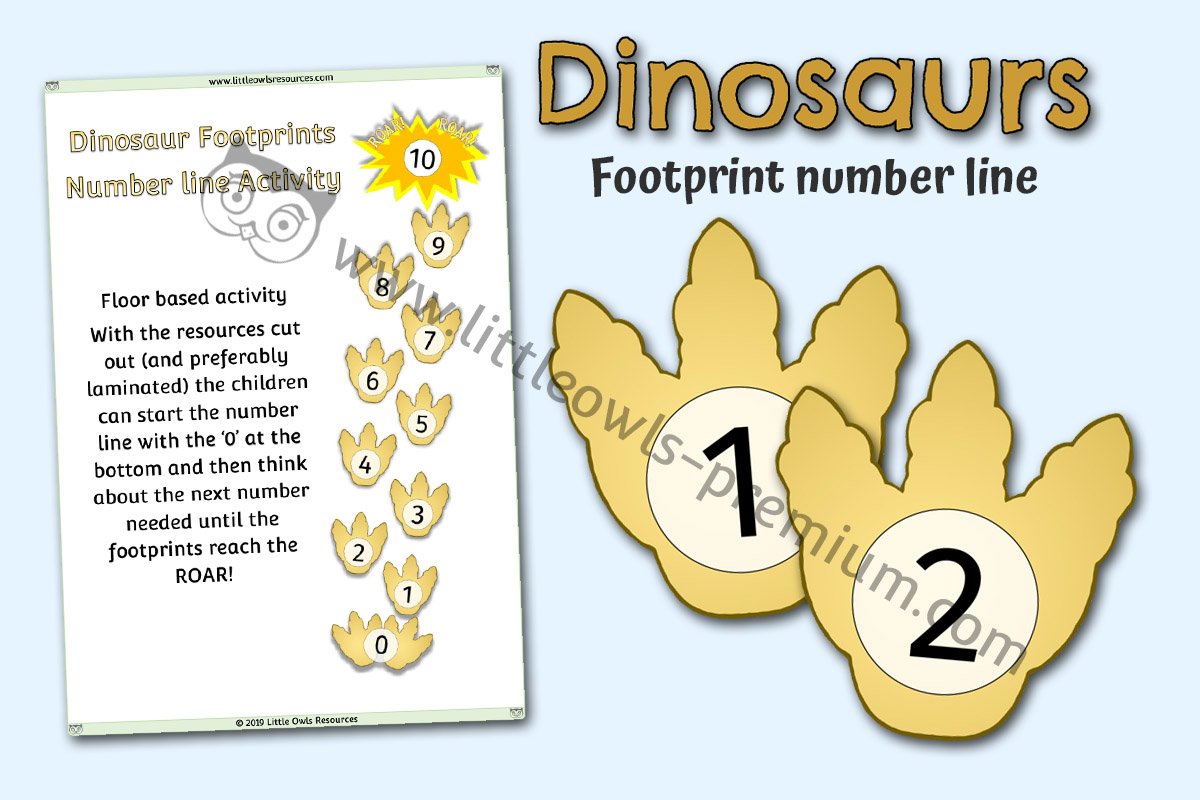
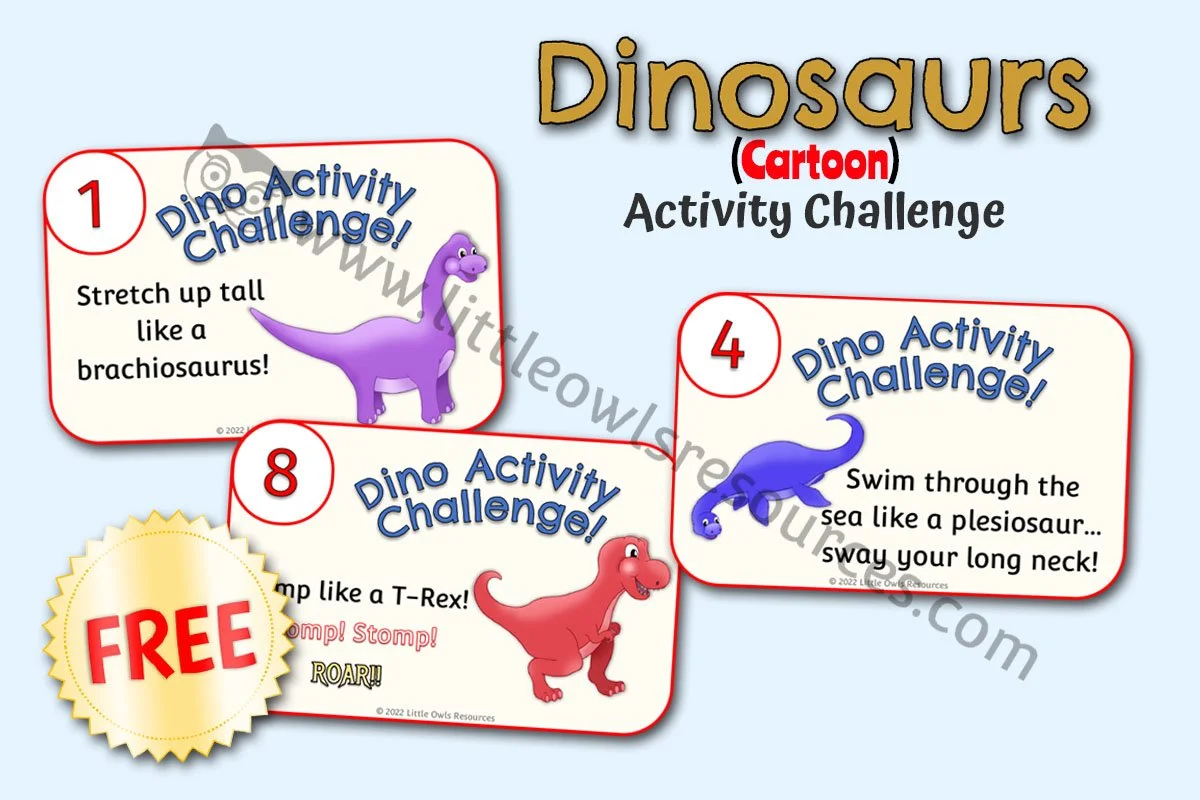
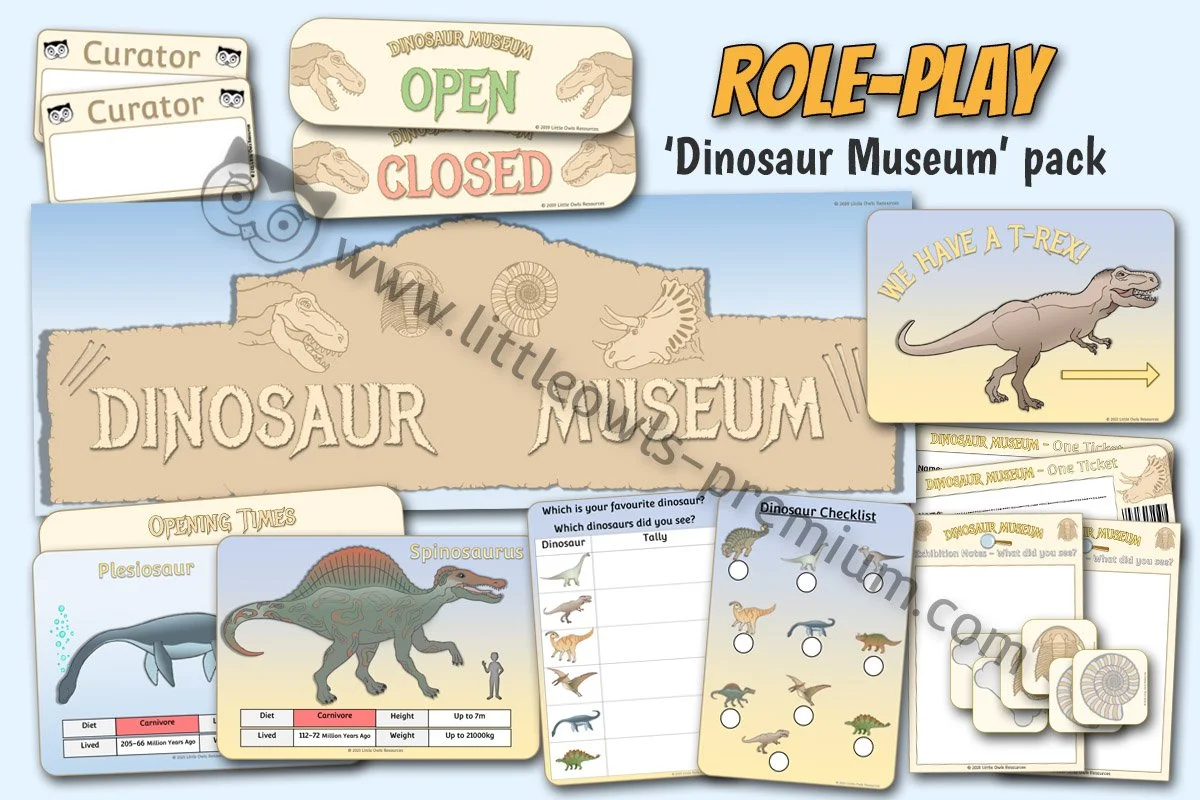
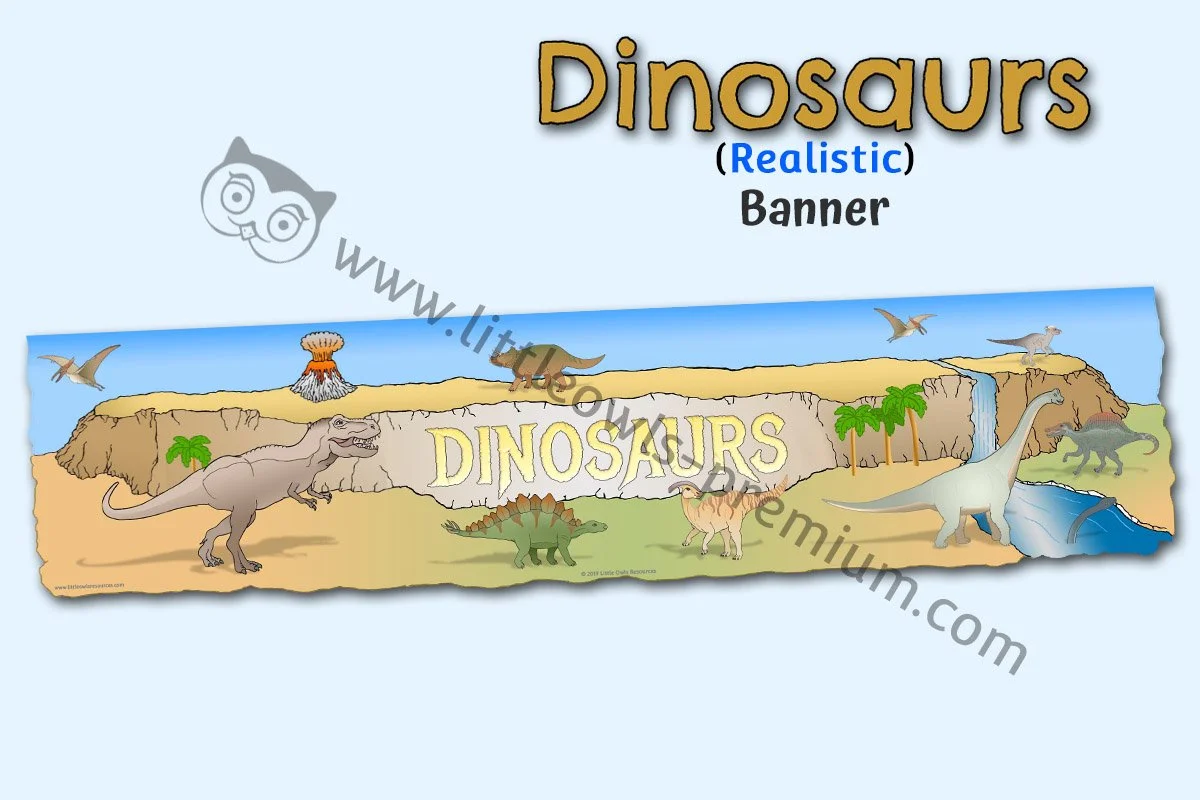
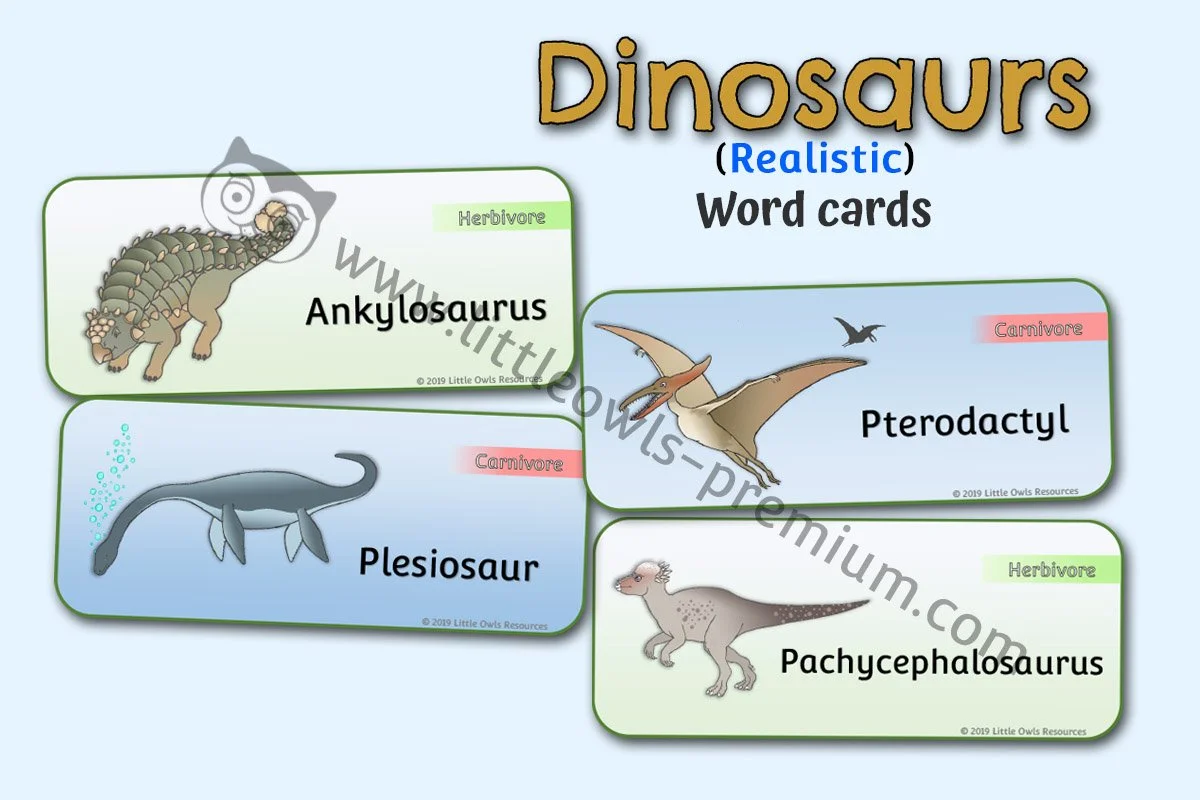
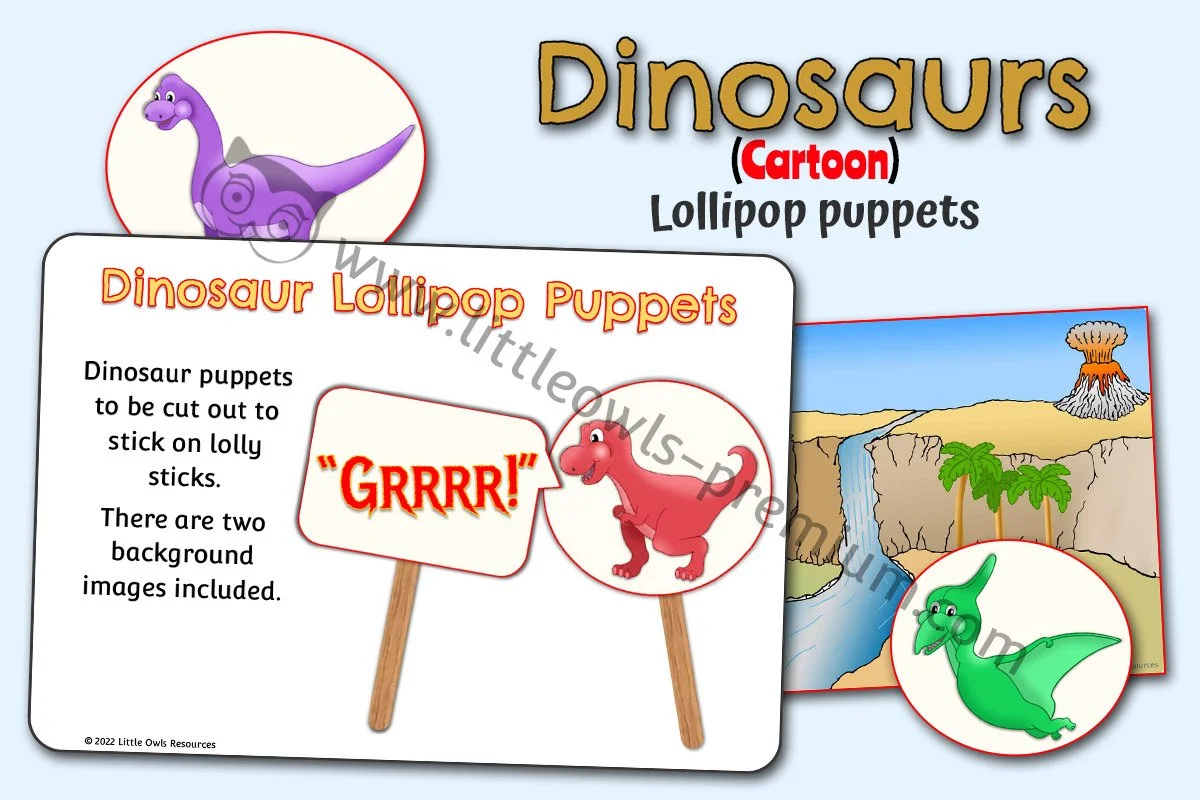
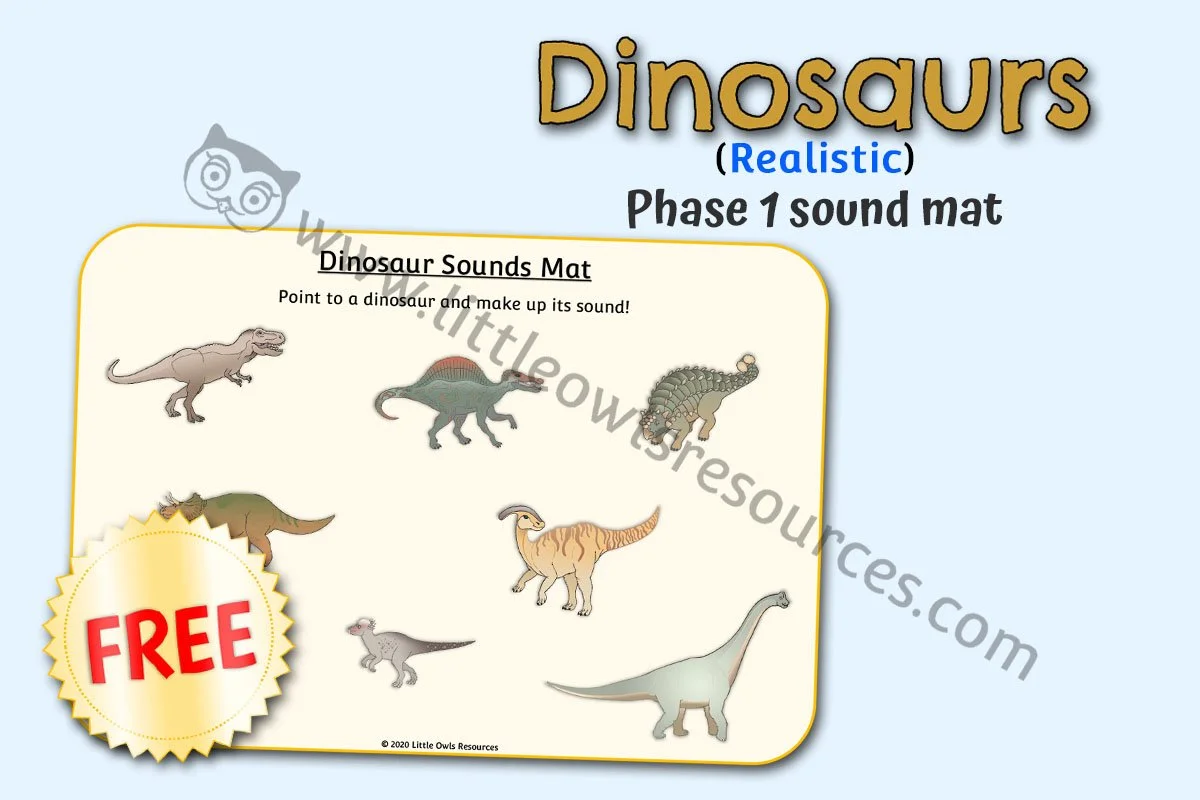
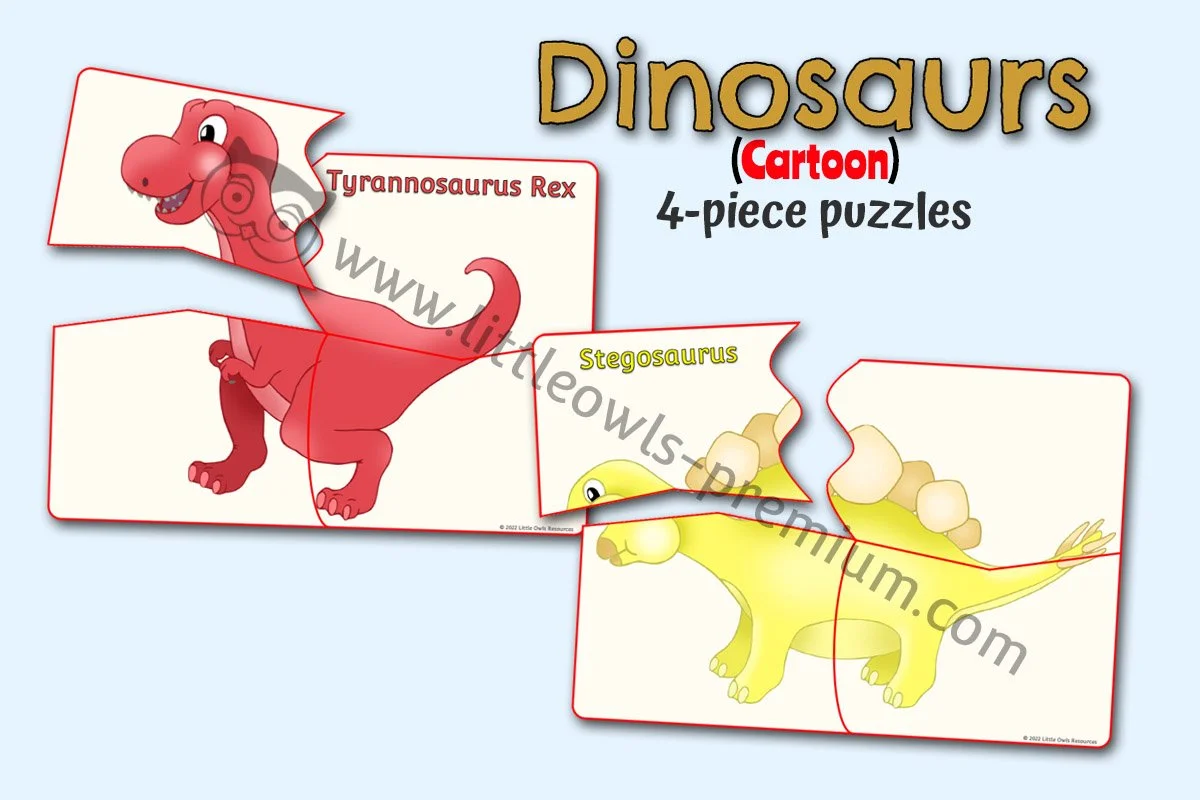
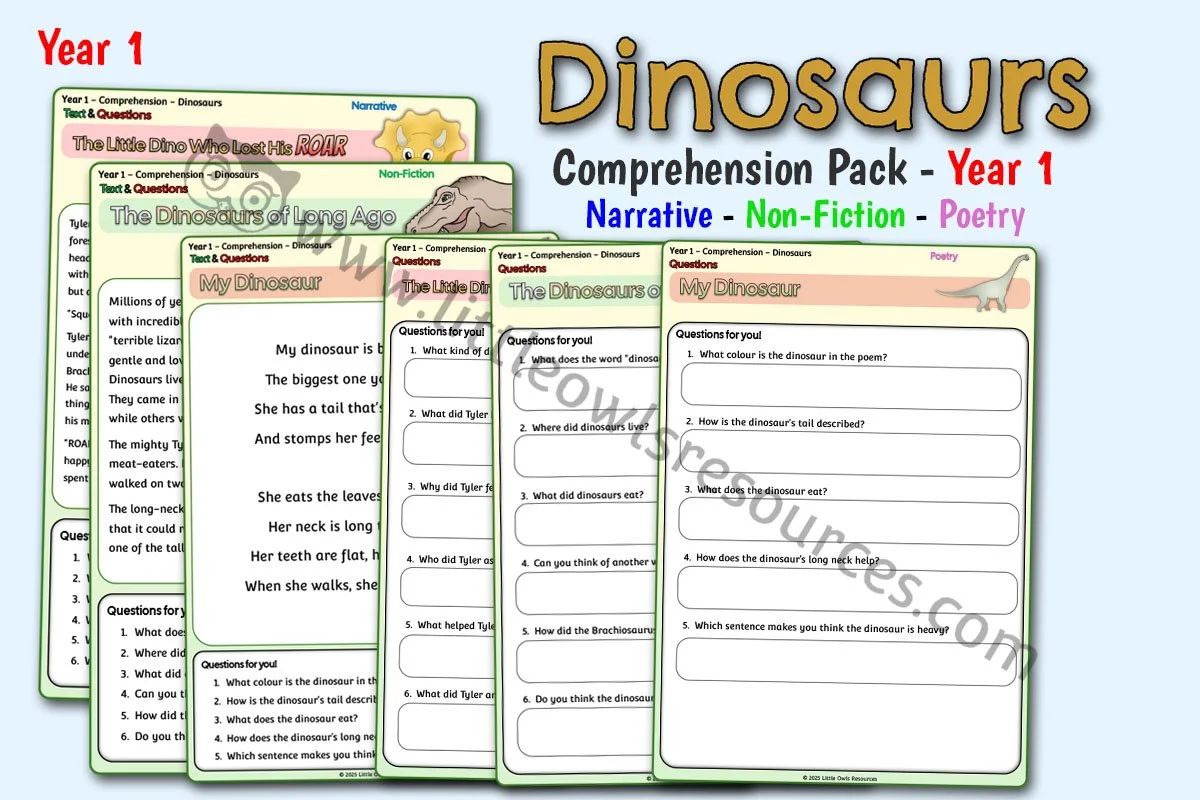
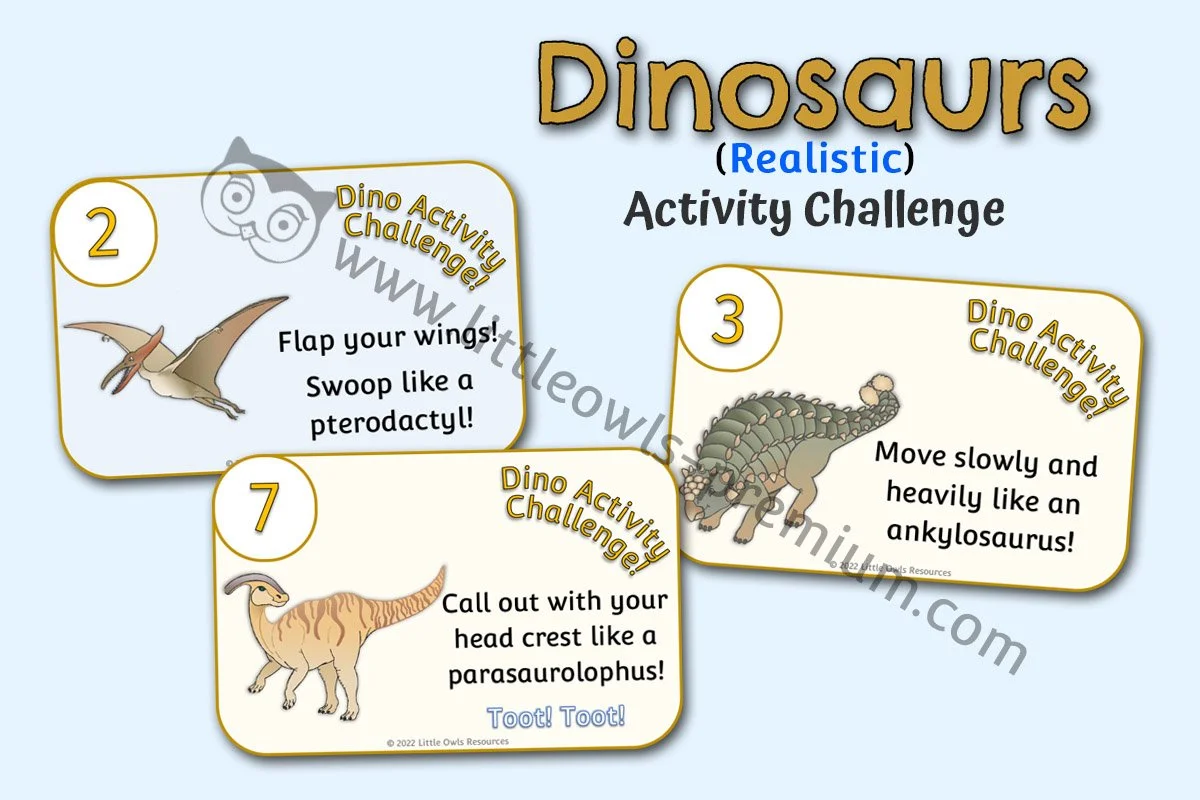
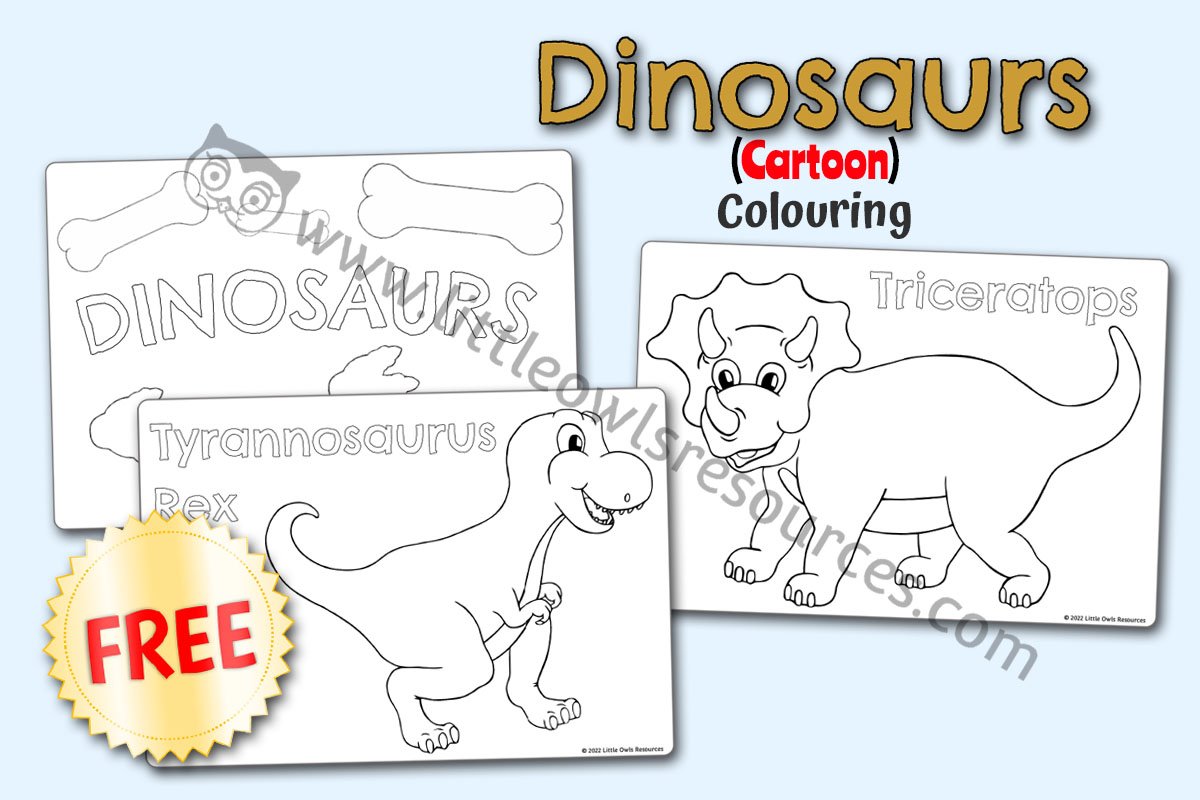
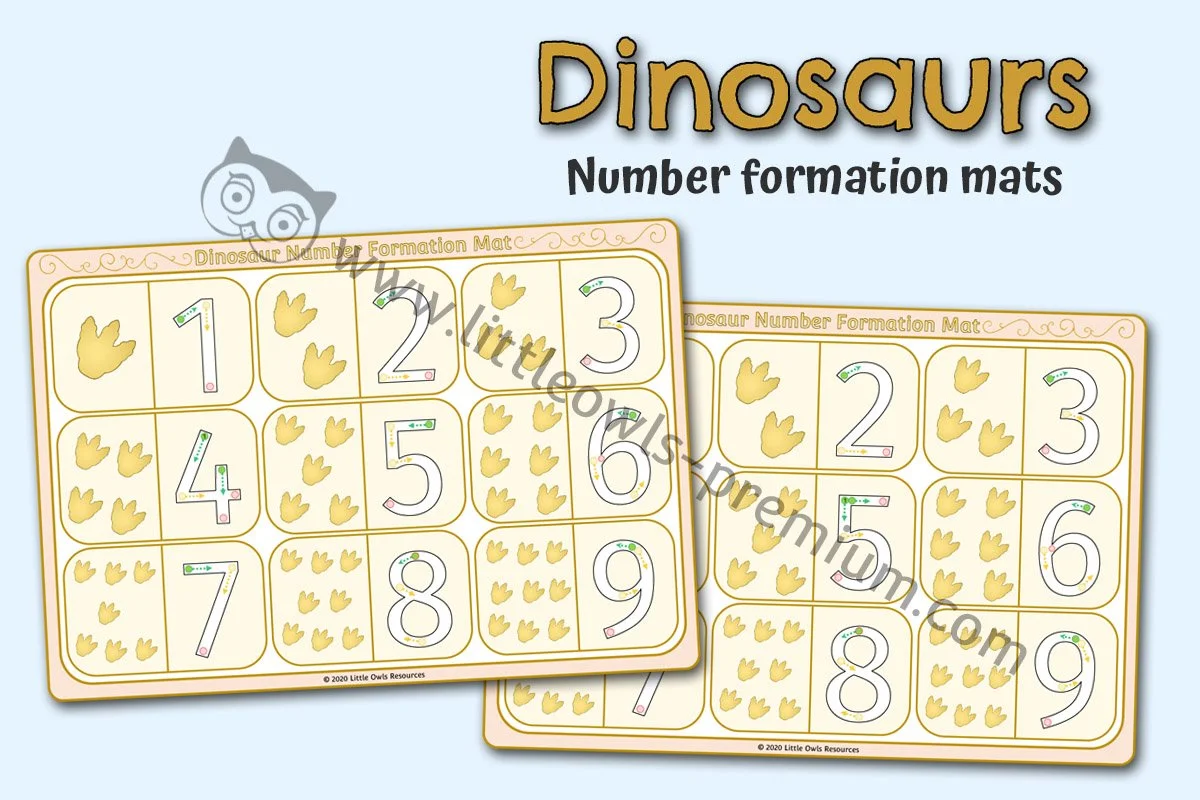
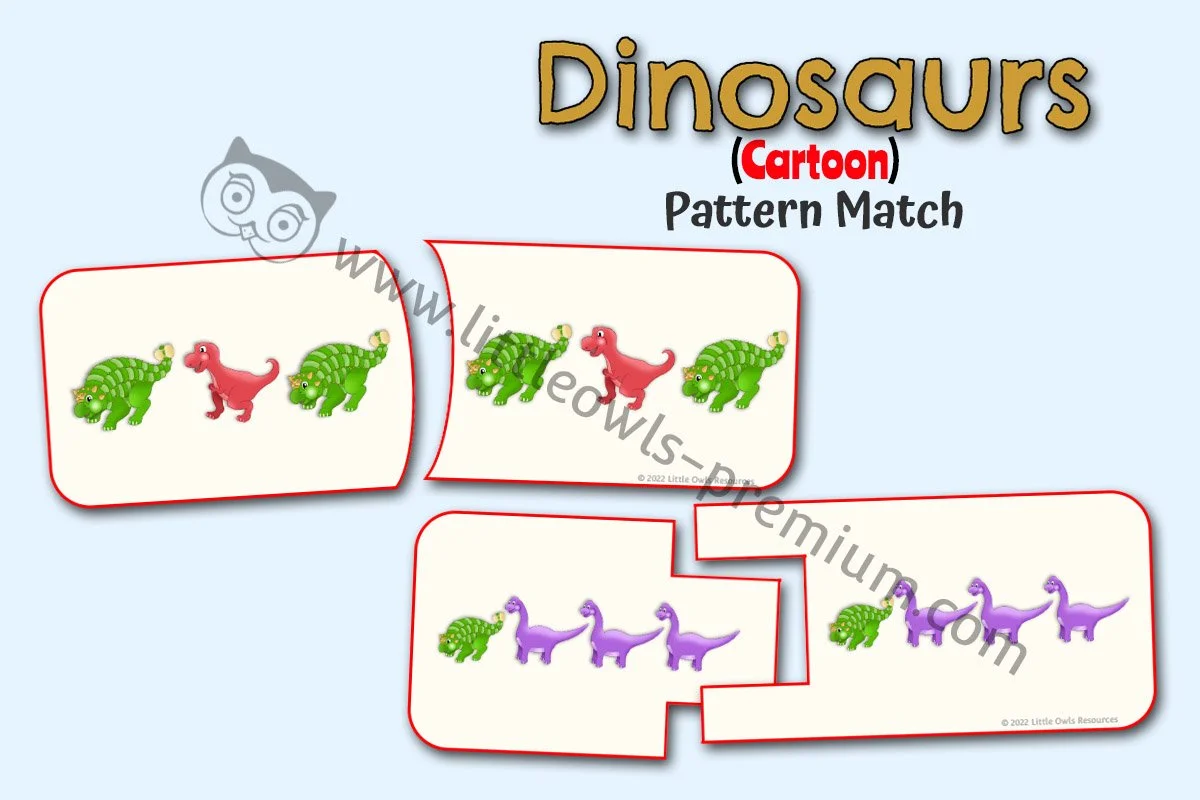
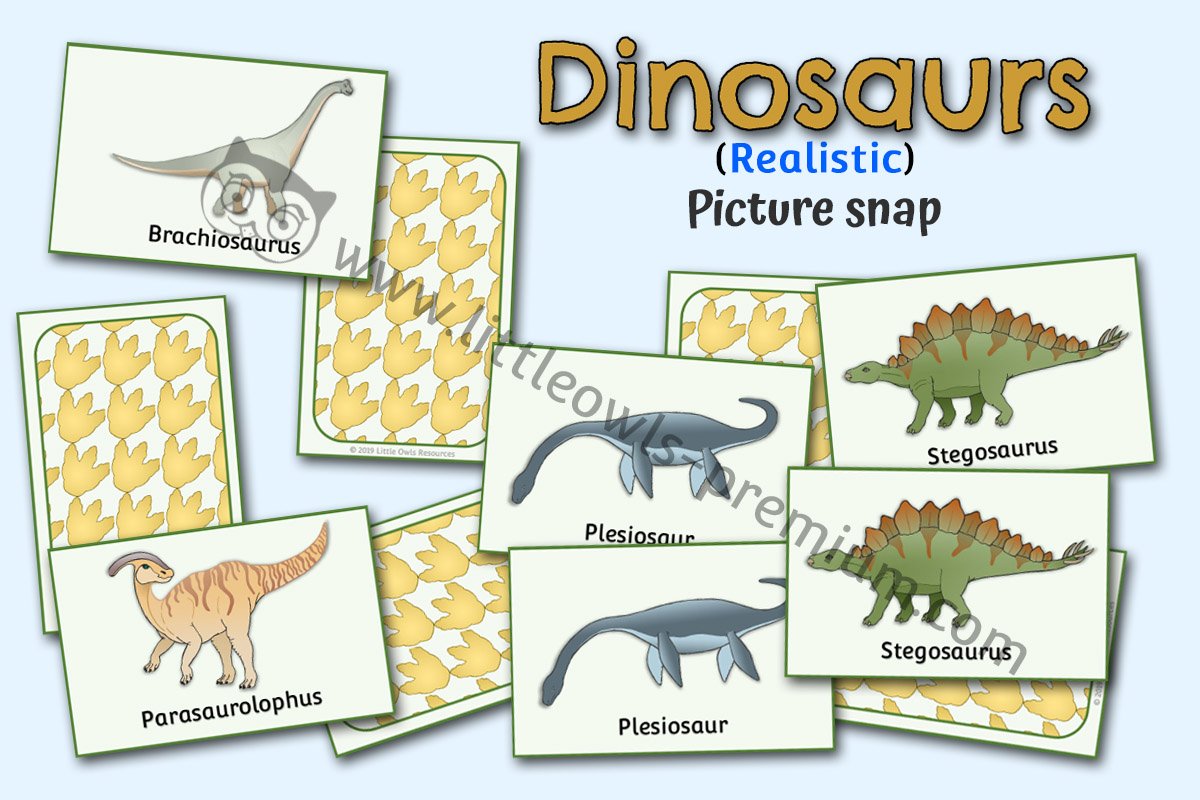
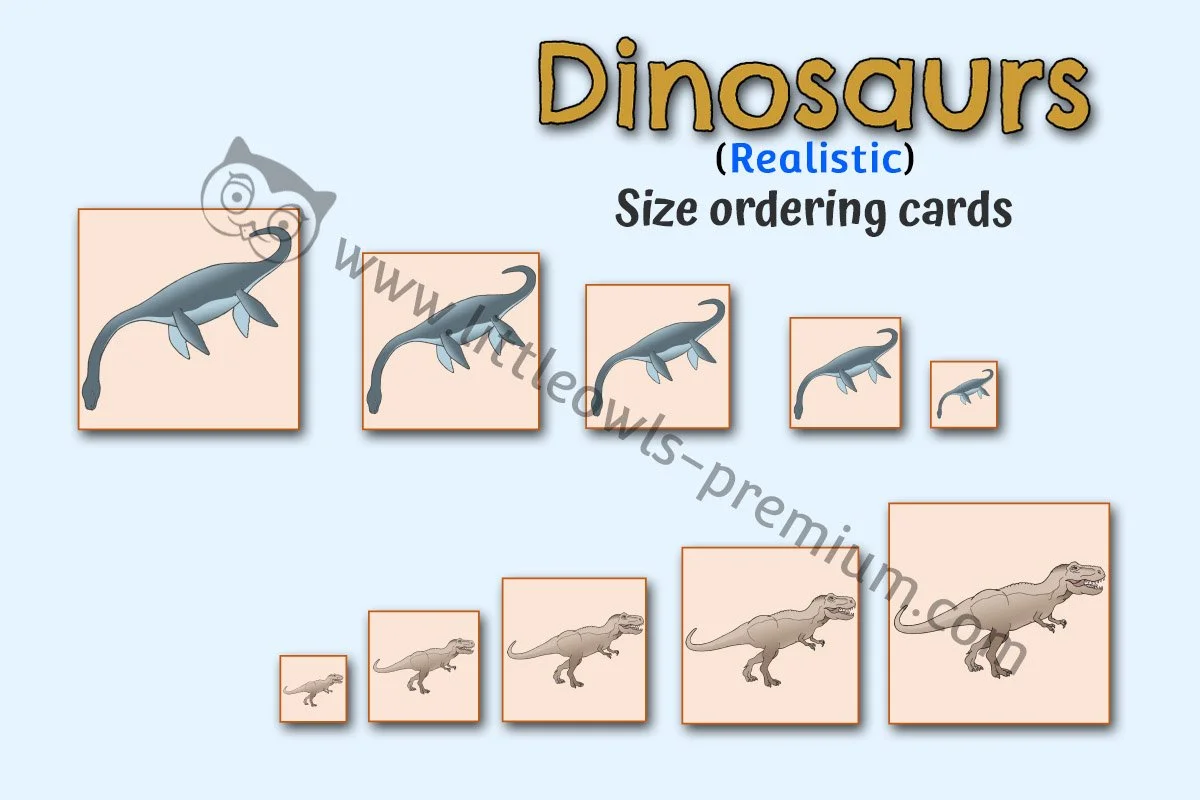
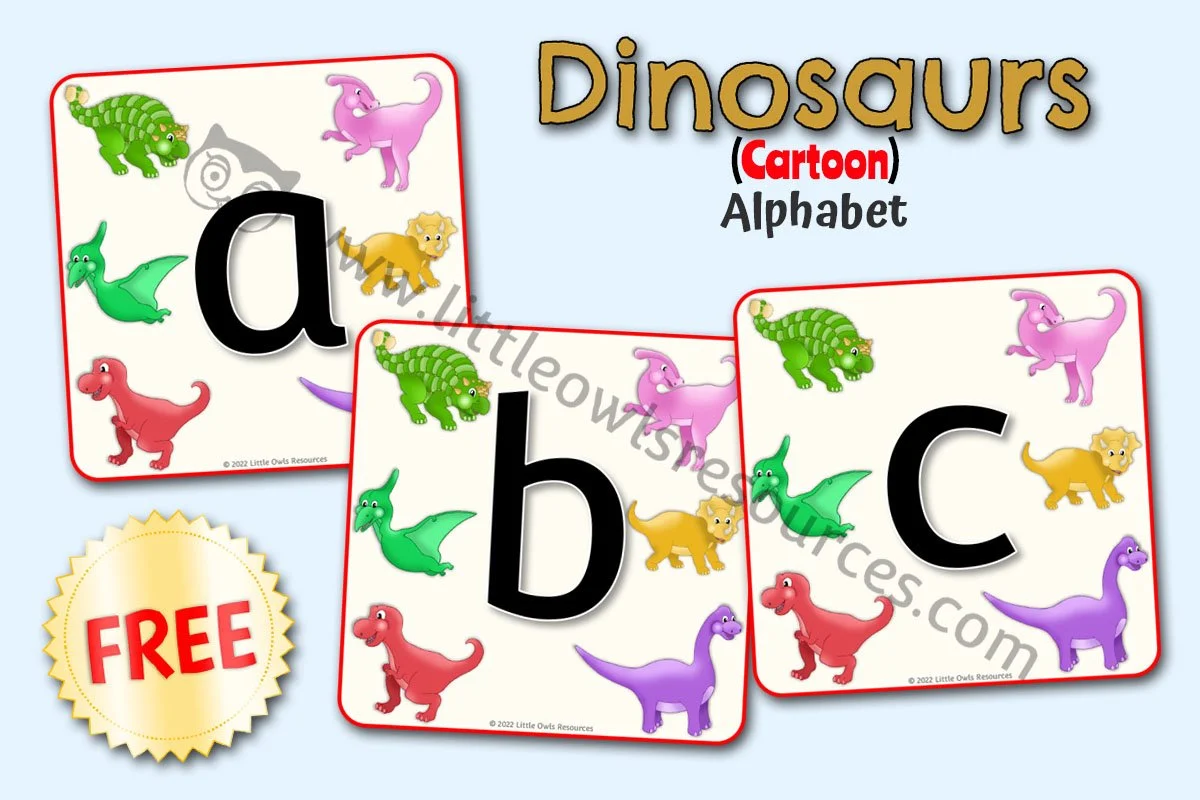
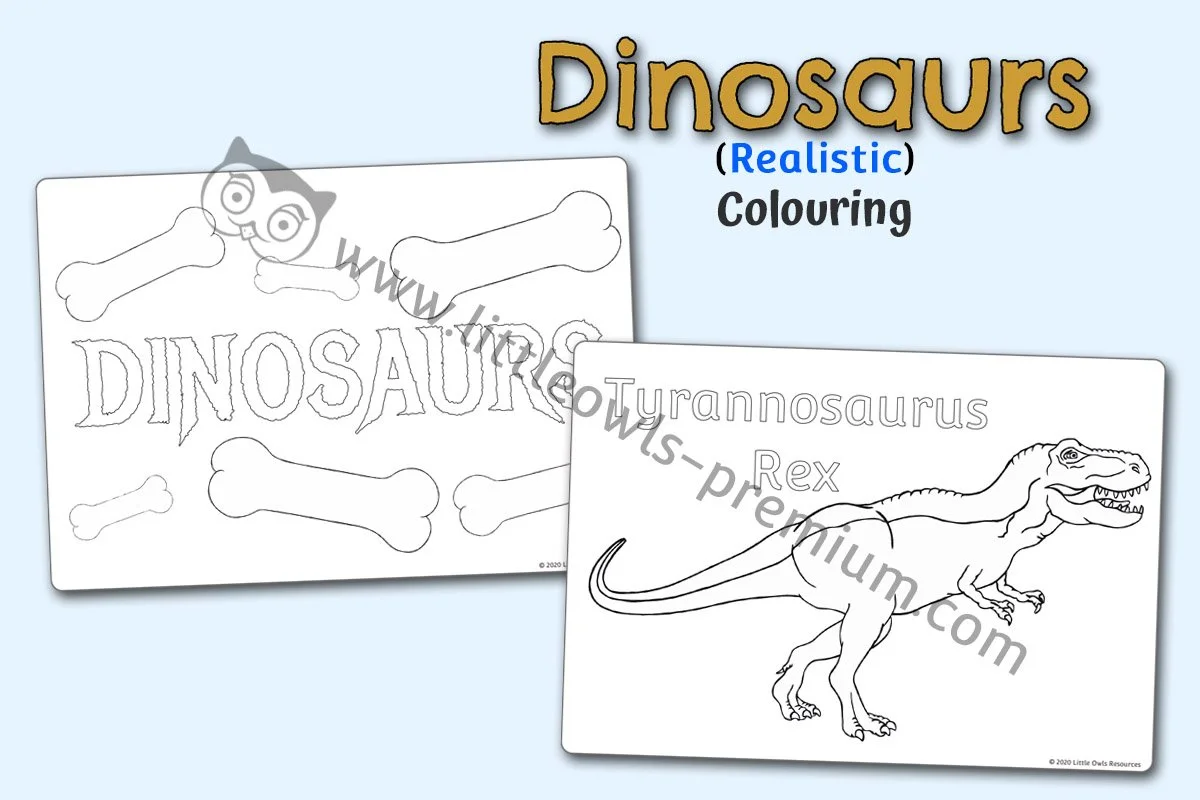
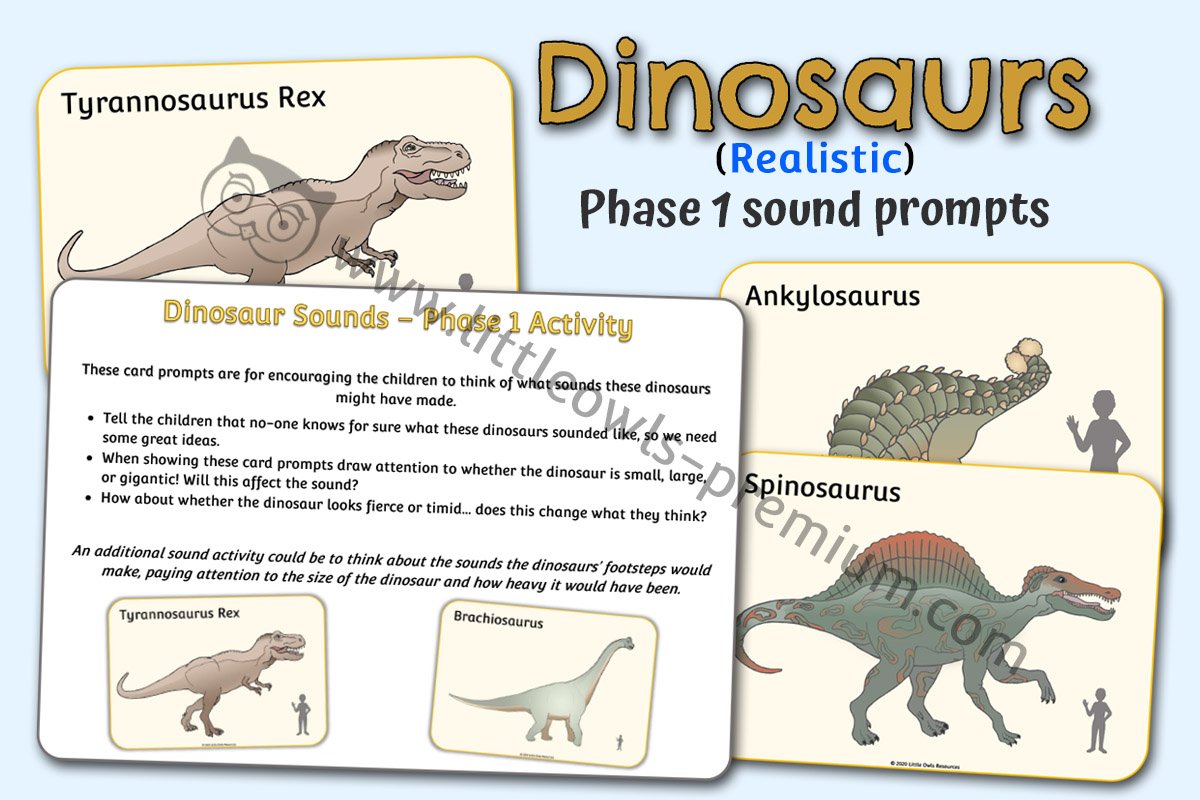
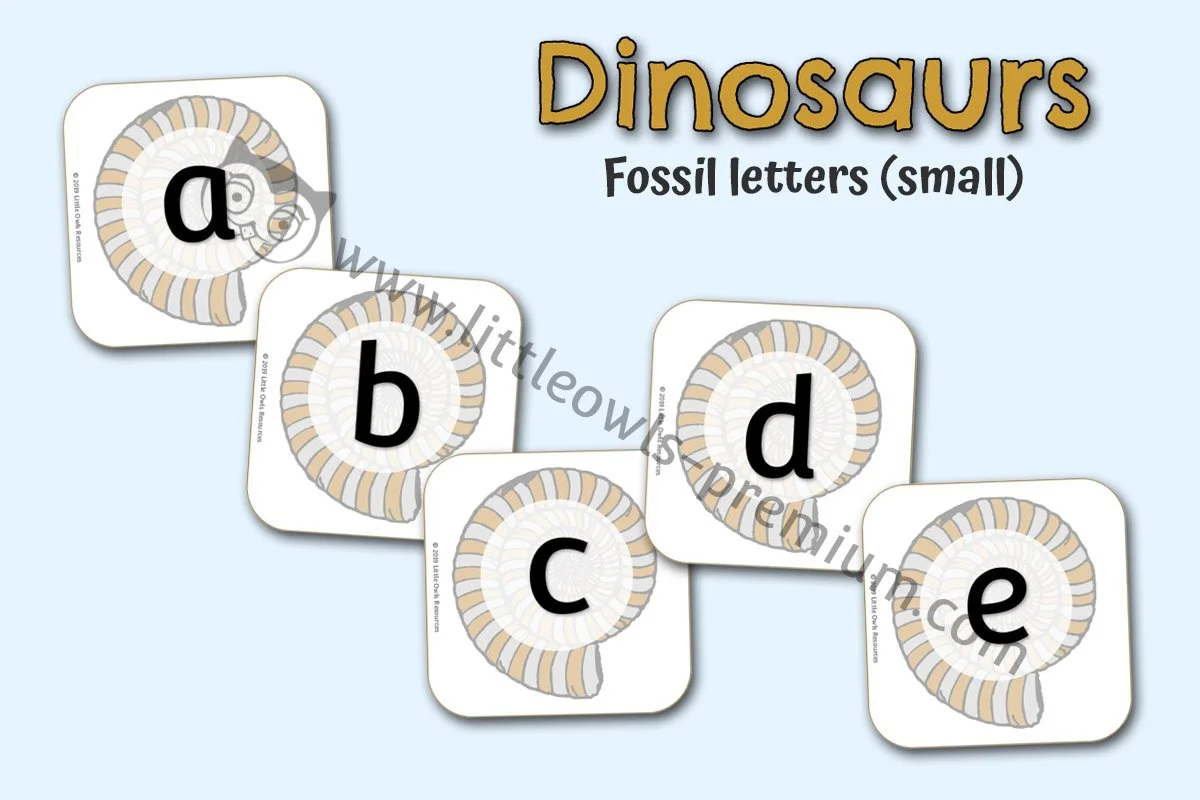
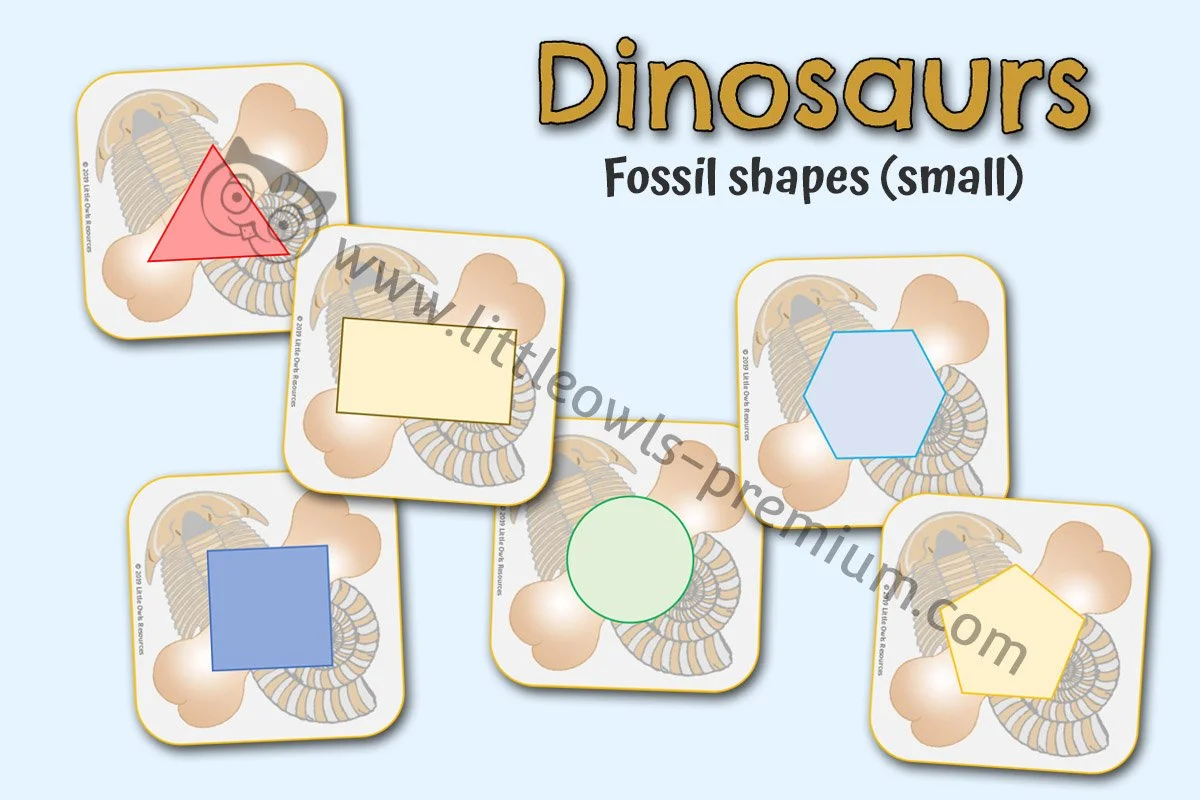
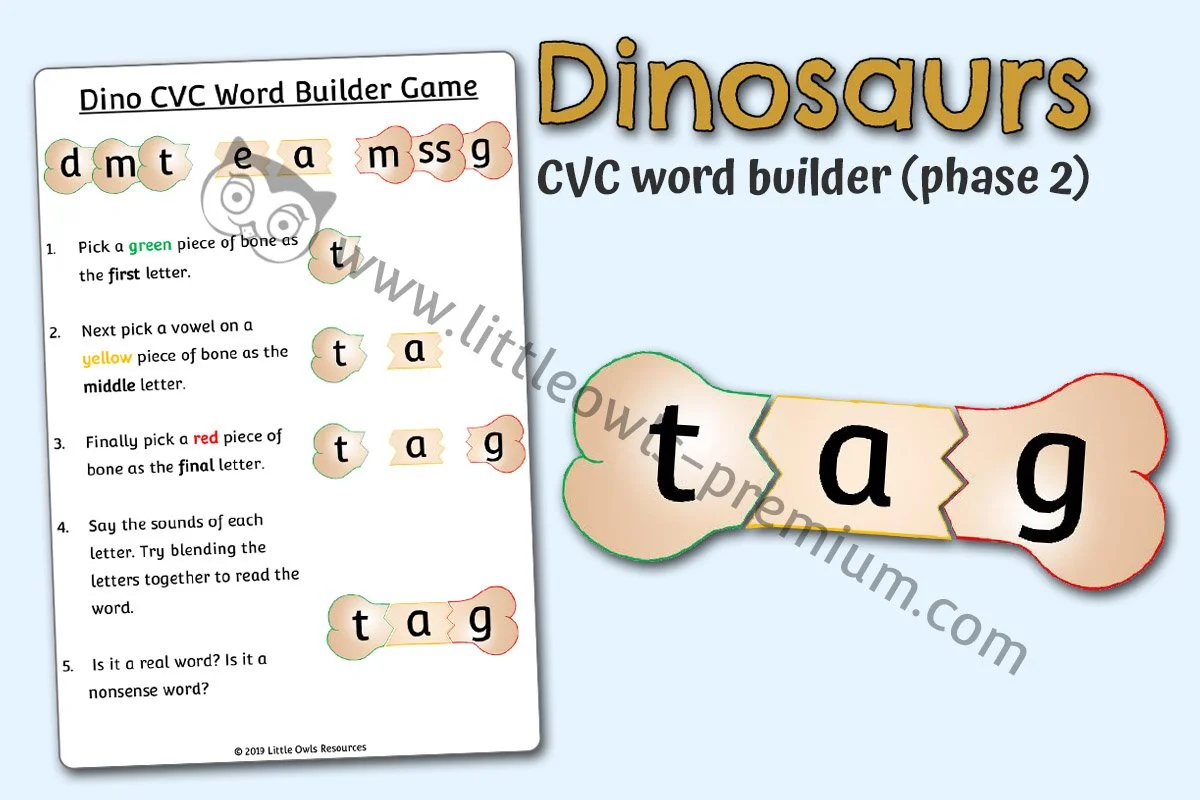
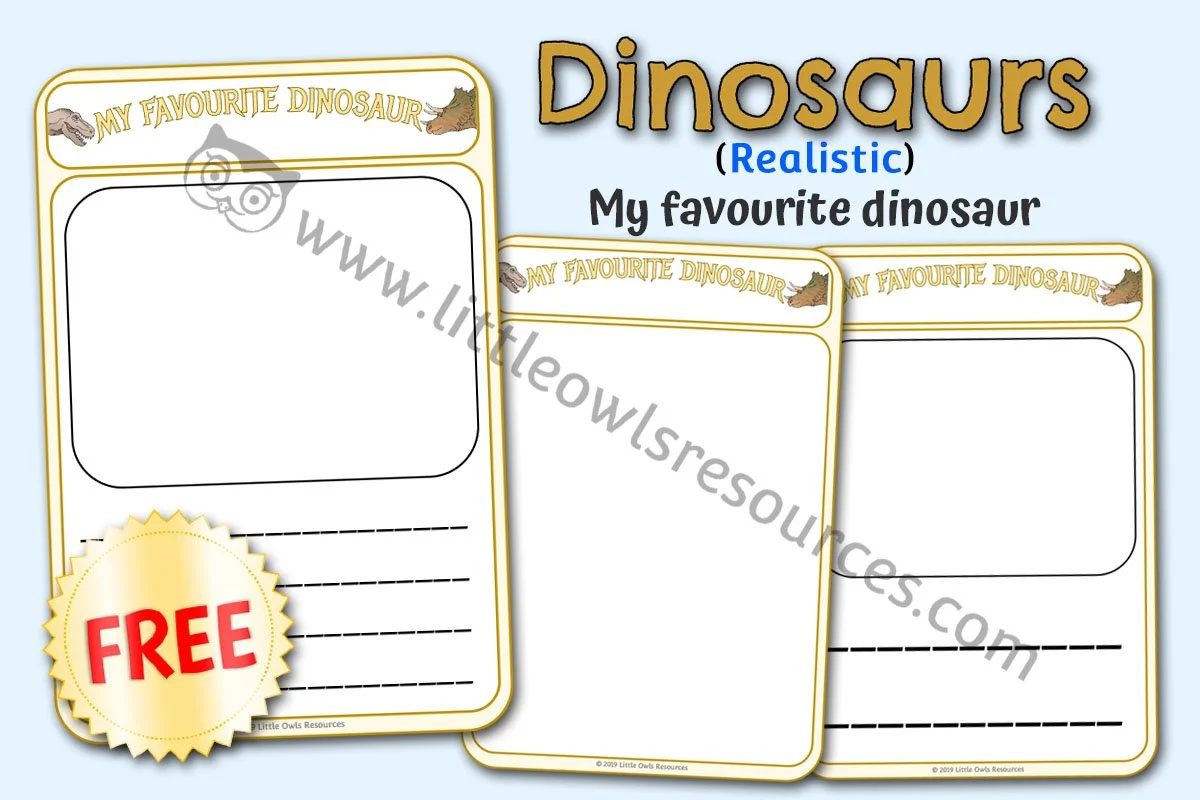
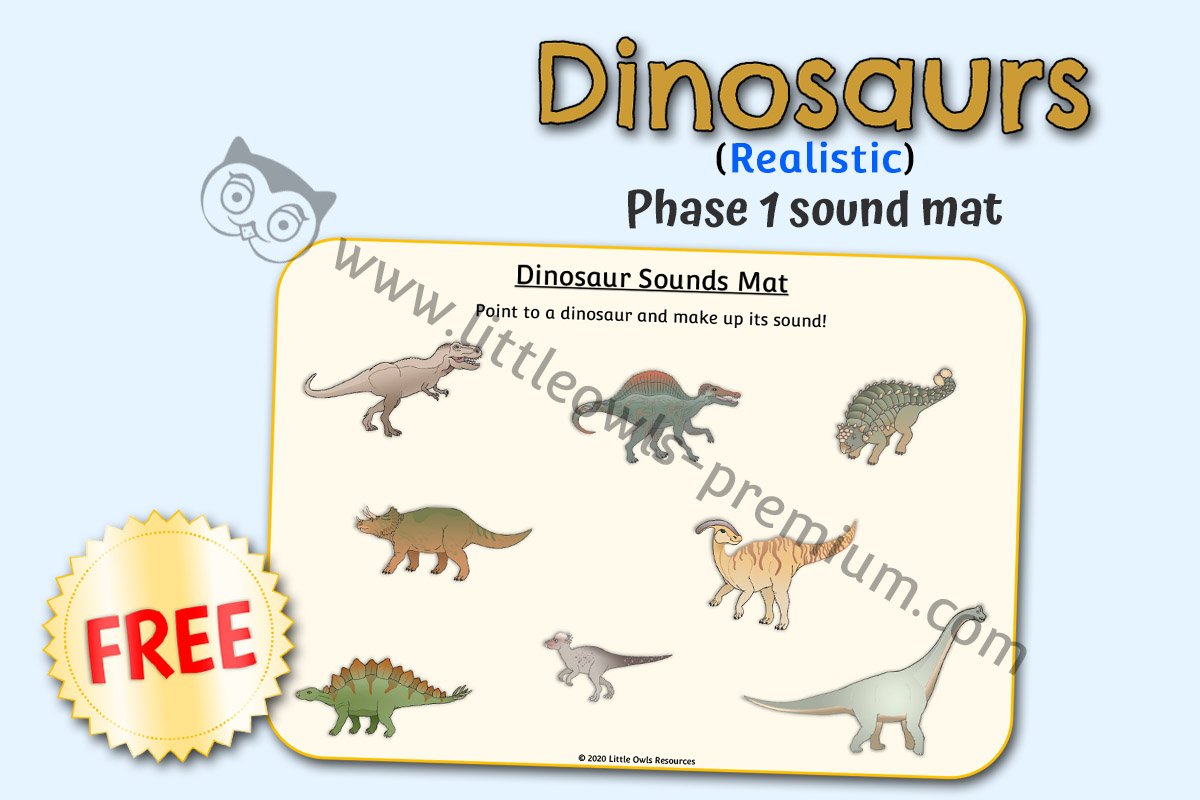
🦖 Free Dinosaur Resources
Explore our free Dinosaur-themed resources and discover exciting opportunities for prehistoric learning and exploration.




💡 Join as a Free Access member to download the samples above and all other free resources available on Little Owls Resources at no cost. Alternatively, explore all membership options here.

🦕 Dinosaur Printable Provision & Teaching Resources
Browse our collection of Dinosaur-themed resources designed to support learning across the curriculum.
-
🎭 Role Play & Imaginative Play
Dinosaur Museum Role Play Pack
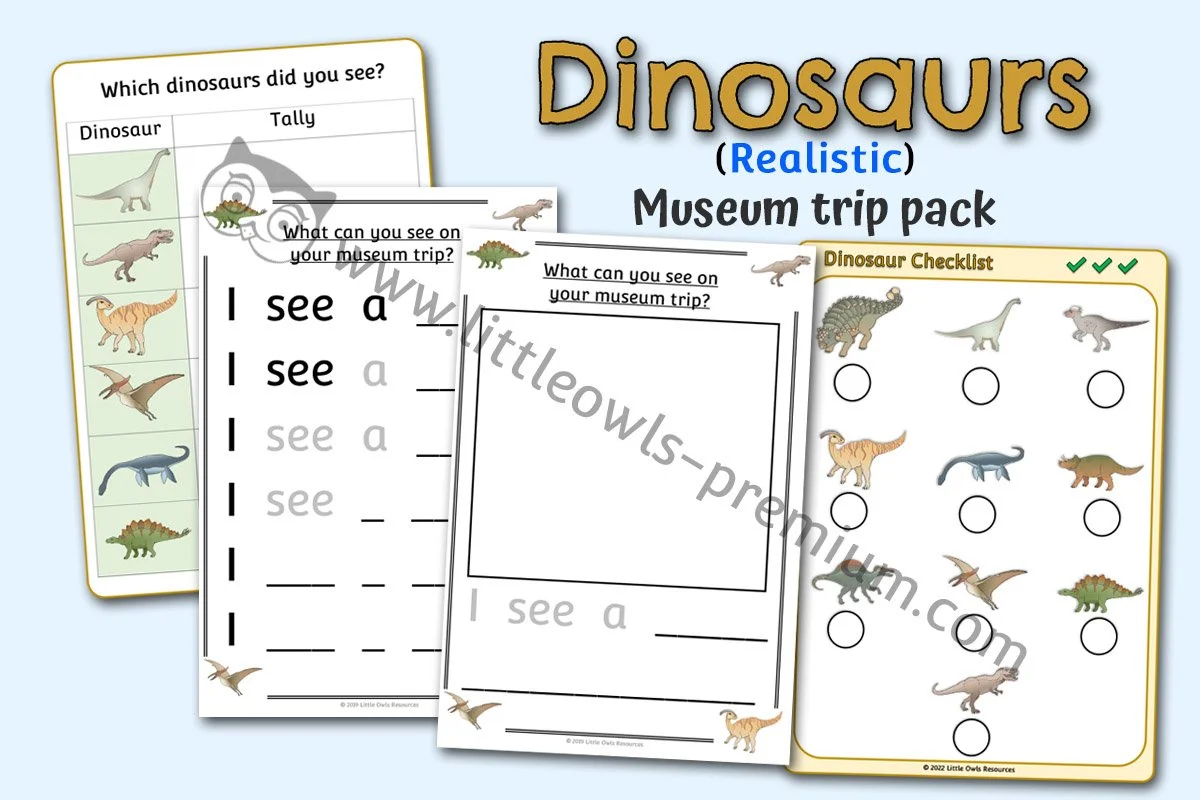
Dinosaur Museum Trip Pack
Dinosaur Lollipop Puppets
Dinosaur Storytelling Resources
🗣️ Vocabulary & Communication
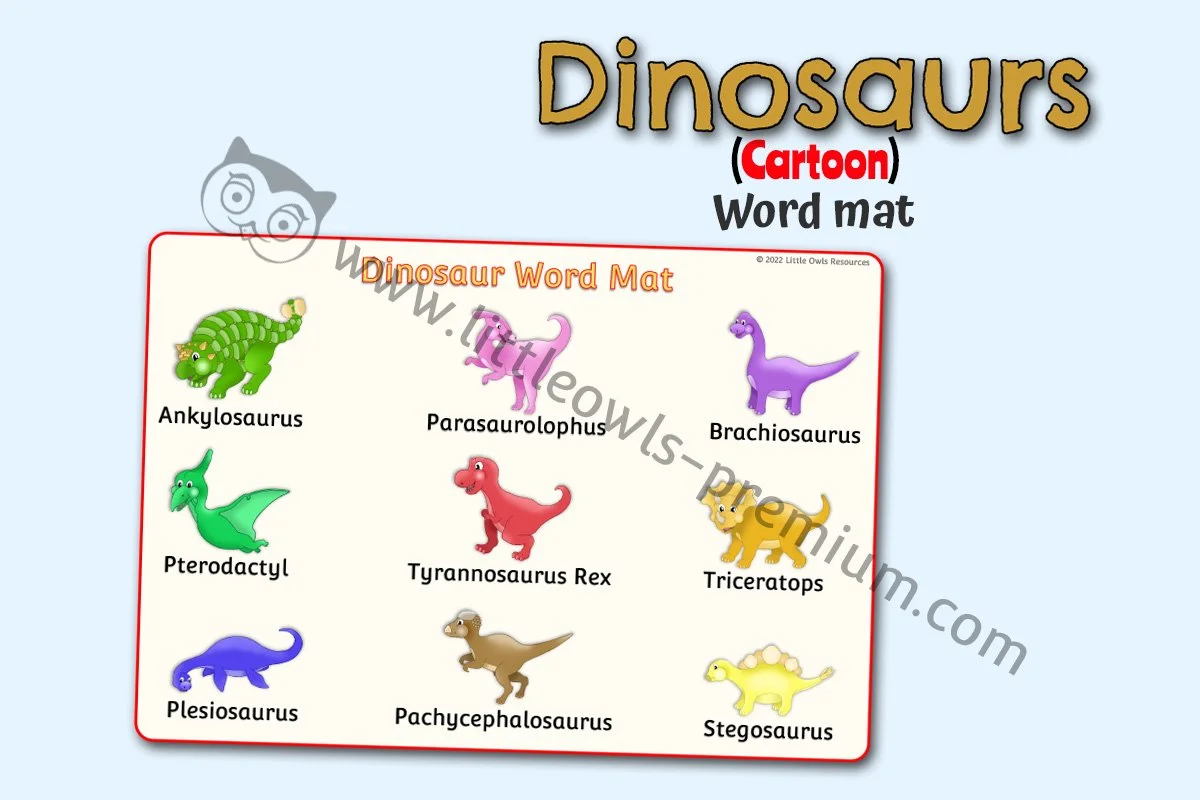
Dinosaur Word Mats
Word Cards
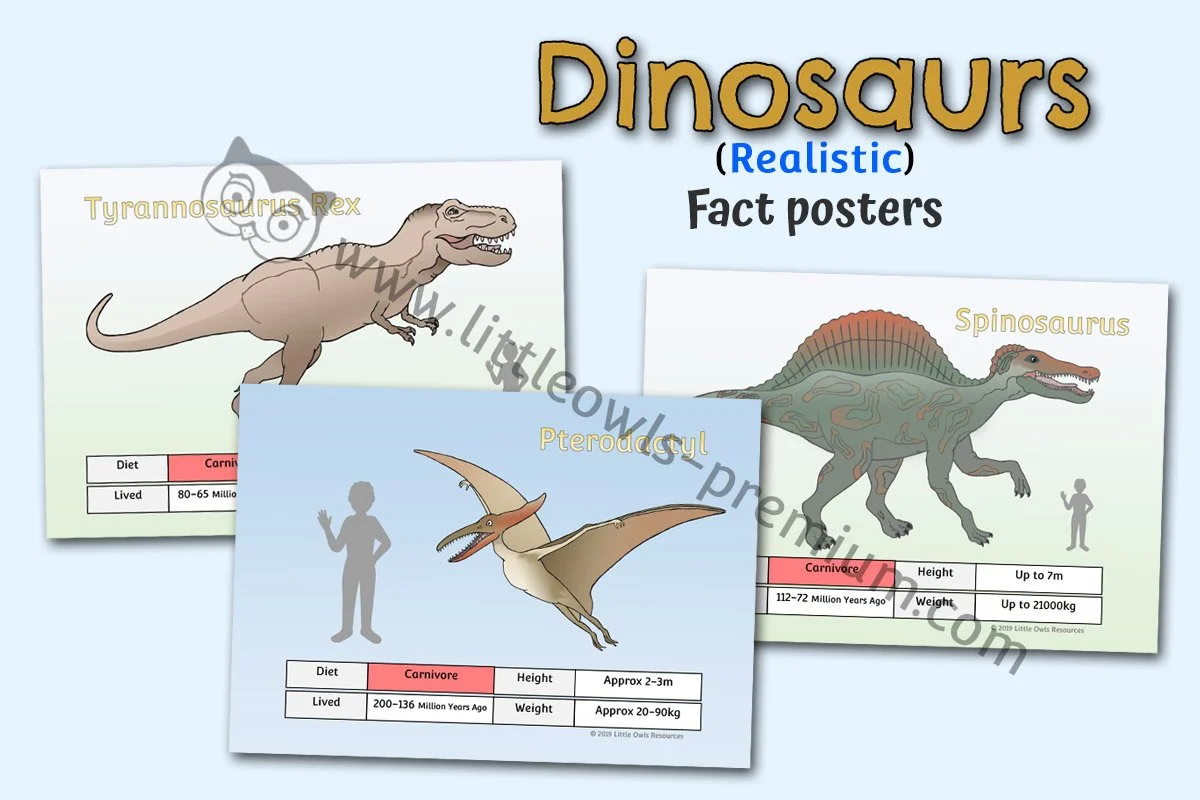
Dinosaur Fact Posters
Alphabet Displays
✏️ Literacy & Phonics
Dinosaur Bone CVC Word Builder
Dinosaur Sounds Activities
Dinosaur Writing Opportunities
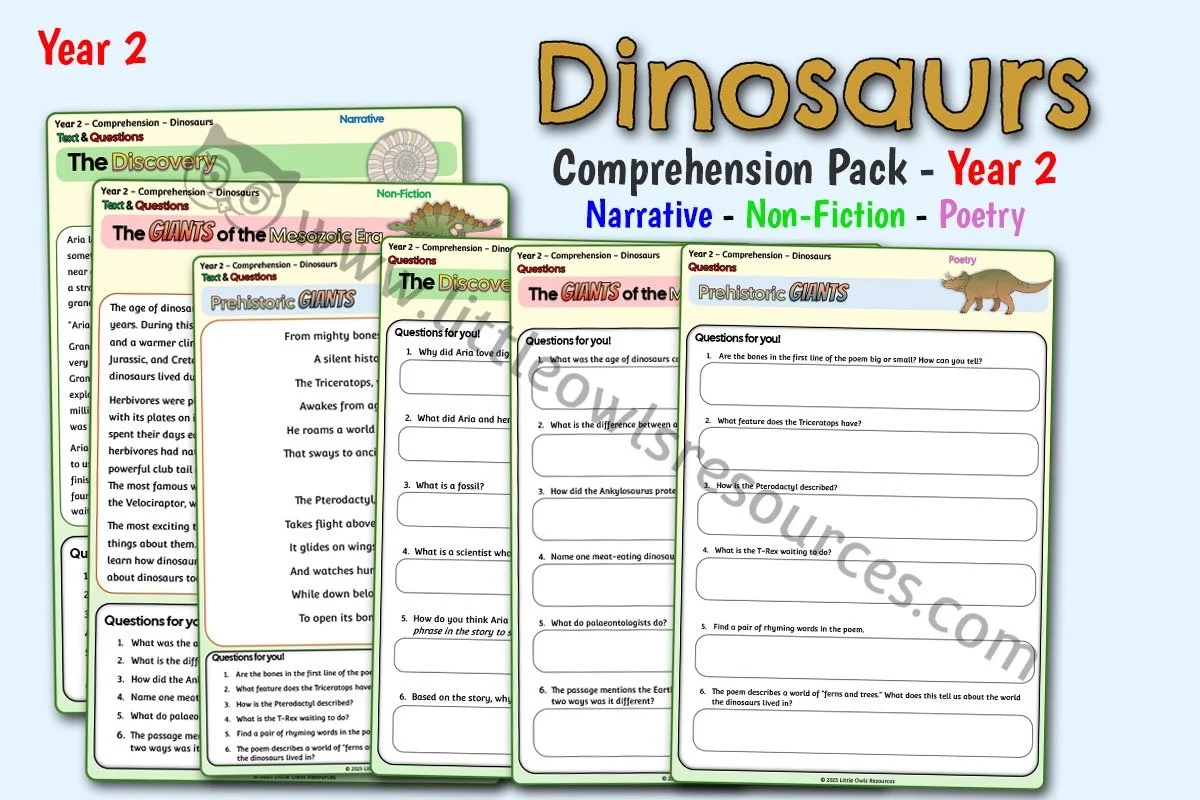
Dinosaur Comprehension Packs (KS1)
➗ Maths & Problem Solving
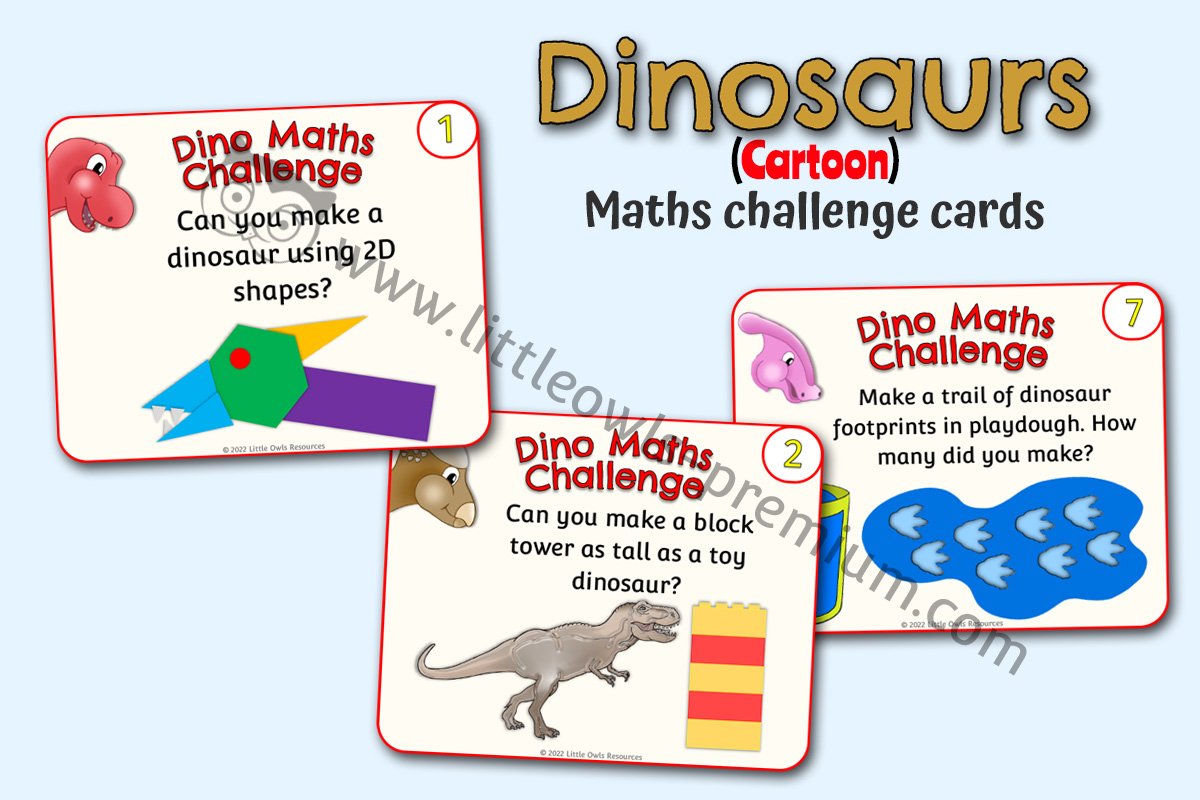
Dinosaur Maths Challenge Cards
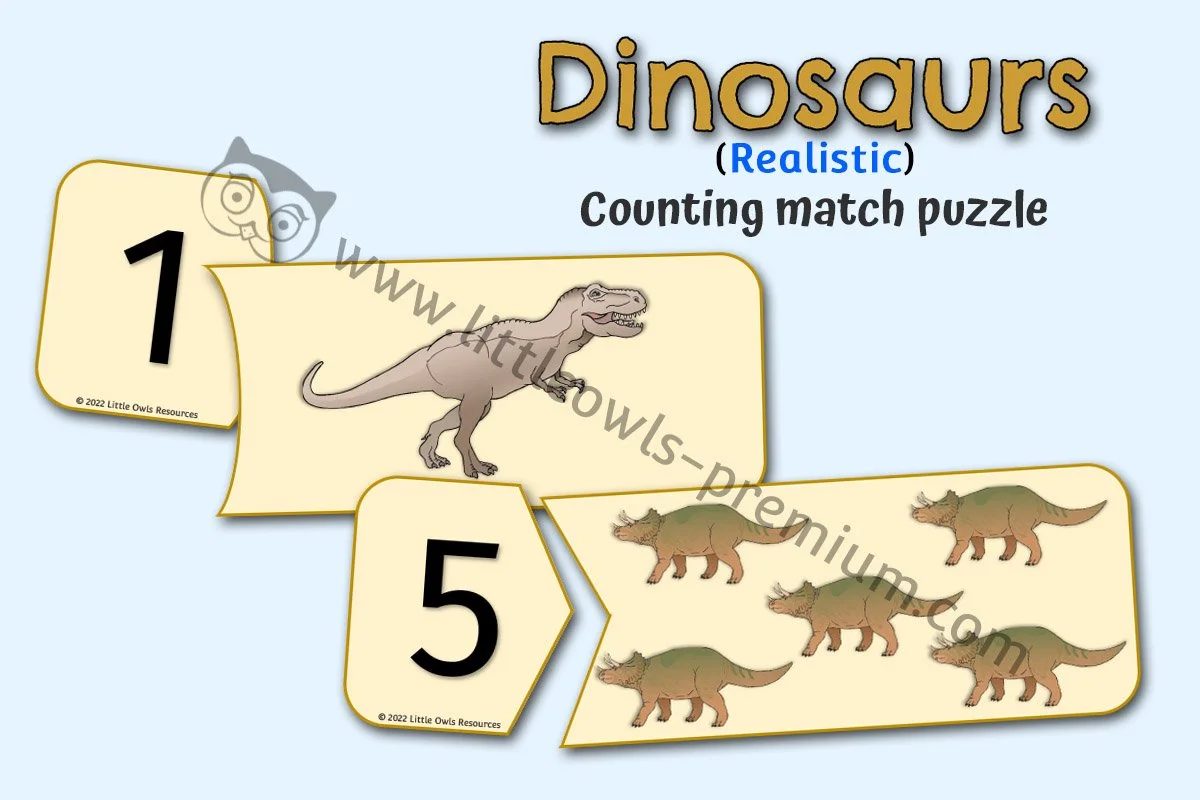
Counting Puzzles
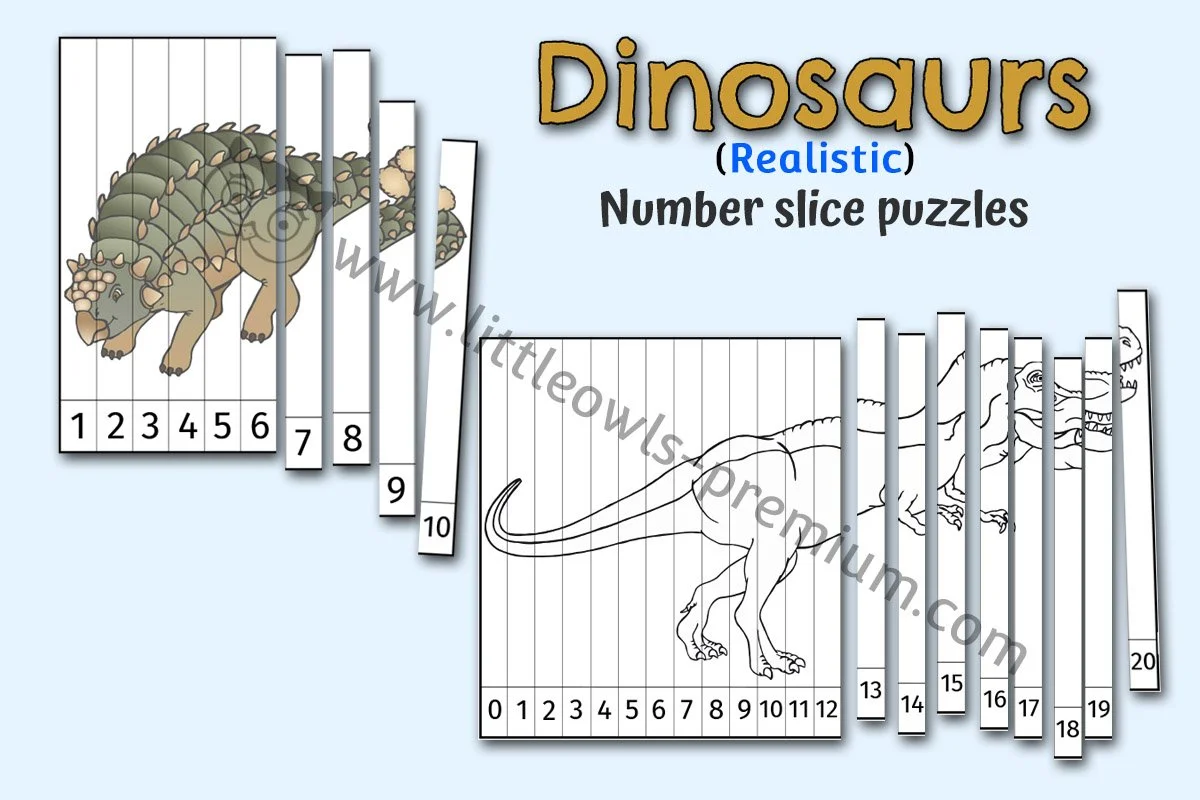
Number Slice Puzzles
Tally Charts
Pictograms
🔬 Understanding the World & Science
Dinosaur Fact Posters
Dinosaur Size Ordering Cards
Fossil Exploration Activities
Carnivore and Herbivore Games
🎨 Creative Arts & Design
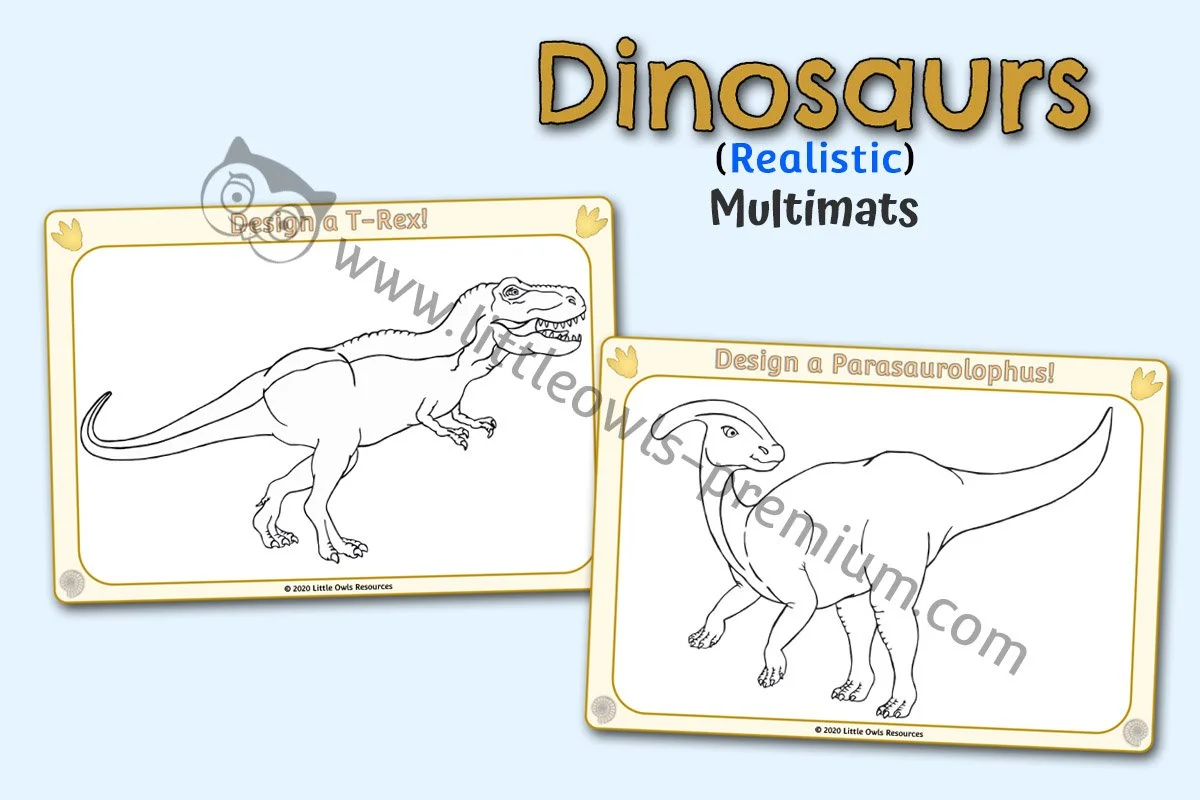
Design a Dinosaur
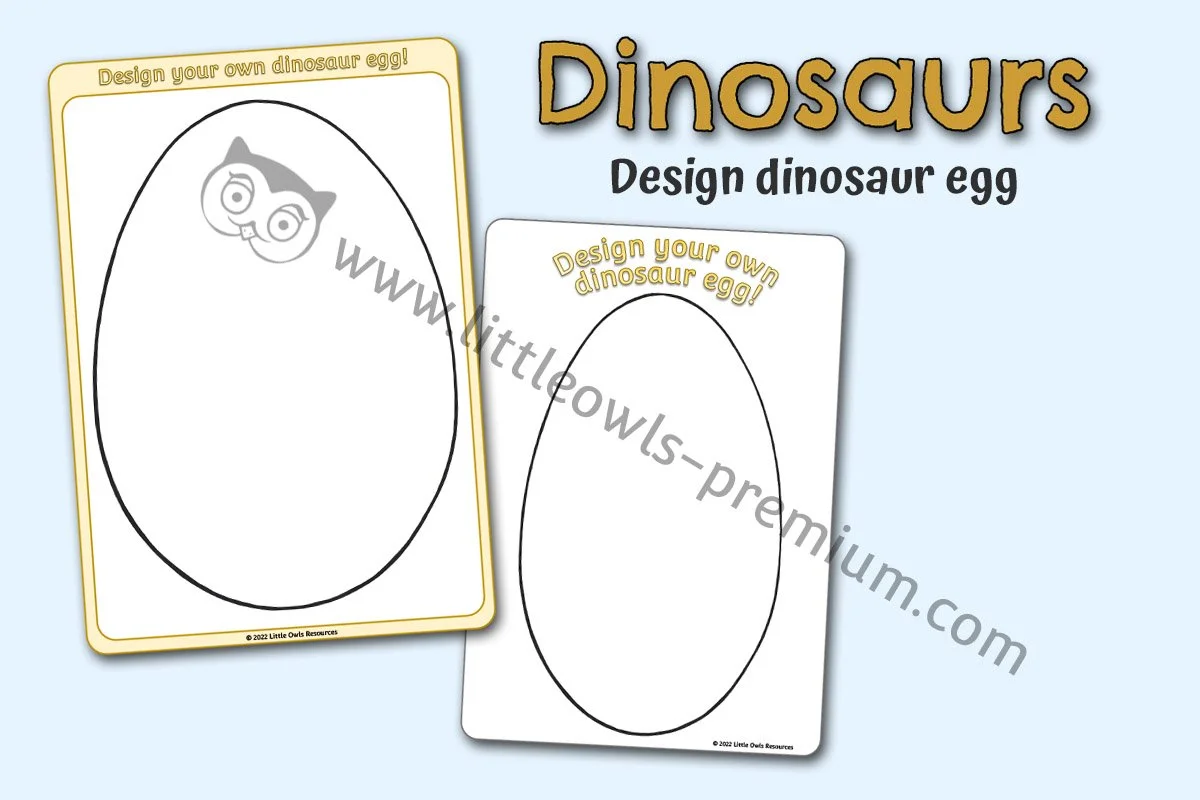
Design a Dinosaur Egg
Dinosaur Colouring
Dinosaur Multimats
💡 All resources include editable (DOCX) and PDF file versions for flexibility in your setting. More file format information here.
Core Dinosaur Provision | Cartoon Style


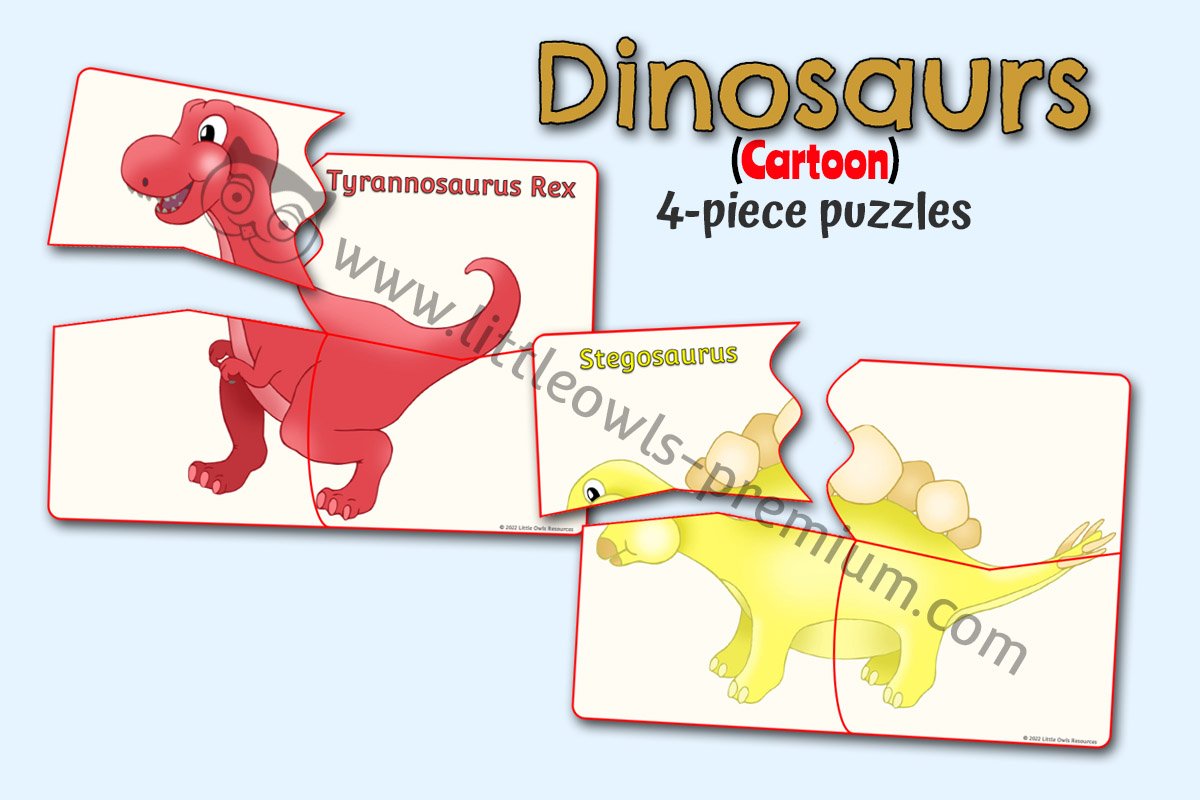
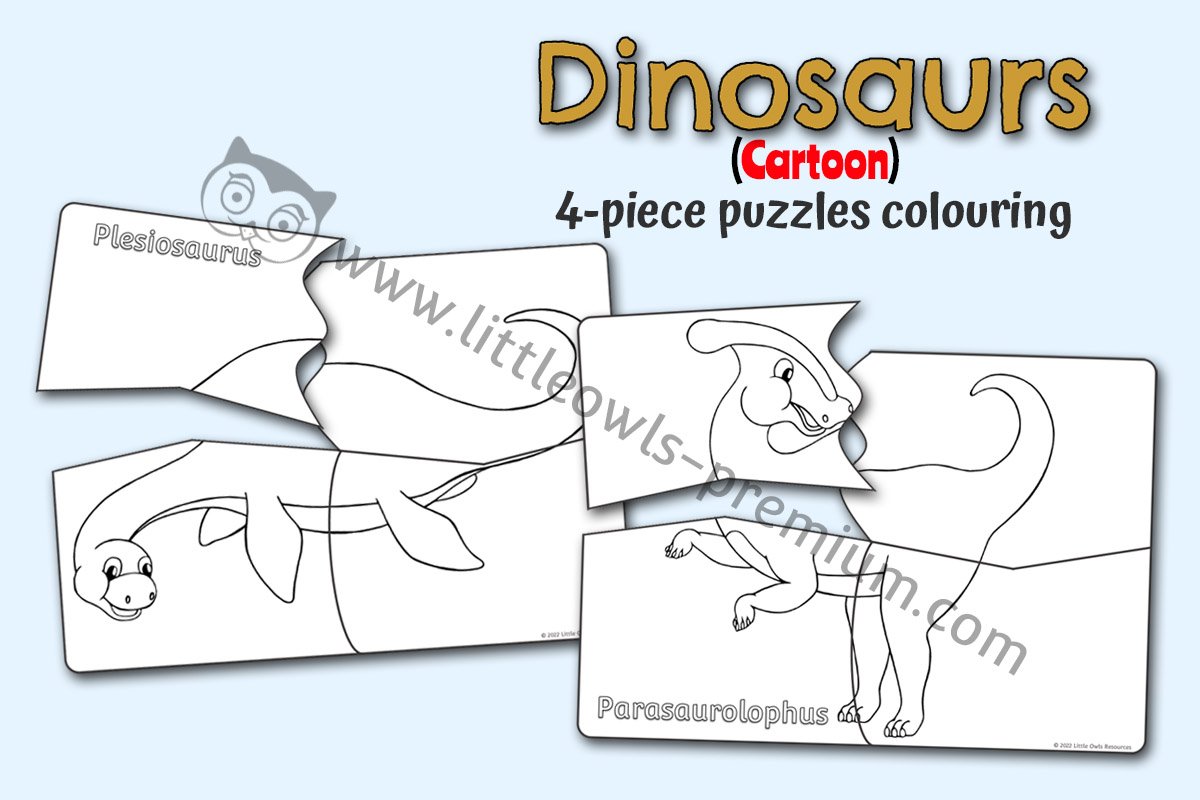
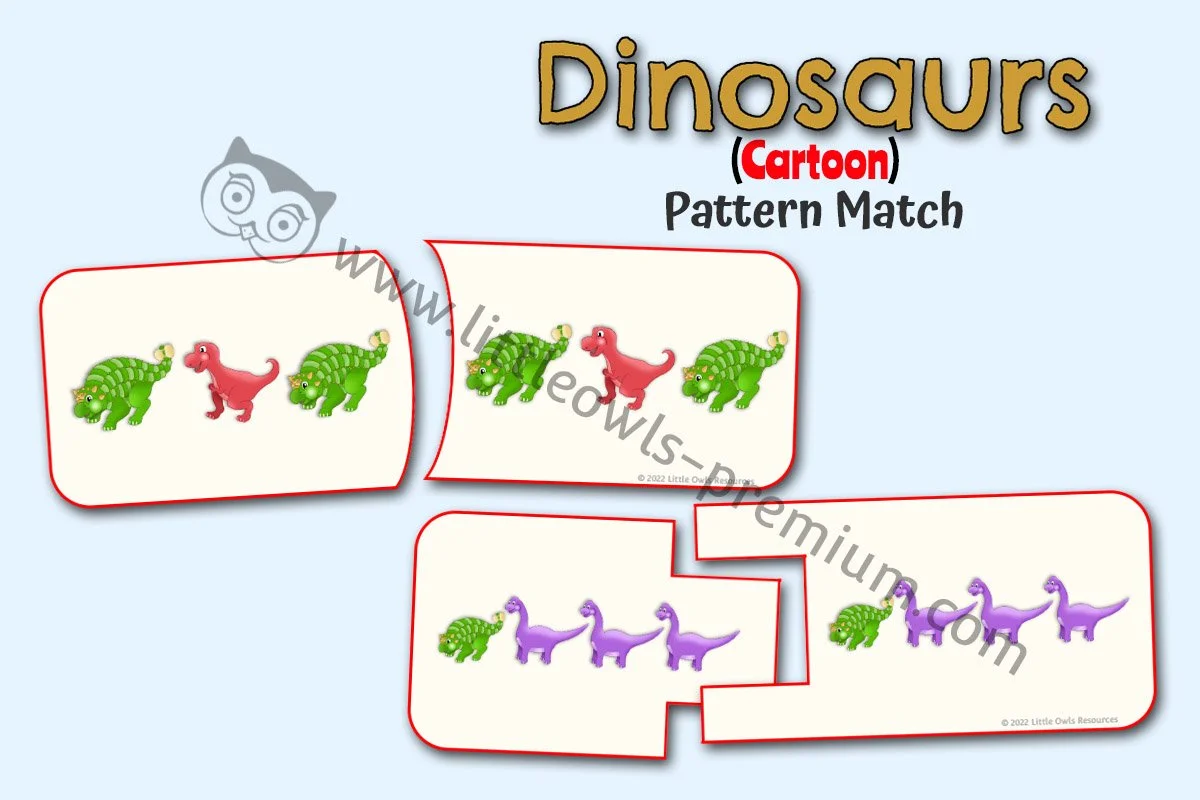

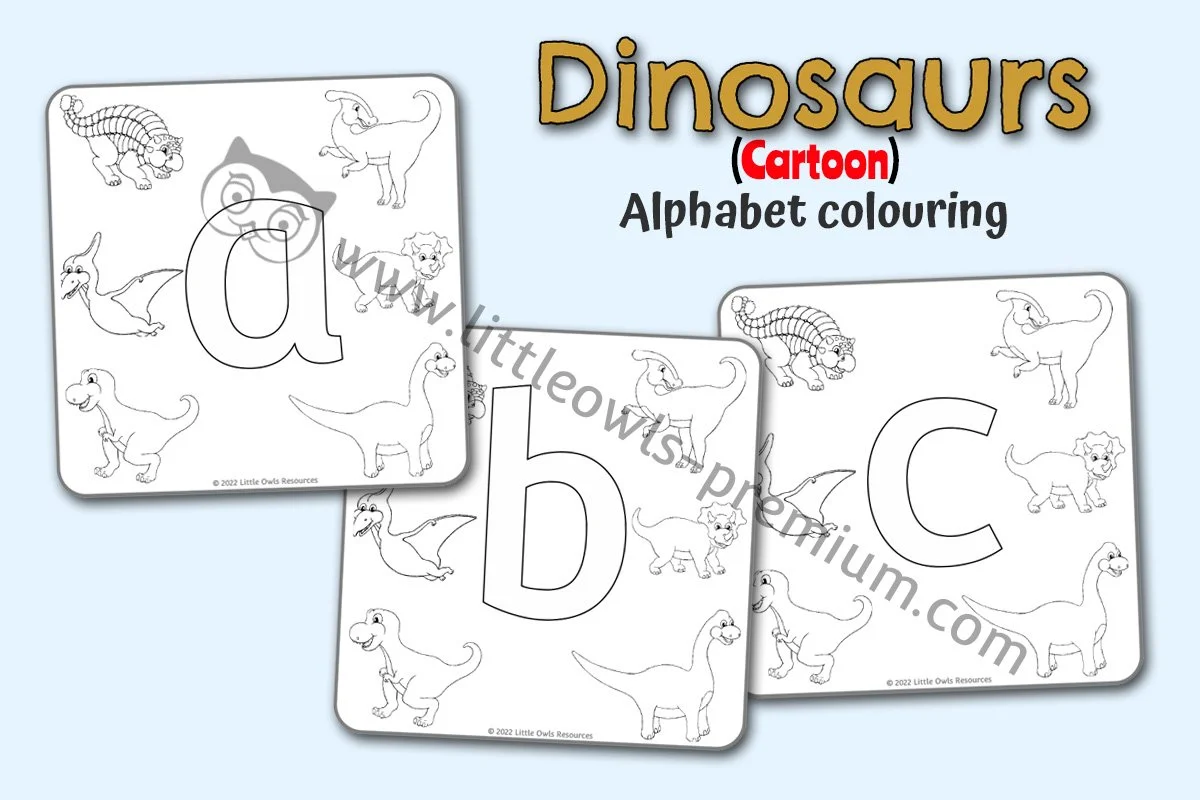

Core Dinosaur Provision | Realistic Style


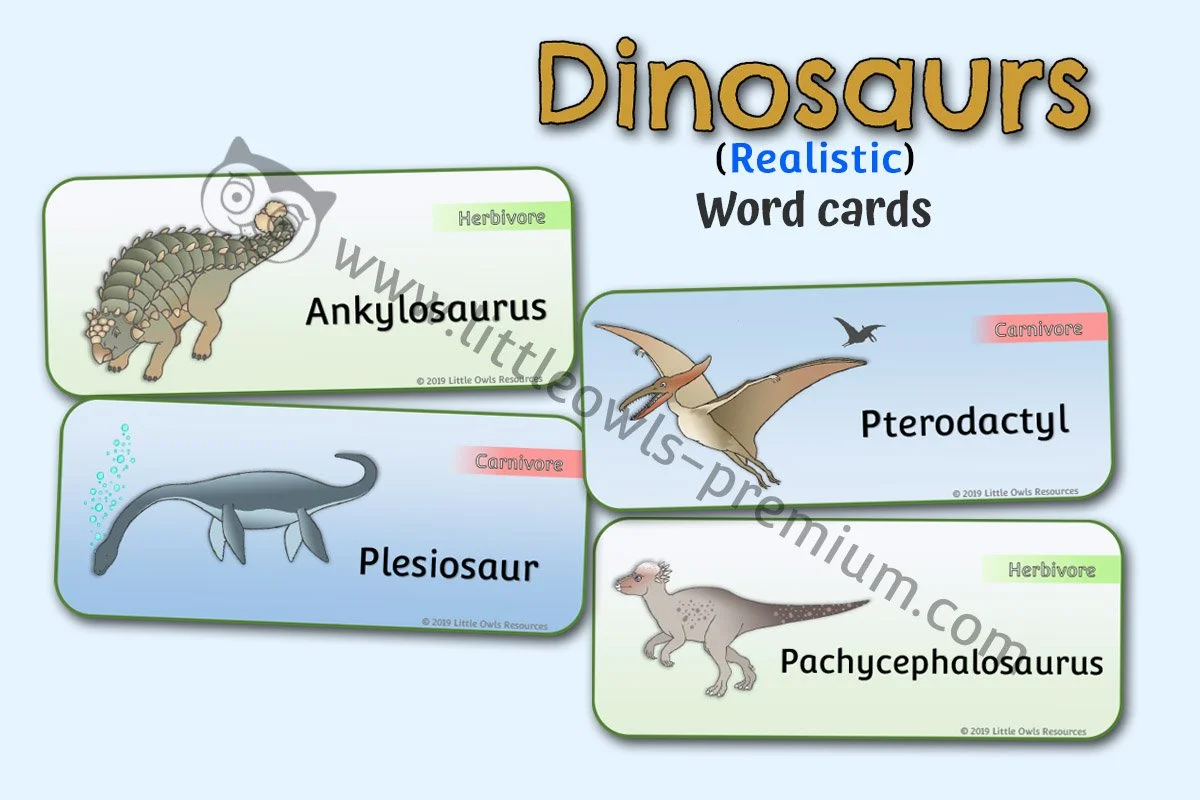


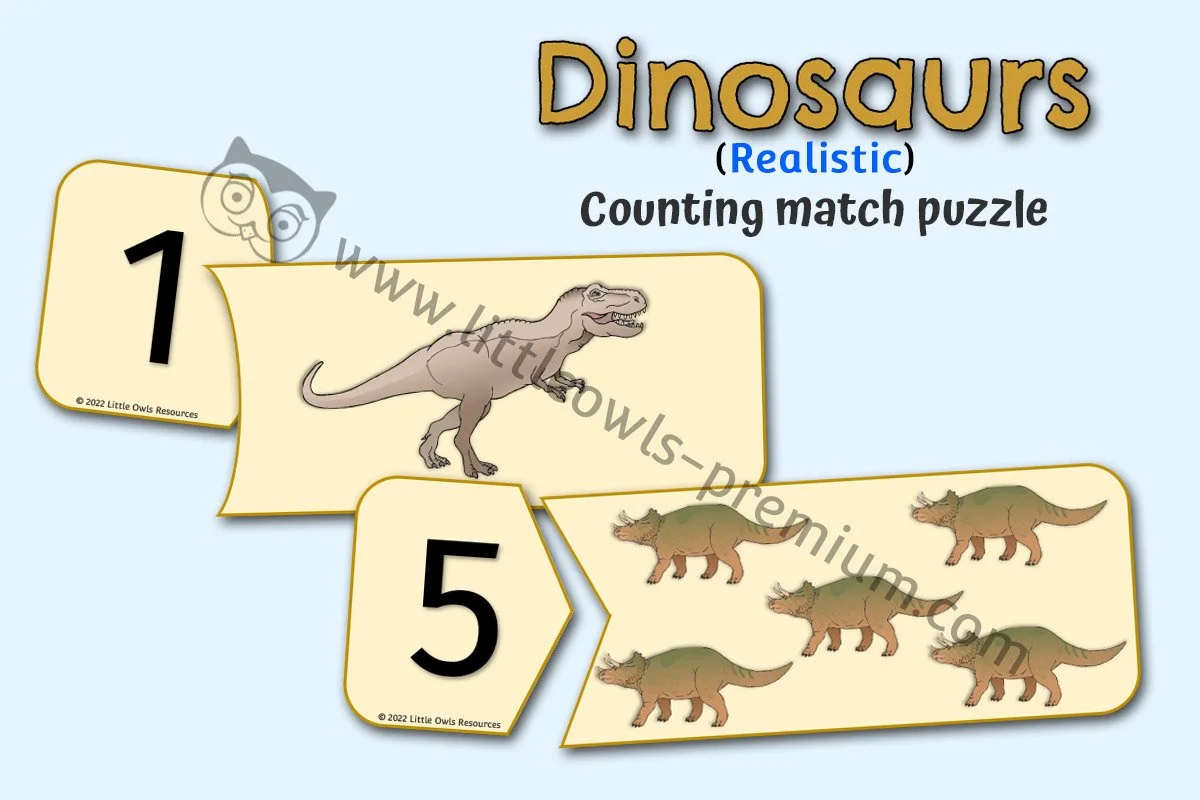
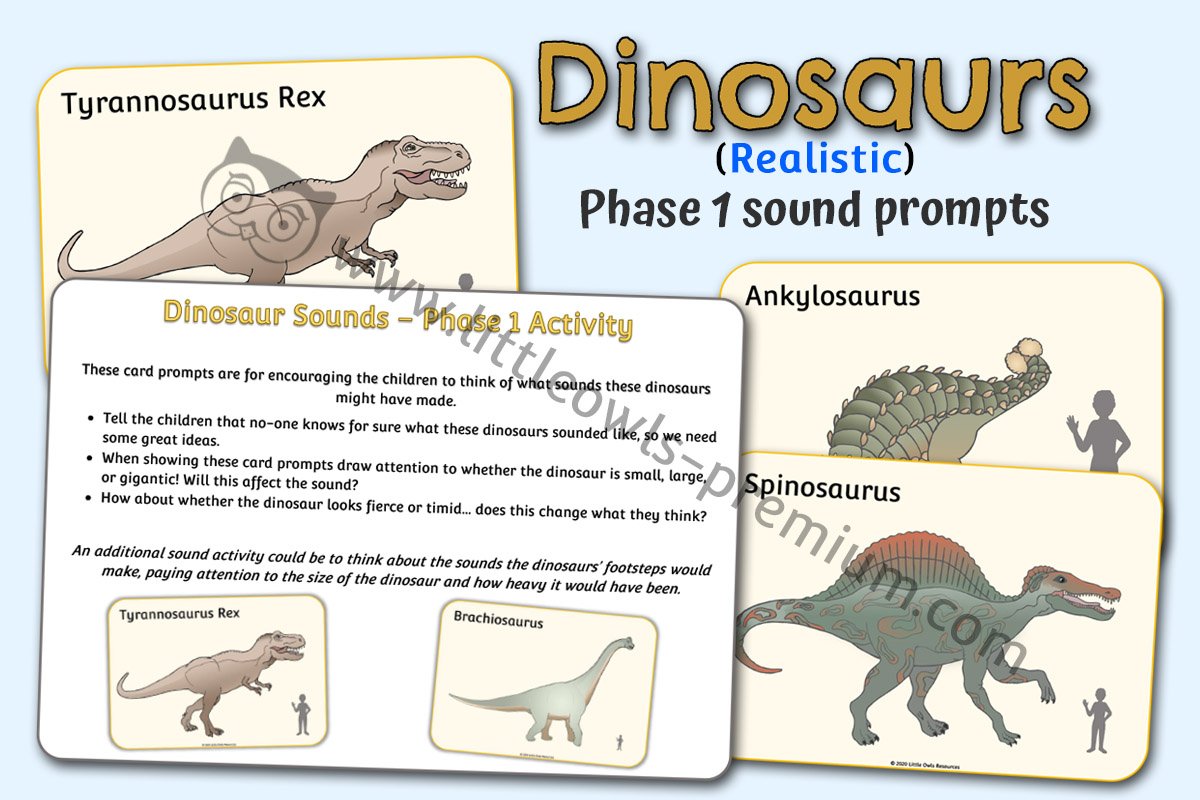

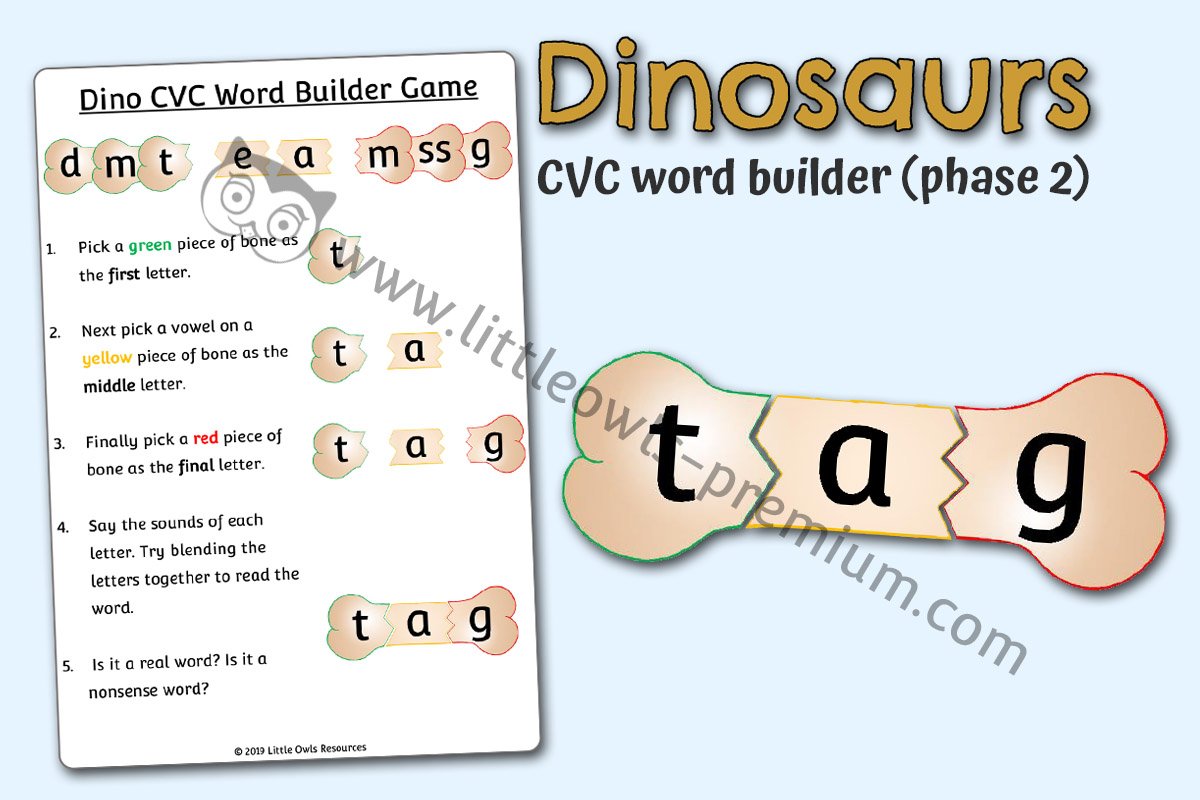


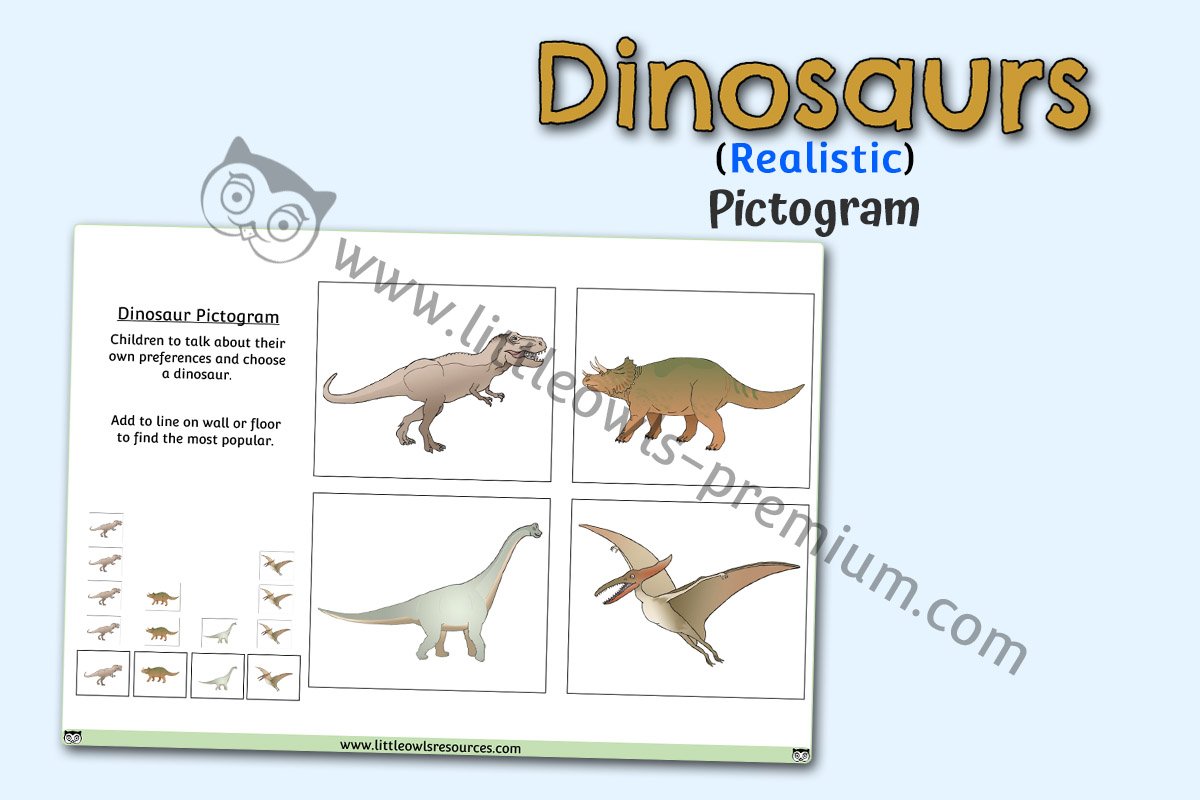


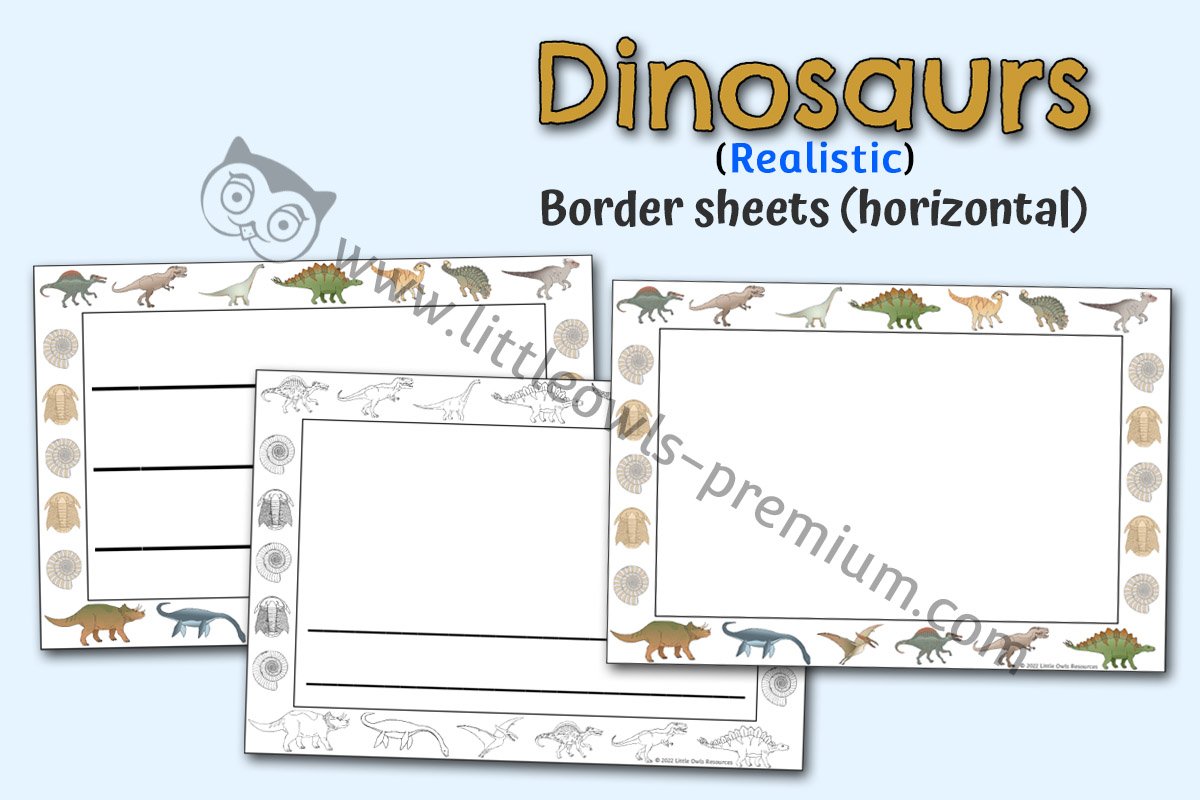


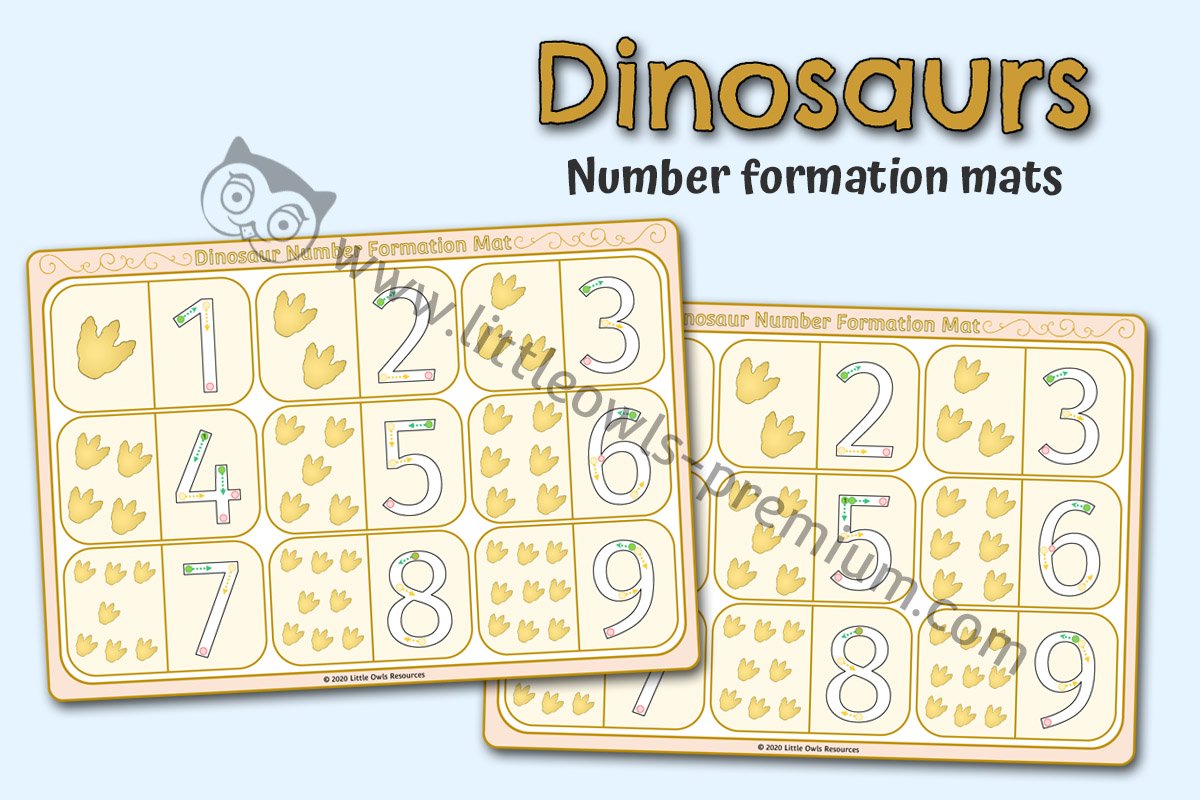
Additional Core Dinosaur Provision | No Particular Style




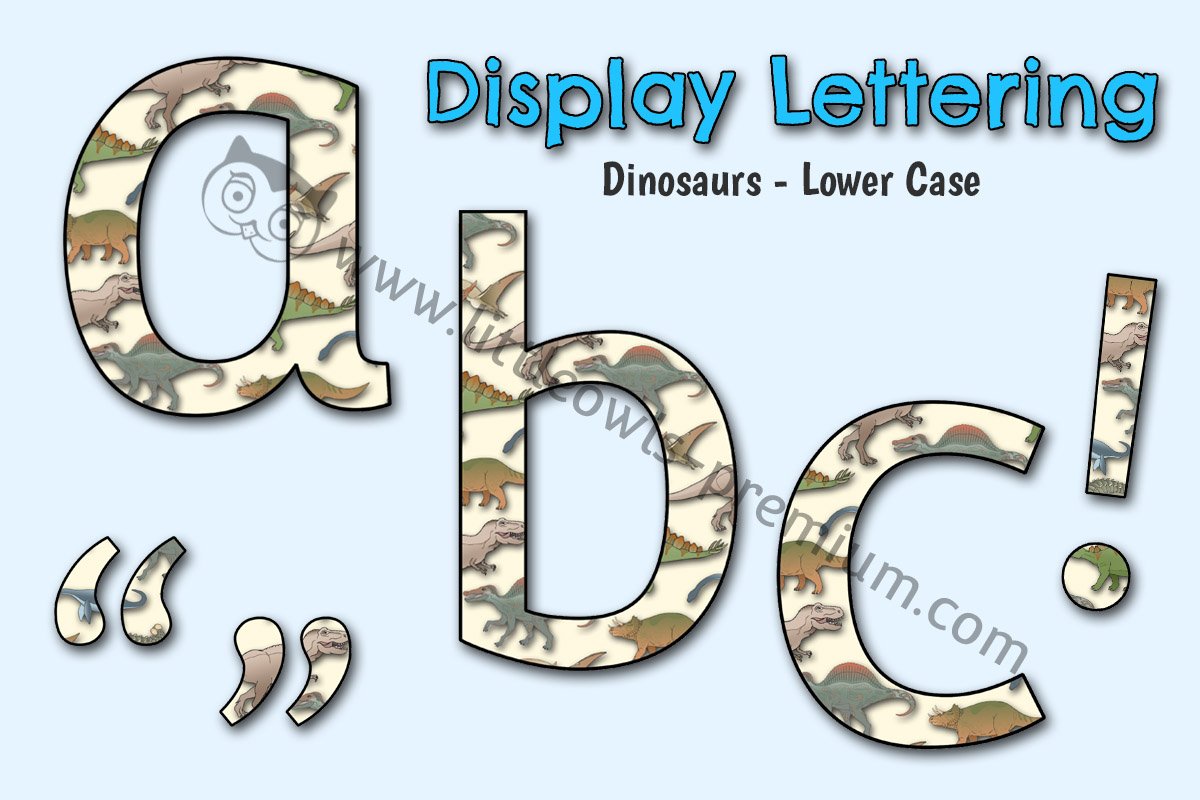
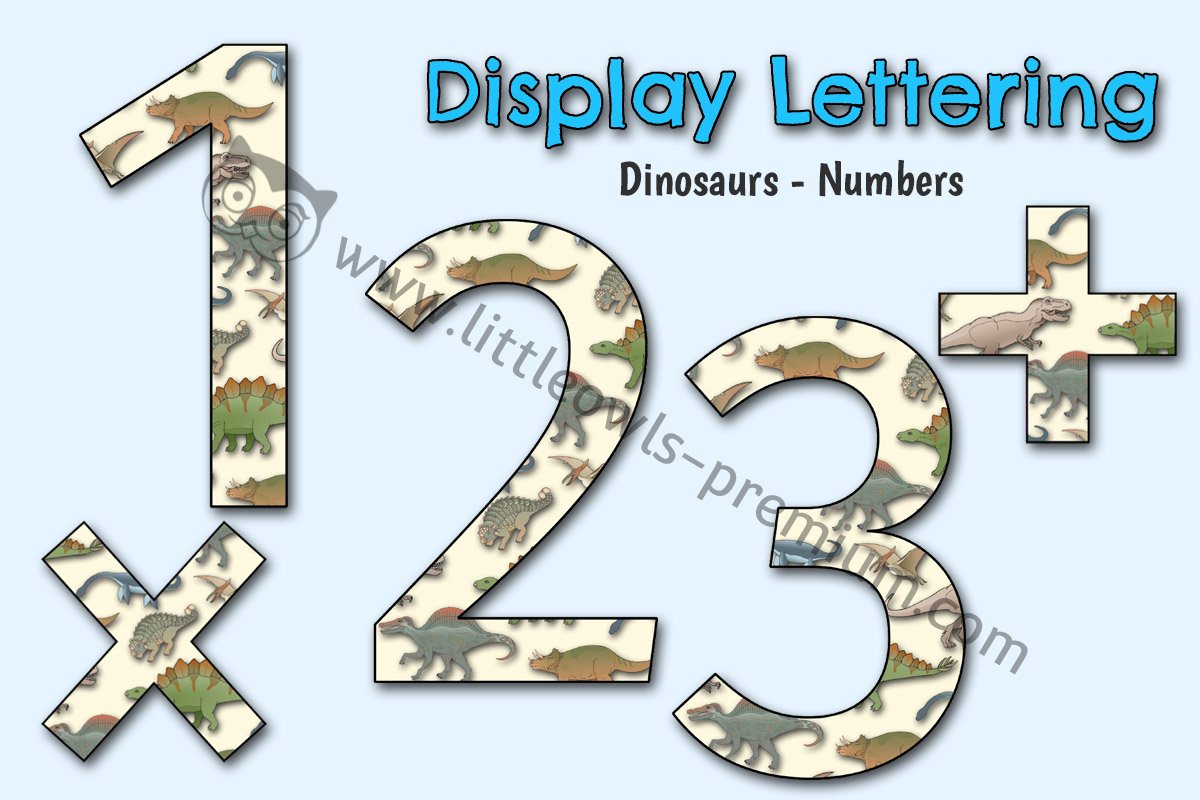
Display Lettering

Dinosaur Themed Comprehension Packs | KS1 English


‘Dino Dig’ resources in ‘Outdoor Area - Sand Play’…


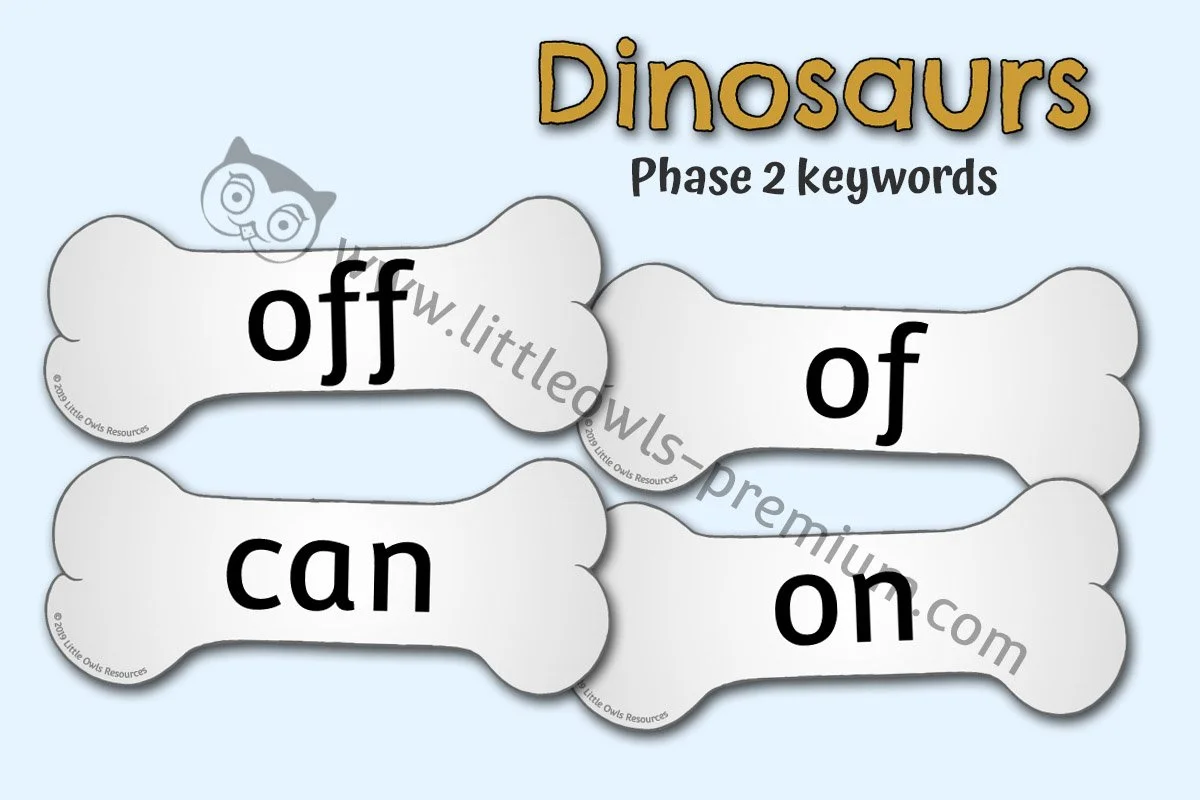
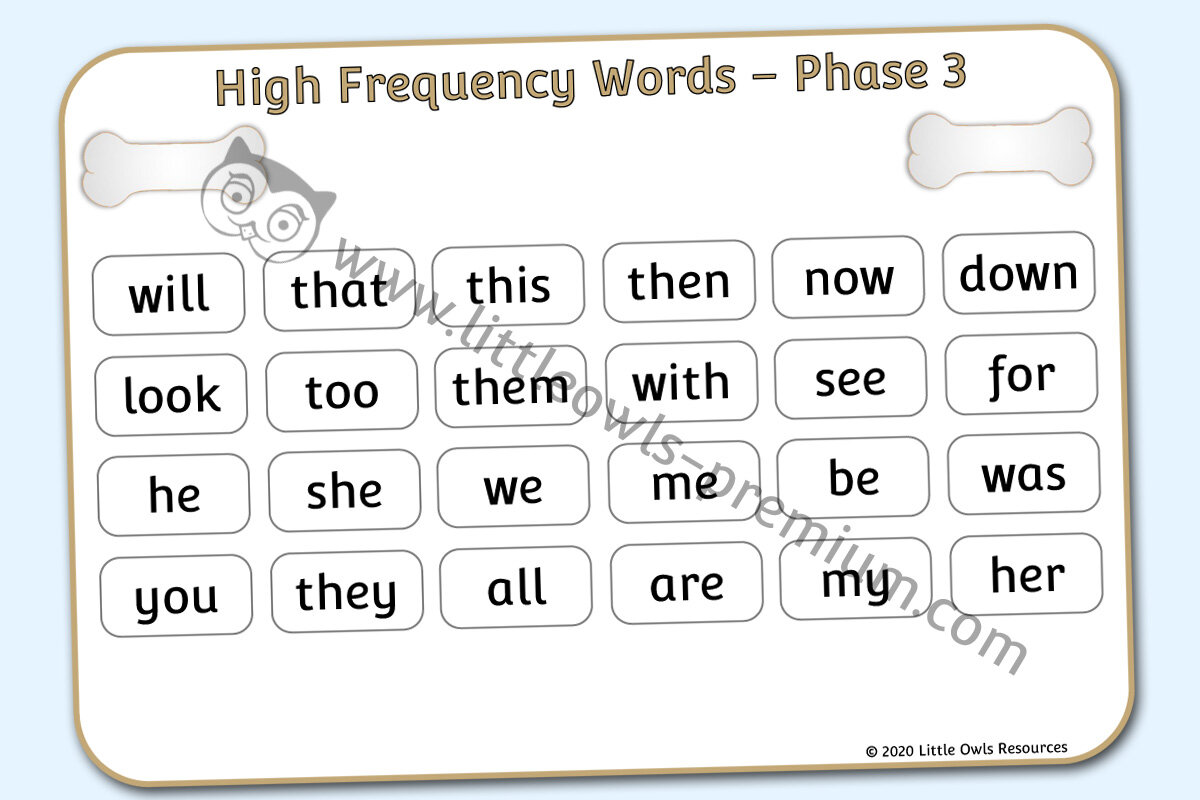
Phase 2 & 3 High Frequency Words



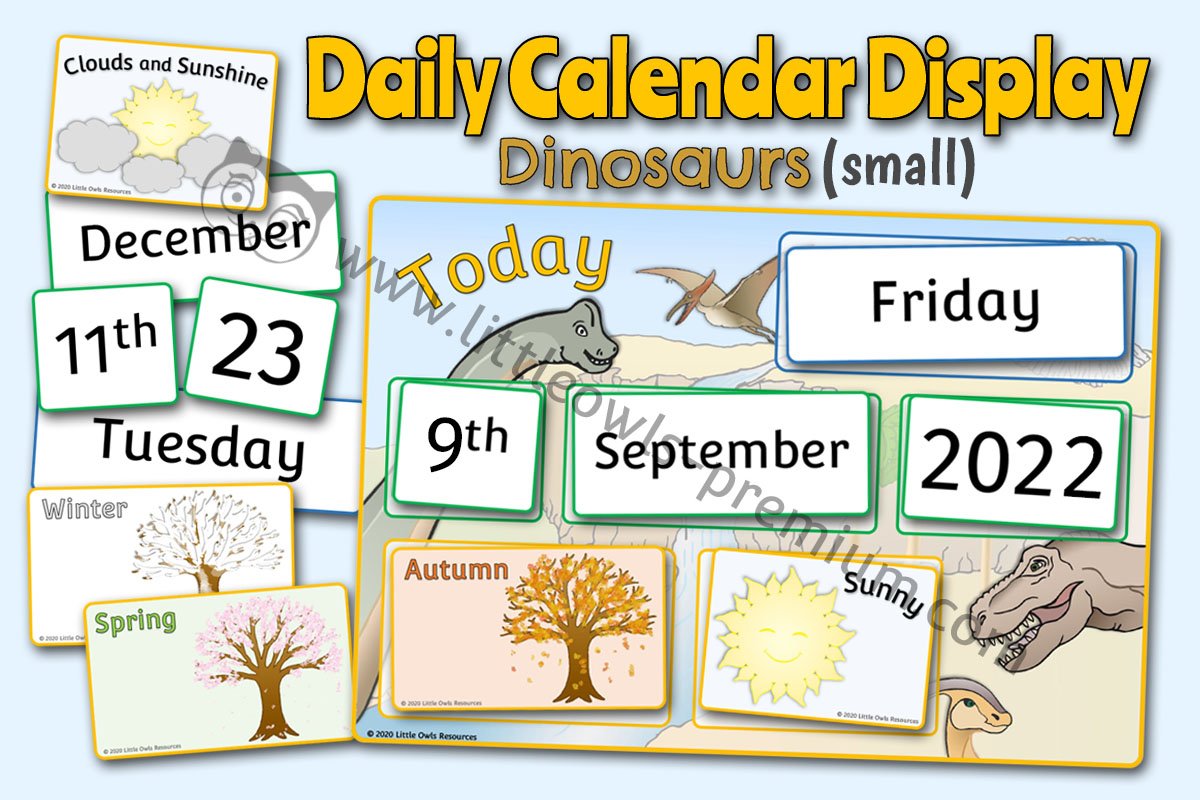
Organisational Tools


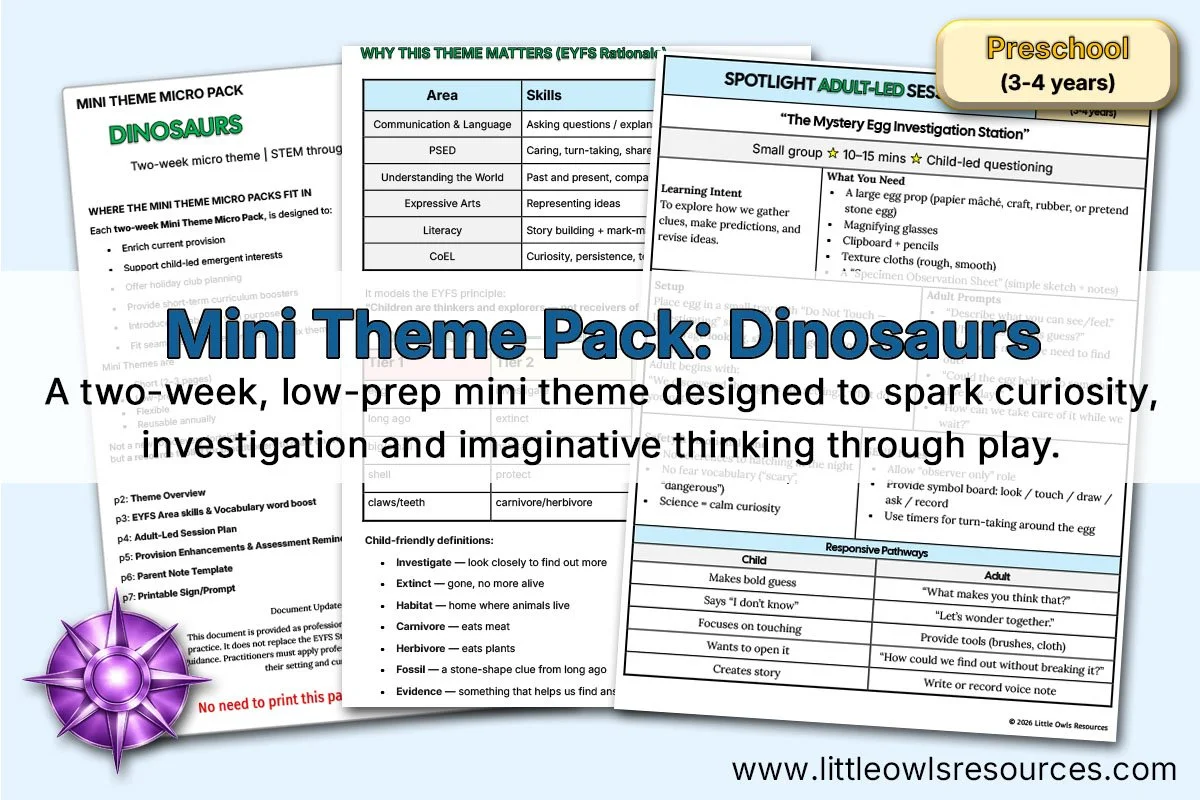
🧠 Dinosaur Planning & Pedagogy Support
Support meaningful prehistoric learning through our professional planning resources and curriculum guidance.
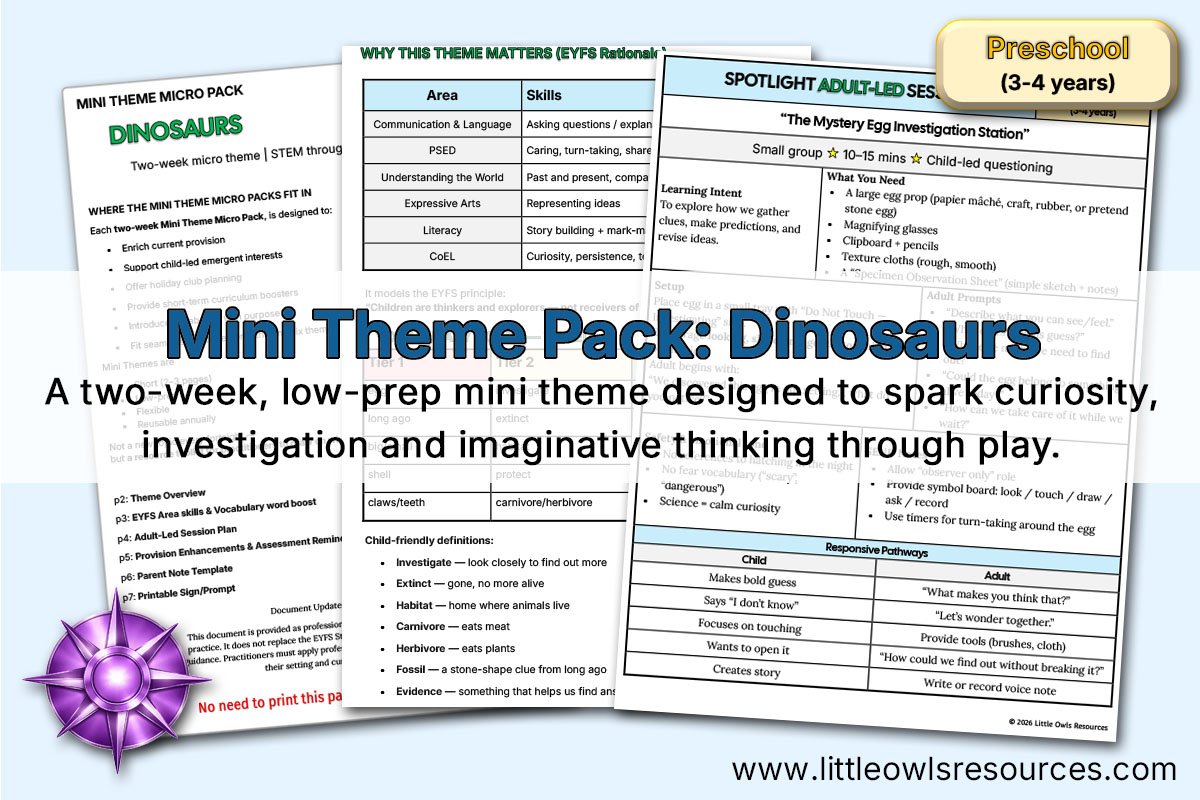
Premium Planning Ideas

Professional
💡 Explore our EYFS Curriculum & Pedagogy Suite for comprehensive planning and guidance (separate pathways for birth-18 months, 18-36 months, 3-4 years & 4-5 years).
Related Theme & Project Planning Support | EYFS Curriculum & Pedagogy
(Documents within this section are available with our Professional Tier Memberships)
🌿 EYFS Dinosaur Ideas (Continuous Provision & Enhancements)
These ideas are designed as open-ended invitations that can be adapted according to children's interests and fascinations.
🦴 Dinosaur Dig Investigation Area
Create a simple excavation site using sand, soil or loose materials.
Add:
Fossils
Dinosaur bones
Brushes
Magnifying glasses
Measuring tools
Adult Role
Support children to make observations, ask questions and develop theories about what they discover.
🏛️ Dinosaur Museum Role Play
Create a museum environment with:
Dinosaur models
Information cards
Tickets
Clipboards
Maps
Adult Role
Support communication, storytelling and information sharing through meaningful play.
🌋 Small World Dinosaur Habitats
Volcanoes
Forest environments
Swamps
Loose parts landscapes
Adult Role
Follow children's narratives and encourage them to explain their thinking.
🥚 Dinosaur Egg Investigation
Provide:
Dinosaur eggs
Fossils
Natural materials
Measuring resources
Adult Role
Encourage prediction, comparison and mathematical language.
✏️ Mark Making & Early Writing
Museum tickets
Dinosaur labels
Fact cards
Excavation records
Discovery journals
Adult Role
Provide meaningful reasons for writing and recording within play.
🔬 KS1 Dinosaur Activities & Learning Ideas
🧪 Scientific Enquiry
Compare herbivores and carnivores
Explore fossil evidence
Investigate extinction theories
Classify dinosaurs
✍️ English Activities
Dinosaur fact files
Museum guides
Adventure stories
Information reports
➗ Maths Opportunities
Dinosaur data handling
Measuring dinosaur lengths
Size comparison investigations
Dinosaur surveys and pictograms
🌍 History & Geography Connections
Understanding prehistoric times
Comparing past and present
Locating fossil discoveries
Exploring ancient environments
🌍 Curriculum Links (EYFS & KS1)
🟢 EYFS Areas of Learning
Communication & Language
Topic vocabulary
Discussion and questioning
Storytelling and explanation
Physical Development
Digging and excavation play
Fine motor fossil investigations
Outdoor exploration
Personal, Social & Emotional Development
Collaborative investigations
Confidence in sharing ideas
Understanding the World
The natural world
Similarities and differences
Exploring the past
Expressive Arts & Design
Imaginative worlds
Creative construction
Role play
🔵 KS1 National Curriculum Links
Science
Animals including humans
Working scientifically
Classification
History
Understanding the past
Evidence and interpretation
English
Information texts
Narrative writing
Speaking and listening
Maths
Number
Statistics
Measurement
🦴 Fossils, Excavations & Discovery
One of the most engaging aspects of a Dinosaur topic is helping children become explorers and investigators.
Explore opportunities to:
Discover Fossils
Fossil matching
Fossil identification
Shape investigations
Become Palaeontologists
Dig for dinosaur bones
Record discoveries
Measure findings
Ask Scientific Questions
What do fossils tell us?
How do we know dinosaurs existed?
What can evidence reveal?
These experiences encourage curiosity, critical thinking and scientific enquiry.
🏛️ Dinosaur Museums & Role Play
Many children become fascinated by museums and dinosaur exhibitions.
Create opportunities to:
Become Museum Curators
Label exhibits
Create information cards
Organise collections
Become Tour Guides
Share facts
Answer questions
Lead visitors around displays
Become Dinosaur Experts
Research species
Create fact books
Present discoveries
This role play supports communication, literacy and confidence.
📚 Books & Story Inspirations
Popular dinosaur-themed stories can provide rich opportunities for language development and imaginative play.
Consider linking activities to:
Harry and the Bucketful of Dinosaurs
Ten Little Dinosaurs
That's Not My Dinosaur
Stories often provide excellent starting points for investigations, role play and creative projects.
📅 Dinosaur Special Events
The following blog pages provide information and inspiration:

🌻 Related Topics & Themes
🐾 Animals & Living Things
🌿 Outdoor Learning
🔬 Discovery & Investigation
🌍 The Natural World






❓ Dinosaur FAQs
What are good Dinosaur activities for EYFS?
Dinosaur digs, fossil investigations, role play museums, small world habitats and dinosaur storytelling all provide engaging learning opportunities.
What can children learn through a Dinosaur topic?
Children can develop scientific thinking, vocabulary, mathematical skills, creativity and an understanding of the past through meaningful play and investigation.
How do you create a Dinosaur role play area?
A Dinosaur Museum, excavation site or palaeontologist laboratory provides rich opportunities for communication, enquiry and imaginative play.
What are good KS1 Dinosaur activities?
Fact files, fossil investigations, classification activities, museum projects and dinosaur-themed writing all work well.
Why are dinosaurs so popular in EYFS?
Dinosaurs inspire curiosity, wonder and questioning, making them ideal for child-led enquiry and sustained shared thinking.
🌟 Explore More
Discover our EYFS Curriculum & Pedagogy Suite
Find out more about membership options
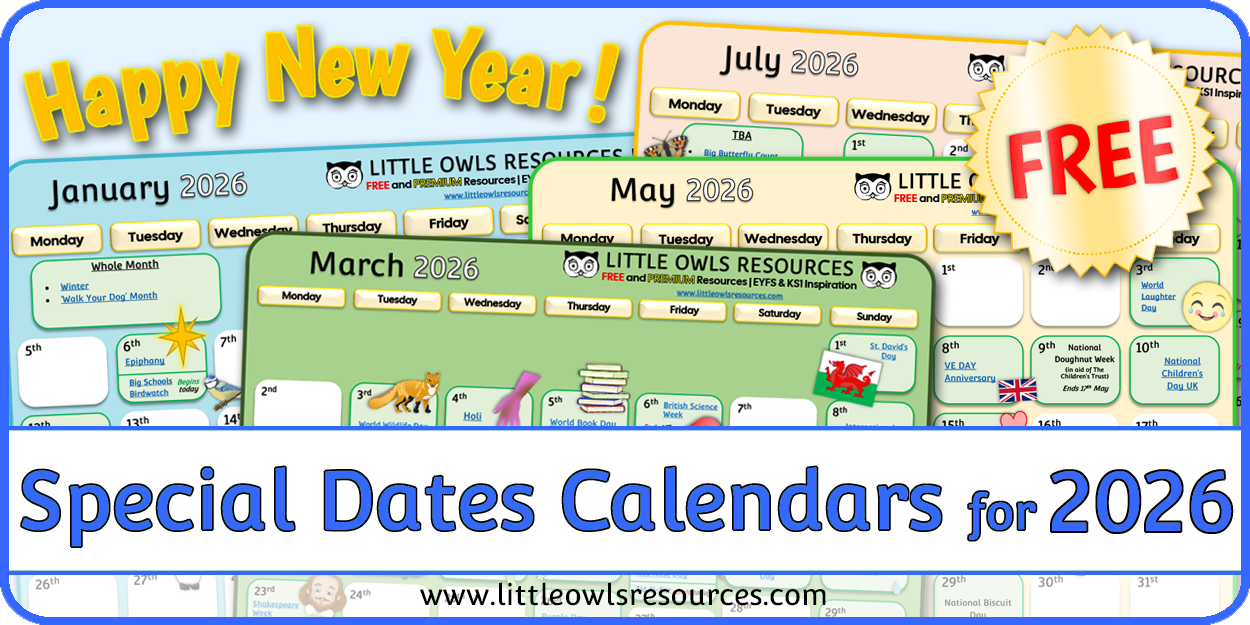


Monday 1st June 2026: Roar with excitement and dig into the incredible world of dinosaurs! 🦖🌋🦕 For early years settings, nurseries, preschools, childminders, and Year 1 and Year 2 classrooms, this day provides a wonderfully…