

**Note: This page is for educational inspiration and is not officially affiliated with World Turtle Day. World Turtle Day is celebrated annually on May 23rd. It was established in 2000 by American Tortoise Rescue (ATR), a non-profit organization dedicated to the rescue and rehabilitation of all species of tortoise and turtle. The purpose of the day is to bring attention to, and increase knowledge of and respect for, turtles and tortoises, and to encourage human action to help them survive and thrive. It highlights the threats they face globally, such as habitat destruction, illegal pet trade, and entanglement in fishing gear, and promotes conservation efforts. For official information and how to get involved, please visit the American Tortoise Rescue website: www.worldturtleday.org
Sunday 23rd May 2027
23rd May each year
-
World Turtle Day raises awareness of turtles and tortoises, highlighting their importance in ecosystems and the need to protect them and their habitats.
-
This theme provides rich opportunities to explore:
animals (reptiles, sea creatures, pets)
habitats (ocean, land environments)
life cycles and growth
conservation and environmental care
This supports:
EYFS:
Understanding the World (animals, habitats, environments)
Communication & Language (describing, questioning)
PSED (care, empathy, responsibility)
KS1 (National Curriculum):
Science (animals including humans, habitats, life cycles)
Geography (oceans, environments, conservation)
Citizenship/PSHE (responsibility and care for animals)
-
In the EYFS, learning about animals develops through:
real-world exploration
observation and curiosity
play and imagination
responsive adult interaction
👉 Find out more about developmentally appropriate practice in EYFS by exploring our ‘Curriculum & Pedagogy Suite’.
Pathways available for:
-
Exploring turtles and tortoises supports:
🐾 Empathy & Respect for Living Things
Children develop care for animals and their environments.
🌍 Understanding Habitats
Children explore where animals live and why environments matter.
🌿 Environmental Awareness
Children begin to understand how human actions affect animals.
🔍 Scientific Curiosity
Children observe, question and explore animal behaviour and features.
🌿 EYFS: Provision & Child-Led Ideas (0–5 Years)
These ideas are not activities to be planned or completed. They support learning through exploration, play and real experience.
-
Exploration is sensory and relational.
Babies may:
observe movement (e.g. water, animals)
explore textures and natural materials
respond to sounds and visual patterns
Adults can:
provide sensory-rich experiences
narrate simple observations
support calm shared exploration
👉 Additional curriculum & planning support for this age group may be found on our ‘EYFS Planning for Babies (0–18 Months)’ hub page.
-
Toddlers explore through movement and curiosity.
Children may:
notice animals and environments
explore water, sand and outdoor spaces
engage in simple pretend play
Adults can:
follow children’s interests
model simple language (“turtle”, “water”)
allow repeated exploration
👉 Additional curriculum & planning support for this age group may be found on our ‘EYFS Planning for Toddlers (18–36 Months)’ hub page.
-
Children begin to explore ideas about animals and habitats.
Children may:
ask questions about animals
explore habitats through play
sort and group animals
Adults can:
support curiosity through conversation
introduce simple concepts (e.g. ocean vs land)
extend thinking through play
👉 Additional curriculum & planning support for this age group may be found on our ‘EYFS Planning for Preschool (3–4 Years)’ hub page.
-
Children deepen understanding and make connections.
Children may:
explore differences between animals
understand simple environmental impact
use more complex vocabulary
Adults can:
support reasoning and explanation
introduce simple scientific ideas
extend learning through provision
👉 Additional curriculum & planning support for this age group may be found on our ‘EYFS Planning for Reception (4–5 Years)’ hub page.
-
Understanding animals develops through:
exploration
observation
interaction
real experiences
🌱 Environment Enhancements & Invitations (EYFS)
These are optional enhancements that may be added to provision if they align with children’s interests in animals and environments.
-
You might enhance provision by:
adding animal figures (including turtles/tortoises)
providing small world environments
allowing imaginative play around animals
Resources that may support this include:
-
You might enhance provision by:
creating simple ocean or land habitats
offering materials to build environments
allowing children to explore where animals live
Resources:
-
You might enhance provision by:
providing water play opportunities
adding sea animals to sensory play
exploring movement and floating
Resources that may support this include:
Sea animal materials
-
You might enhance provision by:
introducing simple vocabulary (turtle, shell, ocean)
responding to children’s questions
modelling descriptive language
-
You might enhance provision by:
modelling gentle behaviour towards animals
supporting children to care for environments
introducing simple ideas about protection
You may link to:
-
You might enhance provision by:
offering materials for drawing or modelling animals
allowing children to represent habitats
valuing children’s interpretations
-
Understanding animals develops through:
exploration
curiosity
real experiences
meaningful interaction
📘 KS1 Learning Activities for World Turtle Day
In Key Stage 1, this theme can support more structured learning about animals, habitats and conservation.
-
Children can:
explore characteristics of reptiles
compare sea turtles and tortoises
You may use our:
Sea Turtle Pack
Turtle Body Parts Posters & Writing Sheets
Reptile Posters
Pets Fact Cards
-
Children can:
explore ocean and land habitats
understand how animals live and grow
You may use our:
Under the Sea displays and resources
Sea Animal Word Mats and Cards
Turtle Egg Find Game
-
Children can:
explore how to protect animals
understand environmental impact
Resources:
-
Children can:
learn how to care for animals
explore needs of pets
You may use our:
Veterinary Role-Play Pack
-
Children can:
apply maths and literacy within meaningful contexts
You may use our:
Maths
Sea Animal Counting resources
Number puzzles and multimats
Literacy
Sea Animal Alphabet
Word cards and phonics resources
-
Children can:
represent animals and habitats
explore creative expression
You may use our:
Drawing Sea Animals
Animal Multimats
Creative resources
-
-
A helpful question: “Does this deepen children’s understanding and respect for living things?”
If it supports:
curiosity
empathy
connection
→ it is meaningful
-
World Turtle Day supports children to:
explore animals and habitats
develop empathy and care
understand environmental impact
build early scientific curiosity
In the EYFS, this is most effective when it is:
play-based
exploration-led
rooted in real experiences
In KS1, it can be:
supported through structured learning
extended through discussion and investigation
-
We offer a range of resources to support practitioners across EYFS and KS1, including printable materials and in-depth curriculum and pedagogy guidance.
🟢 Free Membership
You can access a selection of free resources by creating a free account.
This includes:
selected printable resources
sample materials
weekly support emails for those who opt-in
🟡 Premium Membership (Printables)
Our Premium Membership provides access to our full library of printable teaching and provision resources.
This includes:
themed resources (e.g. Gardening, Emotions, Seasons)
continuous provision materials
activity cards, displays and printable packs
These resources can be used flexibly to support:
provision enhancements
small group work
classroom organisation
🟣 Professional Membership (Curriculum & Pedagogy)
Our Professional Membership provides access to our full Curriculum & Pedagogy Suite (Birth–5).
~ In addition to Premium Printable Provision access.~
This includes:
age-specific pathways (Babies, Toddlers, Preschool, Reception)
planning guidance and templates
observation and assessment support
SEND and inclusion guidance
inspection-ready documentation
These documents are designed to support:
confident decision-making
consistent practice across teams
clear articulation of EYFS pedagogy
(KS1 curriculum coming soon!)
👉 Visit EYFS Curriculum & Pedagogy Suite
👉 [View Professional Membership]
🧠 Choosing What Works for You
You do not need to use everything at once.
Many practitioners:
start with free resources
build their printable provision over time
use pedagogy documents to support team understanding and leadership
Choose what best fits your setting, role and stage of development.
👉 To explore more early years events, visit our Special Dates Calendar.
Printable resources to support teaching & learning surrounding: ‘World Turtle Day’
Free ‘Turtle’ and ‘Tortoise’ printable resources and activities:
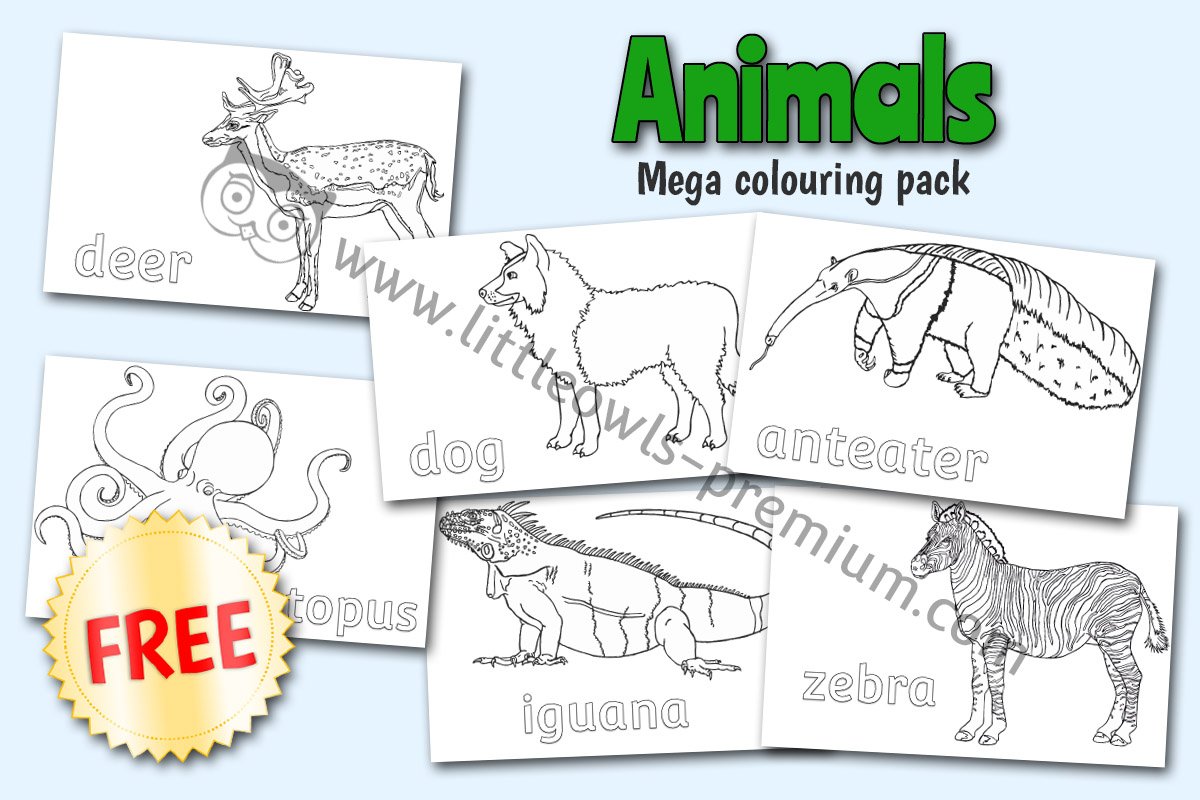
Mega pack of Animal colouring pictures…49 sheets of individual animals to colour including their names.
Great for fine motor, observational skills, colour choice and becoming aware that text has meaning.
Original artwork drawn by Sara Murphy and final digital resources created by Stuart Murphy. COPYRIGHT ON ALL OF THE RESOURCES HOUSED ON THIS WEBSITE IS HELD BY ‘LITTLE OWLS RESOURCES’. OUR RESOURCES (INCLUDING THE IMAGES WITHIN THEM), CANNOT BE SHARED OR SOLD COMMERCIALLY.
DOWNLOAD EDITABLE (DOCX)
DOWNLOAD NON-EDITABLE (PDF)
<<-BACK TO ANIMALS OF THE WORLD MENU

Under the Sea themed Alphabet cards. These cards could be used as learning prompts or a display around a water play area.
(Don’t forget if you choose the editable docx file, you can change the font!)
Original artwork drawn by Sara Murphy and final digital resources created by Stuart Murphy. COPYRIGHT ON ALL OF THE RESOURCES HOUSED ON THIS WEBSITE IS HELD BY ‘LITTLE OWLS RESOURCES’. OUR RESOURCES (INCLUDING THE IMAGES WITHIN THEM), CANNOT BE SHARED OR SOLD COMMERCIALLY.
DOWNLOAD EDITABLE (DOCX)
DOWNLOAD NON-EDITABLE (PDF)
DOWNLOAD NON-EDITABLE (Zipped JPEGs)
‘Turtle’ printable resources and activity ideas in our ‘Animals’ and ‘Under the Sea’ topics:

The pages of this pack give some general information about sea turtles and some fun and engaging activities to foster and develop children’s interest in them.
Pack includes:
• Fact posters x3 (Could be used as stimuli for a lesson input)
• Number slice activity (1-10) (Can be pre-cut for a pure number ordering activity or left to be cut by child to add scissor practice)
• Number slice activity - colouring version (1-10) (As above but to be coloured before cutting)
• Description sheet (Can be used as an independent writing activity or with an adult scribing the ideas of a younger child)
• A4 poster
• A4 poster - colouring version
• ‘Body Parts’ x3 (fully labelled, initial sounds only, blank)
• Draw and write sheets x3 (blank sheet, wide lines and narrow lines)
• 1x 4-piece puzzle
• Multimats x2 (for Colouring/Art & Craft/Loose Parts/Playdough)
Fine Motor, Mark Making/Drawing/Writing, Pencil Control, Drawing, Take Home, Zoo, Puzzles, Games, Activity, Animal body parts, Discussion Prompts, Print Carries Meaning, Problem Solving, Observational Skills, Posters/Displays, Using Shapes for Task, Number Recognition and Ordering, Sea Turtle, Ocean, Endangered Animal Packs, Art and Craft, Turtle, Reptiles
Original artwork drawn by Sara Murphy and final digital resources created by Stuart Murphy. COPYRIGHT ON ALL OF THE RESOURCES HOUSED ON THIS WEBSITE IS HELD BY ‘LITTLE OWLS RESOURCES’. OUR RESOURCES (INCLUDING THE IMAGES WITHIN THEM), CANNOT BE SHARED OR SOLD COMMERCIALLY.
DOWNLOAD EDITABLE (DOCX)
DOWNLOAD NON-EDITABLE (PDF)
DOWNLOAD NON-EDITABLE (Zipped JPEGs)

Help the turtles find their eggs!
Game for three players. Take turns to turn a card. If it is a rock turn the card back over. If it is an egg put it on your collection card.
The first player to get five eggs is the winner!
Observational Skills, Reptiles, Problem Solving, Counting, Number Recognition and Ordering, Games, Group Activity, Turn Taking, Zoo, Ocean, Turtle
Original artwork drawn by Sara Murphy and final digital resources created by Stuart Murphy. COPYRIGHT ON ALL OF THE RESOURCES HOUSED ON THIS WEBSITE IS HELD BY ‘LITTLE OWLS RESOURCES’. OUR RESOURCES (INCLUDING THE IMAGES WITHIN THEM), CANNOT BE SHARED OR SOLD COMMERCIALLY.
DOWNLOAD EDITABLE (DOCX)
DOWNLOAD NON-EDITABLE (PDF)
<<-BACK TO ANIMALS OF THE WORLD MENU

Posters depicting some common reptiles; turtle, komodo dragon, snake and iguana.
Posters/Displays, Observational Skills, Reptiles, Zoo, Komodo Dragon, Iguana, Snake, Turtle
Original artwork drawn by Sara Murphy and final digital resources created by Stuart Murphy. COPYRIGHT ON ALL OF THE RESOURCES HOUSED ON THIS WEBSITE IS HELD BY ‘LITTLE OWLS RESOURCES’. OUR RESOURCES (INCLUDING THE IMAGES WITHIN THEM), CANNOT BE SHARED OR SOLD COMMERCIALLY.
DOWNLOAD EDITABLE (DOCX)
DOWNLOAD NON-EDITABLE (PDF)
<<-BACK TO ANIMALS OF THE WORLD MENU

Banner with headings/labels you may also wish to use on your display board.
Posters/Displays, Print Carries Meaning, Observational Skills, Vulture, Elephant, Tiger, Giraffe, Chimpanzee, Quail, Flamingo, Iguana, Zebra, Dolphin, Clownfish, Banded Penguin, Penguin, Octopus, Turtle, Seahorse, Herbivores, Carnivores, Omnivores
Original artwork drawn by Sara Murphy and final digital resources created by Stuart Murphy. COPYRIGHT ON ALL OF THE RESOURCES HOUSED ON THIS WEBSITE IS HELD BY ‘LITTLE OWLS RESOURCES’. OUR RESOURCES (INCLUDING THE IMAGES WITHIN THEM), CANNOT BE SHARED OR SOLD COMMERCIALLY.
DOWNLOAD EDITABLE (DOCX)
DOWNLOAD NON-EDITABLE (PDF)
<<-BACK TO ANIMALS OF THE WORLD MENU
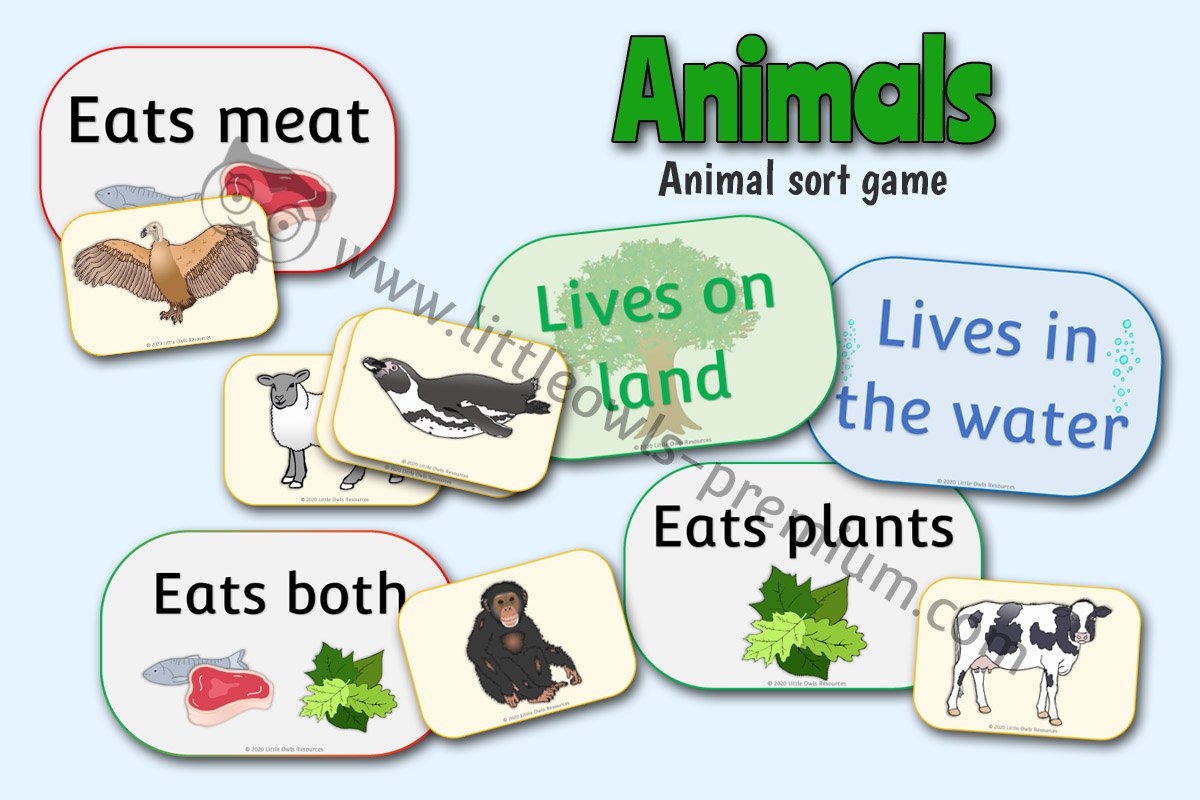
Pack of animal cards with sorting labels. Ideal for use as part of an interactive display or sorting activity or game. Differentiate for use with different ages of children by your selection of activity cards, the vocabulary you use and your use of questioning. You may like to select e.g. the headings ‘4 legs’, ‘2 legs’ and ‘0 legs’. Place them on the floor or a table and discuss with your child(ren) which animal cards should be placed under each of the headings. For some headings such as ‘Eats meat’, ‘Eats plants’ and ‘Eats both’ you may like to create your own venn diagram by using two hoops/looped skipping ropes on the floor or circles on paper which overlap in the middle. The 2 separate components go in each hoop e.g. ‘Eats meat’ and ‘Eats plants’ and the overlapping centre is where both characteristics are true. In this case ‘Eats both meat and plants’. If none of the characteristics mentioned are true for an animal, the animal card may be placed outside of the circles. This sorting activity is a great way to encourage children to observe animal characteristics closely. The active engagement with the subject matter means they are more likely to retain knowledge for example new vocabulary. Can you think of any other ways to sort these animals? Perhaps you could make your own heading cards?
Graphs/Charts, Sorting Activities, Games, Activity, Group Activity, Discussion Prompts, Posters/Displays, Observational Skills, Problem Solving, Print Carries Meaning, Cards/Flashcards, Vulture, Dolphin, Clownfish, Turtle, Cow, Chicken, Hen, Duck, Sheep, Banded Penguin, Penguin, Chimpanzee, Elephant, Flamingo, Giraffe, Sea Lion, Tiger, Birds, Mammals, Fish, Reptiles, Carnivores, Herbivores, Omnivores
Original artwork drawn by Sara Murphy and final digital resources created by Stuart Murphy. COPYRIGHT ON ALL OF THE RESOURCES HOUSED ON THIS WEBSITE IS HELD BY ‘LITTLE OWLS RESOURCES’. OUR RESOURCES (INCLUDING THE IMAGES WITHIN THEM), CANNOT BE SHARED OR SOLD COMMERCIALLY.
DOWNLOAD EDITABLE (DOCX)
DOWNLOAD NON-EDITABLE (PDF)
<<-BACK TO ANIMALS OF THE WORLD MENU

Pack includes 3 pages: poster for display and modelling, version with blank labels for writing, plus a writing template with initial sounds for labels.
Posters/Displays, Mark Making/Drawing/Writing, Fine Motor, Pencil Control, Observational Skills, Problem Solving, Activity, Take Home, Laminate to use with w/b pens, Animal body parts, Reptiles, Zoo, Ocean, Endangered Animals, Turtle
Original artwork drawn by Sara Murphy and final digital resources created by Stuart Murphy. COPYRIGHT ON ALL OF THE RESOURCES HOUSED ON THIS WEBSITE IS HELD BY ‘LITTLE OWLS RESOURCES’. OUR RESOURCES (INCLUDING THE IMAGES WITHIN THEM), CANNOT BE SHARED OR SOLD COMMERCIALLY.
DOWNLOAD EDITABLE (DOCX)
DOWNLOAD NON-EDITABLE (PDF)
<<-BACK TO ANIMALS OF THE WORLD MENU

‘Our Favourite Animals’ Pictogram Chart pictures and banner designed for children to not only think about their favourite animal, but also realise that others may not have the same favourite. In addition, children begin to learn about simple graphs and charts. Ideal for use in a classroom, preschool, nursery or childminder setting. Children do not have to necessarily complete the activity at the same time, but a chart can be added to a display and individual children can add their own favourites at appropriate times. Simply place any of the eight large animals on the first page in a horizontal line to form the base of the chart and children can add their own favourite smaller animal above to create the vertical lines of a chart. The lengths of the lines can be compared and number of animals on each can be counted to find totals. Questions such as ‘How many children like tigers?’ may be asked. To really extend mathematical thinking, questions such as ‘How many more children like elephants than kangaroos?’ Animals included are: lion, kangaroo, chimpanzee, zebra, elephant, dolphin, tiger and turtle.
Graphs/Charts, Personal Opinion/Feelings, Group Activity, Posters/Displays, Counting, Observational Skills, Problem Solving, Discussion Prompts, Zoo, Lion, Kangaroo, Chimpanzee, Zebra, Elephant, Dolphin, Tiger, Turtle, Mammals, Reptiles
Original artwork drawn by Sara Murphy and final digital resources created by Stuart Murphy. COPYRIGHT ON ALL OF THE RESOURCES HOUSED ON THIS WEBSITE IS HELD BY ‘LITTLE OWLS RESOURCES’. OUR RESOURCES (INCLUDING THE IMAGES WITHIN THEM), CANNOT BE SHARED OR SOLD COMMERCIALLY.
DOWNLOAD EDITABLE (DOCX)
DOWNLOAD NON-EDITABLE (PDF)

Once laminated these Animal Multimats are ideal to be used as reusable playdough or loose parts mats. Alternatively, use them in conjunction with whiteboard pens. Without lamination these sheets could also be used with mark making tools or art and craft materials.
Activity, Fine Motor, Mark Making/Drawing/Writing, Pencil Control, Playdough/Loose Part Mats, Zoo, Art and Craft, Anteater, Koi Carp, Fish, Kangaroo, Octopus, Vulture, Iguana, Turtle, Reptiles, Mammals, Birds, 2, Zoo
Original artwork drawn by Sara Murphy and final digital resources created by Stuart Murphy. COPYRIGHT ON ALL OF THE RESOURCES HOUSED ON THIS WEBSITE IS HELD BY ‘LITTLE OWLS RESOURCES’. OUR RESOURCES (INCLUDING THE IMAGES WITHIN THEM), CANNOT BE SHARED OR SOLD COMMERCIALLY.
DOWNLOAD EDITABLE (DOCX)
DOWNLOAD NON-EDITABLE (PDF)
<<-BACK TO ANIMALS OF THE WORLD MENU

Animal themed horizontal border paper. A variety of options including 2 types of lined and a blank sheet. Each of these are available within the pack in both full colour and black and white versions for colouring in.
Fine Motor, Mark Making/Drawing/Writing, Drawing, Pencil Control, Take Home, Zoo, Octopus, Tiger, Banded Penguin, Penguin, Sea Lion, Frog, Lion, Chimpanzee, Wolf, Meerkat, Quail, Starfish, Seahorse, Turtle, Anteater, Dolphin, Vulture, Zebra, Iguana, Crabs, Rhinos, Elephant, Flamingo, Giraffe, Kangaroo, Mammals, Birds, Reptiles, Amphibians, Invertebrate
Original artwork drawn by Sara Murphy and final digital resources created by Stuart Murphy. COPYRIGHT ON ALL OF THE RESOURCES HOUSED ON THIS WEBSITE IS HELD BY ‘LITTLE OWLS RESOURCES’. OUR RESOURCES (INCLUDING THE IMAGES WITHIN THEM), CANNOT BE SHARED OR SOLD COMMERCIALLY.
DOWNLOAD EDITABLE (DOCX)
DOWNLOAD NON-EDITABLE (PDF)
<<-BACK TO ANIMALS OF THE WORLD MENU

Animal themed vertical border paper. A variety of options including 2 types of lined and a blank sheet. Each of these are available within the pack in both full colour and black and white versions for colouring in.
Fine Motor, Mark Making/Drawing/Writing, Pencil Control, Drawing, Take Home, Zoo, Iguana, Tiger, Banded Penguin, Penguin, Sea Lion, Lion, Seahorse, Octopus, Quail, Frog, Crabs, Zebra, Starfish, Vulture, Anteater, Dolphin, Wolf, Turtle, Meerkat, Chimpanzee, Rhinos, Kangaroo, Elephant, Flamingo, Giraffe, Mammals, Birds, Reptiles, Amphibians, Invertebrate
Original artwork drawn by Sara Murphy and final digital resources created by Stuart Murphy. COPYRIGHT ON ALL OF THE RESOURCES HOUSED ON THIS WEBSITE IS HELD BY ‘LITTLE OWLS RESOURCES’. OUR RESOURCES (INCLUDING THE IMAGES WITHIN THEM), CANNOT BE SHARED OR SOLD COMMERCIALLY.
DOWNLOAD EDITABLE (DOCX)
DOWNLOAD NON-EDITABLE (PDF)

Help children to recognise phase 3 sounds by linking them to animal names depicted on the mat. Use as part of a Letters and Sounds display area or table activities as a visual reminder of the sounds.
Letters & Sounds - Phase 3, Posters/Displays, Jellyfish, Vole, Wolf, Fox, Yak, Zebra, Buzzard, Quail, Chimpanzee, Sheep, Earthworm, Flamingo, Snail, Deer, Nightingale, Goat, Kangaroo, Woodlouse, Starfish, Horse, Turtle, Cow, Koi Carp, Earwig, Prairie Dog, Vulture, Spider, Mammals, Reptiles, Birds, Fish, Invertebrate
Original artwork drawn by Sara Murphy and final digital resources created by Stuart Murphy. COPYRIGHT ON ALL OF THE RESOURCES HOUSED ON THIS WEBSITE IS HELD BY ‘LITTLE OWLS RESOURCES’. OUR RESOURCES (INCLUDING THE IMAGES WITHIN THEM), CANNOT BE SHARED OR SOLD COMMERCIALLY.
DOWNLOAD EDITABLE (DOCX)
DOWNLOAD NON-EDITABLE (PDF)
DOWNLOAD NON-EDITABLE (Zipped JPEGs)
<<-BACK TO ‘ANIMALS OF THE WORLD’ MENU
<<-BACK TO ‘LETTERS AND SOUNDS - PHASE 3’ MENU

Use as part of a Letters and Sounds display area, tuff spot activity (e.g. match objects in the tray with the appropriate letter/digraph sound), or as flashcards during teaching games with a small group. Help children to recognise these sounds by linking them to animal names depicted on the cards.
Letters & Sounds - Phase 3, Posters/Displays, Jellyfish, Vole, Wolf, Fox, Yak, Zebra, Buzzard, Quail, Chimpanzee, Sheep, Earthworm, Flamingo, Snail, Deer, Nightingale, Goat, Kangaroo, Woodlouse, Starfish, Horse, Turtle, Cow, Koi Carp, Earwig, Prairie Dog, Vulture, Spider, Mammals, Birds, Fish, Reptiles, Invertebrate
Original artwork drawn by Sara Murphy and final digital resources created by Stuart Murphy. COPYRIGHT ON ALL OF THE RESOURCES HOUSED ON THIS WEBSITE IS HELD BY ‘LITTLE OWLS RESOURCES’. OUR RESOURCES (INCLUDING THE IMAGES WITHIN THEM), CANNOT BE SHARED OR SOLD COMMERCIALLY.
DOWNLOAD EDITABLE (DOCX)
DOWNLOAD NON-EDITABLE (PDF)
DOWNLOAD NON-EDITABLE (Zipped JPEGs)
<<-BACK TO ‘ANIMALS OF THE WORLD’ MENU
<<-BACK TO ‘LETTERS AND SOUNDS - PHASE 3’ MENU

Phase 3 sound cards with animals to colour which depict the relevant sound.
Letters & Sounds - Phase 3, Colouring, Fine Motor, Pencil Control, Letter Formation, Mark Making/Drawing/Writing, Jellyfish, Vole, Wolf, Fox, Yak, Zebra, Buzzard, Quail, Chimpanzee, Sheep, Earthworm, Flamingo, Snail, Deer, Nightingale, Goat, Kangaroo, Woodlouse, Starfish, Horse, Turtle, Cow, Koi Carp, Earwig, Prairie Dog, Vulture, Spider, Mammals, Reptiles, Fish, Birds, Invertebrate
Original artwork drawn by Sara Murphy and final digital resources created by Stuart Murphy. COPYRIGHT ON ALL OF THE RESOURCES HOUSED ON THIS WEBSITE IS HELD BY ‘LITTLE OWLS RESOURCES’. OUR RESOURCES (INCLUDING THE IMAGES WITHIN THEM), CANNOT BE SHARED OR SOLD COMMERCIALLY.
DOWNLOAD EDITABLE (DOCX)
DOWNLOAD NON-EDITABLE (PDF)
DOWNLOAD NON-EDITABLE (Zipped JPEGs)

This pack contains some activity ideas for learning about ANIMALS as well as some blank forms for you to note down your own ideas.
Staring at a blank page when planning can be difficult so we hope that even if you don’t end up using our exact suggestions, they will be a spark of inspiration for your own great ideas when planning for your children.
(For additional ‘Animals’ themed resources visit our ‘ANIMALS’ PAGE.)
Original artwork drawn by Sara Murphy and final digital resources created by Stuart Murphy. COPYRIGHT ON ALL OF THE RESOURCES HOUSED ON THIS WEBSITE IS HELD BY ‘LITTLE OWLS RESOURCES’. OUR RESOURCES (INCLUDING THE IMAGES WITHIN THEM), CANNOT BE SHARED OR SOLD COMMERCIALLY.
DOWNLOAD EDITABLE (DOCX)
DOWNLOAD NON-EDITABLE (PDF)
DOWNLOAD NON-EDITABLE (Zipped JPEGs)
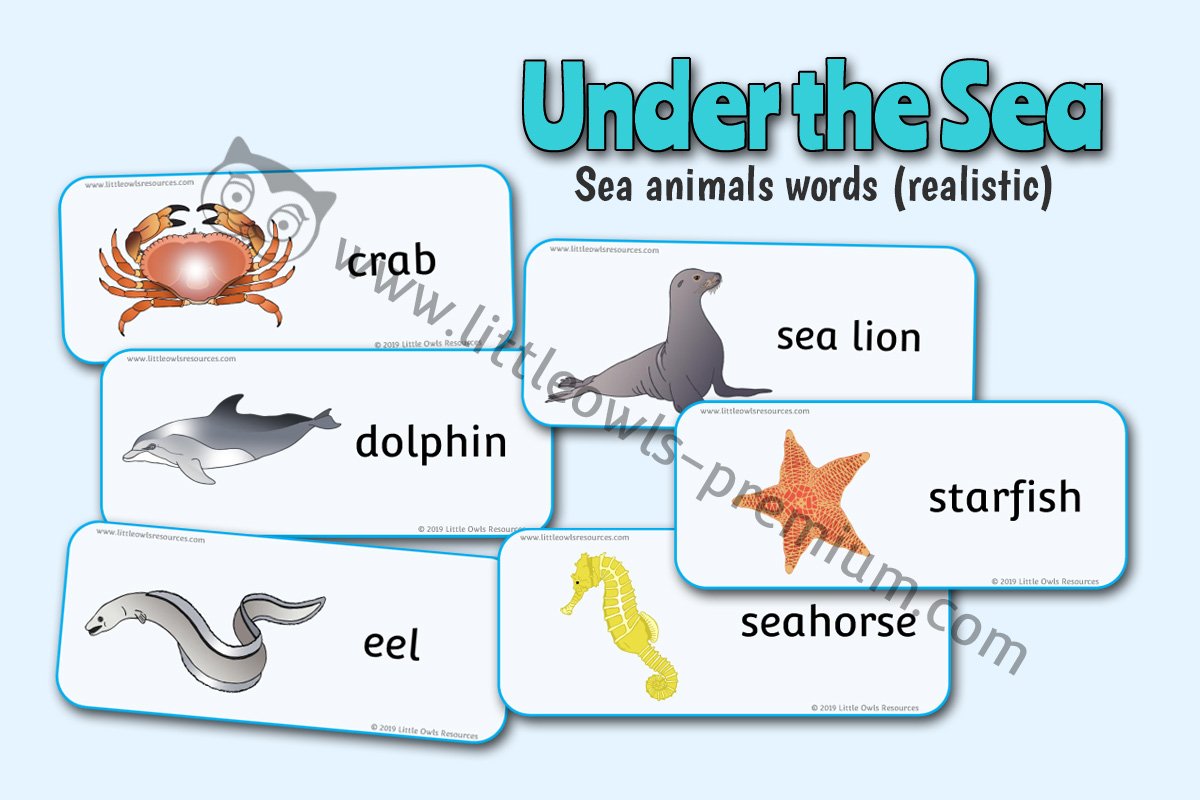
Engaging Sea Animal (realistic style) word cards. Use as part of 'Under the Sea' themed role play areas and displays. Blank cards within the set to make your own or challenge the children to.
Posters/Displays, Flashcards, Word Cards, Print Carries Meaning, Observational Skills, *Realistic Style*, Reading, Crabs, Dolphin, Eel, Edible Crab, Fish, Jellyfish, Octopus, Clownfish, Seahorse, Sea Lion, Starfish, Turtle, Narwhal, Mammals, Invertebrates, Reptiles
Original artwork drawn by Sara Murphy and final digital resources created by Stuart Murphy. COPYRIGHT ON ALL OF THE RESOURCES HOUSED ON THIS WEBSITE IS HELD BY ‘LITTLE OWLS RESOURCES’. OUR RESOURCES (INCLUDING THE IMAGES WITHIN THEM), CANNOT BE SHARED OR SOLD COMMERCIALLY.
DOWNLOAD EDITABLE (DOCX)
DOWNLOAD NON-EDITABLE (PDF)
<<-BACK TO ‘UNDER THE SEA’ MENU
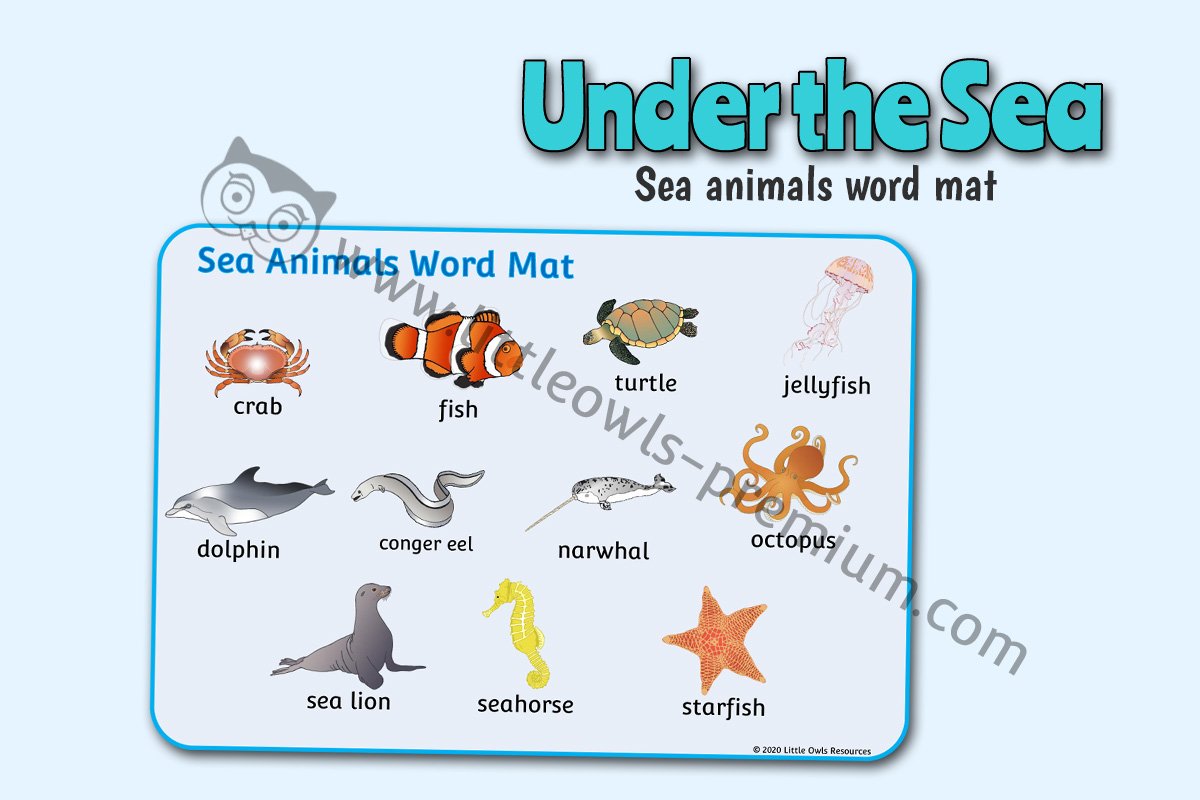
‘Sea Animals’ word mat. Why not use in conjunction with our ‘Sea Animal’ (Realistic) word cards? Can be used as part of a display or activities. Uses vary from pointing activities with younger children (e.g. ‘Where’s the turtle?’) and naming and describing objects in the world around us, right up to children beginning to read and write.
Word Mats, Posters/Displays, Print Carries Meaning, Observational Skills, Reading, *Realistic Style*, Crabs, Edible Crab, Fish, Clownfish, Turtle, Jellyfish, Dolphin, Eel, Narwhal, Octopus, Sea Lion, Seahorse, Starfish, Invertebrates, Mammals, Reptiles
Original artwork drawn by Sara Murphy and final digital resources created by Stuart Murphy. COPYRIGHT ON ALL OF THE RESOURCES HOUSED ON THIS WEBSITE IS HELD BY ‘LITTLE OWLS RESOURCES’. OUR RESOURCES (INCLUDING THE IMAGES WITHIN THEM), CANNOT BE SHARED OR SOLD COMMERCIALLY.
DOWNLOAD EDITABLE (DOCX)
DOWNLOAD NON-EDITABLE (PDF)
<<-BACK TO ‘UNDER THE SEA’ MENU
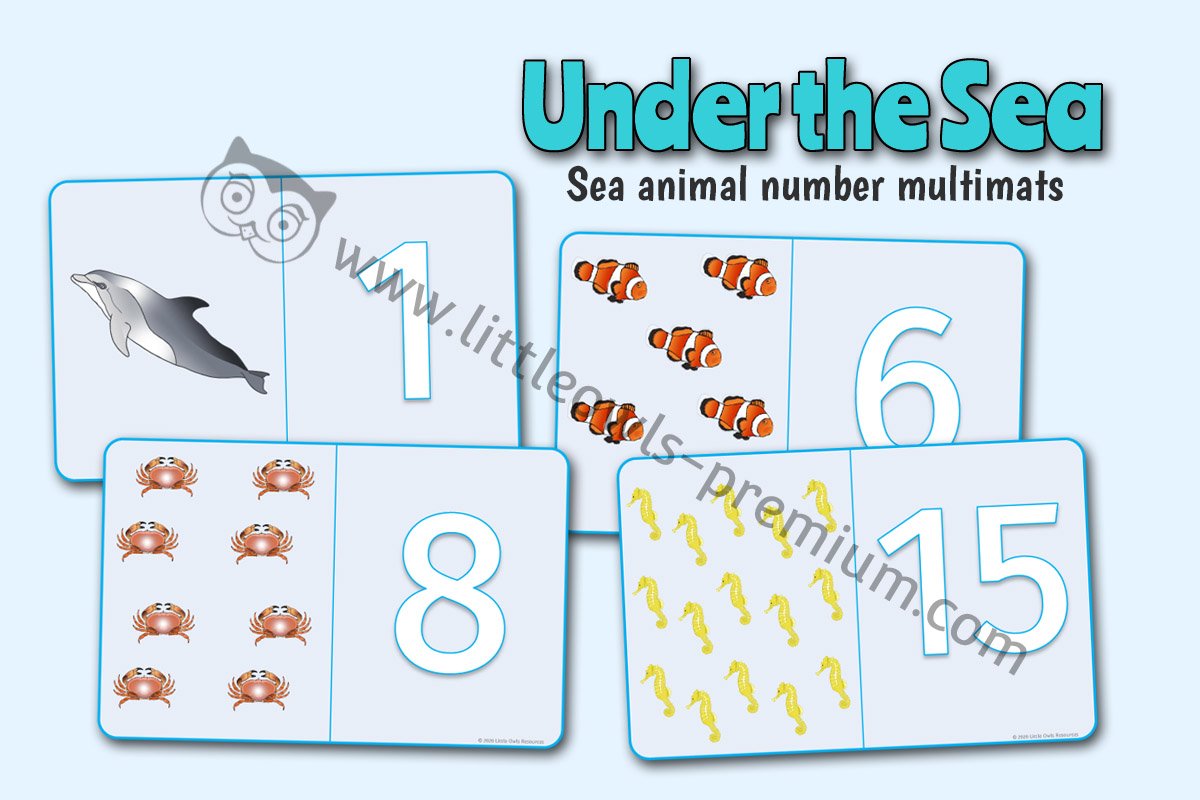
Great for number formation and counting! These A4 size mats can be laminated for use as playdough mats. Children can mould the shape of each number in playdough and also make the sea animals. Additionally, they may be used for number writing practice with a whiteboard pen or used as stimulus for a loose parts activity. For example loose parts may be placed inside the lines of the numbers (also developing fine motor control) and placed onto each sea animal to aid in counting the correct quantity.
Counting, Playdough/Loose Part Mats, Posters/Displays, Laminate to use with w/b pens, Activity, Fine Motor, Pencil Control, Mark Making/Drawing/Writing, Number Lines, Number Formation, Number Recognition & Ordering, *Realistic Style*, Dolphin, Mammals, Eel, Jellyfish, Invertebrates, Sea Lion, Seahorse, Clownfish, Fish, Octopus, Edible Crab, Crabs, Turtle, Reptiles, Starfish
Original artwork drawn by Sara Murphy and final digital resources created by Stuart Murphy. COPYRIGHT ON ALL OF THE RESOURCES HOUSED ON THIS WEBSITE IS HELD BY ‘LITTLE OWLS RESOURCES’. OUR RESOURCES (INCLUDING THE IMAGES WITHIN THEM), CANNOT BE SHARED OR SOLD COMMERCIALLY.
DOWNLOAD EDITABLE (DOCX)
DOWNLOAD NON-EDITABLE (PDF)
<<-BACK TO ‘UNDER THE SEA’ MENU
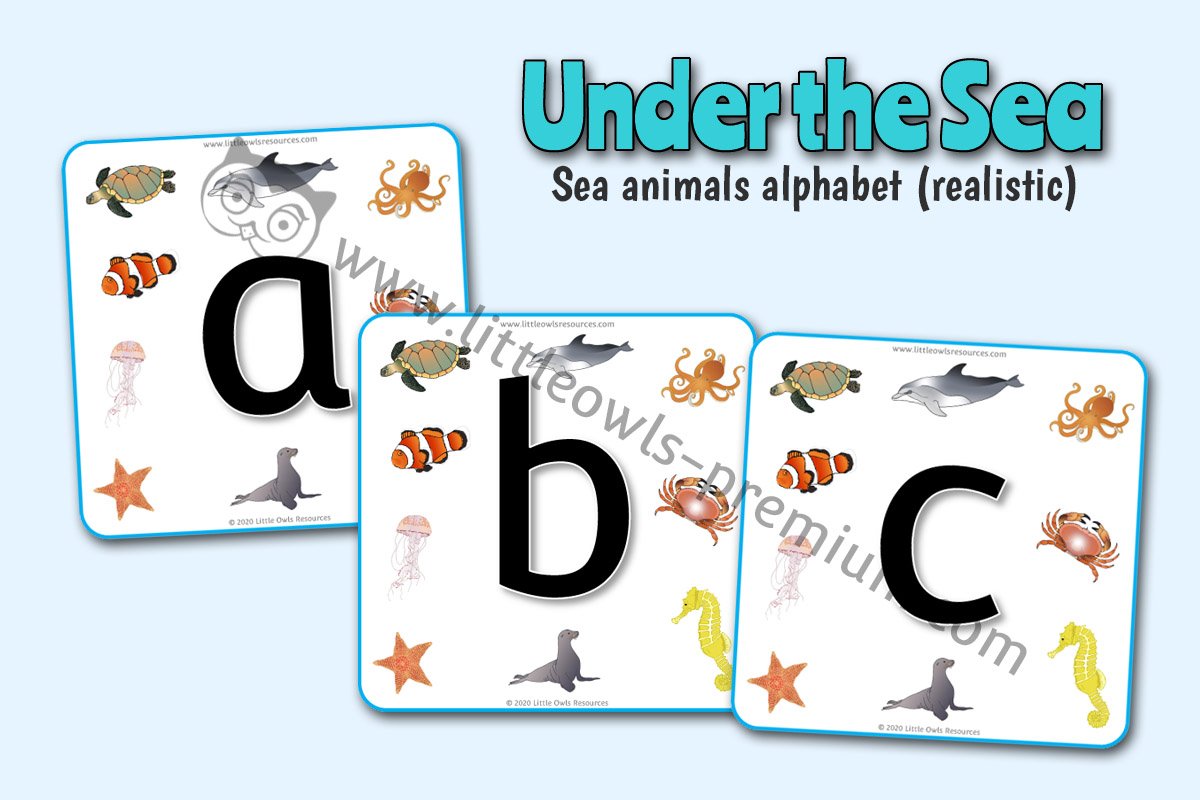
'Under the Sea' themed alphabet (Realistic). Print one to a page for use as a large alphabet display or four to a page for a set of flashcards or smaller display. Use on the wall or as part of activities, e.g. match the initial sounds with the objects in a tuff spot.
Alphabet, Posters/Displays, Flashcards, Reading, *Realistic Style*, Turtle, Dolphin, Octopus, Clownfish, Jellyfish, Starfish, Crabs, Sea Lion, Seahorse, Edible Crab, Fish
Original artwork drawn by Sara Murphy and final digital resources created by Stuart Murphy. COPYRIGHT ON ALL OF THE RESOURCES HOUSED ON THIS WEBSITE IS HELD BY ‘LITTLE OWLS RESOURCES’. OUR RESOURCES (INCLUDING THE IMAGES WITHIN THEM), CANNOT BE SHARED OR SOLD COMMERCIALLY.
DOWNLOAD EDITABLE (DOCX)
DOWNLOAD NON-EDITABLE (PDF)
<<-BACK TO ‘UNDER THE SEA’ MENU
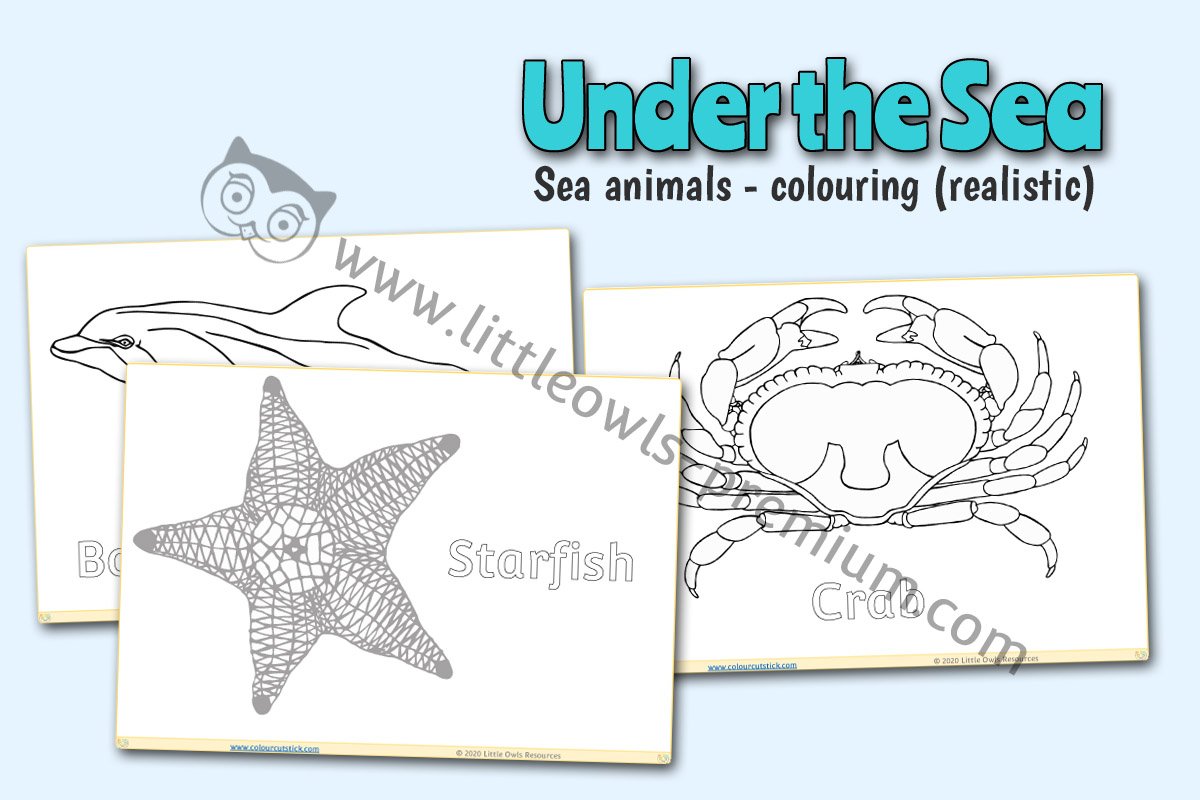
Large Sea Animal colouring pictures which each include a label.
Colouring, Activity, Reading, Print Carries Meaning, Fine Motor, Pencil Control, Mark Making/Drawing/Writing, Take Home, *Realistic Style*, Dolphin, Sea Lion, Jellyfish, Turtle, Crabs, Edible Crab, Starfish, Seahorse, Eel, Clownfish, Fish, Mammals, Invertebrates, Reptiles, Octopus, Narwhal
Original artwork drawn by Sara Murphy and final digital resources created by Stuart Murphy. COPYRIGHT ON ALL OF THE RESOURCES HOUSED ON THIS WEBSITE IS HELD BY ‘LITTLE OWLS RESOURCES’. OUR RESOURCES (INCLUDING THE IMAGES WITHIN THEM), CANNOT BE SHARED OR SOLD COMMERCIALLY.
DOWNLOAD EDITABLE (DOCX)
DOWNLOAD NON-EDITABLE (PDF)
<<-BACK TO ‘UNDER THE SEA’ MENU
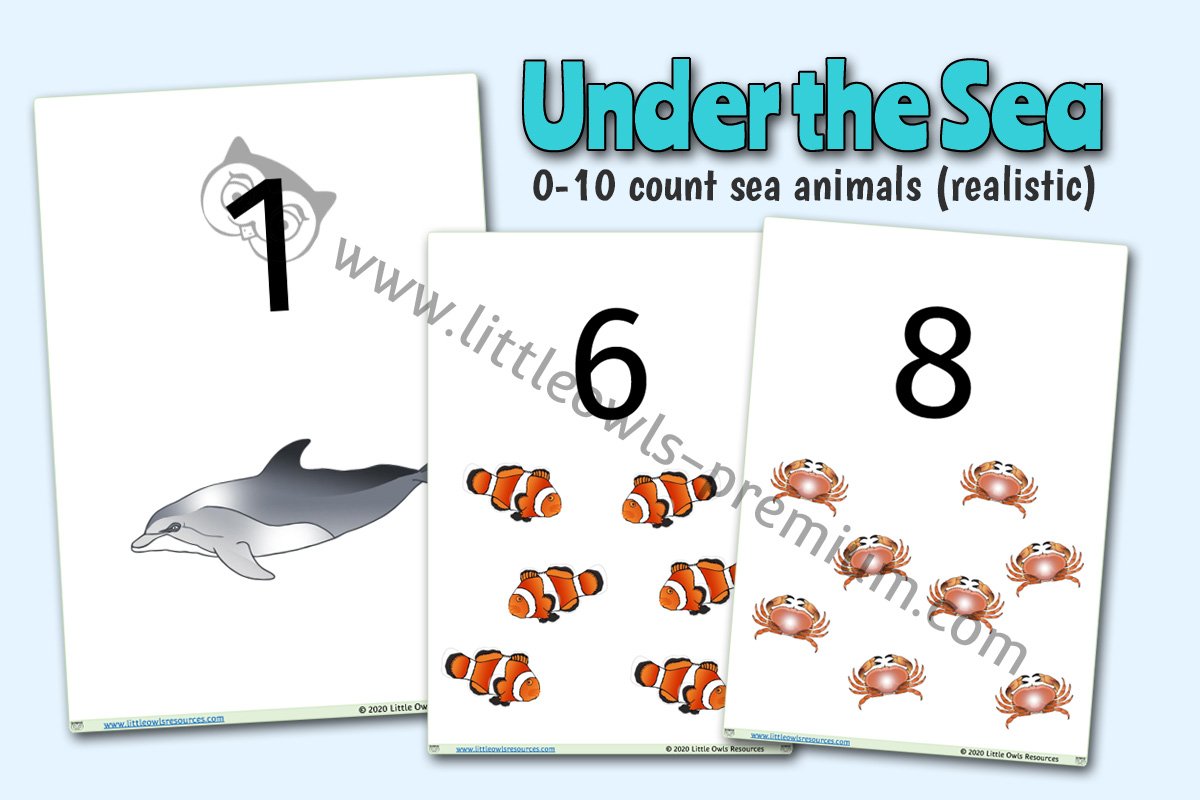
Count the sea creatures (realistic) from 0 to 10. Print one or two numbers to a page for use as part of a display or eight to a page for a set of flashcards.
*Realistic Style*, Posters/Displays, Numbers, Number Lines, Counting, Dolphin, Eel, Jellyfish, Sea Lion, Seahorse, Clownfish, Fish, Octopus, Crabs, Edible Crab, Turtle, Starfish
Original artwork drawn by Sara Murphy and final digital resources created by Stuart Murphy. COPYRIGHT ON ALL OF THE RESOURCES HOUSED ON THIS WEBSITE IS HELD BY ‘LITTLE OWLS RESOURCES’. OUR RESOURCES (INCLUDING THE IMAGES WITHIN THEM), CANNOT BE SHARED OR SOLD COMMERCIALLY.
DOWNLOAD EDITABLE (DOCX)
DOWNLOAD NON-EDITABLE (PDF)
<<-BACK TO ‘UNDER THE SEA’ MENU

‘Sea Animal’ themed Number Slice Puzzle Activities. Puzzles available for 1-5, 1-10 and 0-20 sequencing. Full colour versions in this pack. Cut along the vertical lines and laminate for multiple uses or allow your children to cut and stick as an individual activity to take home. Great for number recognition and ordering, observational skills and motor control. Picture and number combination enables child self checking.
Activity, Puzzles, Fine Motor, Scissor Skills, Observational Skills, Problem Solving, Take Home, Number Recognition & Ordering, *Realistic Style*, Starfish, Turtle, Crabs, Edible Crab, Clownfish, Fish, Dolphin, Mammals, Invertebrates, Reptiles
Original artwork drawn by Sara Murphy and final digital resources created by Stuart Murphy. COPYRIGHT ON ALL OF THE RESOURCES HOUSED ON THIS WEBSITE IS HELD BY ‘LITTLE OWLS RESOURCES’. OUR RESOURCES (INCLUDING THE IMAGES WITHIN THEM), CANNOT BE SHARED OR SOLD COMMERCIALLY.
DOWNLOAD EDITABLE (DOCX)
DOWNLOAD NON-EDITABLE (PDF)
<<-BACK TO ‘UNDER THE SEA’ MENU
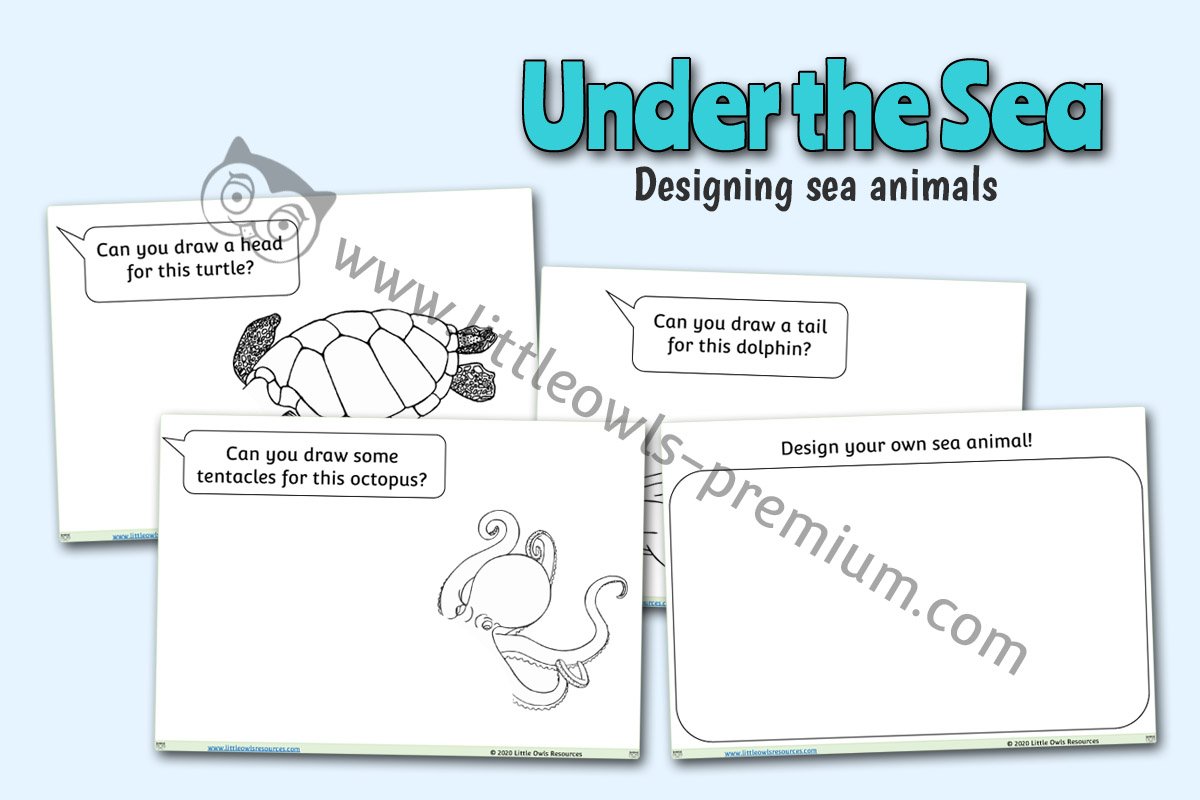
Can your children draw the missing parts to these sea animals? Or challenge your children to design their own animals with these ‘missing parts’ animal sheets (x6) and final ‘design your own sea animal’ sheet.
Mark Making/Drawing/Writing, Fine Motor, Pencil Control, Laminate to use with w/b pens, Activity, Take Home, Design Your Own, *Realistic Style*, Turtle, Dolphin, Seahorse, Eel, Crabs, Edible Crab, Octopus
Original artwork drawn by Sara Murphy and final digital resources created by Stuart Murphy. COPYRIGHT ON ALL OF THE RESOURCES HOUSED ON THIS WEBSITE IS HELD BY ‘LITTLE OWLS RESOURCES’. OUR RESOURCES (INCLUDING THE IMAGES WITHIN THEM), CANNOT BE SHARED OR SOLD COMMERCIALLY.
DOWNLOAD EDITABLE (DOCX)
DOWNLOAD NON-EDITABLE (PDF)
<<-BACK TO ‘UNDER THE SEA’ MENU
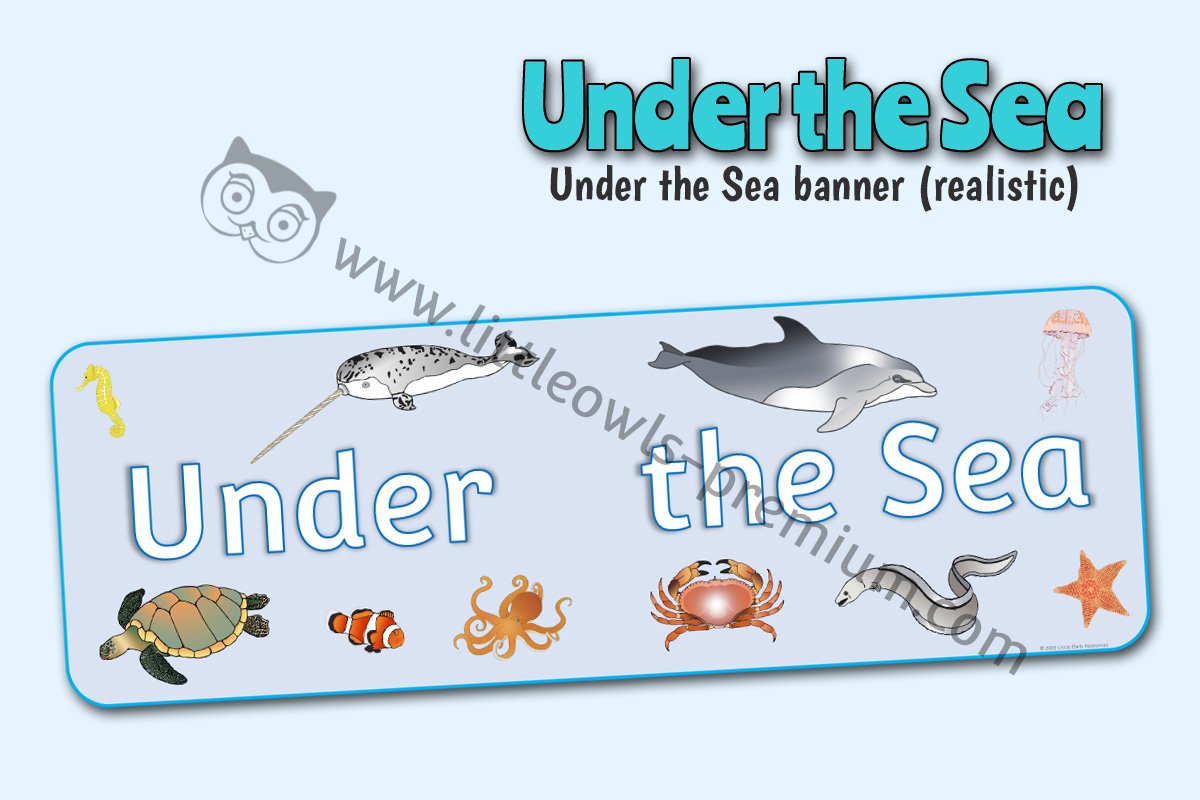
‘Under the Sea’ banner (realistic). Original banner size stretches 2 lengths of A4.
Print Carries Meaning, Observational Skills, Posters/Displays, *Realistic Style*, Seahorse, Narwhal, Dolphin, Jellyfish, Turtle, Clownfish, Fish, Octopus, Crabs, Edible Crab, Eel, Starfish
Original artwork drawn by Sara Murphy and final digital resources created by Stuart Murphy. COPYRIGHT ON ALL OF THE RESOURCES HOUSED ON THIS WEBSITE IS HELD BY ‘LITTLE OWLS RESOURCES’. OUR RESOURCES (INCLUDING THE IMAGES WITHIN THEM), CANNOT BE SHARED OR SOLD COMMERCIALLY.
DOWNLOAD EDITABLE (DOCX)
DOWNLOAD NON-EDITABLE (PDF)
<<-BACK TO ‘UNDER THE SEA’ MENU
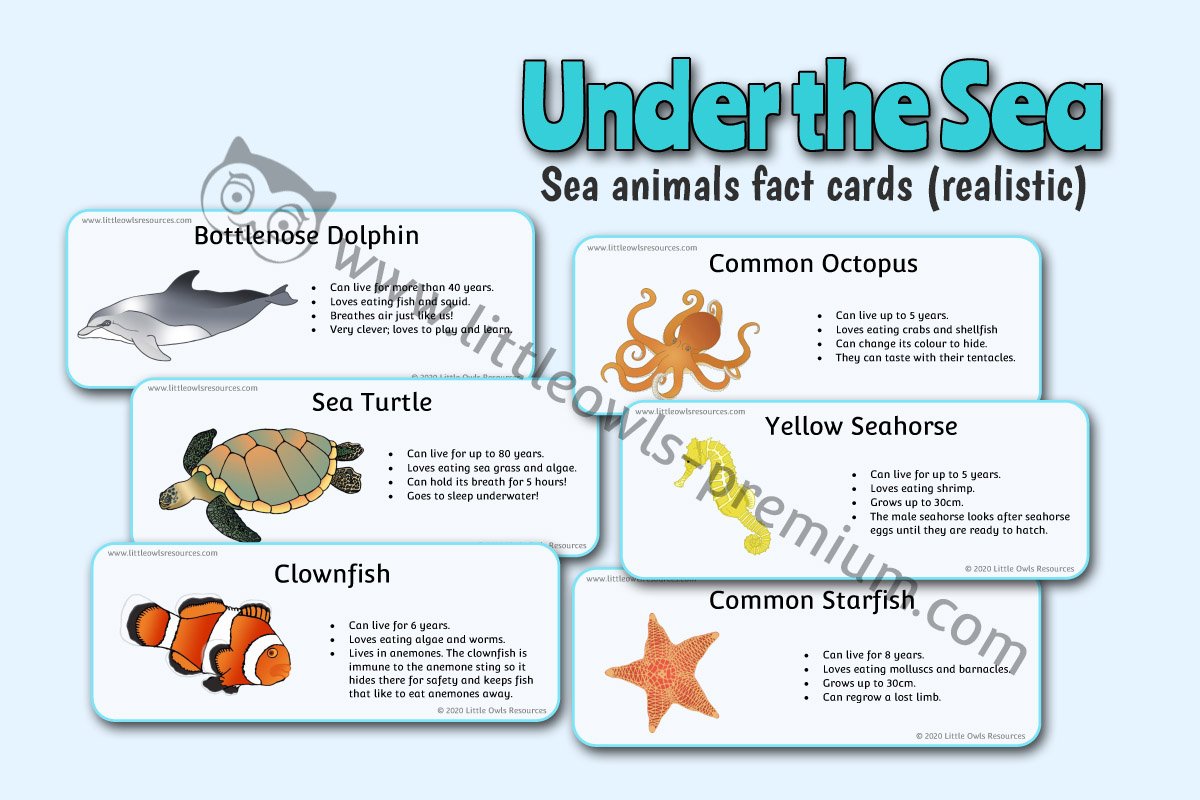
Fun and interesting facts about some popular sea animals to engage your children.
Fact Cards, Posters/Displays, *Realistic Style*, Dolphin, Turtle, Clownfish, Octopus, Seahorse, Starfish, Sea Lion, Crabs, Edible Crab, Jellyfish, Eel, Narwhal, Mammals, Reptiles, Fish, Invertebrates
Original artwork drawn by Sara Murphy and final digital resources created by Stuart Murphy. COPYRIGHT ON ALL OF THE RESOURCES HOUSED ON THIS WEBSITE IS HELD BY ‘LITTLE OWLS RESOURCES’. OUR RESOURCES (INCLUDING THE IMAGES WITHIN THEM), CANNOT BE SHARED OR SOLD COMMERCIALLY.
DOWNLOAD EDITABLE (DOCX)
DOWNLOAD NON-EDITABLE (PDF)
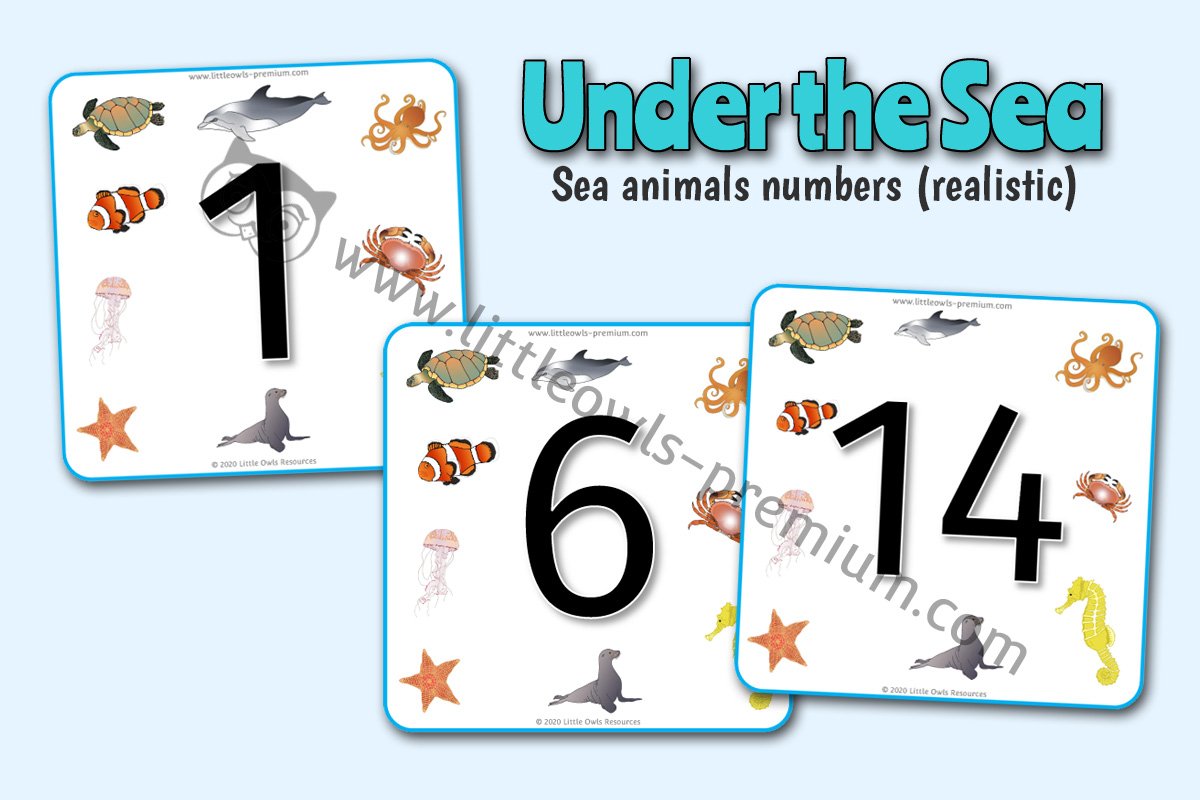
Numbers 0-30 with an 'Under the sea' background border. Print one number to a page for use as a large number line display or four to a page for a set of flashcards or smaller display.
Numbers, Number Recognition & Ordering, Number Lines, Flashcards, Posters/Displays, *Realistic Style*, Turtle, Dolphin, Octopus, Clownfish, Jellyfish, Starfish, Crabs, Edible Crab, Seahorse, Sea Lion
Original artwork drawn by Sara Murphy and final digital resources created by Stuart Murphy. COPYRIGHT ON ALL OF THE RESOURCES HOUSED ON THIS WEBSITE IS HELD BY ‘LITTLE OWLS RESOURCES’. OUR RESOURCES (INCLUDING THE IMAGES WITHIN THEM), CANNOT BE SHARED OR SOLD COMMERCIALLY.
DOWNLOAD EDITABLE (DOCX)
DOWNLOAD NON-EDITABLE (PDF)
<<-BACK TO ‘UNDER THE SEA’ MENU
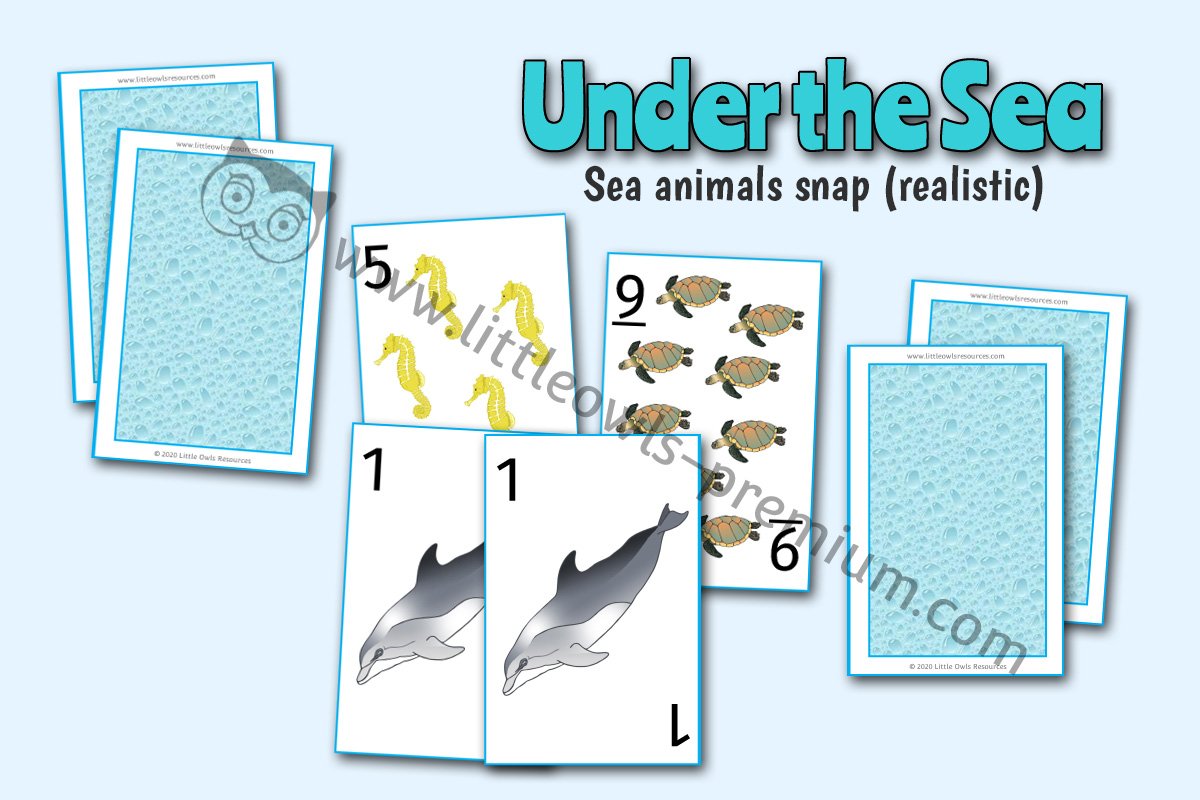
Ideal as part of an 'Under the Sea' topic. These Sea Animal themed Snap cards (1-10) can be printed, cut out and laminated to consolidate children's recognition of numbers and sea themed creatures with a fun game of snap!
Games, Snap Cards, Group Activity, Numbers, Observational Skills, Matching Activities, *Realistic Style*, Dolphin, Eel, Jellyfish, Sea Lion, Seahorse, Clownfish, Octopus, Crabs, Edible Crab, Turtle, Starfish, Mammals, Fish, Invertebrates, Reptiles
Original artwork drawn by Sara Murphy and final digital resources created by Stuart Murphy. COPYRIGHT ON ALL OF THE RESOURCES HOUSED ON THIS WEBSITE IS HELD BY ‘LITTLE OWLS RESOURCES’. OUR RESOURCES (INCLUDING THE IMAGES WITHIN THEM), CANNOT BE SHARED OR SOLD COMMERCIALLY.
DOWNLOAD EDITABLE (DOCX)
DOWNLOAD NON-EDITABLE (PDF)
<<-BACK TO ‘UNDER THE SEA’ MENU
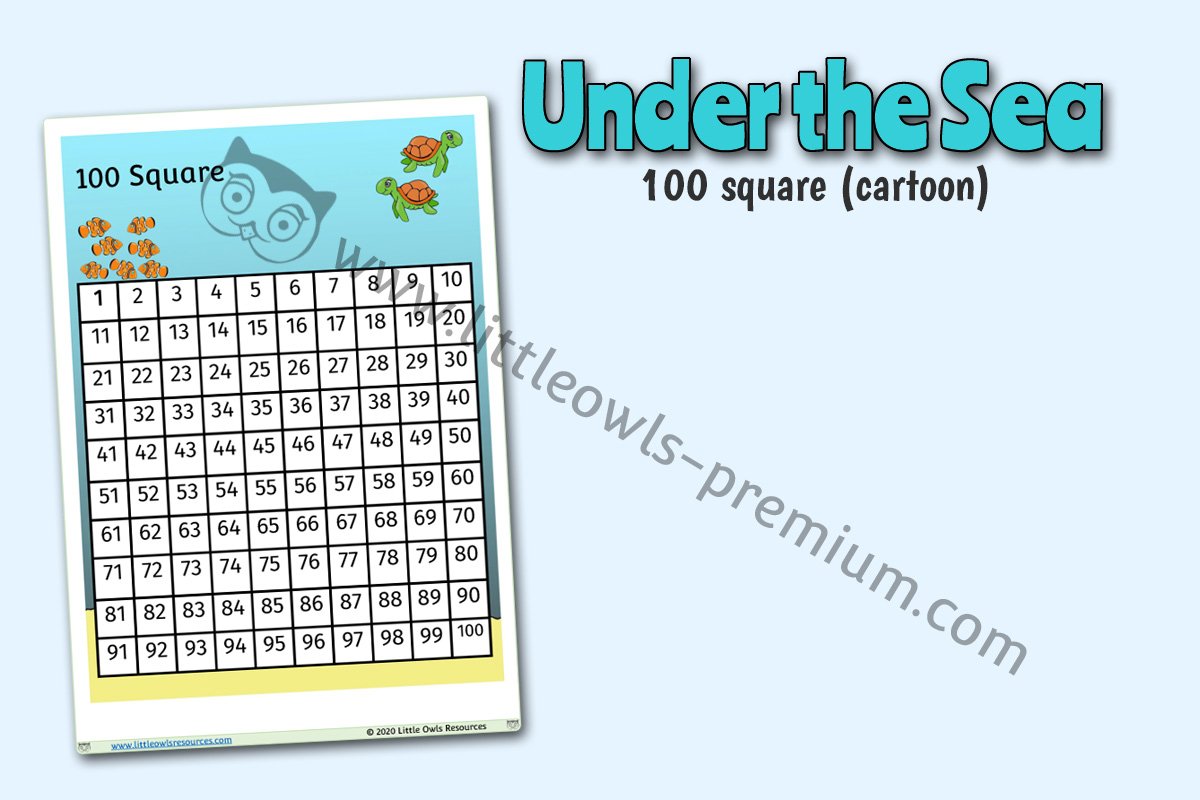
Under the Sea themed 100 square (cartoon).
Numbers, *Cartoon Style*, Posters/Displays, Number Lines, Clownfish, Turtle
Original artwork drawn by Sara Murphy and final digital resources created by Stuart Murphy. COPYRIGHT ON ALL OF THE RESOURCES HOUSED ON THIS WEBSITE IS HELD BY ‘LITTLE OWLS RESOURCES’. OUR RESOURCES (INCLUDING THE IMAGES WITHIN THEM), CANNOT BE SHARED OR SOLD COMMERCIALLY.
DOWNLOAD EDITABLE (DOCX)
DOWNLOAD NON-EDITABLE (PDF)
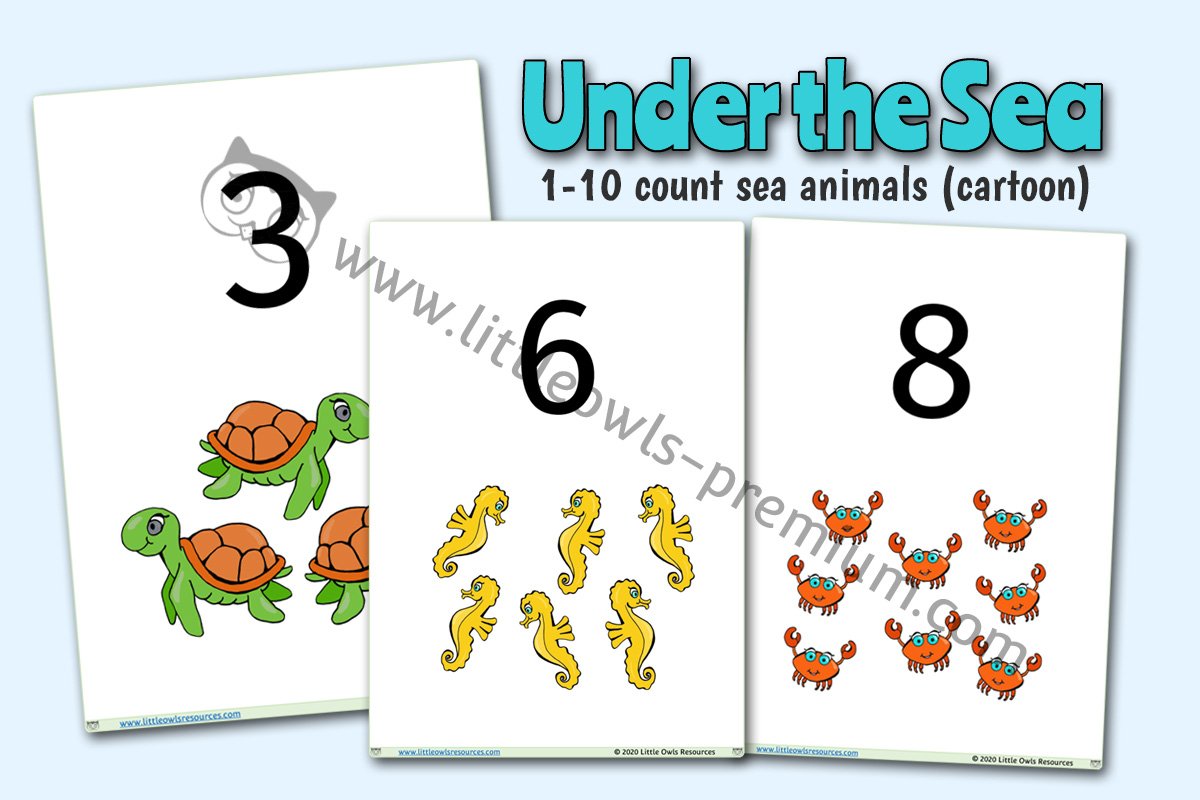
Count the sea creatures (cartoon) from 0 to 10. Print one or two numbers to a page for use as part of a display or eight to a page for a set of flashcards.
Flashcards, Numbers, Counting, *Cartoon Style*, Number Lines, Dolphin, Octopus, Turtle, Sea Lion, Seahorse, Eel, Clownfish, Crabs, Starfish, Lobster
Original artwork drawn by Sara Murphy and final digital resources created by Stuart Murphy. COPYRIGHT ON ALL OF THE RESOURCES HOUSED ON THIS WEBSITE IS HELD BY ‘LITTLE OWLS RESOURCES’. OUR RESOURCES (INCLUDING THE IMAGES WITHIN THEM), CANNOT BE SHARED OR SOLD COMMERCIALLY.
DOWNLOAD EDITABLE (DOCX)
DOWNLOAD NON-EDITABLE (PDF)
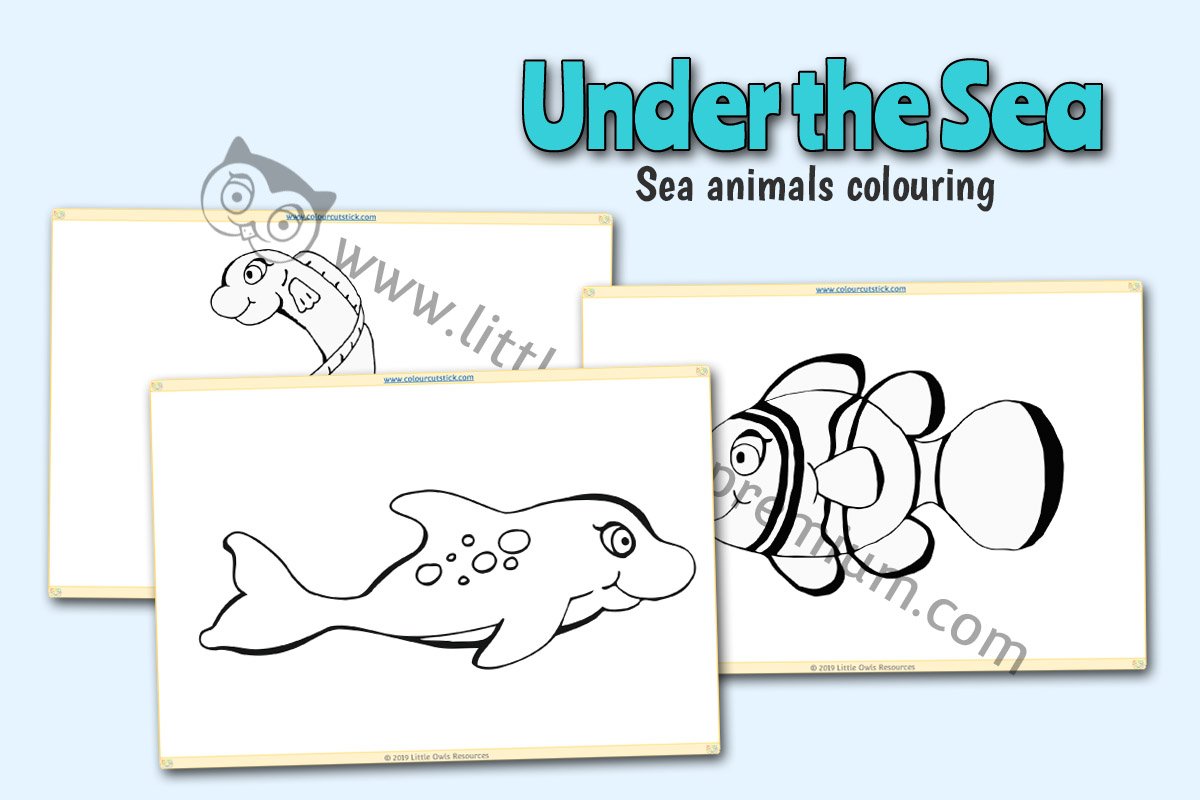
Large and small friendly sea creatures for colouring. Which colours will your children choose?
Colouring, *Cartoon Style*, Fine Motor, Mark Making/Drawing/Writing, Pencil Control, Take Home, Dolphin, Crabs, Eel, Clownfish, Lobster, Octopus, Seahorse, Sea Lion, Turtle, Starfish
Original artwork drawn by Sara Murphy and final digital resources created by Stuart Murphy. COPYRIGHT ON ALL OF THE RESOURCES HOUSED ON THIS WEBSITE IS HELD BY ‘LITTLE OWLS RESOURCES’. OUR RESOURCES (INCLUDING THE IMAGES WITHIN THEM), CANNOT BE SHARED OR SOLD COMMERCIALLY.
DOWNLOAD EDITABLE (DOCX)
DOWNLOAD NON-EDITABLE (PDF)
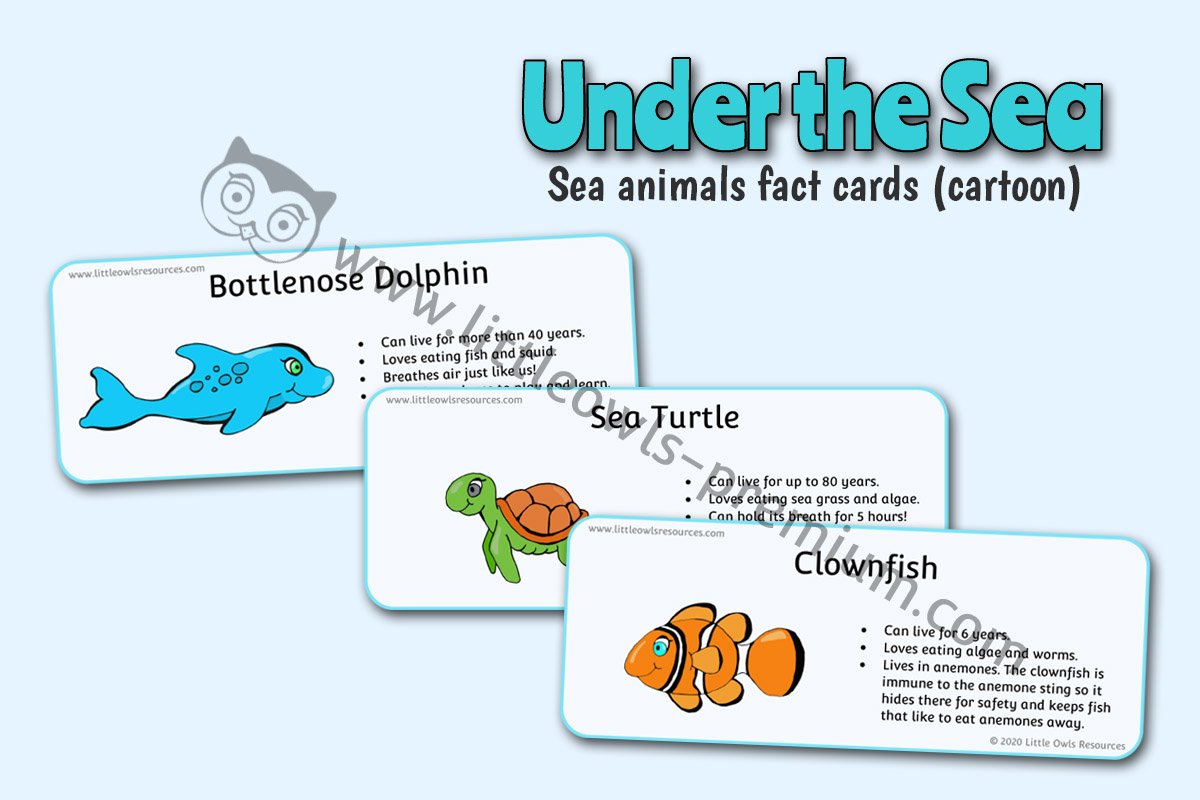
Fun and interesting facts about some popular sea animals to engage your children.
*Cartoon Style*, Fact Cards, Posters/Displays, Print Carries Meaning, Dolphin, Turtle, Clownfish, Octopus, Seahorse, Starfish, Sea Lion, Crabs, Lobster, Eel
Original artwork drawn by Sara Murphy and final digital resources created by Stuart Murphy. COPYRIGHT ON ALL OF THE RESOURCES HOUSED ON THIS WEBSITE IS HELD BY ‘LITTLE OWLS RESOURCES’. OUR RESOURCES (INCLUDING THE IMAGES WITHIN THEM), CANNOT BE SHARED OR SOLD COMMERCIALLY.
DOWNLOAD EDITABLE (DOCX)
DOWNLOAD NON-EDITABLE (PDF)
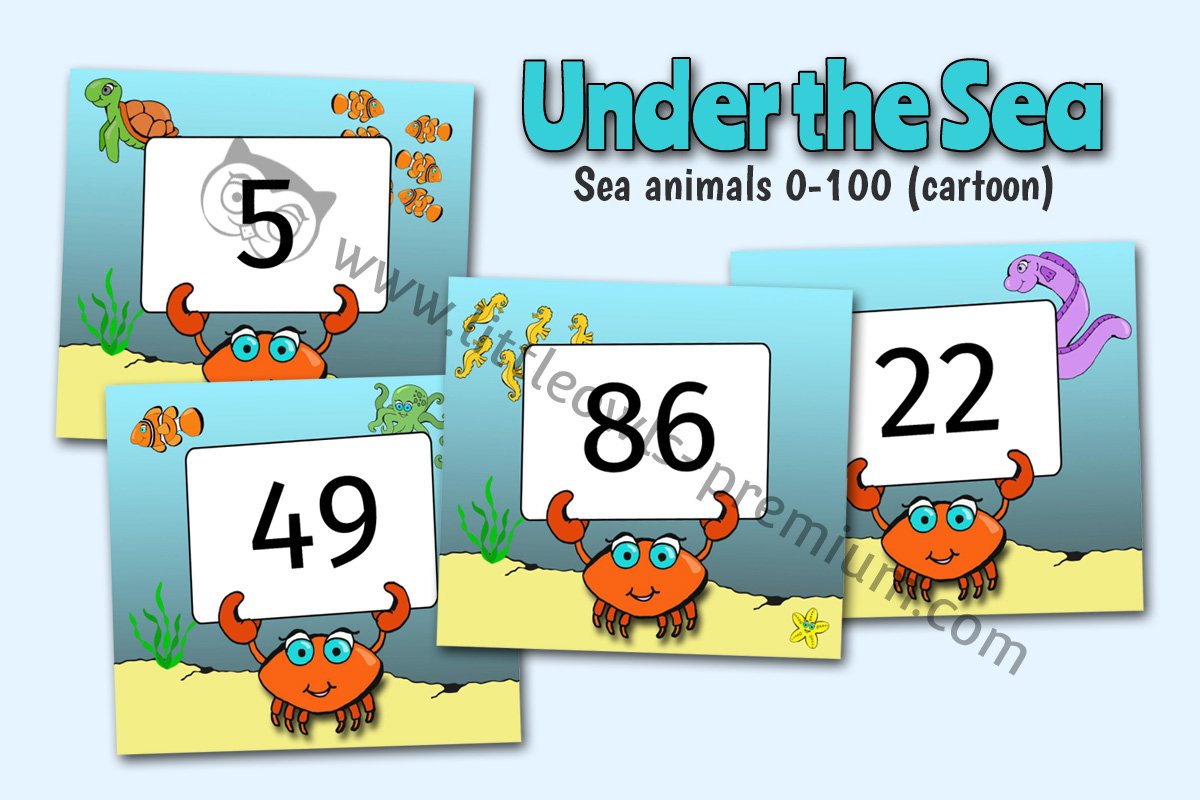
Numbers 0-100 on 5 different alternating colourful 'Under the sea' backgrounds. Print one number to a page for use as a large number line display or four to a page for a set of flashcards or smaller display.
Numbers, Flashcards, *Cartoon Style*, Posters/Displays, Number Lines, Number Recognition & Ordering, Turtle, Clownfish, Eel, Octopus, Seahorse, Crabs
Original artwork drawn by Sara Murphy and final digital resources created by Stuart Murphy. COPYRIGHT ON ALL OF THE RESOURCES HOUSED ON THIS WEBSITE IS HELD BY ‘LITTLE OWLS RESOURCES’. OUR RESOURCES (INCLUDING THE IMAGES WITHIN THEM), CANNOT BE SHARED OR SOLD COMMERCIALLY.
DOWNLOAD EDITABLE (DOCX)
DOWNLOAD NON-EDITABLE (PDF)
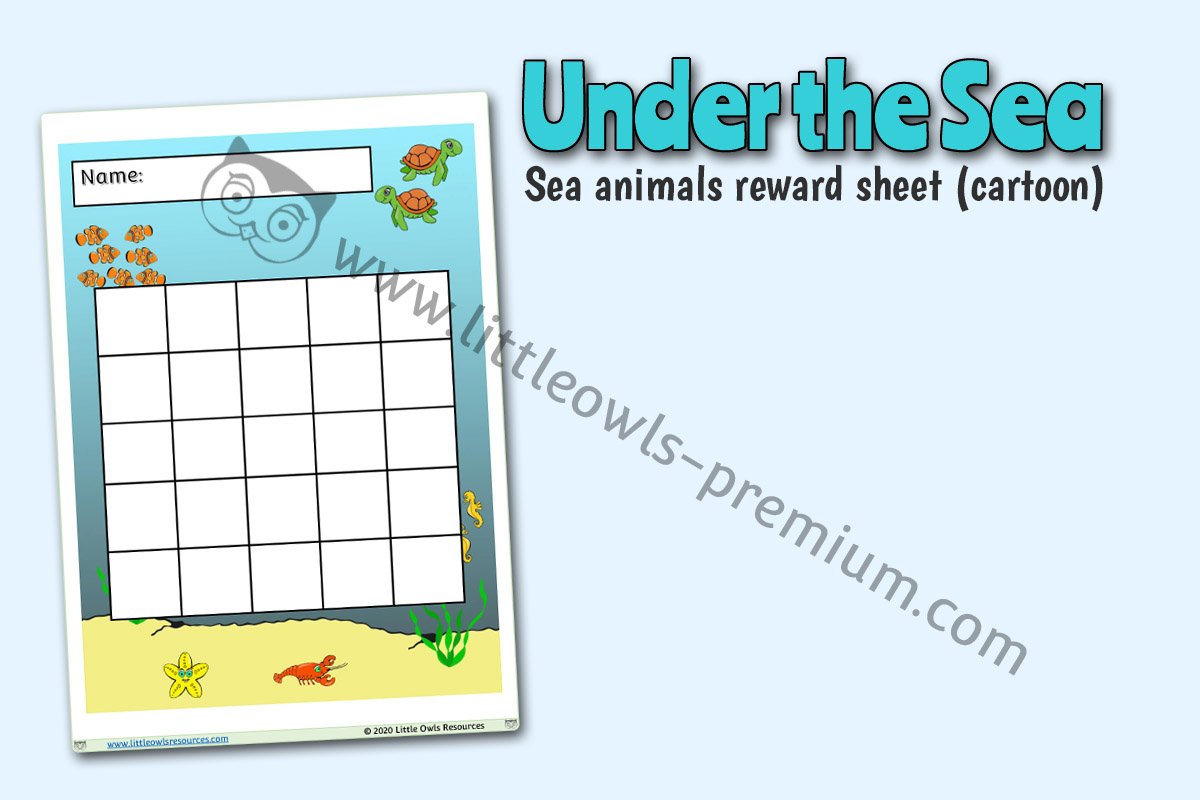
A4 sized Sea Animals/Under the Sea reward chart (cartoon style).
*Cartoon Style*, Reward Charts, Posters/Displays, Clownfish, Turtle, Lobster, Starfish
Original artwork drawn by Sara Murphy and final digital resources created by Stuart Murphy. COPYRIGHT ON ALL OF THE RESOURCES HOUSED ON THIS WEBSITE IS HELD BY ‘LITTLE OWLS RESOURCES’. OUR RESOURCES (INCLUDING THE IMAGES WITHIN THEM), CANNOT BE SHARED OR SOLD COMMERCIALLY.
DOWNLOAD EDITABLE (DOCX)
DOWNLOAD NON-EDITABLE (PDF)
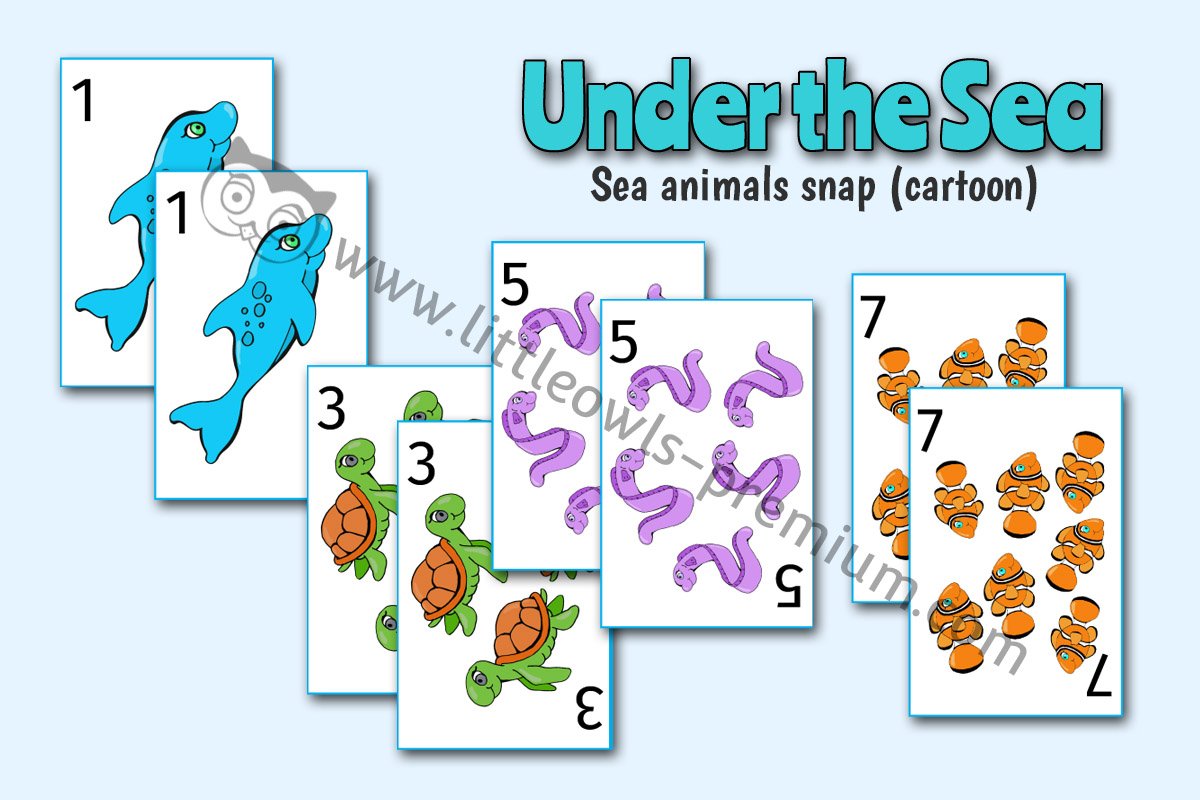
Ideal as part of an 'Under the Sea' topic. These Sea Animal themed Snap cards (1-10) can be printed, cut out and laminated to consolidate children's recognition of numbers and sea themed creatures with a fun game of snap!
Numbers, Counting, *Cartoon Style*, Games, Snap Cards, Dolphin, Octopus, Turtle, Sea Lion, Seahorse, Eel, Clownfish, Crabs, Starfish, Lobster
Original artwork drawn by Sara Murphy and final digital resources created by Stuart Murphy. COPYRIGHT ON ALL OF THE RESOURCES HOUSED ON THIS WEBSITE IS HELD BY ‘LITTLE OWLS RESOURCES’. OUR RESOURCES (INCLUDING THE IMAGES WITHIN THEM), CANNOT BE SHARED OR SOLD COMMERCIALLY.
DOWNLOAD EDITABLE (DOCX)
DOWNLOAD NON-EDITABLE (PDF)
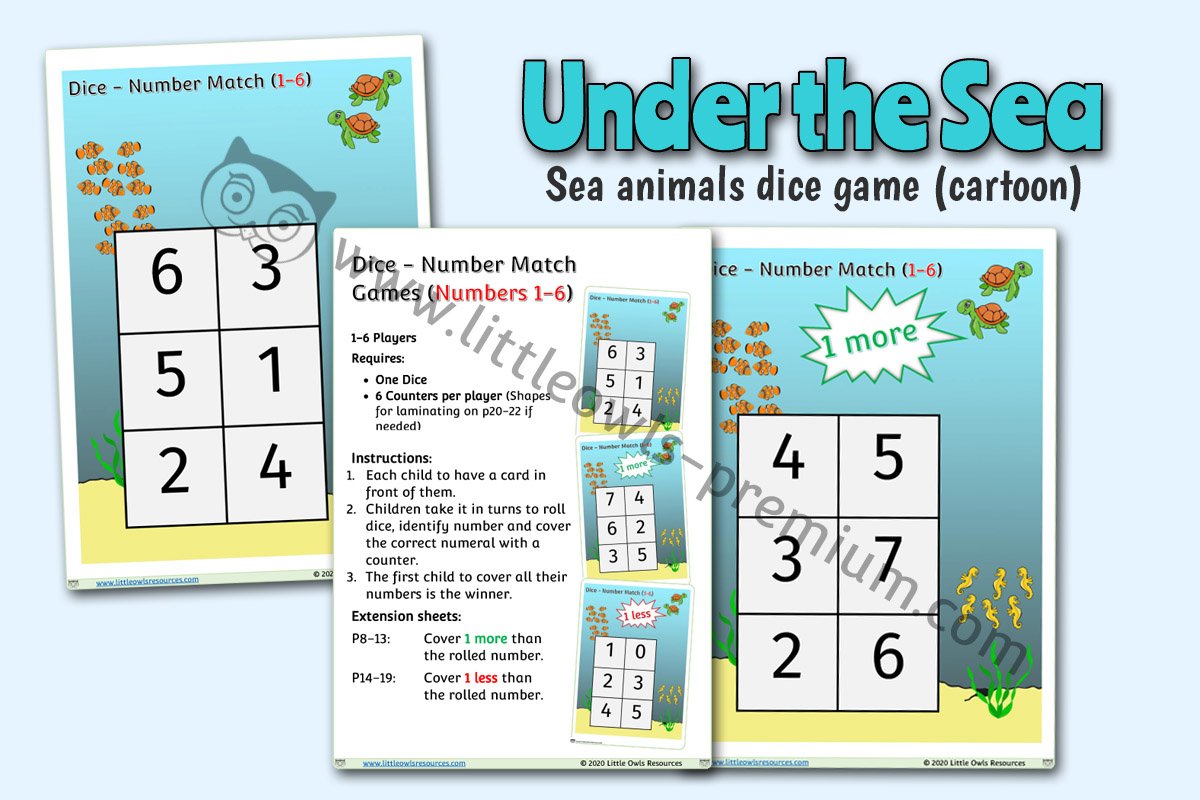
Enjoy consolidating number recognition with your children when you play this fun Sea themed dice game! Easy to play and instructions included on the front page. Extension game boards included for learning about '1 more' and '1 less'. Why not use these in conjunction with one of our number line displays to visually represent 1 more and 1 less by moving left and right along the line displayed on your wall? Or use our sea themed hundred square. Smaller table number lines also available here. In addition, if you would like to incorporate shape recognition into the game...6 sets of different 2D shapes are included for you to use as counters.
Numbers, More/Less, *Cartoon Style*, Games, Home Learning, Turtle, Seahorse, Clownfish
Original artwork drawn by Sara Murphy and final digital resources created by Stuart Murphy. COPYRIGHT ON ALL OF THE RESOURCES HOUSED ON THIS WEBSITE IS HELD BY ‘LITTLE OWLS RESOURCES’. OUR RESOURCES (INCLUDING THE IMAGES WITHIN THEM), CANNOT BE SHARED OR SOLD COMMERCIALLY.
DOWNLOAD EDITABLE (DOCX)
DOWNLOAD NON-EDITABLE (PDF)
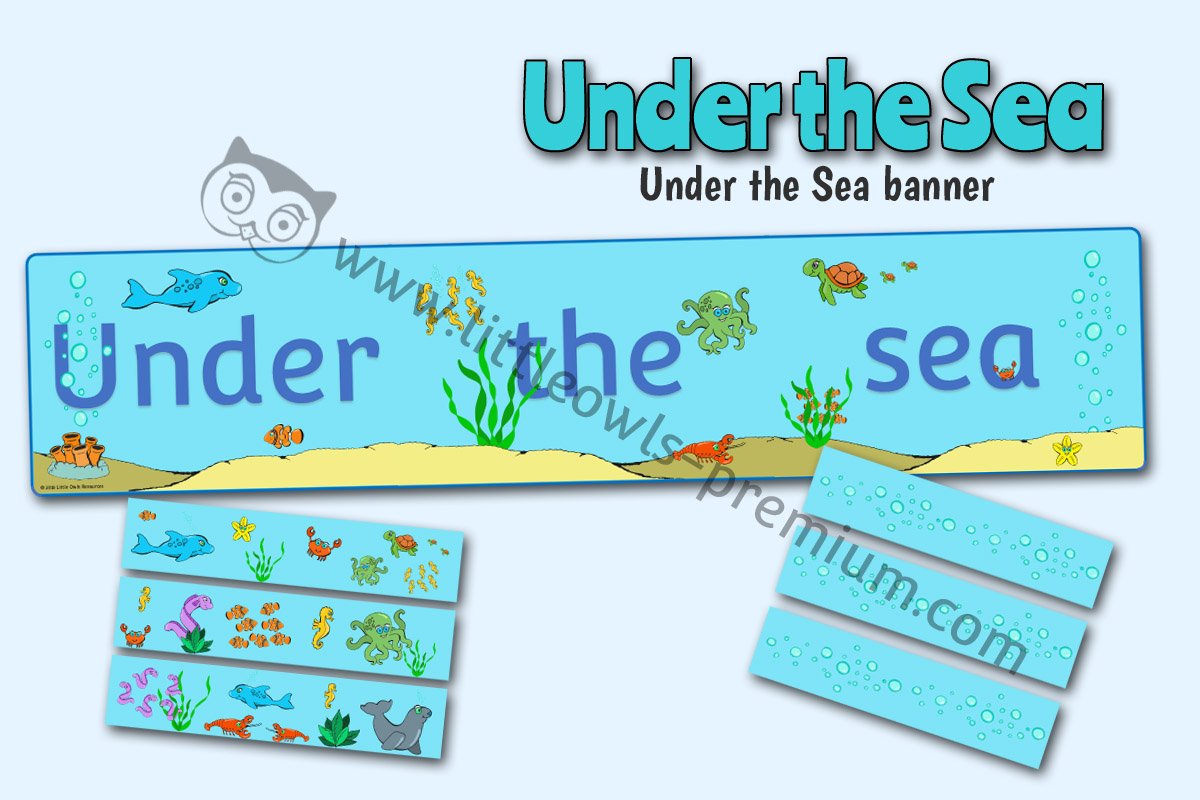
Under the sea banner and borders. Original banner size stretches 3 lengths of A4. Print 3 to 1 page for a smaller display. Print as many vertical and horizontal borders as your display board requires.
*Cartoon Style*, Posters/Displays, Dolphin, Seahorse, Turtle, Octopus, Crabs, Lobster, Clownfish, Starfish, Eel
Original artwork drawn by Sara Murphy and final digital resources created by Stuart Murphy. COPYRIGHT ON ALL OF THE RESOURCES HOUSED ON THIS WEBSITE IS HELD BY ‘LITTLE OWLS RESOURCES’. OUR RESOURCES (INCLUDING THE IMAGES WITHIN THEM), CANNOT BE SHARED OR SOLD COMMERCIALLY.
DOWNLOAD EDITABLE (DOCX)
DOWNLOAD NON-EDITABLE (PDF)
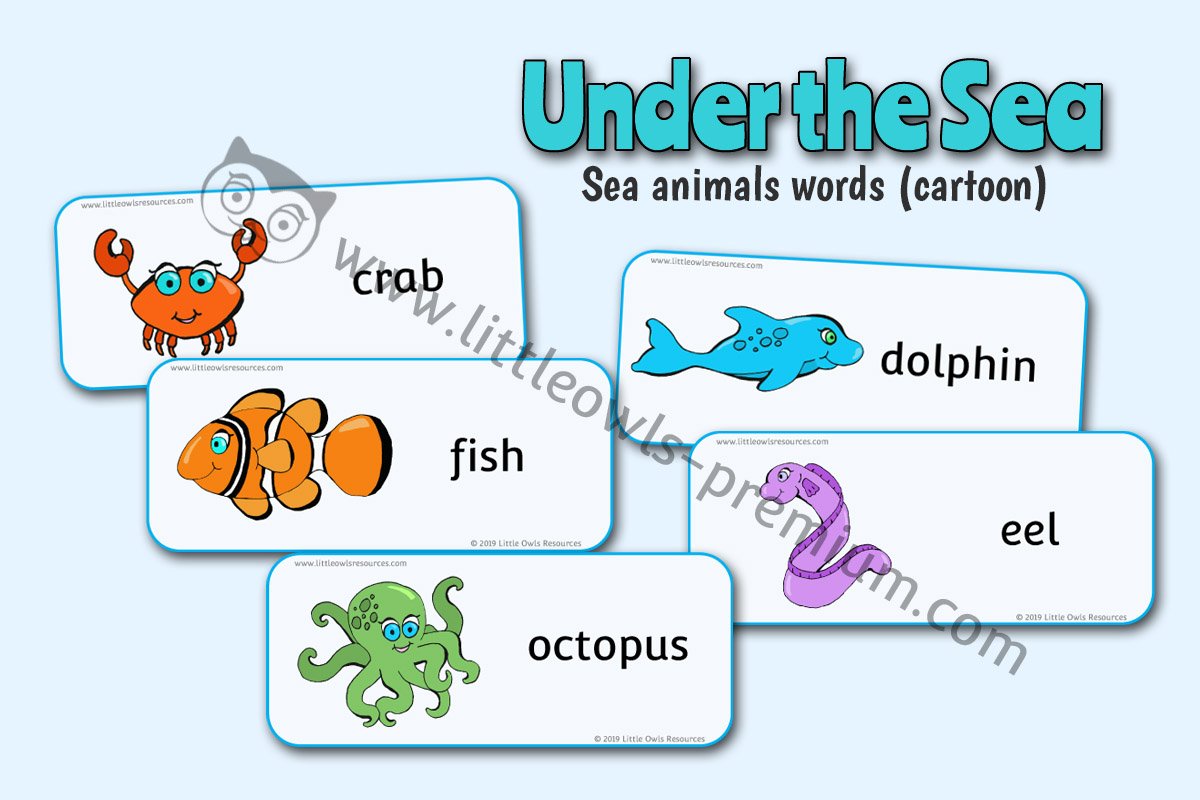
Bright and eye catching Sea Animal (cartoon style) word cards. Use as part of 'Under the Sea' themed role play areas and displays. Blank cards within the set to make your own or challenge the children to.
Reading, *Cartoon Style*, Posters/Displays, Word Cards, Crabs, Dolphin, Eel, Clownfish, Fish, Lobster, Octopus, Seahorse, Sea Lion, Starfish, Turtle
Original artwork drawn by Sara Murphy and final digital resources created by Stuart Murphy. COPYRIGHT ON ALL OF THE RESOURCES HOUSED ON THIS WEBSITE IS HELD BY ‘LITTLE OWLS RESOURCES’. OUR RESOURCES (INCLUDING THE IMAGES WITHIN THEM), CANNOT BE SHARED OR SOLD COMMERCIALLY.
DOWNLOAD EDITABLE (DOCX)
DOWNLOAD NON-EDITABLE (PDF)

These cards can be used alongside small world sea animal toys for a water play challenge.
Print the cards that match the toys you have in your setting and then write a number in the white box if desired.
Place the sea animal toys in the water and then the children can use the cards as a finding challenge.
Add some bubbles to the water to increase the searching aspect of the task.
Original artwork drawn by Sara Murphy and final digital resources created by Stuart Murphy. COPYRIGHT ON ALL OF THE RESOURCES HOUSED ON THIS WEBSITE IS HELD BY ‘LITTLE OWLS RESOURCES’. OUR RESOURCES (INCLUDING THE IMAGES WITHIN THEM), CANNOT BE SHARED OR SOLD COMMERCIALLY.
DOWNLOAD EDITABLE (DOCX)
DOWNLOAD NON-EDITABLE (PDF)
DOWNLOAD NON-EDITABLE (Zipped JPEGs)
‘Tortoise’ printable resources and activity ideas in our ‘Pets’ topic:
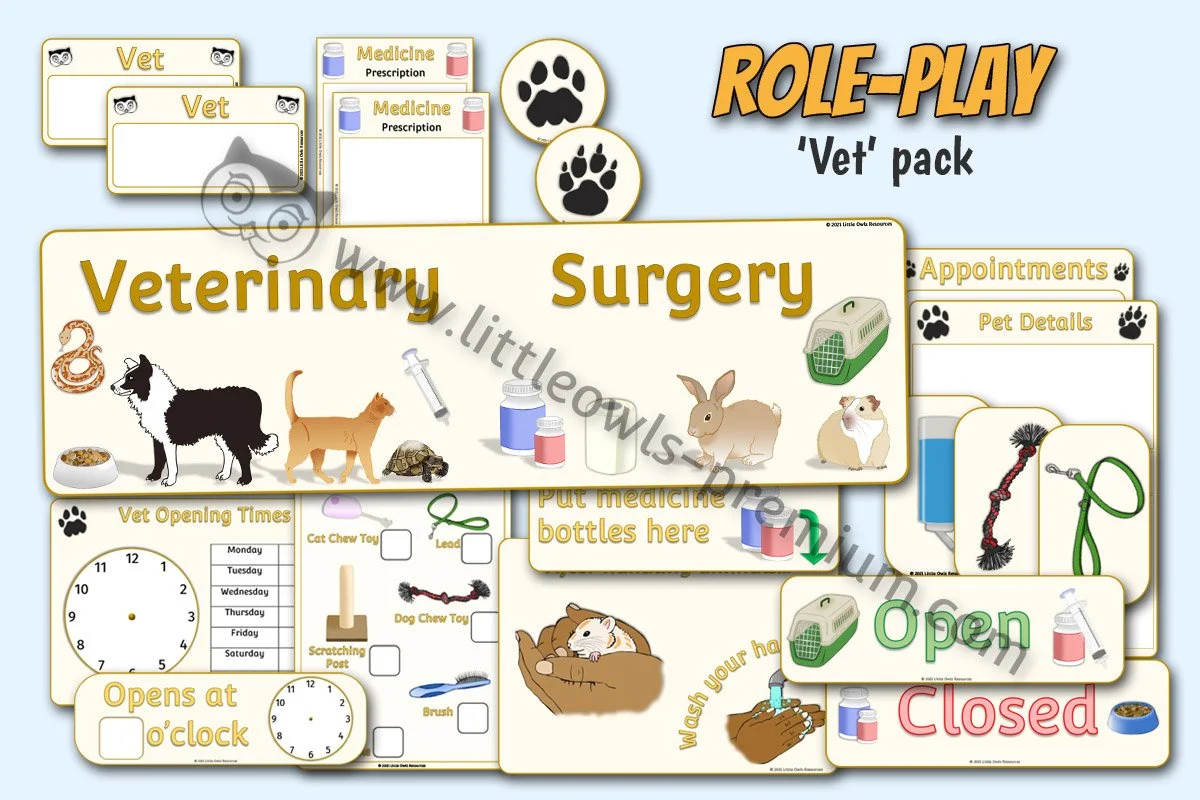
Everything you need to set up a veterinary surgery role-play area!
Pack includes:
(Please note that words, etc. can be altered within the editable docx file version.)
‘Veterinary Surgery’ banner
Paw print decorative signs
Vet identity cards
Posters ‘Thank-you for waiting’, ‘After handling animals…wash you hands’
Social distancing signs & floormats
‘Please wait’ footprint floormats
Animal word cards
‘Put medicine bottles here’ & ‘Put bandages here’ activity signs
‘Open’ & ‘Closed’ signs
‘Vet Opening Times’ Poster - Space to draw hands on clock and write times
‘Opens at…o’ clock’ and ‘Closes at…o’ clock’ signs - spaces for emergent writing
Templates for emergent writing (ideally laminated) - ‘Medicine Prescription’, ‘Appointments’ & ‘Pet Details’ forms
‘For Sale’ Menu sign - Space to write prices by items
Items for sale prop cards
Animal fact cards
Posters/Displays, Reading, Print carries meaning, Observation, Role-Play, Measures-Money, Measures-Time, Fact Cards, Mark Making/Drawing/Writing, Number Formation, Fine Motor, Turn Taking, Pencil Control, Laminate to use with w/b pens, Cards/Flashcards, Walk Your Dog Month, Dog, Cat, Rabbit, Chicken, Hamster, Tortoise, Goldfish, Guinea Pig, Snake, Canary, Birds, Mammals, Reptiles, Fish
Original artwork drawn by Sara Murphy and final digital resources created by Stuart Murphy. COPYRIGHT ON ALL OF THE RESOURCES HOUSED ON THIS WEBSITE IS HELD BY ‘LITTLE OWLS RESOURCES’. OUR RESOURCES (INCLUDING THE IMAGES WITHIN THEM), CANNOT BE SHARED OR SOLD COMMERCIALLY.
DOWNLOAD EDITABLE (DOCX)
DOWNLOAD NON-EDITABLE (PDF)
DOWNLOAD NON-EDITABLE (Zipped JPEGs)
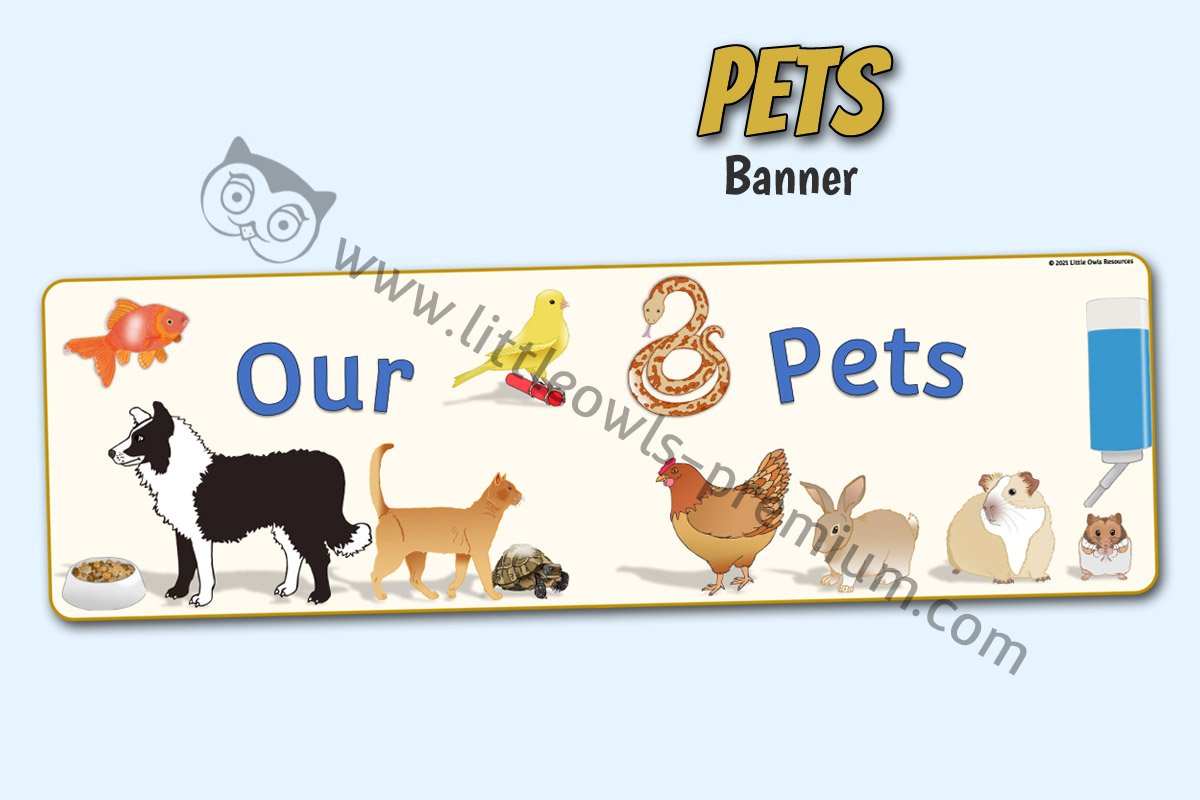
‘Our Pets’ Banner.
Posters/Displays, Reading, Print carries meaning, Observation, Dog, Cat, Rabbit, Chicken, Hamster, Tortoise, Goldfish, Guinea Pig, Snake, Canary, Birds, Mammals, Reptiles, Fish
Original artwork drawn by Sara Murphy and final digital resources created by Stuart Murphy. COPYRIGHT ON ALL OF THE RESOURCES HOUSED ON THIS WEBSITE IS HELD BY ‘LITTLE OWLS RESOURCES’. OUR RESOURCES (INCLUDING THE IMAGES WITHIN THEM), CANNOT BE SHARED OR SOLD COMMERCIALLY.
DOWNLOAD EDITABLE (DOCX)
DOWNLOAD NON-EDITABLE (PDF)
DOWNLOAD NON-EDITABLE (Zipped JPEGs)
<<-BACK TO ‘PETS’ TOPIC MENU PAGE

Pets word mats (one all lower case letters and a second with capital letters at the start of each animal name). Pets include cat, dog, hamster, guinea pig, goldfish, tortoise, rabbit, snake, canary and chicken.
Posters/Displays, Reading, Print carries meaning, Observation, Dog, Cat, Rabbit, Chicken, Hamster, Tortoise, Goldfish, Guinea Pig, Snake, Canary, Birds, Mammals, Reptiles, Fish
Original artwork drawn by Sara Murphy and final digital resources created by Stuart Murphy. COPYRIGHT ON ALL OF THE RESOURCES HOUSED ON THIS WEBSITE IS HELD BY ‘LITTLE OWLS RESOURCES’. OUR RESOURCES (INCLUDING THE IMAGES WITHIN THEM), CANNOT BE SHARED OR SOLD COMMERCIALLY.
DOWNLOAD EDITABLE (DOCX)
DOWNLOAD NON-EDITABLE (PDF)
DOWNLOAD NON-EDITABLE (Zipped JPEGs)
<<-BACK TO ‘PETS’ TOPIC MENU PAGE
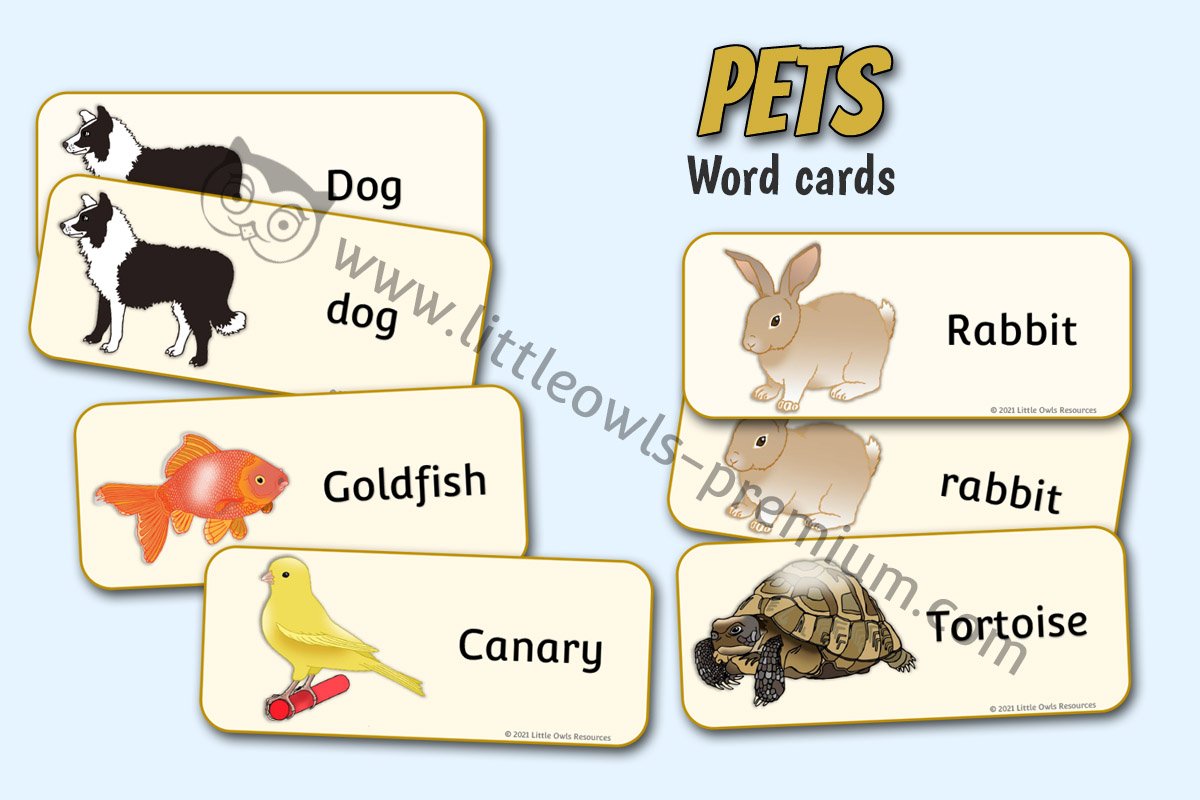
Pet word cards. Versions with all lower case letters and also with capital letters at the start of each animal name are included in the pack. Blank cards also included in order for you and your children to create your own cards. Pets include cat, dog, hamster, guinea pig, goldfish, tortoise, rabbit, snake, canary and chicken.
Posters/Displays, Reading, Print carries meaning, Observation, Cards/Flashcards, Dog, Cat, Canary, Rabbit, Chicken, Hamster, Tortoise, Goldfish, Fish, Guinea Pig, Mammals, Reptiles, Snake, Birds
Original artwork drawn by Sara Murphy and final digital resources created by Stuart Murphy. COPYRIGHT ON ALL OF THE RESOURCES HOUSED ON THIS WEBSITE IS HELD BY ‘LITTLE OWLS RESOURCES’. OUR RESOURCES (INCLUDING THE IMAGES WITHIN THEM), CANNOT BE SHARED OR SOLD COMMERCIALLY.
DOWNLOAD EDITABLE (DOCX)
DOWNLOAD NON-EDITABLE (PDF)
DOWNLOAD NON-EDITABLE (Zipped JPEGs)
<<-BACK TO ‘PETS’ TOPIC MENU PAGE
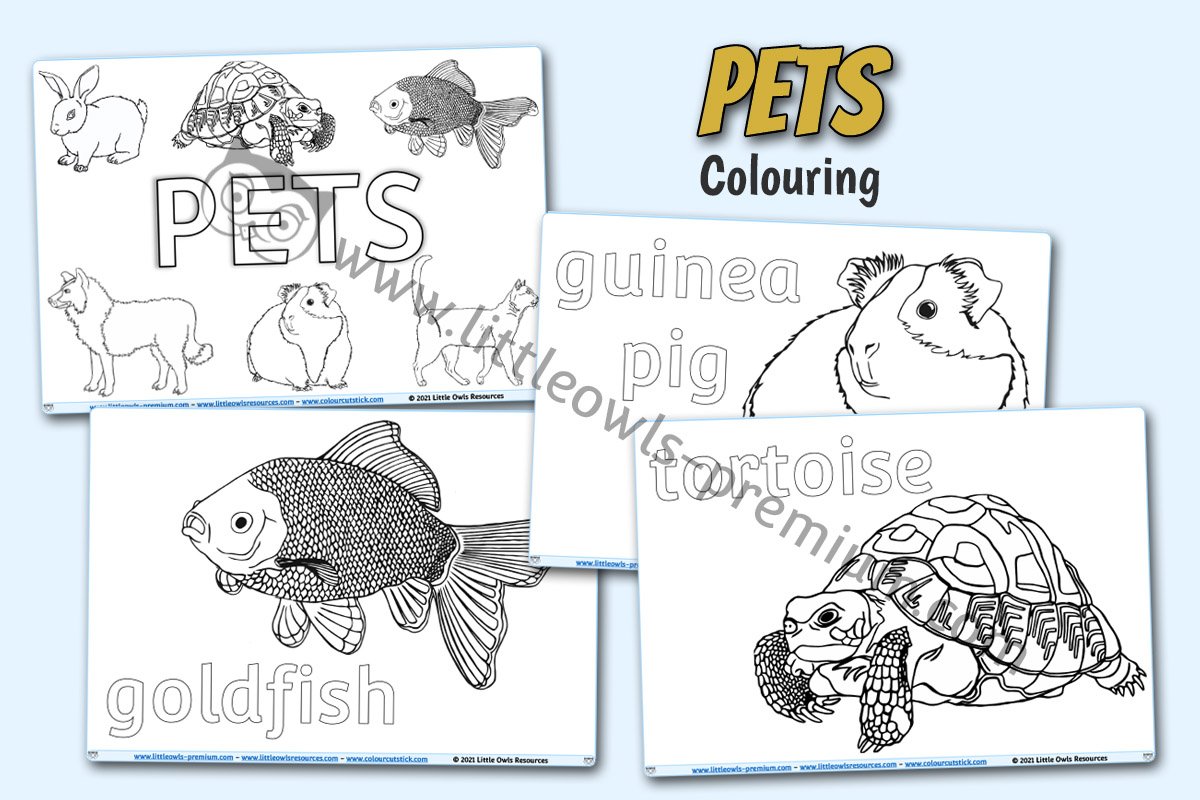
Pets include cat, dog, hamster, guinea pig, goldfish, tortoise, rabbit, snake, canary and chicken.
Reading, Observation, Colouring, Fine Motor, Mark Making/Drawing/Writing, Pencil Control, Activities, Rabbit, Tortoise, Goldfish, Fish, Reptiles, Mammals, Dog, Guinea Pig, Cat, Snake, Canary, Birds, Hamster, Chicken
Original artwork drawn by Sara Murphy and final digital resources created by Stuart Murphy. COPYRIGHT ON ALL OF THE RESOURCES HOUSED ON THIS WEBSITE IS HELD BY ‘LITTLE OWLS RESOURCES’. OUR RESOURCES (INCLUDING THE IMAGES WITHIN THEM), CANNOT BE SHARED OR SOLD COMMERCIALLY.
DOWNLOAD EDITABLE (DOCX)
DOWNLOAD NON-EDITABLE (PDF)
DOWNLOAD NON-EDITABLE (Zipped JPEGs)
<<-BACK TO ‘PETS’ TOPIC MENU PAGE
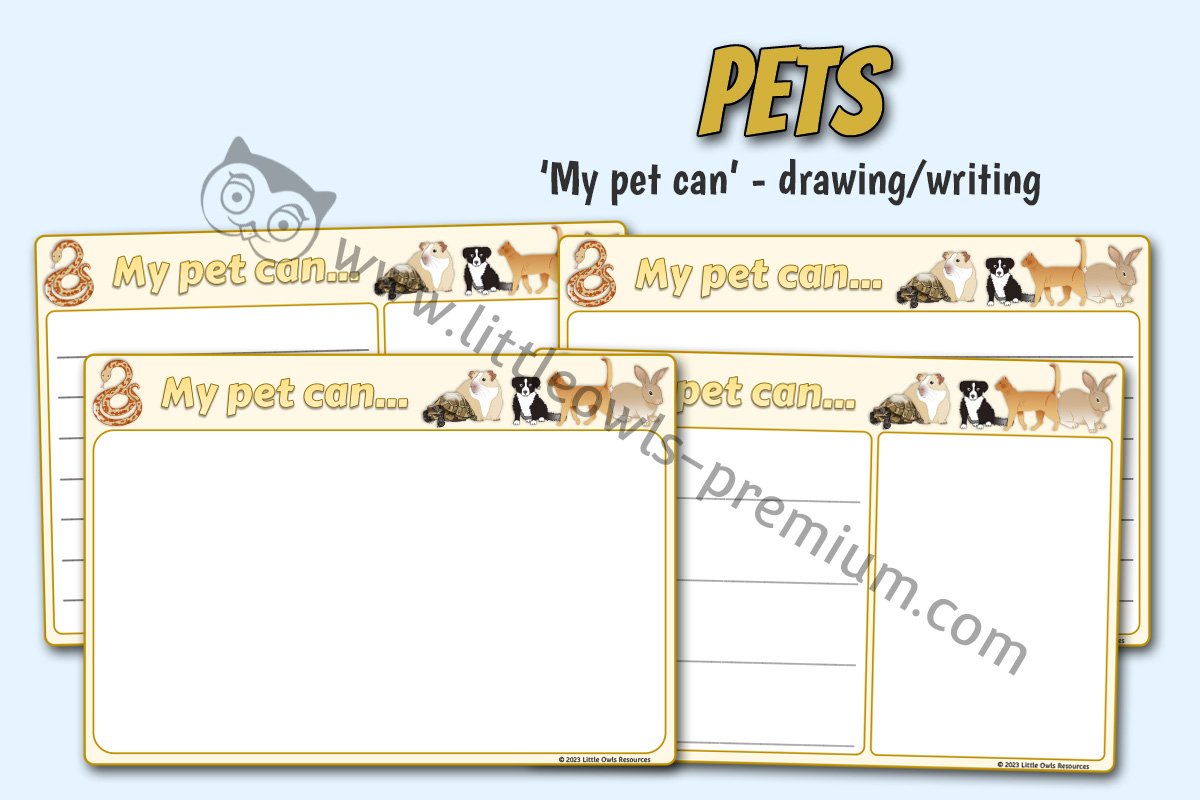
Pack of sheets of varying layouts which are designed to provoke discussion and inspire mark making/drawing. Children may like to write/draw about a real pet they have or a fictitious, even fantastical one! What can your pet do?
Fine Motor, Pencil Control, Laminate to use with w/b pens, Mark Making/Drawing/Writing, Take Home, Activities, Drawing, Snake, Tortoise, Guinea Pig, Cat, Dog, Rabbit
Original artwork drawn by Sara Murphy and final digital resources created by Stuart Murphy. COPYRIGHT ON ALL OF THE RESOURCES HOUSED ON THIS WEBSITE IS HELD BY ‘LITTLE OWLS RESOURCES’. OUR RESOURCES (INCLUDING THE IMAGES WITHIN THEM), CANNOT BE SHARED OR SOLD COMMERCIALLY.
DOWNLOAD EDITABLE (DOCX)
DOWNLOAD NON-EDITABLE (PDF)
DOWNLOAD NON-EDITABLE (Zipped JPEGs)
<<-BACK TO ‘PETS’ TOPIC MENU PAGE
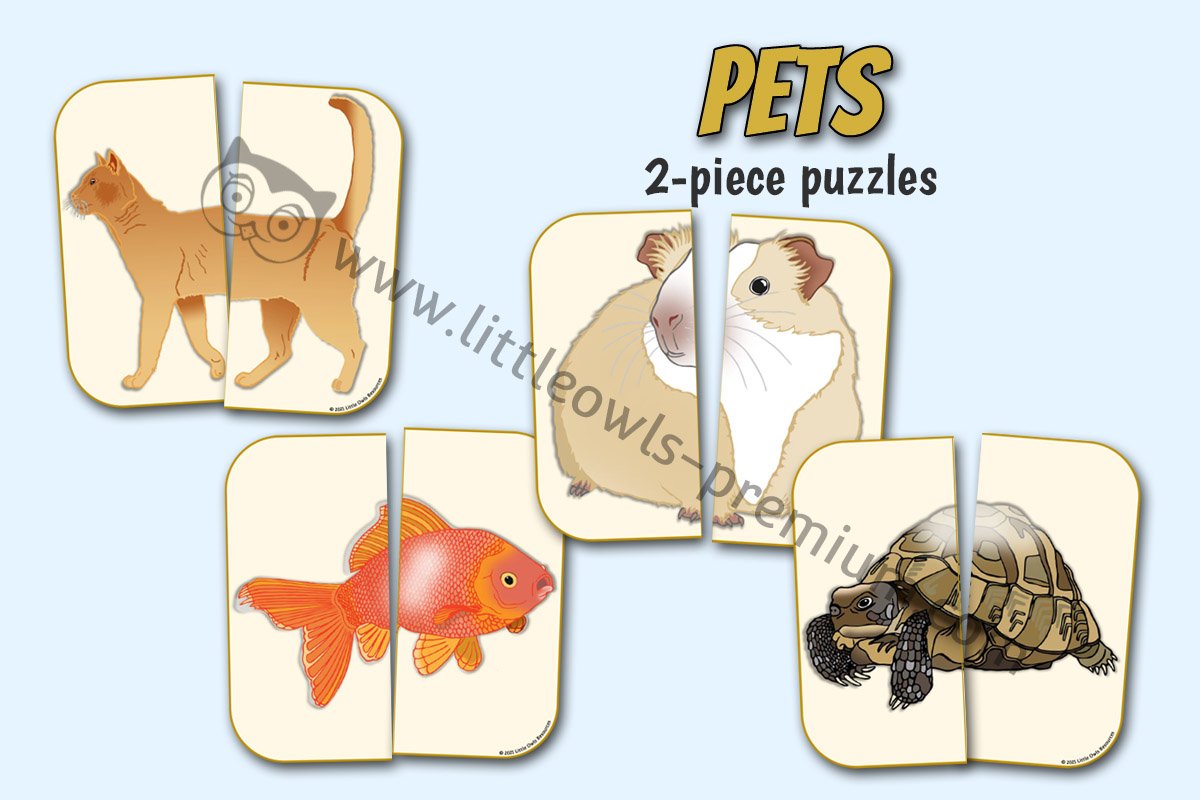
Set of 10 Pet puzzles each with 2 parts. Ideal for our youngest children in order for them to begin to spot similarities and differences, recognise colours and patterns and solve problems involving observational skills. Also perfect for Pet vocab learning! (Includes cat, dog, hamster, guinea pig, goldfish, tortoise, rabbit, snake, canary and chicken.)
Observation, Problem Solving, Puzzles, Games, Matching/Sorting Activities, Fine Motor, Activities, Cat, Dog, Hamster, Guinea Pig, Goldfish, Tortoise, Rabbit, Snake, Canary, Chicken, Birds, Mammals, Reptiles, Fish
Original artwork drawn by Sara Murphy and final digital resources created by Stuart Murphy. COPYRIGHT ON ALL OF THE RESOURCES HOUSED ON THIS WEBSITE IS HELD BY ‘LITTLE OWLS RESOURCES’. OUR RESOURCES (INCLUDING THE IMAGES WITHIN THEM), CANNOT BE SHARED OR SOLD COMMERCIALLY.
DOWNLOAD EDITABLE (DOCX)
DOWNLOAD NON-EDITABLE (PDF)
DOWNLOAD NON-EDITABLE (Zipped JPEGs)
<<-BACK TO ‘PETS’ TOPIC MENU PAGE
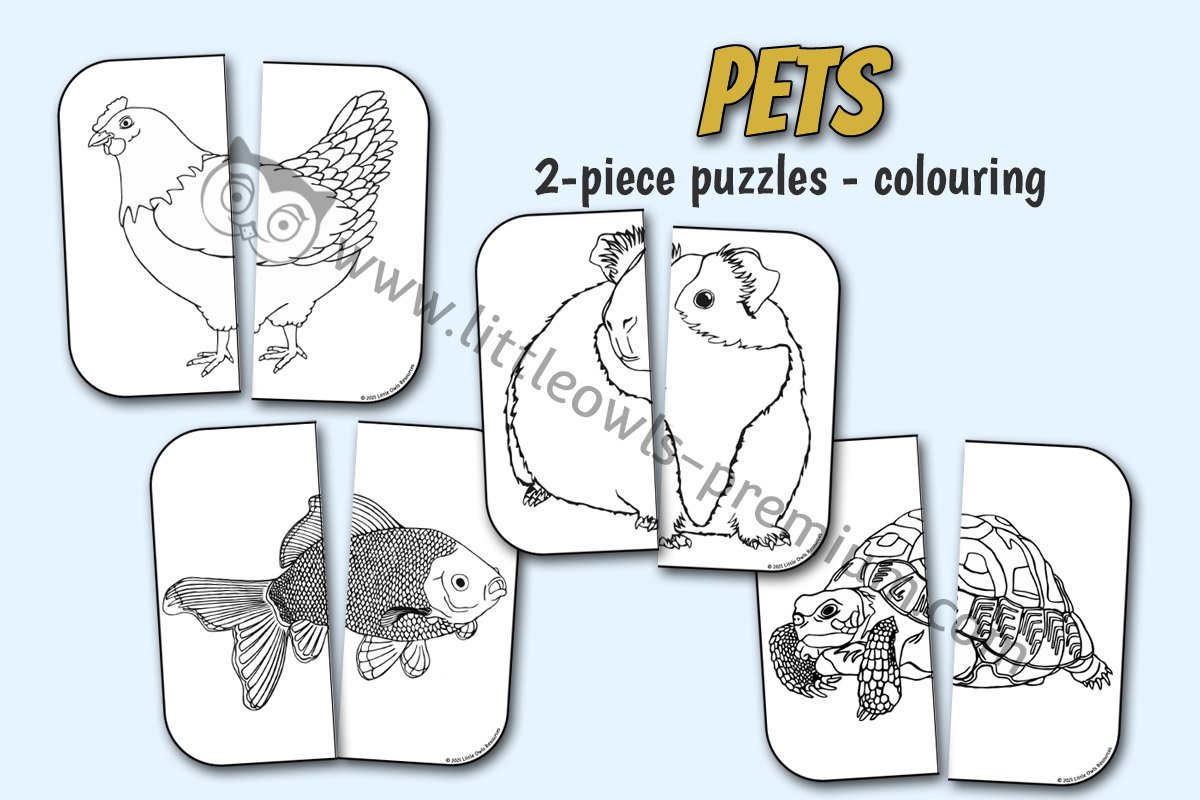
Set of 10 Pet puzzles each with 2 parts (colouring versions). Ideal for our youngest children in order for them to begin to spot similarities and differences, recognise patterns and solve problems involving observational skills. Also perfect for Pet vocab learning! (Includes cat, dog, hamster, guinea pig, goldfish, tortoise, rabbit, snake, canary and chicken.)
Observation, Problem Solving, Puzzles, Games, Matching/Sorting Activities, Fine Motor, Mark Making/Drawing/Writing, Colouring, Pencil Control, Activities, Cat, Dog, Hamster, Guinea Pig, Goldfish, Tortoise, Rabbit, Snake, Canary, Chicken, Fish, Birds, Reptiles, Mammals
Original artwork drawn by Sara Murphy and final digital resources created by Stuart Murphy. COPYRIGHT ON ALL OF THE RESOURCES HOUSED ON THIS WEBSITE IS HELD BY ‘LITTLE OWLS RESOURCES’. OUR RESOURCES (INCLUDING THE IMAGES WITHIN THEM), CANNOT BE SHARED OR SOLD COMMERCIALLY.
DOWNLOAD EDITABLE (DOCX)
DOWNLOAD NON-EDITABLE (PDF)
DOWNLOAD NON-EDITABLE (Zipped JPEGs)
<<-BACK TO ‘PETS’ TOPIC MENU PAGE
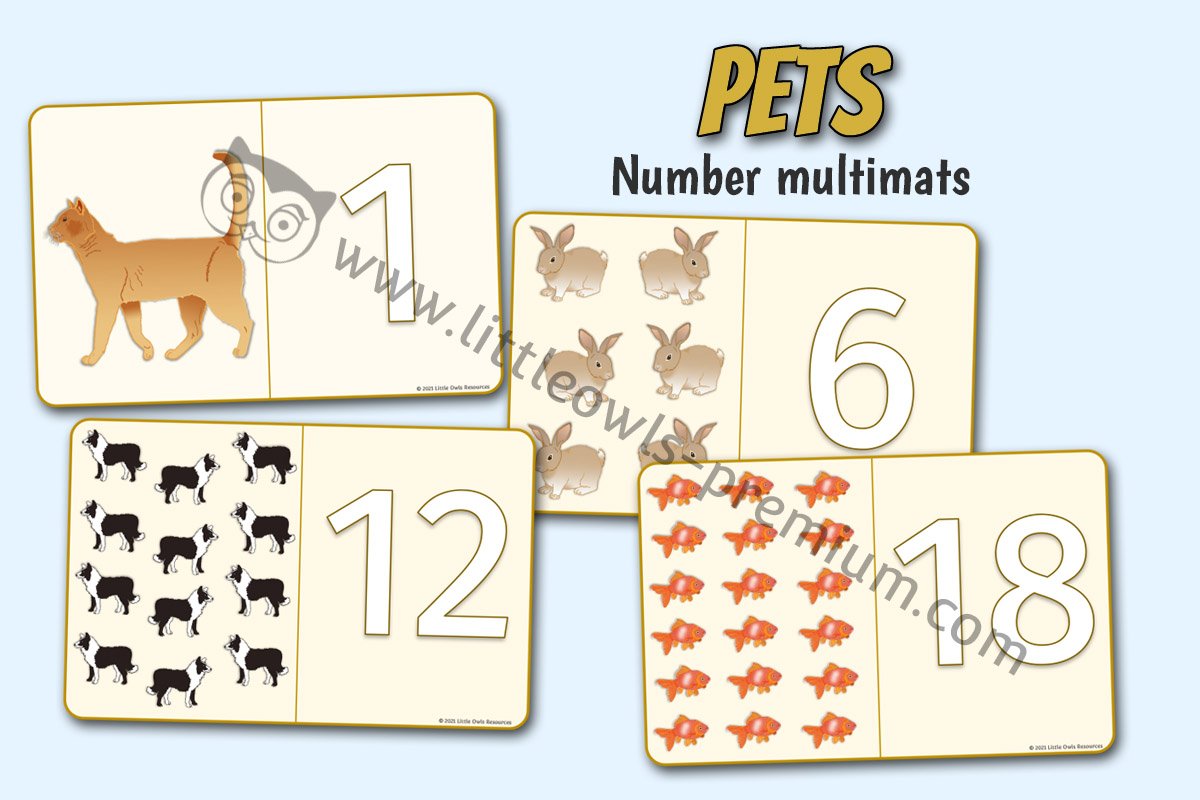
These A4 size mats can be laminated for use as playdough mats, or for number writing practice with a whiteboard pen. Alternatively, they can be part of a loose parts activity. Pets include cat, dog, hamster, guinea pig, goldfish, tortoise, rabbit, snake, canary and chicken.
Posters/Displays, Print carries meaning, Observation, Playdough/Loose Parts, Counting, Number Formation, Number Recognition and Ordering, Cat, Dog, Hamster, Guinea Pig, Goldfish, Tortoise, Rabbit, Snake, Canary, Chicken, Reptiles, Mammals, Fish, Birds
Original artwork drawn by Sara Murphy and final digital resources created by Stuart Murphy. COPYRIGHT ON ALL OF THE RESOURCES HOUSED ON THIS WEBSITE IS HELD BY ‘LITTLE OWLS RESOURCES’. OUR RESOURCES (INCLUDING THE IMAGES WITHIN THEM), CANNOT BE SHARED OR SOLD COMMERCIALLY.
DOWNLOAD EDITABLE (DOCX)
DOWNLOAD NON-EDITABLE (PDF)
DOWNLOAD NON-EDITABLE (Zipped JPEGs)
<<-BACK TO ‘PETS’ TOPIC MENU PAGE
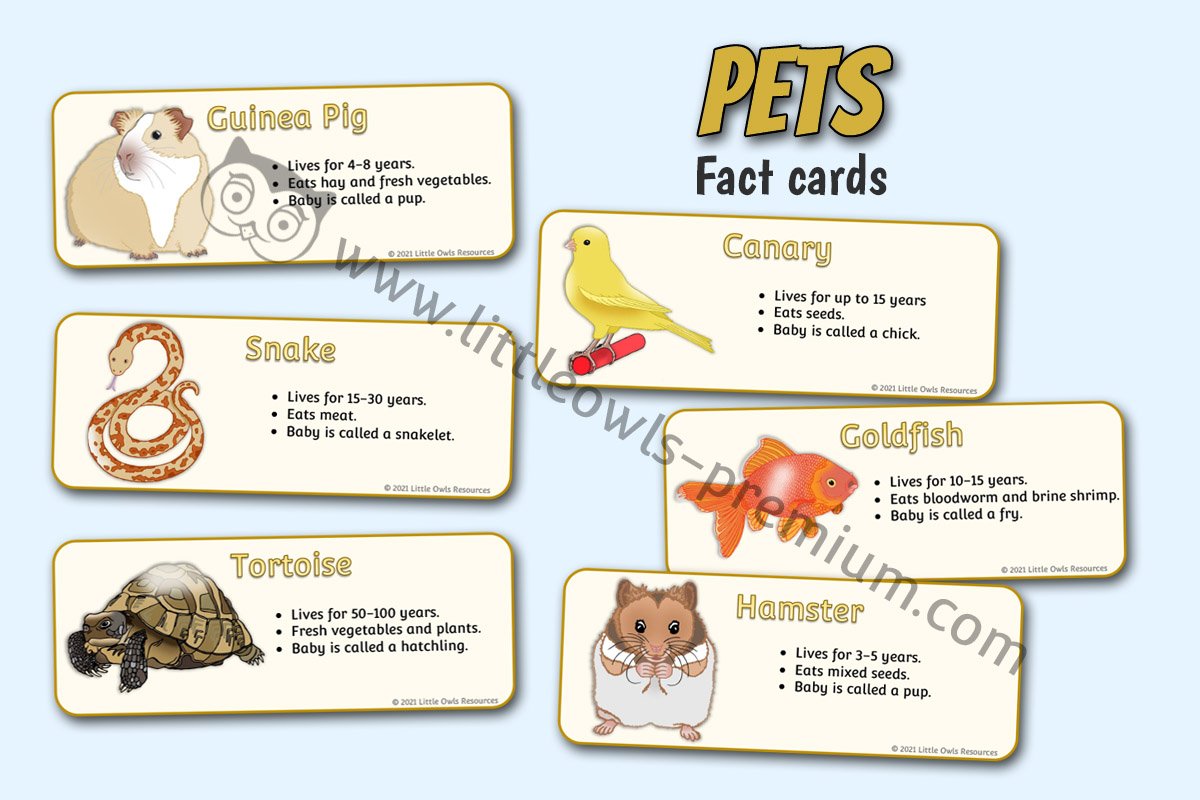
Pack of 10 Pet Fact Cards. Pets include cat, dog, hamster, guinea pig, goldfish, tortoise, rabbit, snake, canary and chicken.
Matching/Sorting Activities, Listening Skills, Fact Cards, Cards/Flashcards, Posters/Displays, Reading, Print carries meaning, Observation, Cat, Dog, Hamster, Guinea Pig, Goldfish, Tortoise, Rabbit, Snake, Canary, Chicken, Reptiles, Mammals, Birds, Fish
Original artwork drawn by Sara Murphy and final digital resources created by Stuart Murphy. COPYRIGHT ON ALL OF THE RESOURCES HOUSED ON THIS WEBSITE IS HELD BY ‘LITTLE OWLS RESOURCES’. OUR RESOURCES (INCLUDING THE IMAGES WITHIN THEM), CANNOT BE SHARED OR SOLD COMMERCIALLY.
DOWNLOAD EDITABLE (DOCX)
DOWNLOAD NON-EDITABLE (PDF)
DOWNLOAD NON-EDITABLE (Zipped JPEGs)
<<-BACK TO ‘PETS’ TOPIC MENU PAGE
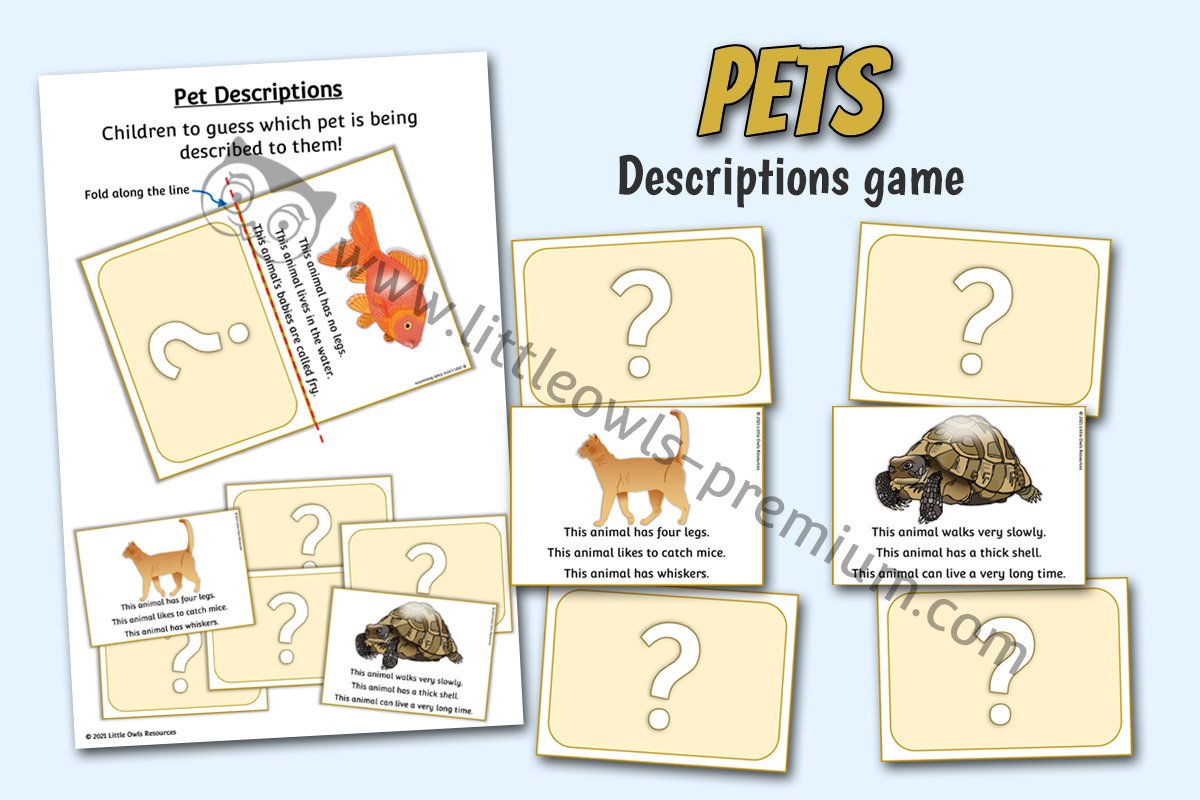
Children to guess which pet is being described to them! Adult to select a card (10 included) and read the three sentences written under the image. Children to listen very carefully to the clues and guess which animal they think it could be. Perfect game for developing listening skills, problem solving and learning about their favourite pets! (Includes cat, dog, hamster, guinea pig, goldfish, tortoise, rabbit, snake, canary and chicken.)
Problem Solving, Games, Matching/Sorting Activities, Listening Skills, Activities, Group Activities, Cat, Dog, Hamster, Guinea Pig, Goldfish, Tortoise, Rabbit, Snake, Canary, Chicken, Mammals, Reptiles, Birds, Fish
Original artwork drawn by Sara Murphy and final digital resources created by Stuart Murphy. COPYRIGHT ON ALL OF THE RESOURCES HOUSED ON THIS WEBSITE IS HELD BY ‘LITTLE OWLS RESOURCES’. OUR RESOURCES (INCLUDING THE IMAGES WITHIN THEM), CANNOT BE SHARED OR SOLD COMMERCIALLY.
DOWNLOAD EDITABLE (DOCX)
DOWNLOAD NON-EDITABLE (PDF)
DOWNLOAD NON-EDITABLE (Zipped JPEGs)
<<-BACK TO ‘PETS’ TOPIC MENU PAGE
Additional Pages you may like to explore which cover relevant &/or Connected themes


CLICK HERE to visit the ‘BEACH SCHOOL’ PAGE.
Printable ‘Beach’ teaching and learning resources include: scavenger hunts/checklists, mindfulness activity cards, cockle shell age poster, senses booklets and prompts, colouring pages, drawing/writing/mark making sheets, shell multimats, playdough/ loose part mats, art and craft activities, templates, pattern cards, natural loose part art prompts/posters, shapes, pre-writing, rockpool fact cards, symmetry, activity/movement challenges, display lettering, sand play and more!




CLICK HERE to visit ‘LIFE CYCLES’ PAGE.
Printable ‘Life Cycle’ teaching and learning resources include: cyclic puzzles, frog, chicken, caterpillar/butterfly, ant/bean life cycle display packs, posters, cut and stick activities, banners, cards, playdough mats and more!


CLICK HERE to visit ‘ON THE FARM’ PAGE.
Printable ‘Farm’ related teaching and learning resources include: word mats/cards, banners, farm animals and the young/babies counting, puzzles, I spy activities, follow the lines pencil control, animal body part posters, multimats, playdough mats, loose part activities, art and craft, fine motor control, phase 1, 2 and 3 letters and sounds, animal colouring, number slice puzzles, pictogram, size ordering, matching and memory games, fact cards, picture snap, farm trip pack and more!


More Early Years Event Pages for May

Sunday 23rd May 2027: 🐢🌊 For early years settings, nurseries, preschools, childminders, and Year 1 and Year 2 classrooms, World Turtle Day provides a wonderful and engaging theme for exploring animals (especially reptiles, sea creatures, and pets), habitats (ocean, desert, wetlands, gardens), conservation, life cycles,…

Saturday 22nd May 2027: 🌳🐠 International Day for Biological Diversity (IDB) is a special day celebrated every year on May 22nd. It was started by the United Nations to help everyone understand something very important called 'biological diversity', or 'biodiversity' for short. Biodiversity means…

Wednesday 19th May 2027 (TBC): 🔢➕ For early years settings, nurseries, preschools, childminders, and Year 1 and Year 2 classrooms, National Numeracy Day provides a fantastic and practical theme for exploring counting, number recognition, shapes, patterns, problem-solving, and early mathematical concepts. It's about building a positive attitude…

Thursday 20th May 2027: 🐝🍯 For early years settings, nurseries, preschools, childminders, and Year 1 and Year 2 classrooms, World Bee Day provides a wonderful and engaging theme for exploring minibeasts, plants, life cycles, food sources, the environment, and understanding the world (the world around us). It's about introducing…

Tuesday 18th May 2027: 🏛️🔎 For early years settings, nurseries, preschools, childminders, and Year 1 and Year 2 classrooms, International Museum Day provides a fantastic and engaging theme for exploring history, science, art, culture, discovery, role-play, and understanding the world (the world around us). It's about sparking children's curiosity,…

Sunday 9th May 2027 (TBC): 👧👦 For early years settings, nurseries, preschools, childminders, and Year 1 and Year 2 classrooms, National Children’s Day provides an incredibly broad and foundational opportunity to explore all aspects of a child's health, safety, well-being, emotions, physical development, rights, and…

Friday 21st May 2027: 🐾🌱 Endangered Species Day is a special day celebrated every year on the third Friday in May. It was started by a group called the National Endangered Species Act Education Centre in the United States and was recognised…

Saturday 15th May 2027: 👨👩👧👦💖 International Day of Families is a special day celebrated every year on May 15th. It was started by the United Nations in 1993 because they wanted everyone to remember how important…

Monday 10th - Sunday 16th May 2027 (TBC): 😊🧠 Mental Health Awareness Week happens every year in May. It's hosted by the Mental Health Foundation, a charity in the UK. This week is all about helping everyone understand that our minds…

Wednesday 12th May 2027: 👩⚕️🧑⚕️ For early years settings, nurseries, preschools, childminders, and Year 1 and Year 2 classrooms, International Nurses Day provides a fantastic and practical theme for exploring people who help us, health and well-being, empathy, role-play, and personal, social…

Wednesday 5th May 2027: ✨🧼 World Hand Hygiene Day is a special day celebrated every year on May 5th. It was started by the World Health Organization (WHO) with a very important message: 'SAVE LIVES:…

Sunday 2nd May 2027: 😄😂 The main idea of this day is to show how laughter can help bring peace and friendship to people all over the world. Dr. Kataria believes that laughter is like a super-power that can help people…

🚶♀️🚶♂️For early years settings, nurseries, preschools, childminders, and Year 1 and Year 2 classrooms, National Walking Month (1st - 31st May 2027) and Walk to School Week (Monday 17th - Friday 21st May 2027 - TBC) provide a fantastic and practical theme for exploring physical development, health and well-being, the environment, road safety…

Thursday 20th May 2027 (TBC) & Thursday 5th November 2026: Let's learn outside! 🌳☀️ Outdoor Classroom Day is a global campaign to inspire and celebrate outdoor play and learning, with two designated days each year: one in May and one in November…
Explore special dates (including awareness dates, festivals, celebrations & events) relevant to your EYFS & KS1 children
Browse our ‘Special Dates Calendar’ page using the link below. You’ll find calendars for every month of the year to aid your planning!
Click here to visit our ‘Special Dates Calendar’ page for an entire year of key EYFS & KS1 events, festivals & celebrations.
Search ‘Little Owls Resources’ Using the following Menu Buttons…
Click here to visit our ‘Special Dates Calendar’ page for an entire year of key EYFS & KS1 events, festivals & celebrations.


Disclaimer:
This page is for educational purposes only and is intended to support early years and primary practitioners with ideas and resources related to 'World Turtle Day'. We are not officially affiliated with or endorsed by American Tortoise Rescue (ATR), which established this annual observance. We do not claim any rights to specific trademarks or official materials associated with this event. For official information and how to get involved, please visit the American Tortoise Rescue website: www.tortoise.com/.
Saturday 29th May - Sunday 6th June 2027 (TBC): 🌱🥕 For early years settings, nurseries, preschools, childminders, and Year 1 and Year 2 classrooms, National Children’s Gardening Week provides a wonderfully rich and hands-on theme for exploring plants, life cycles, food sources, nature, science (growth and change), the environment, outdoor play,…