
Part of the EYFS Glossary
This article forms part of our EYFS Glossary of Early Years Education Terms, which explains key curriculum, pedagogy, and assessment language used in early years practice.
Sensory Development refers to the way children use and develop their senses—such as sight, hearing, touch, taste, smell, movement, and balance—to understand and interact with the world around them.
What is Sensory Development?
Sensory development describes how children use their senses to explore, understand, and respond to their environment. From birth, children begin to learn through sensory experiences, which form the foundation for later development.
Through seeing, hearing, touching, tasting, smelling, moving, and balancing, children gather information about the world and begin to make sense of their surroundings.
The Senses in Early Childhood
Sensory development includes a range of senses that support children’s exploration and learning.
These include:
Sight (visual) – recognising shapes, colours, and movement
Hearing (auditory) – responding to sounds, voices, and patterns
Touch (tactile) – exploring textures, temperature, and materials
Taste (gustatory) – experiencing different flavours
Smell (olfactory) – recognising scents
Movement (vestibular) – understanding balance and movement
Body awareness (proprioceptive) – sensing position and movement of the body
Together, these senses help children explore and understand their environment.
Sensory Development in Early Years Practice
In early years settings, sensory development is supported through a range of experiences that encourage exploration.
Practitioners may provide:
sensory-rich environments
opportunities to explore different textures and materials
experiences involving movement and balance
activities that involve sound, light, and visual stimuli
natural materials for exploration
These experiences help children engage with their environment and develop their senses.
The Role of Sensory Experiences in Learning
Sensory experiences play an important role in early learning. Through sensory exploration, children begin to:
investigate how things feel, look, and sound
develop curiosity and engagement
make connections between experiences
build understanding of cause and effect
These experiences form the foundation for learning across all areas of development.
Sensory Development and Children’s Development
Sensory development supports a wide range of developmental areas, including:
physical development (movement, coordination)
communication and language (describing experiences)
cognitive development (exploration and understanding)
emotional wellbeing (comfort and engagement)
By providing rich sensory experiences, practitioners support children’s overall development.
Common Questions About Sensory Development
-
Sensory development provides the foundation for learning by helping children explore and understand their environment.
-
Children may respond to sensory experiences differently, and development can vary depending on individual needs and experiences.
-
Practitioners can support sensory development by providing varied, safe, and engaging sensory experiences and environments.
Summary
Sensory Development refers to how children use their senses to explore and understand the world. Through sensory experiences, children develop the foundations for learning, communication, movement, and interaction.
Related Glossary Terms
The following glossary entries are closely related to Sensory Development and provide additional context:
Further Guidance | Related Documents within our ‘EYFS Curriculum & Pedagogy’ suite:
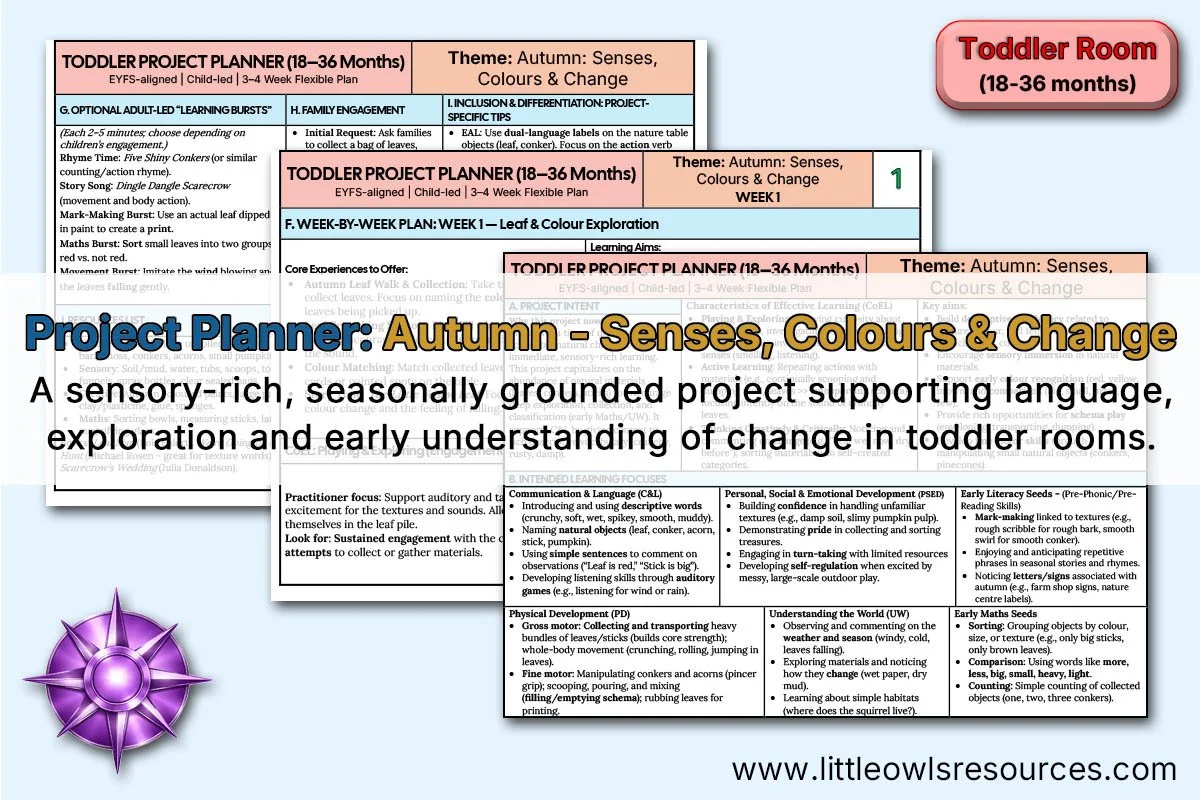
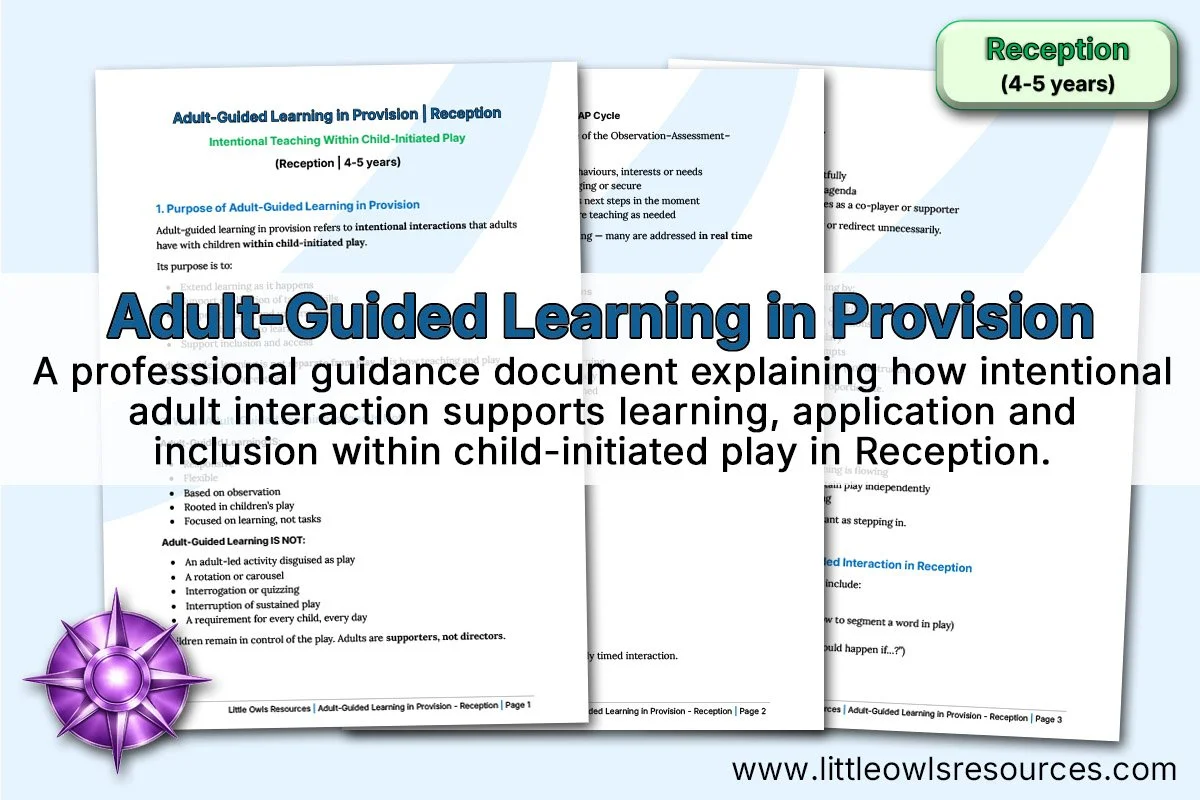
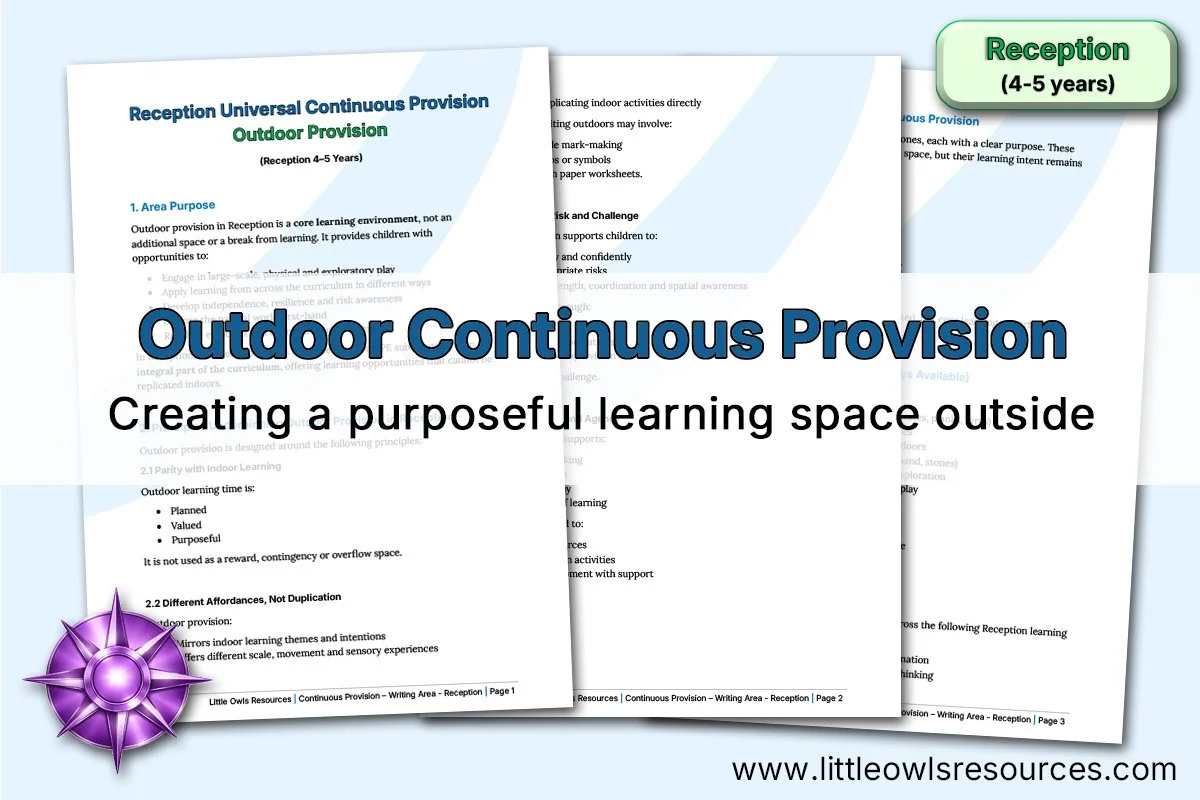
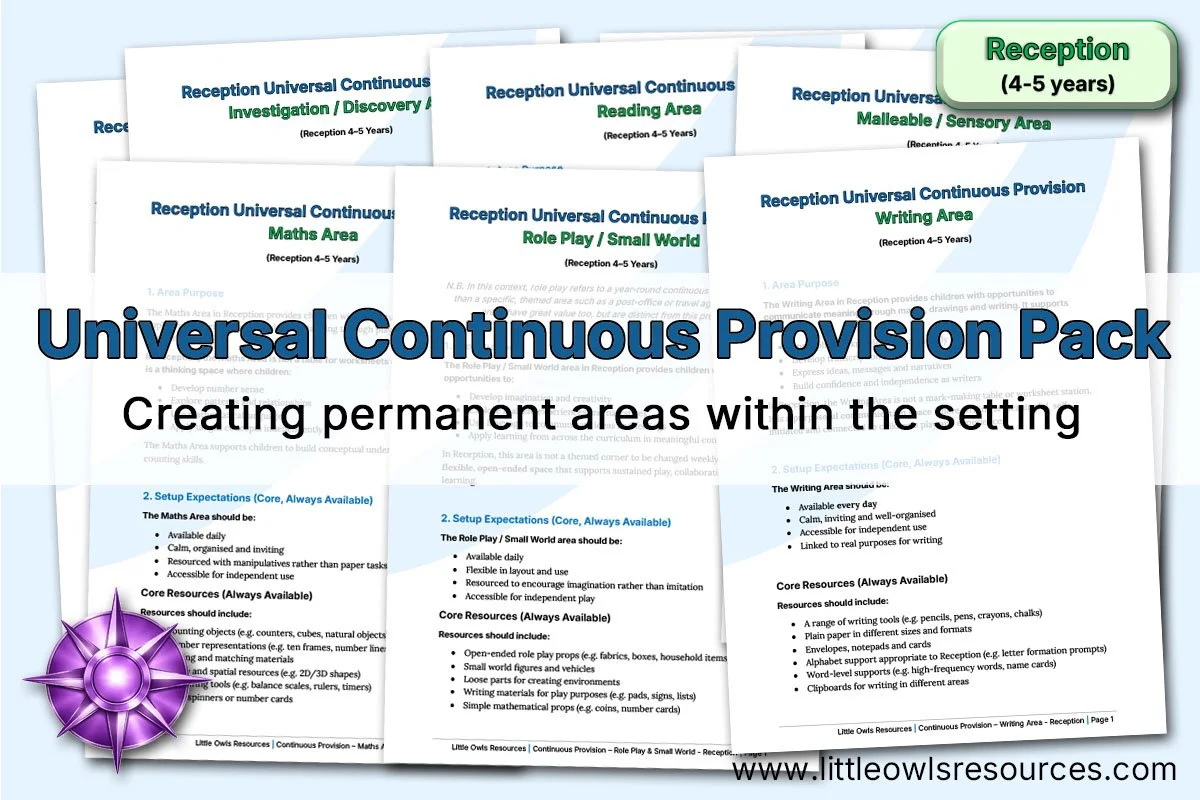
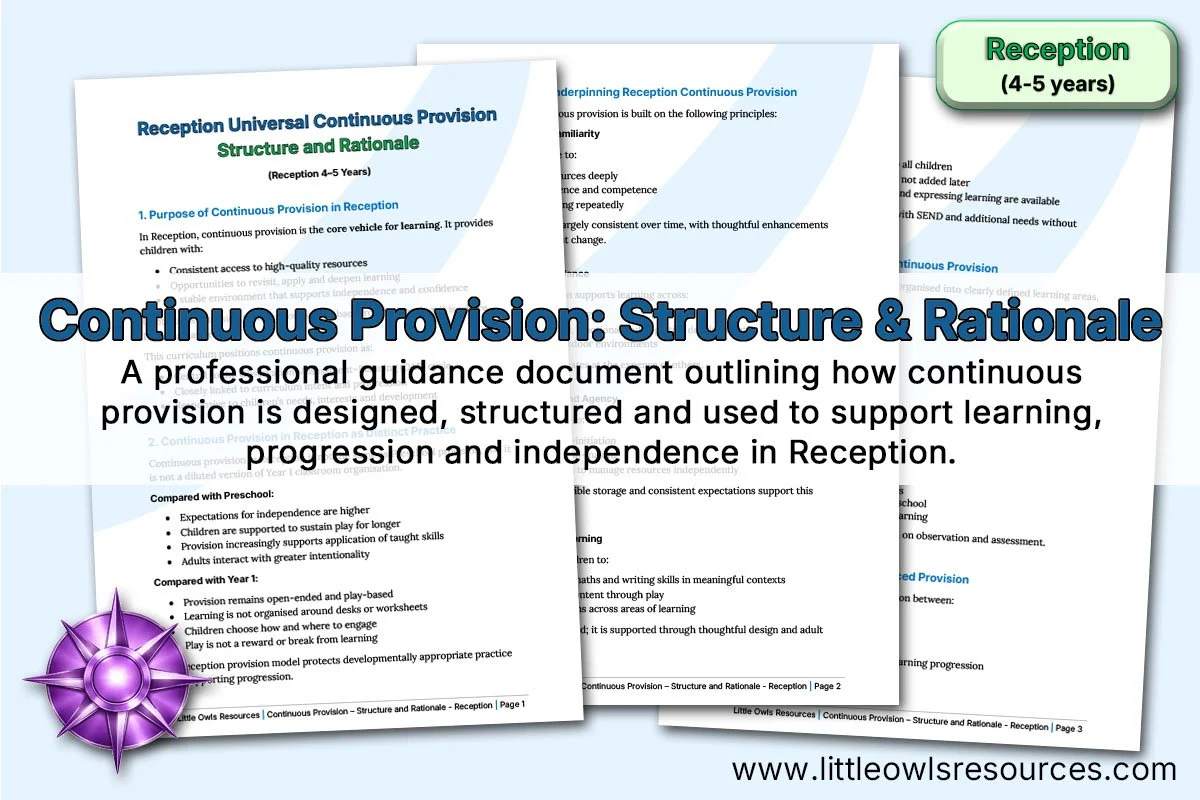
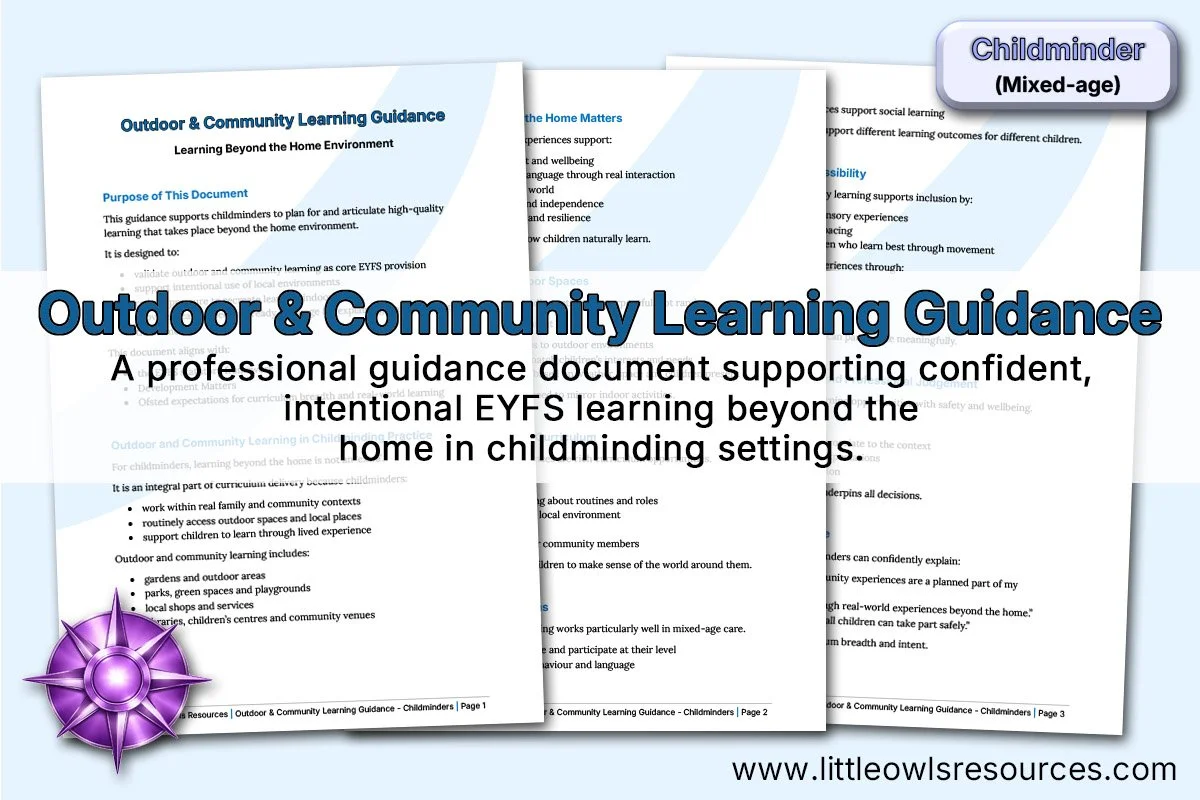
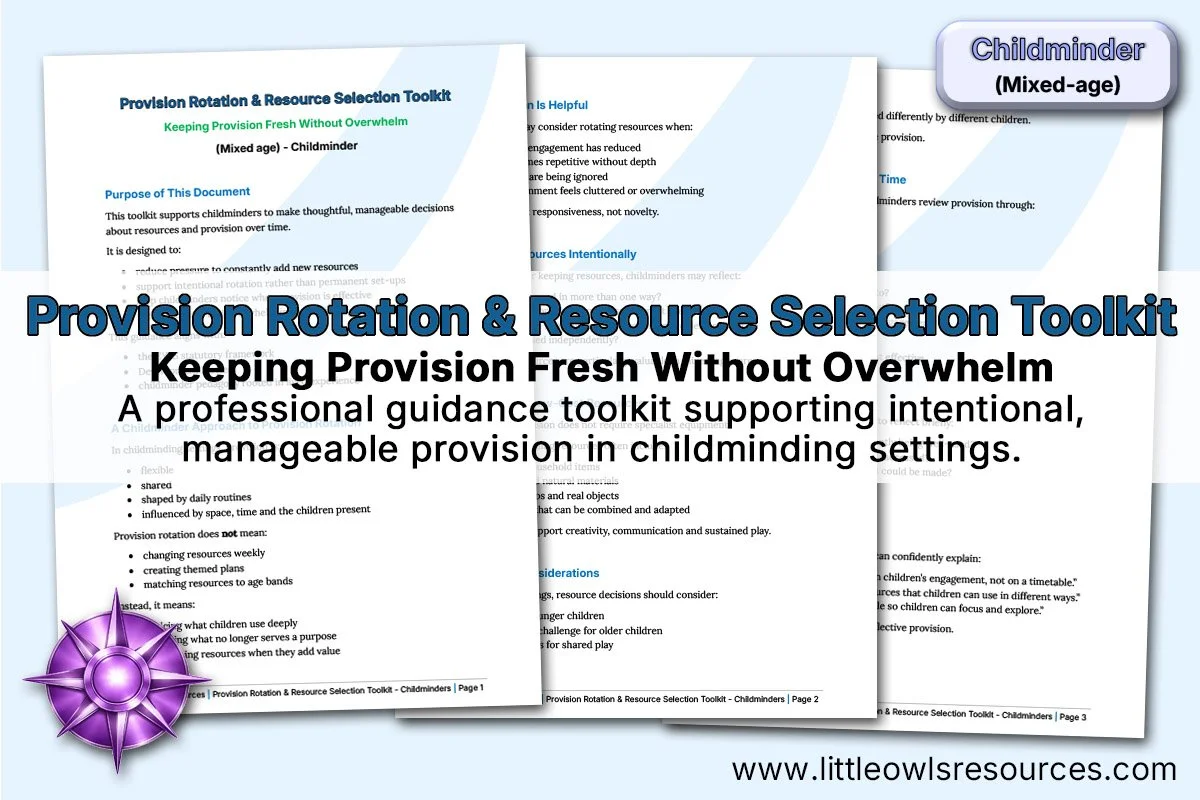
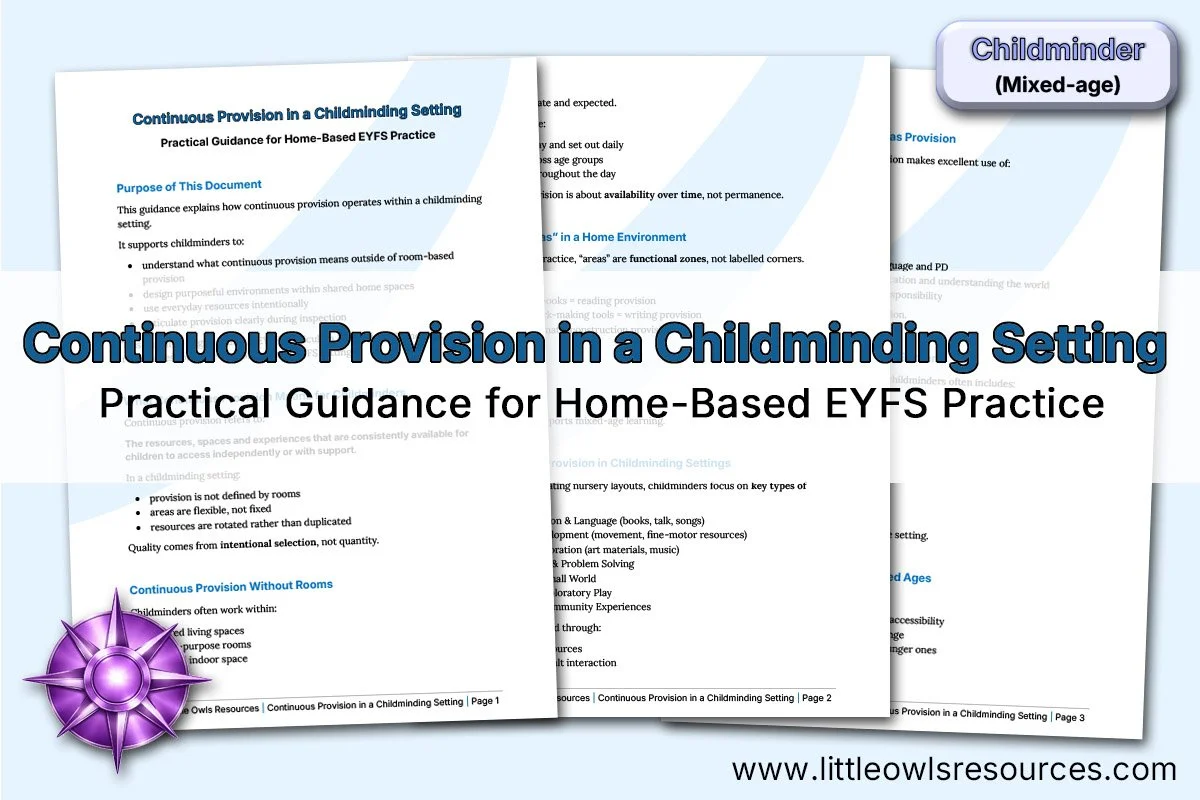
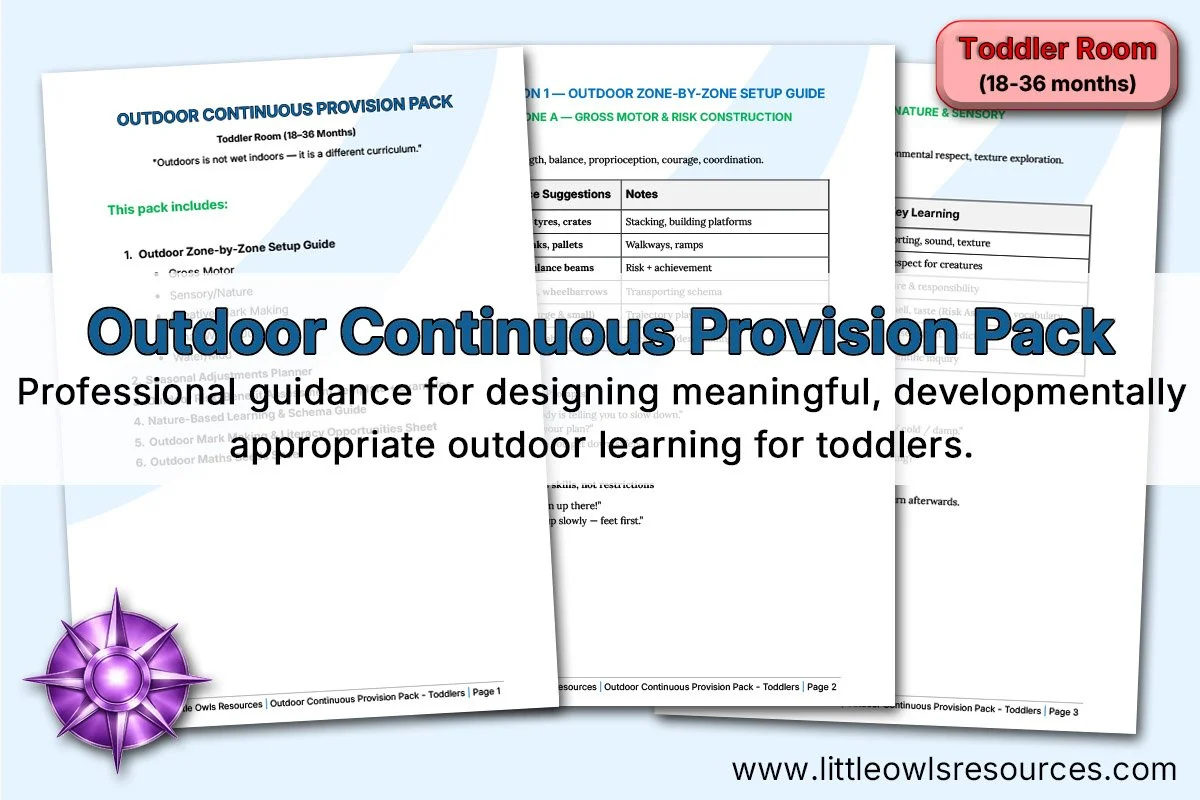
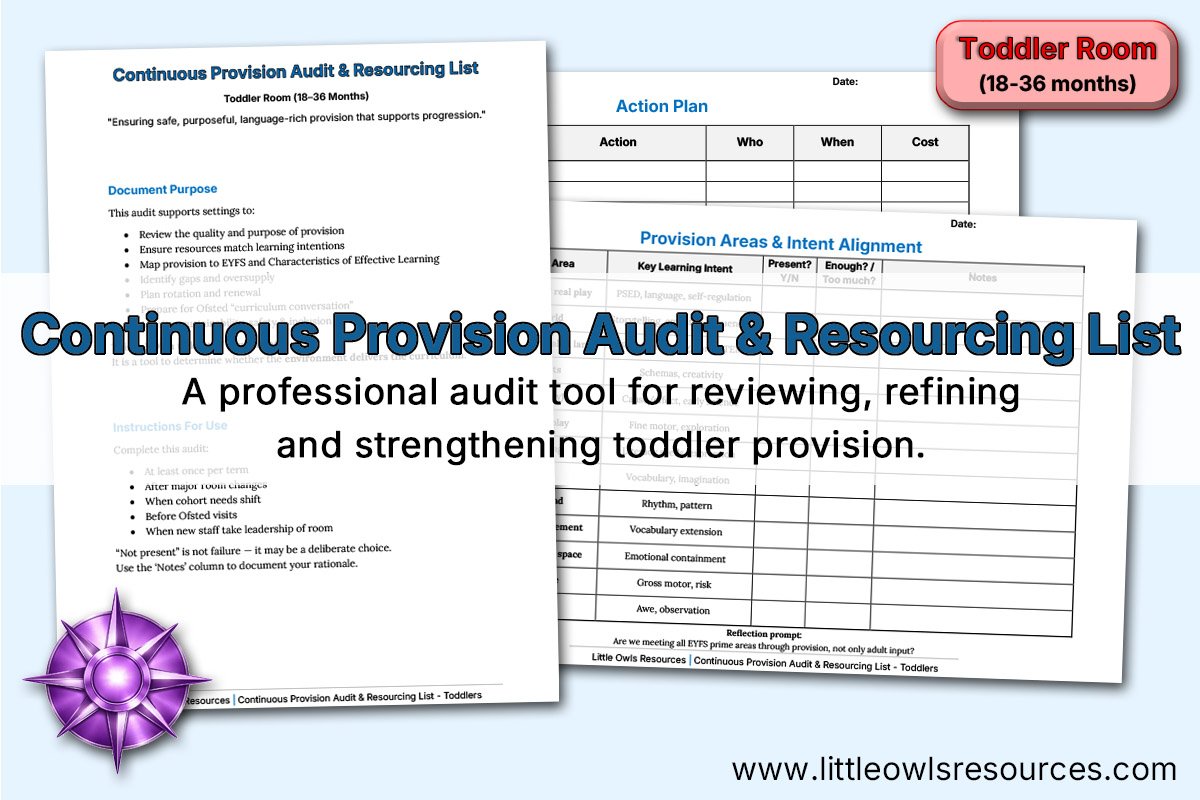
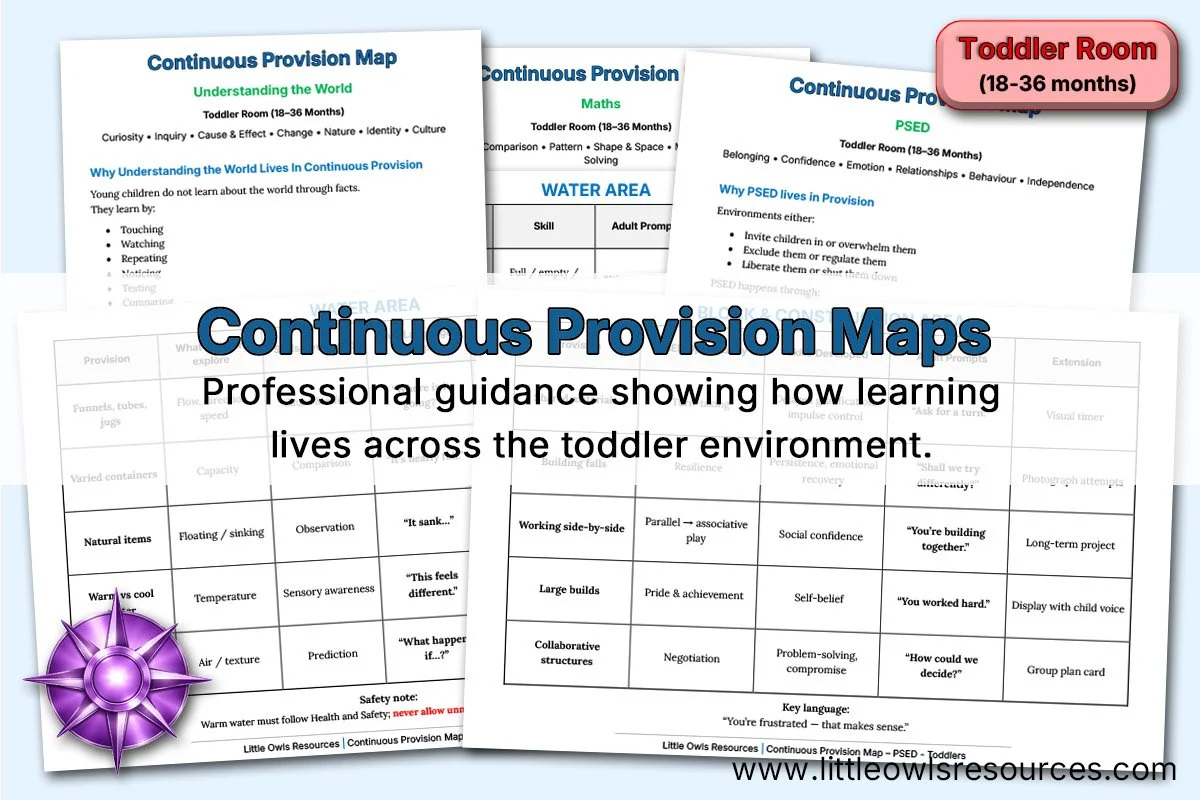
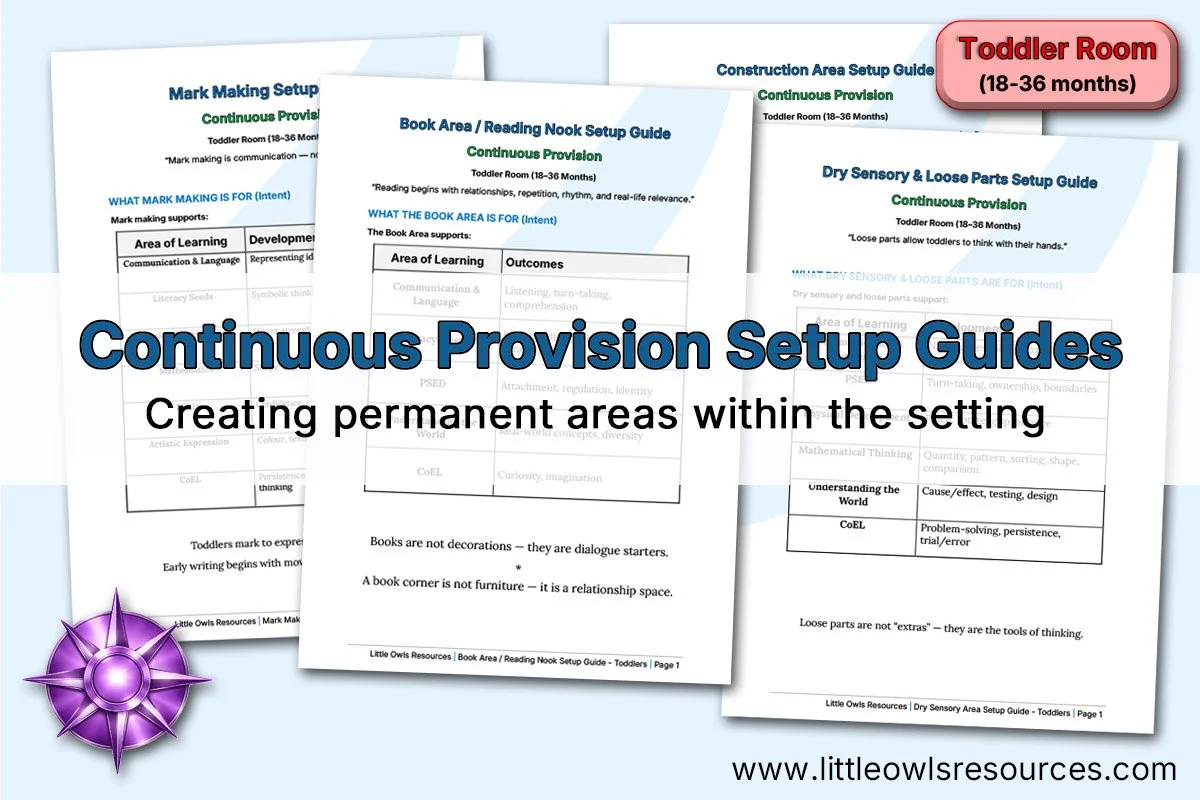
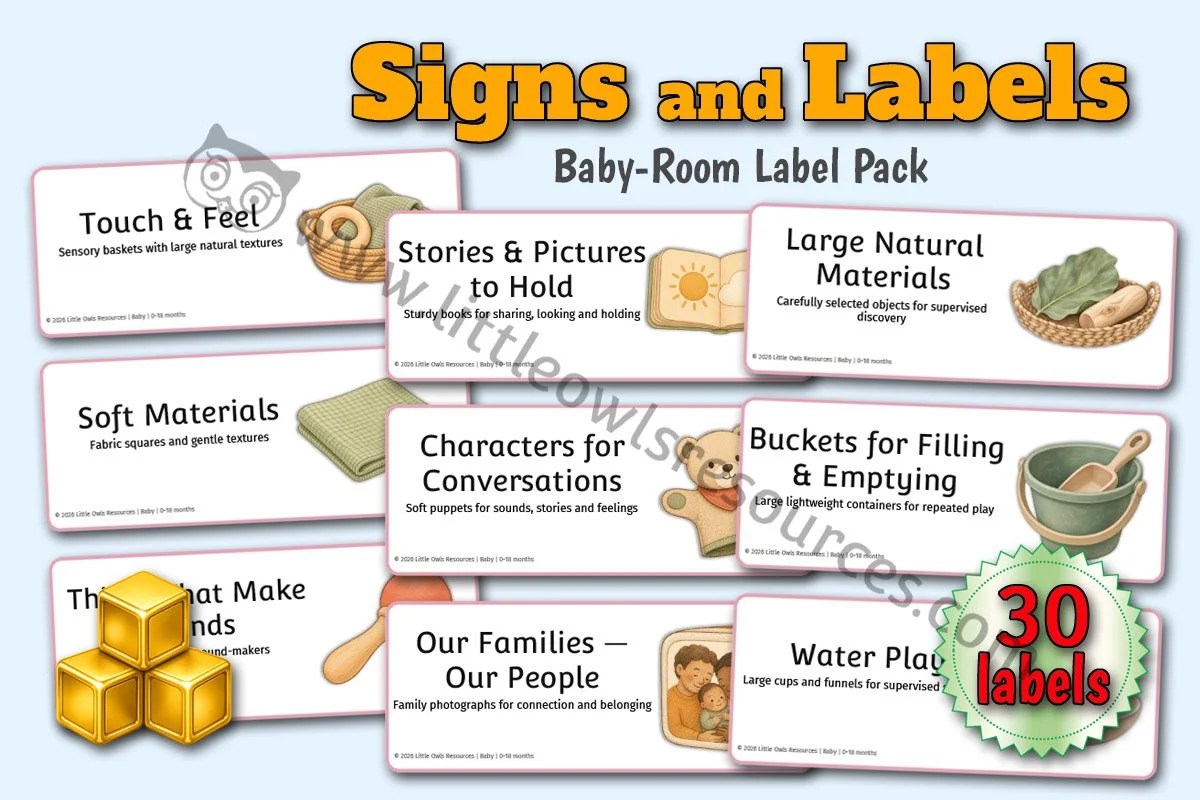
Below you will find a selection of guidance documents from within our Little Owls Resources ‘Curriculum & Pedagogy’ area which explore this concept (& its age-specific application within EYFS settings) in greater depth.
[For additional documents please visit our support pathways: Baby | Toddler | Preschool | Reception | Mixed-Age]

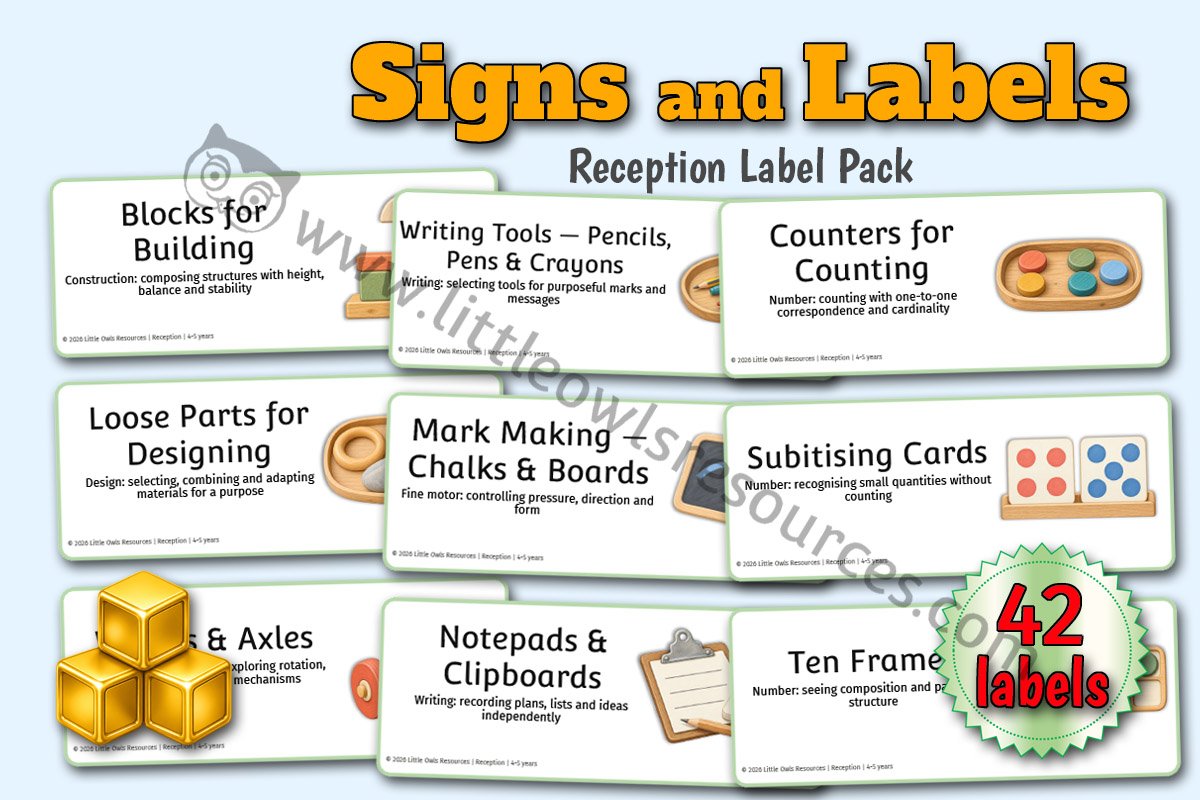
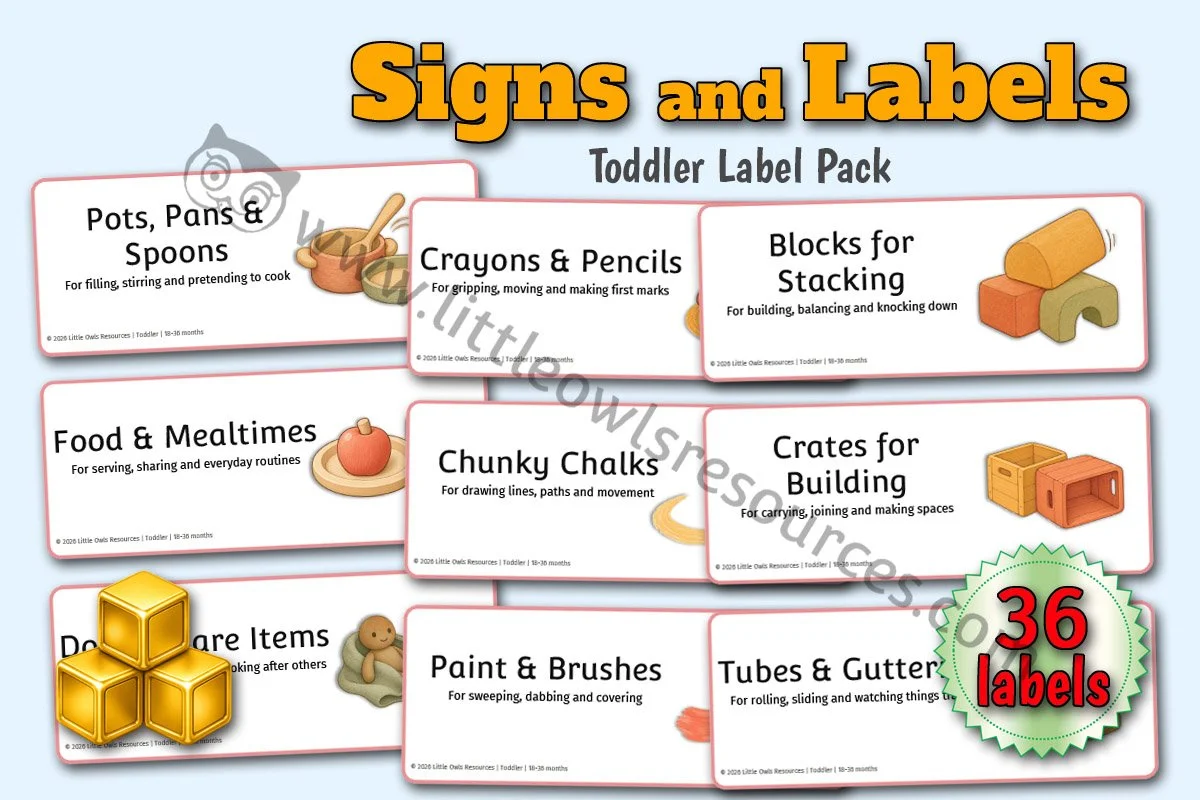




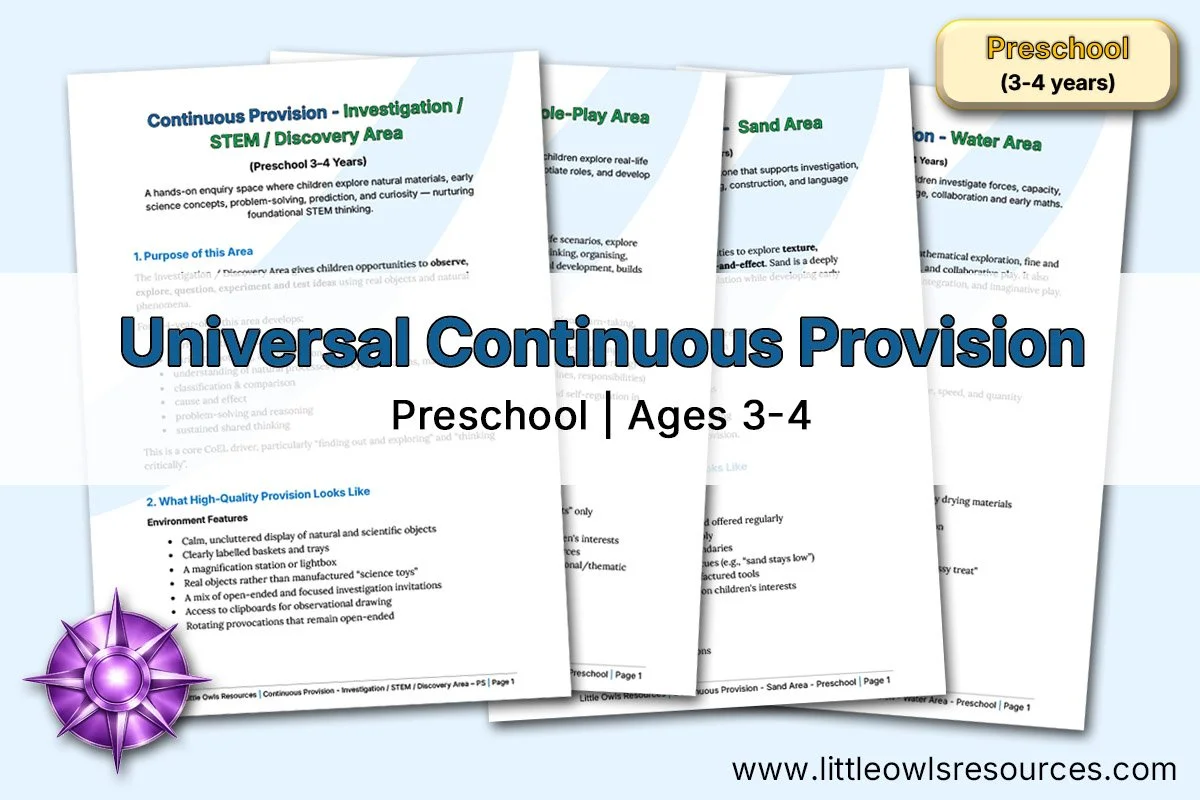

Further Guidance | Related Resources within our ‘Printable Provision’ area:
Disclaimer
The information provided in this glossary is intended to support understanding of terminology commonly used within the Early Years Foundation Stage (EYFS). It does not constitute official guidance and should not be considered a substitute for the EYFS Statutory Framework or other Department for Education publications.
Terminology and interpretations may vary between settings and professional contexts.