

Scroll down to read this web document or download files here: DOCX 📝 | PDF 📄
EYFS Inspection-Facing Summaries
Birth to 5
Babies (0–18 Months)
Inspection-Facing Practice Summary
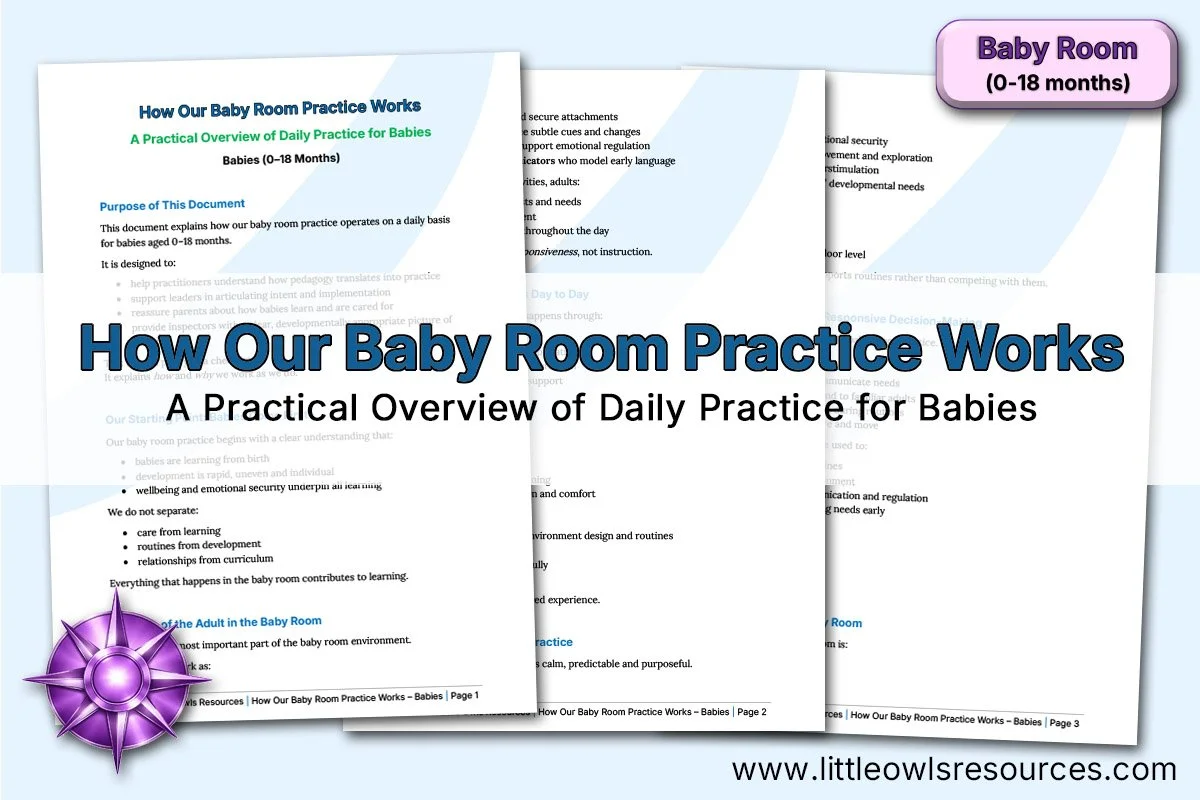
In our baby rooms, care is the curriculum.
For babies aged 0–18 months, learning is rooted in:
secure attachments
responsive care
sensory and physical exploration
predictable routines
Babies learn through relationships, movement and repeated experiences.
There are no planned activities or learning outcomes for babies.
Our curriculum intent at this stage describes:
how we design calm, sensory-rich environments
how adults interact, respond and co-regulate
how routines support communication and wellbeing
Implementation is seen in:
consistent key-person relationships
attuned adult interaction
narration, imitation and shared attention
Impact is seen through:
babies’ wellbeing and engagement
growing curiosity and movement
early communication signals
secure, trusting relationships
We use observation to understand each baby and respond sensitively.
Assessment is narrative, not data-driven.
This approach aligns fully with the EYFS statutory framework and Development Matters guidance for babies.
Toddlers (18–36 Months)
Inspection-Facing Practice Summary
In our toddler rooms, play, schemas and relationships drive learning.
Toddlers learn through:
movement and exploration
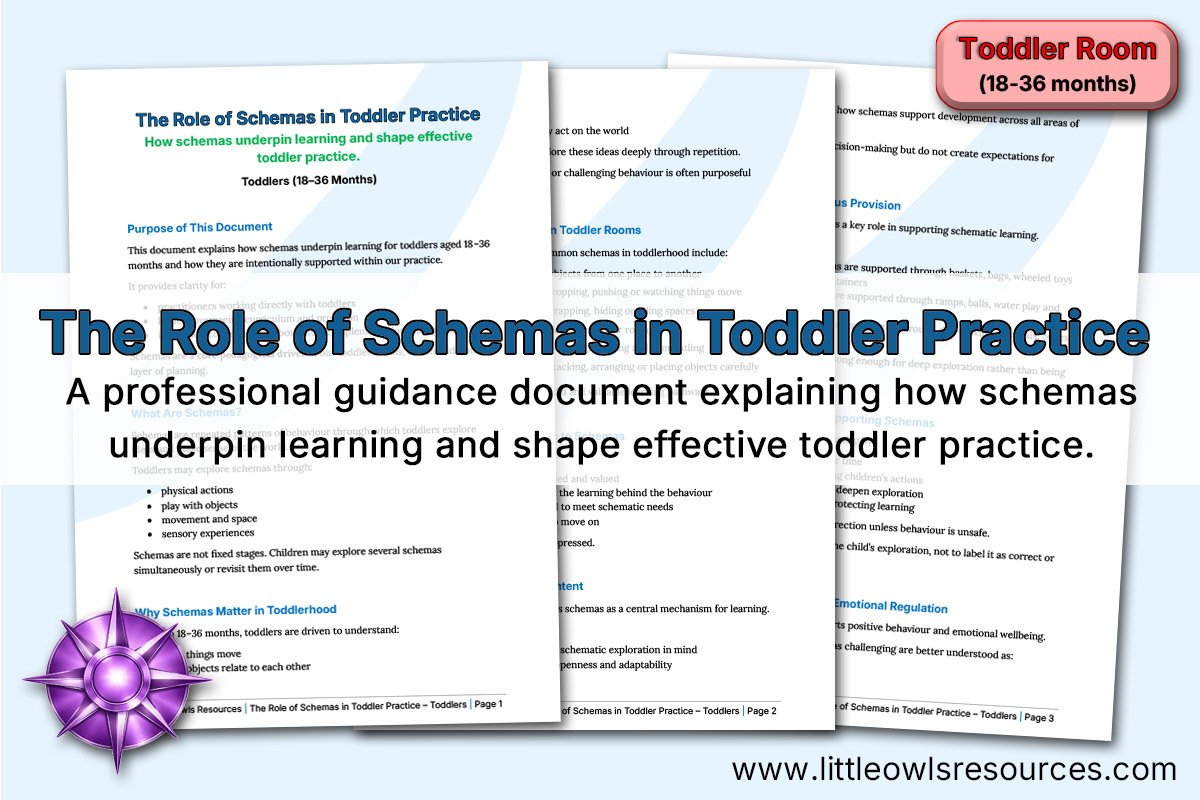
repetition and schematic play
emerging independence
language developed through interaction
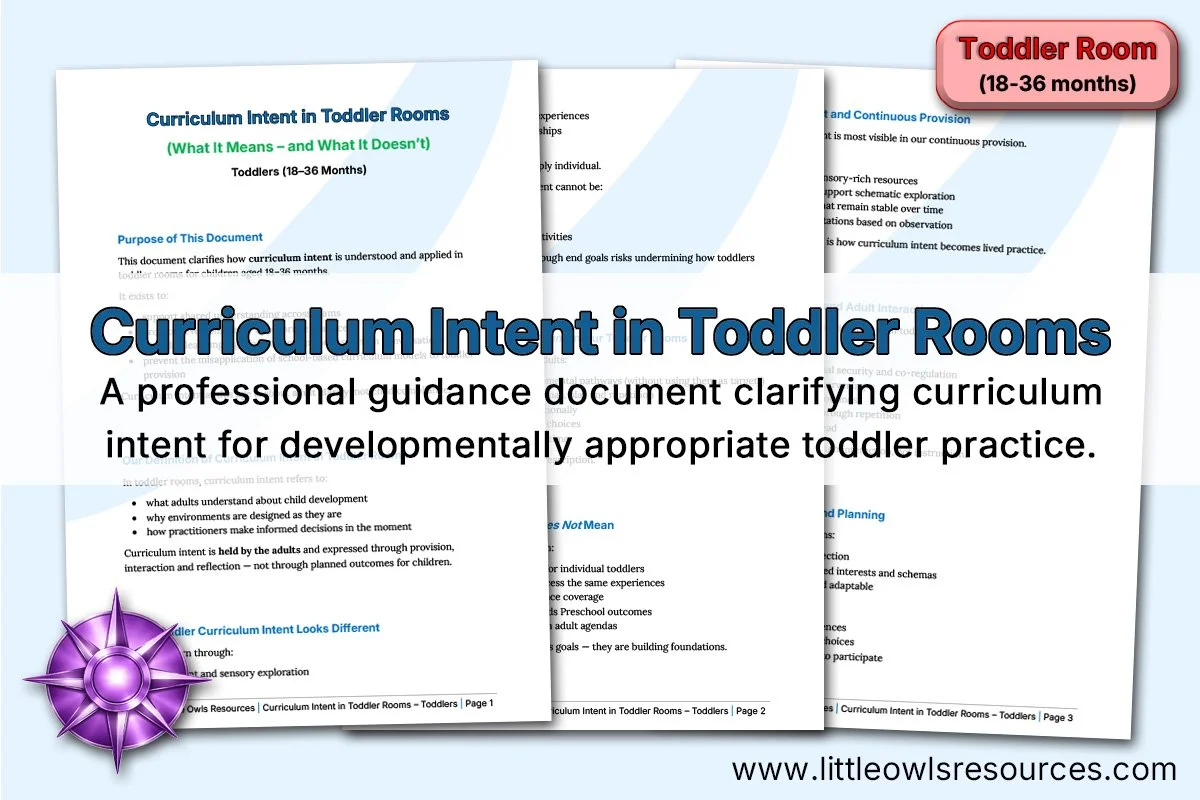
Our curriculum intent supports adult understanding, not targets for children.
It helps practitioners design environments and interactions that respond to:
children’s interests
schemas
communication and emotional needs
Adults:
observe before intervening
follow children’s lead in play
model language and support regulation
use brief, playful adult-led moments when appropriate
Themes or projects are used flexibly as shared contexts and never override child-led exploration.
Impact is seen in:
increased confidence and independence
longer periods of engagement
growing vocabulary and expressive communication
Assessment remains observation-led and proportionate, including the statutory progress check at age two.
This ensures toddlers are not rushed and are supported at the right developmental pace.
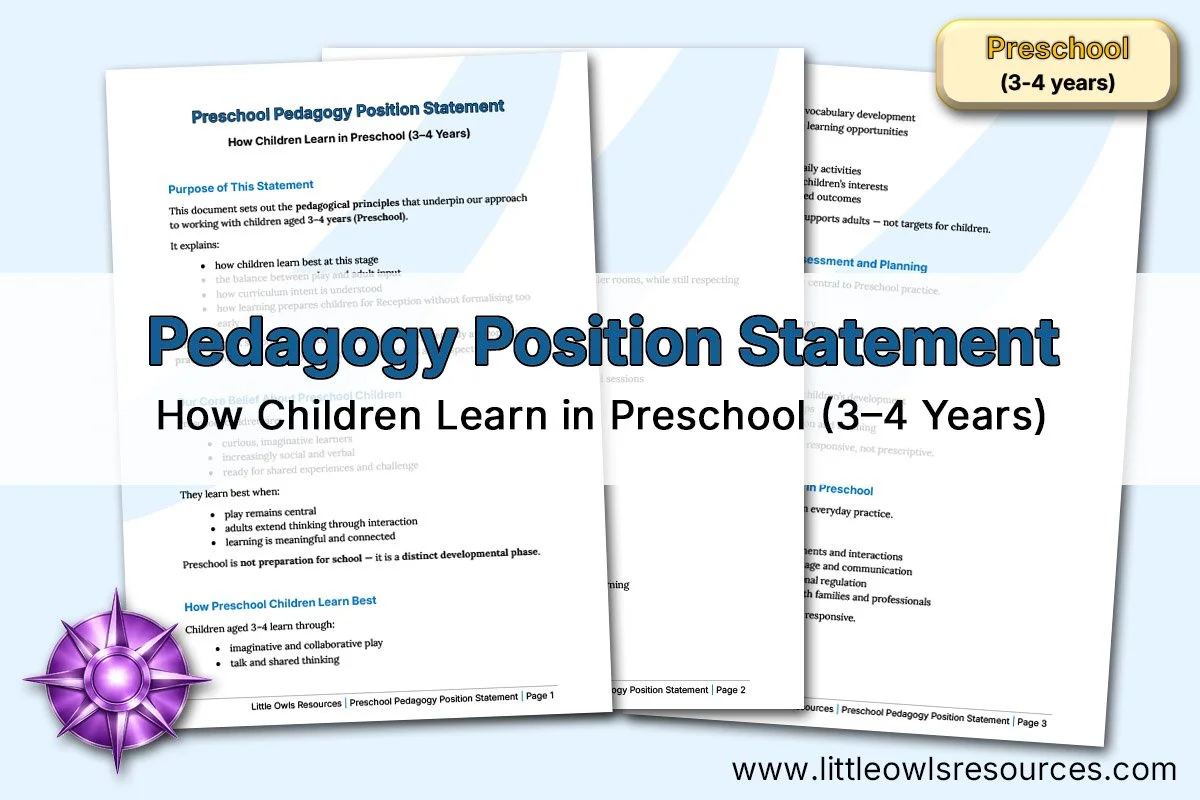
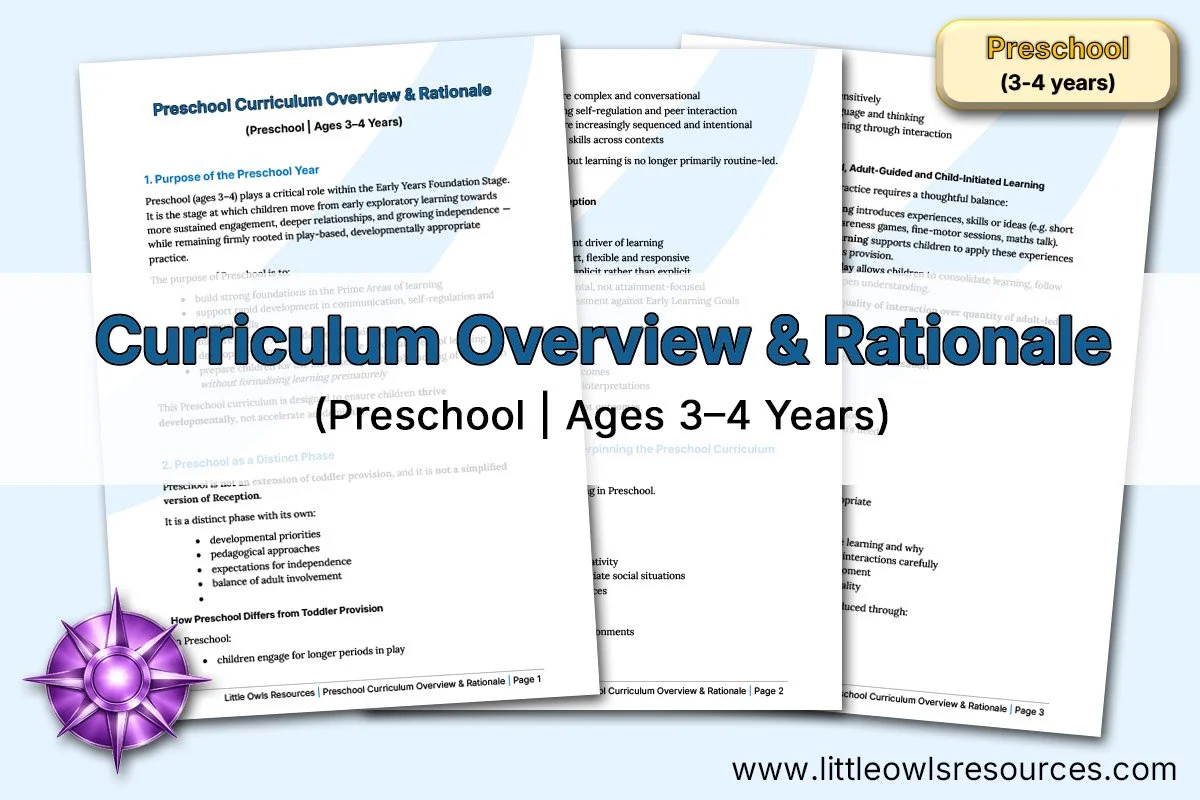
Preschool (3–4 Years)
Inspection-Facing Practice Summary
In Preschool, we balance play-based learning with purposeful adult input.
Children aged 3–4 learn best through:
imaginative play
shared experiences
rich language interactions
early skill-building in context
Our curriculum uses themes to organise learning experiences, while maintaining:
strong continuous provision
responsive adult interaction
short, focused adult-led sessions
Adult-led teaching supports:
early phonological awareness
mathematical understanding
fine-motor development
early writing for purpose
Planning is led by observation and children’s interests, not by fixed outcomes.
Impact is seen through:
richer language and play narratives
developing reasoning and problem-solving
increasing independence and collaboration
Assessment is non-statutory, proportionate and focused on understanding children, not tracking data.
This phase prepares children developmentally, not academically, for Reception.
Reception (4–5 Years)
Inspection-Facing Practice Summary
Reception is a distinct curriculum year with statutory expectations.
In Reception, we deliver the EYFS curriculum through:
high-quality adult-led teaching
stable, well-resourced continuous provision
purposeful application of learning through play
We maintain a strong balance between:
child-initiated learning
adult-guided interaction
systematic teaching (phonics, maths, writing)
Our curriculum intent is clearly sequenced and aligned with:
the EYFS statutory framework
Development Matters
EYFSP expectations
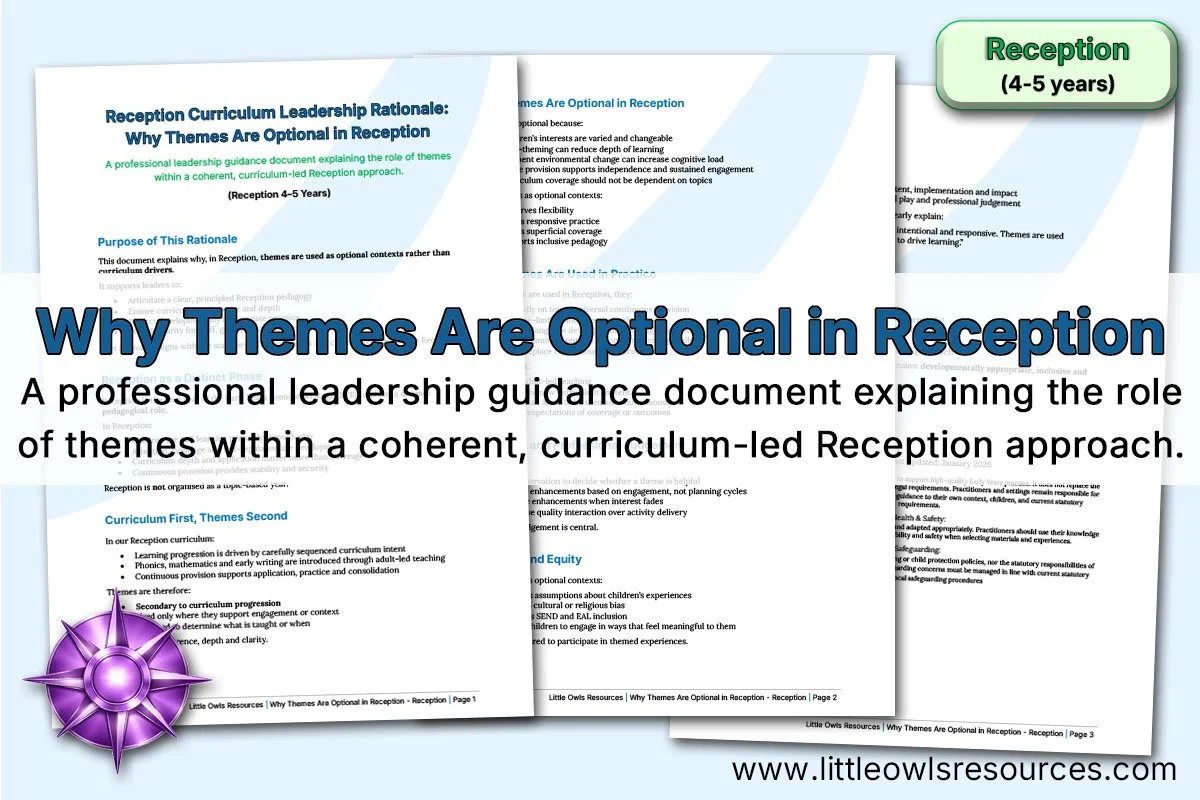
Themes are optional and used only where they support application — they do not drive the curriculum.
Observation, assessment and planning form a continuous cycle, ensuring teaching responds to children’s needs.
Impact is seen in:
confident application of taught skills
independence and reflective talk
readiness for the transition into Year 1
Reception remains play-based and inclusive, without becoming Year 1.
EYFS as a Whole
Inspection-Facing Summary Statement
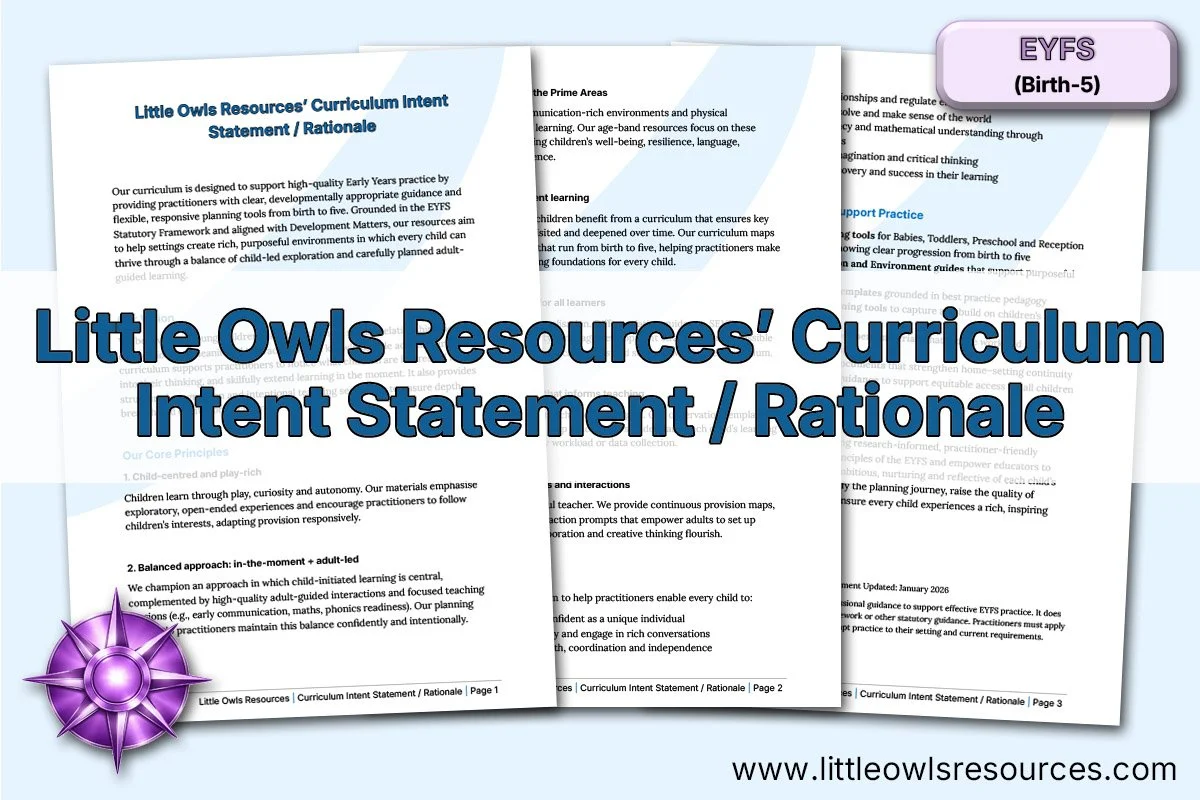
Across birth to 5, our EYFS curriculum is:
developmentally sequenced
play-based
inclusive
coherent
Each age phase is distinct, but connected through:
strong relationships
observation-led practice
high-quality environments
thoughtful adult interaction
Children are never rushed.
Expectations increase only when developmentally appropriate.
This ensures children experience a secure, confident and well-supported journey through the EYFS, fully aligned with statutory guidance and best practice.
Document Updated: January 2026
Recommended next read selection





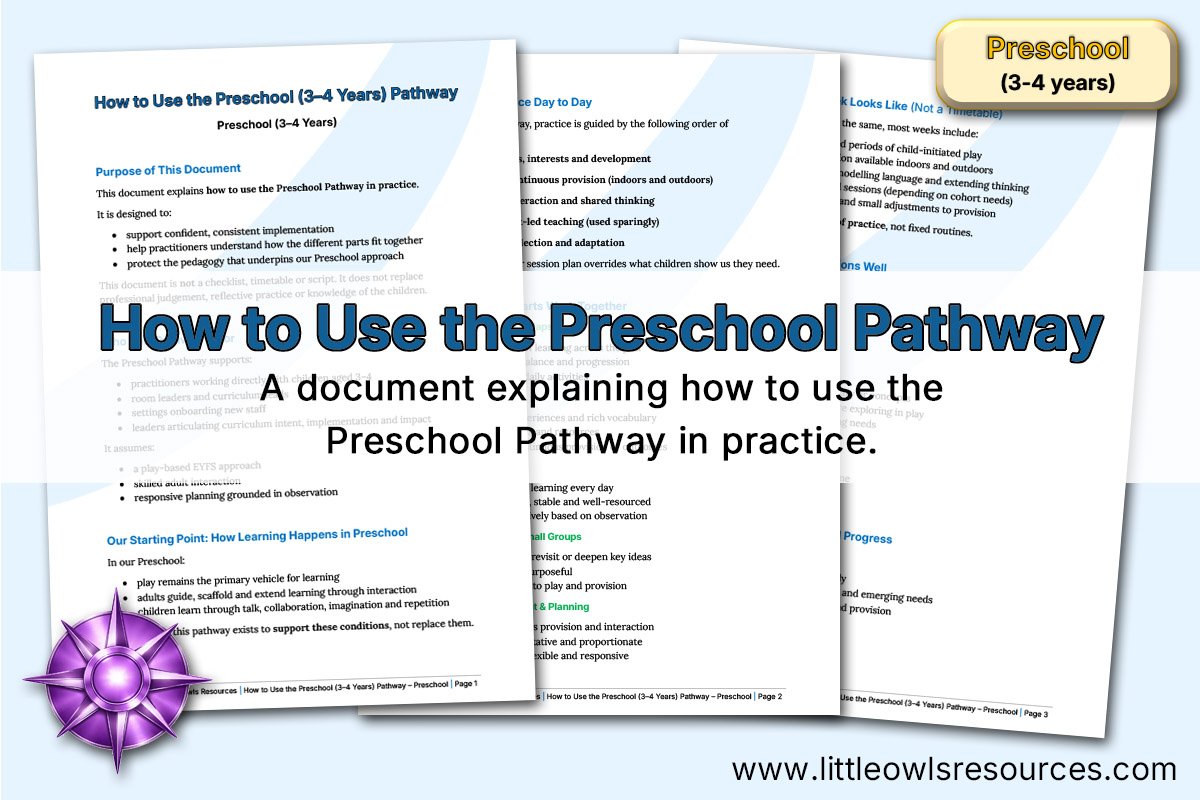

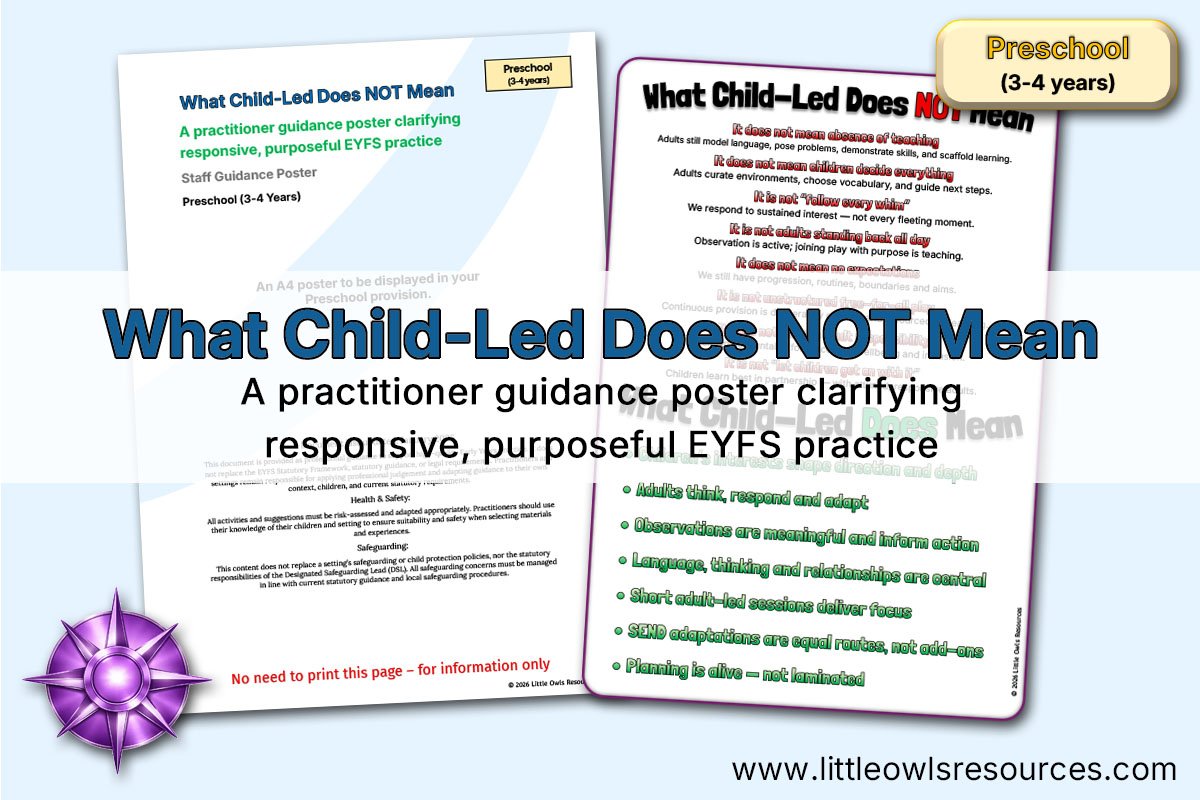

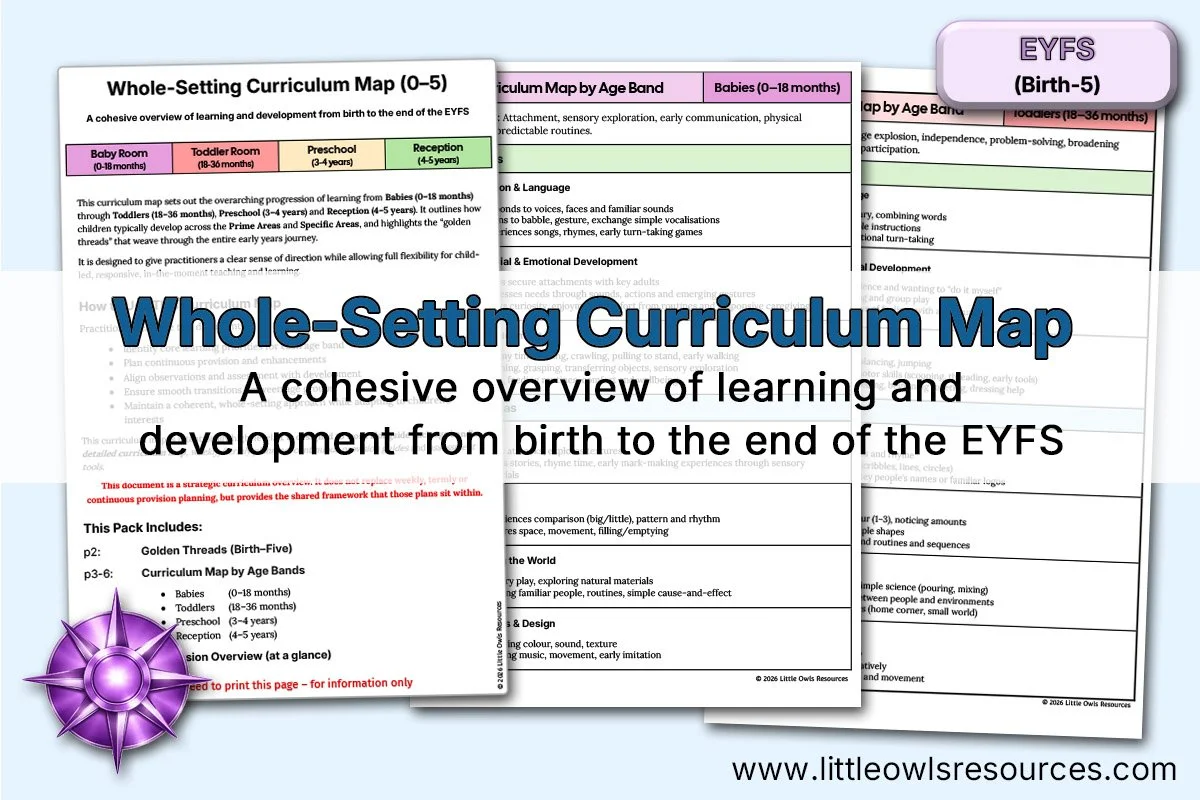


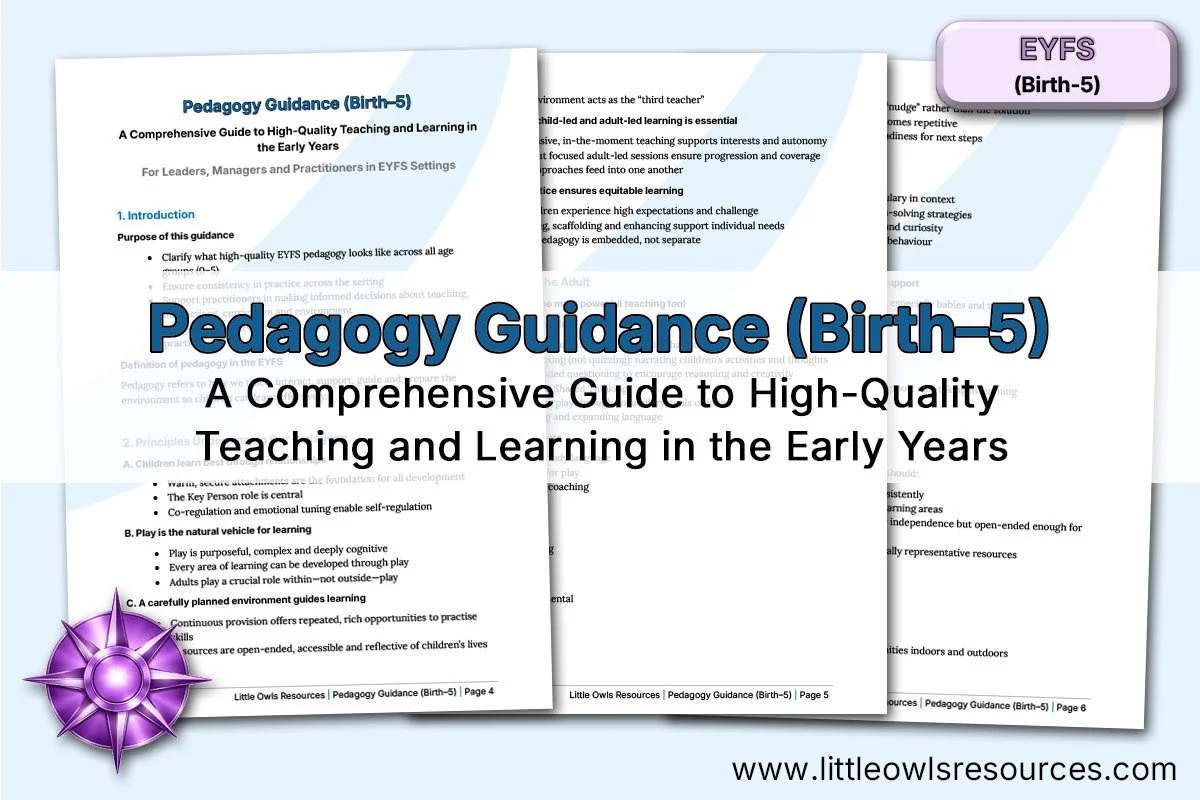
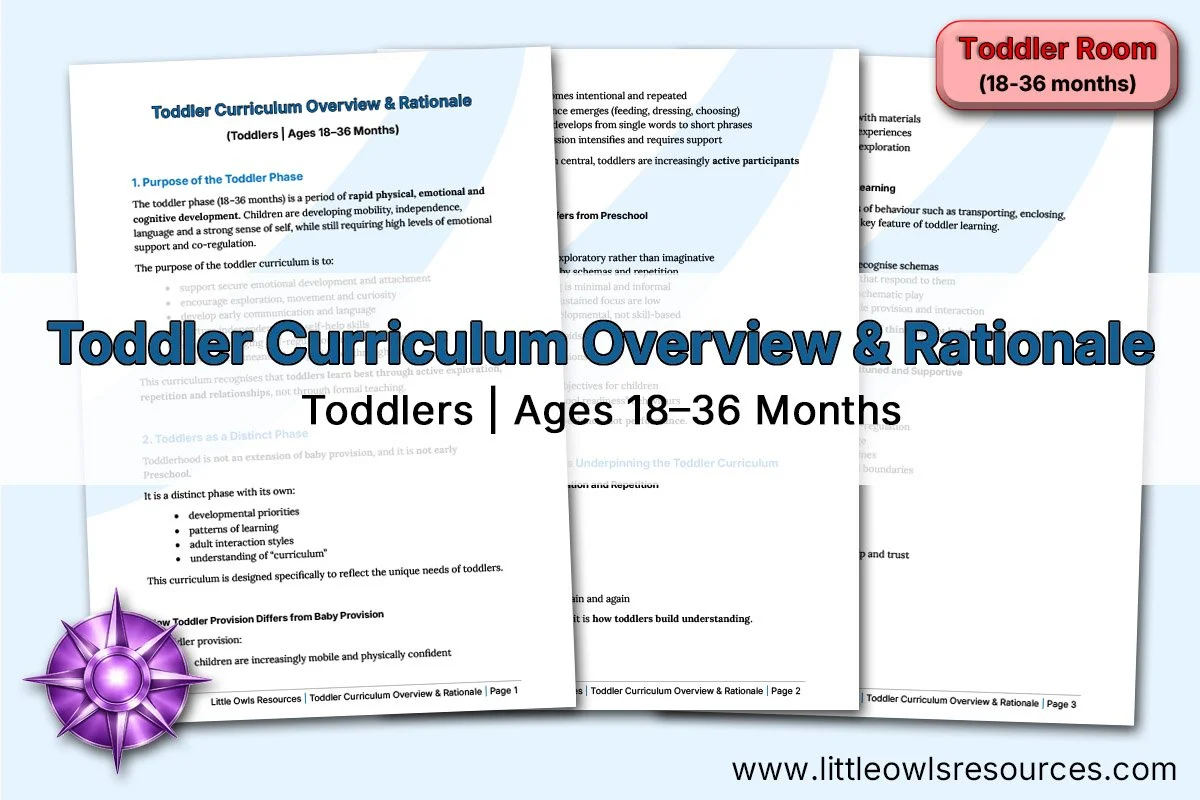
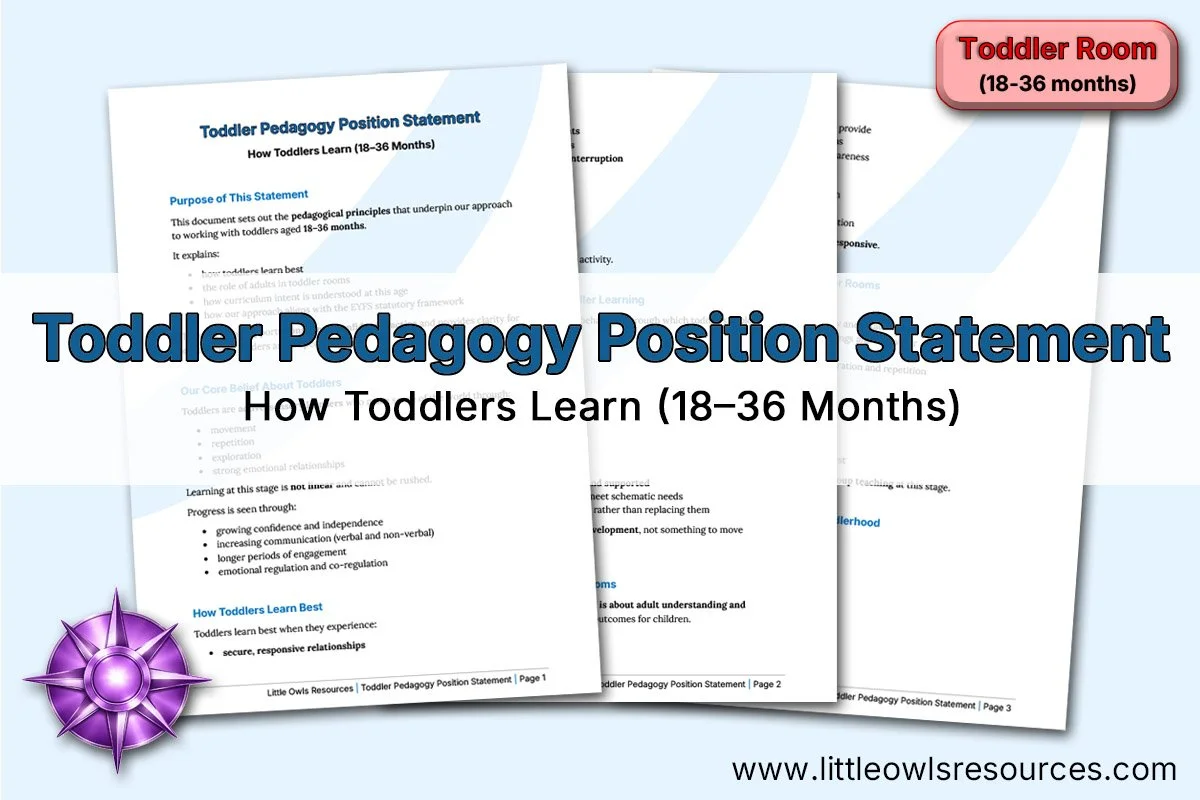
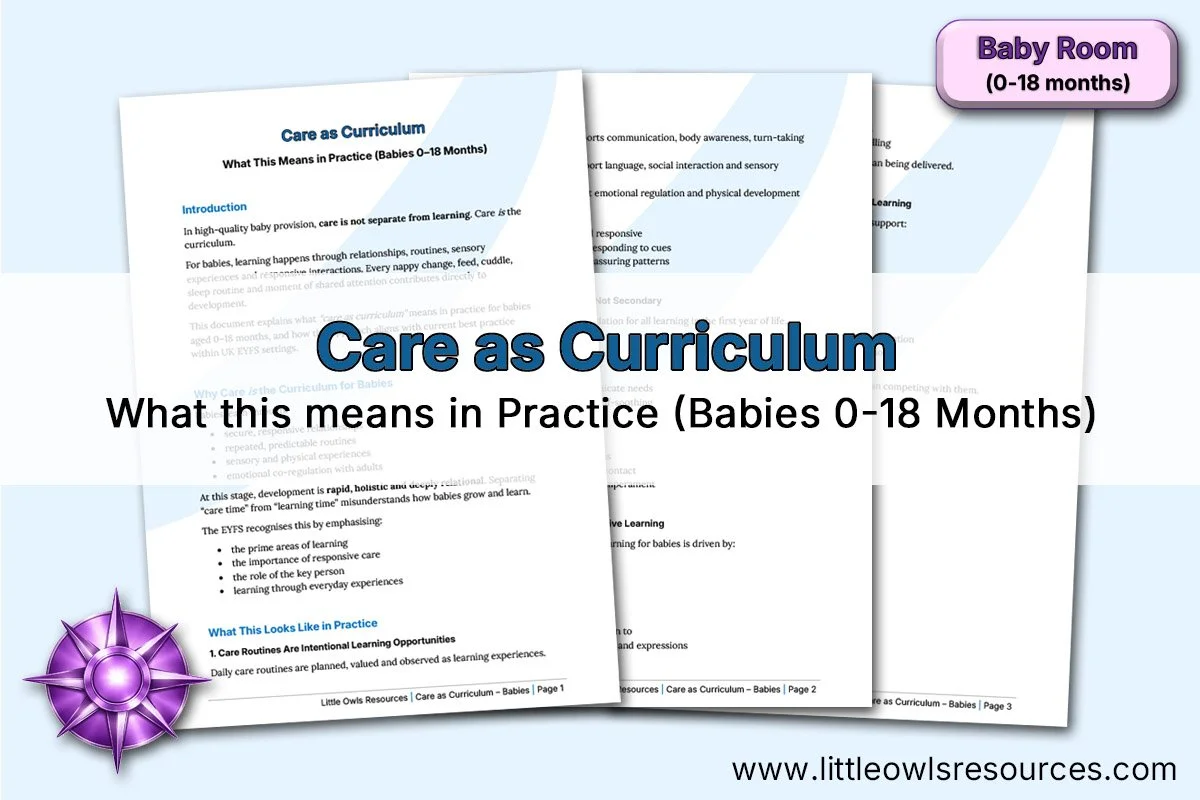

Additional Whole-Setting Guidance | for Professional Members
Explore our whole-setting guidance below, including overarching curriculum and pedagogy documents, early years schemas and EYFS setting policies.
-
-
Early Years Schemas - Practitioner Toolkit | EYFS Birth-5
↪ Schema Cards (definition, behaviours, age-related examples, enabling resources)
↪ Schema Observation & Responsive Provision Planning Template
-
EYFS Group Setting Policies Pack
↪ x 25 Policy Documents
↪ Policy Sign-Off and Confirmation Document
↪ EYFS Setting Policy Folder Contents List
Childminder Setting Policies Pack
↪ x 25 Policy Documents
↪ Childminder Assistant or Volunteer Policy Sign-Off and Confirmation Document
↪ Childminder Policy Folder Contents List
-
↪ Clear, practitioner-friendly explanations of key curriculum and pedagogy terms used throughout our guidance.
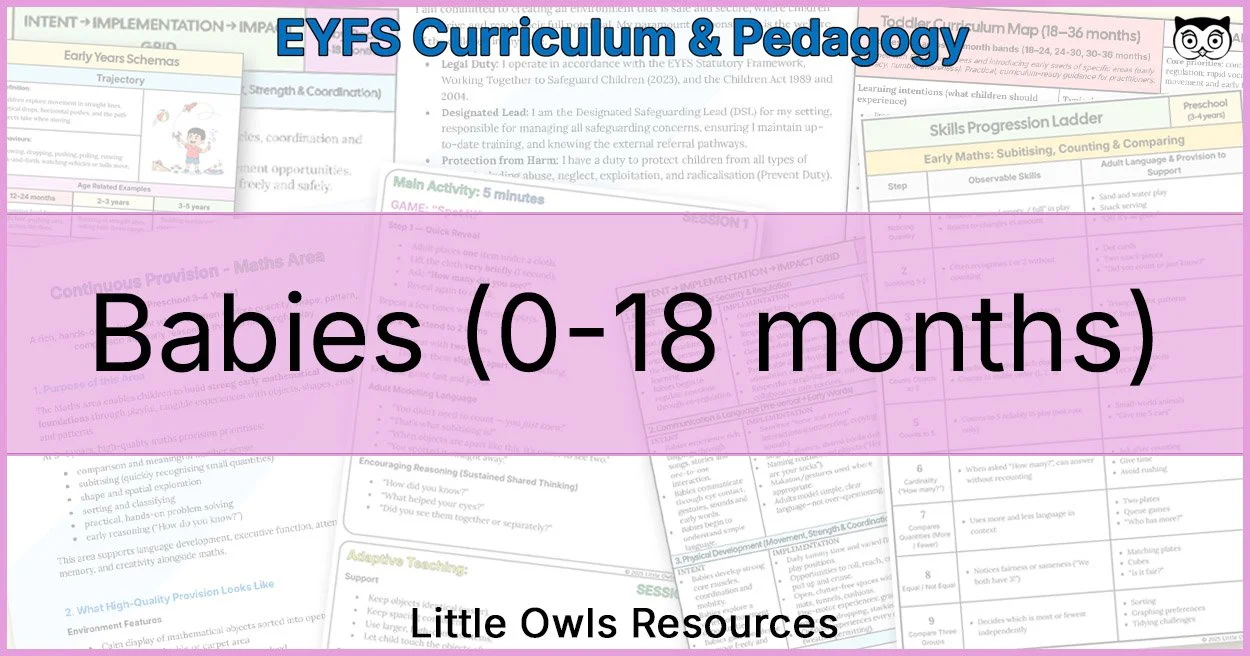
Looking for age-specific pathway documents?
Select the pathway that best reflects your role or the age group you work with. You do not need to use everything. (Some practitioners may use more than one pathway.)
Latest EYFS Articles & Practical Guides | From Our Blog
Stay informed, get expert advice, and find inspiration from our collection of articles and useful external resources, tailored specifically for EYFS practitioners. We regularly publish in-depth articles to support you with current best practices, regulatory changes, and fresh ideas.




Are you looking for a specific resource or document for your provision?
Use our 🔍 SEARCH Bar located at the top of every page.
Content within the EYFS Curriculum & Pedagogy Membership is provided as professional guidance and support. It reflects current understanding of the EYFS statutory framework, Development Matters and inspection expectations at the time of writing. Practitioners are responsible for applying professional judgement and ensuring practice aligns with current statutory requirements and their specific context.
Updated: January 2026