• Home 🏠
  • About Us
  • Pricing
    • 🌟Printable Resources Hub🌟
    • ↪ Themes
    • ↪ Role Play
    • ↪ Festivals & Celebrations
    • ↪ Special Dates Calendar
    • ↪ Areas of Learning
    • ↪ Organisational Tools
  • EYFS Curriculum & Pedagogy
  • Special Dates Calendar
Menu

Little Owls Resources - Free and Premium Early Years Printables

Street Address
City, State, Zip
Phone Number
Early Years/Preschool/EYFS Printable Activities/Planning/Displays/Paperwork and ideas for Childminders, Preschools, Nursery Practitioners, Teachers and Parents

Your Custom Text Here

Little Owls Resources - Free and Premium Early Years Printables

  • Home 🏠
  • About Us
  • Pricing
  • Printable Resources ⬇
    • 🌟Printable Resources Hub🌟
    • ↪ Themes
    • ↪ Role Play
    • ↪ Festivals & Celebrations
    • ↪ Special Dates Calendar
    • ↪ Areas of Learning
    • ↪ Organisational Tools
  • EYFS Curriculum & Pedagogy
  • Special Dates Calendar

Curriculum Language in Baby Rooms | Babies (birth-18 months)

January 18, 2026 Stuart Murphy

Home › EYFS Curriculum & Pedagogy › Baby Room Curriculum & Pedagogy › Curriculum Language in Baby Rooms | Babies (birth-18 months)


Scroll down to read this web document or download files here: DOCX 📝 | PDF 📄

(This pathway component is currently available to read on the web page below and will be available for download by: March 31st 2026)

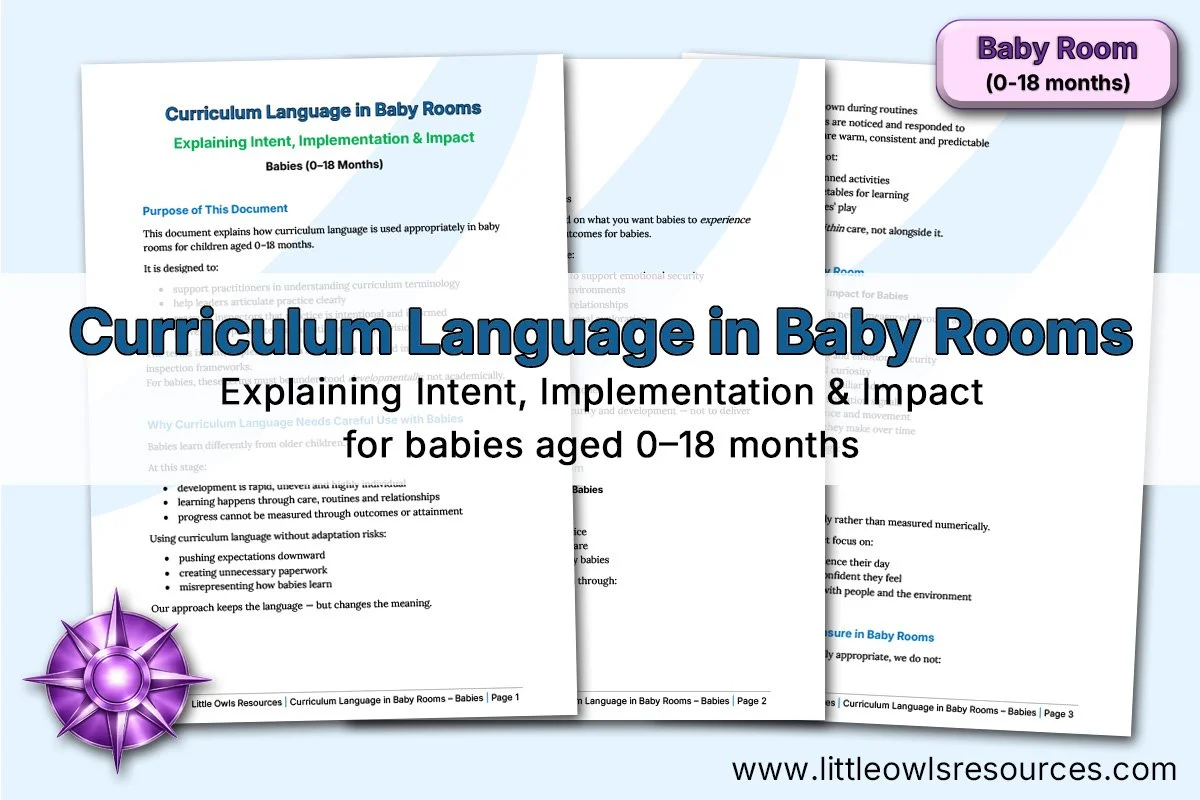
Curriculum Language in Baby Rooms

Explaining Intent, Implementation & Impact for babies aged 0–18 months

Purpose of This Document

This document explains how curriculum language is used appropriately in baby rooms for children aged 0–18 months.

It is designed to:

  • support practitioners in understanding curriculum terminology

  • help leaders articulate practice clearly

  • reassure inspectors that practice is intentional and informed

  • prevent inappropriate formalisation of baby provision

The terms intent, implementation and impact are used in the EYFS and inspection frameworks.
For babies, these terms must be understood developmentally, not academically.

Why Curriculum Language Needs Careful Use with Babies

Babies learn differently from older children.

At this stage:

  • development is rapid, uneven and highly individual

  • learning happens through care, routines and relationships

  • progress cannot be measured through outcomes or attainment

Using curriculum language without adaptation risks:

  • pushing expectations downward

  • creating unnecessary paperwork

  • misrepresenting how babies learn

Our approach keeps the language — but changes the meaning.

Intent in the Baby Room

What We Mean by Intent for Babies

In baby rooms, intent describes:

  • how we design environments

  • how we structure routines

  • how adults interact with babies

Intent is about adult decisions, based on what you want babies to experience and develop — not predetermined outcomes for babies.

Examples of baby room intent include:

  • providing predictable routines to support emotional security

  • designing calm, sensory-rich environments

  • prioritising secure key-person relationships

  • allowing time and space for physical exploration

Intent does not mean:

  • planning activities

  • setting learning objectives

  • expecting progress against milestones

Our intent is to support wellbeing, security and development — not to deliver content.

Implementation in the Baby Room

What Implementation Looks Like for Babies

Implementation refers to:

  • how adults carry out daily practice

  • the quality of interactions and care

  • how routines are experienced by babies

In baby rooms, implementation is seen through:

  • responsive caregiving

  • attuned communication

  • emotional co-regulation

  • sensitivity to cues and needs

High-quality implementation means:

  • adults slow down during routines

  • babies’ signals are noticed and responded to

  • interactions are warm, consistent and predictable

Implementation is not:

  • delivering planned activities

  • following timetables for learning

  • directing babies’ play

Learning happens within care, not alongside it.

Impact in the Baby Room

How We Understand Impact for Babies

Impact in baby rooms is never measured through attainment.

Instead, impact is seen in:

  • babies’ wellbeing and emotional security

  • engagement and curiosity

  • growing trust in familiar adults

  • emerging communication signals

  • physical confidence and movement

  • visible progress they make over time

Impact is noticed through:

  • observation

  • reflection

  • daily interaction

It is described narratively rather than measured numerically.

Statements about impact focus on:

  • how babies experience their day

  • how secure and confident they feel

  • how they engage with people and the environment

What We Do Not Measure in Baby Rooms

To remain developmentally appropriate, we do not:

  • track babies against age-related outcomes

  • assess progress through checklists

  • compare babies with one another

  • expect evidence of “curriculum coverage”

Assessment at this stage is:

  • formative

  • supportive

  • used to inform care and interaction

How This Aligns with EYFS and Development Matters

This interpretation of curriculum language aligns with:

  • the EYFS emphasis on prime areas of learning

  • the statutory role of the key person

  • learning through everyday experiences

  • Development Matters guidance for babies

The EYFS does not require:

  • planned activities for babies

  • formal assessment of learning outcomes

  • evidence of progression through content

Our approach reflects both the letter and spirit of the framework.

Talking Confidently About Baby Room Practice

Practitioners and leaders can confidently explain that:

  • curriculum intent sits with adult practice

  • implementation is seen in relationships and routines

  • impact is visible in wellbeing, engagement and the progress babies make over time

This language allows inspectors to:

  • see intentional practice

  • understand developmental appropriateness

  • recognise high-quality baby provision

Without requiring practice to change.

In Summary

In baby rooms:

  • curriculum language is adapted, not abandoned

  • intent focuses on environment and interaction

  • implementation is responsive care

  • impact is wellbeing, engagement and visible progress

This ensures:

  • babies are not rushed

  • practice remains relational

  • adults are protected from inappropriate expectations

Curriculum language supports reflection and articulation — it never dictates how babies should learn.

Document Updated: January 2026

Download Document Here:

(This pathway component is currently available to read on the web page above and will be available for download by: March 31st 2026)

 
Download DOCX 📝
Download PDF 📄


Recommended next read Selection

EYFS
Curriculum Language in Baby Rooms | Babies (birth-18 months)

Explaining Intent, Implementation & Impact for babies aged 0–18 months

Read More →
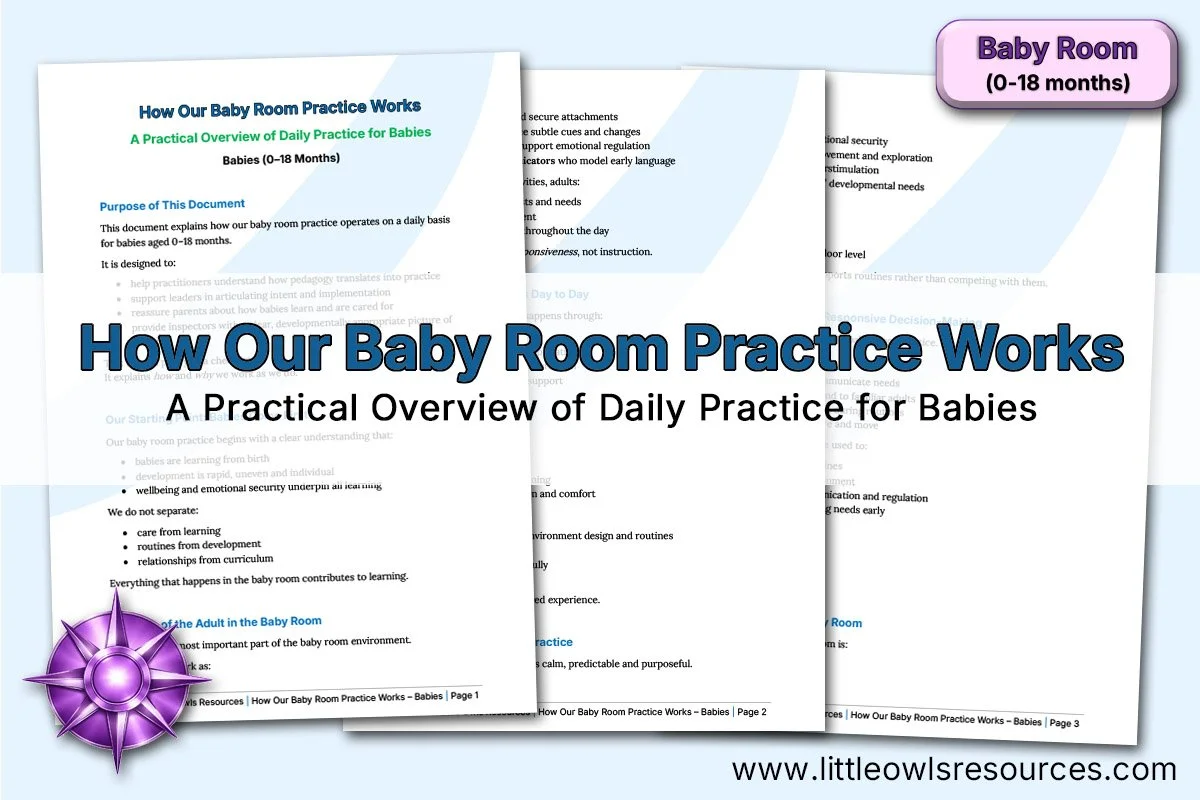
How Our Baby Room Practice Works | Babies (birth-18 months)

A professional overview explaining day-to-day EYFS practice for babies aged 0–18 months

Read More →
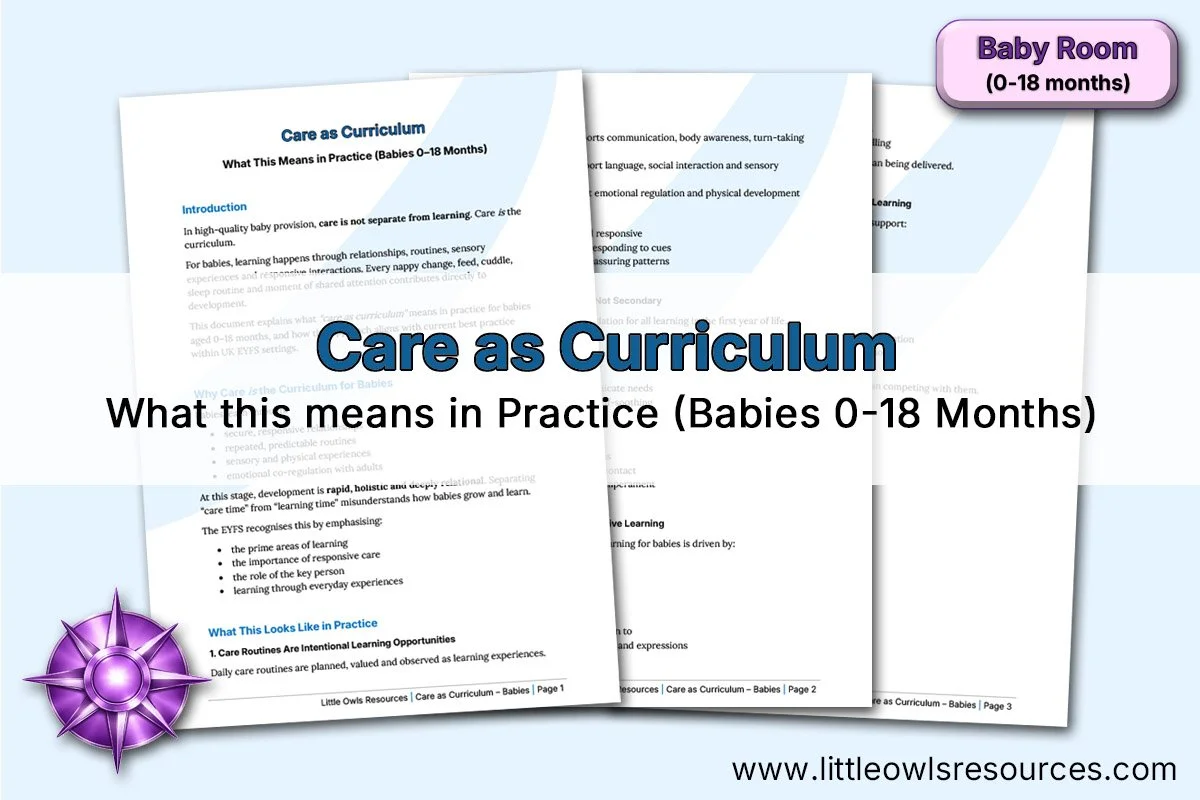
Care as Curriculum: What This Means in Practice | Babies 0-18 Months

What This Means in Practice (Babies 0–18 Months)

Read More →
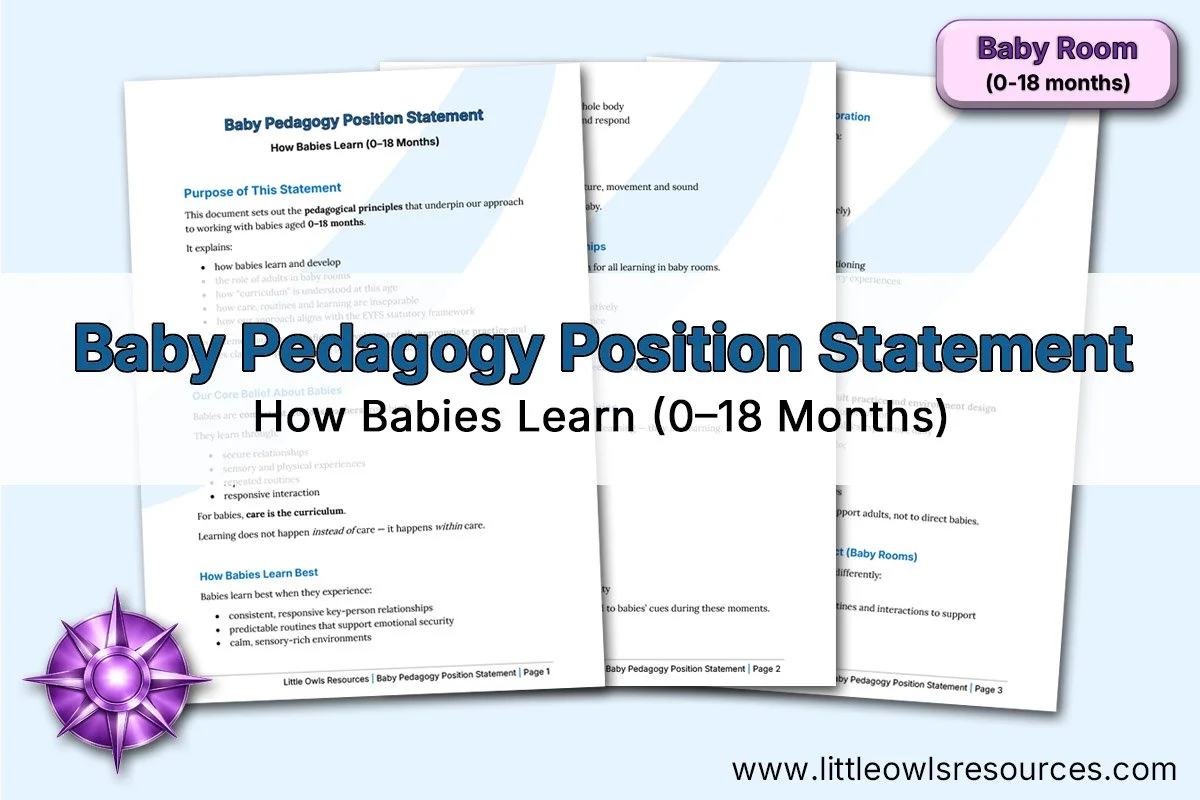
Baby Pedagogy Position Statement | 0-18 Months

This document sets out the pedagogical principles that underpin our approach to working with babies aged 0–18 months.

Read More →
 

Additional Documents | Professional Membership Contents (Babies 0-18 months)

Navigate our Curriculum & Pedagogy guidance documents here.

Pedagogical identity:
Relationship-led, care-centred baby practice where routines, interaction and sensory experience are the curriculum.

  • 👉 This section protects developmentally appropriate practice.

    • Baby Pedagogy Position Statement – How Babies Learn (0–18 Months)

    • Care as Curriculum: What This Means in Practice

    • How Our Baby Room Practice Works

    • Curriculum Language in Baby Rooms(Intent, Implementation & Impact Explained)

  • 👉 These documents support adult understanding — not expectations for babies.

    • Baby Curriculum Maps - Developmental progression across age bands(0–3 months | 3–6 months | 6-9 months | 9-12 months | 12-18 months)

    • Adult Reference: Developmental Signals & Support

    • Understanding Early Communication & Regulation

  • 👉 Observation informs interaction, routines and environment.

    • In-The-Moment Narrative Observation Template for Babies

    • Micro-Observation Template (Checklist Format)

    • Pocket-Sized Observation Card

    • Using Observation to Respond to Babies’ Needs

    • In-the-Moment Prompt Cards (x17)

  • 👉 The environment supports exploration, movement and communication.

    • Baby Room Environment Guide & Resourcing Lists

    • Baby Room Continuous Provision Maps

      • 0–9 Months

      • 9–18 Months

    • Labelling Pack | Baby Room (0–18 Months)

  • 👉 Care routines are central to learning and wellbeing.

    • Daily Routines as Learning Opportunities

    • Transition & Sleep Routine Record Pack

      • Daily Transition Record

      • Individual Sleep Routine Profile

      • Review Template

    • Supporting Emotional Regulation in Baby Rooms

  • 👉 Language is built through interaction, not instruction.

    • Five Sentence Stems Every Baby Room Practitioner Should Use (Baby Room Poster)

    • Responsive Talk, Narration & Imitation

    • Supporting Early Communication (Pre-Verbal & Emerging Speech)

  • 👉 Planning supports adults — it never directs babies.

    • Weekly Care & Learning Planning Templates (x2)

    • Using Baby Room Planning Templates Responsively

    • ‘Intent - Implementation - Impact’ Reference Grids(Emotional, Communication, Physical, Sensory, Social, Problem-Solving, Independence)

    • Baby Responsive Planning Sheet

    • When (and When Not) to Plan in Baby Rooms

  • 👉 Proportionate, sensitive and statutory practice.

    • Concerns & Referrals Quick Form

    • Recording and Responding to Safeguarding Concerns

    • Progress Check at Age 2(looking ahead)

      • Report Template

      • Practitioner Guidance

  • 👉 Early support is relational, preventative and respectful.

    • SEND Identification & Next Steps Pack | Babies

      • What to Look For

      • What Evidence to Collect

      • Practical Next Steps

    • SEND & Inclusion Support Pack

      • A practical Toolkit for Early Years Practitioners

      • Inclusion Through Environment & Interaction

  • 👉 Strong partnerships support consistency and trust.

    • Daily Diary – Baby Room

    • Baby Room Welcome & Settling-In Pack

    • Supporting Babies at Home (Shared Routines & Communication)

    • Supporting Speech & Language at Home (0–3 Years)

  • 👉 Transitions are emotional, not academic.

    • Preparing for Transition to Toddler Room

    • Sharing Information with Sensitivity

    • Supporting Babies and Families Through Change


Additional Whole-Setting Guidance | for Professional Members

Explore our whole-setting guidance below, including overarching curriculum and pedagogy documents, early years schemas and EYFS setting policies.

    • Little Owls Resources’ Curriculum Intent Statement

    • EYFS from Birth to 5: Curriculum Coherence & Pedagogical Throughline

    • Whole-Setting Curriculum Map (Birth-5): Curriculum Intent & Progression

    • Pedagogy Guidance Document

    • Speech & Language Development - Setting Statement

    • EYFS Inspection-Facing Summaries

  • Early Years Schemas - Practitioner Toolkit | EYFS Birth-5

    ↪ Schema Cards (definition, behaviours, age-related examples, enabling resources)

    ↪ Schema Observation & Responsive Provision Planning Template

    • EYFS Group Setting Policies Pack

      ↪ x 22 Policy Documents

      ↪ Policy Sign-Off and Confirmation Document

      ↪ EYFS Setting Policy Folder Contents List

    • Childminder Setting Policies Pack

      ↪ x 22 Policy Documents

      ↪ Childminder Assistant or Volunteer Policy Sign-Off and Confirmation Document

      ↪ Childminder Policy Folder Contents List

  • EYFS Glossary

    ↪ Clear, practitioner-friendly explanations of key curriculum and pedagogy terms used throughout our guidance.


Looking for a different age-group pathway?

Select the pathway that best reflects your role or the age group you work with. You do not need to use everything. (Some practitioners may use more than one pathway.)
Featured
🍼 Babies (0–18 months)

Responsive care, observation and development in the earliest years

🚼 Toddlers (18–36 months)

Development, play and progression in the toddler years

🎨 Preschool (3–4 years)

Curriculum, continuous provision and purposeful teaching

🎓 Reception (4–5 years)

Play-based pedagogy, progression and EYFSP readiness

🏡 Childminders (Birth–5)

Mixed-age pedagogy, planning without overload and inspection confidence


Latest EYFS Articles & Practical Guides | From Our Blog

Stay informed, get expert advice, and find inspiration from our collection of articles and useful external resources, tailored specifically for EYFS practitioners. We regularly publish in-depth articles to support you with current best practices, regulatory changes, and fresh ideas.
EYFS & KS1 Articles
Major UK Curriculum Shake-Up Announced: What EYFS & KS1 Practitioners Need to Know

A major overhaul of the national curriculum in England has been announced following the publication of the independent Curriculum and Assessment Review. For those working in the Early Years Foundation Stage (EYFS) and Key Stage 1 (KS1), the changes signal a renewed focus on practical life skills, digital literacy, and enriching learning experiences…

Read More →
New Education Inspection Framework | What EYFS Settings Need to Know

The world of early years education is constantly evolving, and with it, the frameworks that guide and assess our invaluable work. Come November 2025, a significant shift will occur as the new Education Inspection Framework (EIF) comes into effect, bringing with it some crucial changes…

Read More →
Revised 2025 EYFS Statutory Framework for Group & School-Based Providers | What You Need to Know

With the new 2025 EYFS Statutory Framework for group and school-based providers coming into effect on 1st September 2025, it's essential to understand the updates to ensure your practice remains compliant, effective…

Read More →
DfE Press Release | Parents urged to read more to boost children’s life chances

The Education Secretary is calling on parents to lead by example and make reading a daily habit to help reverse the decline in reading for pleasure, to help give kids the best start in life as part of the…

Read More →
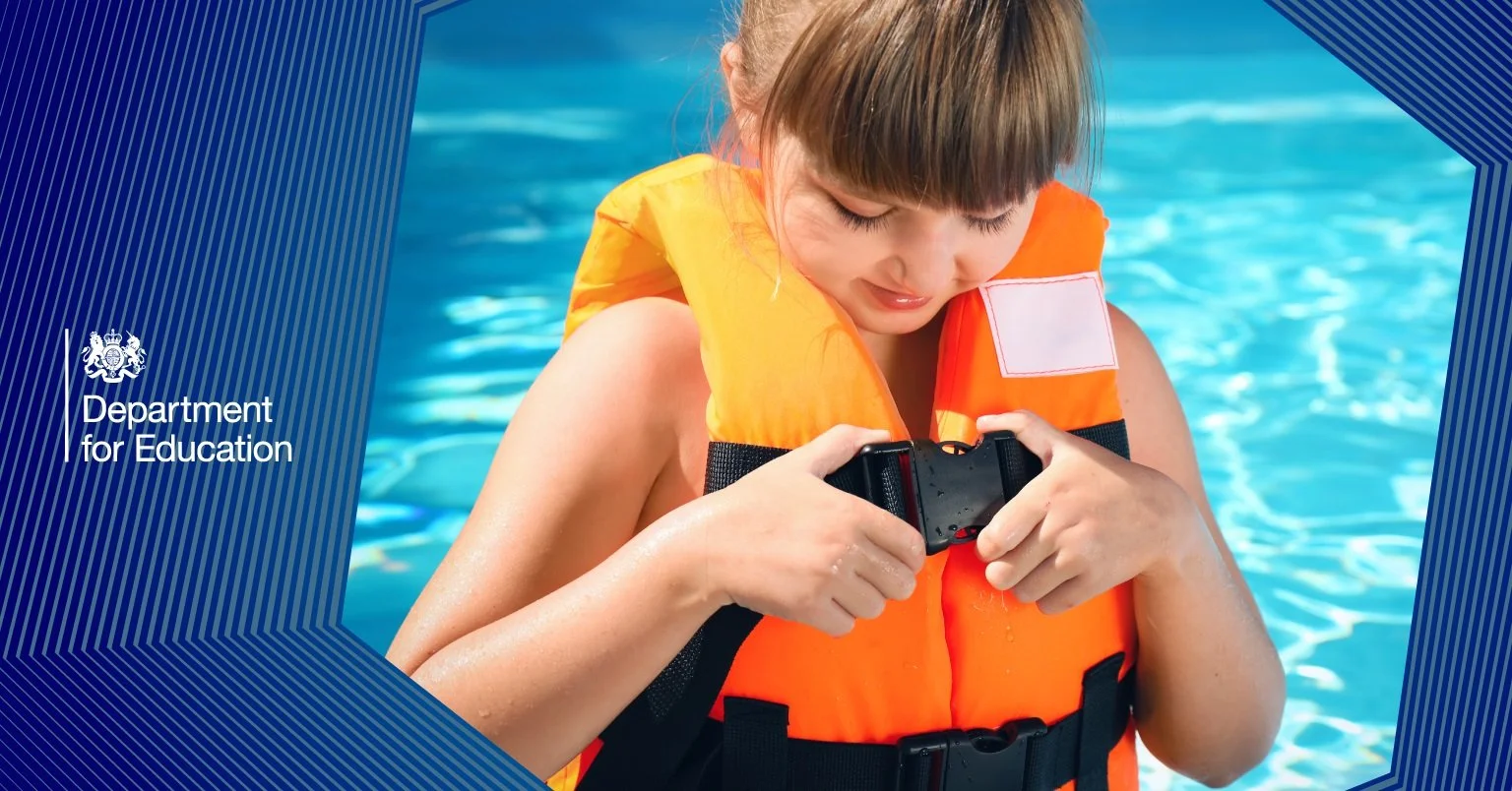
DfE Update | Drowning Prevention Week: what children learn about water safety at school

As we head into summer, it’s especially important that children are prepared with these skills. This year, the Royal Life Saving Society UK's Drowning Prevention Week runs from 14 June to 21…

Read More →
DfE Update | Hot weather and heatwaves: guidance for schools and other education settings

There are several ways that schools can make changes to keep children safe in hot weather, especially as children are more at risk of becoming ill with heat-related issues than adults…

Read More →
 

Are you looking for a specific resource or document for your provision?

Use our 🔍 Search Bar located at the top of every page.


Content within the EYFS Curriculum & Pedagogy Membership is provided as professional guidance and support. It reflects current understanding of the EYFS statutory framework, Development Matters and inspection expectations at the time of writing. Practitioners are responsible for applying professional judgement and ensuring practice aligns with current statutory requirements and their specific context.

Updated: January 2026

 
In Babies | 0-18 Months, -B1 Tags Baby, Curriculum Language in Baby Rooms | Babies (birth-18 months)
← Baby Curriculum Map | Babies (birth-18 months)How Our Baby Room Practice Works | Babies (birth-18 months) →

Trusted by over 35,000 members

- early years professionals across nurseries, schools and childminding settings


Contact Little Owls Resources support:

support@littleowlsresources.com

Information

  • About | Testimonials

  • Privacy Policy

  • Cookie Policy

  • Terms & Conditions

  • Help Page

Core Navigation

  • Membership

  • Printable Resources

  • Events Calendar

  • Curriculum & Pedagogy

Thank-you Little Owls Resources members! Our community is growing! 😊


Read our File Format information

Copyright on all of the images, files & resources housed on this website is held by ‘Little Owls Resources’. In downloading any of these resources you are issued a single licence for your own use and the right to grant a limited licence to your students to use the licensed material as part of your teaching and their own use.

Our resources (including the images within them), cannot be shared or sold commercially.

Website powered by Squarespace

Search powered by https://www.sitesearch360.com