• Home 🏠
  • About Us
  • Pricing
    • 🌟Printable Resources Hub🌟
    • ↪ Themes
    • ↪ Role Play
    • ↪ Festivals & Celebrations
    • ↪ Special Dates Calendar
    • ↪ Areas of Learning
    • ↪ Organisational Tools
  • EYFS Curriculum & Pedagogy
  • Special Dates Calendar
Menu

Little Owls Resources - Free and Premium Early Years Printables

Street Address
City, State, Zip
Phone Number
Early Years/Preschool/EYFS Printable Activities/Planning/Displays/Paperwork and ideas for Childminders, Preschools, Nursery Practitioners, Teachers and Parents

Your Custom Text Here

Little Owls Resources - Free and Premium Early Years Printables

  • Home 🏠
  • About Us
  • Pricing
  • Printable Resources ⬇
    • 🌟Printable Resources Hub🌟
    • ↪ Themes
    • ↪ Role Play
    • ↪ Festivals & Celebrations
    • ↪ Special Dates Calendar
    • ↪ Areas of Learning
    • ↪ Organisational Tools
  • EYFS Curriculum & Pedagogy
  • Special Dates Calendar

Speech & Language Development - Setting Statement | Whole-Setting Document

January 18, 2026 Stuart Murphy

Home › EYFS Curriculum & Pedagogy › Speech & Language Development - Setting Statement | Birth-5 Document (Overview)


Scroll down to read this web document or download files here: DOCX 📝 | PDF 📄


Speech & Language Development

Setting Statement For Parents, Inspectors & Website

Our Vision

At our setting, communication is at the heart of learning, wellbeing and relationships.

We believe:

  • Children communicate long before they speak

  • Every child has a voice

  • Adults are partners in talk, not directors

  • Language grows strongest through play, connection, and curiosity

  • We celebrate ALL communication — gestures, signs, sounds, facial expressions, words, silence & laughter

Communication is more than speaking — it is belonging.

Our Approach

We create a communication-rich environment where children:

  • Are listened to without interruption

  • Have time to think, respond and explore ideas

  • Hear a broad range of vocabulary in meaningful contexts

  • Learn language through shared play and everyday routines

  • Experience stories, rhymes and songs every day

  • Develop confidence to express emotions and ideas

Our practitioners respond sensitively, observe carefully and interact purposefully, using strategies supported by current research and the EYFS.

Key Principles of Practice

Approach & What it Looks Like

  • Follow the Child's Lead - Adults join play rather than redirect

  • Commenting > Quizzing - “The water is splashing loudly!”

  • Wait & Pause - Time to think and respond

  • Copy + Extend - “Car.” → “Red car.”

  • Serve & Return - Conversation as turn-taking

  • Sustained Shared Thinking - Wondering and exploring ideas together

  • Rich Vocabulary - Real words rooted in real experience

  • Emotion Coaching - Naming and validating feelings

Language is not added on — It is woven through every interaction.

Staff Training & CPD

All staff receive ongoing support and professional development focused on:

  • Early speech and language development

  • EAL strategies

  • Supporting non-verbal communication

  • Play-based language building

  • Dialogic reading (shared story approaches)

  • Understanding developmental stages

  • Knowing when and how to seek advice

We reflect as a team, share practice, observe each other and commit to being lifelong learners alongside the children.

Partnership with Parents

We recognise parents as children’s first and most important educators.

We:

  • Share ideas for building language at home

  • Celebrate every small communication milestone

  • Offer non-judgemental conversations

  • Provide practical strategies, not pressure

  • Listen to parent insight as part of assessment

Communication thrives when adults work together.

Inclusion and Early Identification

We believe all communication is meaningful.

We ensure:

  • Every child feels heard, valued and responded to

  • Language support is inclusive, not isolating

  • Children developing differently are not compared but understood

  • Concerns are handled sensitively and collaboratively

  • Referrals are timely, evidence-based and partnership-led

We adapt environments, expectations and resources — not the child.

How This Aligns With EYFS & Ofsted Expectations

  • Recognising and supporting early communication
    → EYFS Section 1: 1.6, 1.7

  • Creating language-rich environments
    → Development Matters ‘Communication and Language’

  • Building children’s confidence and self-regulation
    → PSED links

  • Partnership with parents
    → Statutory requirement

  • Early identification of needs
    → SEND Code of Practice

  • Inclusive curriculum delivery
    → Ofsted’s emphasis on Intent–Implementation–Impact

This statement demonstrates a pedagogically robust approach and reflects contemporary best practice.

In summary

We are a communication-focused setting where children learn language through joyful, meaningful interaction. We listen, we model, we extend, and we celebrate every voice.


Document Updated: January 2026


Download DOCX 📝
Download PDF 📄


Recommended next read Selection

EYFS
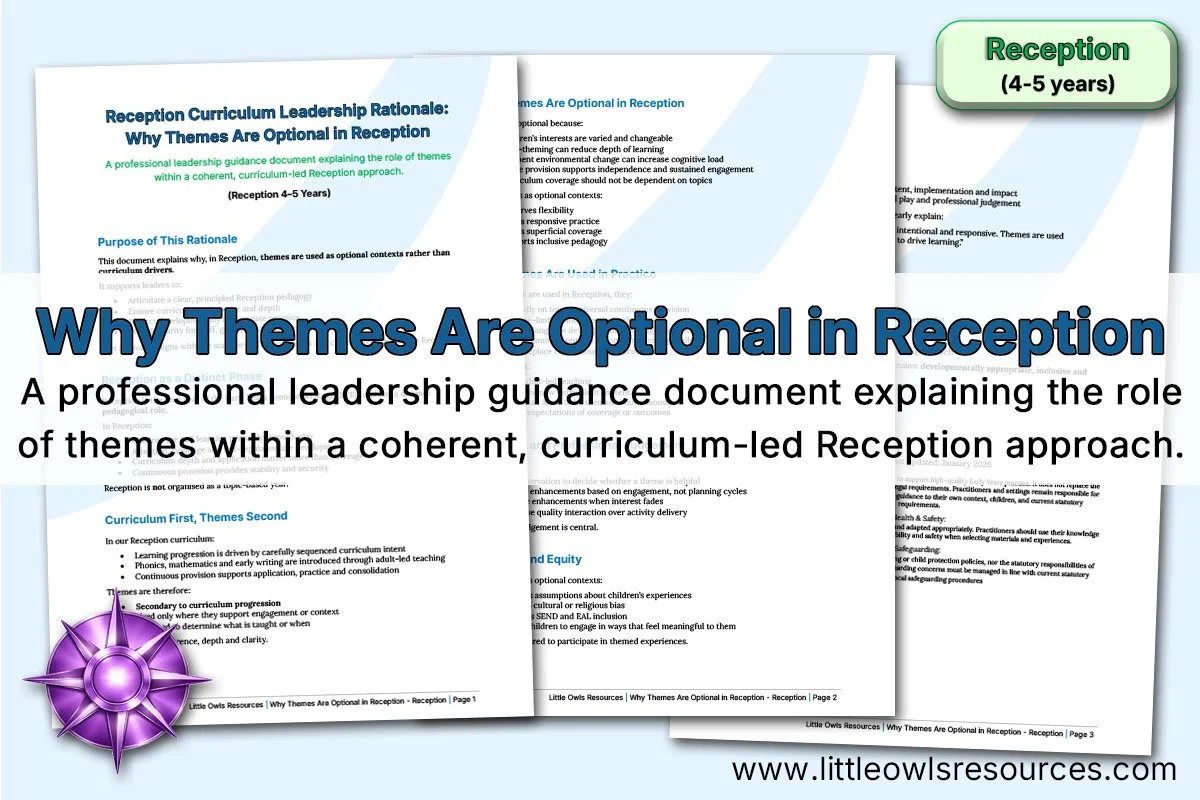
Why Themes Are Optional in Reception | 4-5 Years

A professional leadership guidance document explaining the role of themes within a coherent, curriculum-led Reception approach.

Read More →
How to Use the Reception Pathway | 4-5 Years

This document is designed to help practitioners and leaders understand how to navigate and use the Reception Pathway effectively.

Read More →
About Our Reception Curriculum Phase Framework | 4-5 Years

A professional guidance document explaining the rationale and structure behind our phase-based approach to Reception curriculum design.

Read More →
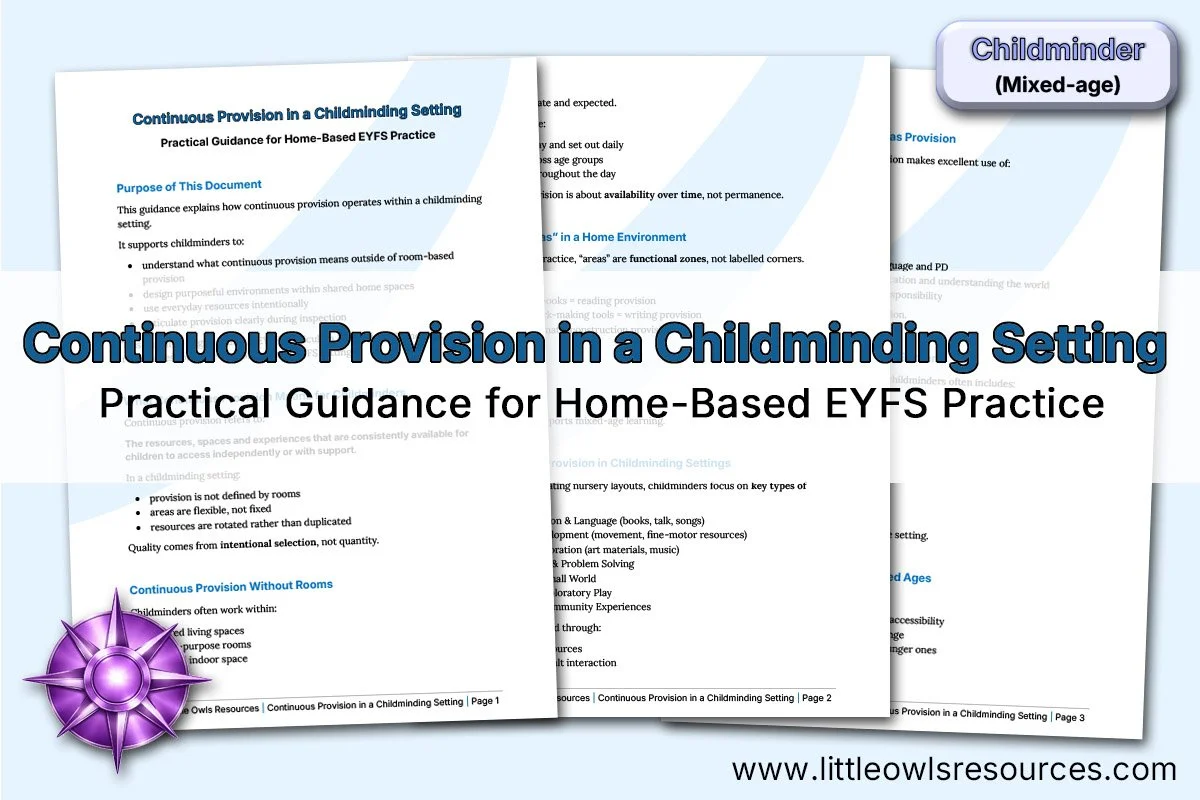
Continuous Provision in a Childminding Setting | Mixed-Age

A professional guidance document supporting confident continuous provision in home-based, mixed-age EYFS settings.

Read More →
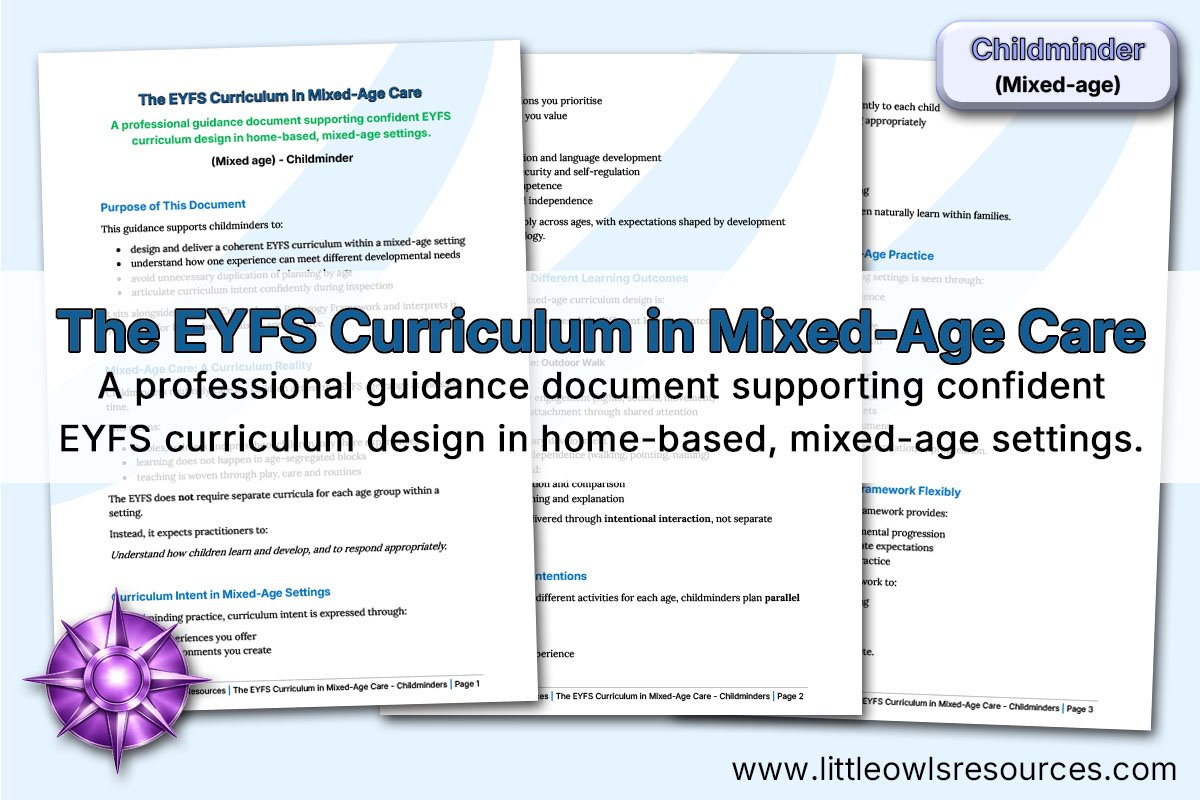
The EYFS Curriculum in Mixed-Age Care | Childminder Guidance

A professional guidance document supporting confident EYFS curriculum design in home-based, mixed-age settings.

Read More →
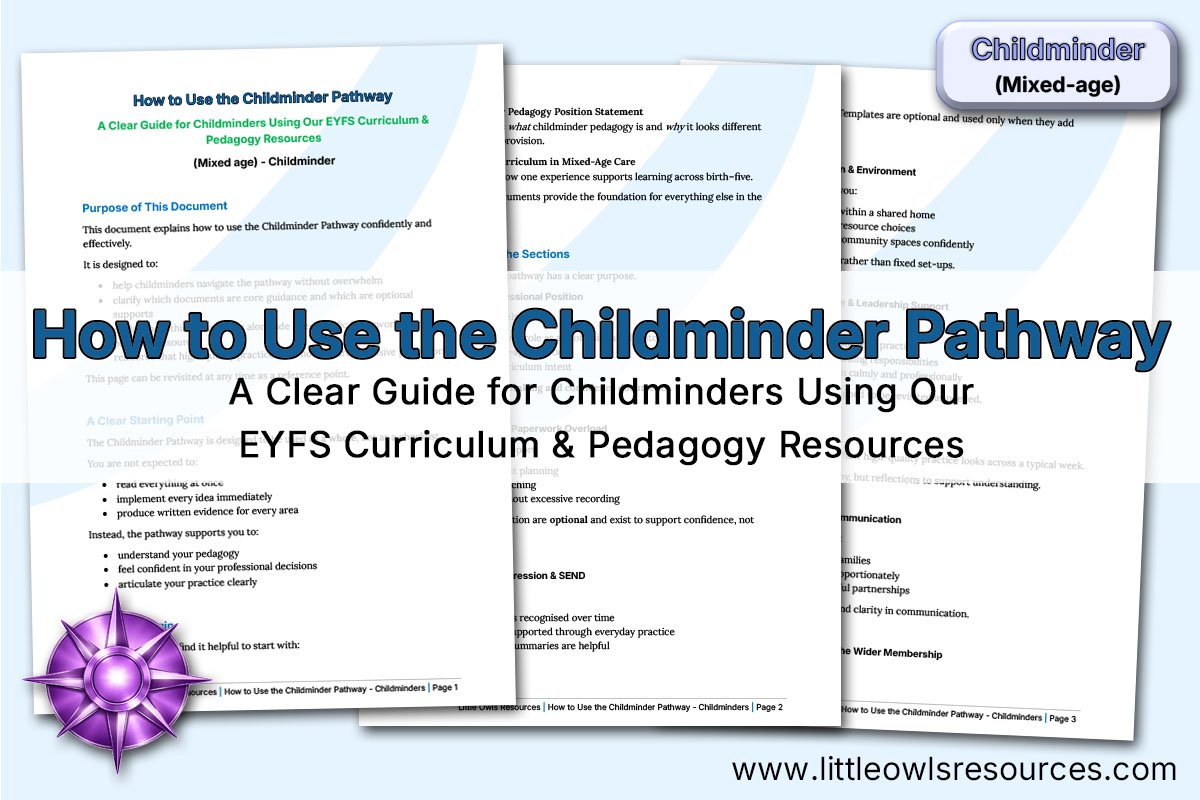
How To Use The Childminder Pathway | Mixed-Age

A Clear Guide for Childminders Using Our EYFS Curriculum & Pedagogy Resources

Read More →
FAQs: Toddler Planning & Pedagogy (18–36 Months)

This page answers frequently asked questions about planning and pedagogy in toddler rooms.

Read More →
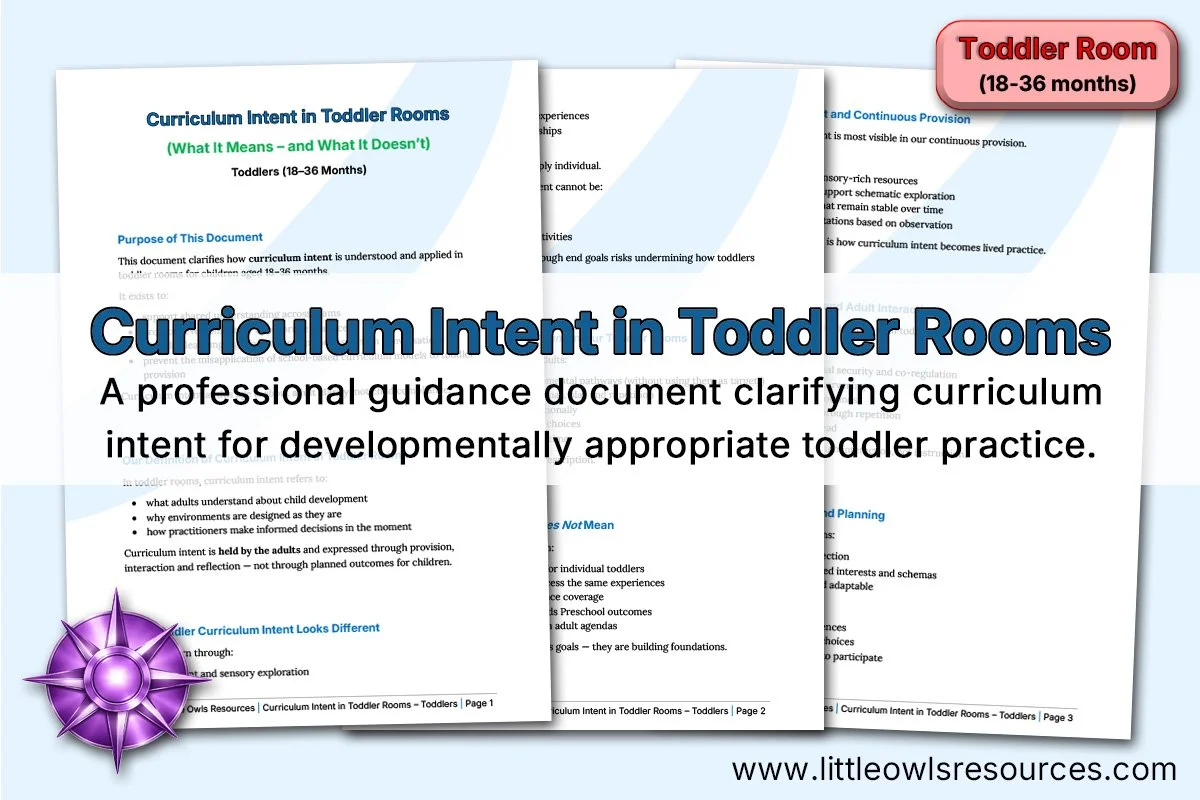
Curriculum Intent in Toddler Rooms | Toddlers (18–36 Months)

A professional guidance document clarifying curriculum intent for developmentally appropriate toddler practice.

Read More →
How Our Toddler Curriculum Works (18–36 Months)

A professional guidance document explaining how curriculum intent, implementation and impact operate in toddler rooms.

Read More →
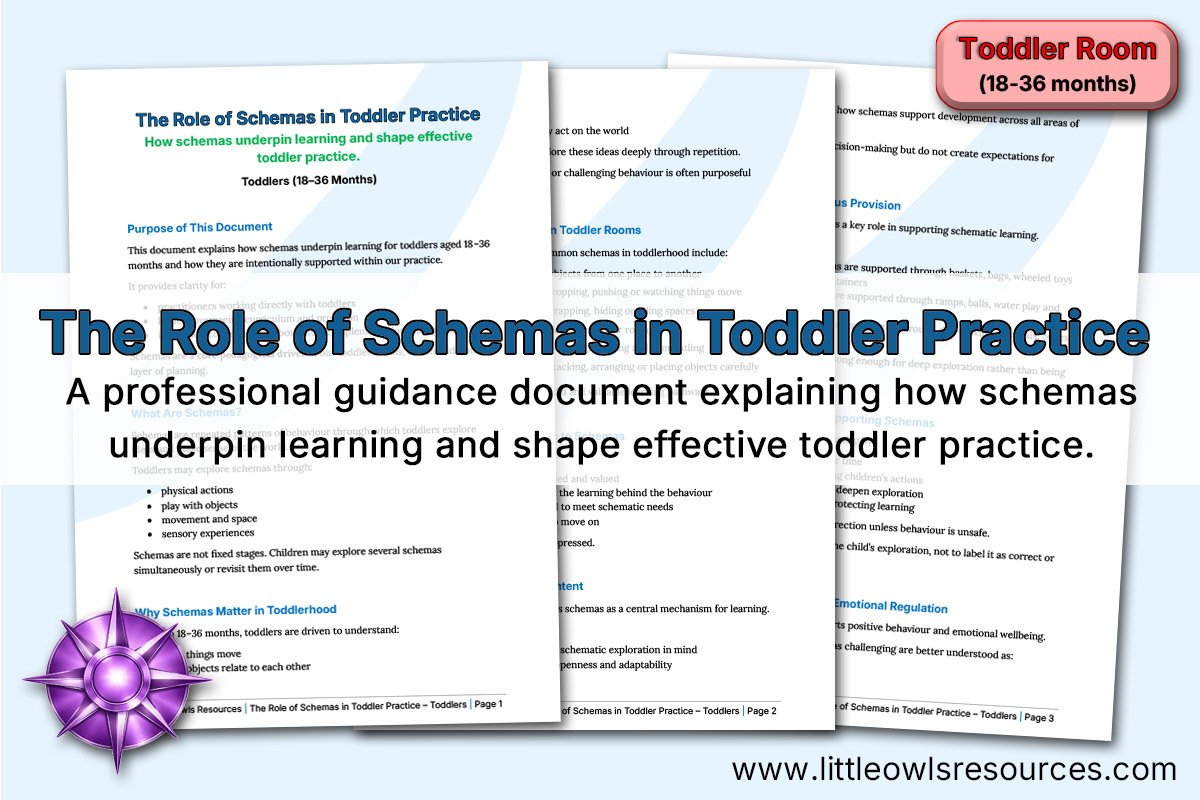
The Role of Schemas in Toddler Practice (18-36 Months)

A professional guidance document explaining how schemas underpin learning and shape effective toddler practice.

Read More →
How To Use The Toddler (18-36 Months) Pathway

This overview explains how to navigate, understand and use the Toddler (18–36 months) Pathway effectively.

Read More →
Curriculum Language in Baby Rooms | Babies (birth-18 months)

Explaining Intent, Implementation & Impact for babies aged 0–18 months

Read More →
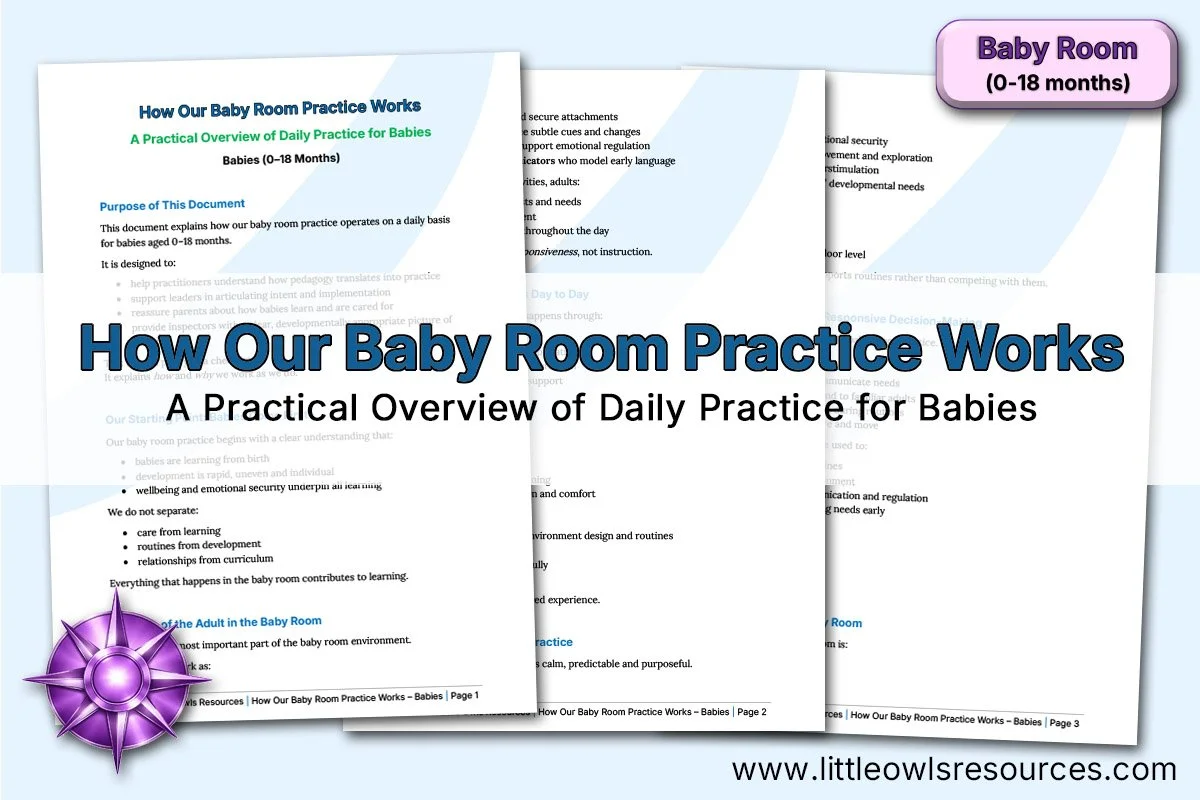
How Our Baby Room Practice Works | Babies (birth-18 months)

A professional overview explaining day-to-day EYFS practice for babies aged 0–18 months

Read More →
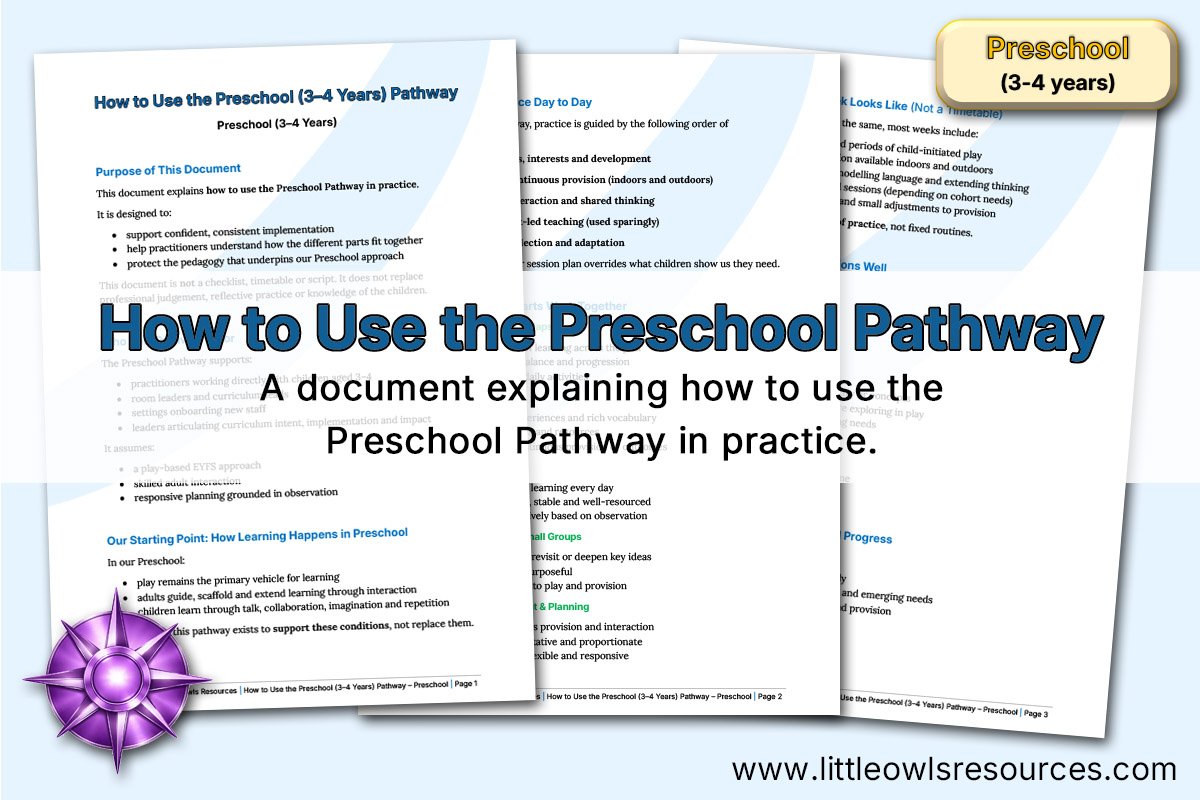
How To Use The Preschool (3-4 Years) Pathway

This document explains how to use the Preschool Pathway in practice.

Read More →
Adult-Led With Purpose Poster | Preschool 3-4 Years

A practitioner guidance poster clarifying intentional, play-based adult-led teaching

Read More →
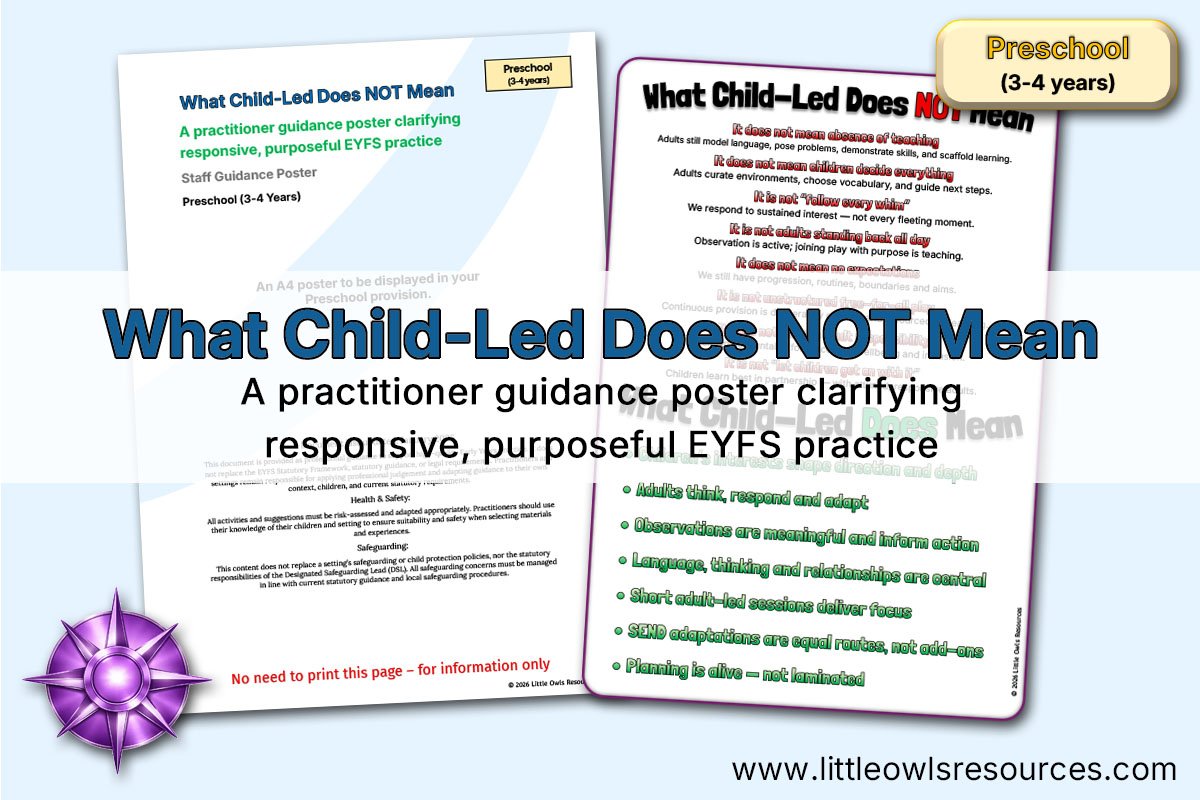
What Child-Led Does NOT Mean Poster | Preschool 3-4 Years

A practitioner guidance poster clarifying responsive, purposeful EYFS practice

Read More →
Preschool (3–4 Years) Curriculum Overview | How Themes Fit Together (Overview)

A full-year, responsive EYFS planning framework

Read More →
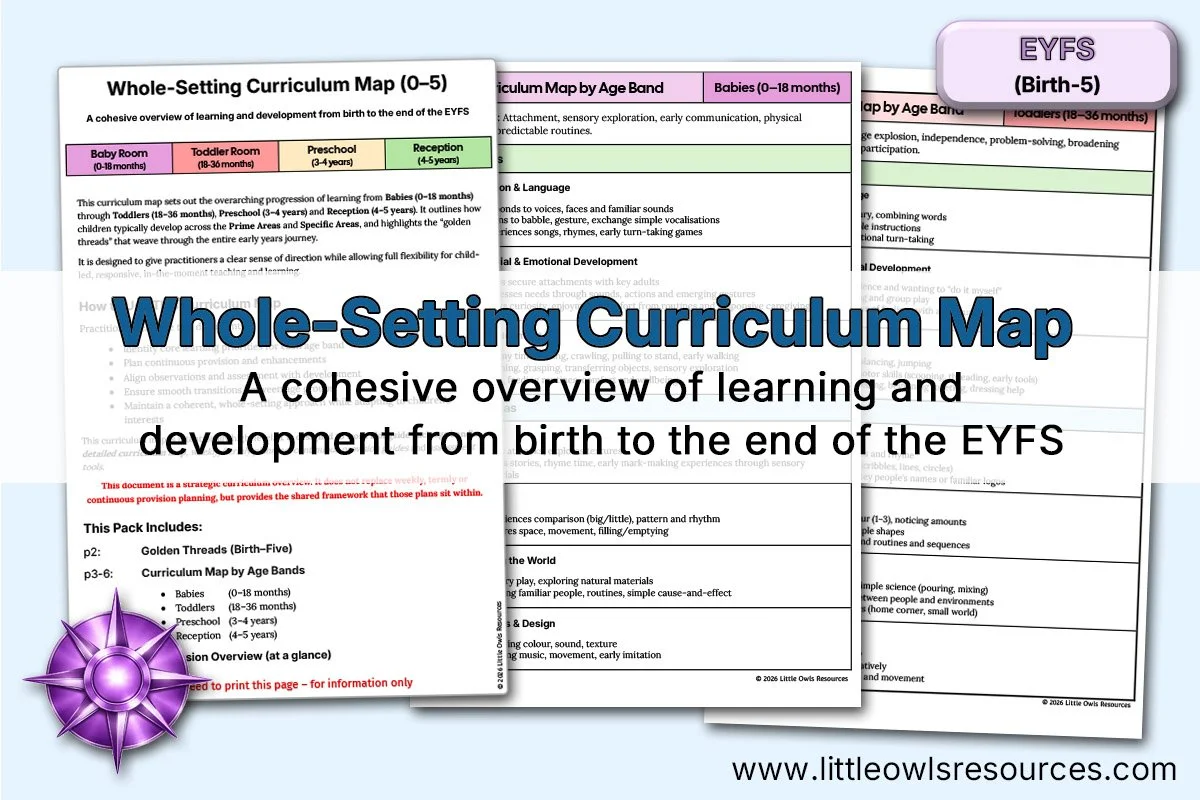
Whole-Setting Curriculum Map (Birth–5): Curriculum Intent & Progression (Overview)

A cohesive, high-level overview of learning and development from birth to the end of the EYFS.

Read More →
EYFS Inspection-Facing Summaries | Birth-5 Document (Overview)

Clear, age-phase inspection summaries articulating curriculum intent, implementation and impact across the EYFS.

Read More →
Speech & Language Development - Setting Statement | Birth-5 Document (Overview)

Setting Statement for Parents, Inspectors & Website

Read More →
EYFS from Birth to 5 | Curriculum Coherence & Pedagogical Throughline

Curriculum Coherence & Pedagogical Throughline

Read More →
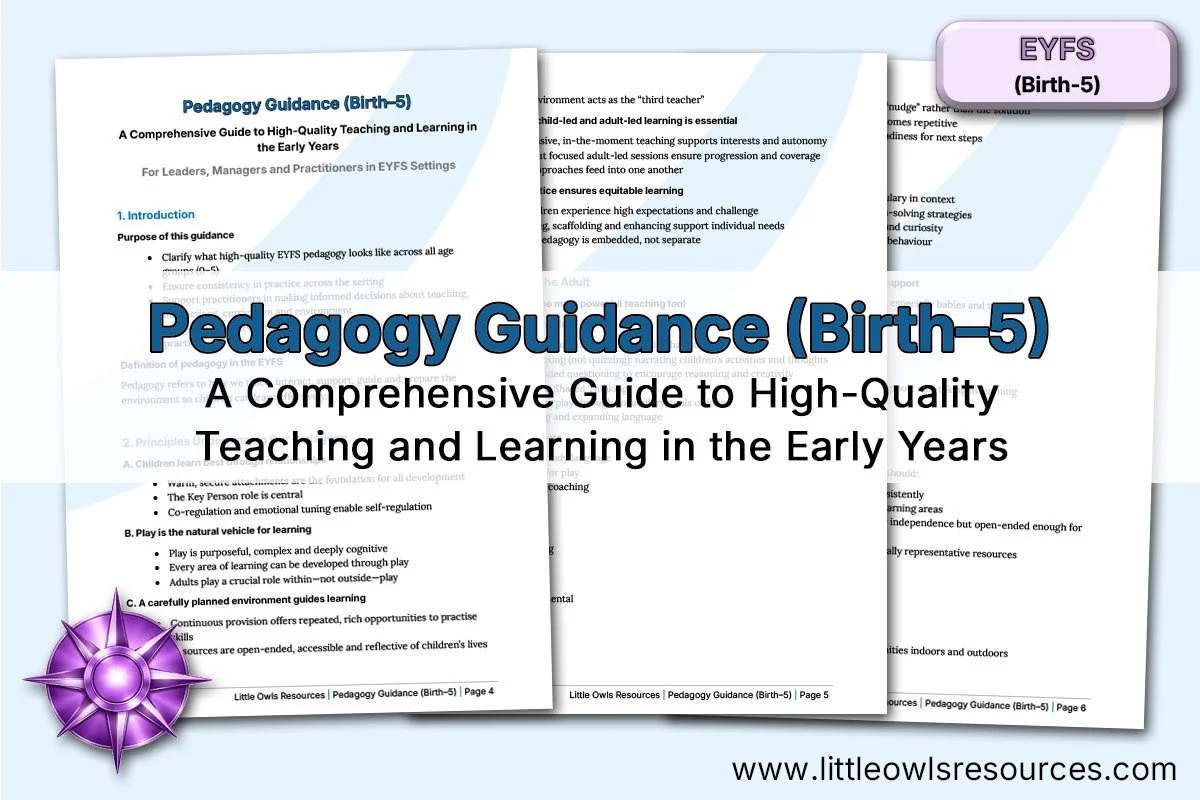
Pedagogy Guidance (Birth–5) | Whole-Setting Document (Overview)

A professional guidance document supporting confident, consistent EYFS pedagogy from birth to five.

Read More →
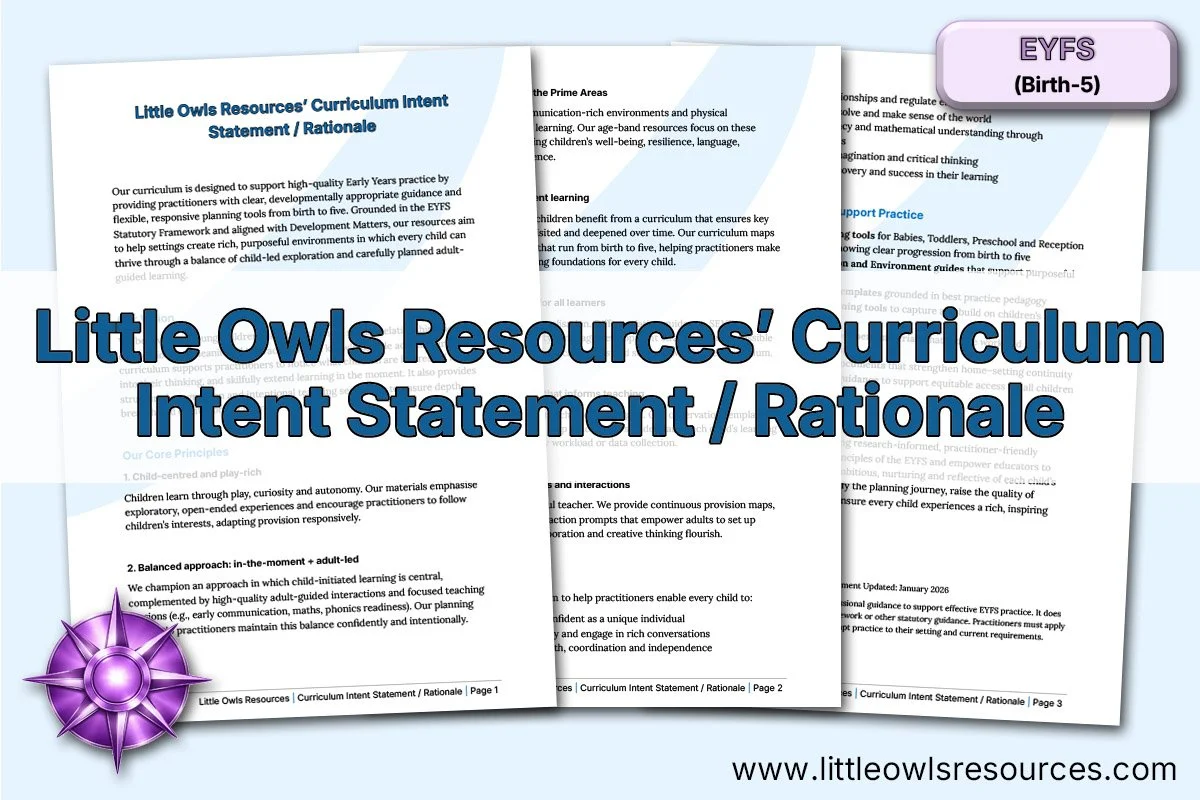
Little Owls Resources' Curriculum Intent Statement | Birth-5

Our curriculum is designed to support high-quality Early Years practice by providing practitioners with clear, developmentally appropriate guidance and flexible, responsive planning tools from birth to five.

Read More →
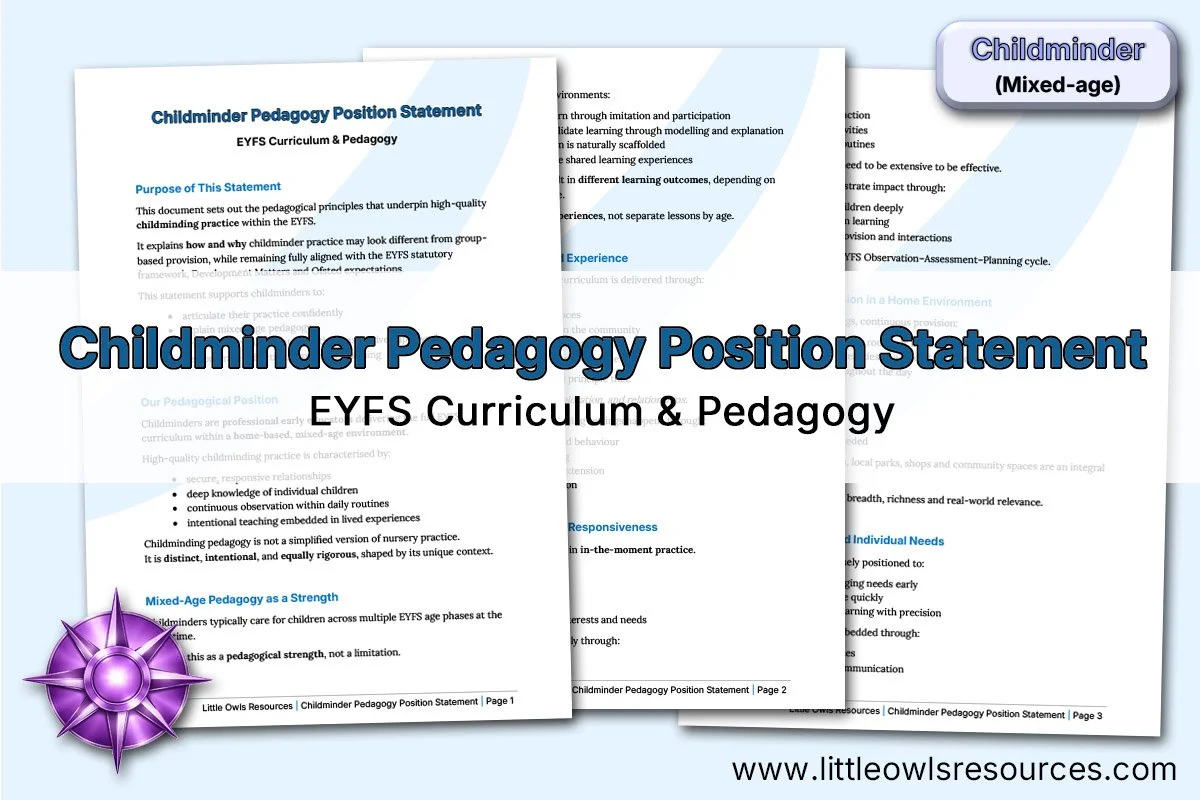
Childminder Pedagogy Position Statement | Mixed-Age

EYFS Curriculum & Pedagogy

Read More →
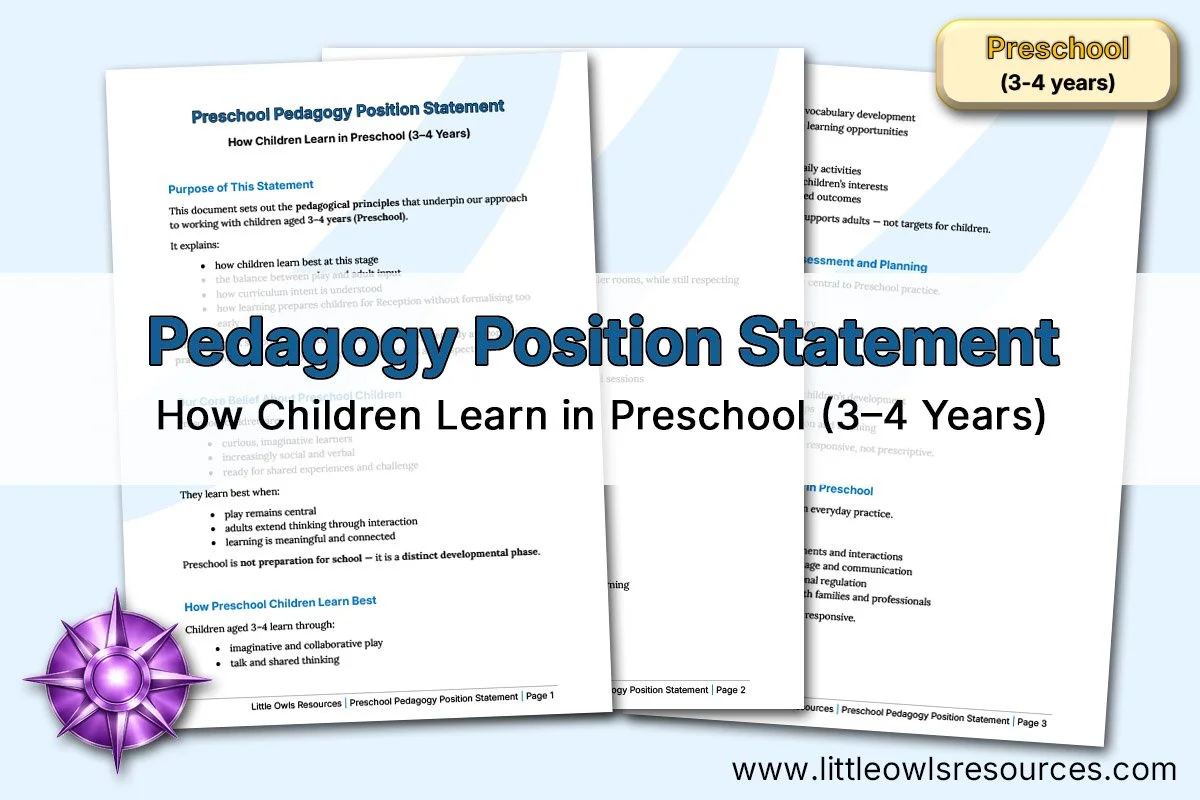
Preschool Pedagogy Position Statement | 3-4 Years

How Children Learn in Preschool (3–4 Years)

Read More →
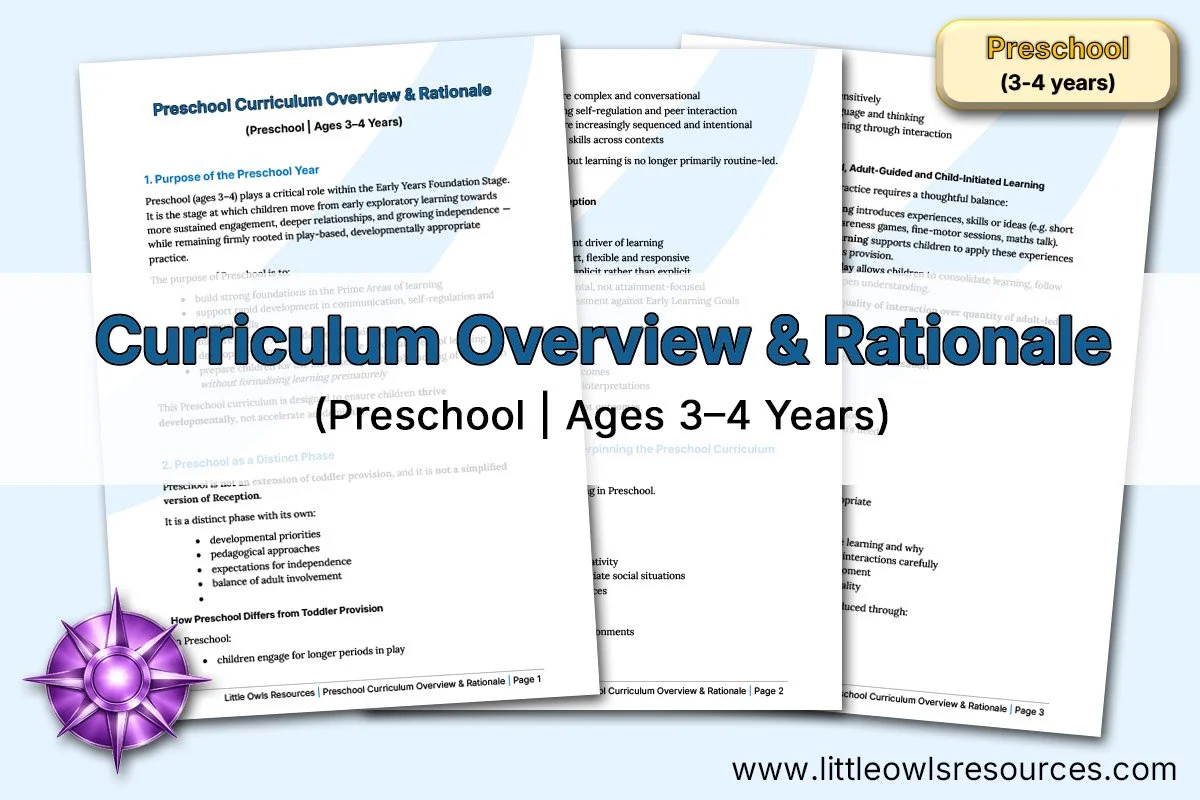
Preschool Curriculum Overview & Rationale | 3-4 Years

(Preschool | Ages 3–4 Years)

Read More →
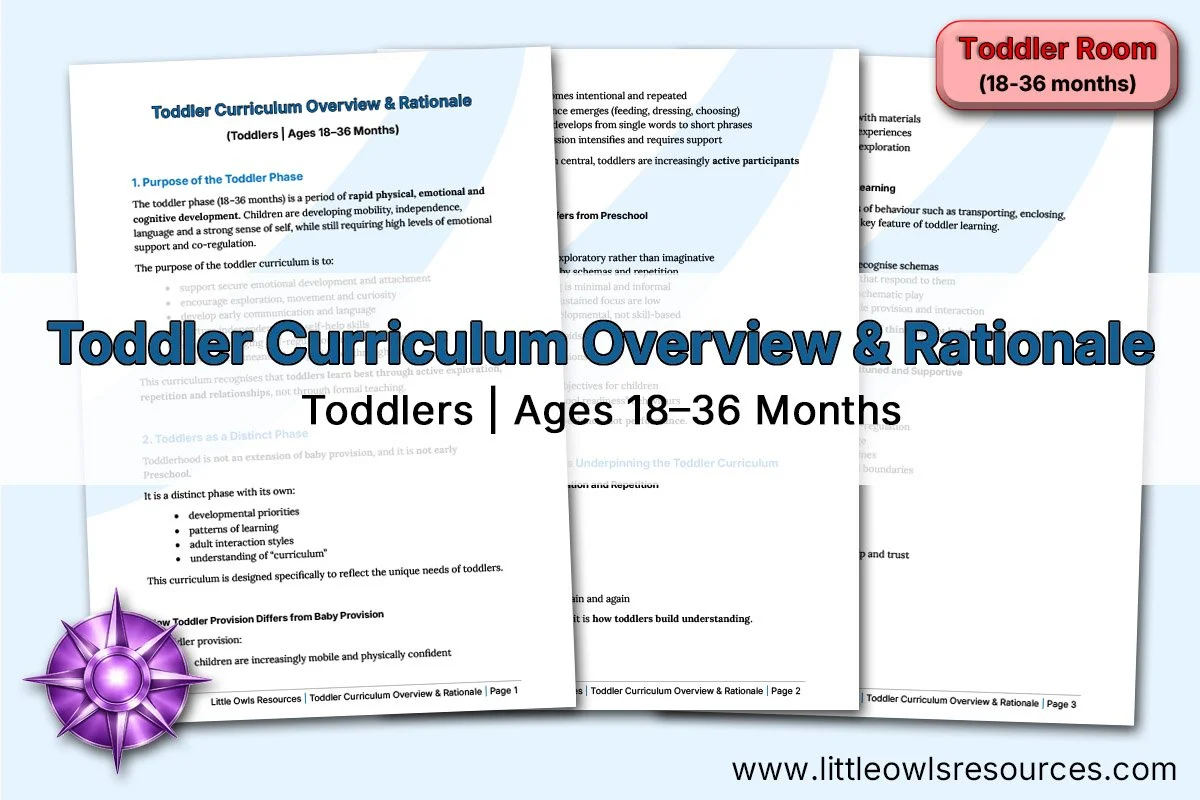
Toddler Curriculum Overview & Rationale | 18-36 Months

(Toddlers | Ages 18–36 Months)

Read More →
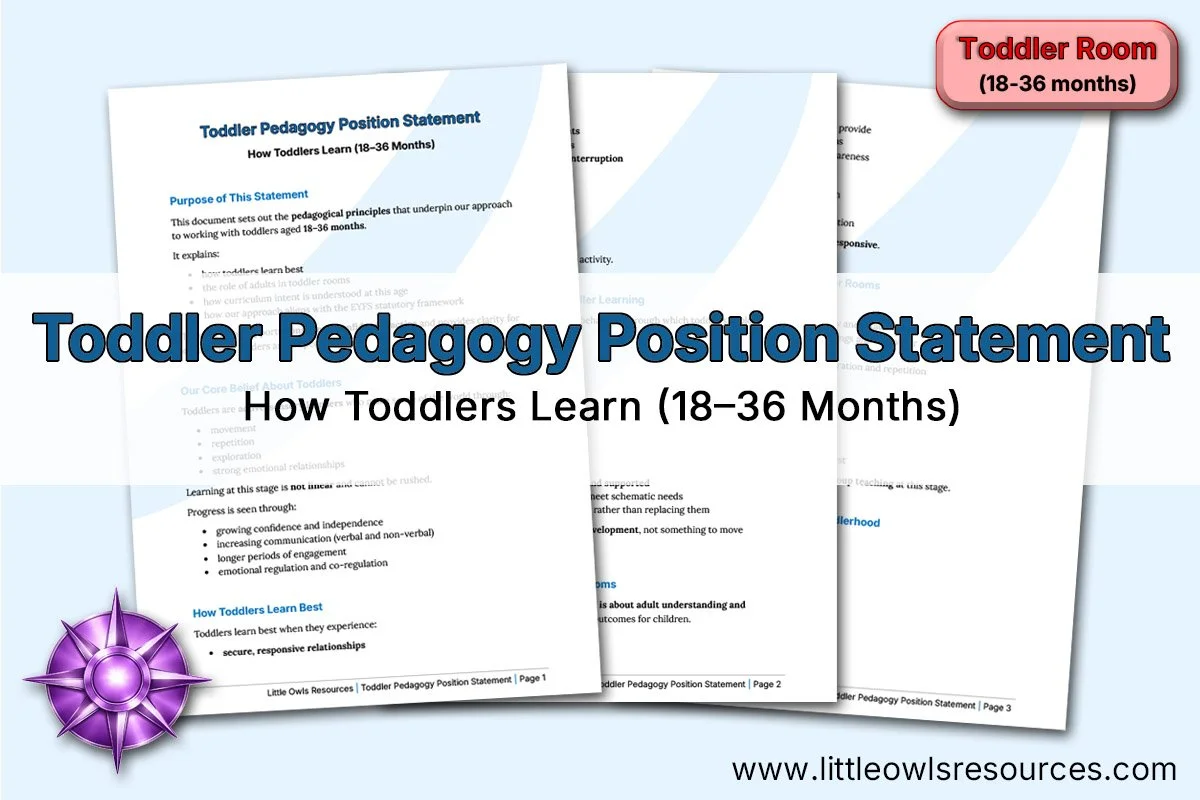
Toddler Pedagogy Position Statement | 18-36 Months

How Toddlers Learn (18–36 Months)

Read More →
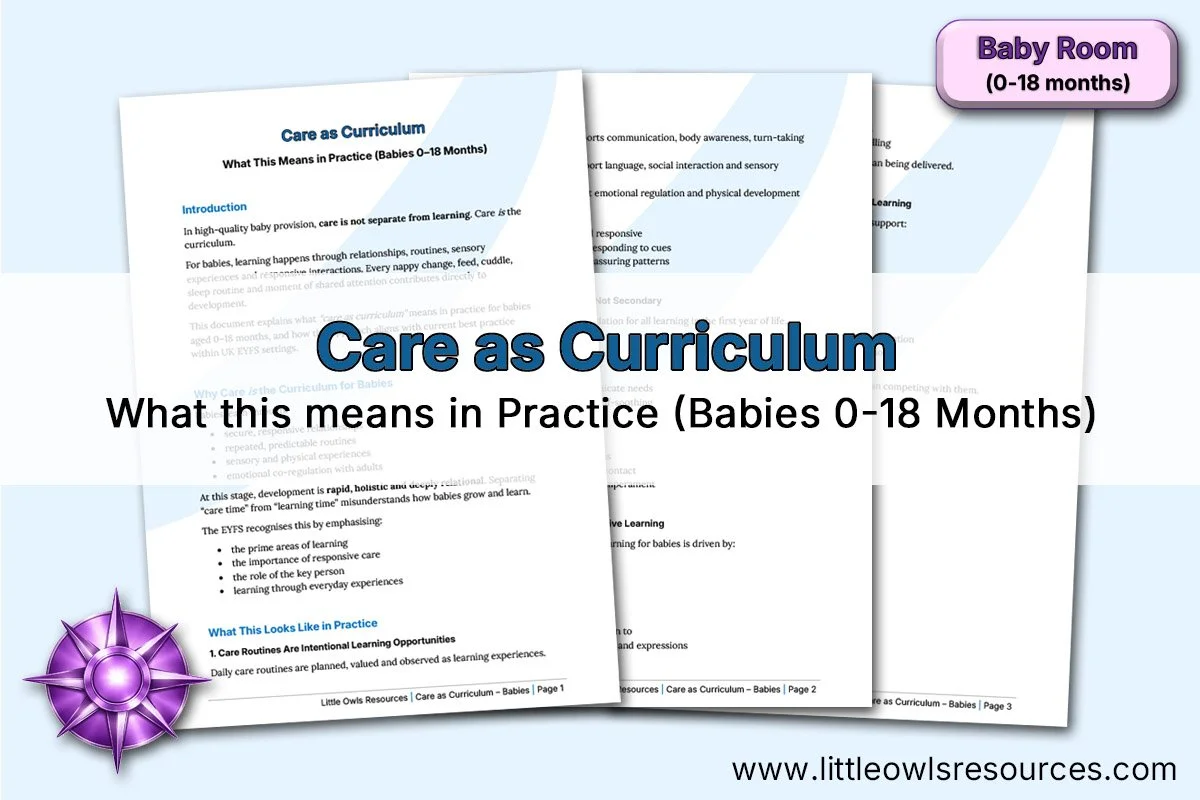
Care as Curriculum: What This Means in Practice | Babies 0-18 Months

What This Means in Practice (Babies 0–18 Months)

Read More →
Reception Curriculum Overview & Rationale | 4-5 Years

Reception Year | Ages 4–5

Read More →
 

Additional Whole-Setting Guidance | for Professional Members

Explore our whole-setting guidance below, including overarching curriculum and pedagogy documents, early years schemas and EYFS setting policies.

    • Little Owls Resources’ Curriculum Intent Statement

    • EYFS from Birth to 5: Curriculum Coherence & Pedagogical Throughline

    • Whole-Setting Curriculum Map (Birth-5): Curriculum Intent & Progression

    • Pedagogy Guidance Document

    • Speech & Language Development - Setting Statement

    • EYFS Inspection-Facing Summaries

  • Early Years Schemas - Practitioner Toolkit | EYFS Birth-5

    ↪ Schema Cards (definition, behaviours, age-related examples, enabling resources)

    ↪ Schema Observation & Responsive Provision Planning Template

    • EYFS Group Setting Policies Pack

      ↪ x 22 Policy Documents

      ↪ Policy Sign-Off and Confirmation Document

      ↪ EYFS Setting Policy Folder Contents List

    • Childminder Setting Policies Pack

      ↪ x 22 Policy Documents

      ↪ Childminder Assistant or Volunteer Policy Sign-Off and Confirmation Document

      ↪ Childminder Policy Folder Contents List

  • EYFS Glossary

    ↪ Clear, practitioner-friendly explanations of key curriculum and pedagogy terms used throughout our guidance.


Looking for age-specific pathway documents?

Select the pathway that best reflects your role or the age group you work with. You do not need to use everything. (Some practitioners may use more than one pathway.)
Featured
🍼 Babies (0–18 months)

Responsive care, observation and development in the earliest years

🚼 Toddlers (18–36 months)

Development, play and progression in the toddler years

🎨 Preschool (3–4 years)

Curriculum, continuous provision and purposeful teaching

🎓 Reception (4–5 years)

Play-based pedagogy, progression and EYFSP readiness

🏡 Childminders (Birth–5)

Mixed-age pedagogy, planning without overload and inspection confidence


Latest EYFS Articles & Practical Guides | From Our Blog

Stay informed, get expert advice, and find inspiration from our collection of articles and useful external resources, tailored specifically for EYFS practitioners. We regularly publish in-depth articles to support you with current best practices, regulatory changes, and fresh ideas.
EYFS & KS1 Articles
Major UK Curriculum Shake-Up Announced: What EYFS & KS1 Practitioners Need to Know

A major overhaul of the national curriculum in England has been announced following the publication of the independent Curriculum and Assessment Review. For those working in the Early Years Foundation Stage (EYFS) and Key Stage 1 (KS1), the changes signal a renewed focus on practical life skills, digital literacy, and enriching learning experiences…

Read More →
New Education Inspection Framework | What EYFS Settings Need to Know

The world of early years education is constantly evolving, and with it, the frameworks that guide and assess our invaluable work. Come November 2025, a significant shift will occur as the new Education Inspection Framework (EIF) comes into effect, bringing with it some crucial changes…

Read More →
Revised 2025 EYFS Statutory Framework for Group & School-Based Providers | What You Need to Know

With the new 2025 EYFS Statutory Framework for group and school-based providers coming into effect on 1st September 2025, it's essential to understand the updates to ensure your practice remains compliant, effective…

Read More →
DfE Press Release | Parents urged to read more to boost children’s life chances

The Education Secretary is calling on parents to lead by example and make reading a daily habit to help reverse the decline in reading for pleasure, to help give kids the best start in life as part of the…

Read More →
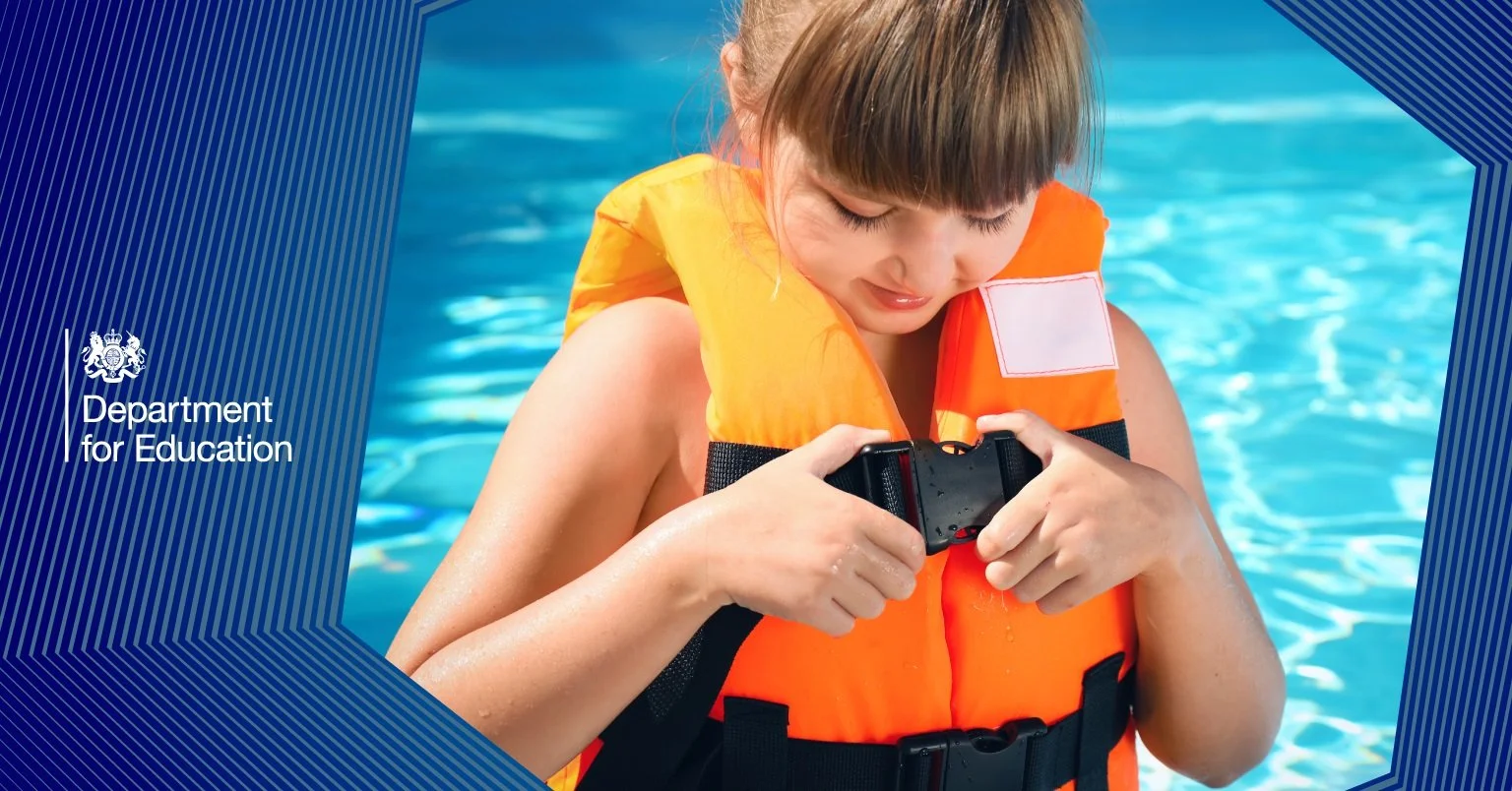
DfE Update | Drowning Prevention Week: what children learn about water safety at school

As we head into summer, it’s especially important that children are prepared with these skills. This year, the Royal Life Saving Society UK's Drowning Prevention Week runs from 14 June to 21…

Read More →
DfE Update | Hot weather and heatwaves: guidance for schools and other education settings

There are several ways that schools can make changes to keep children safe in hot weather, especially as children are more at risk of becoming ill with heat-related issues than adults…

Read More →
 

Are you looking for a specific resource or document for your provision?

Use our 🔍 SEARCH Bar located at the top of every page.


Content within the EYFS Curriculum & Pedagogy Membership is provided as professional guidance and support. It reflects current understanding of the EYFS statutory framework, Development Matters and inspection expectations at the time of writing. Practitioners are responsible for applying professional judgement and ensuring practice aligns with current statutory requirements and their specific context.

Updated: January 2026

 
In Whole-Setting | C & P, Birth-5, Pedagogy, Speech & Language Tags Speech & Language Development - Setting Statement | Whole-Setting Document

Trusted by over 35,000 members

- early years professionals across nurseries, schools and childminding settings


Contact Little Owls Resources support:

support@littleowlsresources.com

Information

  • About | Testimonials

  • Privacy Policy

  • Cookie Policy

  • Terms & Conditions

  • Help Page

Core Navigation

  • Membership

  • Printable Resources

  • Events Calendar

  • Curriculum & Pedagogy

Thank-you Little Owls Resources members! Our community is growing! 😊


Read our File Format information

Copyright on all of the images, files & resources housed on this website is held by ‘Little Owls Resources’. In downloading any of these resources you are issued a single licence for your own use and the right to grant a limited licence to your students to use the licensed material as part of your teaching and their own use.

Our resources (including the images within them), cannot be shared or sold commercially.

Website powered by Squarespace

Search powered by https://www.sitesearch360.com