
Part of the EYFS Glossary
This article forms part of our EYFS Glossary of Early Years Education Terms, which explains key curriculum, pedagogy, and assessment language used in early years practice.
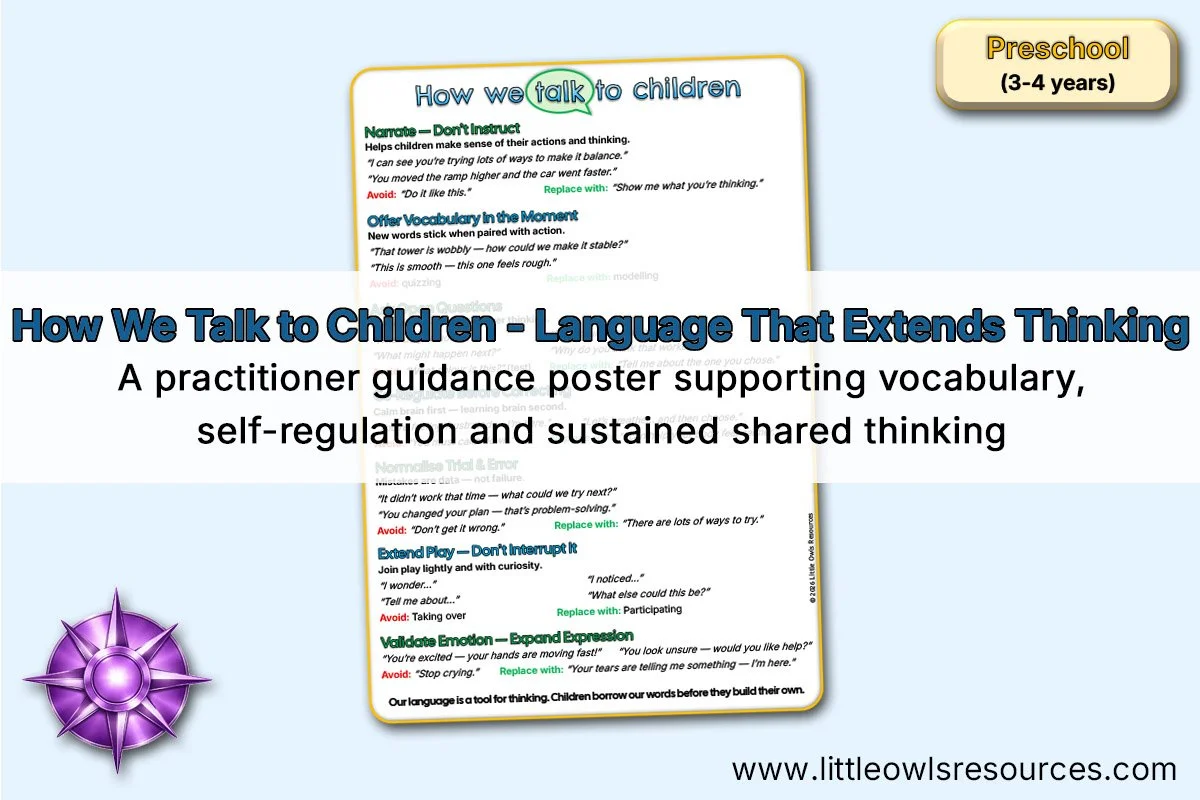
Commenting and questioning are two approaches used by practitioners during interactions with children. Commenting involves describing or acknowledging what a child is doing or thinking, while questioning involves asking children questions to prompt responses or thinking.
What is Commenting vs Questioning?
Commenting and questioning are two ways practitioners interact with children to support learning and development. Both approaches can be used to extend thinking, support language development, and engage children in interaction.
In early years practice, practitioners often use a balance of both approaches depending on the context, the child, and the purpose of the interaction.
What is Commenting in the EYFS?
Commenting involves describing, narrating, or acknowledging what a child is doing, thinking, or experiencing.
Examples of commenting may include:
describing a child’s actions
noticing and acknowledging what a child has done
modelling language linked to an activity
reflecting a child’s ideas back to them
Commenting can support language development by providing children with vocabulary and sentence structures. It can also help maintain engagement by following the child’s focus of attention.
What is Questioning in the EYFS?
Questioning involves asking children questions to prompt responses, reflection, or discussion.
Examples of questioning may include:
asking children to explain their ideas
encouraging children to predict outcomes
prompting children to reflect on experiences
inviting children to consider alternatives
Questions may be open-ended or more specific, depending on the context and purpose of the interaction.
Differences Between Commenting and Questioning
While both approaches support learning, they differ in how they influence interaction.
Commenting:
follows the child’s focus of attention
provides language models
does not require an immediate response
can support sustained engagement
Questioning:
prompts a response from the child
may direct attention or thinking
can support reasoning and reflection
may interrupt engagement if overused
In practice, practitioners often use a combination of both approaches.
When Practitioners Use Commenting and Questioning
Practitioners may choose between commenting and questioning depending on the situation.
For example:
commenting may be used to support language development and maintain engagement during play
questioning may be used to explore ideas, extend thinking, or support reflection
In some situations, commenting can help create space for children to think and respond in their own time, while questioning may encourage children to articulate their ideas more explicitly.
Common Questions About Commenting vs Questioning
-
Neither approach is inherently better. Both commenting and questioning can support children’s learning when used appropriately.
-
Commenting can support language development and maintain children’s engagement without placing pressure on them to respond.
-
In some situations, frequent questioning may interrupt children’s focus or play. Practitioners may balance questioning with commenting to support sustained engagement.
Summary
Commenting and questioning are two approaches used by practitioners to support children’s learning and development. Commenting involves describing and acknowledging children’s actions and ideas, while questioning involves prompting responses and reflection. Both approaches can be used flexibly to support interaction, language development, and thinking.
Related Glossary Terms
The following glossary entries are closely related to Commenting vs Questioning and provide additional context:
Further Guidance | Related Documents within our ‘EYFS Curriculum & Pedagogy’ suite:
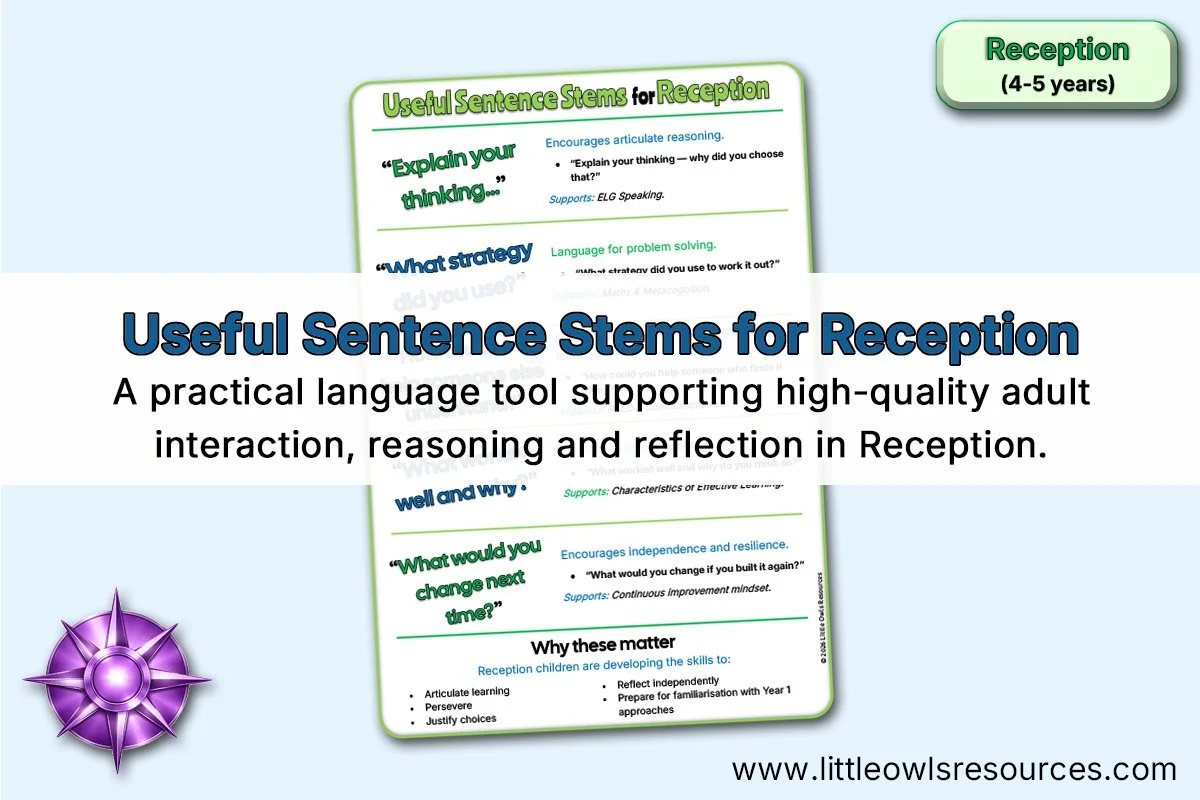
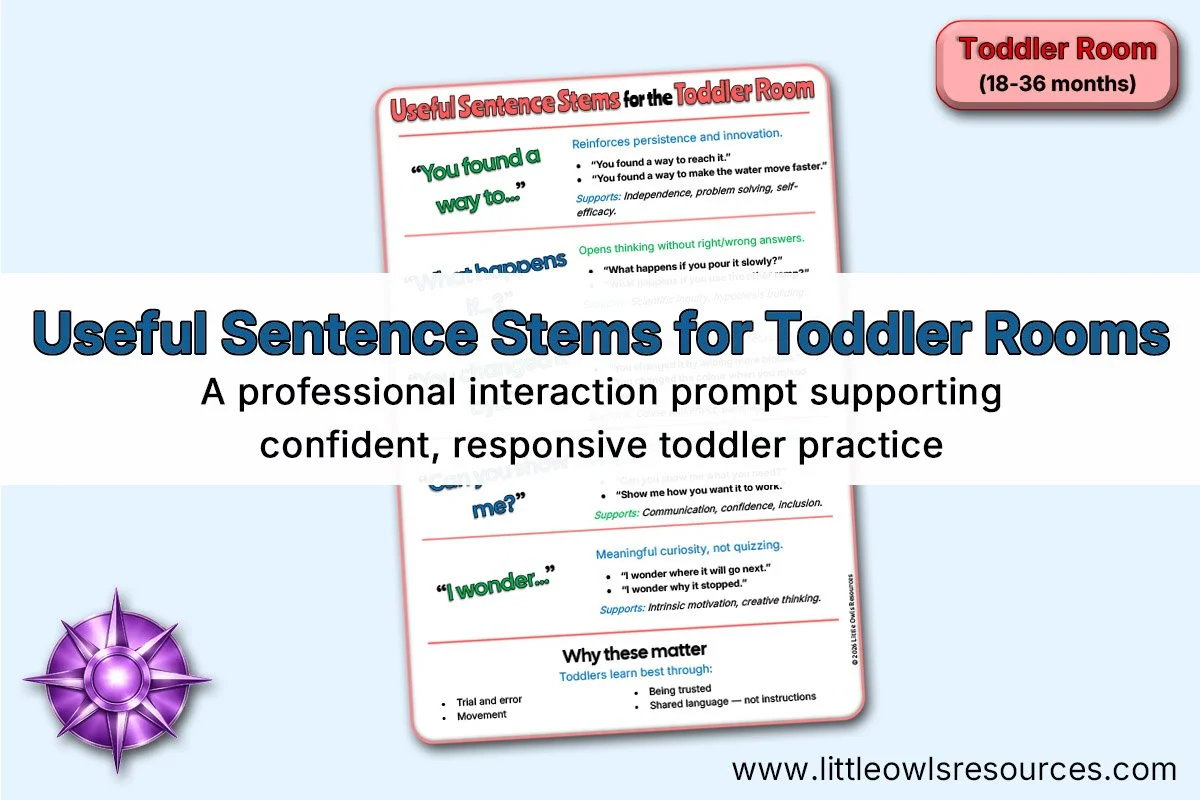
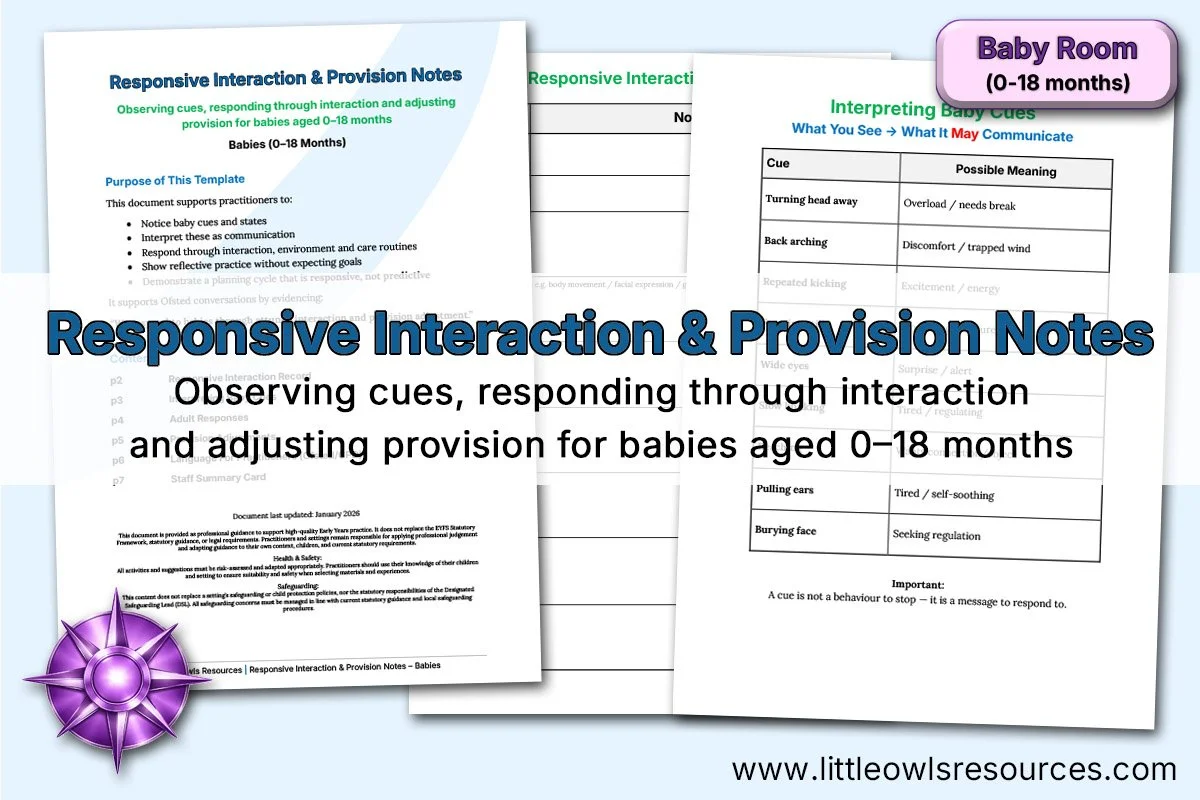
Below you will find a selection of guidance documents from within our Little Owls Resources ‘Curriculum & Pedagogy’ area which explore this concept (& its age-specific application within EYFS settings) in greater depth.
[For additional documents please visit our support pathways: Baby | Toddler | Preschool | Reception | Mixed-Age]






Further Guidance | Related Resources within our ‘Printable Provision’ area:
Disclaimer
The information provided in this glossary is intended to support understanding of terminology commonly used within the Early Years Foundation Stage (EYFS). It does not constitute official guidance and should not be considered a substitute for the EYFS Statutory Framework or other Department for Education publications.
Terminology and interpretations may vary between settings and professional contexts.