
Part of the EYFS Glossary
This article forms part of our EYFS Glossary of Early Years Education Terms, which explains key curriculum, pedagogy, and assessment language used in early years practice.
Emotional Regulation refers to the ability to recognise, understand, and manage emotions in ways that are appropriate to the situation and developmental stage.
What is Emotional Regulation?
Emotional regulation describes how individuals recognise and manage their emotional responses. In early childhood, this ability is still developing, and children often need support to understand and respond to their feelings.
Emotional regulation involves:
recognising emotions
expressing feelings
managing responses
adapting behaviour to different situations
In early years contexts, these skills develop gradually through experience and interaction.
Emotional Regulation in Early Childhood
Young children experience a wide range of emotions but may not yet have the language or strategies to manage them independently. As a result, they may rely on adults to help them understand and regulate their feelings.
Examples of emotional regulation in early childhood may include:
calming after becoming upset
managing frustration during play
expressing feelings through words or actions
adjusting behaviour in response to social situations
These experiences form part of children’s developing emotional understanding.
How Emotional Regulation Develops
Emotional regulation develops over time through repeated experiences and supportive interactions. Children learn through:
consistent and responsive care
interaction with familiar adults
observing how others manage emotions
opportunities to express and discuss feelings
This development is closely linked to co-regulation, where adults support children in managing emotions before they can do so independently.
The Role of the Adult in Supporting Emotional Regulation
Practitioners play a key role in supporting emotional regulation by providing guidance, reassurance, and consistent responses.
Adults may:
acknowledge and name children’s emotions
provide comfort and reassurance
model calm and regulated behaviour
support children in finding ways to manage feelings
create predictable routines and environments
These approaches help children develop understanding and confidence in managing emotions.
Emotional Regulation and Learning
Emotional regulation supports children’s ability to engage in learning. When children feel calm and secure, they are more able to:
focus on activities
interact with others
explore new experiences
manage challenges
Supporting emotional regulation therefore contributes to children’s overall development and participation in learning.
Common Questions About Emotional Regulation
-
Emotional regulation is one aspect of self-regulation. Self-regulation also includes managing behaviour, attention, and thinking.
-
Young children are still developing this ability and often rely on adults for support through co-regulation.
-
Practitioners support emotional regulation through responsive care, modelling behaviour, and helping children understand and express their feelings.
Summary
Emotional Regulation refers to the ability to recognise, understand, and manage emotions. In early years settings, children develop these skills gradually through interaction, support, and experience. Practitioners play an important role in helping children build the foundations for managing emotions independently.
Related Glossary Terms
The following glossary entries are closely related to Emotional Regulation and provide additional context:
Further Guidance | Related Documents within our ‘EYFS Curriculum & Pedagogy’ suite:
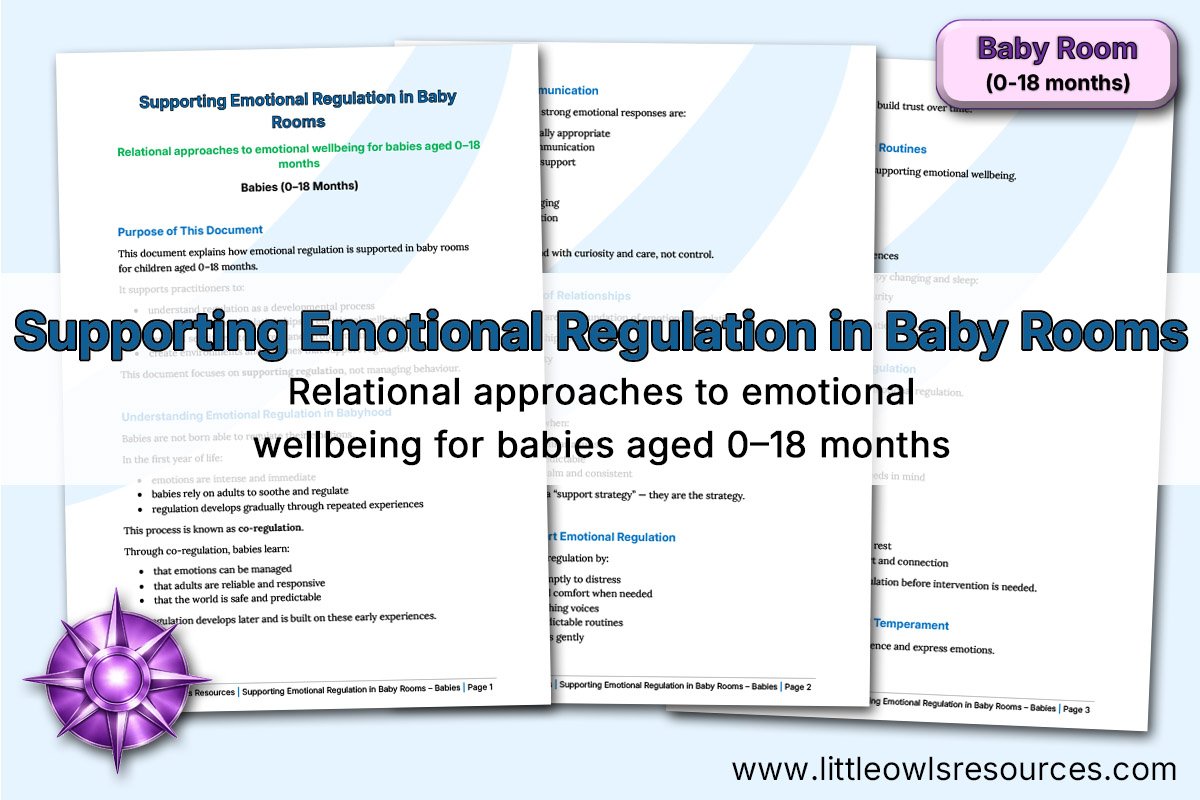
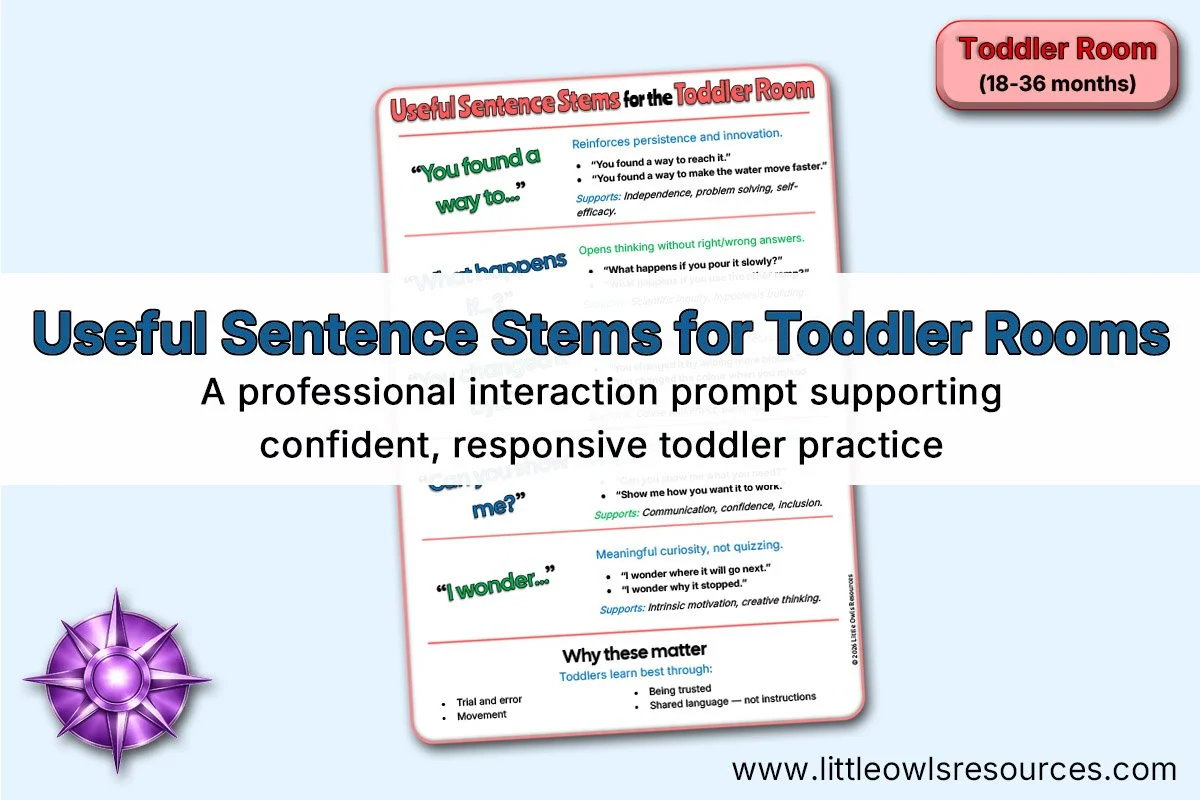
Below you will find a selection of guidance documents from within our Little Owls Resources ‘Curriculum & Pedagogy’ area which explore this concept (& its age-specific application within EYFS settings) in greater depth.
[For additional documents please visit our support pathways: Baby | Toddler | Preschool | Reception | Mixed-Age]





Further Guidance | Related Resources within our ‘Printable Provision’ area:
Disclaimer
The information provided in this glossary is intended to support understanding of terminology commonly used within the Early Years Foundation Stage (EYFS). It does not constitute official guidance and should not be considered a substitute for the EYFS Statutory Framework or other Department for Education publications.
Terminology and interpretations may vary between settings and professional contexts.